Electrical Safety Inspection and EICR Certification Costs
By Housey · Last reviewed 6th of May 2026
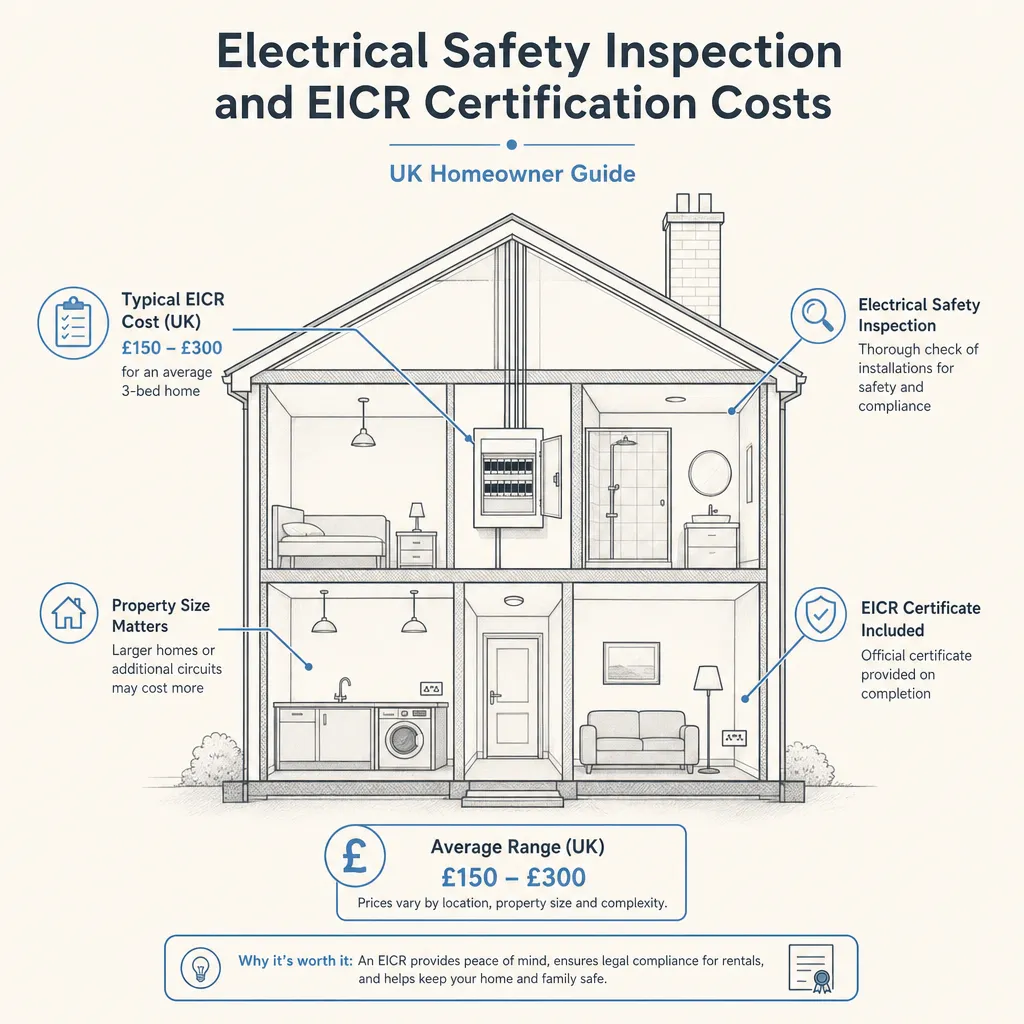
Electrical Safety Inspection and EICR Certification Costs
An Electrical Installation Condition Report (EICR) is a formal assessment of the fixed electrical installation in a property — the wiring, consumer unit, sockets, switches, and associated equipment. Landlords in England, Scotland, and Wales now face legal duties to have one carried out at defined intervals, and homeowners buying or selling are increasingly asked to produce one as part of pre-exchange due diligence. Understanding what an EICR costs, and what drives the price, helps you budget accurately and choose a suitably qualified electrician.
Key points
- Landlords in England must have an EICR carried out every five years under the Electrical Safety Standards in the Private Rented Sector (England) Regulations 2020 (SI 2020/312).
- An EICR for a typical two- to three-bedroom UK home costs £150–£250; a one-bedroom flat typically costs £100–£150.
- Only a qualified and competent electrician registered with a government-approved competent person scheme — such as NICEIC, NAPIT, or ELECSA — should carry out an EICR.
- EICR outcome codes range from C1 (danger present, immediate action required) to C3 (improvement recommended); a C1 or C2 code means the installation is unsatisfactory and remedial work must be completed before the report can be considered satisfactory.
- In Scotland, landlords must comply with mandatory electrical inspection requirements under the Housing (Scotland) Act 2006 and associated regulations, with inspection intervals depending on tenancy type.
What does an EICR cost?
EICR costs vary by property size, age of the installation, number of circuits, and location. The table below gives indicative ranges based on typical UK property types.
Indicative UK costs, last reviewed 2026-05-06. Quotes vary significantly by location, property type, and number of circuits.
Property type | Approximate number of circuits | Typical EICR cost |
|---|---|---|
Studio or one-bedroom flat | 4–6 circuits | £100–£150 |
Two- to three-bedroom house | 6–10 circuits | £150–£250 |
Four- to five-bedroom house | 10–15 circuits | £250–£400 |
HMO (house in multiple occupation) | 15+ circuits | £400–£600+ |
Commercial property | Varies widely | Quote required |
Prices in London and the South East are typically 15–25% higher than the UK average. Some electricians charge per circuit rather than a flat fee; a per-circuit rate of £20–£30 is common, meaning larger or older properties with more circuits cost considerably more. Always confirm whether the quoted price is all-inclusive or per circuit before agreeing.
What affects the EICR price?
Number of circuits: The more circuits in the property, the longer the inspection takes. Older properties often have more circuits than expected, particularly where electrical work has been added piecemeal over decades.
Age and condition of the installation: A 1970s consumer unit with outdated wiring takes longer to inspect and is more likely to generate outcome codes requiring follow-up remedial work. The EICR fee itself does not cover any remedial work — this is quoted and charged separately.
Access and layout: If cables are concealed, sockets are fixed behind furniture, or the loft is difficult to access, the inspection takes longer. Confirm access requirements with the electrician before booking.
Location: Electricians in London and the South East charge higher day rates than those in the North or Wales. Rural areas may also carry a travel surcharge on top of the inspection fee.
HMO and communal areas: Houses in multiple occupation require more thorough inspection, particularly of communal areas and any emergency lighting or fire alarm circuits. Always agree the full scope of the inspection in writing before the electrician attends.
Who can carry out an EICR?
An EICR must be carried out by a person who is both qualified and competent to do so. In practice, this means an experienced electrician holding appropriate inspection and testing qualifications. Look for:
- Registration with a government-approved competent person scheme: NICEIC, NAPIT, ELECSA, or SELECT (Scotland).
- Evidence of specific inspection and testing competence, such as a City & Guilds 2391 qualification or a current equivalent.
- Current professional indemnity and public liability insurance.
Landlords in England must retain the EICR and any completion certificates for remedial work, as local housing authorities can request these documents under the 2020 Regulations. Failure to comply can result in a financial penalty issued by the local authority.
Understanding EICR outcome codes
An EICR does not simply pass or fail. Instead, it assigns codes to individual observations:
- C1 — Danger present: A risk of injury exists. Immediate remedial action is required before the installation can continue to be used safely.
- C2 — Potentially dangerous: The installation is not immediately dangerous but could become so. Remedial work must be completed and certified before the report can be considered satisfactory.
- C3 — Improvement recommended: The installation meets minimum safety requirements but does not fully comply with current standards. An EICR can still be deemed satisfactory where only C3 codes are present.
- FI — Further investigation required: An issue has been identified that cannot be fully assessed without additional investigation — for example, wiring concealed within walls that cannot be safely inspected without further access.
Landlords in England must ensure that any C1 or C2 observations are remedied and obtain written confirmation from the electrician before providing a copy of the EICR to tenants.
Red flags: when an EICR should be a priority
While periodic inspection is good practice for any property, the following situations make an EICR particularly urgent:
- The property was last rewired more than 25–30 years ago and there is no record of a recent formal inspection.
- The consumer unit has rewirable fuses rather than modern circuit breakers and residual current devices (RCDs).
- There are signs of scorching, burning smells, or discolouration around sockets, switches, or the consumer unit itself.
- The property has had multiple owners and no satisfactory EICR can be located.
- You are about to let a property and cannot confirm that a satisfactory EICR from within the last five years exists.
- A buyer's solicitor or mortgage lender has requested an EICR as a condition of exchange or lending.
- Circuit breakers are tripping repeatedly without an obvious cause.
Important limitations
This article provides general cost and process information about EICRs in the UK. It is not a substitute for a professional assessment of your specific electrical installation. EICR costs vary by property, location, and contractor. Outcome codes and any remedial work required depend on the individual installation and the inspector's professional judgement. Legal duties for landlords can vary between England, Scotland, Wales, and Northern Ireland — the information above focuses primarily on England. For landlord compliance questions, consult your local housing authority or a specialist property solicitor.
What to ask a qualified professional
Before instructing an electrician to carry out an EICR, ask the following:
- Are you registered with NICEIC, NAPIT, ELECSA, or another government-approved competent person scheme?
- Do you hold appropriate inspection and testing qualifications, such as City & Guilds 2391 or a current equivalent?
- Does the quoted fee cover the full EICR report, including all circuits in the property?
- If you identify remedial work, will you provide a separate written quote for this before carrying it out?
- In what format will the EICR be issued — paper, PDF, or an online contractor portal?
- Is VAT included in the quoted price?
- How quickly will the completed report be issued after the inspection?
- If the installation is deemed unsatisfactory, what is your process for completing and certifying the remedial work, and will I receive a completion certificate?
When to get professional help
If any of the red flags above apply, arrange an EICR rather than monitoring the situation. Do not attempt to investigate suspected electrical faults yourself. If you notice burning smells, persistent tripping of circuit breakers, or visible damage to wiring or accessories, switch off the relevant circuit at the consumer unit if it is safe to do so and contact a registered electrician promptly. If you believe there is an immediate danger to life, contact your electricity network operator's emergency line or call 999.
How Housey can help
If you need a qualified electrician to carry out an Electrical Installation Condition Report, Housey can help you request quotes from NICEIC- and NAPIT-registered electricians in your area. Compare prices and credentials before instructing, and receive your formal EICR certificate once the inspection is complete.
Frequently asked questions
How often does an EICR need to be renewed?
For rental properties in England, an EICR must be carried out at least every five years, or at the start of each new tenancy if the existing report has expired. For owner-occupied homes, renewal is not legally mandated, but the IET recommends an inspection every ten years or on change of occupancy. Rules differ in Scotland under the Housing (Scotland) Act 2006.
Can I use an old EICR when selling my home?
An EICR is not a legal requirement for a home sale in England and Wales, but buyers, solicitors, and mortgage lenders may request one. An existing EICR is useful evidence, but if it is more than five to ten years old or contains outstanding C1 or C2 codes, a buyer may request a new inspection before exchange.
What happens if my EICR comes back unsatisfactory?
If the report identifies C1 or C2 codes, the electrician will advise on the remedial work required. For landlords in England, this work must be completed and certified within 28 days of the EICR date, or sooner if the report specifies. Remedial costs are separate from the EICR fee and range from a straightforward RCD replacement to a full rewire in serious cases.
Is an EICR the same as a Portable Appliance Test (PAT)?
No. An EICR covers the fixed electrical installation — the wiring, consumer unit, sockets, switches, and light fittings. A PAT test covers portable electrical appliances such as kettles, computers, and extension leads. Both may be required in rental or commercial properties, but they are distinct inspections with different scopes and qualifications.
Can I negotiate the price of an EICR?
It is reasonable to request quotes from two or three registered electricians and compare. For larger properties or portfolios, some electricians offer a reduced per-property rate for multiple inspections. The lowest price is not always the best choice — check the electrician's qualifications, scheme registration, and exactly what is included in the fee before deciding.
Sources and further reading
- Electrical safety standards in the private rented sector — GOV.UK
- Electrical Safety Standards in the Private Rented Sector (England) Regulations 2020 — legislation.gov.uk
- Finding a registered electrician — Electrical Safety First
- Find a registered contractor — NICEIC
- Periodic inspection and testing guidance — IET (Institution of Engineering and Technology)
Useful next reads
 Surveys & Inspections
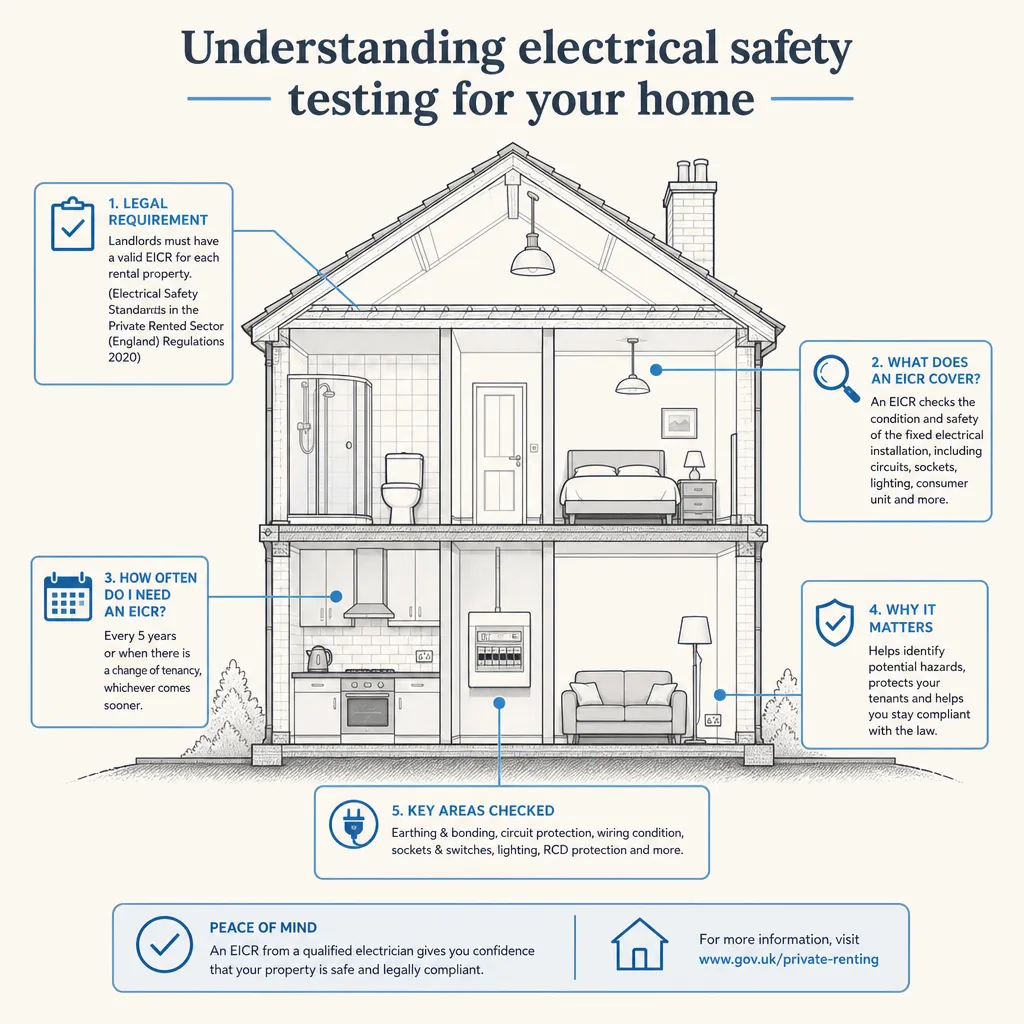
Understanding electrical safety testing for your home
An Electrical Installation Condition Report (EICR) assesses the fixed wiring, consumer unit, and electrical circuits in a property.
 Surveys & Inspections
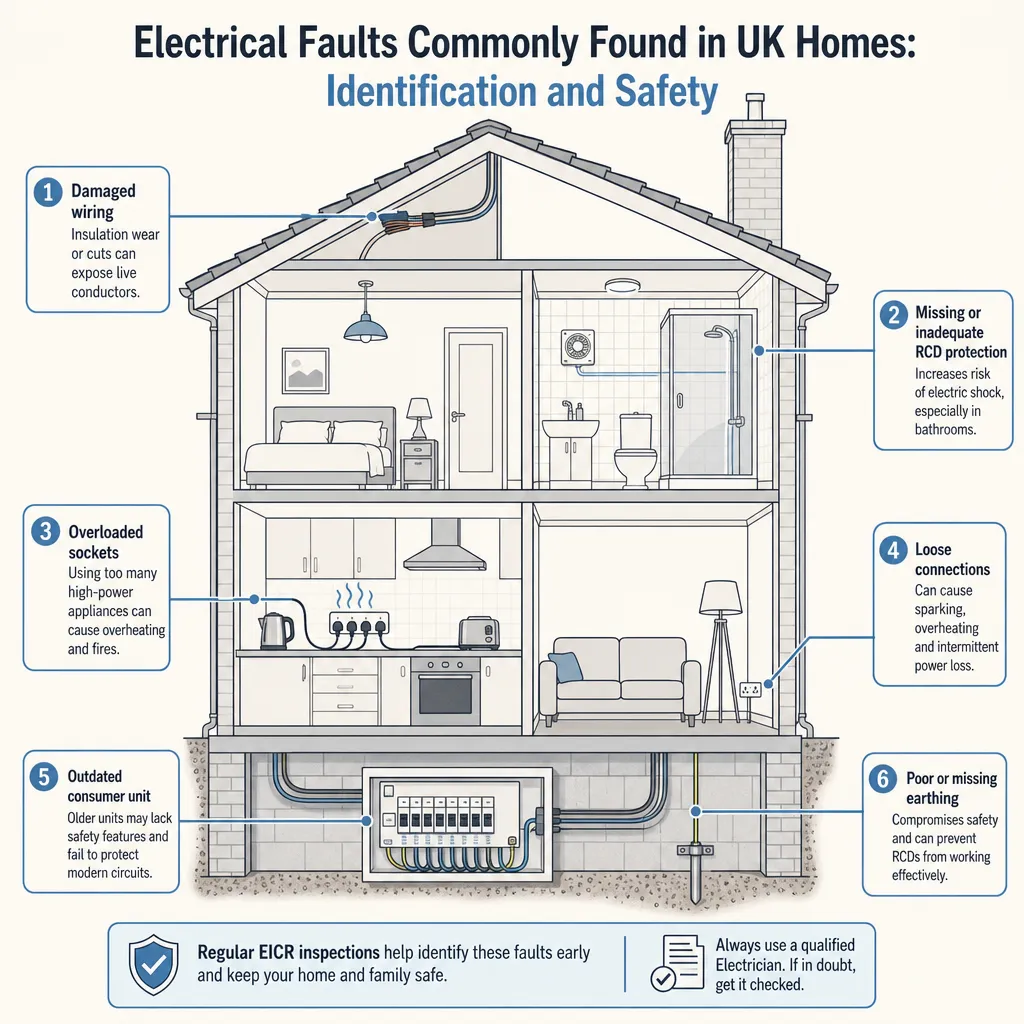
Electrical Faults Commonly Found in UK Homes: Identification and Safety
Common electrical faults in UK homes include deteriorating wiring, overloaded circuits, faulty consumer units without RCD protection, loose socket connections, and unapproved DIY alterations.
 Surveys & Inspections
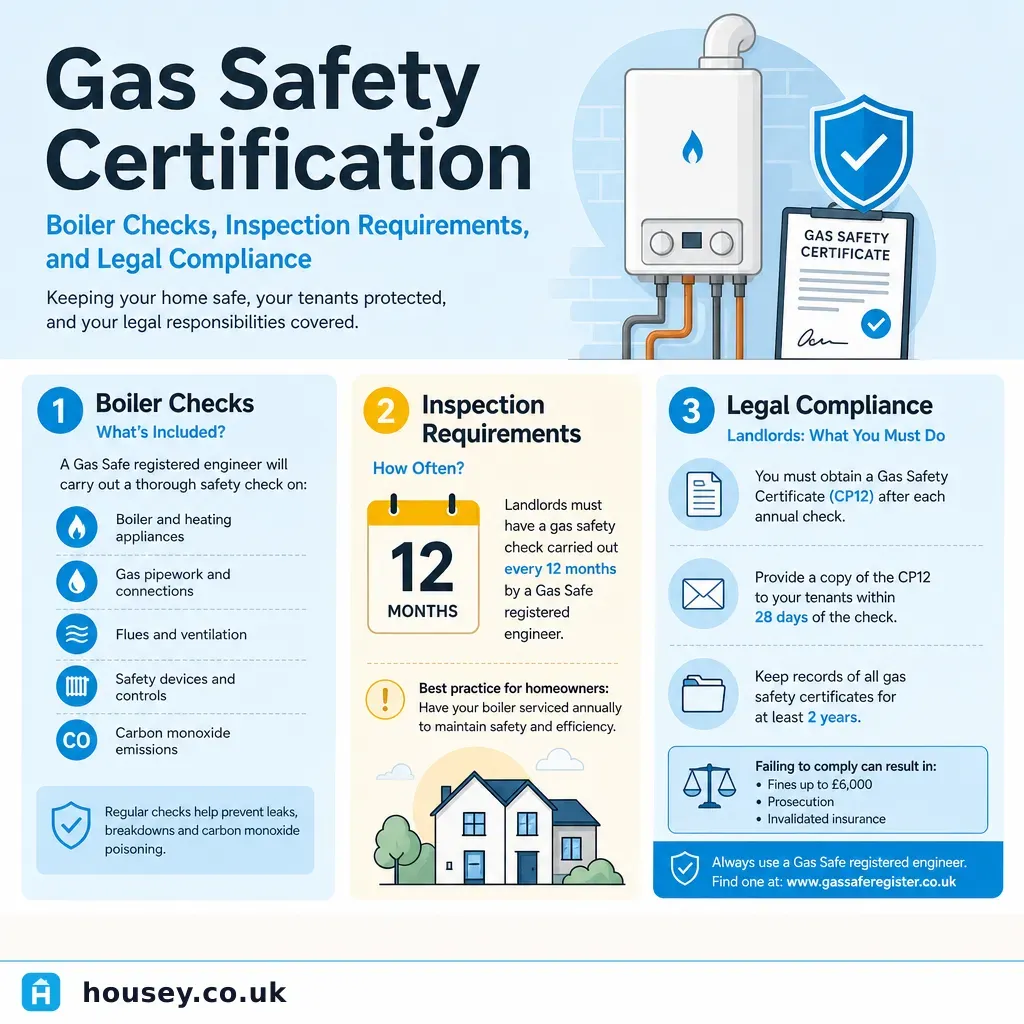
Gas Safety Certification: Boiler Checks, Inspection Requirements, and Legal Compliance
A gas safety certificate — officially a Gas Safety Record — is issued by a Gas Safe registered engineer after inspecting all gas appliances, pipework, and flues in a property.
 Surveys & Inspections
Why Property Boundaries Matter: Surveying and Dispute Prevention
Property boundaries in England and Wales are recorded as general boundaries by HM Land Registry — not precise measurements.
 Surveys & Inspections
Safe Property Viewing Practices: Protecting Yourself During Inspections
When viewing a property in the UK, always tell someone where you are going and share the full address before you leave.