Gas Safety Certification: Boiler Checks, Inspection Requirements, and Legal Compliance
By Housey · Last reviewed 19th of May 2026
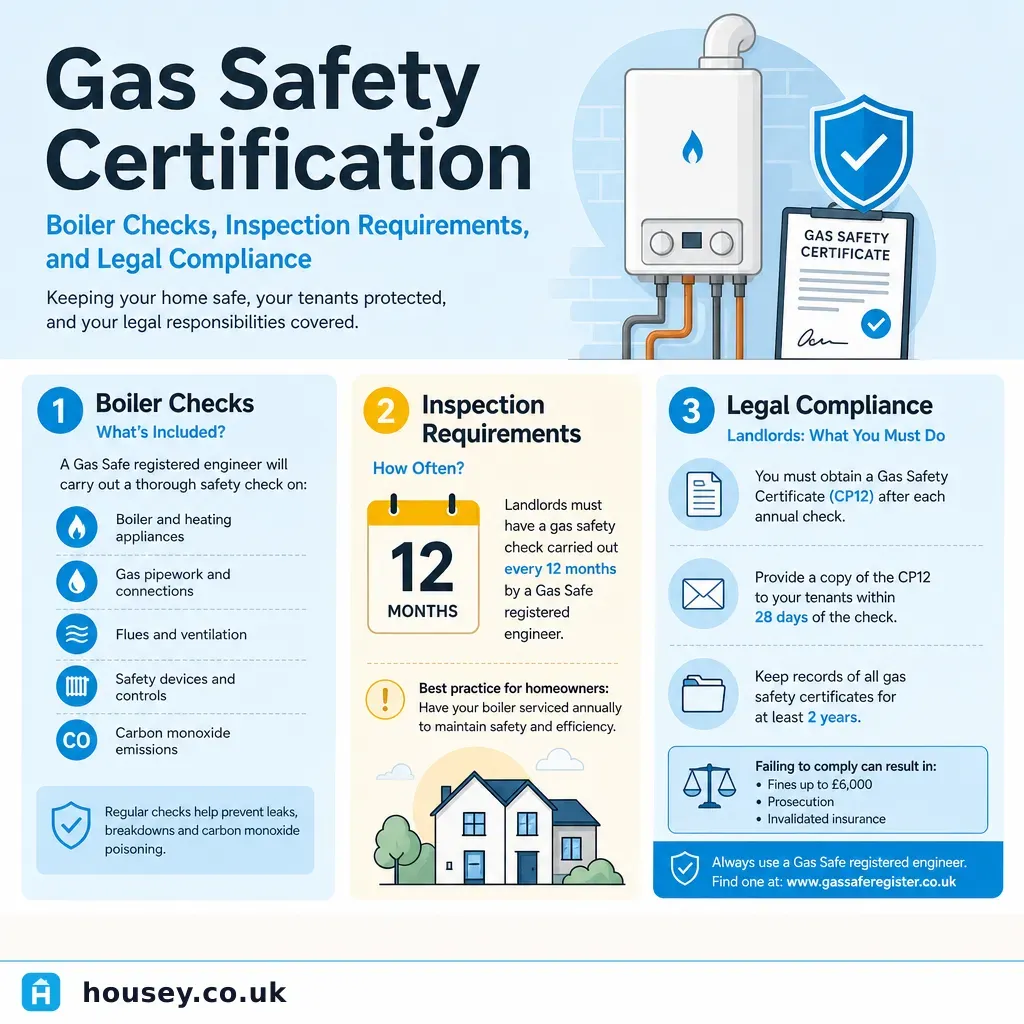
Gas Safety Certification: Boiler Checks, Inspection Requirements, and Legal Compliance
Gas safety certification sits at the intersection of public safety and property law in the UK. Questions arise most often when a landlord is preparing a new tenancy, when a tenant receives notice of an engineer visit, or when a homeowner wants to understand whether their annual boiler service provides the same legal coverage as a formal gas safety inspection. The rules are precise, the penalties for landlords are significant, and the underlying reason — carbon monoxide poisoning and gas explosions remain live risks in UK homes — makes compliance more than a paperwork exercise.
Key points
- Regulation 36 of the Gas Safety (Installation and Use) Regulations 1998 legally requires landlords to arrange an annual gas safety check for every gas appliance, pipework, and flue in a rented property.
- All engineers carrying out gas work in Great Britain must be listed on the Gas Safe Register, which replaced CORGI registration in April 2009 — you can verify any engineer at GasSafeRegister.co.uk.
- Landlords must provide tenants with a copy of the Gas Safety Record (commonly called a CP12) within 28 days of each annual check; new tenants must receive their copy before or on the first day of their tenancy.
- The Gas Safety Record must be retained by the landlord for at least two years.
- Non-compliant landlords face an unlimited fine or up to six months' imprisonment under the Health and Safety at Work etc. Act 1974; local authority environmental health teams can also serve improvement and prohibition notices.
What is a gas safety certificate?
"Gas safety certificate" is the common term for what is formally called a Gas Safety Record. It is issued by a Gas Safe registered engineer after inspecting and testing all gas appliances, pipework, and associated flues in a property.
The document records:
- The address of the property and the date of the inspection
- A description and location of each gas appliance checked
- The results of all safety checks carried out on each appliance
- Any defects identified, and action taken or recommended
- The engineer's Gas Safe registration number and signature
The Gas Safety Record does not replace an annual boiler service, which checks internal components, efficiency, and manufacturer warranty compliance. The two are related but distinct:
Document or service | Legal requirement | What it covers | Who needs it |
|---|---|---|---|
Gas Safety Record (CP12) | Yes — landlords, annually | Appliances, pipework, flues: safety checks only | All landlords with gas appliances in rented property |
Annual boiler service | No legal requirement | Internal components, efficiency, manufacturer warranty | All gas boiler owners (strongly recommended by HSE) |
Building Regulations compliance certificate | Required for new gas installation | Competent person self-certification under Part J | Anyone having new gas appliances installed |
Who must have an annual gas safety check?
Landlords
Landlords of residential property in England, Wales, and Scotland are legally required under the Gas Safety (Installation and Use) Regulations 1998 to:
- Arrange a gas safety check every 12 months by a Gas Safe registered engineer.
- Provide the Gas Safety Record to each tenant within 28 days of the check — or before the tenancy begins for new tenants.
- Retain a copy of each record for at least two years.
- Ensure all gas appliances, pipework, and flues are maintained in a safe condition throughout the tenancy.
This applies to all rented residential properties including houses, flats, houses in multiple occupation (HMOs), and holiday lets where gas is present.
Owner-occupiers
There is no legal obligation for owner-occupiers to have an annual gas safety inspection. However, the Health and Safety Executive and Gas Safe Register strongly recommend that all homeowners arrange an annual gas safety check alongside their boiler service, install and regularly test carbon monoxide alarms, and instruct only Gas Safe registered engineers for any gas work.
Social housing
Housing associations and local authority landlords are subject to the same obligations as private landlords under the Gas Safety Regulations, along with additional duties under the Social Housing (Regulation) Act 2023 regarding transparency and responsive repairs.
What the engineer checks
A Gas Safe registered engineer carrying out a gas safety inspection will typically:
- Check all gas appliances — boiler, gas fire, hob, cooker, instantaneous water heater — for safe operation
- Inspect gas pipework for corrosion, leaks, and adequate support
- Check all flues and chimneys serving gas appliances for obstruction, adequate draw, and safe termination
- Carry out a gas tightness test on the installation
- Check ventilation provision for appliances requiring it
- Check clearances and safety distances around appliances
If an appliance fails a check, the engineer will categorise the defect:
- Immediately Dangerous (ID): the appliance must be disconnected and labelled; the engineer will turn it off and recommend it is not used until repaired or replaced.
- At Risk (AR): a risk exists but the appliance is not immediately dangerous; the engineer will advise and recommend repair.
- Not to Current Standards (NCS): the appliance does not meet current standards but is not immediately dangerous; an advisory notice is issued.
How to find and instruct a Gas Safe engineer
All engineers working on gas appliances in homes in Great Britain must be registered with the Gas Safe Register, the official list maintained on behalf of the Health and Safety Executive. To find and verify an engineer:
- Search by postcode at GasSafeRegister.co.uk
- Ask to see the engineer's Gas Safe ID card at every visit — it states the appliance types and gas types they are qualified to work on
- Check that the card covers the specific work required (domestic natural gas, LPG, commercial gas work are all separate)
Do not instruct an engineer who cannot provide their Gas Safe registration number. Unregistered gas work is illegal, unsafe, and will not produce a legally valid Gas Safety Record.
Homeowner and landlord checklist: gas safety
Important limitations
This article provides general information about gas safety certification requirements in the UK as of May 2026. Gas safety law, engineer competence requirements, and landlord obligations can vary by property type, tenancy agreement, local authority, and individual circumstances. The information here primarily reflects the position in England and Wales. Scotland and Northern Ireland may have additional or differing requirements. Nothing in this article constitutes legal or safety advice. If you have a gas emergency, leave the building immediately and call the National Gas Emergency Service on 0800 111 999. For specific legal obligations, consult a qualified solicitor or your local authority environmental health team.
When this becomes urgent
Seek immediate professional help or take emergency action if:
- You smell gas or suspect a gas leak — evacuate the building immediately and call 0800 111 999.
- A Gas Safe engineer has labelled an appliance as Immediately Dangerous (ID).
- A tenant reports symptoms consistent with carbon monoxide poisoning: headache, nausea, dizziness, or confusion.
- Your Gas Safety Record has already lapsed during a live tenancy — arrange an emergency check without delay.
- You are about to grant a new tenancy and have no current Gas Safety Record in place.
What to ask a qualified professional
Before instructing a Gas Safe engineer:
- Are you Gas Safe registered, and what appliance types and gas types are listed on your ID card?
- Will you provide a copy of the Gas Safety Record on the day of the inspection, and in what format?
- What is your process if you find a defect — will you issue an Immediately Dangerous notice and what are my obligations as landlord?
- Do you carry public liability and professional indemnity insurance?
- Will the quote cover all appliances, pipework, and flues in the property, or are any excluded?
- Is VAT included in your quoted price?
- What is your availability for emergency call-outs if a fault arises after the inspection?
When to get professional help
Any work on domestic gas appliances — installation, repair, servicing, relocation, or decommissioning — must be carried out by a Gas Safe registered engineer. This is a legal requirement, not a recommendation. Never attempt gas work yourself.
Contact a Gas Safe engineer promptly if:
- You are a landlord and your Gas Safety Record has expired or is within a week of expiry
- A boiler pilot light keeps going out or the boiler repeatedly cuts out on lockout
- There is any smell of gas in the property at any time
- You are purchasing a property and wish to understand the condition of the existing gas installation
How Housey can help
Housey connects landlords and homeowners with Gas Safe registered engineers who issue gas safety certificates across the UK. Request quotes through Housey to compare engineers in your area and receive your Gas Safety Record promptly.
Frequently asked questions
How long is a gas safety certificate valid for in the UK?
A Gas Safety Record is valid for 12 months from the date of inspection. Landlords must renew it annually. You can arrange the next check up to two months early without losing the original expiry date, meaning the anniversary rolls forward rather than shortening the period between checks.
What is the difference between a gas safety check and a boiler service?
A gas safety check inspects all gas appliances, pipework, and flues for safe operation — it is safety-focused, not efficiency-focused. A boiler service checks internal components, cleans key parts, and identifies wear. Both are usually carried out by the same Gas Safe engineer on the same visit but are recorded separately.
Can a tenant carry out the gas safety check themselves?
No. The Gas Safety (Installation and Use) Regulations 1998 require the check to be carried out by a Gas Safe registered engineer. Arranging and conducting the gas safety inspection is the landlord's legal responsibility — it cannot be delegated to the tenant.
Do I need a gas safety certificate to sell my house?
There is no legal requirement for owner-occupiers to provide a gas safety certificate when selling a residential property. However, buyers' solicitors may request records of recent gas servicing. Providing a current service record can give buyers confidence in the installation and may support the conveyancing process.
Sources and further reading
- Gas Safety (Installation and Use) Regulations 1998 — legislation.gov.uk
- HSE: Gas Safety — Landlord Responsibilities — Health and Safety Executive
- Gas Safe Register: Find an Engineer — Gas Safe Register
- GOV.UK: Gas safety — landlord responsibilities — GOV.UK
- GOV.UK: Carbon monoxide alarms guidance for landlords — GOV.UK
Useful next reads
 Surveys & Inspections
Gas Safety Certificate: What Landlords and Homeowners Need
Landlords in England, Scotland, and Wales must arrange a gas safety check every 12 months by a Gas Safe registered engineer under the Gas Safety (Installation and Use) Regulations 1998.
 Surveys & Inspections
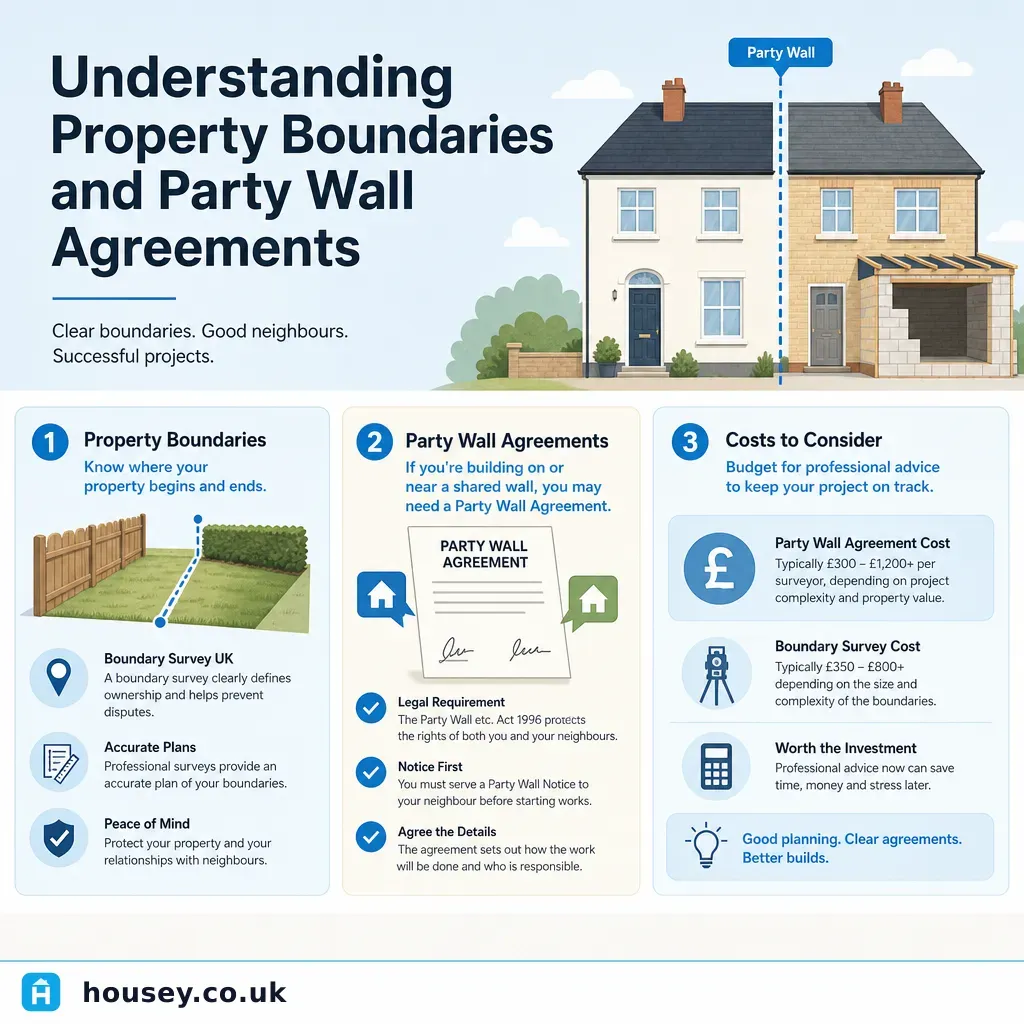
Understanding Property Boundaries and Party Wall Agreements
Property boundaries define the legal extent of your land; the Party Wall etc.
 Surveys & Inspections
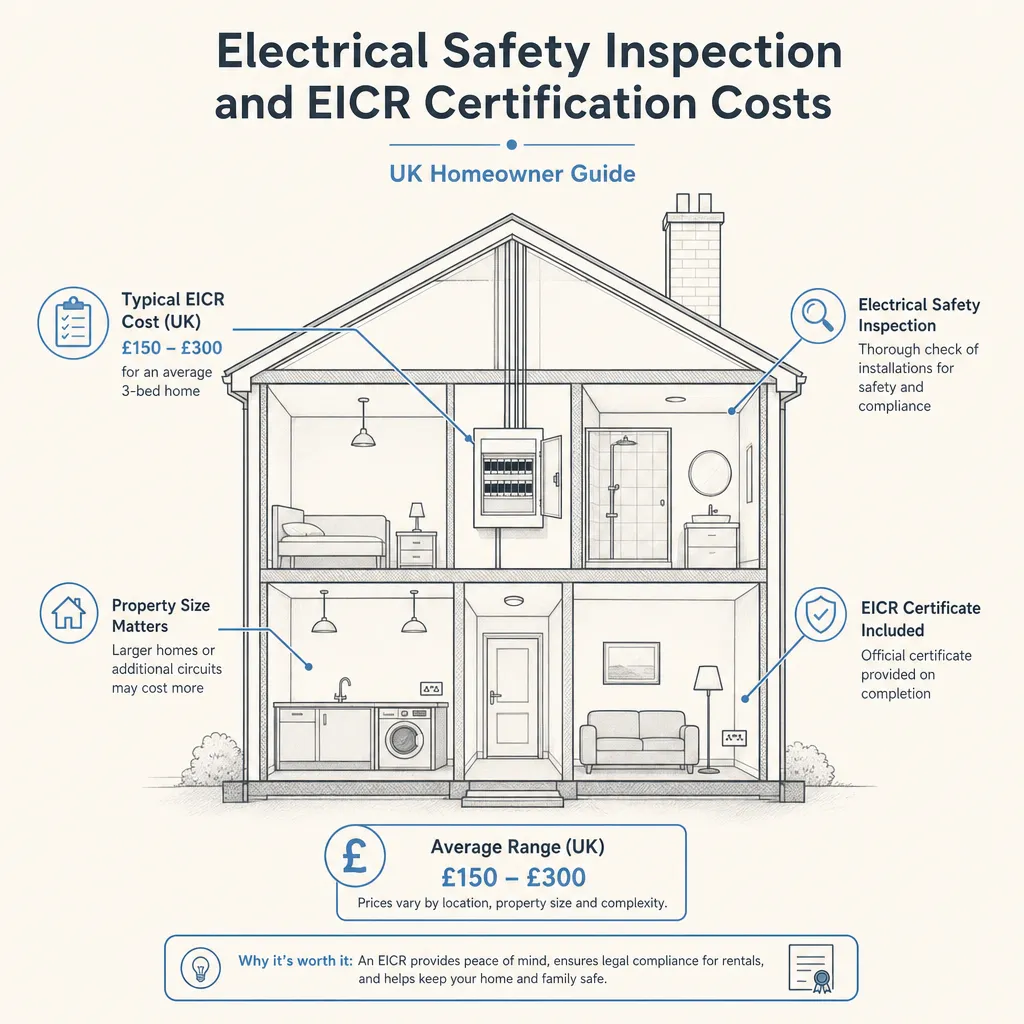
Electrical Safety Inspection and EICR Certification Costs
An Electrical Installation Condition Report (EICR) typically costs £100–£150 for a one-bedroom flat and £150–£250 for a two- to three-bedroom house in the UK.
 Surveys & Inspections
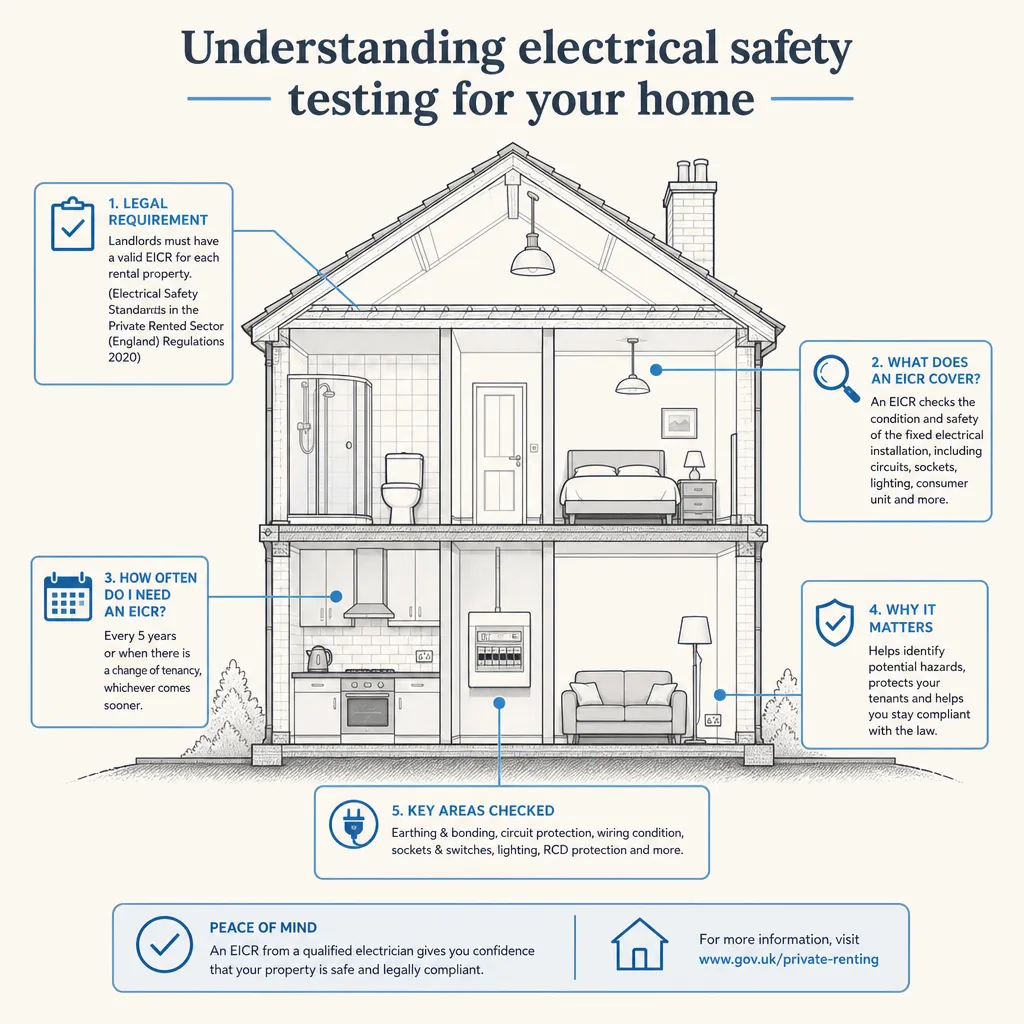
Understanding electrical safety testing for your home
An Electrical Installation Condition Report (EICR) assesses the fixed wiring, consumer unit, and electrical circuits in a property.
 Surveys & Inspections
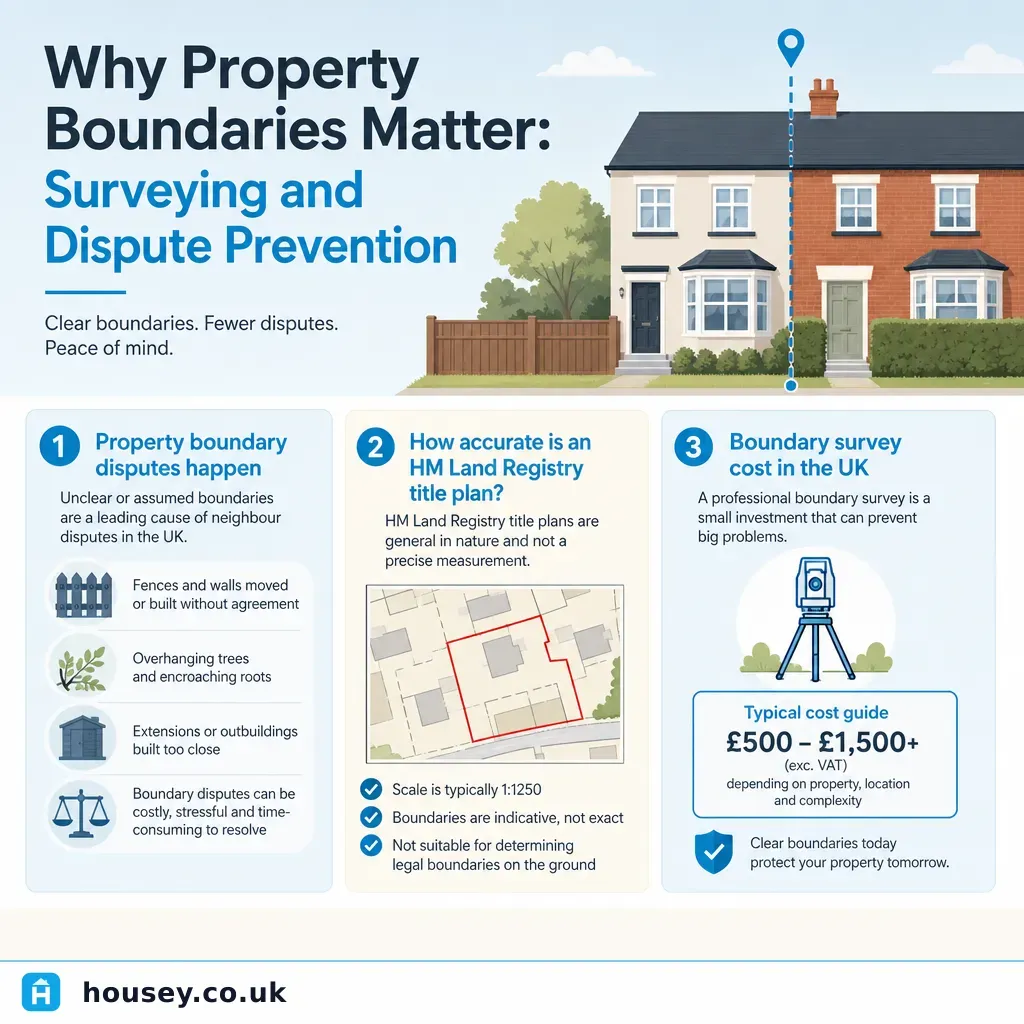
Why Property Boundaries Matter: Surveying and Dispute Prevention
Property boundaries in England and Wales are recorded as general boundaries by HM Land Registry — not precise measurements.