Electric Heating Systems: Options and Comparisons
By Housey · Last reviewed 11th of May 2026
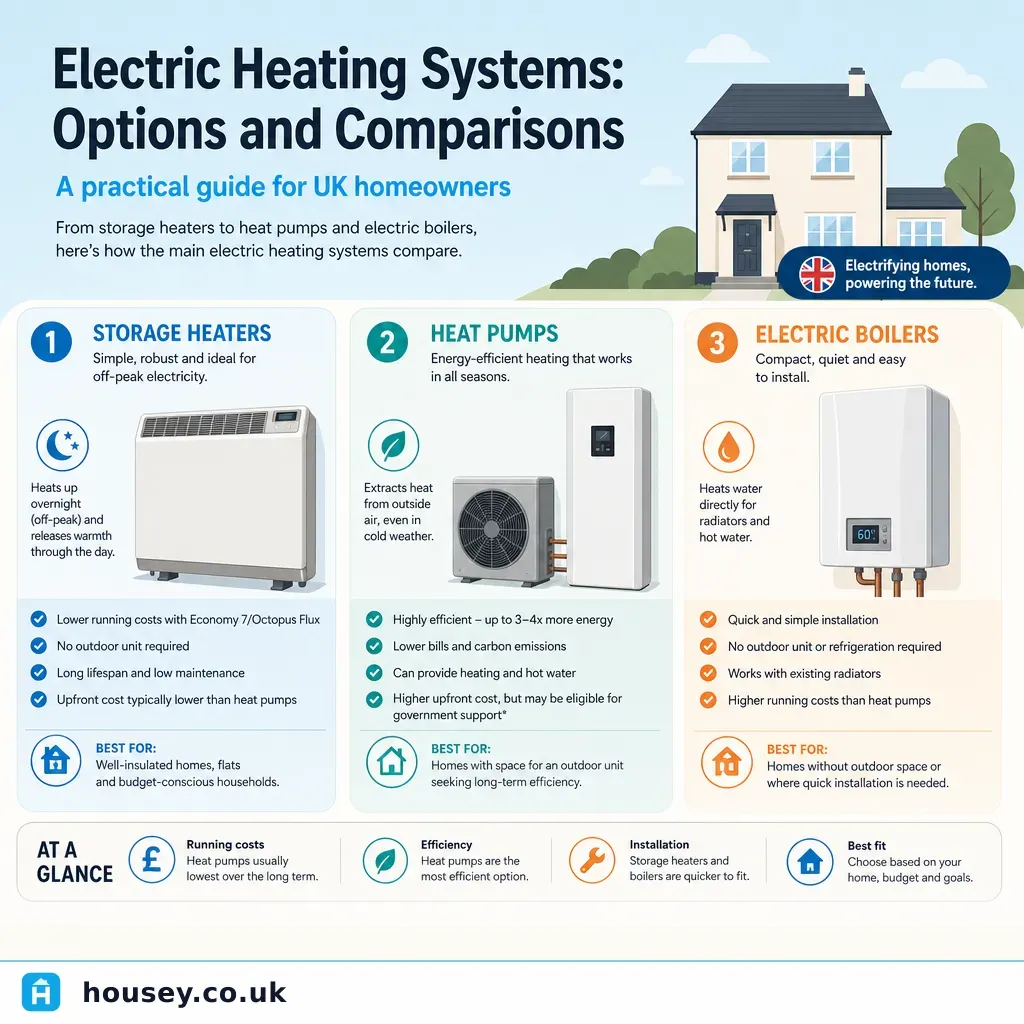
Electric Heating Systems: Options and Comparisons
For UK homes without a gas connection — or where homeowners are planning ahead of a potential transition away from fossil fuel heating — electric heating covers a range of technologies with very different running costs, installation requirements, and comfort profiles. The choice matters because selecting the wrong system for your property type, insulation level, or occupancy pattern can mean a significantly higher energy bill year on year. Understanding how each option works, what it costs to run, and which tariff structures it relies on is essential before committing to any installation.
Key points
- Heat pumps (air source or ground source) achieve a coefficient of performance (COP) of 2.5–4, meaning they deliver 2.5–4 kWh of heat for every 1 kWh of electricity consumed — far more efficient than any direct electric heating system.
- The Boiler Upgrade Scheme (BUS) currently offers £7,500 towards the cost of a qualifying air source or ground source heat pump; check GOV.UK for current scheme status and eligibility before instructing an installer.
- Storage heaters use cheaper off-peak electricity on Economy 7 or Economy 10 tariffs but only deliver cost savings if you are actually on the right tariff and your occupancy pattern aligns with when heat is released.
- Infrared panel heaters warm objects and people directly rather than the air, making them suited to zone or supplementary heating, but they operate at a 1:1 electricity-to-heat ratio.
- Part P of the Building Regulations requires that most fixed electrical installation work — including wiring dedicated heating circuits — is carried out or notified by a registered competent electrician (such as an NICEIC or NAPIT registered contractor).
The main types of electric heating
System | How it heats | Efficiency | Best suited to | Key limitation |
|---|---|---|---|---|
Air source heat pump (ASHP) | Extracts heat from outdoor air; distributes via radiators or underfloor heating | COP 2.5–3.5 | Well-insulated homes; properties off the gas grid | Requires professional sizing; indicative installed cost £8,000–£18,000 |
Ground source heat pump (GSHP) | Extracts heat from ground via buried loops or borehole | COP 3–4 | Properties with adequate outdoor land | Higher installed cost; ground works or borehole required |
Electric boiler | Heats water directly via immersion element; connects to existing wet radiator system | 98–99% | Flats, smaller homes, properties removing a gas supply | Running costs higher than gas; hot water cylinder may be needed |
Modern storage heaters | Store heat overnight on a cheap off-peak tariff; release through the day | ~100% (direct) but tariff-dependent | Economy 7 or Economy 10 households | Requires correct tariff; less responsive than direct radiators |
Direct-acting electric radiators | Convert electricity to heat in real time | ~100% (direct) | Rooms used infrequently; supplementary heating | Highest running cost per kWh of all options |
Infrared panels | Radiate heat to surfaces and occupants directly | ~100% (direct) | Spot heating, conservatories, home offices, outbuildings | Not suited as a whole-house primary system |
Indicative UK costs, last reviewed 2026-05-11. Heat pump costs vary by property size, ground conditions, and system complexity. Obtain multiple quotes from MCS-accredited installers.
How to choose the right electric heating system
Decision tree
- Choose an air source heat pump if your home is well insulated (or you plan to insulate it as part of the project), you have adequate outdoor space for the unit, and you are planning a full heating system upgrade rather than a like-for-like swap.
- Choose a ground source heat pump if you have sufficient garden space for ground loops (roughly 1.5 times the floor area of the heated space as a general rule of thumb) and want the highest achievable COP.
- Choose an electric boiler if you already have a functioning wet radiator system and want to remove a gas supply without replacing emitters — particularly suited to flats, smaller terraced houses, or leasehold properties where external heat pump units face planning or lease restrictions.
- Choose modern storage heaters if you are on or can switch to an Economy 7 or Economy 10 tariff and your home is occupied during the hours when stored heat is released (typically morning and evening).
- Choose direct-acting electric radiators or infrared panels for supplementary heating in occasional-use spaces — garden offices, extensions, spare rooms — rather than as a whole-house primary solution.
- Get a professional assessment before committing to a heat pump — system sizing, emitter compatibility, hot water provision, and insulation levels all affect whether the system will perform and whether you will qualify for the Boiler Upgrade Scheme.
Running costs: what drives the difference
Electricity in the UK currently costs around 24–28p/kWh under the Ofgem default tariff (reviewed quarterly). Gas sits at around 6–7p/kWh. This gap is the central challenge for direct electric heating, but heat pumps partially overcome it through their multiplier effect — a COP of 3 means you effectively pay for 1 kWh to receive 3 kWh of usable heat.
Economy 7 and Economy 10 tariffs offer overnight electricity rates that can be 40–60% cheaper than the standard daytime rate, which is what makes modern storage heaters viable for some households. The tariff structure your supplier offers and your actual occupancy pattern — when you are home and when you need warmth — should both influence your decision.
Running costs are also heavily influenced by your home's insulation level. A heat pump in a poorly insulated property with single glazing will struggle to maintain comfort and will run at a lower COP than the same system in a well-insulated modern home. An energy assessment before specifying any system can save significant money over the lifetime of the installation.
Installation and regulatory requirements
All fixed electrical heating installations must comply with Part P of the Building Regulations. This means:
- Work must be carried out by a Part P registered electrician (registered under a competent person scheme such as NICEIC or NAPIT), or
- The work must be notified to the local building control authority and inspected before completion.
Heat pump installations must be carried out by an MCS-accredited installer if you wish to claim the Boiler Upgrade Scheme grant. An Electrical Installation Condition Report (EICR) may be advisable before any significant electric heating upgrade, to confirm that the existing consumer unit and wiring can safely support the new electrical load.
If you are in a listed building or conservation area and wish to install an external heat pump unit, permitted development rights may not apply — check with your local planning authority first.
When to get professional help
Electric heating selection involves electrical safety, energy performance, and — in the case of heat pumps — system design. These are areas where professional input makes a material difference to the outcome and to long-term running costs.
Seek professional advice if:
- You are considering a heat pump and are unsure whether your insulation, emitters, or hot water system are compatible.
- Your consumer unit is old (pre-2016 or fuse-wire type) and you are adding significant new electrical load.
- You are in a listed building or conservation area and want to add external heat pump units.
- You want to claim the Boiler Upgrade Scheme grant, as the installer must hold MCS accreditation.
- You are unsure which tariff you are on or whether switching to Economy 7 would benefit you with storage heaters.
How Housey can help
Before committing to any electric heating system, independent advice on what will work best for your property is worth seeking. Housey can connect you with energy-efficiency consultants who can assess your insulation, occupancy pattern, and current heat loss before recommending a system. If you are considering a heat pump, arrange a heat pump survey to establish suitability and system requirements without committing to installation costs. If you need an electrical safety check before upgrading your heating circuits, an Electrical Installation Condition Report (EICR) will confirm whether your existing wiring and consumer unit can support the new load.
Frequently asked questions
Is electric heating more expensive to run than gas?
For direct-acting electric heating — radiators, infrared panels, electric boilers — yes. Electricity costs roughly 3–4 times more per kWh than gas at current Ofgem rates. Heat pumps partially close this gap because they deliver 2.5–4 units of heat per unit of electricity consumed. Running costs also depend heavily on your property's insulation level and the tariff you are on.
Do heat pumps work in older UK homes?
Air source heat pumps can work in older UK homes, but performance depends on insulation levels and the type of heat emitters installed. Older properties with single glazing, uninsulated solid walls, and small radiators are less suited without additional works. A heat loss calculation and system assessment by an MCS-accredited designer will establish what modifications, if any, are needed before installation.
Can I get a grant towards electric heating?
The Boiler Upgrade Scheme (BUS), administered by Ofgem, currently offers £7,500 towards a qualifying air source or ground source heat pump. The scheme requires installation by an MCS-accredited contractor. Funding through the ECO4 scheme may also be available for eligible low-income households. Check GOV.UK and Ofgem for current availability, eligibility, and any scheme changes.
Do I need an electrician to install electric radiators?
Plug-in electric radiators do not require an electrician. Hard-wired radiators connected to a dedicated circuit must be installed by a Part P registered electrician or the work notified to building control. If you are adding several new circuits for a whole-house system, your consumer unit may also need upgrading — this work must be carried out by a qualified electrician.
Sources and further reading
- Boiler Upgrade Scheme: apply for a grant — GOV.UK
- Building Regulations Approved Document P (Electrical Safety) — GOV.UK
- Energy price cap: how it affects you — Ofgem
- Air source heat pumps — Energy Saving Trust
- MCS: find an accredited installer — Microgeneration Certification Scheme
Useful next reads
 Energy & Retrofit
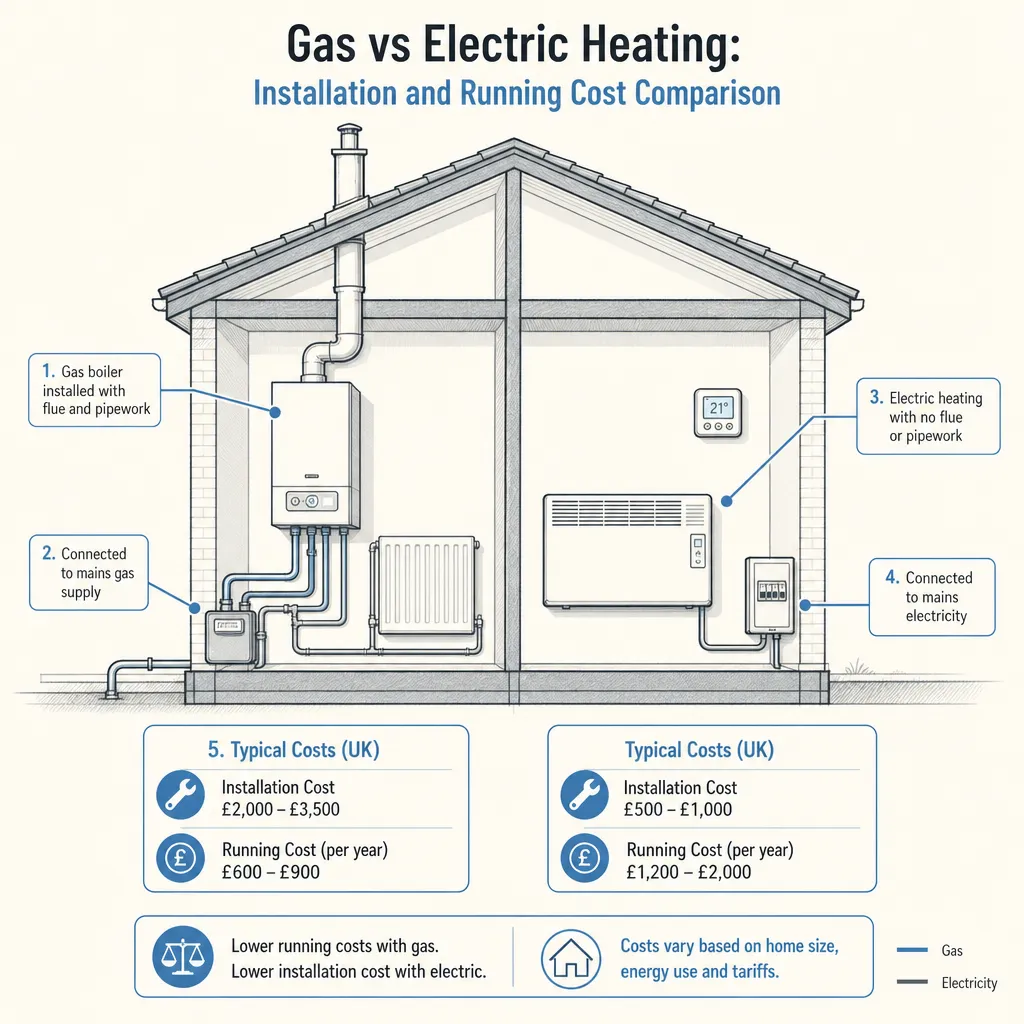
Gas vs Electric Heating: Installation and Running Cost Comparison
Gas central heating usually has lower running costs per kWh than direct electric heating in the UK, though heat pumps can change that equation.
 Energy & Retrofit
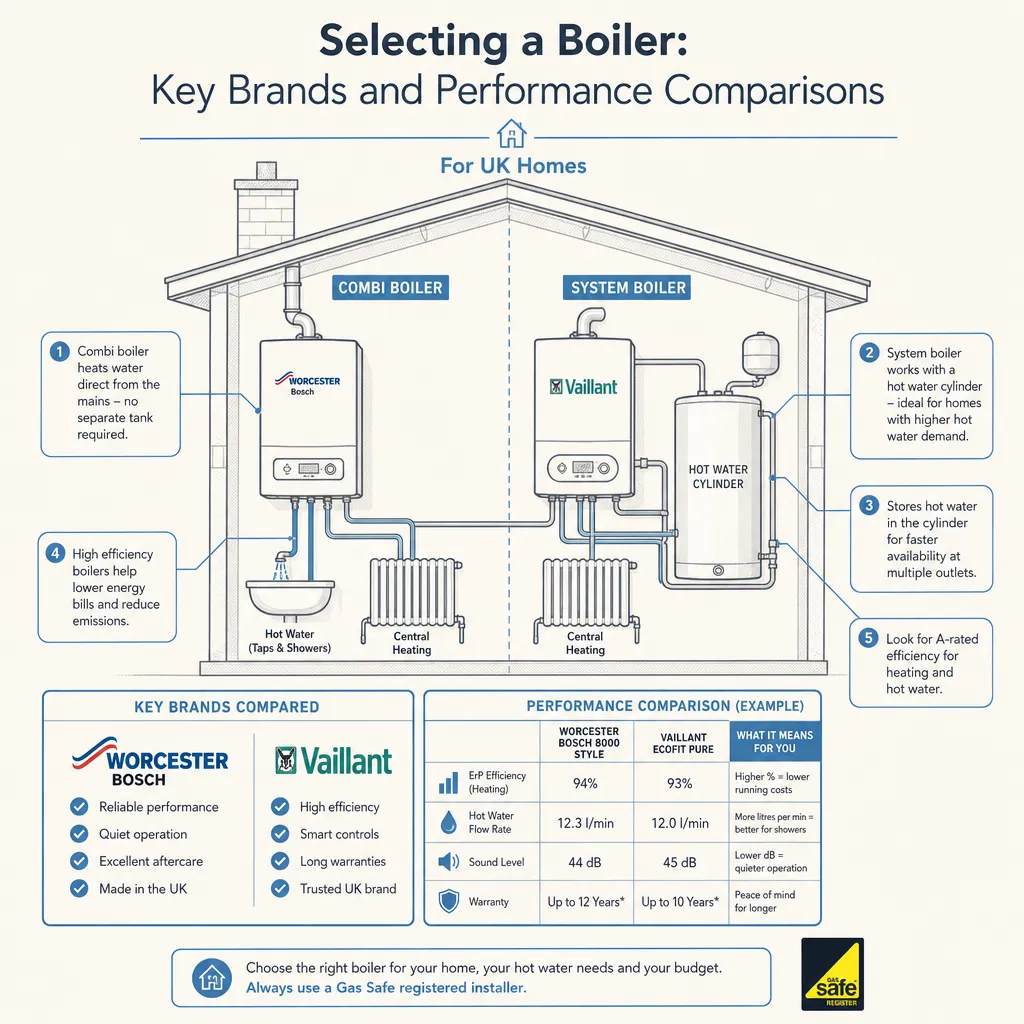
Selecting a Boiler: Key Brands and Performance Comparisons
Most UK homes are heated by a combi, system, or heat-only boiler.
 Energy & Retrofit
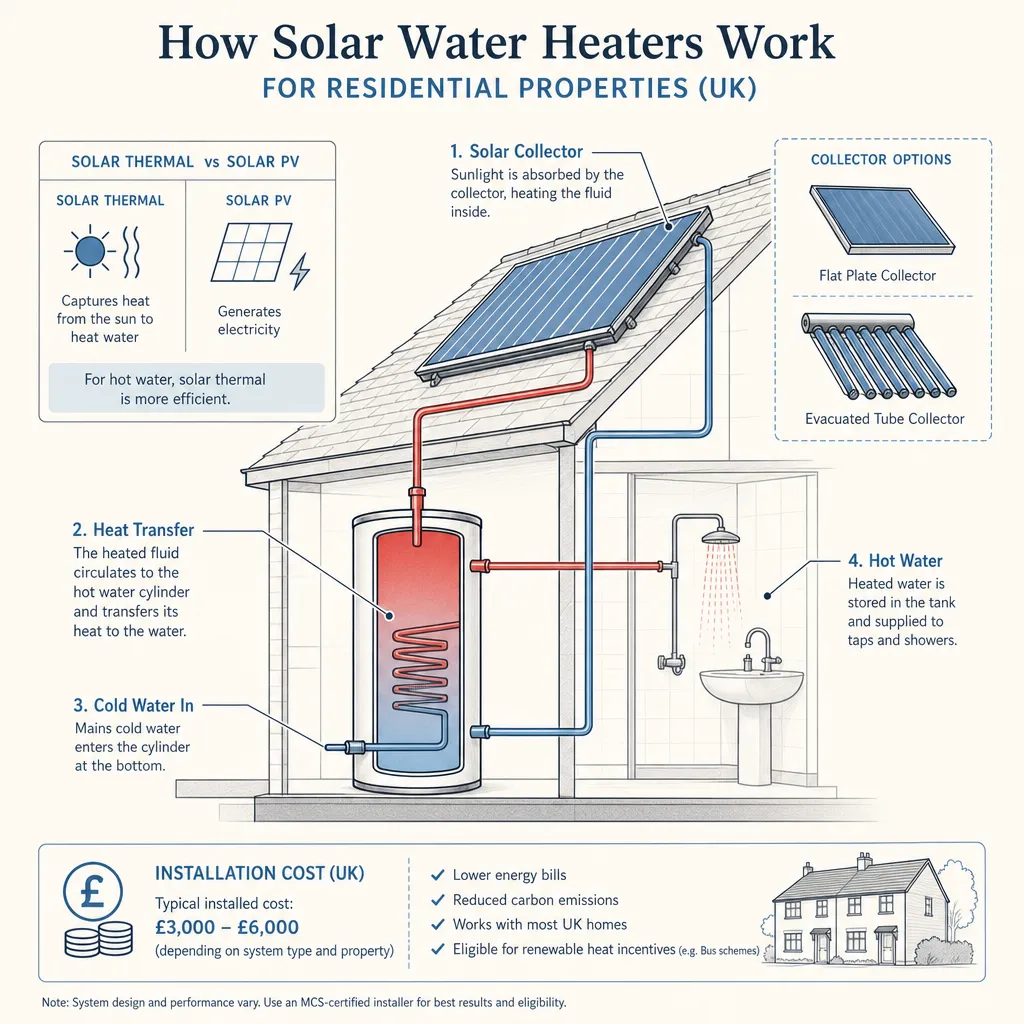
How Solar Water Heaters Work for Residential Properties
Solar water heaters use roof-mounted collectors to capture heat from sunlight and transfer it to a hot water cylinder via a fluid circuit.
 Energy & Retrofit
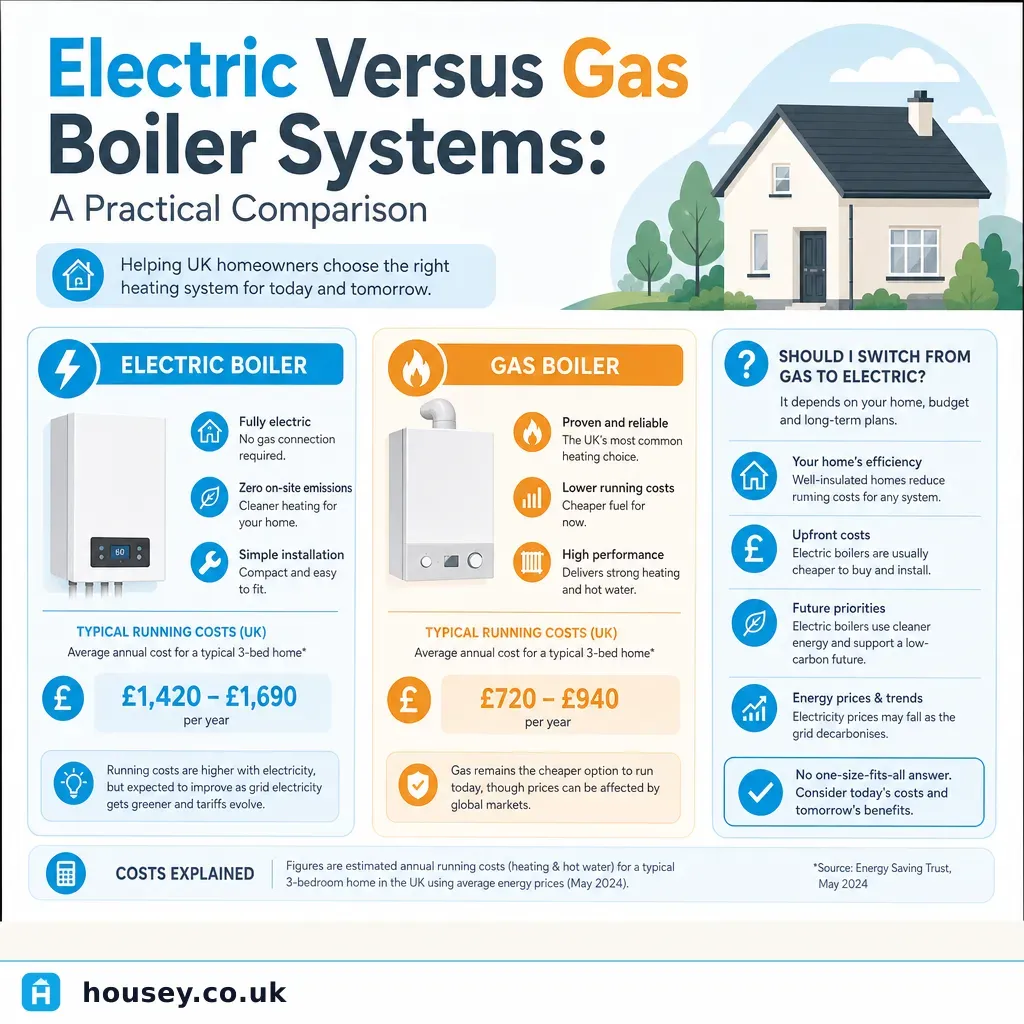
Electric Versus Gas Boiler Systems: A Practical Comparison
Electric boilers convert nearly all electricity into heat (98–99% efficiency) but electricity costs roughly 3–4 times more per kWh than gas, making running costs higher in most UK homes.
 Energy & Retrofit
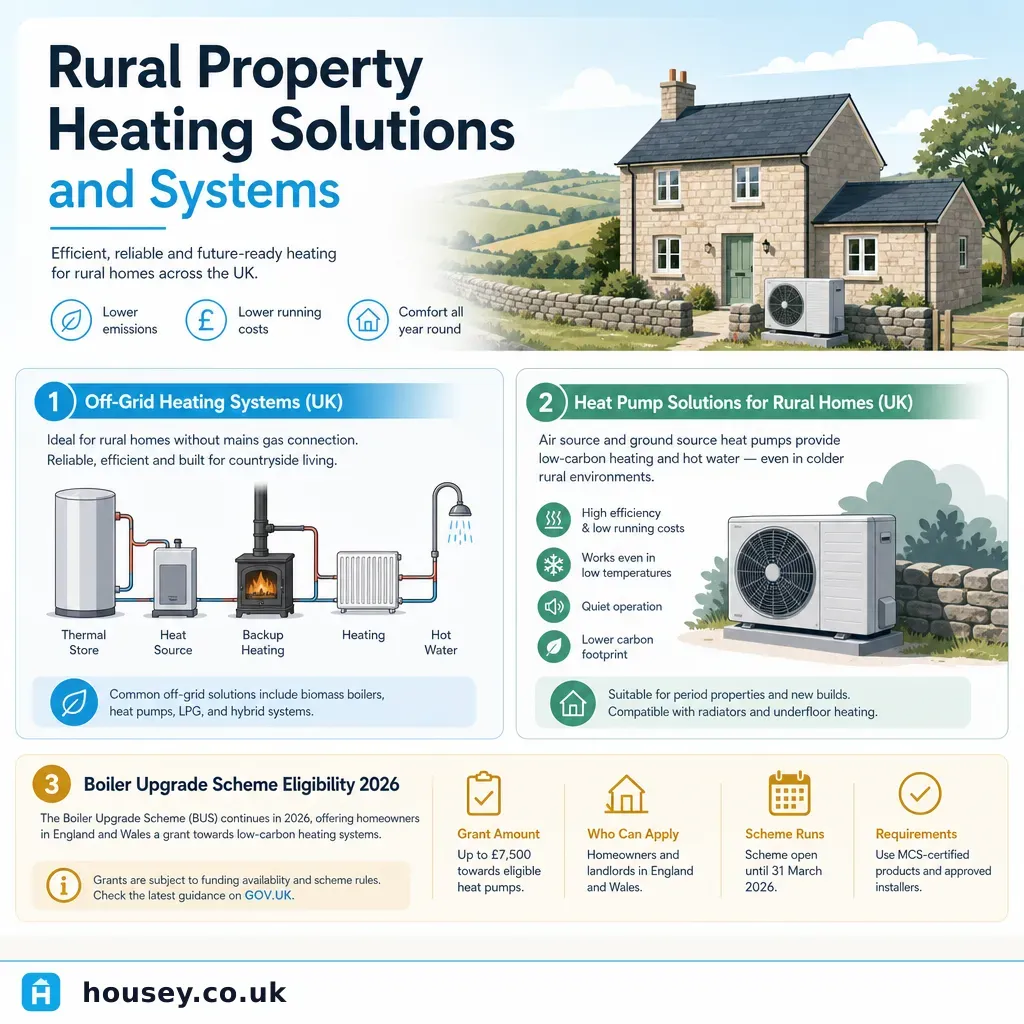
Rural Property Heating Solutions and Systems
Rural homes without mains gas can choose from air source heat pumps, ground source heat pumps, biomass boilers, oil, and LPG.