Electric Versus Gas Boiler Systems: A Practical Comparison
By Housey · Last reviewed 11th of May 2026
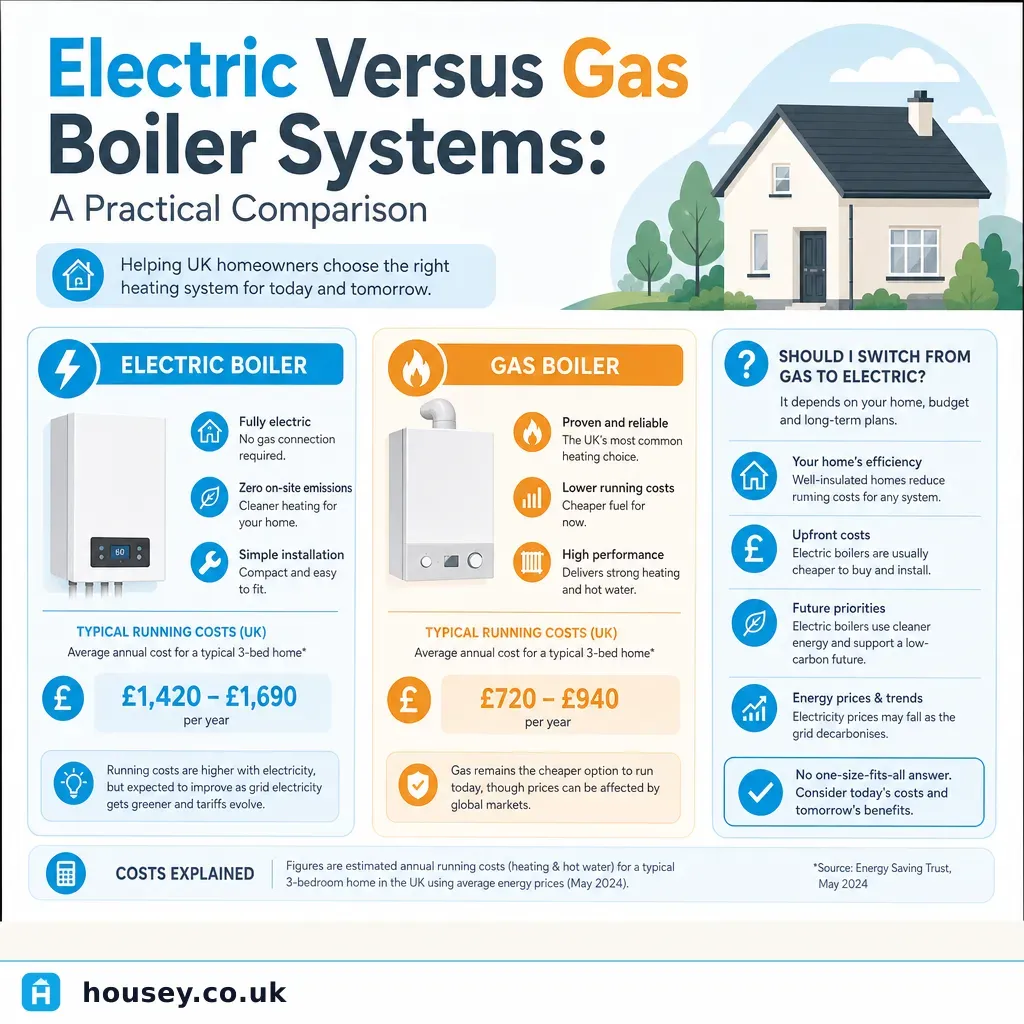
Electric Versus Gas Boiler Systems: A Practical Comparison
Choosing between an electric and a gas boiler is a decision many UK homeowners face when a boiler reaches the end of its serviceable life, when they are moving a property off the gas grid, or when they are planning works that will change how the building is heated. The choice has financial, environmental, and regulatory dimensions that are worth understanding before committing — particularly as the UK's energy landscape continues to evolve and government policy on fossil fuel heating in homes develops. Getting the decision wrong can mean years of unnecessarily high running costs or an expensive system change sooner than expected.
Key points
- Gas boilers must be installed, serviced, and repaired by Gas Safe registered engineers — this is a legal requirement under the Gas Safety (Installation and Use) Regulations 1998.
- Electric boilers achieve 98–99% energy conversion efficiency, but because electricity costs approximately 3–4 times more per kWh than gas at current Ofgem price cap rates, overall running costs are generally higher.
- The Boiler Upgrade Scheme (BUS) offers £7,500 towards a qualifying air source or ground source heat pump — often a more cost-effective long-term alternative to either system.
- The UK's Future Homes Standard is progressively tightening energy requirements for new-build homes, with a direction of travel away from gas heating; the position on existing homes should be checked on GOV.UK before any long-term decision.
- Electric boilers do not require a flue, combustion gas venting, or a gas supply — this can simplify installation significantly in flats, conversions, and properties where running a new flue is impractical.
Head-to-head comparison
Factor | Electric boiler | Gas boiler |
|---|---|---|
Energy conversion efficiency | 98–99% (direct) | 89–94% (modern condensing) |
Fuel cost (approx., Ofgem rates) | ~24–28p/kWh (electricity) | ~6–7p/kWh (gas) |
Typical running cost | Higher for equivalent heat output | Lower at current energy prices |
Carbon intensity | Depends on grid mix; falling as grid decarbonises | Combustion-based; fixed direct carbon output |
Typical installed cost (indicative) | £1,500–£4,000 | £1,500–£4,500 |
Annual servicing | Recommended; no legal mandate | Strongly recommended; Gas Safe engineer required |
Gas Safe engineer required? | No | Yes — legal requirement |
Flue required? | No | Yes |
Suited to off-gas-grid properties? | Yes | Only with LPG (different regulations apply) |
Available grants (2026) | None directly; BUS covers heat pumps | None; BUS incentivises alternatives |
Indicative UK costs, last reviewed 2026-05-11. Costs vary by property size, system complexity, and region. Obtain multiple quotes from qualified contractors.
When an electric boiler makes sense
An electric boiler is most likely to be the practical choice for:
- Properties off the gas grid — rural homes or flats in buildings where a gas supply does not exist and extending one would be cost-prohibitive.
- Small flats or low-demand properties — where heat demand is modest and the per-kWh cost disadvantage of electricity is less acute in absolute terms.
- Homes with a high proportion of self-generated renewable electricity — for example, where solar PV provides a meaningful share of consumption, reducing the effective electricity cost per kWh.
- Conversions and listed buildings — where installing a new gas flue is structurally or aesthetically problematic, or where planning or listed building consent would be difficult to obtain.
- Short-term bridging solutions — where a homeowner plans a heat pump installation within a few years and does not want to commit to a new gas boiler in the interim.
When a gas boiler remains the practical choice
A gas boiler is often the more cost-effective choice where:
- The property has an existing gas connection and a wet radiator system designed to operate at conventional flow temperatures (70–80°C).
- The homeowner is planning to sell within a few years and does not want to undertake a full heating system upgrade before marketing.
- The property has poor insulation and converting to a heat pump would require significant additional works — cavity wall fill, solid wall insulation, new radiators — to be viable.
- Upfront installation budget is the primary constraint and the long-term running cost differential is an acceptable trade-off.
However, the UK government's Future Homes Standard is progressively tightening energy requirements for new builds, and the policy direction continues to move away from gas for domestic heating. This does not mean existing gas boilers must be replaced immediately, but it is relevant context for anyone making a long-term decision about heating infrastructure.
The heat pump alternative
For many UK homeowners, the most appropriate long-term alternative to both a new electric boiler and a replacement gas boiler is a heat pump — particularly an air source heat pump (ASHP). Heat pumps achieve a COP of 2.5–4, which means they deliver more heat energy than the electrical energy they consume, partially offsetting the higher per-kWh cost of electricity compared with gas.
Heat pumps require professional system sizing, compatible emitters (often larger-surface radiators or underfloor heating circuits), and adequate home insulation to perform well. A heat pump survey will assess whether your property is a suitable candidate and what modifications, if any, are needed before installation. The Boiler Upgrade Scheme grant of £7,500 is available for qualifying installations by MCS-accredited contractors.
Important limitations
This article provides general comparative information only. The right choice between an electric boiler, a gas boiler, or a heat pump alternative depends on your property's specific characteristics, insulation levels, energy tariff, gas grid connection status, and any planning or building regulations applicable to your situation. Energy prices, grant schemes, and government policy are all subject to change.
Do not make a final heating system decision based solely on this guide. A qualified heating engineer, Gas Safe registered contractor, or energy-efficiency consultant should assess your specific property and circumstances before any system is specified or installed.
What to ask a qualified professional
Before instructing any contractor to install or replace a boiler or heating system, ask:
- What heat loss calculation have you carried out for my property, and what does it show about heating demand?
- Is my existing wet radiator system compatible with the boiler or heat pump you are recommending, or will emitters need replacing?
- If I install an electric boiler now, how straightforward would it be to convert to a heat pump in the future?
- What is the estimated payback period for a heat pump compared with a new gas boiler at current energy prices?
- Are you Gas Safe registered (for gas work) or MCS accredited (for heat pump installations)?
- What warranty comes with the boiler or heat pump, and what conditions apply to maintain it?
- What is included in the annual service, and is it required to keep the warranty valid?
- What happens to my existing gas pipework if I remove the gas supply entirely?
When to get professional help
Gas work is legally restricted to Gas Safe registered engineers — working on gas installations without registration is a criminal offence under the Gas Safety (Installation and Use) Regulations 1998. Seek professional help immediately if:
- Your existing boiler is leaking gas, producing yellow or orange flames, or has triggered a carbon monoxide alarm.
- You suspect a gas leak — leave the property, do not use electrical switches, and call the National Gas Emergency Service on 0800 111 999.
- You are considering any modification to gas pipework, a gas flue, or a meter connection.
- You want to remove a gas supply entirely and need to arrange formal disconnection through your gas network operator.
- You are unsure of the standard or age of the existing gas pipework in your property.
For electric boiler installation, a Part P registered electrician must carry out or certify the electrical installation work. Do not attempt to wire heating circuits yourself unless you hold the relevant Part P competent person registration.
How Housey can help
If you are deciding between heating options, Housey can connect you with energy-efficiency consultants who can model the running costs and carbon impact of different systems for your specific property before you commit. If you are exploring the heat pump route, a heat pump survey will establish whether your home is suitable without committing to installation costs. If your gas boiler needs an annual inspection or you need to obtain or renew a gas safety certificate, Housey can find a Gas Safe registered engineer in your area.
Frequently asked questions
Are electric boilers more expensive to run than gas?
In most UK homes, yes. Electric boilers convert electricity to heat at nearly 100% efficiency, but electricity costs approximately 3–4 times more per kWh than gas at current Ofgem price cap rates. The gap narrows if you have solar PV, a favourable tariff, or a small property with modest heat demand. A heat pump, achieving a COP of 2.5–4, offers a more efficient electric alternative.
Can I replace my gas boiler with an electric one?
In most cases, yes — an electric boiler can connect to an existing wet radiator system, removing the need for a gas connection and flue. The electrical supply must be adequate for the load, and a Part P registered electrician must carry out the installation. Your gas network operator must formally decommission and cap the existing gas supply before the old boiler is removed.
Will gas boilers be banned in the UK?
The UK government's Future Homes Standard is progressively tightening energy requirements for new-build homes, significantly reducing or eliminating gas heating in new properties. As of 2026, there is no confirmed mandatory replacement date for gas boilers in existing homes. Policy is subject to change — check GOV.UK for the current position before making long-term heating decisions based on anticipated regulation.
Is an electric boiler a good option for a home without a gas supply?
Often yes, particularly for smaller properties where heat demand is modest. For larger homes off the gas grid, a heat pump is usually more cost-effective long term due to its higher efficiency. A direct electric boiler in a large, poorly insulated property can produce very high electricity bills. An energy assessment will help determine the best balance of upfront cost, running cost, and comfort.
Sources and further reading
- Gas Safety (Installation and Use) Regulations 1998 — legislation.gov.uk
- Gas Safe Register: find a registered engineer — Gas Safe Register
- Boiler Upgrade Scheme: apply for a heat pump grant — GOV.UK
- Future Homes and Buildings Standards consultation — GOV.UK
- Energy price cap: how it affects you — Ofgem
- Boilers and heating systems — Energy Saving Trust
Useful next reads
 Energy & Retrofit
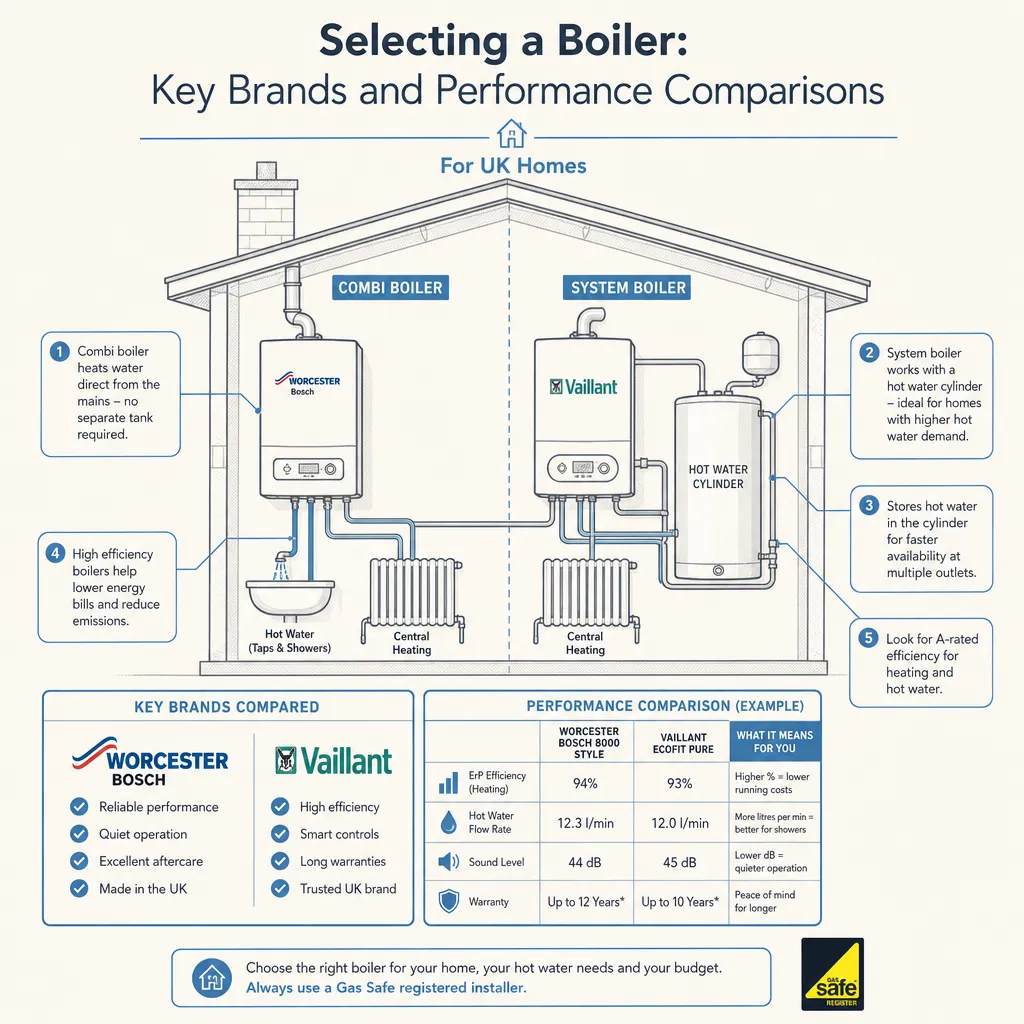
Selecting a Boiler: Key Brands and Performance Comparisons
Most UK homes are heated by a combi, system, or heat-only boiler.
 Energy & Retrofit
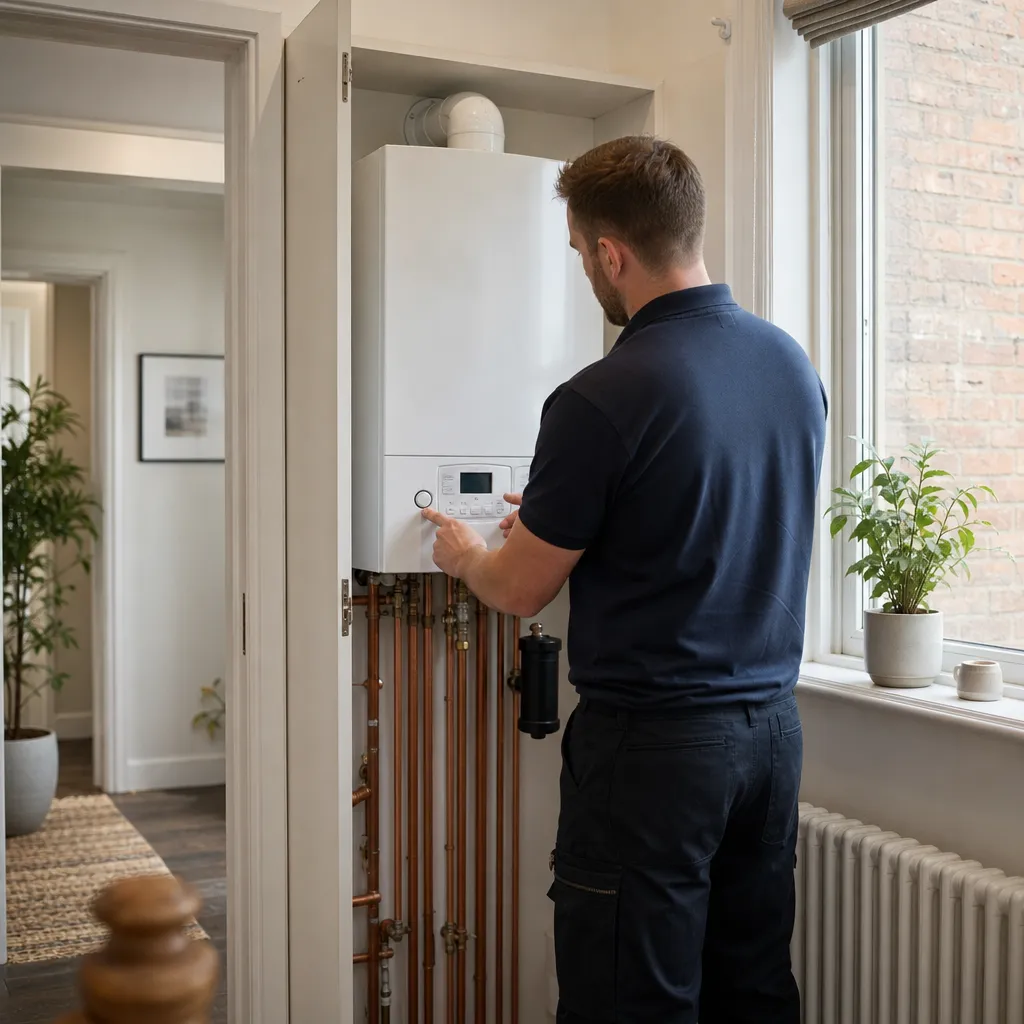
Optimising Heating Systems for Energy Efficiency
Optimising a UK heating system usually involves improving controls such as smart thermostats and thermostatic radiator valves, ensuring the boiler or heat pump is correctly sized, and upgrading radiators or pipework where needed.
 Energy & Retrofit
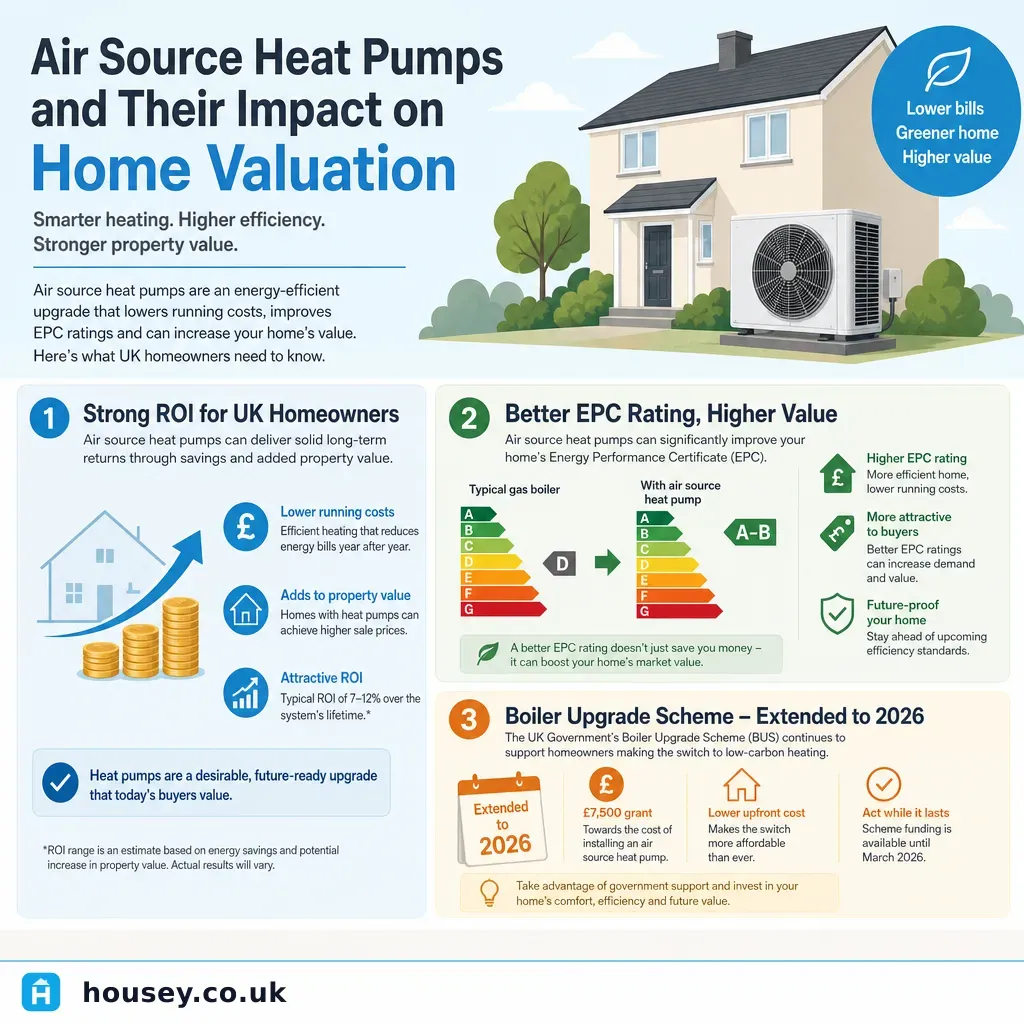
Air Source Heat Pumps and Their Impact on Home Valuation
An air source heat pump can improve your home's EPC rating, which may positively influence its market value — particularly as mortgage lenders and buyers increasingly factor in energy performance.
 Energy & Retrofit
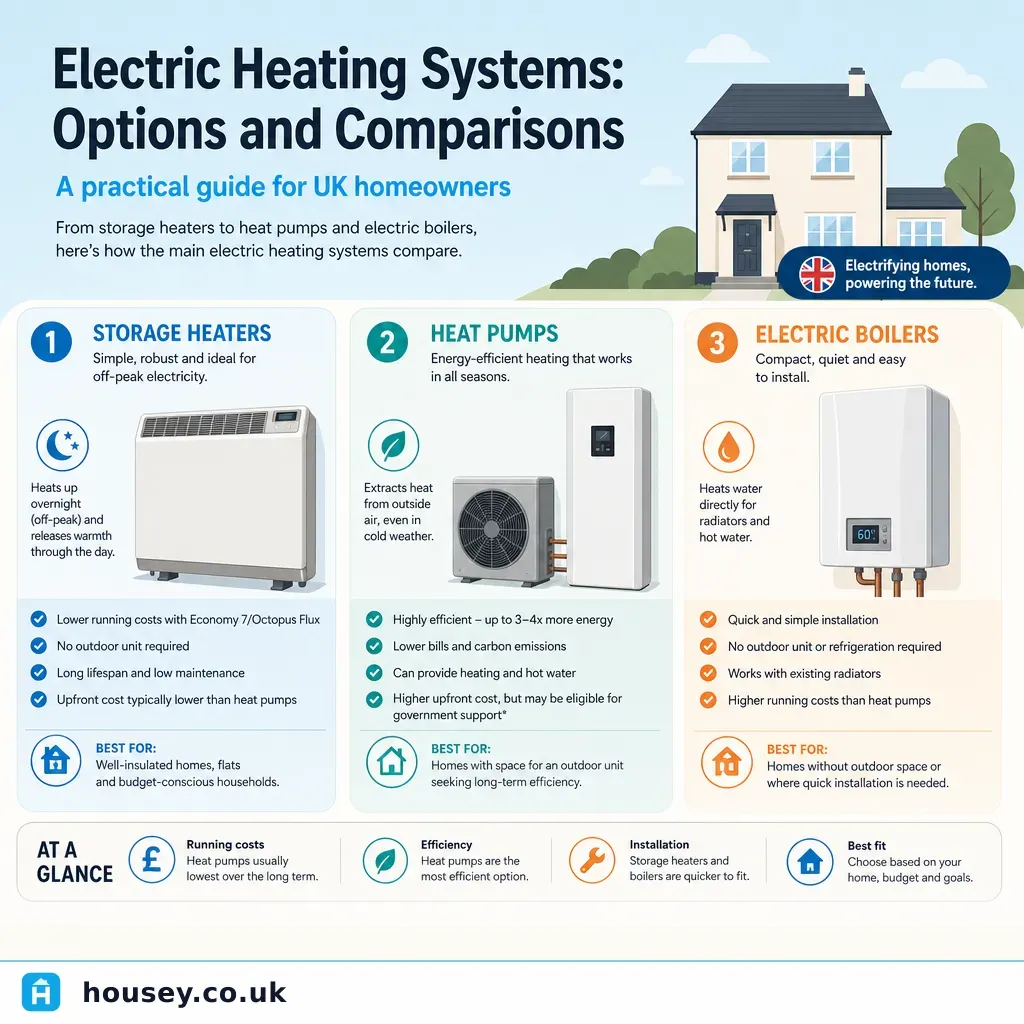
Electric Heating Systems: Options and Comparisons
Electric heating in the UK ranges from direct-acting radiators and storage heaters to heat pumps and electric boilers.
 Energy & Retrofit
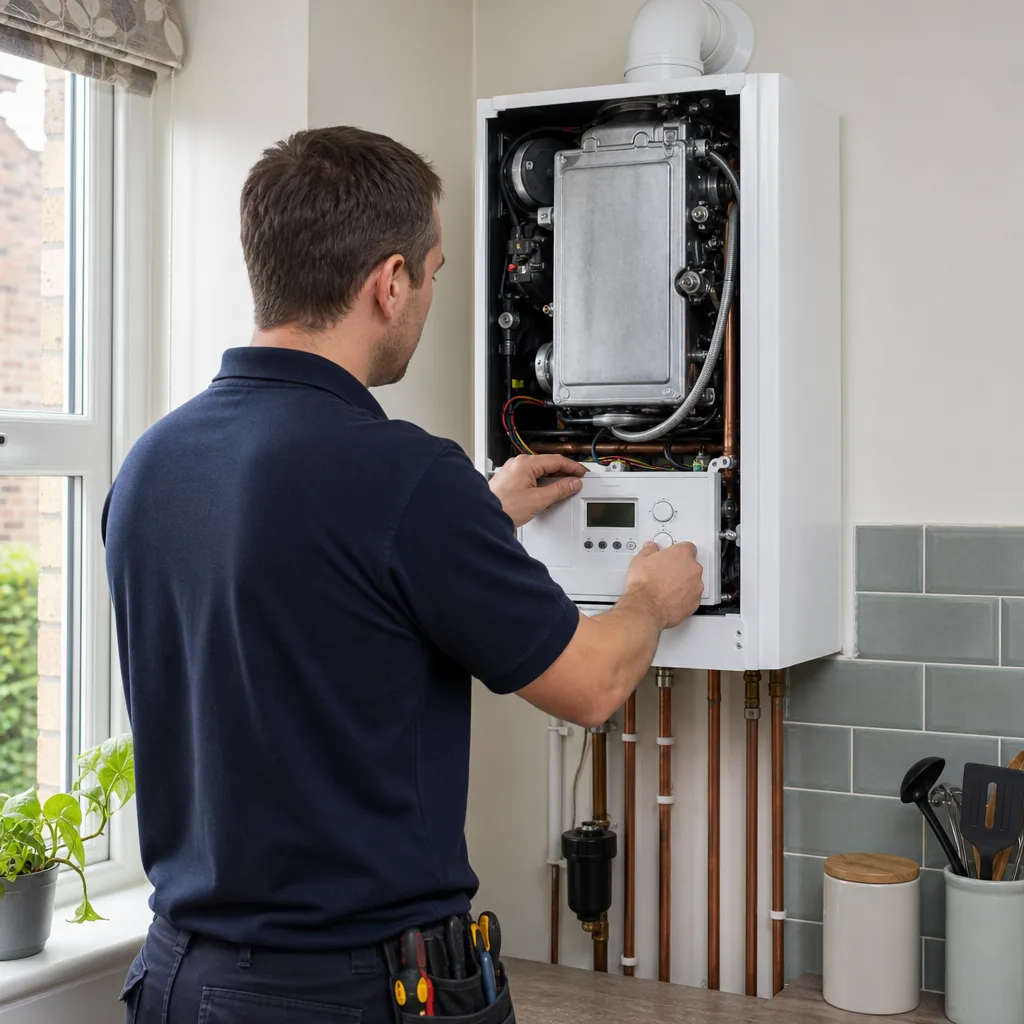
Gas Boiler Ignition and Startup Failures: Diagnosis
When a gas boiler fails to ignite or start, common causes include a loss of gas supply, low system pressure, a faulty ignition electrode or lead, a blocked condensate pipe (in cold weather), or a safety lockout triggered by the control board.