Rural Property Heating Solutions and Systems
By Housey · Last reviewed 30th of May 2026
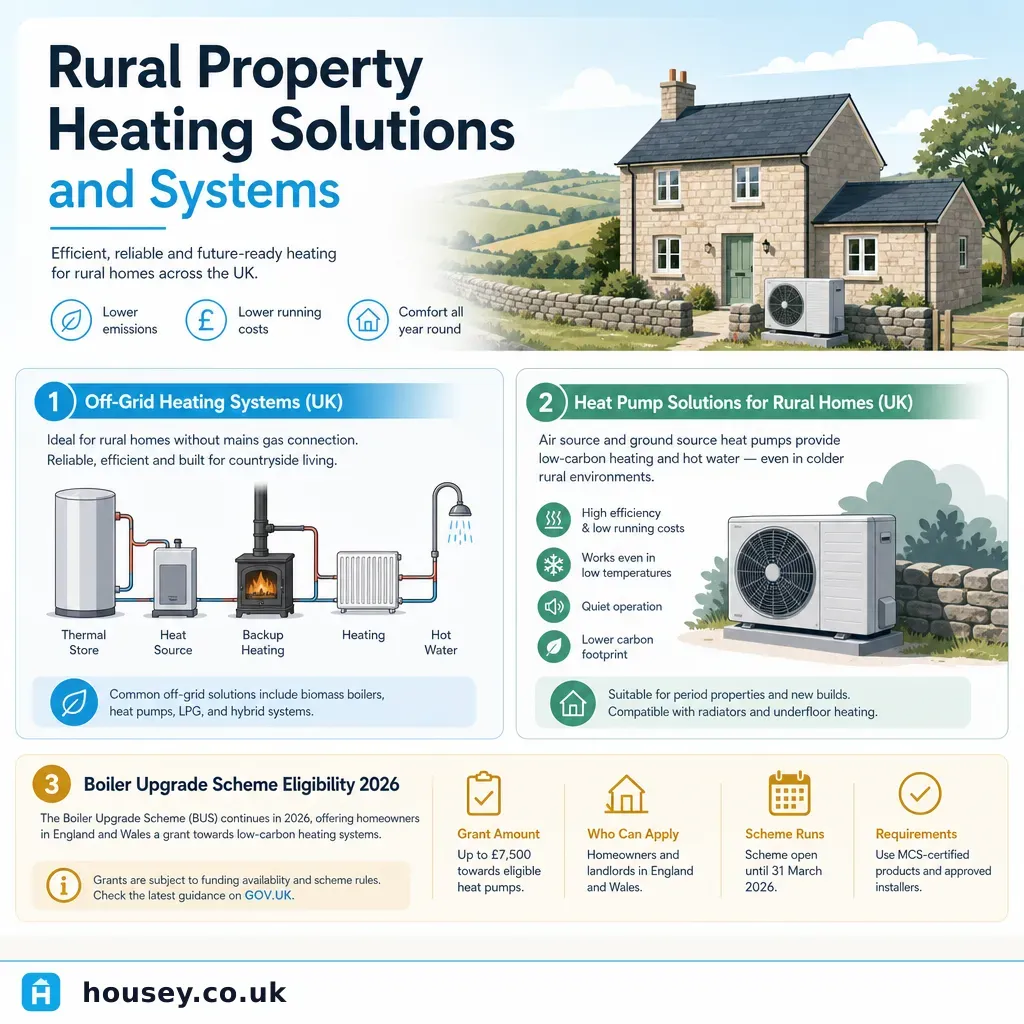
Rural Property Heating Solutions and Systems
For the estimated four million UK homes without a mains gas connection — the majority in rural areas — choosing a heating system involves a very different set of decisions from a standard boiler replacement. The question arises most often when buying a rural property, when an ageing oil boiler needs replacing, or when a homeowner wants to reduce running costs and carbon emissions. The stakes are high: a poorly specified or incorrectly sized system in a solid-wall farmhouse or exposed upland cottage can result in persistently high bills, inadequate warmth, and expensive remediation work.
Key points
- Around 4 million UK homes have no mains gas connection, the majority in rural areas (DESNZ, 2024).
- The Boiler Upgrade Scheme (BUS) offers a £7,500 grant towards a qualifying heat pump installation (as of May 2026), but the property must have a valid EPC with no outstanding loft or cavity-wall insulation recommendations.
- Air source heat pumps must be sized to the building's design heat loss using a room-by-room calculation to BS EN 12831 — undersized units fail to heat adequately; oversized units cycle on and off inefficiently.
- PAS 2035 retrofit assessments are required for government-funded retrofit work and strongly recommended before specifying any heating technology in a solid-wall or pre-1919 rural property.
- Oil-fired boilers remain common in rural areas but face long-term policy uncertainty; Government trajectory is towards phasing out new fossil-fuel heating in homes by 2035.
- MCS (Microgeneration Certification Scheme) accreditation is required for installers of grant-eligible heat pumps and biomass systems.
What heating options are available for off-grid rural homes?
Rural properties without mains gas have five main heating technologies to consider. The right choice depends on the building's insulation level, plot size, fuel availability, and planning constraints.
Heating system | Best for | Not ideal for | Fuel | BUS grant? |
|---|---|---|---|---|
Air source heat pump (ASHP) | Well-insulated homes; properties with outdoor space for unit placement | Solid-wall homes without prior insulation works; very exposed upland sites | Electricity | Yes — £7,500 |
Ground source heat pump (GSHP) | Large plots with land for ground loops or boreholes; high existing insulation standard | Small plots; restricted ground access; listed buildings with ground-works limitations | Electricity | Yes — £7,500 |
Biomass boiler | Rural areas with reliable woodchip or pellet supply; larger older homes with space for fuel storage | Urban settings; air quality management areas; properties with limited storage space | Wood pellets, chips, logs | No current grant |
Oil boiler (replacement) | Existing oil infrastructure; short-term bridging while planning a full retrofit | Long-term energy strategy given policy direction away from fossil fuels | Heating oil | None |
LPG (liquefied petroleum gas) | Properties without existing oil tanks; gas-style appliance preference | Areas with unreliable delivery logistics; households seeking long-term cost certainty | LPG | None |
Indicative technology overview, last reviewed 2026-05-30. Grant values and scheme availability are subject to change — check current GOV.UK Boiler Upgrade Scheme guidance before making any commitments.
Which heating system suits your rural property?
Use this decision framework before committing to a technology:
- Choose an air source heat pump if your home is EPC D or above (or you are willing to insulate first), has outdoor space for the unit, and meets BUS eligibility requirements.
- Choose a ground source heat pump if you have sufficient land for ground loops (roughly 50–100 m² per kW of output required) or can accommodate a borehole, and your insulation levels are already high.
- Choose a biomass boiler if you have reliable access to locally sourced solid fuel, adequate on-site storage, and your property sits outside an air quality management area.
- Retain oil or LPG short-term if your insulation is currently insufficient for a heat pump and you plan a phased, fabric-first retrofit before switching technology.
- Ask an MCS-accredited energy assessor if your property is listed, in a conservation area, or has unusual construction such as cob, stone rubble, or timber frame — standard sizing assumptions may not apply and planning consent may be required.
Insulation must come before heating system choice
The most common and costly mistake in rural retrofit is specifying a new heating system before addressing the building fabric. Heat pumps are low-temperature systems designed to operate in well-insulated, reasonably airtight buildings. Fitting an ASHP in a draughty Victorian farmhouse without first addressing air infiltration, loft insulation, and window draught-proofing results in a system that runs continuously, produces high electricity bills, and may struggle to reach target temperatures during cold spells.
Before choosing a heating technology, commission a whole-house retrofit assessment from a PAS 2035-qualified Retrofit Assessor. This produces an Energy Assessment that documents the building's current heat loss, recommends an insulation sequence, and identifies which heating systems are technically feasible for that specific property.
For solid-wall properties — common in rural areas built before 1919 — internal or external wall insulation may be needed before a heat pump becomes viable. Both carry implications for planning permission, moisture management, and, in the case of listed buildings, listed building consent.
Heat pump sizing for rural properties
Heat pump output is calculated from the property's design heat loss — the rate at which the building loses heat on the coldest design day, measured in kilowatts (kW). Accurate sizing requires a room-by-room heat loss calculation to BS EN 12831, typically carried out by an MCS-accredited installer or a qualified heating engineer.
Common sizing errors in rural properties include:
- Using floor area alone without accounting for exposed elevations, solid walls, or single-glazed windows.
- Ignoring the effect of prevailing wind exposure on heat loss in upland or coastal locations.
- Failing to account for domestic hot water demand when calculating total output required.
- Specifying an ASHP without confirming electricity supply capacity — some rural properties on older networks may need Distribution Network Operator (DNO) approval before a high-load installation.
Permitted development rights for ASHPs require the unit to be at least one metre from a property boundary and not on a wall or roof fronting a highway. Listed buildings and some conservation areas require specific consent — always check with your local planning authority before ordering equipment.
Solar PV as part of a rural energy strategy
Many rural homeowners combine a heat pump with rooftop solar photovoltaic (PV) panels and a heat battery or thermal store to reduce electricity running costs. This can work well where the property has a south-, southeast-, or southwest-facing roof with minimal shading, and where a smart export guarantee (SEG) tariff is in place to monetise surplus generation.
Solar PV systems under 50 kWp do not typically require planning permission on most houses under permitted development, but listed buildings, flats, and properties in conservation areas may need consent. An MCS-accredited solar installer can confirm eligibility before you commission a survey.
Homeowner checklist before specifying a rural heating system
Important limitations
This article provides general guidance on rural heating options across England, Wales, and Scotland. Eligibility rules for grant schemes, permitted development conditions, and planning consent requirements vary by property type, location, tenure, and current Government policy. The Boiler Upgrade Scheme and its criteria are subject to change. Heat pump sizing, moisture risk assessment, and retrofit sequencing must always be carried out by a qualified professional who has inspected the specific property. This article does not constitute engineering, financial, or planning advice.
What to ask a qualified professional
Before commissioning a rural heating system, ask your installer or assessor:
- Are you MCS-accredited, and can I verify your certificate on the MCS database?
- Have you carried out a room-by-room heat loss calculation to BS EN 12831 for this property?
- What fabric improvements does this property need before a heat pump will operate efficiently?
- Is the electricity supply sufficient for this installation, and have you confirmed DNO capacity at this address?
- Will I need planning permission or listed building consent for this system?
- What is the expected Seasonal Coefficient of Performance (SCOP) for this system in this building?
- What annual maintenance is required, and what does a service contract typically cost?
- How will you handle MCS commissioning and certification after installation?
When to get professional help
Seek qualified advice before making any commitment if:
- Your property is listed, in a conservation area, or has unusual construction such as cob, stone rubble, or timber frame.
- You intend to apply for the Boiler Upgrade Scheme — incorrect applications are refused and costs are not reimbursed.
- You have existing damp, condensation, or mould — these must be resolved before new insulation or a new heating system is installed.
- Your electricity supply is on a restricted rural network and DNO capacity has not been confirmed.
- You are planning a whole-house retrofit rather than a straightforward like-for-like replacement.
How Housey can help
Housey can connect you with accredited specialists to help plan your rural heating strategy. Compare quotes from energy-efficiency consultants who can carry out a PAS 2035 retrofit assessment and identify the correct sequence of improvements for your property. When you are ready to explore heat pump options, a heat pump survey will assess your property's suitability and establish accurate sizing requirements. If rooftop solar is part of your energy plan, a solar survey evaluates PV potential and compatibility with your chosen heating technology.
Frequently asked questions
Do I need planning permission for an air source heat pump in a rural property?
Most ASHP installations on houses benefit from permitted development rights and do not require a planning application, provided the unit is at least one metre from a property boundary and is not on a wall or roof fronting a highway. Listed buildings and flats are excluded from permitted development. Always confirm with your local planning authority before installation, as conditions vary by location and property type.
Can I get a Boiler Upgrade Scheme grant if my EPC rating is poor?
The Boiler Upgrade Scheme requires your property to have a valid EPC with no outstanding recommendations for loft or cavity-wall insulation. If your EPC is below D or has insulation recommendations outstanding, you will need to address these first before your BUS application can proceed. A retrofit assessor can identify the correct sequence of fabric improvements needed.
How long does an air source heat pump last in a rural property?
A well-specified and regularly serviced ASHP typically lasts 15–20 years. Ground source heat pumps, which have fewer moving parts, often achieve 20–25 years for the heat pump unit, with ground loops lasting considerably longer. Annual servicing by a qualified engineer is important for warranty compliance and maintaining efficiency, particularly in exposed rural locations.
Is biomass heating still eligible for government support in 2026?
The Domestic Renewable Heat Incentive closed to new applicants in 2022. Biomass boilers are not currently covered by the Boiler Upgrade Scheme. MCS-accredited installations may qualify for future support schemes, but no equivalent grant is currently available for new domestic biomass systems. Check current GOV.UK guidance, as policy on domestic biomass continues to evolve.
Sources and further reading
- Boiler Upgrade Scheme: guidance for homeowners — GOV.UK
- MCS certification for heat pumps and renewables — Microgeneration Certification Scheme
- PAS 2035: retrofitting dwellings for improved energy efficiency — BSI / TrustMark
- Heating your home: energy saving advice — Energy Saving Trust
- Permitted development rights for householders: technical guidance — GOV.UK
Useful next reads
 Energy & Retrofit
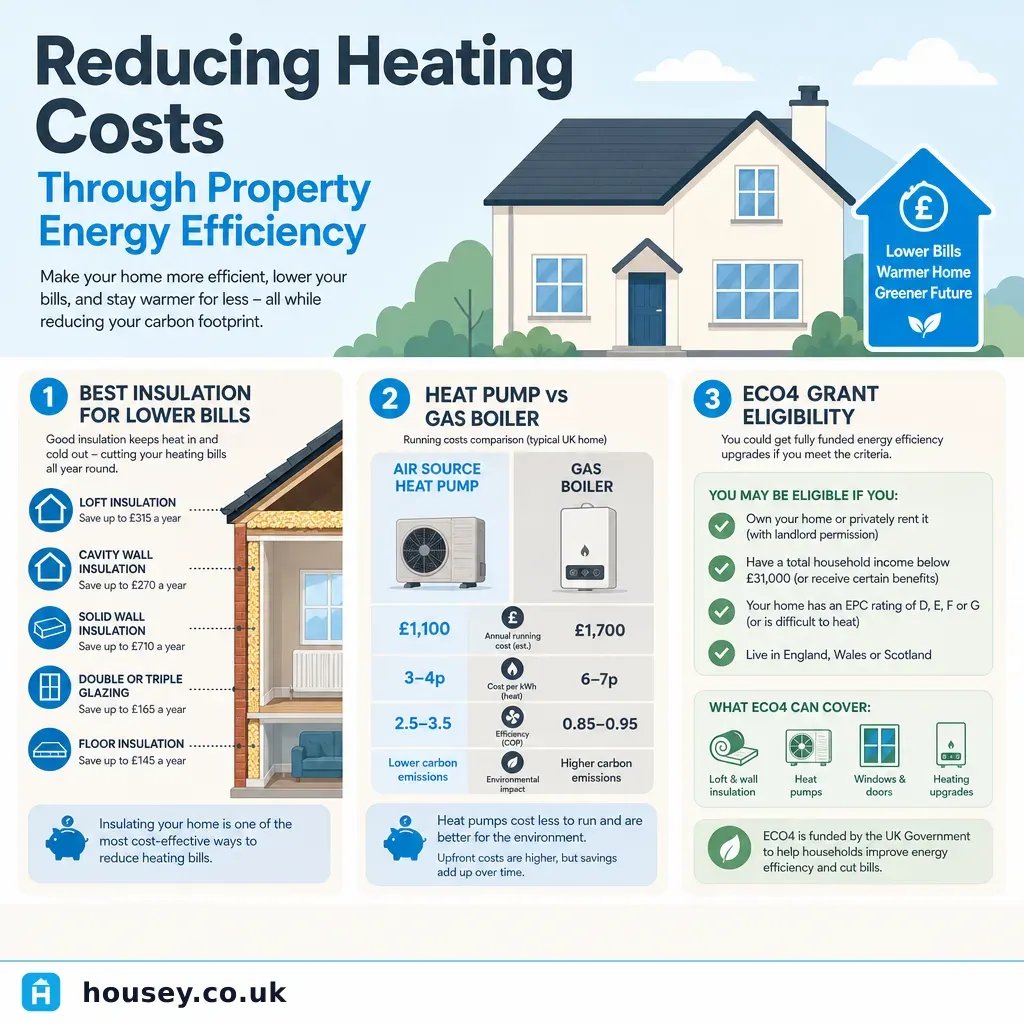
Reducing Heating Costs Through Property Energy Efficiency
Reducing heating costs starts with identifying where heat is lost — typically walls (30–35%), roof (20–25%), and windows.
 Energy & Retrofit
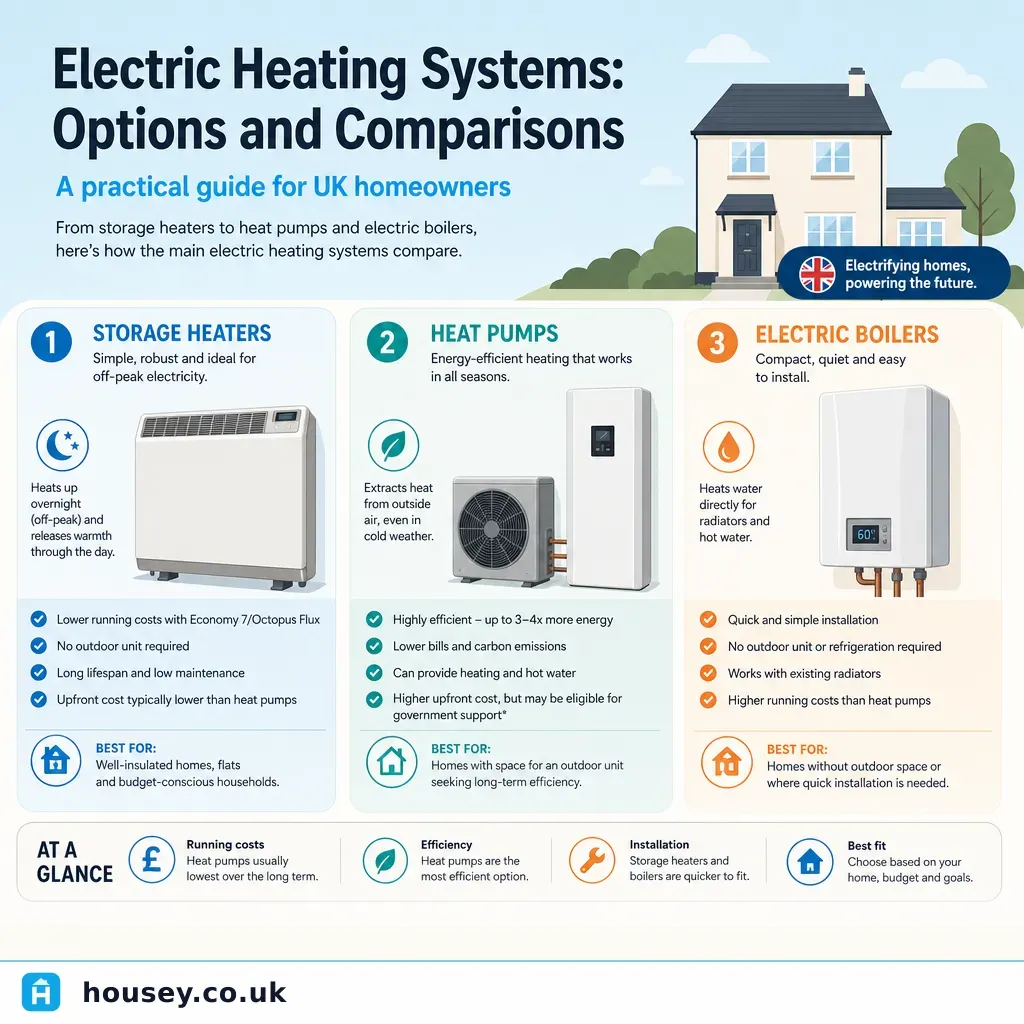
Electric Heating Systems: Options and Comparisons
Electric heating in the UK ranges from direct-acting radiators and storage heaters to heat pumps and electric boilers.
 Energy & Retrofit
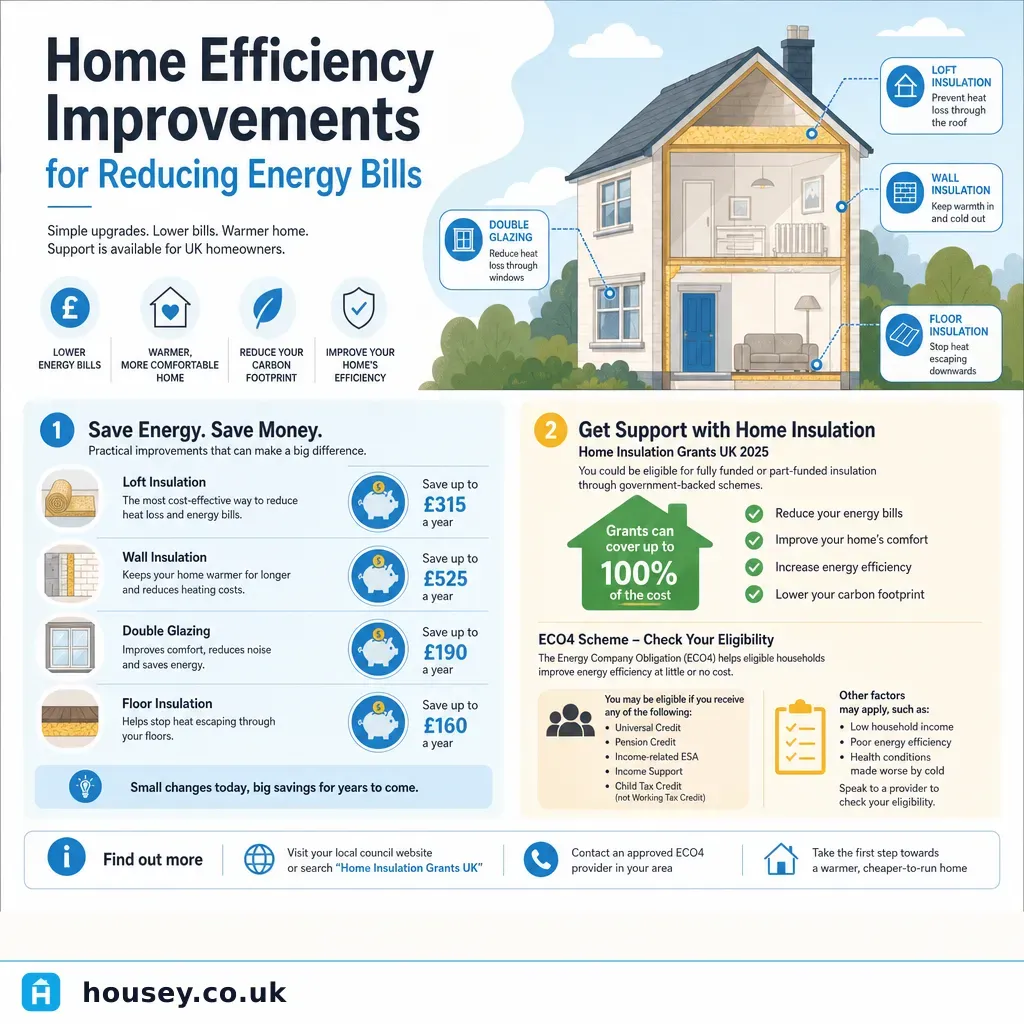
Home Efficiency Improvements for Reducing Energy Bills
The most cost-effective UK home efficiency improvements are usually loft insulation, cavity wall insulation, draught-proofing, and upgrading heating controls.
 Energy & Retrofit
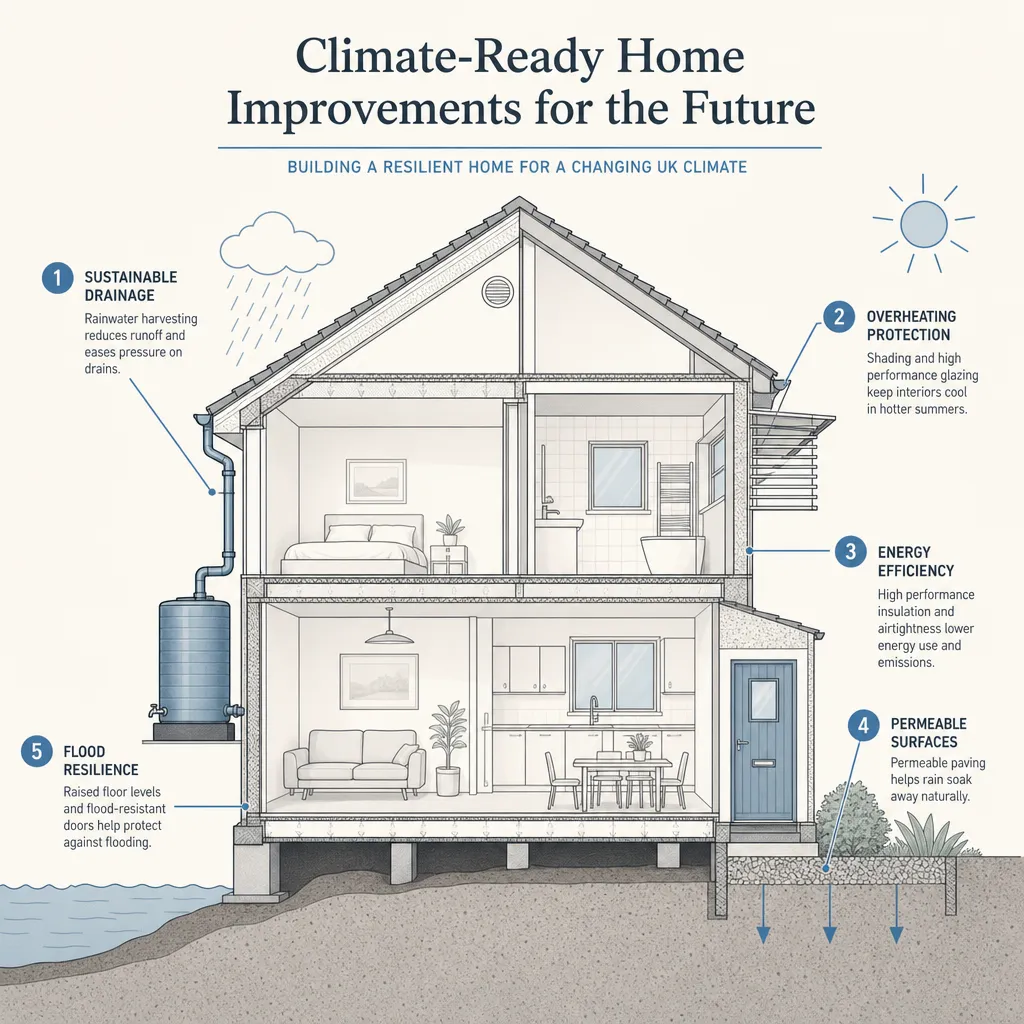
Climate-Ready Home Improvements for the Future
Climate-ready home improvements tackle four main risks for UK properties: overheating, increased rainfall and flooding, storm damage, and energy cost volatility.
 Energy & Retrofit
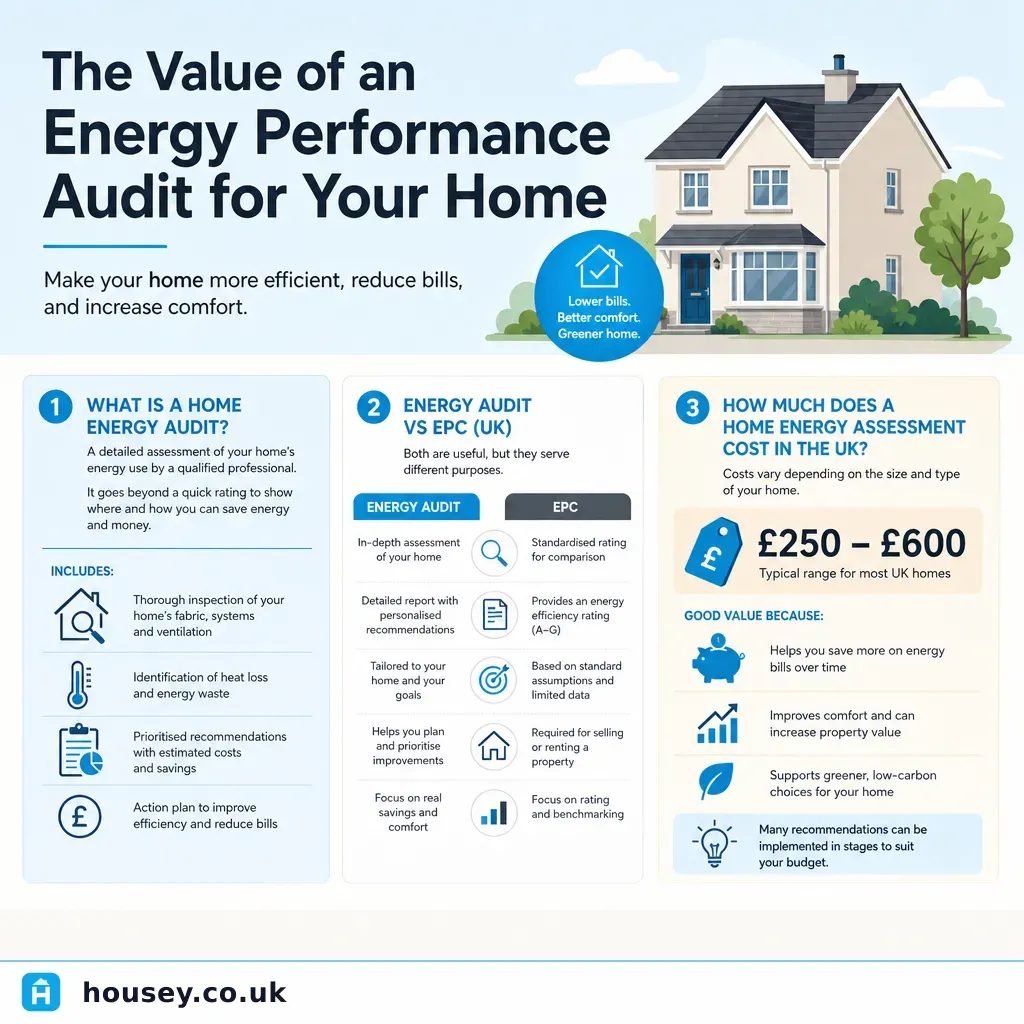
The Value of an Energy Performance Audit for Your Home
A home energy performance audit is a detailed, site-specific assessment of a property's fabric, heating, ventilation, and controls.