Selecting a Boiler: Key Brands and Performance Comparisons
By Housey · Last reviewed 11th of May 2026
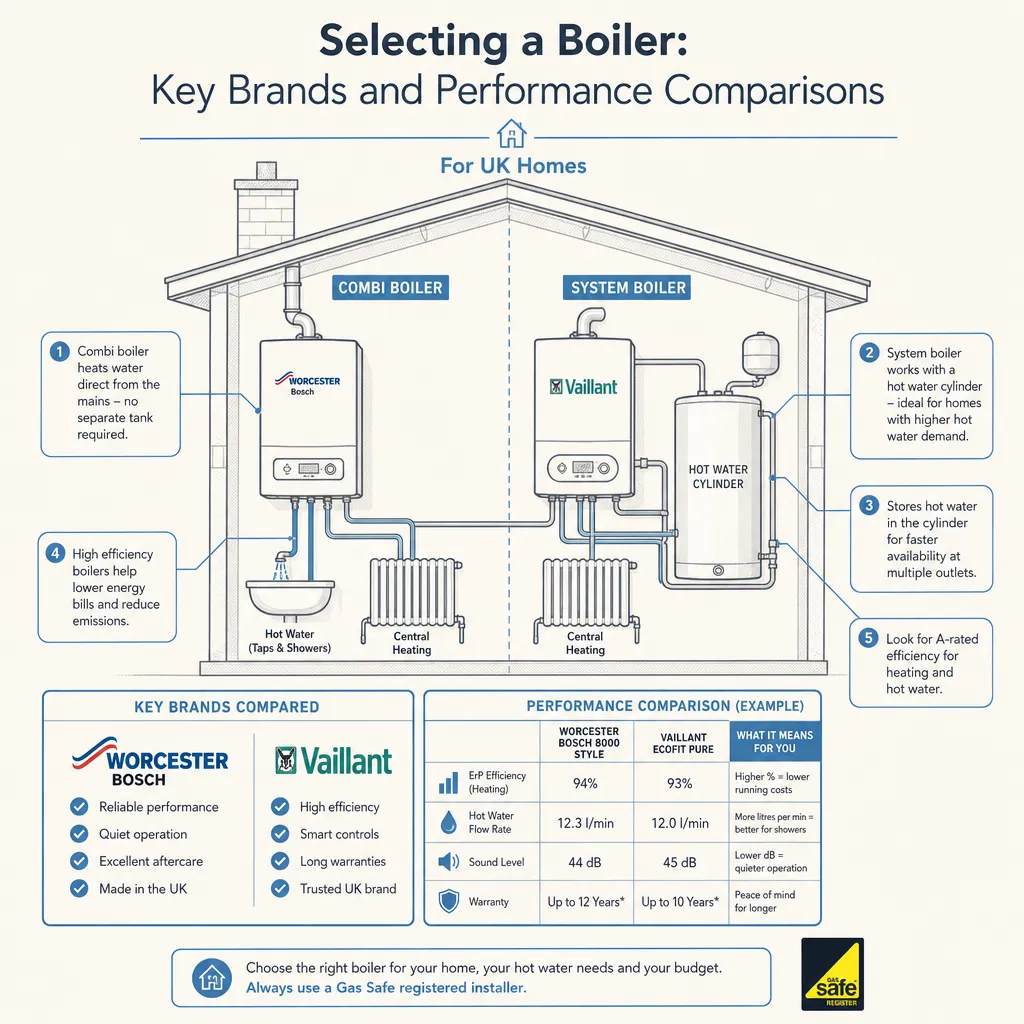
Selecting a Boiler: Key Brands and Performance Comparisons
Choosing a replacement boiler is one of the larger household expenditures most UK homeowners face, and the decision typically involves balancing running costs, reliability, warranty terms, and compatibility with the existing heating system. Most households replace a boiler reactively — when the current one fails, often in cold weather — but understanding the options in advance can reduce both cost and disruption. The market is also shifting: government policy under the Future Homes Standard is moving away from gas boilers in new builds, making the longer-term heating strategy worth considering at the point of replacement.
Key points
- All new gas boilers installed in England, Scotland, and Wales must achieve a minimum ErP (Energy-related Products) A-rating, corresponding to at least 92% seasonal efficiency, under Building Regulations Part L.
- Gas boiler installation must be carried out by a Gas Safe registered engineer; the installer is legally required to notify Building Control via a Competent Person Scheme.
- Worcester Bosch, Vaillant, and Viessmann are consistently among the most recommended brands in independent surveys; however, correct sizing and quality of installation have at least as much bearing on reliability as brand choice.
- The Future Homes Standard is expected to prohibit gas boiler installation in new-build homes in England; it does not currently apply to existing properties, but policy direction is clearly toward low-carbon heating alternatives.
- Combi boilers suit most homes with one or two bathrooms; system boilers are better where multiple outlets are used simultaneously; heat-only (regular) boilers are appropriate where a gravity-fed cylinder is already in place.
What type of boiler do you need?
Brand comparison only becomes useful once you have established which boiler type suits your property. Getting the type wrong can mean inadequate hot-water supply, poor efficiency, or unnecessary installation cost.
Combi boiler
A combination (combi) boiler provides both central heating and instant hot water on demand, without a separate cylinder or cold-water storage tank in the loft. It is the most popular choice in the UK for properties with up to two bathrooms. The key limitation is that combis can struggle to supply two hot-water outlets simultaneously at full flow rate — a relevant consideration for larger households with concurrent demand.
System boiler
A system boiler heats the central heating circuit and fills a separate pressurised hot-water cylinder. No cold-water storage tank is required in the loft, but cylinder space is needed. System boilers are well suited to larger homes or households with three or more bathrooms, because the stored volume can supply multiple outlets at once without a significant drop in pressure.
Heat-only (regular or conventional) boiler
A heat-only boiler works with both a hot-water cylinder and a cold-water storage tank — the traditional configuration found in pre-1980s UK housing. If your home already has this system in good condition, replacing like-for-like is often simpler and cheaper than converting to a combi. Converting a heat-only system to a combi typically requires significant pipework modifications; a Gas Safe registered engineer should assess whether conversion is cost-effective for your specific property.
Boiler brand comparison
The table below reflects broadly consistent findings from independent consumer surveys, installer feedback, and trade assessments as at May 2026. Individual experiences vary considerably, and installer reputation and correct sizing matter as much as brand. Use this as a starting point for discussions with your Gas Safe engineer.
Brand | Typical strengths | Common considerations | Typical residential warranty |
|---|---|---|---|
Worcester Bosch | High reliability ratings, wide service network, strong customer support | Premium price point | 5–12 years (installer-dependent) |
Vaillant | Good efficiency, robust build quality, European engineering reputation | Cost comparable to Worcester Bosch | 5–10 years |
Viessmann | High efficiency, premium components, well regarded by heating engineers | Higher upfront cost; fewer budget options | 5–10 years |
Baxi | Competitive pricing, broad product range, strong UK market presence | Mixed longer-term reliability reports versus premium brands | 5–7 years |
Ideal | Good value, improving quality in recent models, UK-manufactured | Less consistent reliability history at the budget end of the range | 2–10 years (model-dependent) |
Glow-worm | Budget-friendly, common in rental and social housing | Fewer premium features; shorter average warranties | 2–5 years |
Indicative information, last reviewed 2026-05-11. Warranties vary by model, installer registration, and whether annual servicing conditions are met. Always check manufacturer terms before purchasing.
How efficiency ratings work
Under the ErP Directive (incorporated into UK Building Regulations Part L), boilers are rated on a seasonal efficiency scale. An A-rated boiler achieves 90% or above seasonal space heating efficiency. In practice, all new condensing gas boilers on the UK market meet at least this threshold — the ErP label indicates where within the A-band a given model sits.
Real-world efficiency in your home also depends on:
- Correct sizing: an oversized boiler short-cycles inefficiently, increasing wear and fuel consumption.
- Annual servicing: a poorly maintained boiler loses efficiency over time.
- Heating controls: weather compensation, programmable room thermostats, and thermostatic radiator valves (TRVs) all improve real-world performance.
- System cleanliness: a powerflush before installing a new boiler into an old system removes sludge that would otherwise reduce efficiency and longevity.
Which boiler type should you choose?
- Choose a combi if: your home has one or two bathrooms, you have limited space (no cylinder cupboard), and your simultaneous hot-water demand is low to moderate.
- Choose a system boiler if: your home has three or more bathrooms, several people regularly use hot water at the same time, or you want to integrate solar thermal in future.
- Choose a heat-only boiler if: you have an existing gravity-fed system in good condition, converting would require extensive and costly pipework changes, or your heating engineer advises it.
- Ask a Gas Safe registered engineer to assess: if your property is unusually large, you are switching fuel type (for example, from mains gas to LPG), or the existing system is in poor condition and multiple components need replacing.
- Consider a heat pump if: your property has adequate insulation, you are planning a broader energy retrofit, or you want to future-proof against evolving gas boiler regulations — a heat pump survey can assess whether an air-source or ground-source system is viable for your property.
Important limitations
This article provides general information to help UK homeowners begin their research. Boiler selection, sizing, and installation involve technical assessments specific to your property — including heat loss calculations, existing system configuration, pipe sizing, flue routing, and gas supply capacity. Rules on permitted flue positions, ventilation requirements, and applicable Building Regulations vary by property type and location. All gas work must by law be carried out by a Gas Safe registered engineer. This content does not constitute engineering or safety advice and should not be relied upon as a substitute for a professional assessment of your property and heating system.
What to ask a qualified professional
Before instructing a Gas Safe engineer or heating installer:
- What boiler output (in kW) do you recommend, and how have you calculated the heat loss for my property?
- Why are you recommending this brand and model over alternatives at a similar price point?
- Is my existing pipework and radiator system compatible, or will modifications be needed?
- Do you recommend a powerflush, and what does that cost?
- What controls are included or recommended — programmer, room thermostat, TRVs, weather compensation?
- What warranty does the boiler carry, and does it depend on annual servicing by a specific company?
- Will you register the installation with Gas Safe and notify Building Control?
- Is VAT included in the quote, and what factors could change the final price?
When to get professional help
All gas work must by law be carried out by a Gas Safe registered engineer. You should also seek professional advice if:
- Your boiler is over 15 years old and showing intermittent faults or increased fuel consumption.
- You are considering changing boiler type or fuel source.
- Your installer recommends replacing radiators or significant lengths of pipework alongside the boiler.
- You are interested in combining a new boiler with a smart heating system, underfloor heating, or solar thermal.
- A gas safety inspection has flagged concerns about the existing installation.
How Housey can help
If you are weighing a boiler replacement against a low-carbon heating alternative, Housey can connect you with energy-efficiency consultants who can advise on whole-house heating strategy, and with qualified surveyors who carry out heat pump surveys to assess whether an air-source or ground-source system is viable for your property.
Frequently asked questions
How long does a gas boiler typically last?
A well-maintained gas boiler typically lasts 10–15 years, though many remain operational beyond this. Annual servicing extends lifespan and is usually required to keep the manufacturer's warranty valid. If your boiler is over 12 years old and requiring frequent repairs, replacement is usually more cost-effective than continued repair expenditure.
Can I get a grant towards a new boiler in the UK?
The Boiler Upgrade Scheme (BUS), administered through Ofgem, provides grants for replacing gas boilers with heat pumps — not for like-for-like gas boiler replacements. The ECO4 scheme may cover boiler replacements for eligible low-income households. Check current eligibility and grant amounts on GOV.UK, as schemes and funding levels change regularly.
What is the Future Homes Standard and does it affect my existing boiler?
The Future Homes Standard is planned to apply to new-build homes in England, requiring them to be built without gas boilers. It does not currently require existing homeowners to remove functioning gas boilers. Homeowners planning significant renovations or extensions may wish to factor the longer-term policy direction toward low-carbon heating into their decisions.
Does my boiler need an annual service?
Most manufacturers require annual servicing by a Gas Safe registered engineer to keep the warranty valid. Beyond warranty obligations, annual servicing improves safety, efficiency, and longevity. A gas safety check (CP12 certificate) is a legal requirement for landlords. Annual servicing is good practice for all homeowners regardless of tenure or boiler age.
Sources and further reading
- Gas Safe Register — find a registered engineer — Gas Safe Register
- GOV.UK — Boiler Upgrade Scheme — GOV.UK / Ofgem
- Future Homes and Buildings Standards consultation — Department for Energy Security and Net Zero
- Energy Saving Trust — central heating advice — Energy Saving Trust
- Building Regulations Approved Document L — GOV.UK
Useful next reads
 Energy & Retrofit
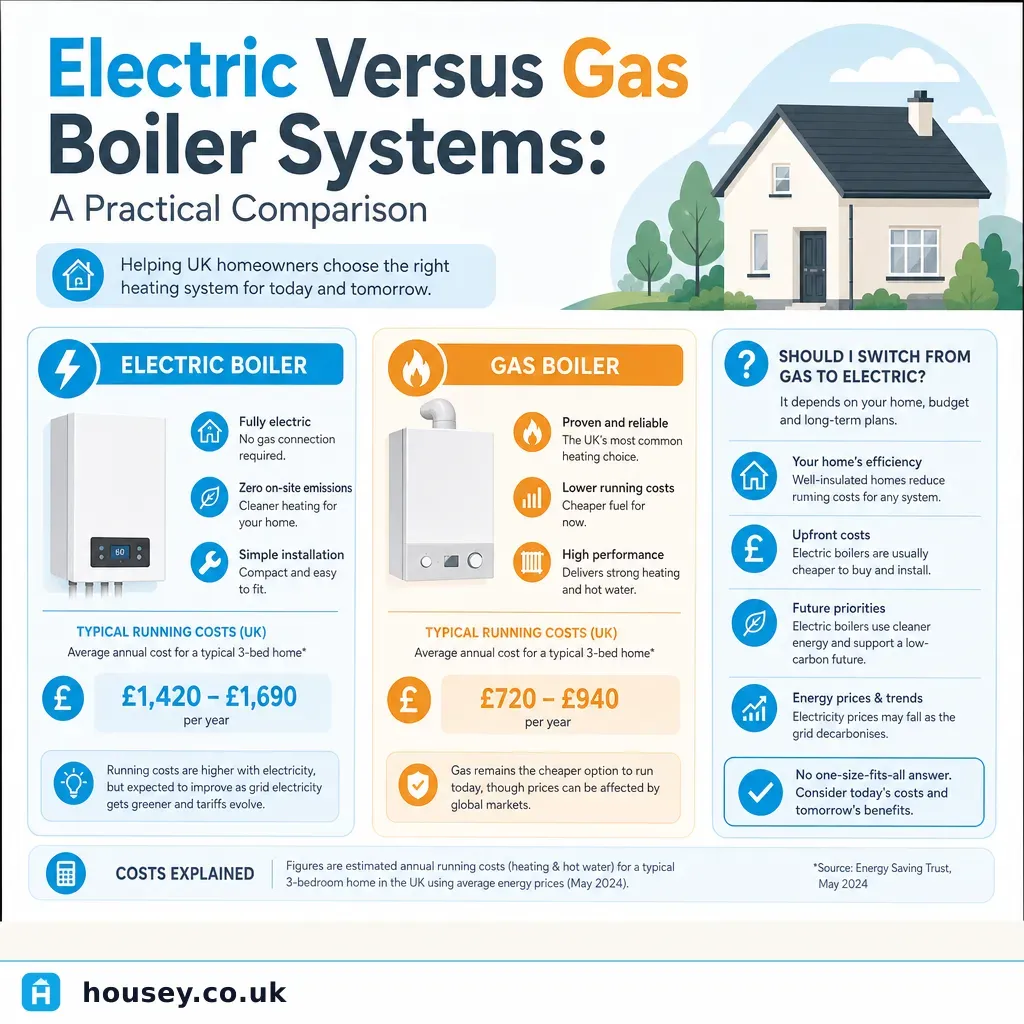
Electric Versus Gas Boiler Systems: A Practical Comparison
Electric boilers convert nearly all electricity into heat (98–99% efficiency) but electricity costs roughly 3–4 times more per kWh than gas, making running costs higher in most UK homes.
 Energy & Retrofit
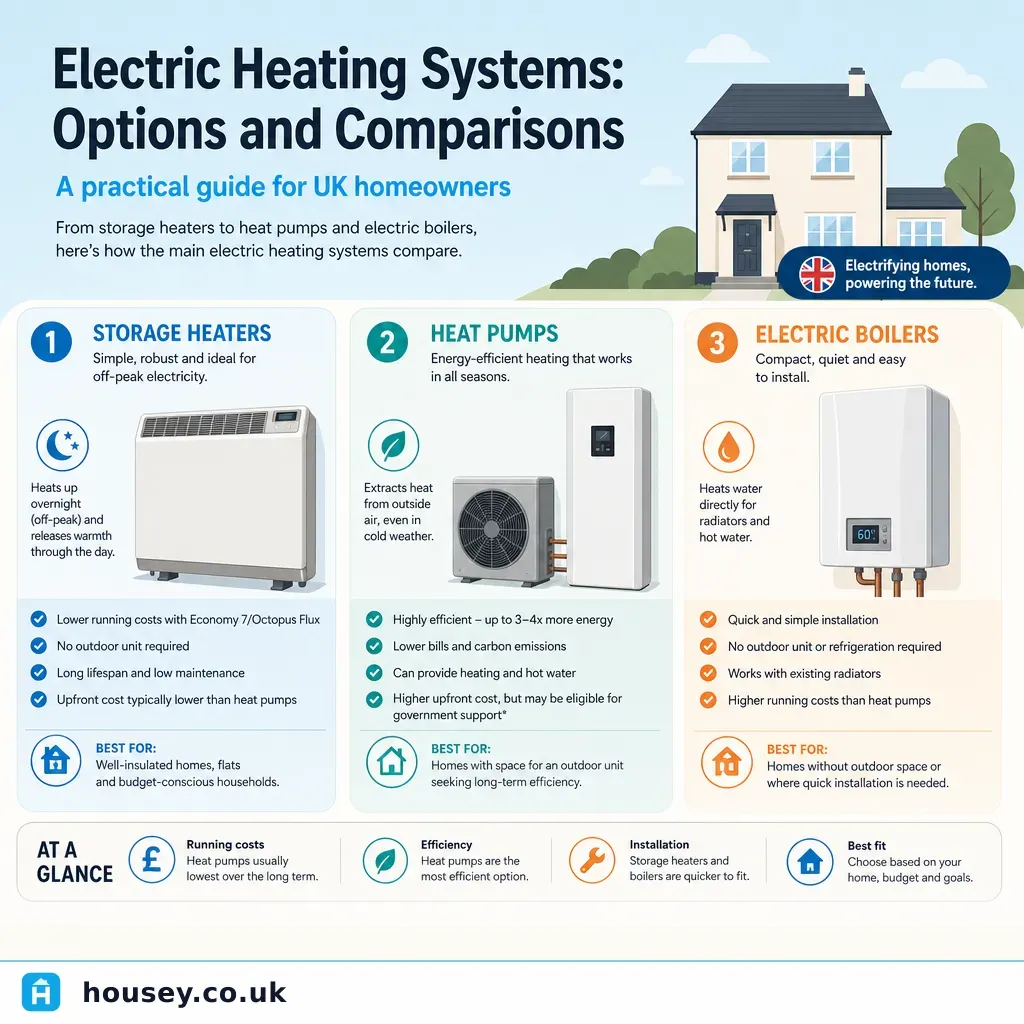
Electric Heating Systems: Options and Comparisons
Electric heating in the UK ranges from direct-acting radiators and storage heaters to heat pumps and electric boilers.
 Energy & Retrofit
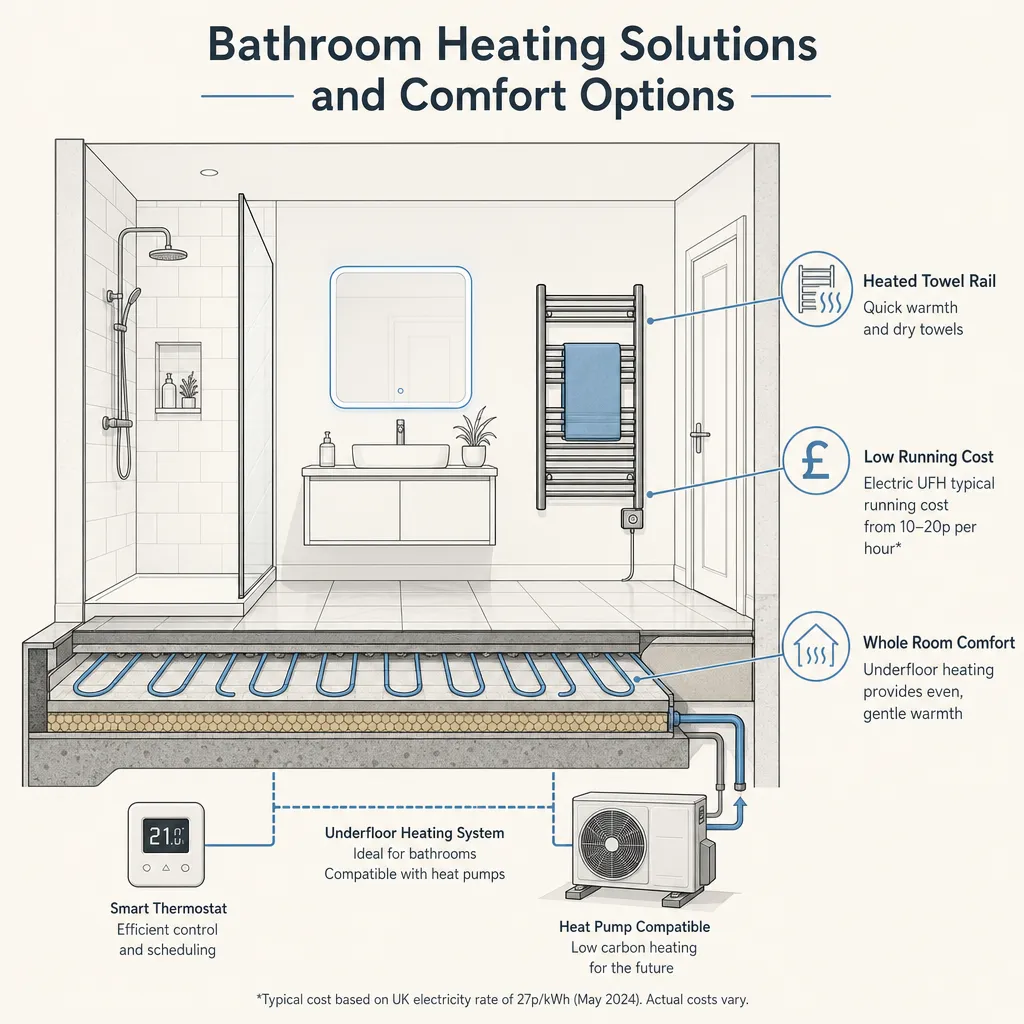
Bathroom Heating Solutions and Comfort Options
UK bathrooms can be heated using electric towel rails, wet radiators on the central heating circuit, electric or wet underfloor heating, or infrared panels.
 Energy & Retrofit
Optimising Heating Systems for Energy Efficiency
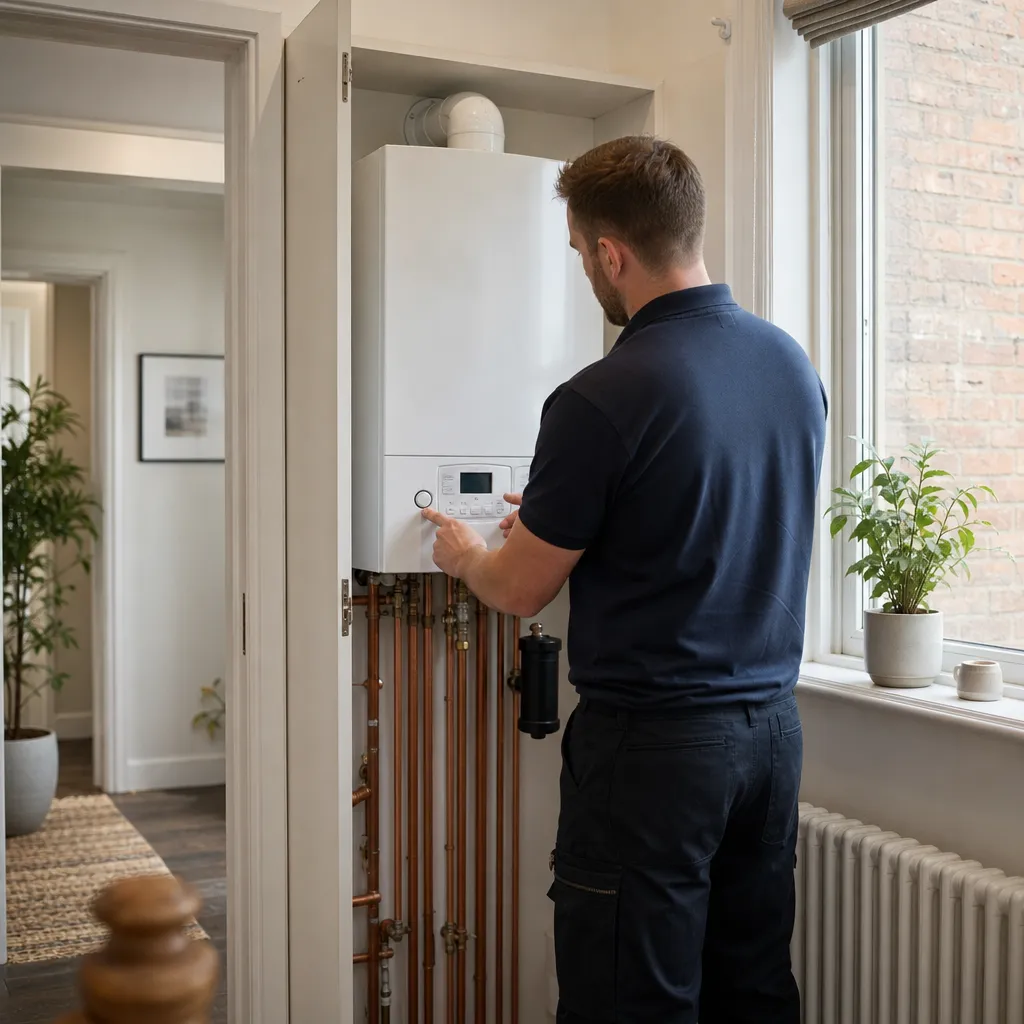
Optimising a UK heating system usually involves improving controls such as smart thermostats and thermostatic radiator valves, ensuring the boiler or heat pump is correctly sized, and upgrading radiators or pipework where needed.
 Energy & Retrofit
How Solar Water Heaters Work for Residential Properties
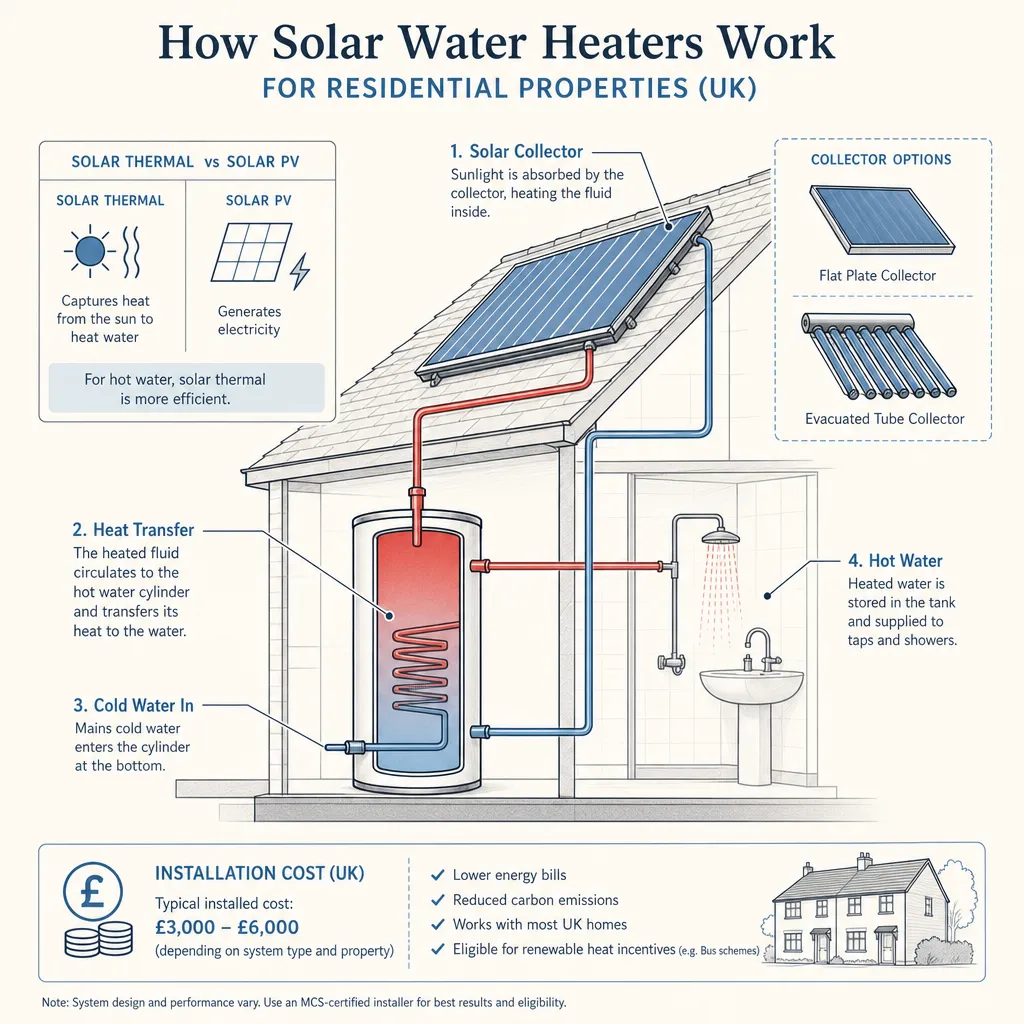
Solar water heaters use roof-mounted collectors to capture heat from sunlight and transfer it to a hot water cylinder via a fluid circuit.