Emerging Design Preferences in UK Home Renovation
By Housey · Last reviewed 24th of May 2026
Emerging Design Preferences in UK Home Renovation
Homeowners planning a renovation in 2025 and 2026 are navigating a shift in aesthetics that moves beyond the minimalist, cool-grey interiors that dominated UK homes through the 2010s. Whether you are extending a 1930s semi, reconfiguring a Victorian terrace, or updating a 1990s estate house, the design choices you make now will shape how your home feels and functions for years. Understanding where taste is heading — and why — can help you invest in changes that age well and add genuine value.
Key points
- Warm neutral palettes (stone, off-white, clay, and sage green) have largely replaced cool greys as the dominant base colour for UK renovation interiors since the early 2020s.
- Biophilic design — the deliberate use of natural materials such as timber, stone, linen, and clay plaster — is one of the most sustained trends across new builds and renovation projects in England and Scotland.
- Post-pandemic hybrid working has driven demand for multifunctional rooms, particularly home offices that double as guest bedrooms, study-bedrooms, or quiet spaces.
- Open-plan living is being rebalanced: many UK renovators are now adding internal glazed partitions, sliding screens, or acoustic-rated doors to create defined zones within previously knocked-through spaces.
- Energy-efficiency upgrades — underfloor heating, mechanical ventilation with heat recovery (MVHR), and high-performance glazing — are increasingly treated as design choices rather than purely technical decisions, influencing room layout and material specification from the outset.
What is driving the shift in UK renovation aesthetics?
Several converging factors are reshaping what UK homeowners want from a renovation.
Hybrid working and space use
The growth of home-based working has changed how people use their homes day to day. A spare bedroom that previously sat unused Monday to Friday is now expected to function as a professional workspace, a space for video calls, and a comfortable guest room at weekends. Furniture, lighting, and acoustic treatment have moved from optional extras to core specification decisions in many renovation briefs.
Energy cost awareness
Sustained energy price rises since 2021 have made homeowners more attentive to thermal performance. Underfloor heating, which distributes heat at lower flow temperatures and suits heat pump systems, is increasingly specified in ground-floor extensions and kitchen-dining spaces — not only for comfort but for running-cost reasons. This has practical design consequences: screed floors require early coordination with trades, and thicker floor build-up affects skirting board heights and door thresholds.
Material availability and sustainability
Supply chain disruptions between 2020 and 2023 prompted many designers and self-builders to specify natural materials that are easier to source locally: British timber, lime-based renders, clay plasters, and natural slate. These materials also carry lower embodied carbon than synthetic equivalents — a factor increasingly cited in planning applications and design statements, particularly in conservation areas.
Which design styles are most popular in UK home renovations?
The table below compares the major aesthetic approaches homeowners are adopting, along with practical considerations for UK property types.
Style | Typical features | Well suited to | Key practical considerations |
|---|---|---|---|
Warm minimalism | Warm neutrals, timber, linen, clean lines | 1990s–2010s new builds; modern extensions | Requires quality joinery to avoid looking cheap; low maintenance once installed |
Biophilic / natural | Exposed timber, stone, clay plaster, indoor planting, natural light | Victorian terraces, rural cottages, barn conversions | Lime plasters may need specialist applicators; clay plaster is vapour-permeable |
Industrial / mixed metal | Steel-frame windows, exposed brick, concrete, brushed brass | Urban conversions, warehouse-style spaces | Acoustic and thermal performance needs careful detailing |
Heritage / period revival | Cornicing, panelling, period palettes, period fittings | Pre-1919 homes, listed buildings, conservation areas | May require conservation officer approval for external changes |
Contemporary garden room | Large glazed openings, seamless indoor/outdoor transitions | Any property with adequate garden depth | Permitted development rights may not cover large glazed structures |
Multifunctional rooms: what are UK homeowners actually specifying?
The most frequent briefs architects and designers report receiving in 2024 and 2025 combine:
- A kitchen-dining-living space with some form of acoustic break — a sliding door, a structural peninsula, or a change in ceiling height — rather than a single undivided room.
- A dedicated workspace — either a separate garden office, a converted garage, or an internal room with acoustic insulation and sufficient power outlets.
- A flexible bedroom — typically a fourth bedroom configured as a home office that can revert to a guest room with fold-down or sofa-bed furniture.
- Improved storage — built-in cabinetry and utility rooms are frequently cited as the most satisfying renovation elements by homeowners once complete.
Planning a multifunctional room from the outset, before walls are opened up, saves both money and frustration. Working with experienced extension builders or an architect helps you define the brief properly before work begins.
What to check before committing to a design direction
Homeowner checklist before starting a renovation
When to get professional help
Most design decisions in a renovation can be made with research and a good brief, but some situations benefit from professional input early:
- If you are altering the internal layout of a pre-1919 property, an architect familiar with traditional construction can identify risks — hidden timbers, lath-and-plaster walls, original chimney stacks — before your contractor does.
- If your design involves a large glazed opening or a flat-roofed extension, structural calculations and building control sign-off will be needed; involve an engineer at design stage, not after planning approval.
- If you are working in a conservation area or on a listed building, consult a conservation-accredited architect or designer before finalising material choices.
- If you are specifying MVHR or a heat pump with underfloor heating, a building services engineer or suitably qualified installer should review the design against Building Regulations Part F and Part L before installation.
How Housey can help
Housey connects UK homeowners with vetted extension builders and garden designers who understand current design expectations and local planning requirements. Whether you are defining a brief for a rear extension, a garden room, or a full interior remodel, comparing quotes through Housey lets you see clearly what each professional offers and on what terms.
Frequently asked questions
Are open-plan layouts still popular in UK home renovations?
Open-plan kitchen-dining-living spaces remain the most requested renovation outcome in UK homes, but the brief has evolved. Many homeowners now want acoustic separation — a sliding door, a half-height wall, or a defined structural opening — to manage noise from cooking, children, or home working without losing the sense of space.
What colours are most popular in UK renovation interiors right now?
Warm neutrals — off-white, stone, clay, and warm grey with yellow or pink undertones — have broadly replaced the cooler blue-grey tones popular in the 2010s. Sage green and deep blue-green are frequently used as accent colours in kitchens and bathrooms. Choosing a natural, neutral palette tends to perform better over a ten-year renovation horizon than following a single season's trend.
Do I need planning permission to change my home's interior design?
Internal alterations generally do not require planning permission in England and Wales. However, structural changes, alterations to a listed building's character-defining features, and some changes in conservation areas may require listed building consent or conservation area consent. Always check with your local planning authority before work begins.
How can I make a new extension look consistent with an older part of my home?
Material matching is the most effective approach: using the same brick, roof tile, or render as the existing building, continuing cornice heights or window cill lines, and matching window proportions. Where an exact material match is not possible, a sympathetic contrast acknowledging that the extension is newer while complementing the original is usually better received by planners.
Sources and further reading
- Building Regulations: Approved Documents — GOV.UK (Parts F and L apply to extensions and renovations)
- Planning Permission: when you need it — GOV.UK
- Guidance on alterations to listed buildings — Historic England
- State of Trade Survey — Federation of Master Builders
- Design Council — Design Council UK
Useful next reads
 Improvement & Build
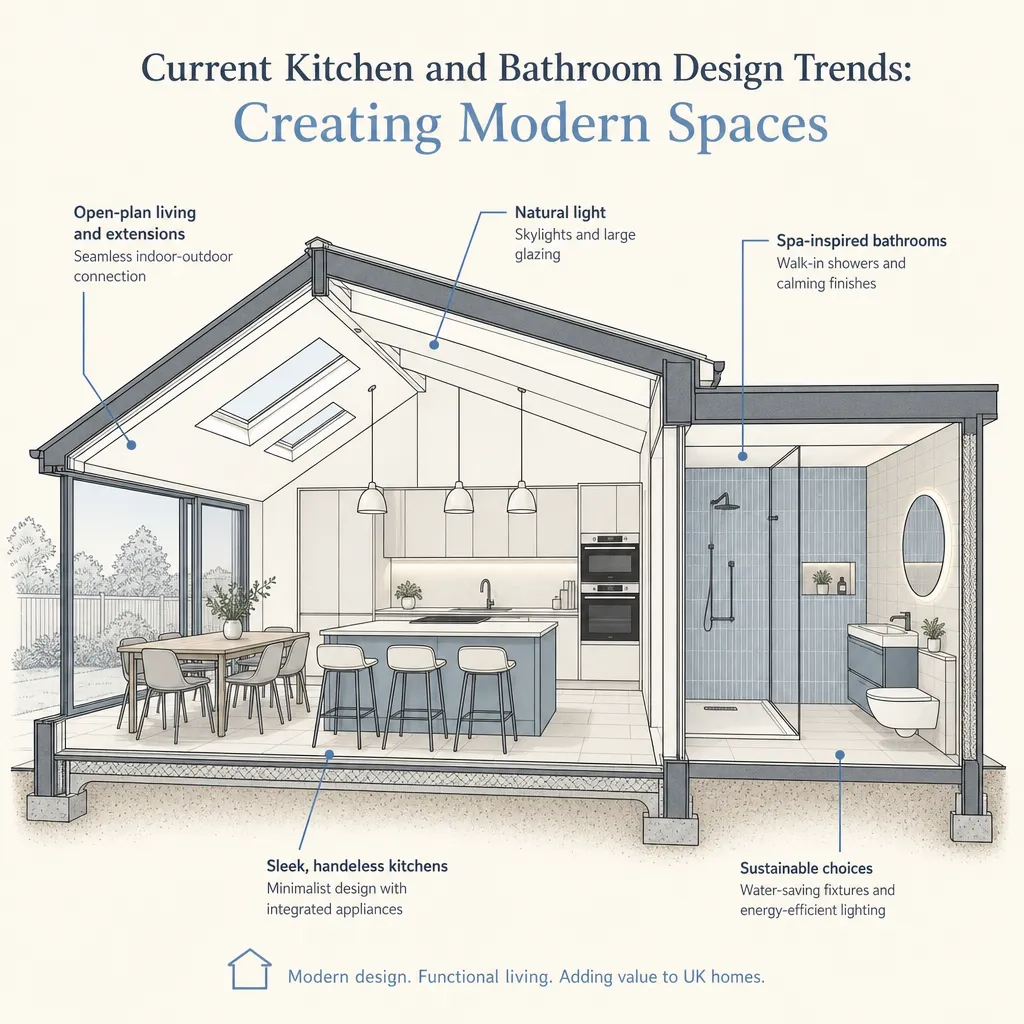
Current Kitchen and Bathroom Design Trends: Creating Modern Spaces
In 2026, UK kitchen design favours open-plan layouts, handleless cabinetry, and quartz composite worktops, while bathrooms trend towards walk-in showers, freestanding baths, and fluted tiles.
 Improvement & Build
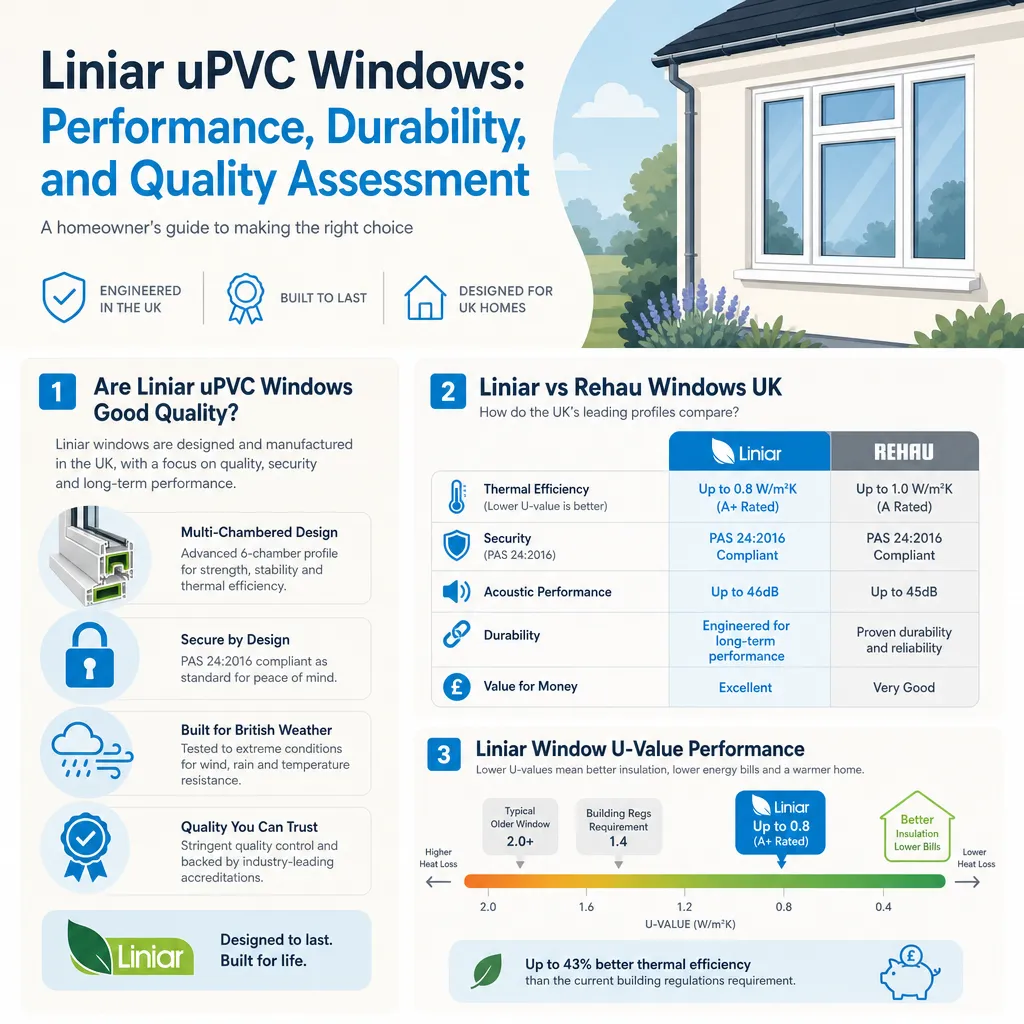
Liniar uPVC Windows: Performance, Durability, and Quality Assessment
Liniar uPVC window profiles are manufactured in the UK using multi-chambered, foamed frames.
 Improvement & Build
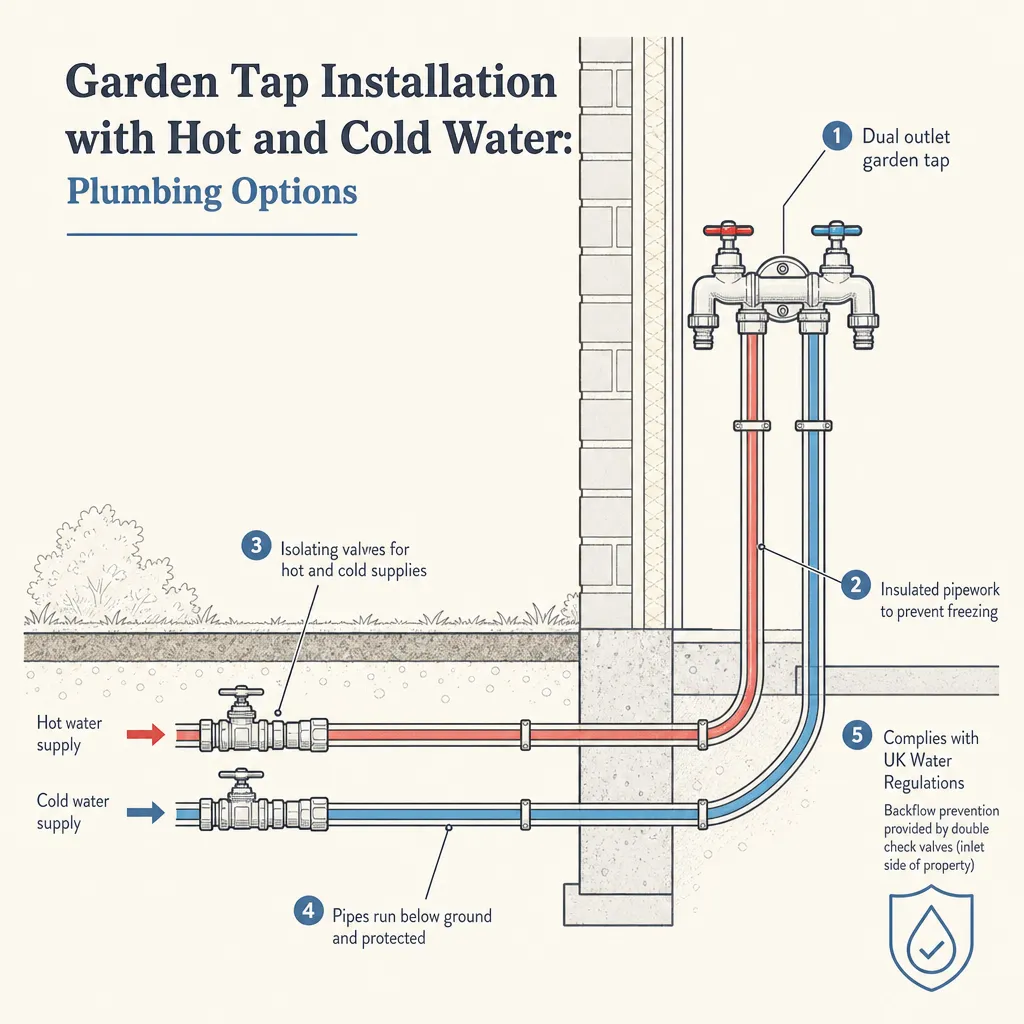
Garden Tap Installation with Hot and Cold Water: Plumbing Options
Adding a cold garden tap is a common DIY project, but routing hot water outdoors requires a plumber to connect to your domestic hot water system and comply with the Water Supply (Water Fittings) Regulations 1999.
 Improvement & Build
Sealing and Maintaining Historic Leaded Glass Windows: Preservation and Performance
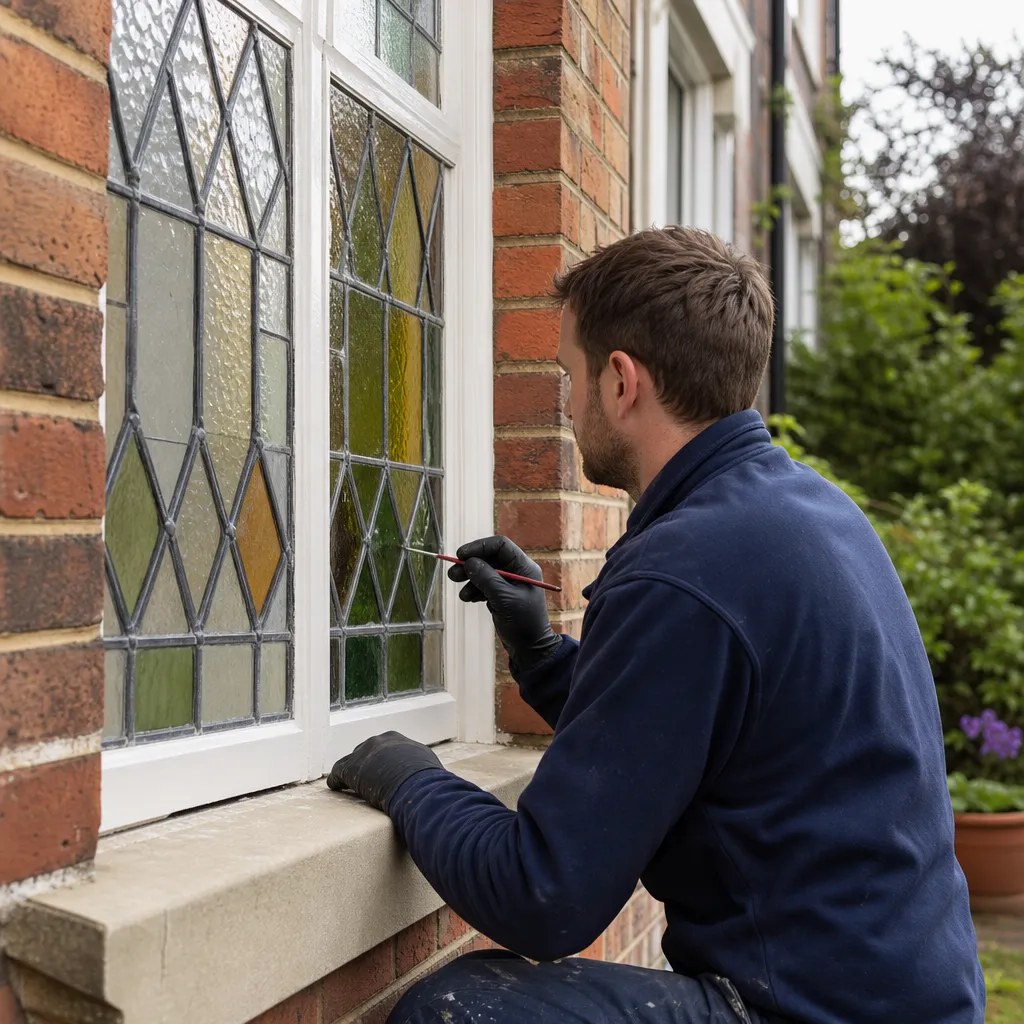
Leaded glass windows are maintained using traditional linseed oil cement — not silicone or modern sealants, which prevent natural movement in the lead came.
 Improvement & Build
Greenhouse Construction: Glass Versus Polycarbonate Materials
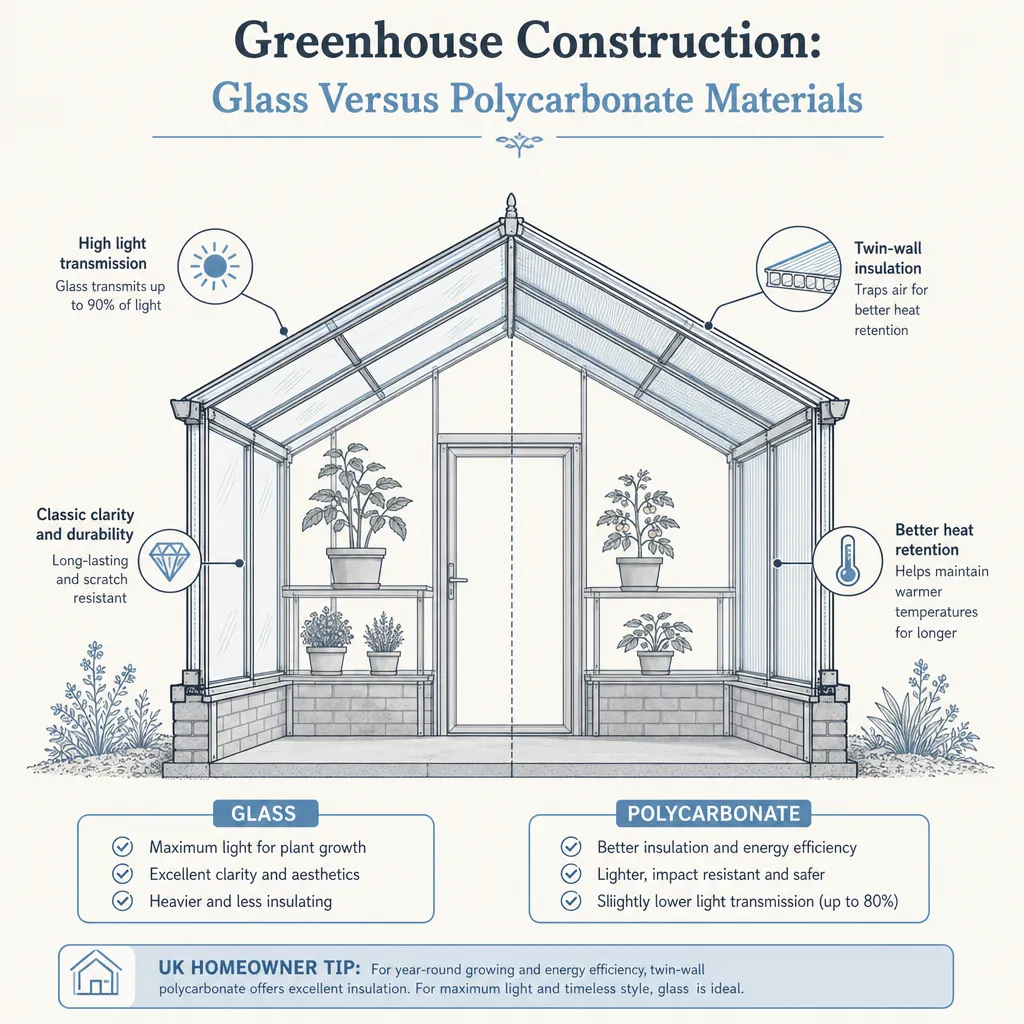
Glass transmits around 90% of available light and lasts indefinitely if unbroken, but insulates poorly and shatters into sharp fragments.