Energy Efficiency Considerations When Viewing a Residential Property
By Housey · Last reviewed 30th of May 2026
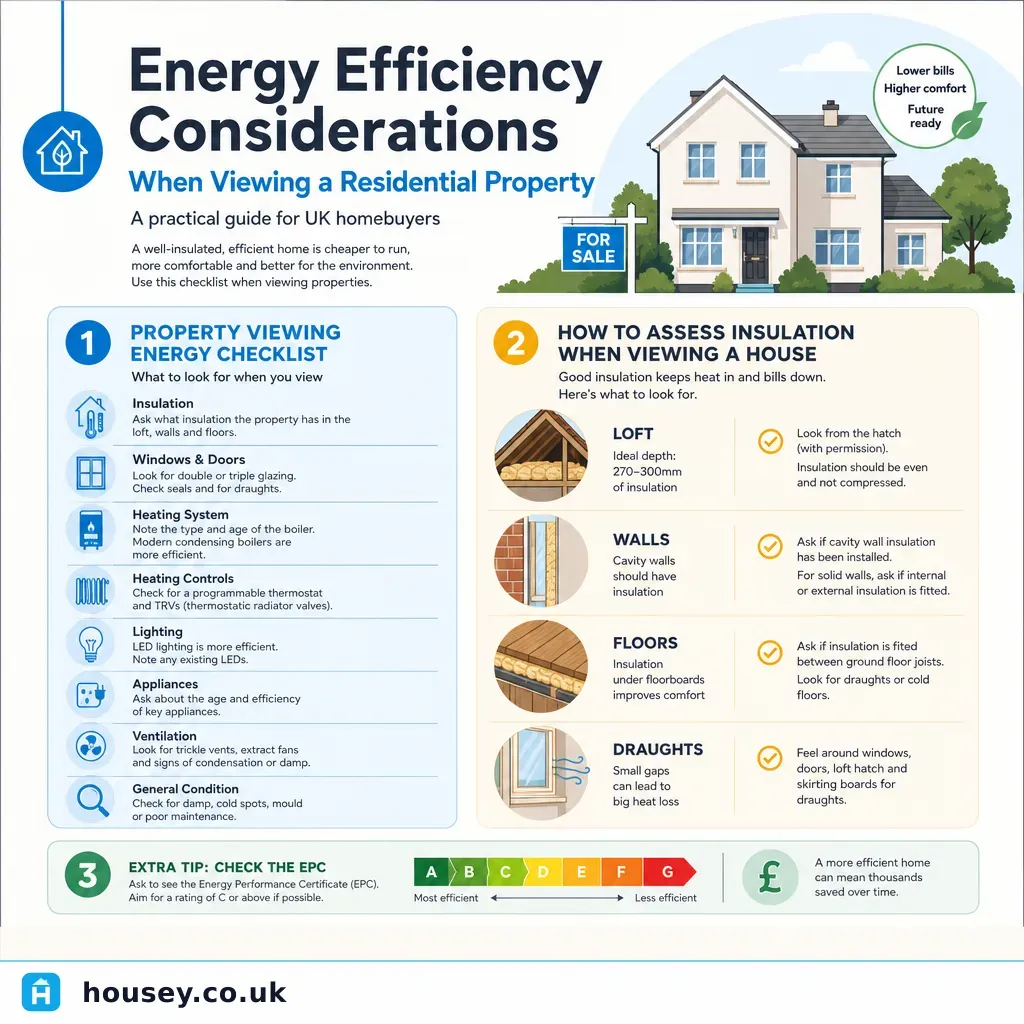
Energy Efficiency Considerations When Viewing a Residential Property
The moment you walk through a property, you are gathering information that will shape your offer and your ongoing running costs — but energy performance is easily overlooked in the excitement of a viewing. With UK energy bills remaining elevated and Minimum Energy Efficiency Standards (MEES) tightening for landlords, understanding a home's thermal performance before exchange can save you thousands of pounds in unexpected upgrade costs and help you make a better-informed offer.
Key points
- All residential properties marketed for sale or rent in England and Wales must have a valid Energy Performance Certificate (EPC) under the Energy Performance of Buildings (England and Wales) Regulations 2012.
- The average UK home is rated EPC band D; properties at band C or above are generally considered energy efficient and typically have meaningfully lower running costs.
- Pre-1920 solid-walled properties account for approximately 35% of heat loss through uninsulated walls — a liability buyers often underestimate when assessing renovation budgets.
- A gas boiler more than 15 years old is approaching the end of its typical serviceable life and may be considerably less efficient than a modern A-rated condensing boiler.
- A thermographic (infrared) survey can reveal hidden insulation deficiencies and cold bridges not visible during a standard viewing or a conventional RICS survey.
How to read the EPC before or during a viewing
The EPC is a legal requirement for sale in England and Wales and must be available free of charge before a property is marketed. It rates the property from A (most efficient) to G (least efficient) and includes both a current rating and a potential rating if the recommended improvements were made.
What to examine:
- Current band: A or B is excellent; C is good; D is average; E, F, or G signals potentially significant upgrade costs that should be factored into your offer.
- Potential band: A large gap between current and potential rating tells you that improvements are available but have not been made. Ask why.
- Recommended measures: The EPC lists specific improvements — for example, loft insulation, cavity wall insulation, or solar panels — with indicative annual savings. Use these as a starting point for budgeting, not a firm cost estimate.
- Validity and age: EPCs are valid for ten years. Check whether the certificate reflects the property's current condition. Major works carried out since the issue date — insulation installed, boiler replaced, windows upgraded — will not be reflected and may mean the current rating is better than shown.
- How features were assessed: Where the assessor has marked insulation as "assumed" or "estimated" rather than verified, treat those figures with caution.
What to look for during the viewing itself
Glazing and windows
- Check whether windows are double or triple glazed. Single-glazed windows — common in pre-1980s properties and some period conversions — are a significant source of heat loss.
- Look for condensation or moisture between panes. A misted sealed unit has failed and needs replacing; this is a cost to factor in.
- Sash windows are particularly prone to draughts. Check for obvious gaps, rattles, and cold air movement around the frames — draught-proofing is relatively low-cost but adds up across a large Victorian or Edwardian property.
Insulation clues
- Ask to look in the loft. Insulation visible at approximately 270 mm depth — roughly the top of a standard joist plus a topping-up layer — is a good sign. Bare or shallow joists indicate inadequate insulation.
- Ask for a cavity wall insulation certificate if the property has cavity walls (typically post-1920 brick construction). Absence of a certificate does not confirm absence of insulation, but the paperwork is important evidence of quality installation.
- Solid walls — no cavity, typically pre-1920 — are significantly more expensive and disruptive to insulate. Factor this into your renovation budget before you exchange.
Heating system
- Note the boiler make and model if accessible. An A-rated condensing boiler is the most efficient option for gas-heated homes. Older non-condensing models, back boilers behind fireplaces, and electric storage heaters are likely to be considerably less efficient.
- Check for a programmer, room thermostat, and thermostatic radiator valves (TRVs). Absence of good controls is an upgrade cost, though not a large one.
- Ask when the boiler was last serviced by a Gas Safe-registered engineer. An annual service is recommended; a gap of several years may mean the boiler is operating below its rated efficiency.
Signs of poor thermal performance
- Cold, damp-feeling internal wall surfaces, particularly in corners — a possible sign of cold bridging or absent insulation behind the plasterwork.
- Staining or tide marks on ceilings and walls — possible condensation damp arising from inadequate insulation or poor ventilation, which may worsen if insulation is added without addressing air movement.
- Draughts around skirting boards on ground floors — may indicate an uninsulated suspended timber floor beneath.
Which survey is right for assessing energy performance?
Survey type | What it covers | Best for | Energy-specific value |
|---|---|---|---|
Basic condition ratings; EPC noted | New-builds and very modern properties in good condition | Limited — flags only major visible issues | |
Condition of all elements; recommendations; EPC referenced | Conventional properties in reasonable condition | Notes visible signs of poor insulation and ageing heating systems | |
In-depth inspection; defect analysis; cost estimates | Older, larger, altered, or unusual properties | Best for identifying insulation deficiencies, cold bridging, and damp origins | |
Thermal imaging of walls, roofs, and windows | Any property where insulation quality is uncertain | Purpose-built for mapping heat loss, cold bridges, and air infiltration points |
Decision tree: which energy check do you need?
- Choose a RICS Level 2 Home Survey if the property is post-1945, in reasonable condition, with double glazing and a modern condensing boiler.
- Choose a RICS Level 3 Building Survey if the property is pre-1919, has solid walls, shows visible damp, or has been significantly extended or altered.
- Add a thermographic survey if the EPC is rated E, F, or G; if walls feel cold or damp; or if you want to verify insulation claims before making an offer on a property where large sums are at stake.
- Ask for an energy consultant's assessment if you are buying specifically to retrofit and need a detailed improvement plan and cost estimate before exchange.
- Check with your local planning authority if the property is in a conservation area or is listed — permitted development rights for replacement windows, external wall insulation, or solar panels may be restricted.
What to ask the estate agent or seller
Use this list during or after a viewing to gather the information you need for a thorough energy assessment.
- What is the current EPC rating, and when was the certificate issued?
- Has cavity wall or loft insulation been installed? Is there an installation certificate?
- When was the boiler last serviced, and by whom?
- Are there any planning restrictions — listed building consent, conservation area rules — that would affect insulation or glazing options?
- What are the approximate monthly or annual energy bills?
- Have any insulation or energy improvement grants been claimed on this property? (Some schemes require repayment or affect future eligibility.)
Note: estate agents are not qualified to give technical energy advice. Treat their responses as starting points for investigation, not verified facts.
When to get professional help
If energy performance is central to your buying decision — or if you are purchasing a property you intend to retrofit — a commissioned survey will give you far more reliable information than a viewing alone.
Seek professional input if:
- The EPC is rated E, F, or G and you need to understand the realistic cost and disruption of improvement works.
- The property is pre-1919 with solid walls — retrofit options are more complex, more expensive, and require careful moisture management.
- You are a prospective landlord: current MEES regulations require a minimum of EPC band E for most tenancies in England and Wales, with tighter standards proposed.
- You want a thermographic survey to identify precisely where heat is escaping before you finalise your offer.
How Housey can help
Housey connects you with qualified surveyors for RICS Level 1, RICS Level 2, and RICS Level 3 surveys, as well as specialists who carry out thermographic surveys — giving you a detailed thermal picture of a property's envelope before you commit to a purchase.
Frequently asked questions
Is the seller legally required to provide an EPC?
Yes. Under the Energy Performance of Buildings (England and Wales) Regulations 2012, a valid EPC must be made available to prospective buyers and tenants free of charge. Failure to provide one can result in a fixed penalty notice. The EPC must be in place before the property is marketed, not just at exchange.
Can I negotiate on price because of a poor EPC rating?
Yes. A poor EPC rating — particularly E, F, or G — indicates likely upgrade costs for insulation, glazing, or heating. This is a legitimate basis for negotiation. Obtain indicative improvement costs from a qualified energy consultant or retrofitter before making or revising your offer.
What is the minimum EPC rating for a rented property?
Under current Minimum Energy Efficiency Standards (MEES) regulations (Energy Efficiency (Private Rented Property) (England and Wales) Regulations 2015), landlords must have an EPC rating of at least E for most residential tenancies. Stricter band C requirements have been proposed but were not yet legislated as of May 2026 — check GOV.UK for the latest position.
Do thermographic surveys require special conditions?
Yes. Thermographic surveys are most effective when there is a temperature difference of at least 10°C between inside and outside, which in the UK typically means autumn or winter. Summer surveys are less reliable. Ensure the property has been heated for several hours before the survey takes place.
Sources and further reading
- Energy Performance of Buildings (England and Wales) Regulations 2012 — legislation.gov.uk
- Energy performance certificates for your home — GOV.UK
- Residential property survey standard — RICS
- Minimum energy efficiency standards — landlord guidance — GOV.UK
- Insulation advice — Energy Saving Trust
Useful next reads
 Surveys & Inspections
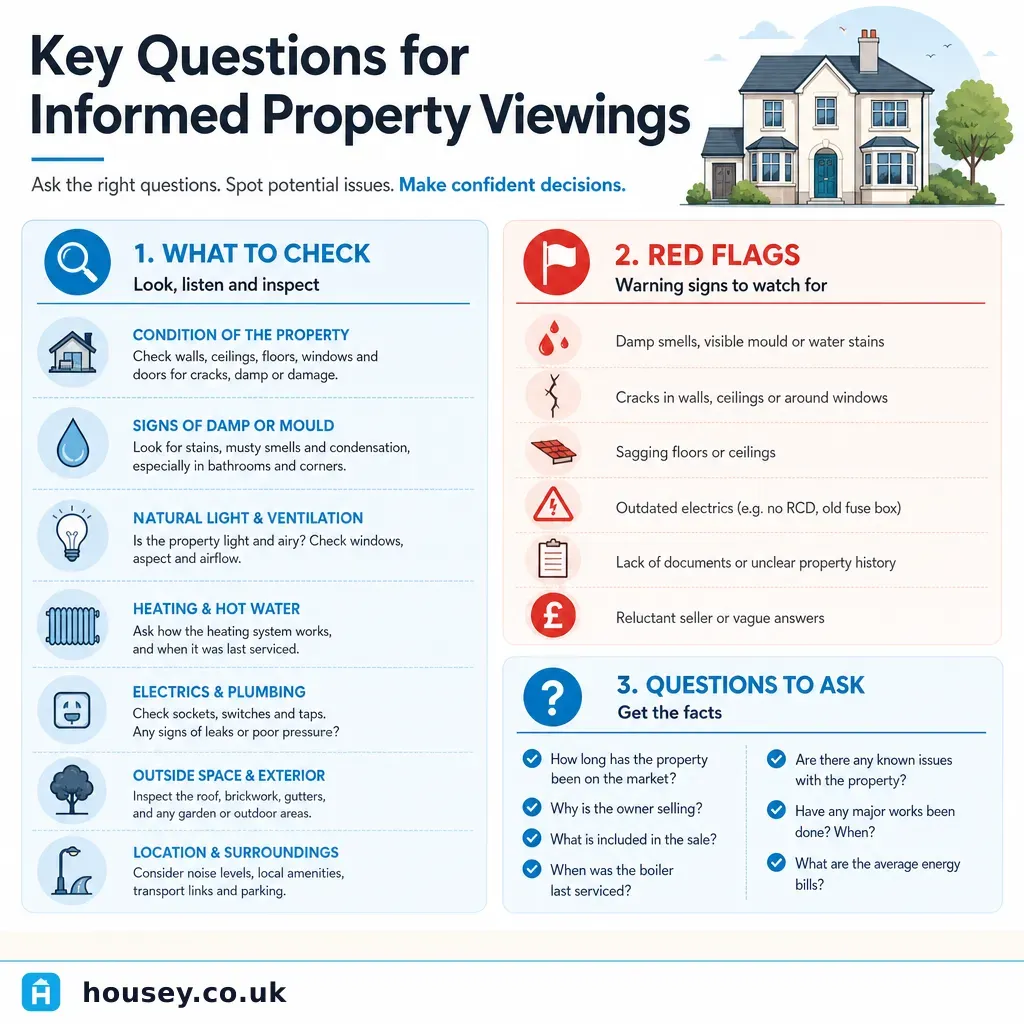
Key Questions for Informed Property Viewings
At a property viewing, ask specifically about structural movement, damp or water ingress, the age and service history of the boiler and electrics, whether any extensions obtained building regulations sign-off, and the seller's chain position.
 Surveys & Inspections
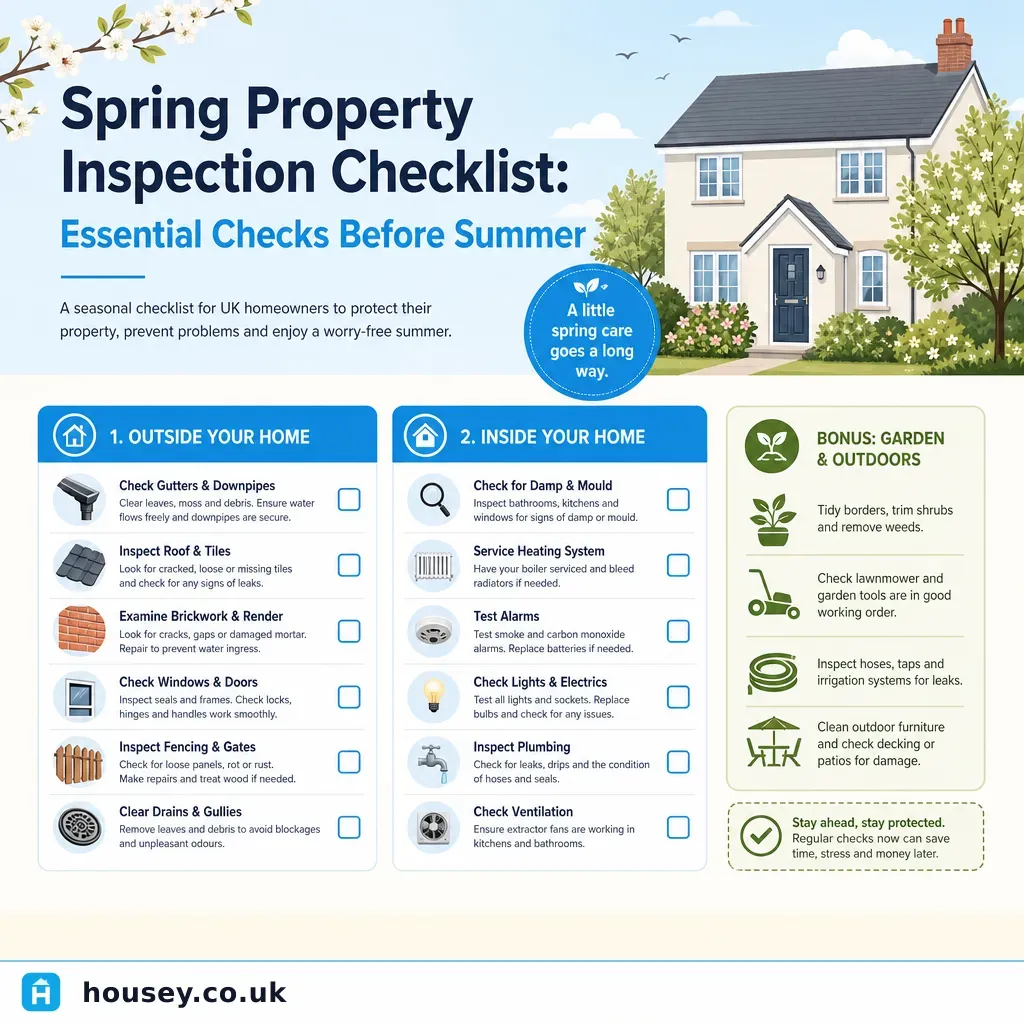
Spring Property Inspection Checklist: Essential Checks Before Summer
Each spring, UK homeowners should check the roof covering, gutters, flashings, drainage, external walls, and window seals for signs of winter damage.
 Surveys & Inspections
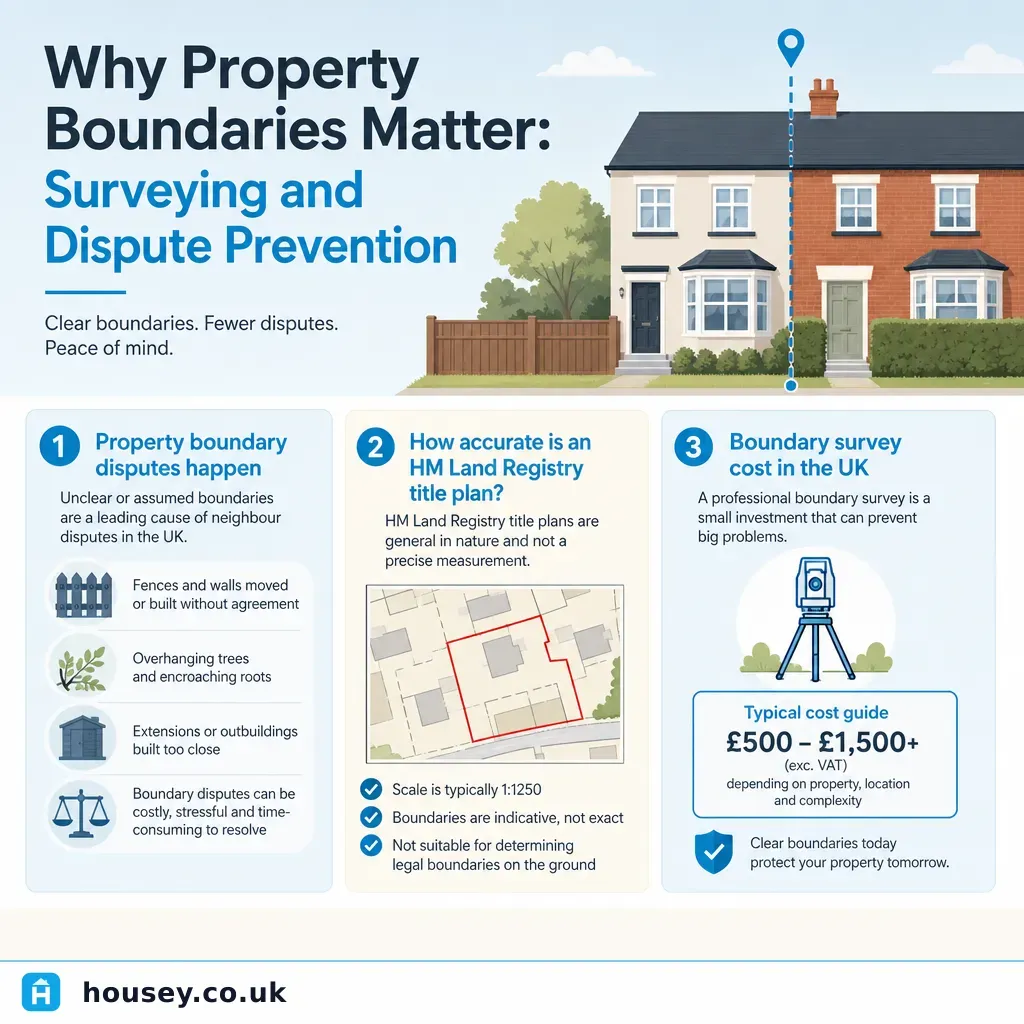
Why Property Boundaries Matter: Surveying and Dispute Prevention
Property boundaries in England and Wales are recorded as general boundaries by HM Land Registry — not precise measurements.
 Surveys & Inspections
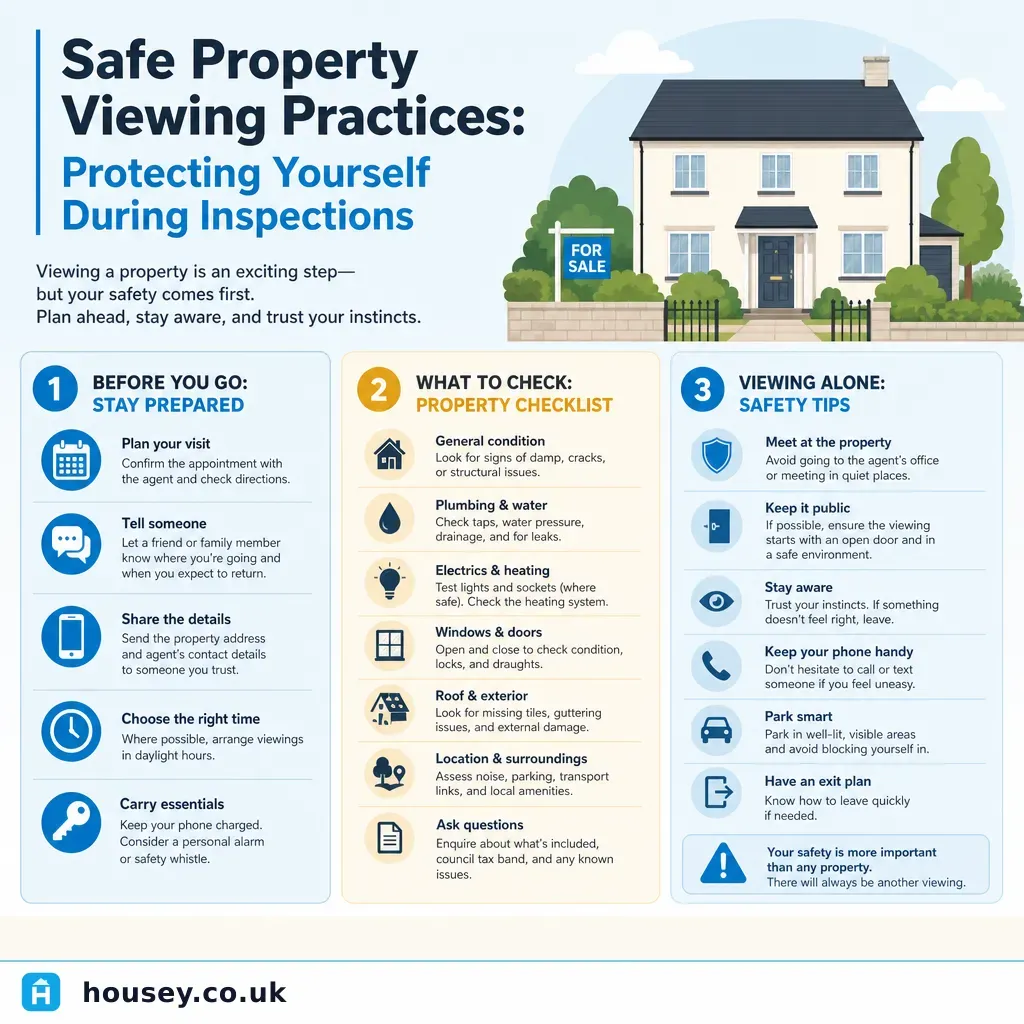
Safe Property Viewing Practices: Protecting Yourself During Inspections
When viewing a property in the UK, always tell someone where you are going and share the full address before you leave.
 Surveys & Inspections
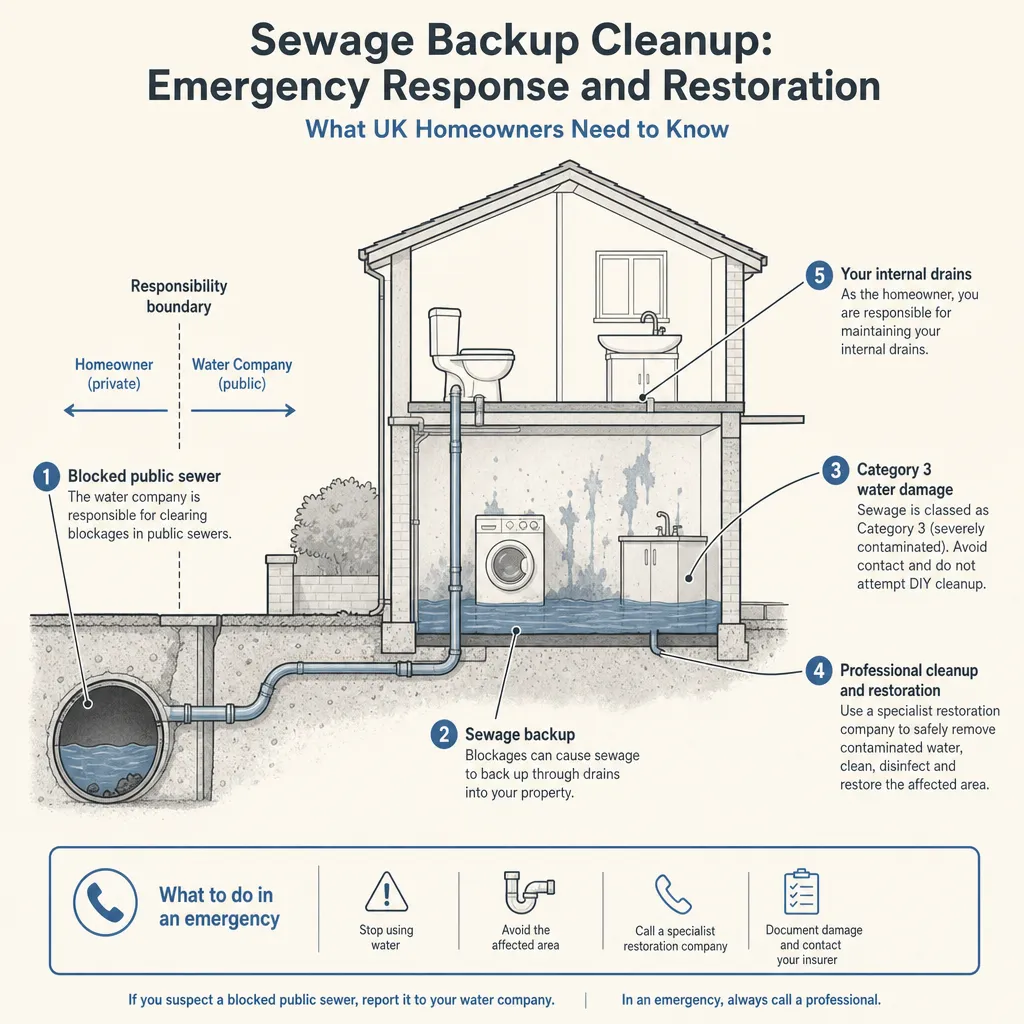
Sewage Backup Cleanup: Emergency Response and Restoration
A sewage backup should be treated as a Category 3 contamination event.