Key Questions for Informed Property Viewings
By Housey · Last reviewed 30th of May 2026
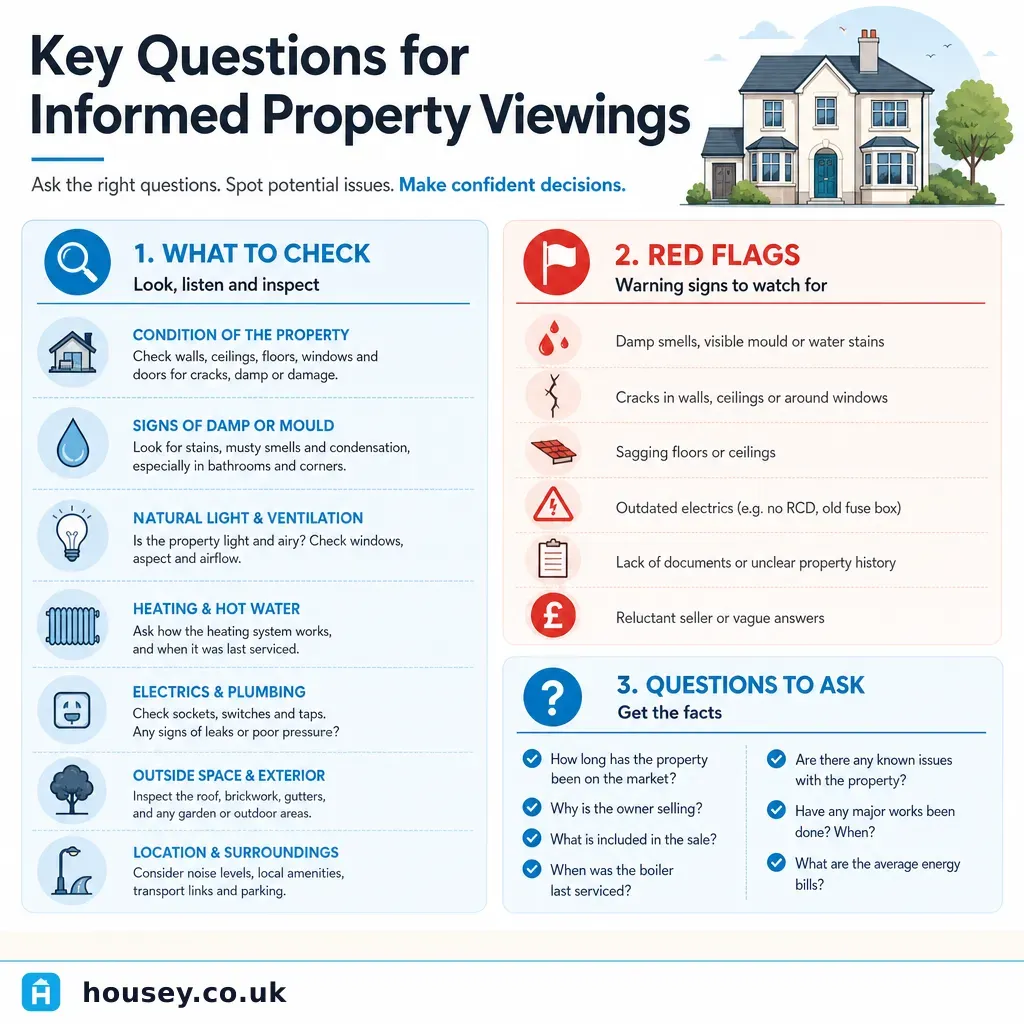
Key Questions for Informed Property Viewings
Property viewings are the buyer's best opportunity to gather information that will not appear in an online listing or estate agent brochure. In England and Wales, sellers are under no legal obligation to volunteer details of defects — which means the questions a buyer asks directly, and the professional survey they commission before exchange, largely determine how much they actually know about what they are buying. Most buyers visit a property two or three times before making an offer, but many leave without raising the questions most likely to reveal costly problems, legal complications, or a mismatched transaction timeline.
Key points
- A RICS Level 3 Building Survey is recommended for properties built before 1920, those with visible defects, and any home that has been significantly extended, altered, or converted.
- Sellers in England and Wales complete a TA6 Property Information Form as part of conveyancing — this records matters known to the seller, but does not cover physical defects the seller is unaware of.
- The Consumer Protection from Unfair Trading Regulations 2008 prohibit sellers and agents from making materially misleading statements, but silence on an unknown defect is not an offence.
- EPC certificates are legally required before a property is marketed — check the EPC register directly if one is not provided, and note any outstanding improvement recommendations.
- Leases below 80 years remaining become significantly more expensive to extend under the Leasehold Reform, Housing and Urban Development Act 1993 — always ask for the current lease term on any leasehold property.
- In Scotland, once missives are concluded the transaction has legal force; this is different from England and Wales, where exchange of contracts is the binding point.
What to ask about the property's physical condition
Agents are prohibited from making misleading statements but are under no duty to volunteer unfavourable information. Ask these questions directly and note the answers.
Structural condition
- Has the property experienced any structural movement, subsidence, or heave? Has any movement been investigated by a structural engineer, and is a report available?
- Are there any cracks in the external walls or internal plasterwork, and when did they first appear?
- Have any extensions, loft conversions, or load-bearing alterations been carried out? If so, was building regulations approval obtained and is a completion certificate available?
- Is the property in a coal mining area, on former industrial land, or in a flood risk zone?
Damp, water, and the roof
- Has there been any damp, water ingress, or condensation? In which rooms, and over what period of time?
- Does the property have a damp-proof course (DPC), and has any damp treatment been carried out? If so, does a guarantee exist and is it transferable to a new owner?
- Are there any flat roofs on extensions or outbuildings, and when were they last inspected or replaced?
- Are the chimneys in working order, and when were they last swept?
Services and utilities
- When was the boiler last serviced, and is there a documented service history?
- Is the electrical installation covered by a current Electrical Installation Condition Report (EICR)?
- Is the property on mains sewerage or served by a private septic tank or sewage treatment plant? If a private system, when was it last emptied and inspected?
- What is the confirmed broadband speed at this address? (Check independently using Ofcom's broadband checker.)
What to ask about the transaction
- How long has the property been on the market, and have any previous sales fallen through? If so, why?
- Is the sale part of a chain, and how many properties are in it?
- What is the seller's preferred or required completion timeline?
- Are there any known disputes with neighbouring properties or any boundary disagreements?
- Is the property freehold or leasehold? If leasehold, what is the remaining lease term, the annual service charge, and the ground rent?
Leasehold questions are particularly important. Service charges can run to thousands of pounds annually on some blocks, and major works contributions can be substantial. Ask to see at least three years of service charge accounts and any major works notices issued to leaseholders.
Red flags to look out for during a viewing
Certain observations during a viewing should prompt further professional investigation before you make an offer:
- Diagonal or stepped cracks in external brickwork, particularly running from window or door corners — a possible indicator of differential settlement or structural movement.
- Tide marks, staining, or a musty smell in ground-floor rooms, cellars, or around chimney breasts — signs of water ingress or rising damp.
- Sagging or noticeably uneven floors — may indicate timber decay, subsidence, or inadequate structural support below.
- Localised fresh plasterwork, new paint, or replacement tiles in isolated patches — cosmetic work in specific areas can indicate an attempt to conceal a known defect.
- Blocked or missing air bricks in older properties with suspended timber floors — inadequate subfloor ventilation leads to timber rot.
- Differential settlement around extensions or outbuildings — cracking or gaps where old and new structures meet is common and warrants investigation.
- Persistent condensation on window panes — can indicate inadequate ventilation and, in older properties, poor overall thermal performance.
- Gutters and downpipes in poor condition — blocked or leaking rainwater goods are a leading cause of wall dampness and roof-timber rot.
What not to assume at a viewing
Many buyers make costly assumptions that are difficult to reverse after exchange of contracts.
Common assumption | Reality |
|---|---|
"Planning was approved, so all the work is legal" | Planning permission and building regulations approval are separate legal processes. A loft conversion can have planning consent but no building regulations completion certificate, meaning it may not comply with fire safety, structural, or thermal standards. |
"It's a new build so everything will be fine" | New builds carry a 10-year NHBC Buildmark warranty, but defects — known as snagging — are common. A professional snagging survey before legal completion is a worthwhile investment. |
"The EPC rating tells me what the energy bills will be" | EPCs measure the theoretical thermal efficiency of the building envelope under standardised conditions. Actual bills depend heavily on occupancy, usage habits, and energy tariffs. Use the EPC for comparison, not bill forecasting. |
"The seller must disclose all problems" | Sellers complete the TA6 form based on their own knowledge. Physical defects the seller is genuinely unaware of do not have to be disclosed. The buyer's survey and solicitor's enquiries are the primary means of discovery. |
"No visible crack means no movement" | Cracks may have been filled and redecorated. Historical movement visible on a professional survey may not be apparent during a viewing. |
"The estate agent is working for me" | In England and Wales, the estate agent is instructed by and legally obligated to the seller. Their duty is to achieve the best outcome for their client, not to protect the buyer's interests. |
Viewing checklist: what to bring and do
When to get professional help
A viewing is no substitute for a professional survey. Commission a RICS-accredited survey before exchange if the property was built before 1920, has unusual construction, has been extended or structurally altered, or if you noticed any of the red flags above. For concerns about structural movement, a structural survey or a RICS Level 3 survey provides the most thorough assessment available for a residential property.
How Housey can help
If your viewing has raised concerns, Housey can connect you with accredited professionals across the UK. Compare quotes for a RICS Level 3 survey for a comprehensive structural and condition report, or book a specialist damp and timber survey if you noticed staining, a musty smell, or signs of moisture during your visit. Getting expert advice before exchange can save considerably more than the cost of the survey itself.
Frequently asked questions
How many viewings should I have before making an offer?
Most buyers make an offer after two viewings — one to assess the overall property and a second to focus on specific concerns from the first visit. For properties where something gave you pause, a third viewing with a builder or surveyor present can clarify the issue and help with budgeting. Two viewings is a widely accepted minimum; making an offer based on a single brief visit alone carries unnecessary risk.
Can I bring a builder or surveyor to a viewing?
Yes. Agents cannot reasonably refuse to allow a qualified professional to accompany you. A builder or surveyor visit before an offer can identify deal-breakers or help budget for works without the cost of a full survey report. This is particularly useful for older properties, those in obvious need of work, or where something concerning appeared during your initial visit.
What is the difference between a viewing and a survey?
A viewing is an informal walk-through arranged through the selling agent. A survey is a formal, professional inspection by a RICS-accredited surveyor producing a written condition report, typically commissioned after an offer is accepted and before exchange of contracts. A viewing cannot substitute for a survey — the two serve entirely different purposes in the buying process.
Are sellers legally obliged to answer my questions truthfully?
Sellers and their agents cannot knowingly make materially misleading statements under the Consumer Protection from Unfair Trading Regulations 2008. However, silence on a defect they are genuinely unaware of is not an offence. Buyers should verify independently through a professional survey and solicitor's enquiries rather than relying on verbal assurances given at a viewing.
Sources and further reading
- RICS Home Survey Standard — RICS
- Consumer Protection from Unfair Trading Regulations 2008 — legislation.gov.uk
- Check a property's EPC rating — GOV.UK / Energy Performance of Buildings Register
- Flood map for planning (England) — Environment Agency / GOV.UK
- How to buy a home — GOV.UK
Useful next reads
 Surveys & Inspections
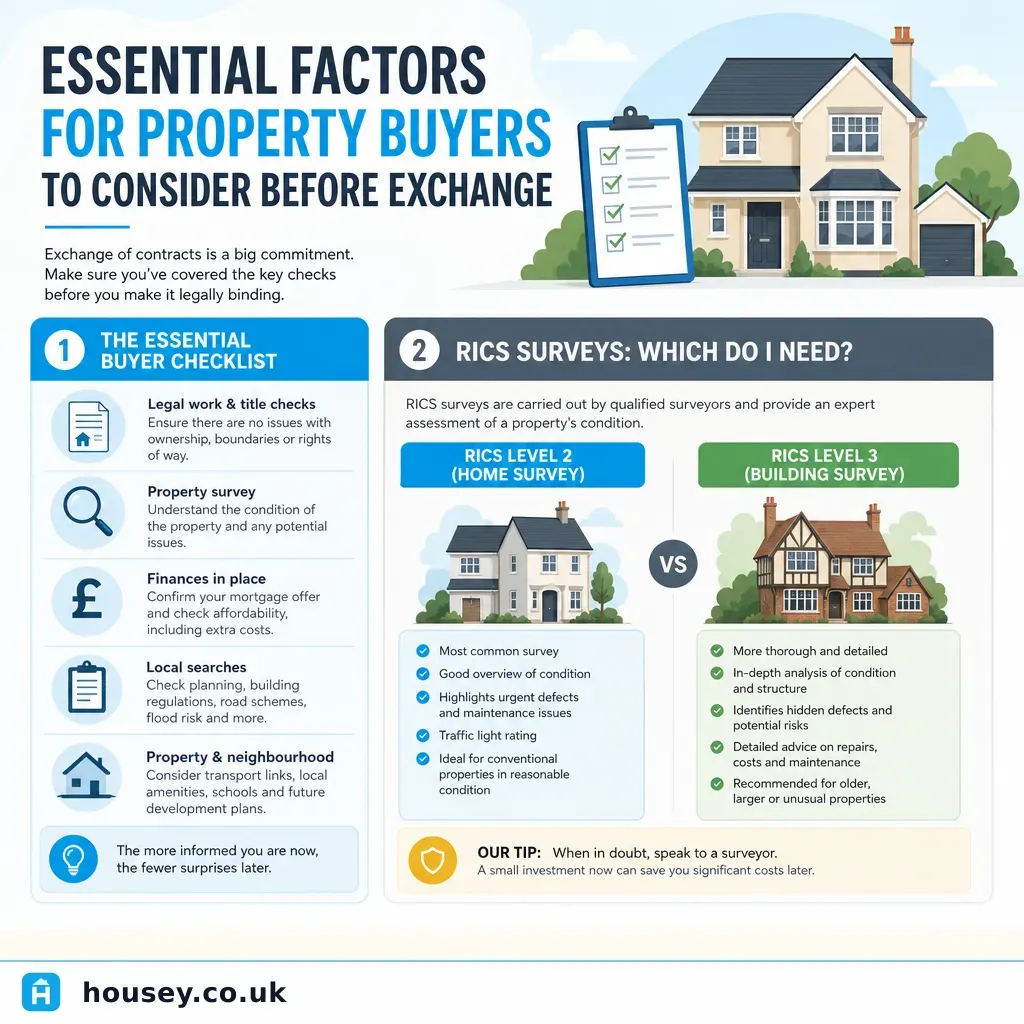
Essential Factors for Property Buyers to Consider Before Exchange
Before exchanging contracts on a UK property, buyers should commission an appropriate RICS survey, review the property's legal title and search results, check the planning history, assess structural condition, and confirm the EPC rating.
 Surveys & Inspections
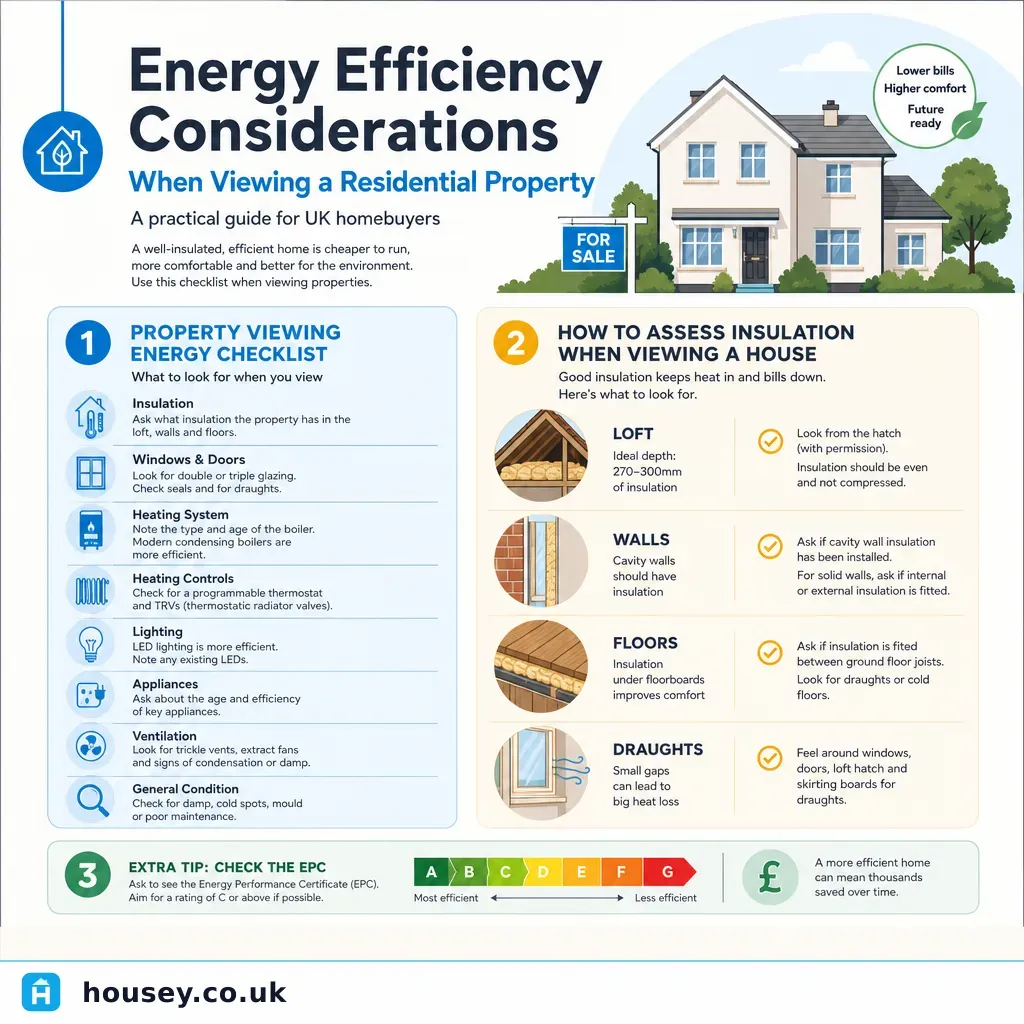
Energy Efficiency Considerations When Viewing a Residential Property
When viewing a residential property, check the EPC rating (aim for band C or above), look for double or triple glazing, assess visible insulation in the loft hatch, check the boiler age and heating controls, and note any signs of damp or cold bridging.
 Surveys & Inspections
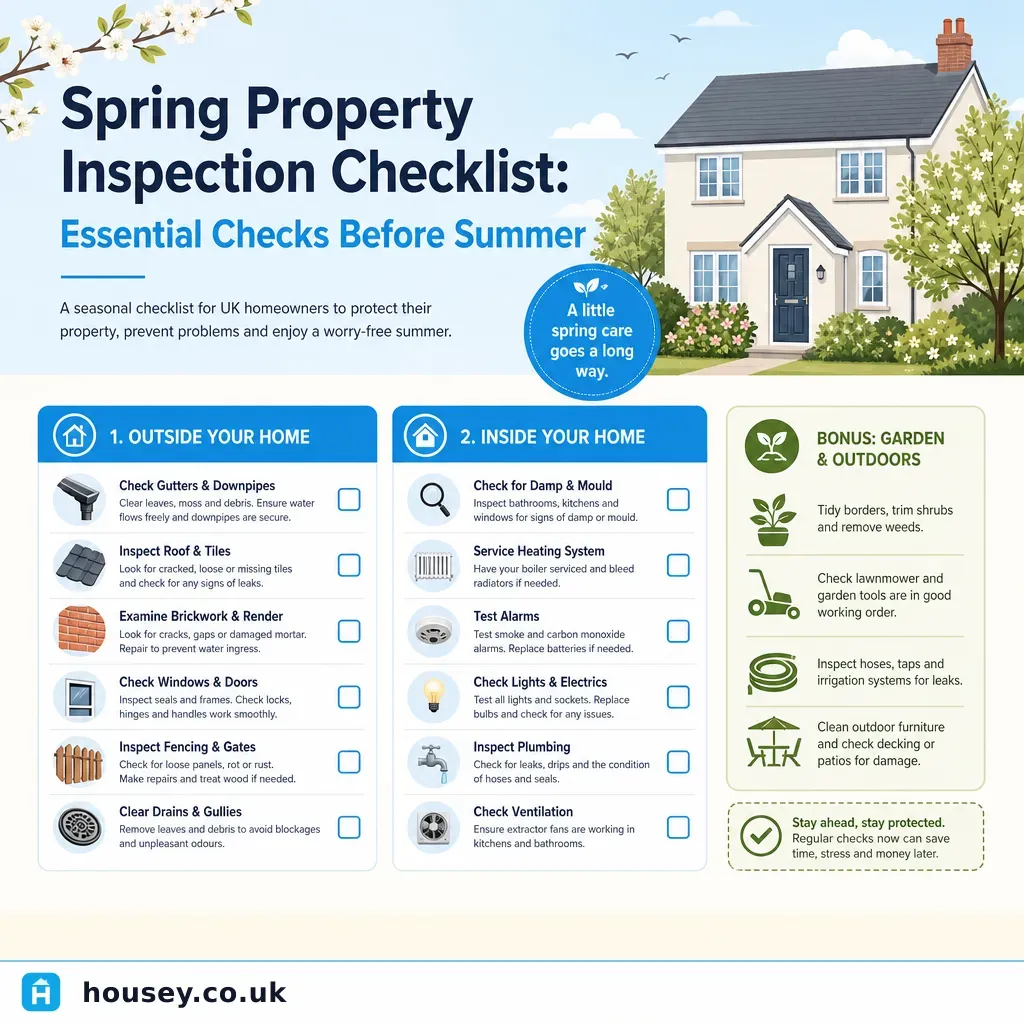
Spring Property Inspection Checklist: Essential Checks Before Summer
Each spring, UK homeowners should check the roof covering, gutters, flashings, drainage, external walls, and window seals for signs of winter damage.
 Surveys & Inspections
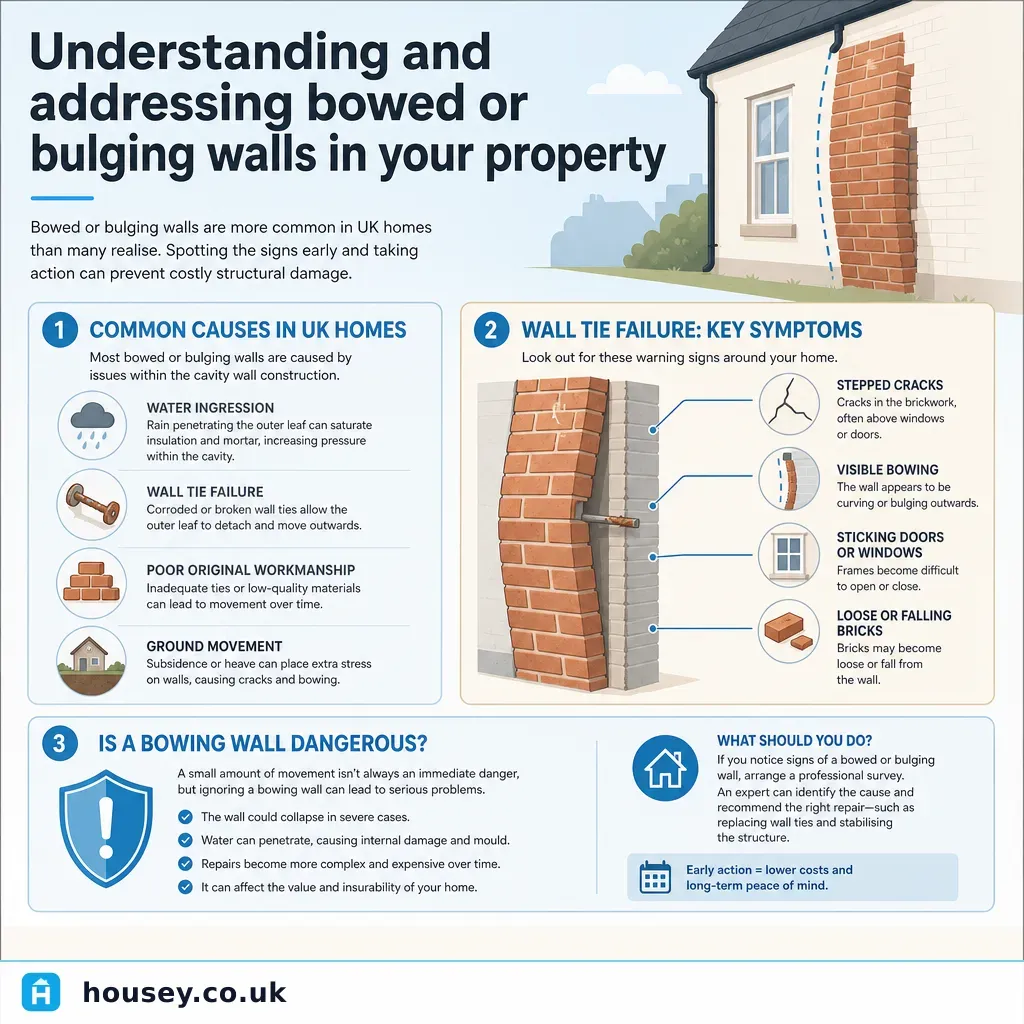
Understanding and addressing bowed or bulging walls in your property
A bowed or bulging wall may indicate wall tie failure, foundation movement, or overloading.
 Surveys & Inspections
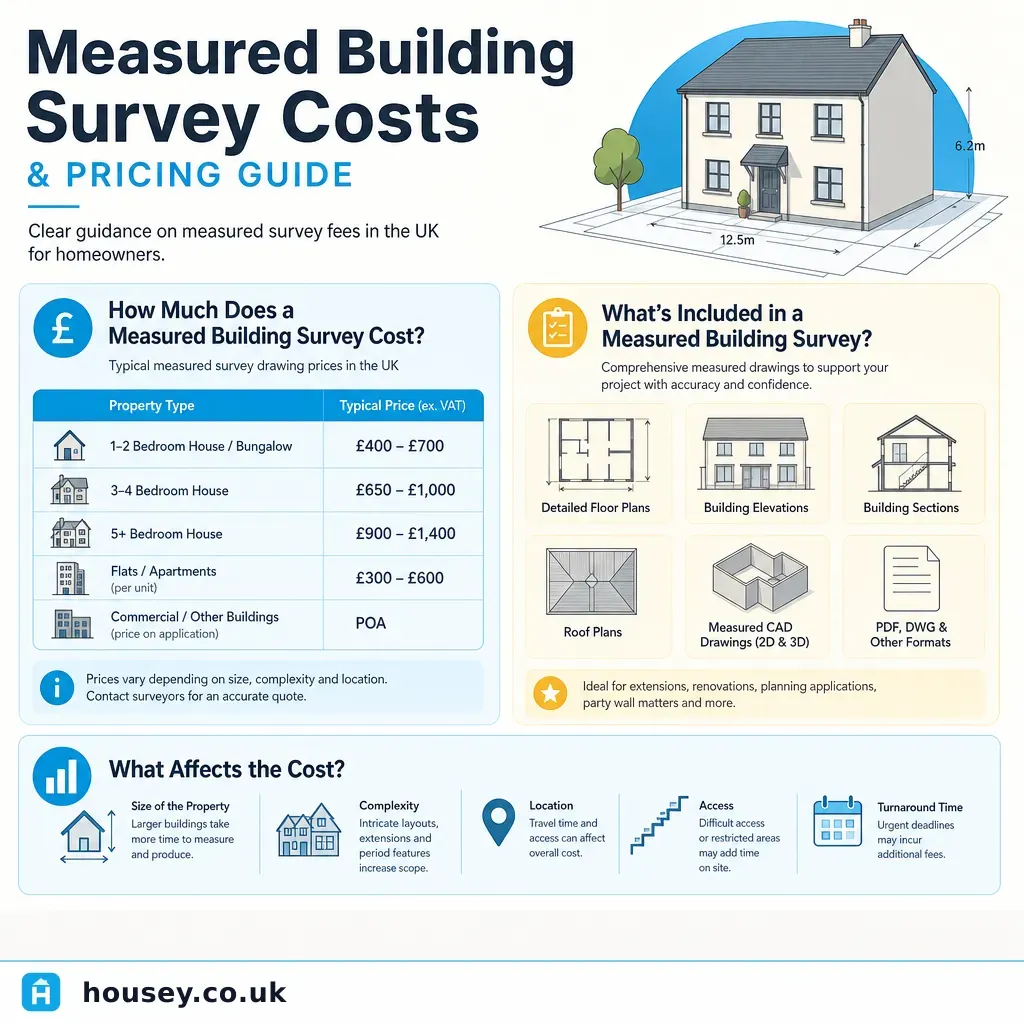
Measured Building Survey Costs and Pricing Guide
A measured building survey in the UK typically costs between £500 and £5,000 for residential properties, depending on floor area, number of levels, drawing scope, and survey method.