Energy Efficiency Guides and Resources for UK Property Owners
By Housey · Last reviewed 30th of May 2026
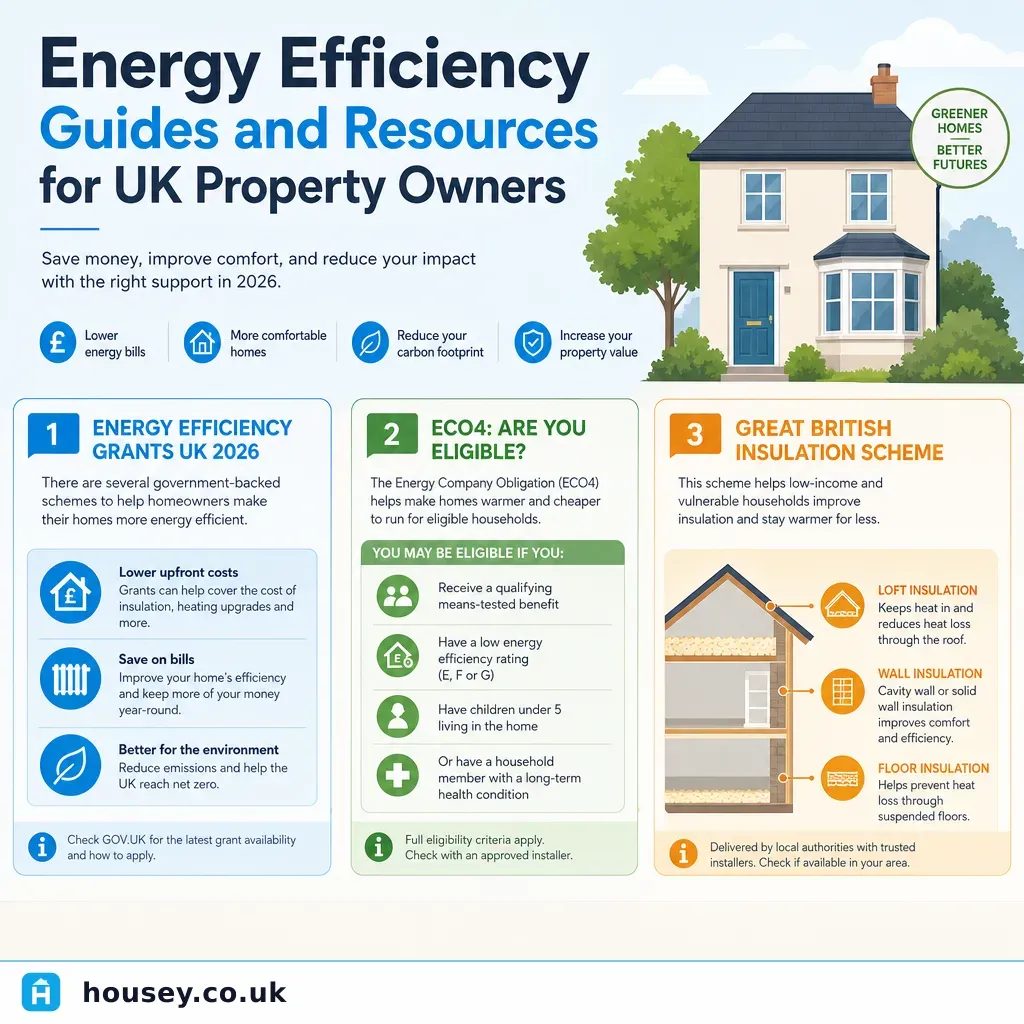
Energy Efficiency Guides and Resources for UK Property Owners
With energy bills still elevated and the UK government's Warm Homes Plan reshaping what retrofit support is available, homeowners are navigating a wider range of choices — and a more complex funding landscape — than at any point in recent memory. This article maps the key energy efficiency measures, official resources, and professional pathways available in 2026, so you can identify the right starting point for your property type and budget.
Key points
- The Great British Insulation Scheme (GBIS) and ECO4 are the main government-funded retrofit programmes in England; eligibility depends on household income, council tax band, and EPC rating.
- PAS 2035 is the publicly available standard governing whole-house retrofit work in the UK; any TrustMark-registered retrofit project must follow it.
- A retrofit coordinator is required for medium and deep retrofit projects funded through certain government schemes, including those following the PAS 2035 framework.
- Air source heat pumps attract a £7,500 grant under the Boiler Upgrade Scheme (BUS) in England and Wales — check GOV.UK for current rates, as funding levels can change.
- Solar PV systems fall under permitted development for most houses in England, meaning no planning permission is needed — but listed buildings and some conservation areas require consent.
Which energy efficiency improvement is right for your home?
No single measure works for every property. The correct sequence matters: insulate the building fabric before changing your heating system, assess ventilation before improving airtightness, and manage moisture risk throughout. Skipping steps — particularly fitting a heat pump into a poorly insulated home — can reduce performance and increase running costs.
Decision tree: choosing where to start
- Start with insulation if your home has uninsulated loft space, unfilled cavity walls (typically built between about 1920 and 1990), or draughty floors and skirting boards. These are usually the most cost-effective first measures and are often grant-funded.
- Consider a heat pump if your home is already well insulated (or will be shortly), has adequate radiator sizes or underfloor heating, and has external space for an outdoor unit. A heat pump survey is essential before committing.
- Look at solar PV if you have a south-, southeast-, or southwest-facing roof with minimal shading, own the property (or have freeholder consent if leasehold), and can use electricity during the day or add battery storage.
- Assess heating controls if you have a modern boiler but no smart thermostat, programmable controls, or thermostatic radiator valves — this is often the lowest-cost efficiency gain available.
- Seek a whole-house retrofit assessment if your property is older than 1919, solid-walled, listed, or has had multiple owners and unknown past alterations. A PAS 2035 assessment will identify risks and sequence improvements correctly.
- Ask a TrustMark-registered retrofit coordinator if you are planning significant works and want a medium-term improvement plan that also protects against moisture and overheating risks.
Comparing the main retrofit measures
Measure | Best for | Typical cost range | Grant available? | Required accreditation |
|---|---|---|---|---|
Loft insulation | Pre-2000 homes with accessible loft | £300–£600 | Possibly (GBIS/ECO4) | TrustMark / CIGA |
Cavity wall insulation | Homes built c.1920–1990 with unfilled cavities | £500–£1,500 | Possibly (GBIS/ECO4) | CIGA-certified installer |
External wall insulation | Solid-walled pre-1920s homes | £8,000–£25,000+ | Possibly (ECO4/HUG2) | TrustMark / PAS 2030 |
Air source heat pump | Well-insulated homes replacing a gas boiler | £8,000–£15,000 before grant | £7,500 BUS grant | MCS-certified installer |
Solar PV | South-facing roof, owner-occupier or freeholder consent | £5,000–£10,000 | Smart Export Guarantee tariff | MCS-certified installer |
Battery storage | Existing or new solar PV system | £3,000–£8,000 | No | MCS-certified (if paired with PV) |
Smart controls and TRVs | Any home with an existing boiler | £100–£400 | No | Not required (DIY possible for most) |
Indicative UK costs, last reviewed 2026-05-30. Quotes vary significantly by region, property size, and access. Always obtain at least three quotes.
Government schemes and funding in 2026
ECO4 (Energy Company Obligation 4): Funded by energy suppliers, ECO4 targets lower-income households and those with the least efficient homes (EPC D or below). Measures covered include insulation, heating upgrades, and heat pumps. Eligibility depends on income, benefits receipt, and council tax band. Apply via your local council or directly through energy suppliers.
Great British Insulation Scheme (GBIS): Open to owner-occupiers and landlords. Eligible properties must be EPC D or below. Covers single measures such as loft or cavity wall insulation. Check the GOV.UK GBIS pages for participating installers and current eligibility criteria.
Boiler Upgrade Scheme (BUS): Provides grants toward the upfront cost of air source heat pumps (£7,500) and ground source heat pumps (£7,500). The grant is applied for by your MCS-certified installer on your behalf — you do not need to claim it directly.
Home Upgrade Grant (HUG2): Funded by DESNZ and delivered via local authorities, this scheme targets off-gas-grid homes in lower-income areas. Check with your local authority for current availability, as funding is allocated regionally.
Warm Homes Plan: The government's overarching retrofit strategy, of which the above schemes form part. Monitor GOV.UK and the Energy Saving Trust for updates as new funding rounds open.
Where to find reliable information
Source | What it covers |
|---|---|
Eligibility checkers, scheme links, EPC finder | |
Practical guides, technology overviews, advice line | |
Find MCS-certified heat pump and solar installers | |
Find PAS 2035-compliant retrofit installers | |
Technical guidance on heat pumps, ventilation, and building services |
What to ask before accepting a quote
Before instructing any energy efficiency contractor, ask:
- What accreditation do you hold? (MCS for heat pumps and solar; CIGA for cavity wall; TrustMark for PAS 2035 retrofit)
- Is this quote based on a physical survey of the property, or is it an assumption? What could change the price?
- Will you handle the grant application, or do I need to manage this myself?
- What ventilation measures are included, and how will moisture risk be managed?
- What guarantee or warranty comes with the installation, and is it backed by an independent scheme?
- Is VAT included in the price, and at what rate?
- What building control approval, MCS certificate, or other documentation will I receive on completion?
When to get professional help
Consider commissioning a retrofit assessment before starting any significant works if:
- Your home is pre-1919, solid-walled, or of non-standard construction.
- You are planning to improve airtightness without first addressing ventilation.
- You want to install a heat pump but are unsure whether your insulation levels or radiator sizes are adequate.
- You are a landlord needing to reach EPC E (or planning ahead for proposed EPC C requirements) and the most straightforward measures have already been completed.
A PAS 2035 retrofit coordinator can assess your home, produce a medium-term improvement plan, and sequence measures to avoid moisture or overheating problems that can arise when works are carried out in the wrong order.
How Housey can help
Housey connects you with qualified local professionals for every stage of your retrofit journey. Compare quotes from energy-efficiency consultants, book a retrofit assessment under PAS 2035, or find an MCS-certified surveyor for a heat pump survey or solar survey.
Frequently asked questions
What is the best first step to improve my home's energy efficiency?
In most cases, improving insulation delivers the greatest energy saving at the lowest cost. Start with loft insulation if you have accessible loft space, then cavity wall insulation if your walls are hollow — typically properties built between 1920 and 1990. Once the building fabric is addressed, heating system upgrades such as a heat pump or solar panels become more effective and cost-efficient.
Which grants are currently available for energy efficiency improvements in 2026?
The main schemes in England are ECO4 (for lower-income households), the Great British Insulation Scheme (single-measure insulation grants), and the Boiler Upgrade Scheme (£7,500 toward a heat pump). Availability and eligibility change regularly — check the GOV.UK energy efficiency grants page or speak to an accredited retrofit adviser for your current entitlements.
Do I need planning permission to install solar panels?
Most roof-mounted solar panels on houses in England fall under permitted development rights, so no planning application is required. Exceptions include listed buildings, properties in conservation areas where panels face a public highway, and flats without separate permitted development rights. Check with your local planning authority if you are unsure whether your property qualifies.
Sources and further reading
- GOV.UK: improve your home's energy efficiency — GOV.UK
- Boiler Upgrade Scheme guidance — GOV.UK
- PAS 2035 overview — BSI Group
- Energy Saving Trust: home improvement guides — Energy Saving Trust
- MCS: find a certified installer — Microgeneration Certification Scheme
- TrustMark: PAS 2035 retrofit — TrustMark
Useful next reads
 Energy & Retrofit
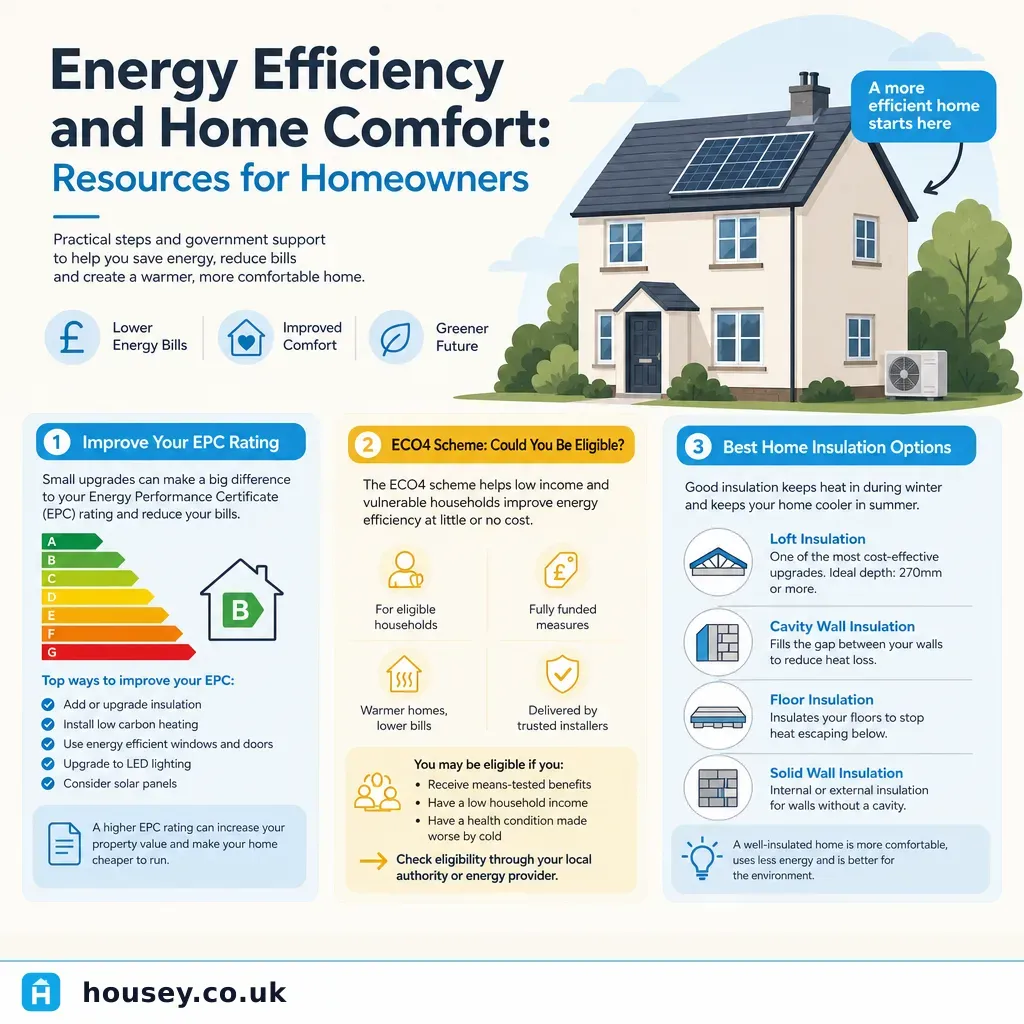
Energy Efficiency and Home Comfort: Resources for Homeowners
Start with your Energy Performance Certificate to understand where your home loses heat, then prioritise improvements by property type.
 Energy & Retrofit
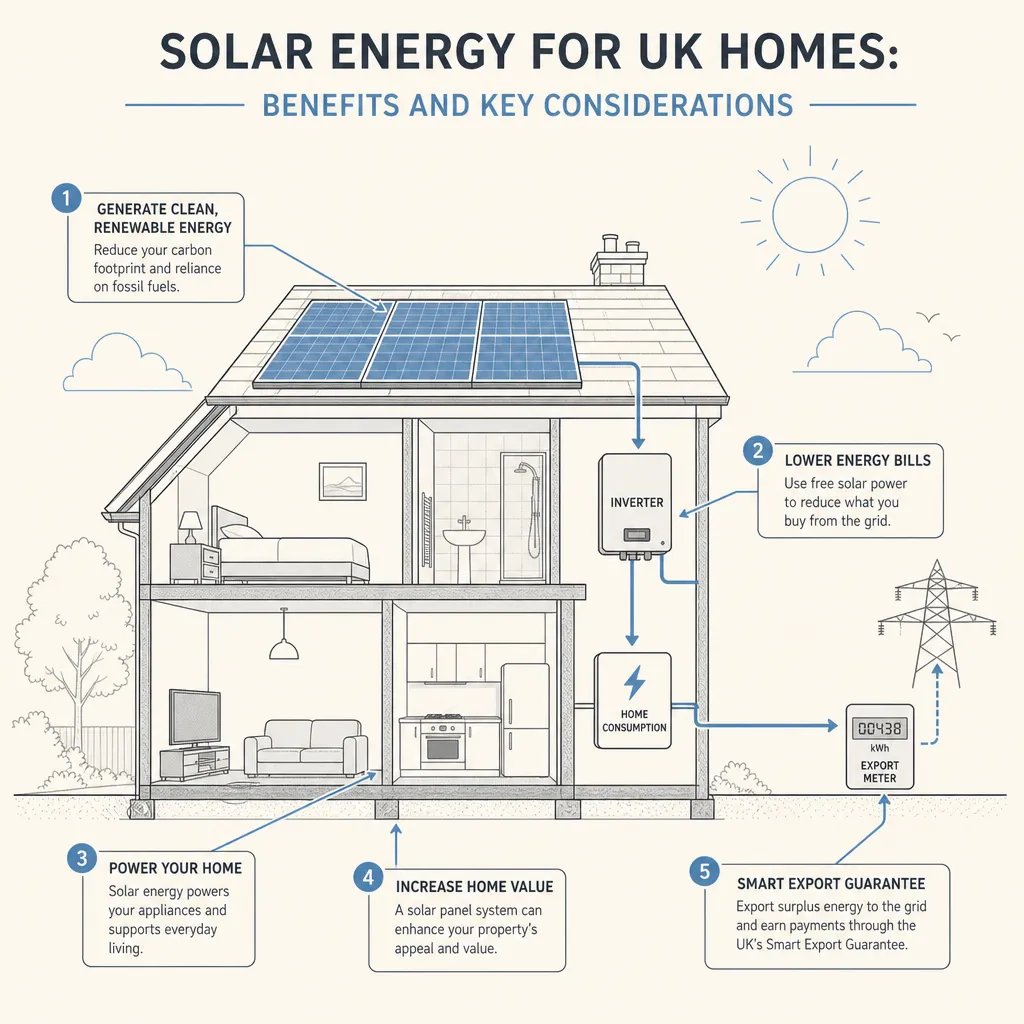
Solar Energy for UK Homes: Benefits and Key Considerations
Solar photovoltaic (PV) panels can reduce electricity bills, generate export income via the Smart Export Guarantee (SEG), and improve a home's EPC rating.
 Energy & Retrofit
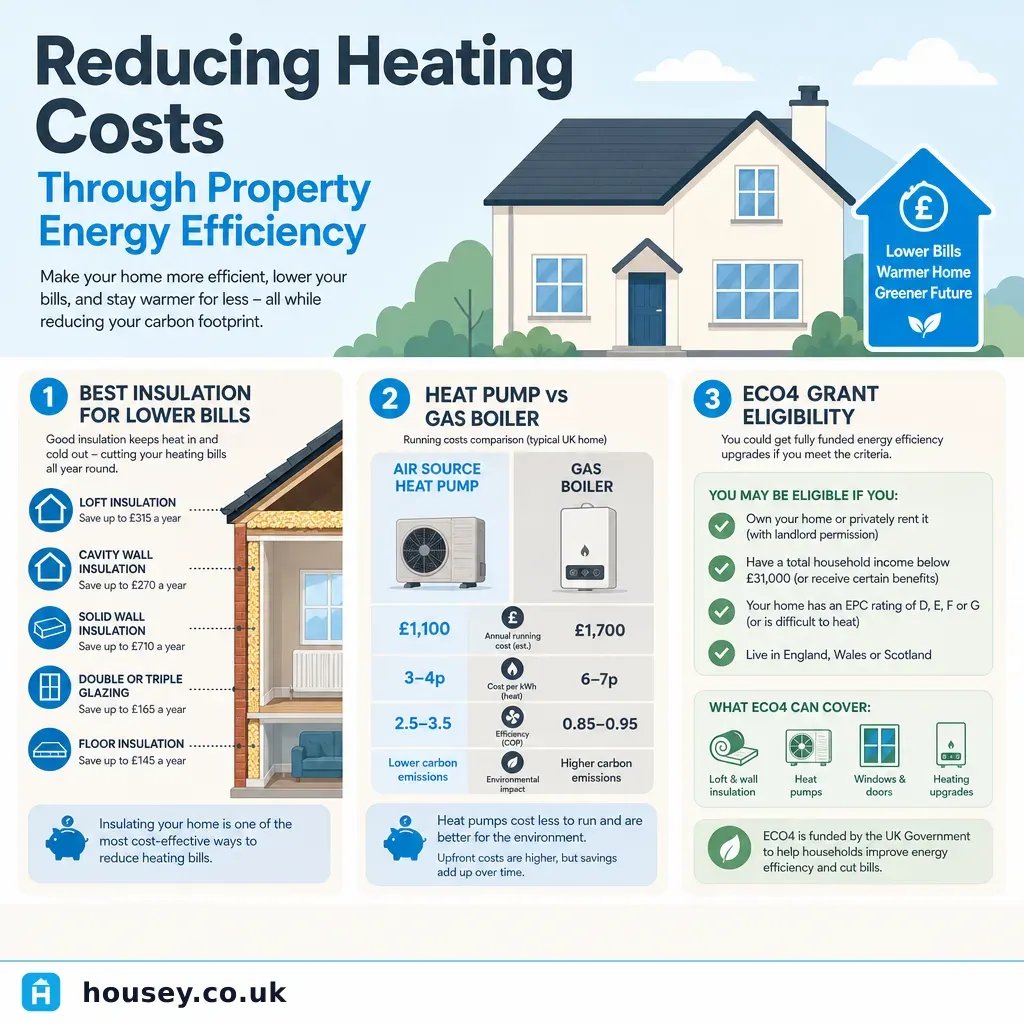
Reducing Heating Costs Through Property Energy Efficiency
Reducing heating costs starts with identifying where heat is lost — typically walls (30–35%), roof (20–25%), and windows.
 Energy & Retrofit
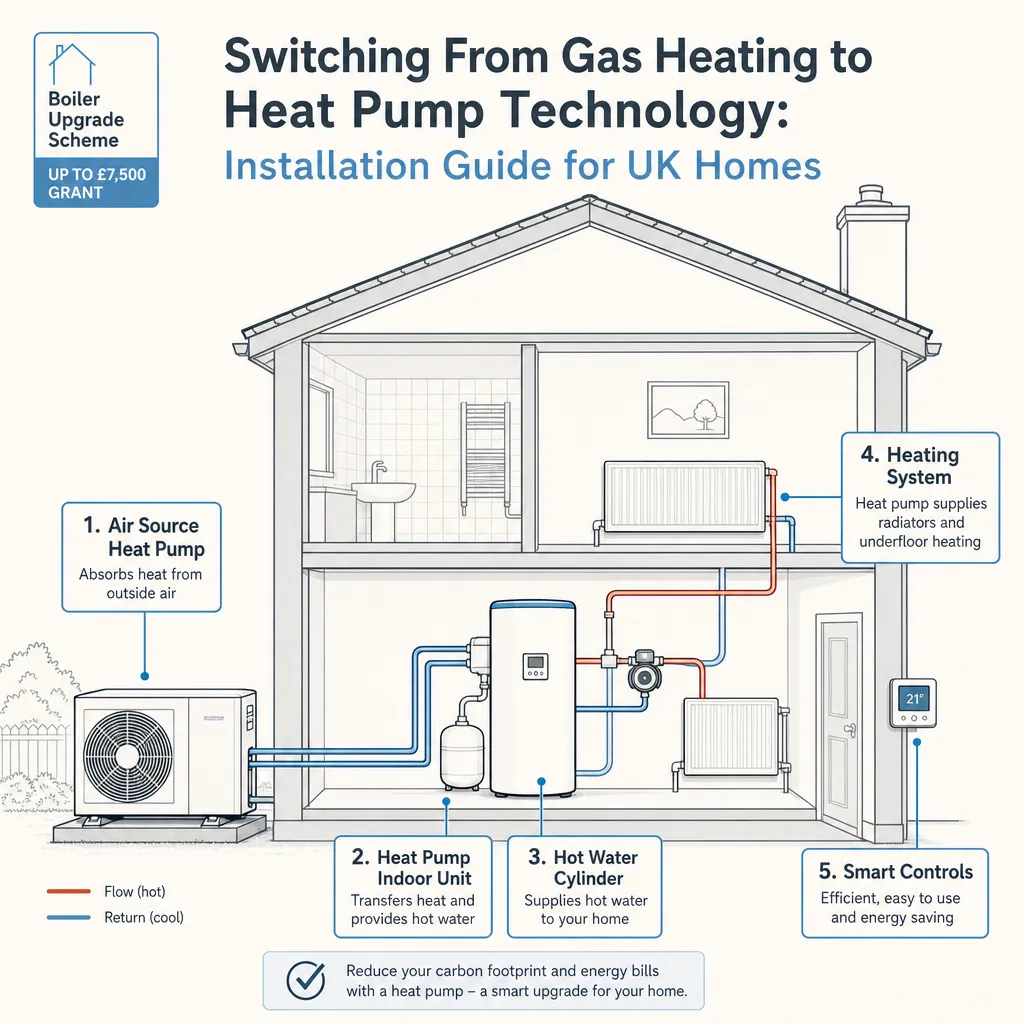
Switching From Gas Heating to Heat Pump Technology: Installation Guide
Switching from gas to a heat pump requires a heat loss calculation, correctly sized equipment, and often radiator upgrades before installation.
 Energy & Retrofit
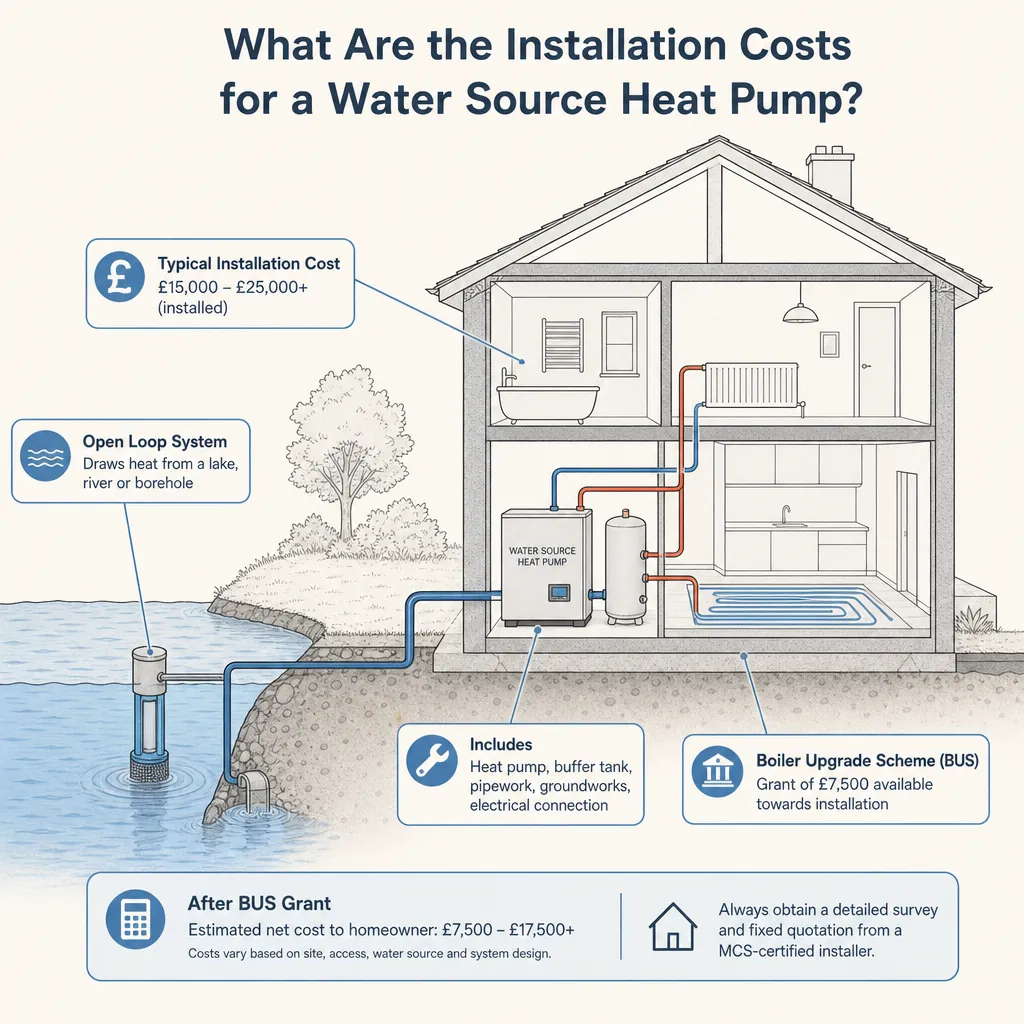
What Are the Installation Costs for a Water Source Heat Pump?
Water source heat pump installation in the UK typically costs £15,000–£45,000, depending on system type (open-loop or closed-loop), required heat output, and site complexity.