Energy Efficiency Market Trends and UK Housing Performance Report
By Housey · Last reviewed 30th of May 2026
Energy Efficiency Market Trends and UK Housing Performance Report
Understanding where the UK housing stock stands on energy performance — and where the market is heading — matters whether you own, rent, invest in property, or are planning retrofit works. Policy shifts, tightening minimum standards, and growing buyer awareness of running costs are reshaping what energy efficiency means for property values, saleability, and landlord compliance obligations across every region of the country.
Key points
- More than 60% of UK homes are rated EPC band D or below, against the government's ambition to bring as many homes as possible to band C by 2035 (DLUHC English Housing Survey 2023–24).
- ONS analysis has found price uplifts of approximately 1.7% to 6.9% for properties with higher EPC ratings compared with otherwise similar band D homes.
- The Energy Efficiency (Private Rented Property) (England and Wales) Regulations 2015 (MEES) currently require landlords to meet a minimum EPC band E; a band C requirement for new tenancies from 2028 has been proposed but was not yet legislated as of May 2026.
- ECO4 (Energy Company Obligation, phase 4) provides funding for insulation and heating upgrades in eligible low-income and fuel-poor households, administered by Ofgem.
- The UK Climate Change Committee (CCC) estimates that between 20 and 29 million homes require significant retrofitting to meet the UK's legally binding net-zero target by 2050.
Where UK homes stand today: the EPC distribution
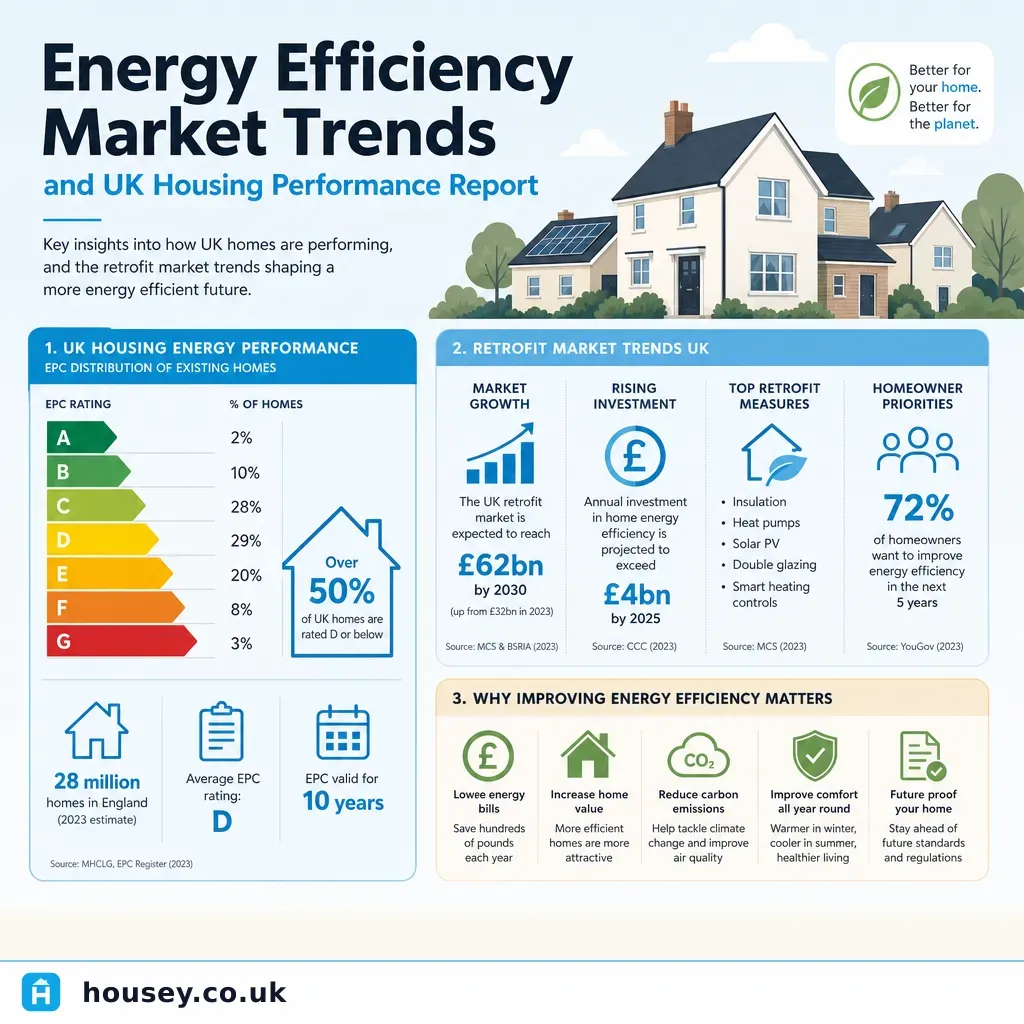
The EPC scale runs from A (most efficient) to G (least efficient). The distribution of the English housing stock, based on DLUHC's English Housing Survey 2023–24, shows meaningful progress in recent decades — but a large gap remains between today's average and government improvement targets.
EPC band | Approximate share of English homes | Broad running cost profile | Primary driver |
|---|---|---|---|
A–B | ~4% | Very low — highly insulated, low-carbon heating | New-builds; deep retrofits |
C | ~36% | Moderate — good insulation, efficient boiler | Post-2000 builds; improved older stock |
D | ~38% | Average — mixed insulation, gas central heating | Mainstream mid-century housing stock |
E | ~14% | Above-average costs — insulation gaps present | Older unimproved stock |
F–G | ~8% | High costs — poor insulation, older or inefficient heating | Hardest-to-treat and unimproved pre-war properties |
Source: DLUHC English Housing Survey 2023–24. Running cost profiles are indicative and vary significantly by property size, occupancy, and prevailing energy tariffs.
Progress has been real: the proportion of homes in bands A–C has grown from approximately 14% in 2010 to around 40% today, largely driven by the roll-out of cavity wall insulation under earlier government programmes and the shift to condensing boilers following the Building Regulations Part L changes of 2005. However, the hardest-to-treat properties — solid-walled homes, properties with complex geometry, and those in conservation areas or listed — remain disproportionately concentrated in the lower bands and present a significantly greater challenge and cost to improve.
Policy drivers shaping the market
Minimum Energy Efficiency Standards (MEES)
The Energy Efficiency (Private Rented Property) (England and Wales) Regulations 2015 introduced the MEES framework. Currently, landlords may not grant most new or renewed residential tenancies in properties rated below EPC band E. The government has proposed raising the threshold to band C for new tenancies from 2028 and all tenancies from 2030, but legislation was not finalised as of May 2026. An estimated 2.4 million privately rented homes in England sit below band C, making this one of the most significant near-term policy drivers for the retrofit market.
ECO4 and the Great British Insulation Scheme
ECO4 (Energy Company Obligation, phase 4), administered by Ofgem, requires large energy suppliers to fund insulation and heating improvements in eligible households — broadly, those in social housing, low-income owner-occupied homes, and privately rented properties with consenting landlords. The Great British Insulation Scheme (GBIS) runs alongside it, targeting a broader range of D–G rated owner-occupied homes. Check GOV.UK and Ofgem for the current status of both schemes and any successor arrangements.
Boiler Upgrade Scheme (BUS)
The BUS provides grants of £7,500 for air source heat pumps and £7,500 for ground source heat pumps (as of 2024) for eligible properties in England and Wales, with installation required from an MCS-accredited contractor. Uptake has grown year-on-year but remains well below the government's heat pump deployment ambitions.
Future Homes Standard
The Future Homes Standard, expected to take effect in England from 2025–2026, will require new homes to produce 75–80% less carbon than properties built to current Part L standards, effectively mandating heat pumps or equivalent low-carbon heating in new builds. This will gradually affect the resale market as buyers compare running costs between new and older stock.
Red flags: when a property's energy performance may be worse than it appears
When reviewing properties, EPC data, or retrofit investment opportunities, watch for these warning signs that performance may be lower — or improvement harder — than initial information suggests.
- An EPC more than five years old on a frequently transacted property — the certificate may not reflect the current condition, or it may have been prepared to a minimum standard without physical verification of insulation features.
- Insulation rated as "assumed" or "estimated" on the EPC — assessors sometimes estimate where they cannot physically verify. Actual performance may be lower than the rating implies.
- A large gap between current and potential EPC rating — significant improvements are available but have not been made. Understanding why is important before exchange.
- Cavity wall insulation certificates that cannot be produced — insulation claimed in records but not evidenced is a risk; poorly installed or failed cavity fill can cause penetrating damp.
- Pre-1919 properties rated above band D without documented solid wall insulation — these ratings deserve scrutiny. Understand precisely which features drove the assessment score.
- A property in a conservation area or with listed building status — permitted development rights for external wall insulation, replacement windows, and solar panels may be restricted, significantly narrowing improvement options and increasing costs.
- A building with a complex roofline or multiple extensions — these can create insulation cold bridges and make standard retrofit measures more complex to detail correctly.
Does energy efficiency add to property value? The green premium
Research consistently finds that higher EPC ratings correlate with higher sale prices, though the size of the premium varies by location, property type, and prevailing market conditions.
ONS analysis of residential property transactions linked to EPC data found that, compared with a band D property of otherwise similar characteristics, homes rated at higher bands attracted average premiums of approximately:
- Band C: 1.7–3.5% uplift
- Band B: 3.5–5.0% uplift
- Band A: 5.0–6.9% uplift
These are averages across a large dataset and will not hold uniformly in every local market or price bracket. They suggest, however, that the cost of well-targeted retrofit measures — particularly moves from band E or D to band C — may be partially recoverable on sale, in addition to the savings on running costs during ownership. Buyer awareness of energy costs has increased since 2021–22, and this is gradually being reflected in valuation practice.
When to get professional help
Navigating retrofit decisions — especially for complex or older properties — benefits considerably from professional assessment rather than relying on the EPC or published cost estimates alone.
Seek professional guidance if:
- You are a landlord assessing your portfolio's exposure to current and forthcoming MEES obligations.
- You are considering solid wall insulation and want to avoid interstitial condensation or structural moisture risk.
- You want to understand grant eligibility under ECO4, GBIS, or the Boiler Upgrade Scheme before committing to expenditure.
- You are buying or investing in property and want an independent view of realistic retrofit costs and their impact on projected yield or resale value.
How Housey can help
An energy-efficiency consultant can audit your property, interpret your EPC in the context of the building's actual construction, and identify which improvements are both technically feasible and financially worthwhile. If you are planning retrofit works — particularly whole-house improvements — a retrofit assessment conducted to PAS 2035 standards is the recommended starting point, ensuring measures are sequenced correctly and moisture risks are managed from the outset.
Frequently asked questions
What is PAS 2035 and why does it matter for retrofit?
PAS 2035 is a British Standard setting out the framework for assessing and installing energy efficiency measures in existing homes. It requires that retrofit work funded through schemes such as ECO4 is coordinated by a qualified Retrofit Coordinator and assessed by a Retrofit Assessor, reducing the risk of poor-quality or counterproductive installations such as insulation causing moisture problems.
Will my EPC rating automatically improve after I insulate my loft?
No. The EPC reflects the property's features as assessed at the time of the survey. If you add insulation, a new boiler, or upgraded glazing after the certificate was issued, you will need a new EPC — conducted by an accredited Domestic Energy Assessor — to update your rating and reflect the improved performance.
Are there grants available for energy efficiency improvements in 2026?
As of May 2026, ECO4 and the Great British Insulation Scheme are the principal government-funded routes for eligible households. The Boiler Upgrade Scheme provides grants for heat pump installations. Eligibility depends on income, property type, EPC rating, and other criteria. Check GOV.UK and Ofgem for current scheme availability, as funding terms can change.
What does 'hardest to treat' mean in the context of retrofit?
'Hardest to treat' describes properties where standard insulation measures — cavity wall fill, standard loft insulation — are not straightforward: solid-walled homes, complex roof geometries, park homes, and historic buildings. These properties typically carry higher per-unit retrofit costs and almost always benefit from specialist assessment before works are commissioned.
Sources and further reading
- English Housing Survey 2023 to 2024 — Department for Levelling Up, Housing and Communities
- Minimum energy efficiency standards — landlord guidance — GOV.UK
- Energy Company Obligation (ECO4) — Ofgem
- Boiler Upgrade Scheme — GOV.UK
- Sixth Carbon Budget — Climate Change Committee
- Energy efficiency of housing in England and Wales — Office for National Statistics
Useful next reads
 Energy & Retrofit
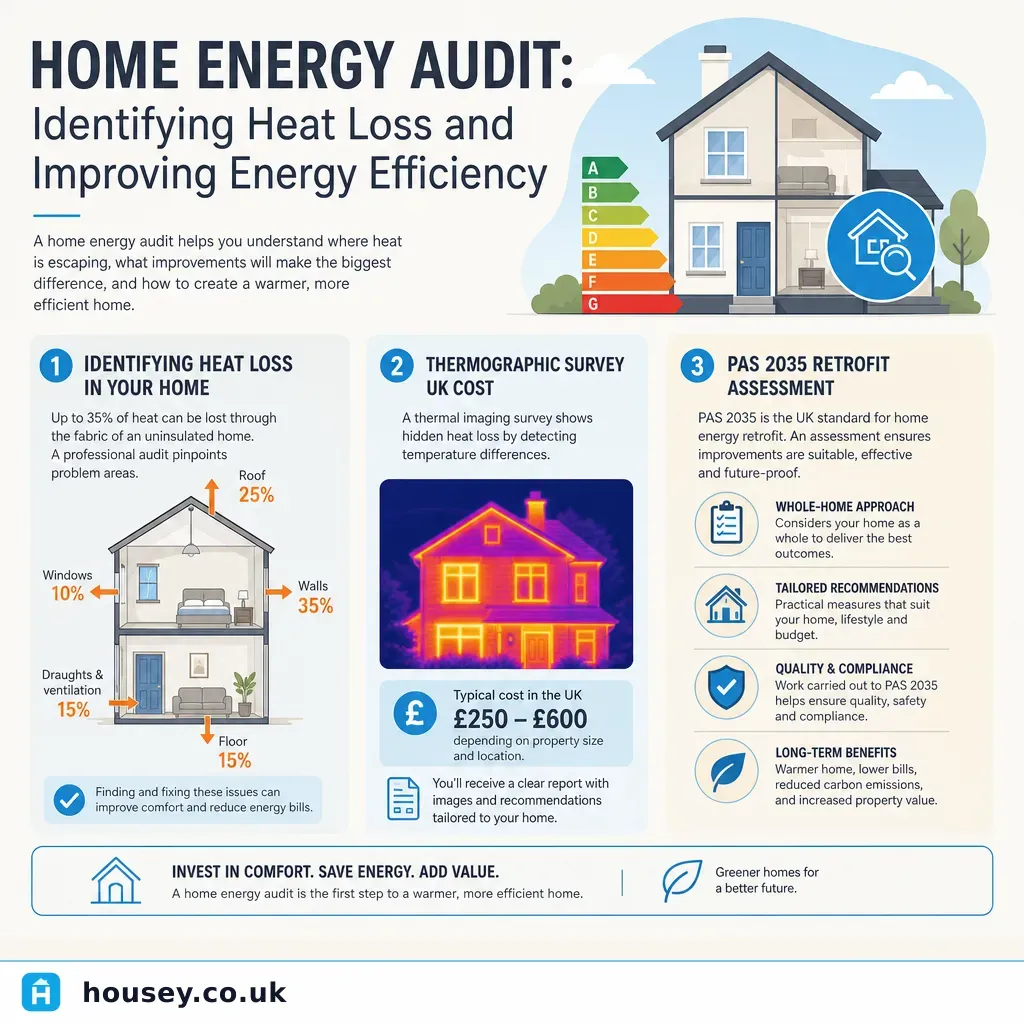
Home Energy Audit: Identifying Heat Loss and Improving Energy Efficiency
A home energy audit is a structured assessment of where your property loses heat and how efficiently it uses energy.
 Energy & Retrofit
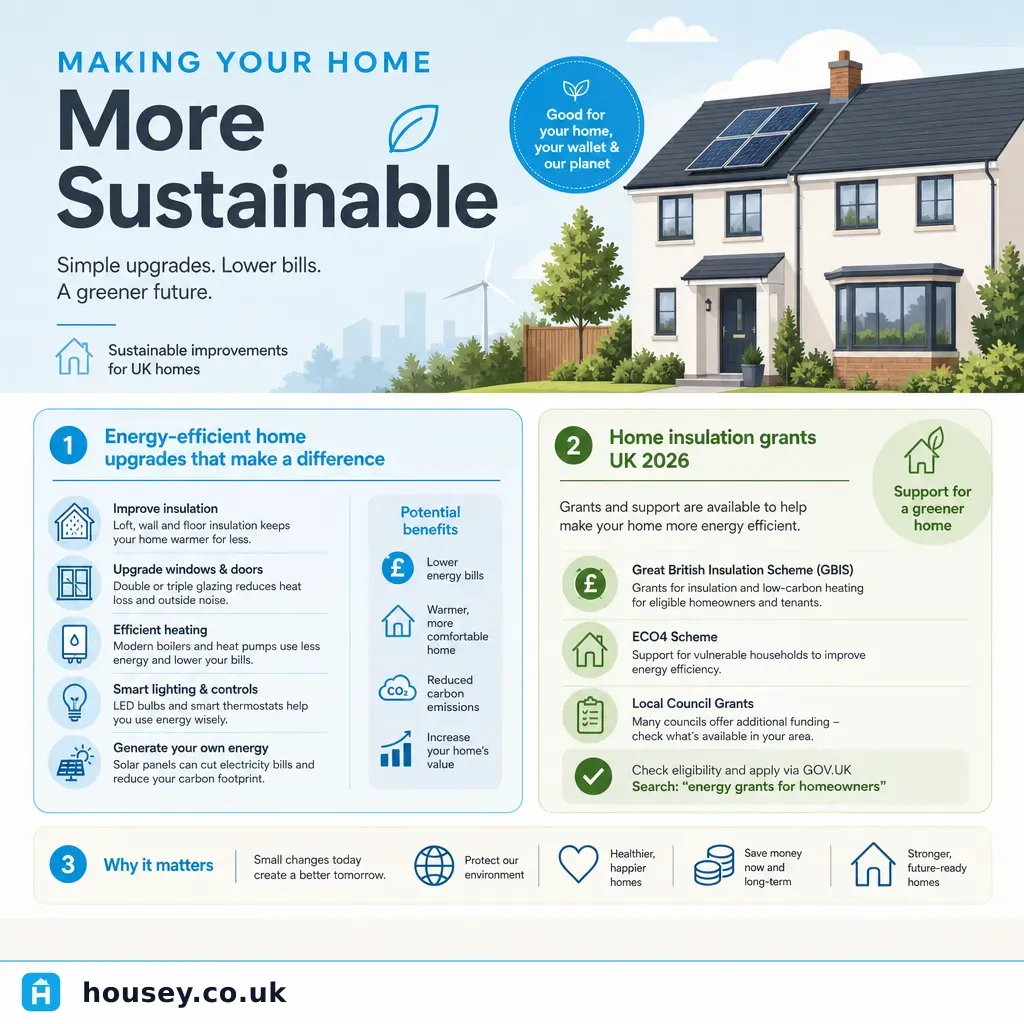
Making your home more sustainable
Making a UK home more sustainable usually starts with fabric-first improvements such as insulation, draught-proofing, and efficient glazing before adding renewable energy systems like solar panels or a heat pump.
 Energy & Retrofit
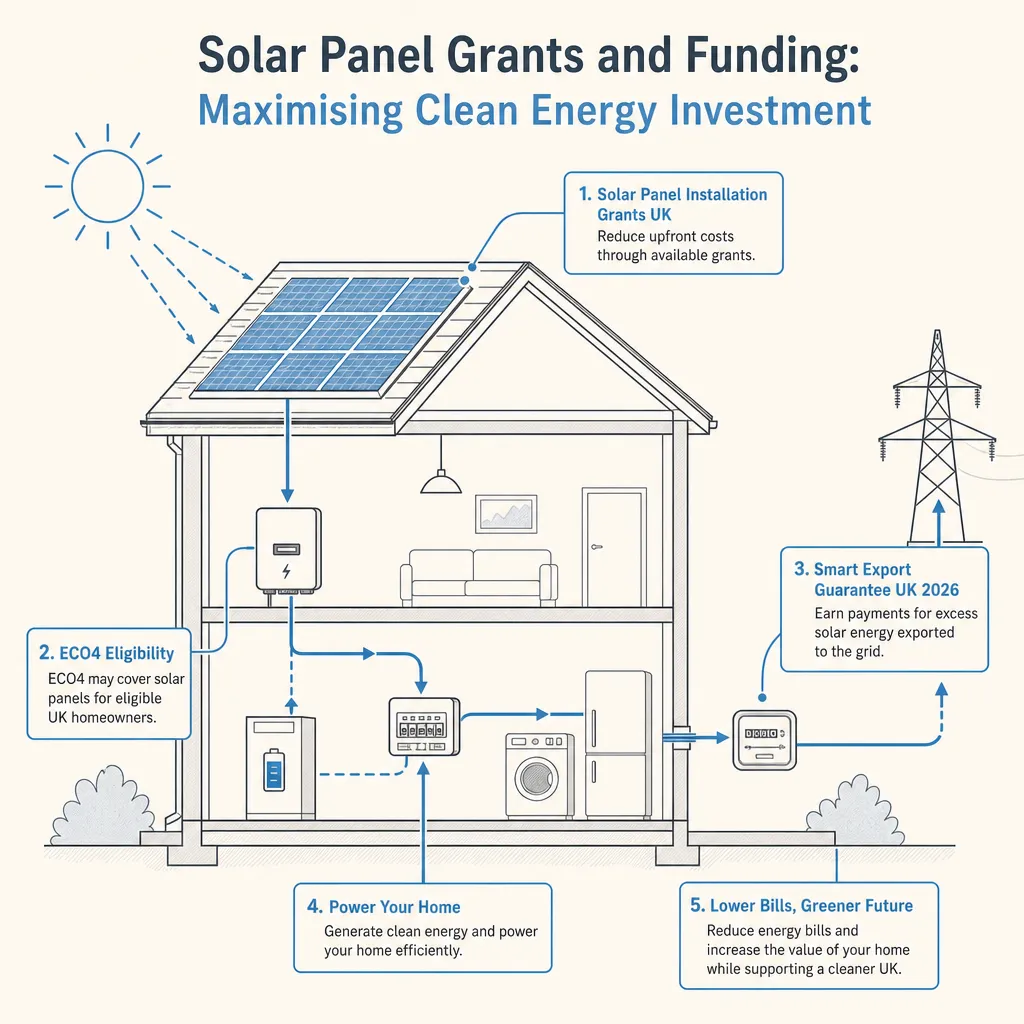
Solar Panel Grants and Funding: Maximising Clean Energy Investment
Several UK solar funding schemes are currently open: the Smart Export Guarantee pays homeowners for surplus electricity exported to the grid, ECO4 can fund free or subsidised panels for eligible low-income households, and 0% VAT on installation applies until at least March 2027.
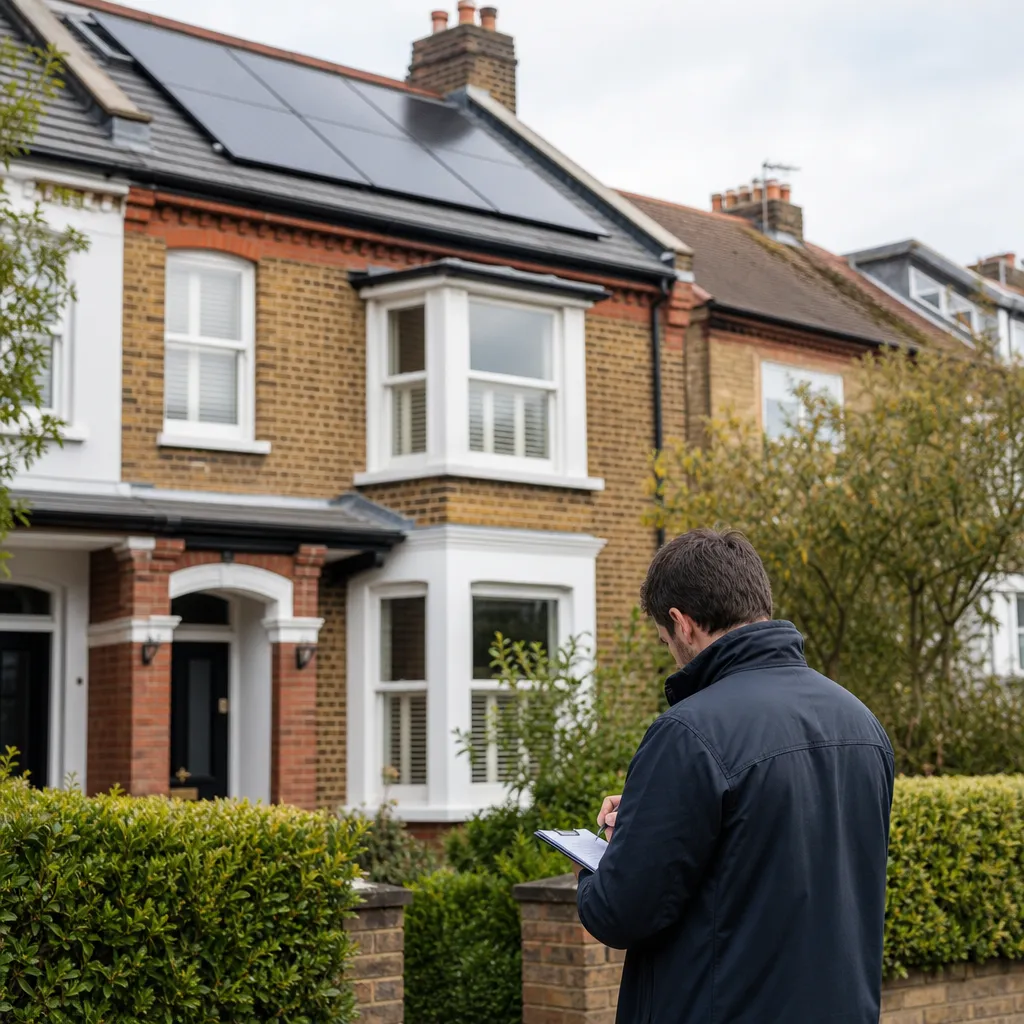 Energy & Retrofit
Making Your Home More Energy Efficient and Sustainable
The most effective approach to home energy efficiency is fabric-first: insulate the loft, walls, and floor before upgrading the heating system.
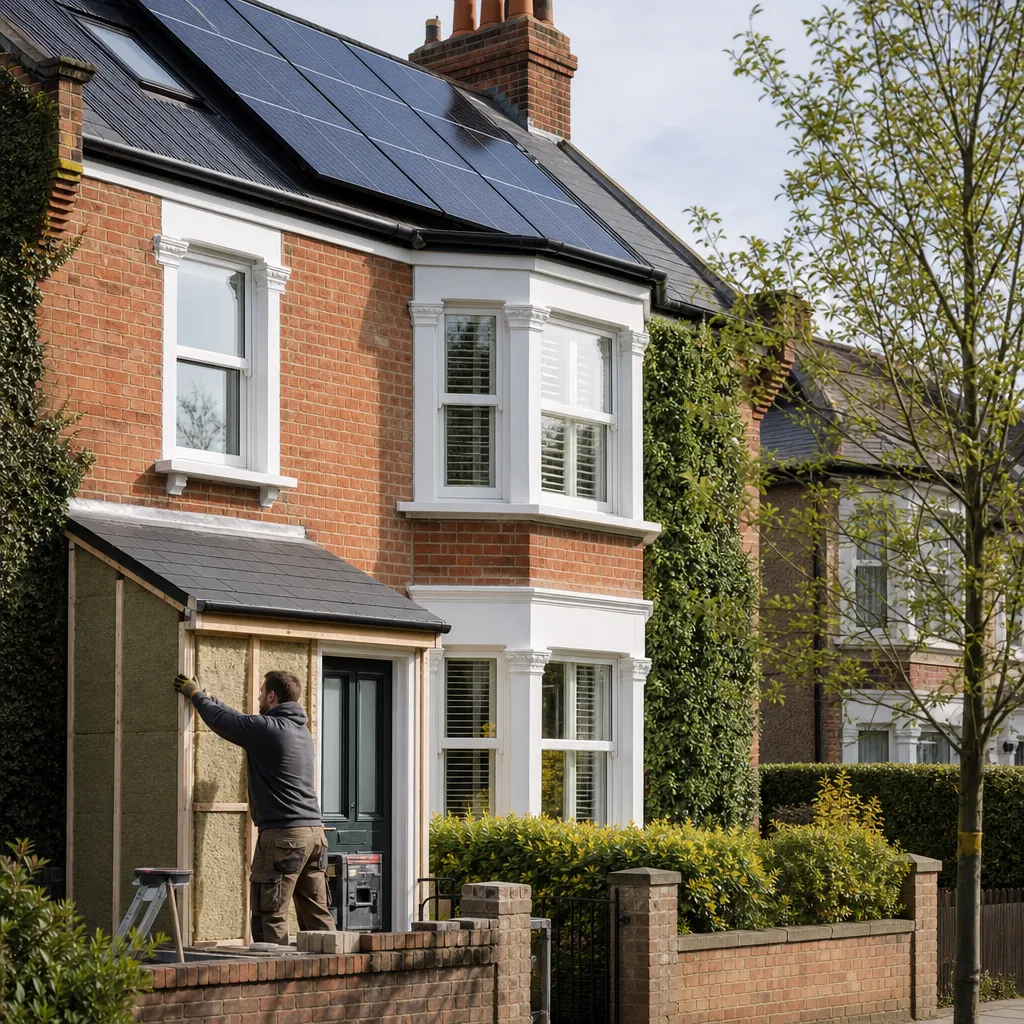 Energy & Retrofit
Sustainable Home Improvements: Eco-Friendly Renovation and Retrofit Trends
Sustainable home improvements in the UK typically start with fabric upgrades — insulation and draught-proofing — then ventilation, then low-carbon heating such as a heat pump.