Sustainable Home Improvements: Eco-Friendly Renovation and Retrofit Trends
By Housey · Last reviewed 25th of May 2026
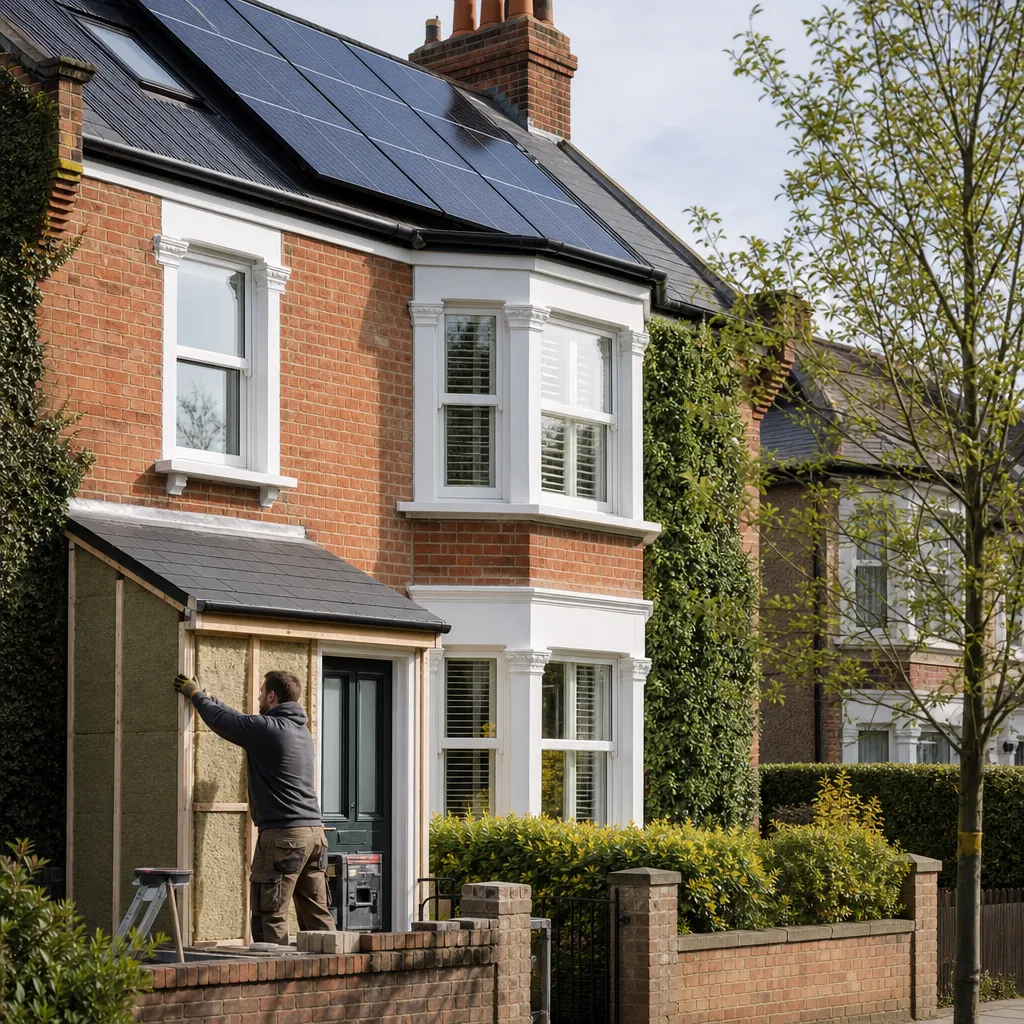
Sustainable Home Improvements: Eco-Friendly Renovation and Retrofit Trends
The push to cut energy bills and reduce household carbon emissions has moved sustainable home improvement from a niche interest to a mainstream concern for UK homeowners. Tightening energy regulations, rising fuel costs, and an expanding range of government grants mean that more households are now weighing up insulation upgrades, heat pump installations, solar panels, and other eco-friendly measures — often for the first time. The choices can be complex, and the consequences of getting the sequencing or specification wrong are costly.
Key points
- PAS 2035 is the UK's nationally recognised framework for domestic retrofit; it is mandatory for all ECO4-funded work and requires a qualified Retrofit Assessor and Retrofit Coordinator.
- The Boiler Upgrade Scheme (BUS) offers grants of up to £7,500 towards an air source heat pump and £7,500 towards a ground source heat pump in England and Wales, as of 2026.
- Solid wall insulation can reduce an uninsulated solid brick wall's U-value from around 2.1 W/m²K to below 0.3 W/m²K, but requires careful moisture management to prevent interstitial condensation.
- Installing airtightness measures without an appropriate ventilation strategy breaches PAS 2035 principles and can cause damp, mould, and poor indoor air quality.
- Solar PV panels on a standard dwelling house generally fall within permitted development rights, but listed buildings, conservation areas, and flat roofs are subject to additional restrictions.
Which sustainable improvements deliver the most impact?
Not all eco-friendly upgrades produce the same result. The right starting point depends on your property's age, construction type, current EPC rating, and how you heat it. Insulation and draught-proofing typically deliver the best return per pound spent — particularly in solid-wall homes built before 1930, which make up a large share of the UK's least energy-efficient housing stock.
The table below compares common sustainable home improvements, who they suit best, and the key risks if poorly specified:
Improvement | Best for | Less suitable for | Typical professional | Key risk if done badly |
|---|---|---|---|---|
Loft insulation (top-up) | Most homes with accessible loft space | Already well-insulated or converted lofts | TrustMark/CIGA-registered installer | Blocking eaves ventilation; condensation |
External solid wall insulation | Pre-1930 solid-brick homes | Listed buildings; conservation areas | PAS 2035 Retrofit Coordinator | Moisture trapped behind cladding; planning issues |
Air source heat pump | Homes with EPC C or above, good insulation | Draughty, poorly insulated properties | MCS-certified heat pump installer | Undersizing; high running costs if fabric not improved first |
Solar PV panels | South-facing roof with minimal shading | North-facing roofs; flats with shared roof | MCS-certified solar installer | Poor returns if shading not assessed |
MVHR (mechanical ventilation with heat recovery) | Well-sealed, insulated homes | Leaky older homes without air-sealing | Specialist MVHR installer | Blocked ducts; noise; increased energy use |
Double or triple glazing | Homes with single glazing | Already double-glazed (diminishing returns) | FENSA-registered installer | Draught reduction without ventilation strategy risks condensation |
Understanding PAS 2035 and why it matters
PAS 2035 is the Publicly Available Specification that governs domestic retrofit in the UK. Introduced in 2019 following the Each Home Counts review, it is mandatory for all work funded under the ECO4 scheme. PAS 2035 requires:
- A Retrofit Assessment conducted by a qualified Retrofit Assessor, covering the property's fabric, ventilation, heating, and moisture risk.
- A Retrofit Coordinator to design a medium-term improvement plan and oversee the project from start to completion.
- All installation work to be carried out by TrustMark-registered, competent tradespeople.
If you are funding retrofit work privately — not through ECO4 or a similar government-backed scheme — PAS 2035 compliance is not legally required. However, following its principles is strongly advisable, particularly for solid-wall homes where moisture risk is significant.
Available grants and financial support
Several government-backed schemes are available to UK homeowners in 2026:
- ECO4 (Great Britain): targets fuel-poor households and properties with low EPC ratings. Eligible homes may receive insulation, heating upgrades, and related improvements at no or reduced cost.
- Boiler Upgrade Scheme (BUS) (England and Wales): grants of up to £7,500 for an air source heat pump and £7,500 for a ground source heat pump, applied for by your MCS-certified installer.
- Great British Insulation Scheme: provides a single insulation upgrade to homes in Council Tax bands A–D, or E–G for lower-income households.
- Home Energy Scotland Grant and Loan: a separate scheme for Scottish homeowners, administered by Energy Saving Trust.
Eligibility criteria change regularly, so always check current GOV.UK guidance on energy grants and your local authority's own schemes before proceeding.
Retrofit order of works: why sequence matters
One of the most common and costly mistakes in retrofit is completing measures in the wrong order:
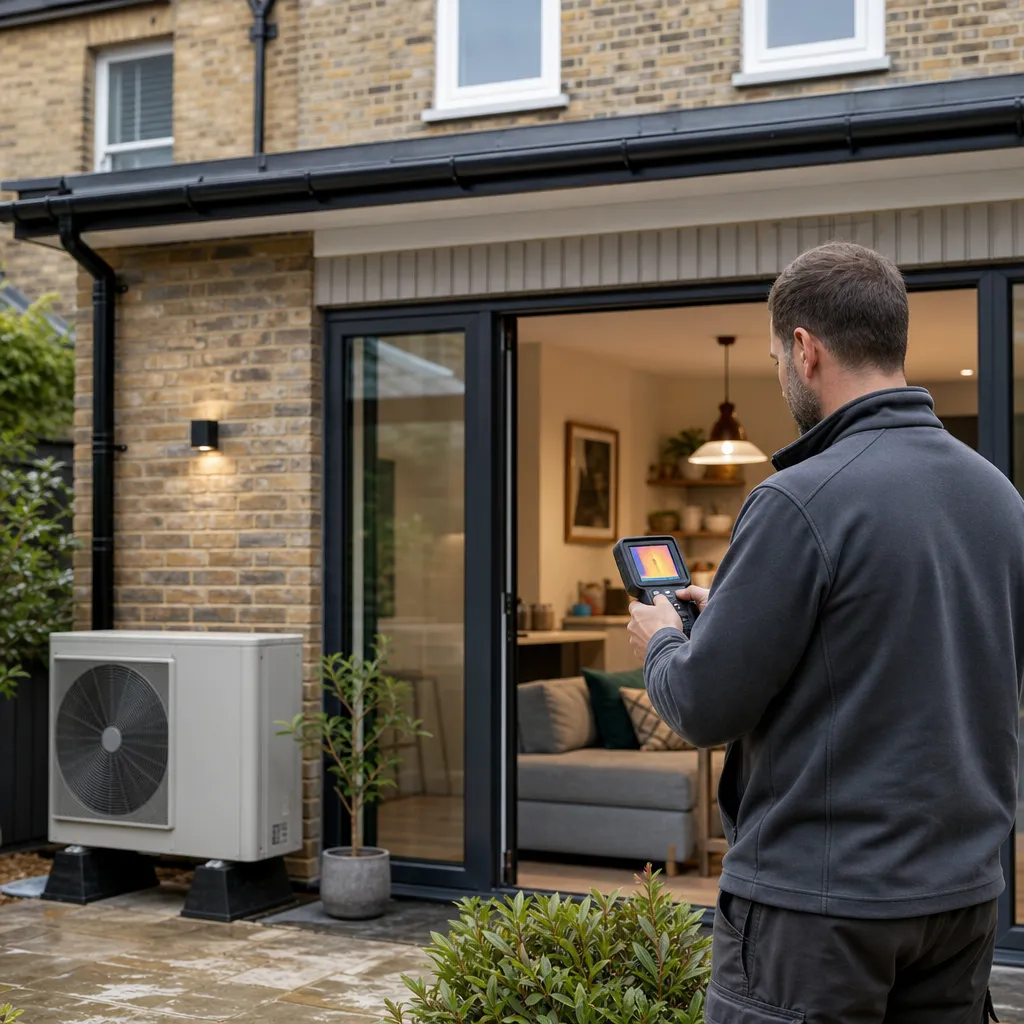
- Adding a heat pump before improving insulation typically results in a system that struggles to heat the home efficiently.
- Installing draught-proofing or airtightness improvements without addressing ventilation can cause indoor air quality problems and condensation.
- Fitting internal wall insulation without first assessing existing moisture levels can trap damp, leading to structural damage over time.
The recommended sequence for most UK homes is: fabric first (insulation and draught-proofing), then ventilation, then low-carbon heating, then renewable energy generation. A Retrofit Assessor or energy-efficiency consultant should confirm the correct order for your specific property.
Homeowner checklist: before starting eco-retrofit
Important limitations
This article provides general information about sustainable home improvements and UK retrofit trends as of 2026. Regulations, grant eligibility criteria, and best practice guidance change regularly. The suitability of any specific measure depends on your property's construction, condition, tenure, and location. Nothing in this article constitutes professional technical, legal, or financial advice. A qualified professional should assess your property before you commit to any retrofit works.
When this becomes urgent
Contact a qualified professional promptly if:
- New damp patches, mould, or condensation appear after insulation has been installed.
- A heat pump or boiler is failing to heat the property to a comfortable temperature despite being reportedly correctly sized.
- There are signs of structural movement alongside moisture problems.
- A contractor recommends an approach that contradicts PAS 2035 sequencing or moisture management principles.
What to ask a qualified professional
Before instructing a Retrofit Assessor or energy-efficiency consultant, ask:
- Are you a PAS 2035 qualified Retrofit Assessor, and are you TrustMark-registered?
- Will you assess moisture risk as part of the survey?
- Can you produce a medium-term improvement plan that sequences measures correctly for my property type?
- What ventilation strategy do you recommend, and how does it integrate with the proposed insulation works?
- Which grant schemes am I eligible for, and can you support the application process?
- What monitoring or follow-up is included after the works are completed?
When to get professional help
Most sustainable home improvements benefit from professional input at the assessment stage, not just during installation. Consider instructing a qualified professional when:
- Your property was built before 1930 or has solid walls.
- You are planning two or more improvement measures in sequence.
- You want to install a heat pump, MVHR system, or other mechanical equipment.
- Your home has existing damp, condensation, or ventilation problems.
- The works require building regulations approval.
How Housey can help
Housey connects UK homeowners with qualified professionals for retrofit assessments, insulation assessments, and energy-efficiency consultants who can assess your property, recommend the right sequence of improvements, and help you access available grant funding.
Frequently asked questions
Do I need planning permission for solar panels on my house in the UK?
In most cases, solar PV panels on a dwelling house fall within permitted development rights and do not require planning permission, provided they are not on a listed building, do not protrude more than 200mm from the roof plane, and the installation is removed when no longer needed. Conservation area restrictions apply. Check with your local planning authority before installing.
What is the difference between an EPC and a retrofit assessment?
An Energy Performance Certificate (EPC) gives your property a rating from A to G and lists recommended improvements. A retrofit assessment under PAS 2035 is a more detailed technical survey covering construction type, moisture risk, ventilation, and heating — and is required for ECO4-funded work. The two documents serve different purposes and should not be confused.
How long does a heat pump take to pay back its cost?
Payback period depends on your home's size, existing insulation levels, the relative cost of electricity versus gas in your area, and whether you claimed the Boiler Upgrade Scheme grant. No single national figure applies. An MCS-certified installer should model expected running costs for your specific property before you proceed.
Can a landlord be required to carry out energy-efficiency improvements?
Under the Minimum Energy Efficiency Standards (MEES) regulations, most privately rented properties in England and Wales must have an EPC rating of at least E to be legally let. The government has consulted on raising this to C for new tenancies. Landlords should check current GOV.UK guidance and plan any required improvements accordingly.
Sources and further reading
- ECO4 scheme — GOV.UK
- Boiler Upgrade Scheme — GOV.UK
- PAS 2035:2023 — BSI Group
- Great British Insulation Scheme — GOV.UK
- Home Energy Scotland — Energy Saving Trust
- Minimum Energy Efficiency Standards (MEES) — GOV.UK
Useful next reads
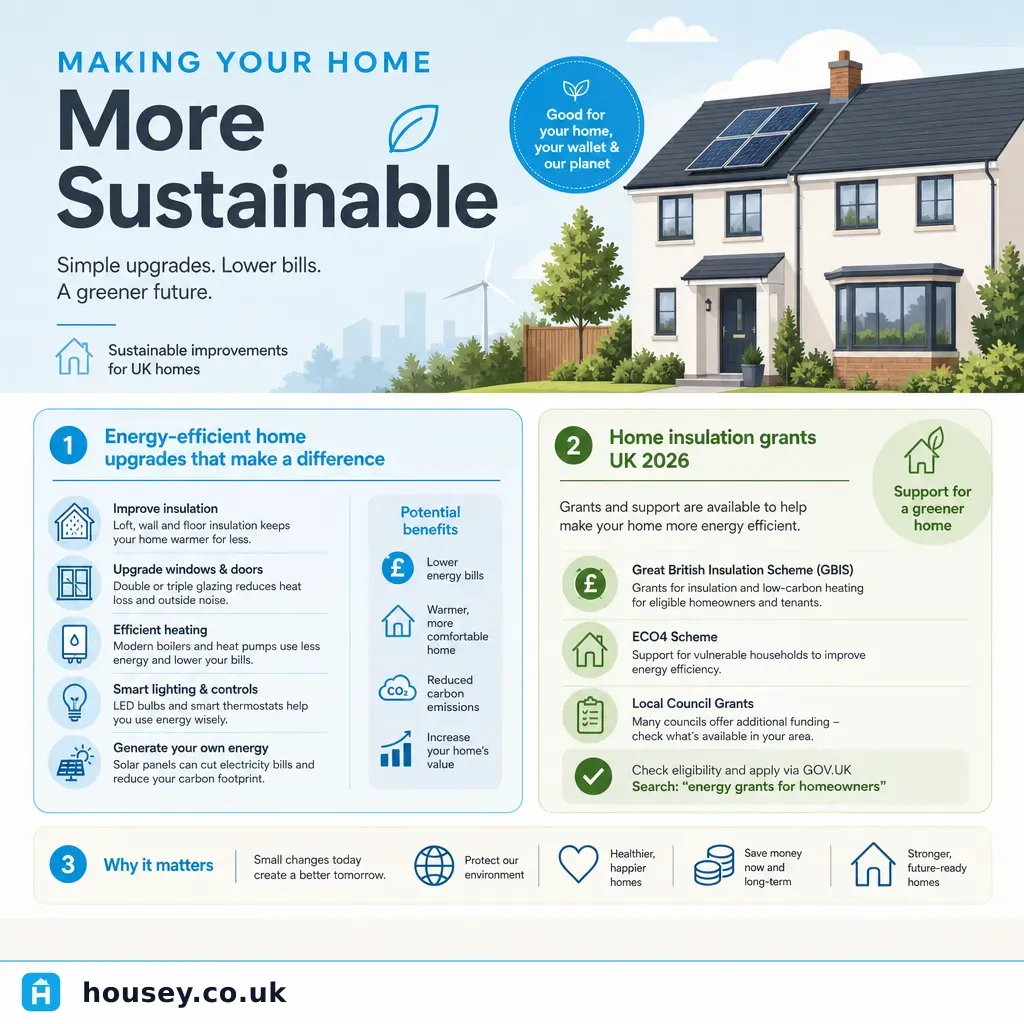 Energy & Retrofit
Making your home more sustainable
Making a UK home more sustainable usually starts with fabric-first improvements such as insulation, draught-proofing, and efficient glazing before adding renewable energy systems like solar panels or a heat pump.
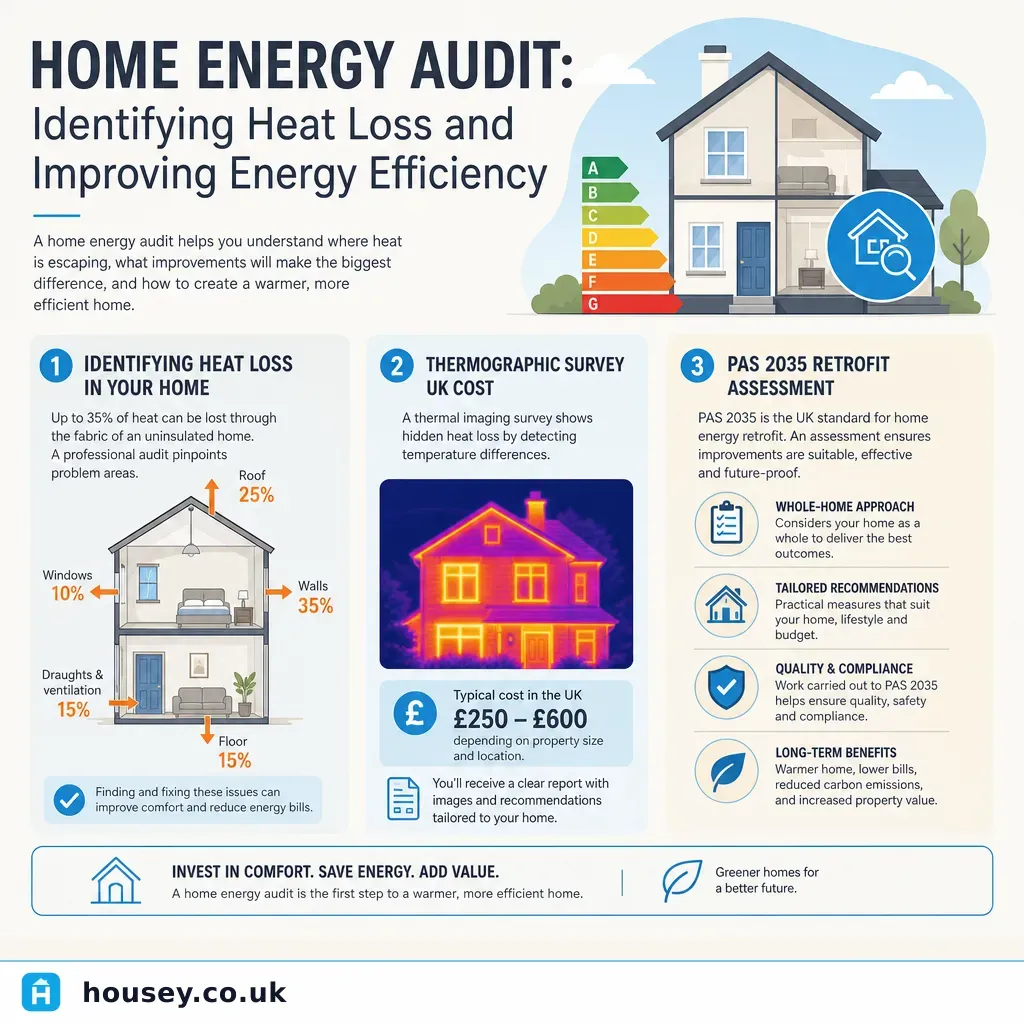 Energy & Retrofit
Home Energy Audit: Identifying Heat Loss and Improving Energy Efficiency
A home energy audit is a structured assessment of where your property loses heat and how efficiently it uses energy.
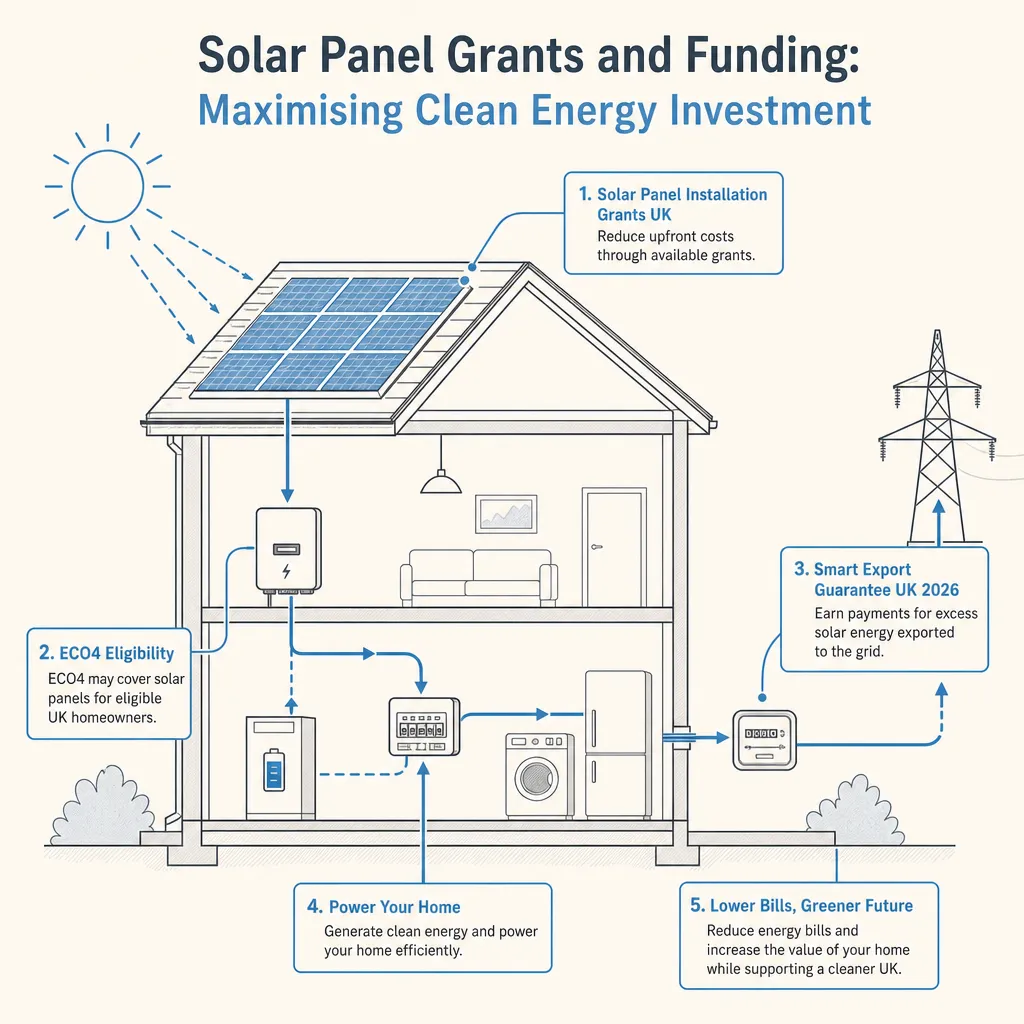 Energy & Retrofit
Solar Panel Grants and Funding: Maximising Clean Energy Investment
Several UK solar funding schemes are currently open: the Smart Export Guarantee pays homeowners for surplus electricity exported to the grid, ECO4 can fund free or subsidised panels for eligible low-income households, and 0% VAT on installation applies until at least March 2027.
 Energy & Retrofit
Making Your Home More Energy Efficient and Sustainable
The most effective approach to home energy efficiency is fabric-first: insulate the loft, walls, and floor before upgrading the heating system.
 Energy & Retrofit
Maximising Energy Efficiency: Smart Tips for UK Homes
Improving energy efficiency in a UK home typically starts with draught-proofing and loft insulation — the measures with the fastest payback — before moving to wall insulation, heating system upgrades, and low-carbon technologies such as heat pumps or solar panels.