Energy Efficiency Reporting and Housing Performance Analysis Hub
By Housey · Last reviewed 30th of May 2026
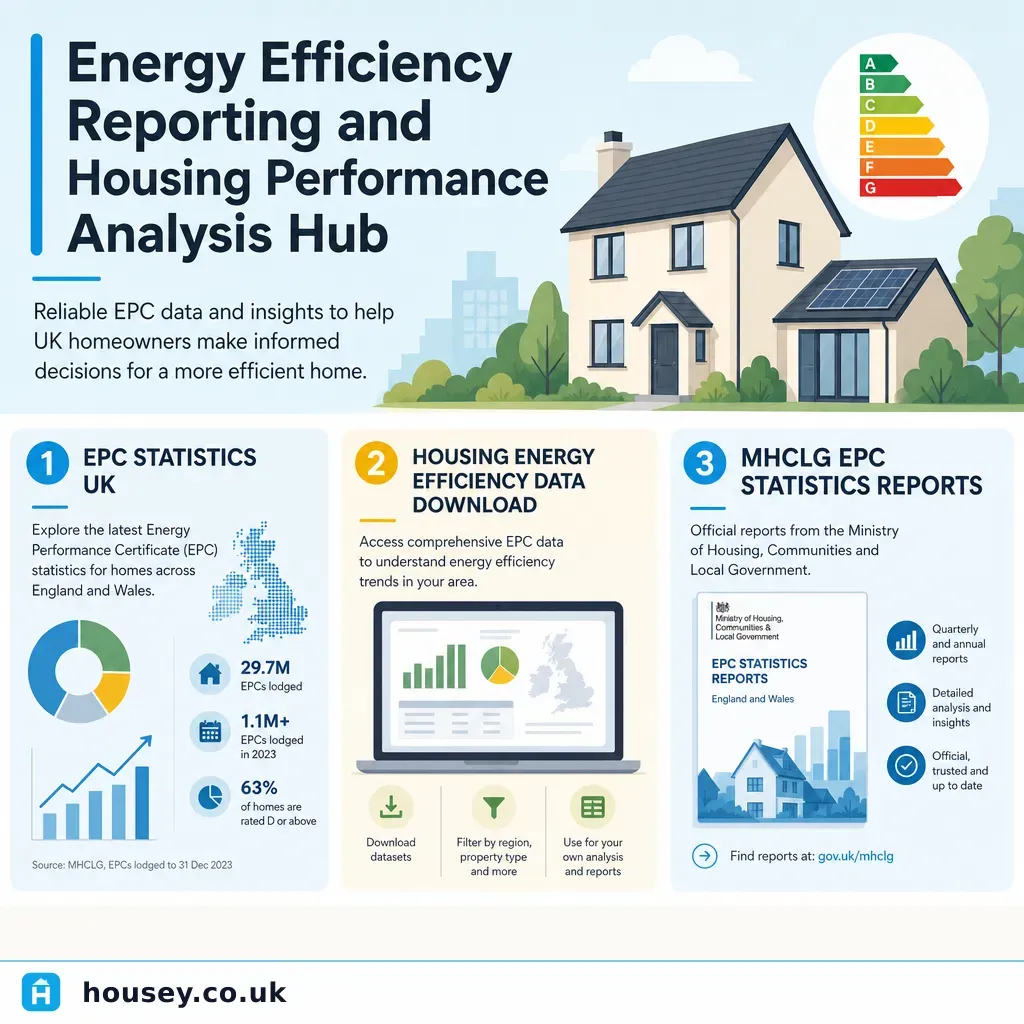
Energy Efficiency Reporting and Housing Performance Analysis Hub
The energy performance of the UK's 29 million homes sits at the heart of government retrofit policy, landlord compliance, and individual purchase decisions. Whether you're a homeowner considering improvements, a landlord tracking regulatory change, or a researcher monitoring national progress, knowing where to find credible housing energy performance data — and how to read it — is increasingly valuable. This article maps the main official UK reporting sources and explains what each one tells you.
Key points
- Around 58% of English homes currently hold an EPC rating of D or below, according to recent English Housing Survey data.
- The Energy Performance of Buildings (EPB) Register is the primary public repository of EPC certificates in England, Wales, and Northern Ireland; Scotland has its own separate register.
- MHCLG (Ministry of Housing, Communities and Local Government) publishes annual and quarterly EPC statistics broken down by tenure, property type, region, and age band.
- The English Housing Survey, conducted annually by MHCLG, tracks energy efficiency alongside housing condition, tenure, and demographic data covering around 13,300 households each year.
- The Standard Assessment Procedure (SAP) is the methodology used to calculate EPC ratings; changes to SAP versions over time mean older certificates may not be directly comparable to more recent ones.
What official UK housing energy performance data covers
The core national dataset for housing energy performance in England and Wales is the Energy Performance of Buildings (EPB) Register, administered by the Department for Energy Security and Net Zero (DESNZ). It holds every EPC lodged since 2008 — currently tens of millions of records — each containing:
- The property's EPC rating (A to G) and numerical score.
- Estimated annual energy costs and potential savings.
- Recommended improvements and their projected rating impact.
- Property characteristics: construction era, floor area, wall and roof insulation type, heating system.
EPCs are publicly searchable by postcode at find-energy-certificate.service.gov.uk. Bulk data downloads are available for researchers and local authorities, covering individual certificate records or summary statistics.
Scotland's EPCs are held on a separate register managed via Scottish Government-contracted services and use the same underlying SAP methodology but are administered independently.
MHCLG energy statistics: what they show and how to use them
MHCLG publishes quarterly and annual EPC statistics for domestic and non-domestic buildings in England and Wales. The domestic statistics are particularly useful for understanding trends across the housing stock. Reports typically include:
- Distribution of EPC ratings by region and local authority.
- Breakdown by property type (detached, semi-detached, terraced, flat).
- Changes in rating distribution over time, useful for tracking retrofit progress.
- New-build versus existing-stock comparisons.
These reports are published on GOV.UK under the Energy Performance of Buildings Certificates statistics section and are available as downloadable spreadsheets alongside a summary bulletin.
Use case | What to look for |
|---|---|
Monitoring local retrofit progress | Regional and local authority EPC rating breakdowns |
Understanding tenure-specific trends | Rented versus owner-occupied EPC distributions |
Benchmarking a specific property | Property-type and construction-era averages |
Policy research or planning submissions | Annual trends and year-on-year rating change data |
Grant scheme eligibility analysis | F/G-rated stock volumes by local authority area |
The English Housing Survey: broader housing performance context
The English Housing Survey (EHS), conducted annually by MHCLG, is the most comprehensive housing condition dataset in England. It captures:
- SAP scores and EPC band estimates for the surveyed stock.
- Fuel poverty rates using the Low Income Low Energy Efficiency (LILEE) metric.
- Insulation levels, heating systems, and energy-related defects.
- Damp, disrepair, and non-decent homes data alongside energy metrics.
The EHS headline and detailed reports are free to download from GOV.UK. A dedicated Energy chapter is published annually, making it straightforward to track how average energy efficiency across the stock is changing over time. The survey's fuel poverty analysis is also used to inform ECO4 and Great British Insulation Scheme targeting.
Homeowner checklist: using housing energy data effectively
Before drawing conclusions from any dataset, verify the following:
- Certificate date: EPCs are valid for ten years. Older certificates may not reflect current insulation, glazing, or heating systems.
- Publication lag: Official statistics are typically three to twelve months behind real-world lodge dates.
- Coverage gap: Properties without a recent transaction, letting, or new construction may not have a current EPC. Estimates suggest around 40% of the owner-occupied stock lacks a recent certificate.
- Scotland versus England and Wales: Separate registers and methodologies apply. Do not compare Scottish and English EPC data directly without adjusting for any methodology differences.
- SAP version: The methodology for calculating ratings has been updated over time. Certificates produced under earlier SAP versions may not be directly comparable to more recent assessments.
- Recommended measures vs actual condition: EPC recommended improvements are modelled estimates based on property characteristics, not a physical inspection — treat them as a starting point, not a definitive survey.
Using performance data to support retrofit planning
Housing energy performance reports can inform retrofit decisions in several practical ways:
- Benchmarking: Compare your property's EPC rating and SAP score against the average for its type and age band using MHCLG statistics.
- Identifying typical measures: EPB Register data for similar properties in your area can indicate which improvements — cavity wall insulation, loft insulation, heat pump — are most commonly recommended.
- Grant eligibility research: Local authority and grant scheme eligibility (ECO4, Great British Insulation Scheme) often depends on EPC rating and local deprivation data, both of which are publicly reported.
- Tracking improvement over time: Commissioning a new EPC after carrying out works provides a benchmarked record of the upgrade and supports compliance evidence.
When to get professional help
Housing performance data is a useful starting point, not a prescription for action. Seek professional input if:
- Your property's SAP score or EPC rating seems inconsistent with its physical condition — for example, a recently insulated home still rated E or below.
- You are planning a whole-house retrofit and need a coordinated improvement plan under PAS 2035.
- Your property is listed, in a conservation area, or of non-standard construction — standard improvement assumptions embedded in EPC certificates may not apply.
- You are a landlord needing to comply with Minimum Energy Efficiency Standards (MEES) and are unsure how to interpret your current rating or identify cost-effective routes to compliance.
How Housey can help
Housey connects homeowners and landlords with qualified energy efficiency professionals across the UK. Whether you need a new EPC, a retrofit assessment, or guidance on which improvements to prioritise, our platform helps you find and compare vetted local specialists.
Frequently asked questions
Where can I find EPC data for a specific property in the UK?
Search the Energy Performance of Buildings Register at find-energy-certificate.service.gov.uk for any property in England, Wales, or Northern Ireland. Enter the postcode to view current or historic EPC certificates. In Scotland, use the Scottish EPC register via the Scottish Government website.
How often is national housing energy efficiency data updated?
MHCLG publishes EPC statistics quarterly, with each release typically covering data lodged three to six months prior. The English Housing Survey publishes annual results roughly twelve months after data collection. The Energy Performance of Buildings Register is updated continuously as new certificates are lodged.
Can I download bulk EPC data for research purposes?
Yes. Bulk EPC data for England and Wales is available for download from the Energy Performance of Buildings Register portal. The dataset includes individual certificate records with property characteristics, ratings, and recommendation data. Account registration is required for bulk downloads.
Sources and further reading
- Energy Performance of Buildings Register — Department for Energy Security and Net Zero
- EPC statistics for England and Wales — MHCLG
- English Housing Survey — MHCLG
- ONS housing datasets — Office for National Statistics
- Energy Saving Trust: home energy guidance — Energy Saving Trust
Useful next reads
 Energy & Retrofit
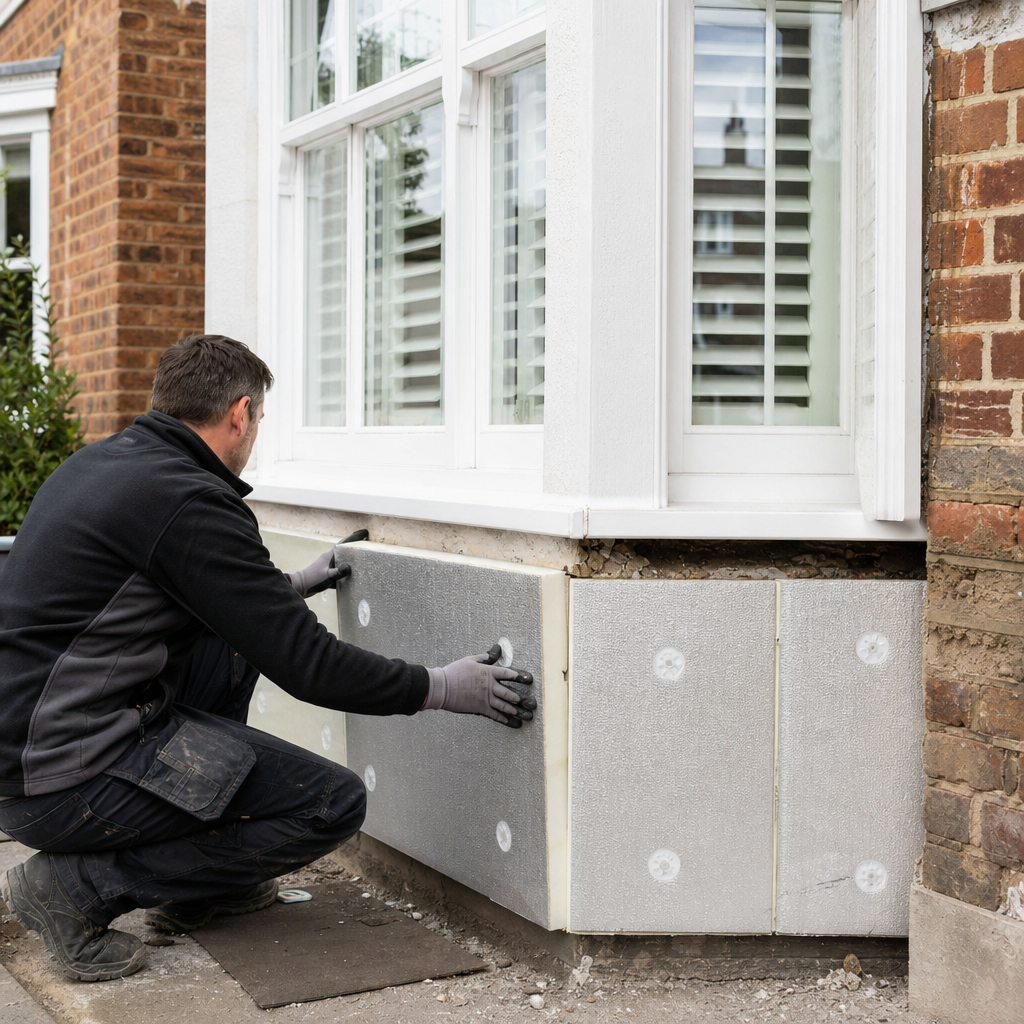
Insulating Solid Masonry Walls Under Bay Windows: Technical Guidance
Insulating solid masonry walls under bay windows requires specialist detailing at angled wall faces, window reveals, and the bay floor and ceiling junctions.
 Energy & Retrofit
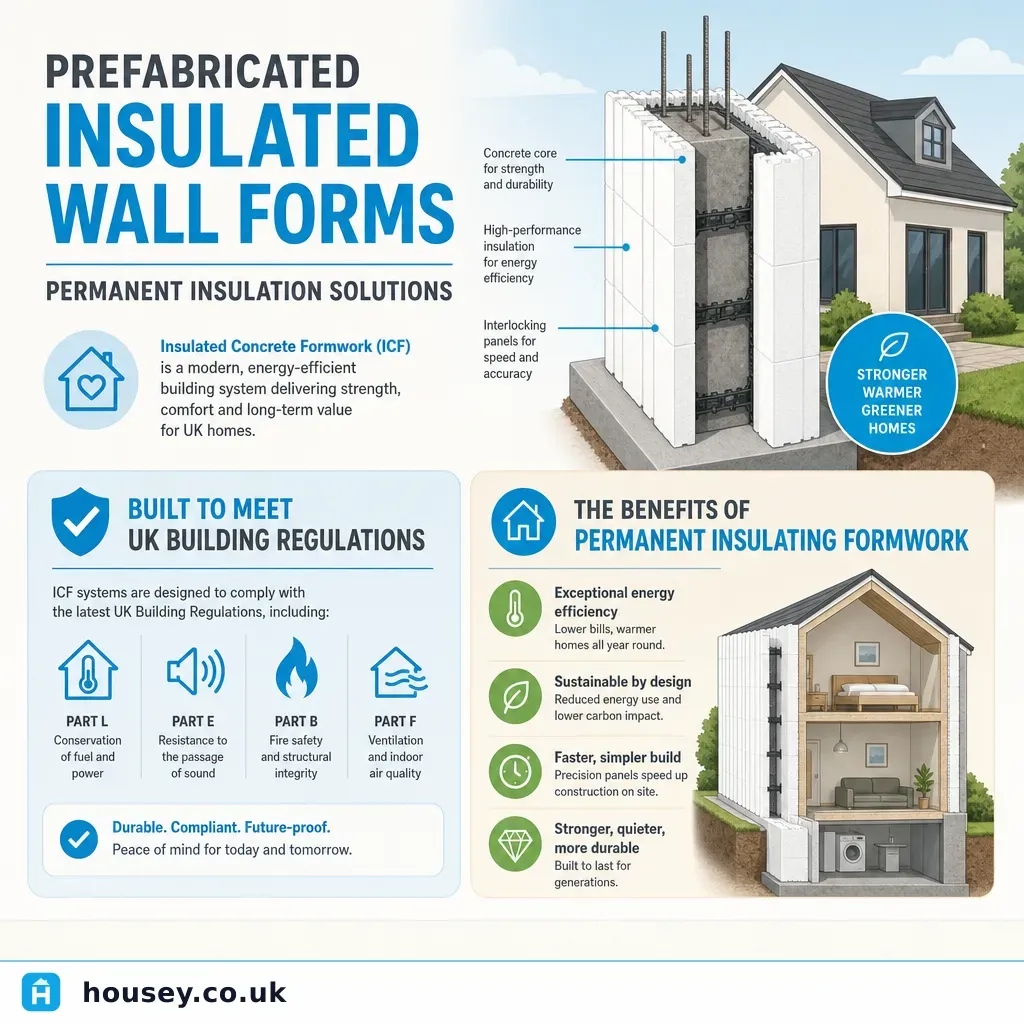
Prefabricated Insulated Wall Forms: Permanent Insulation Solutions
Prefabricated insulated wall forms — including ICF and SIPs systems — deliver high thermal performance by combining permanent insulation with structural concrete or timber in a single wall assembly.
 Energy & Retrofit
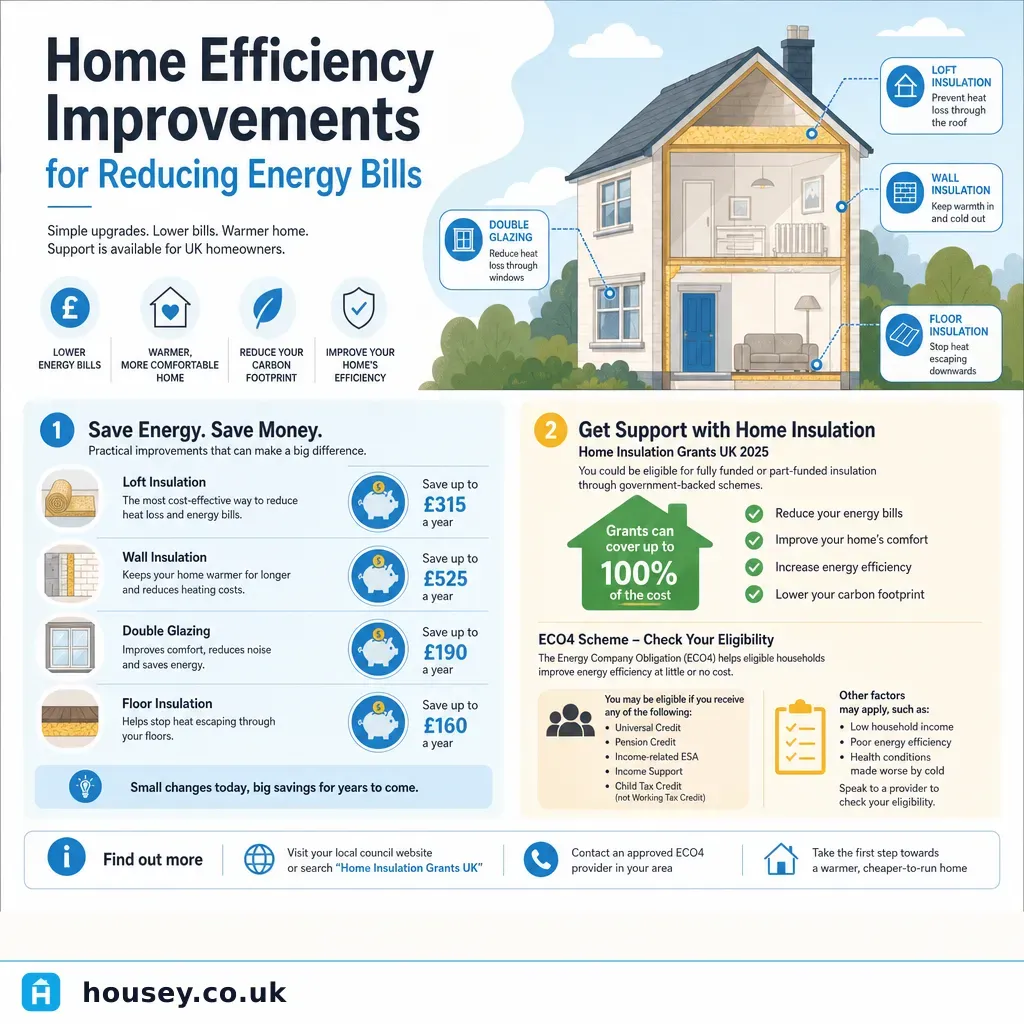
Home Efficiency Improvements for Reducing Energy Bills
The most cost-effective UK home efficiency improvements are usually loft insulation, cavity wall insulation, draught-proofing, and upgrading heating controls.
 Energy & Retrofit
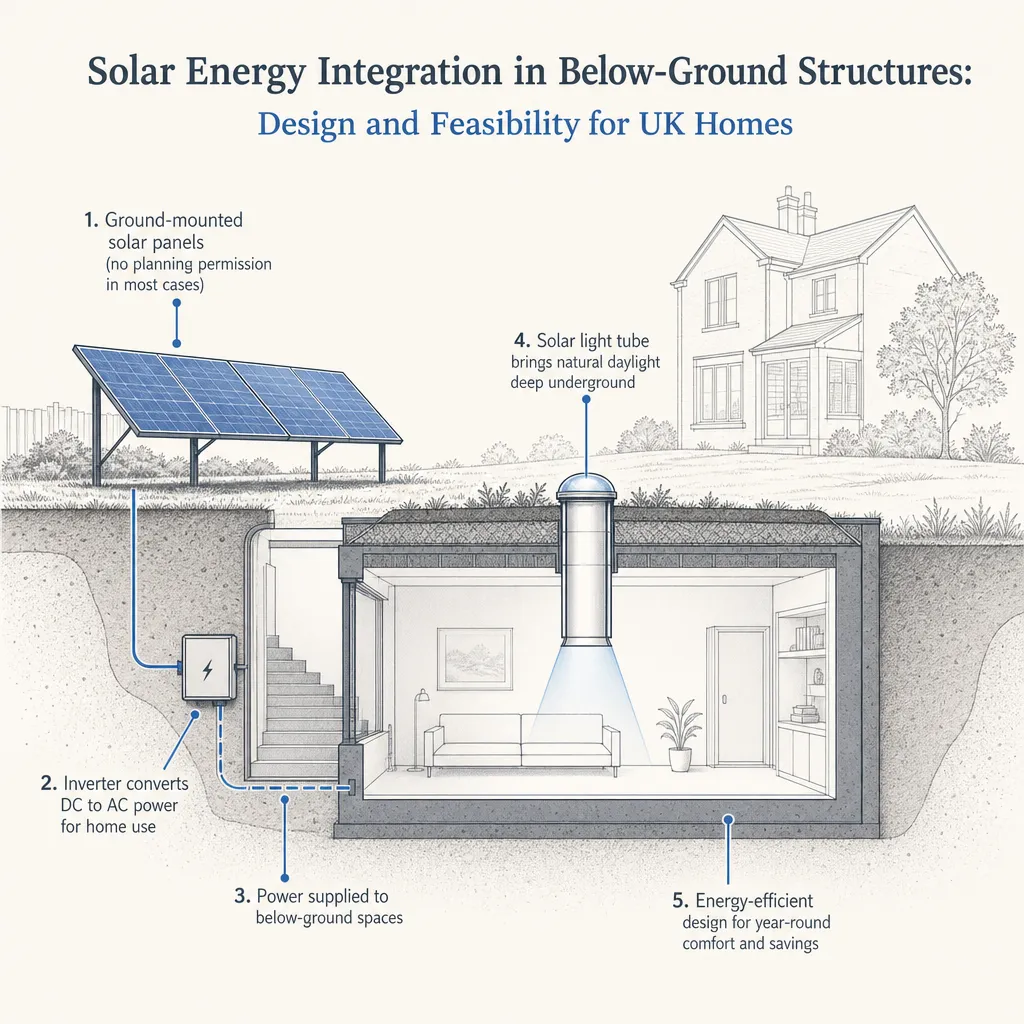
Solar Energy Integration in Below-Ground Structures: Design and Feasibility
Below-ground structures cannot host solar panels on their own roofs but can use surface-mounted panels connected via cable runs, solar light tubes for daylighting, and battery storage.
 Energy & Retrofit
Climate-Ready Home Improvements for the Future
Climate-ready home improvements tackle four main risks for UK properties: overheating, increased rainfall and flooding, storm damage, and energy cost volatility.