Insulation Effectiveness: Understanding Thermal Performance in Concrete Construction
By Housey · Last reviewed 24th of May 2026
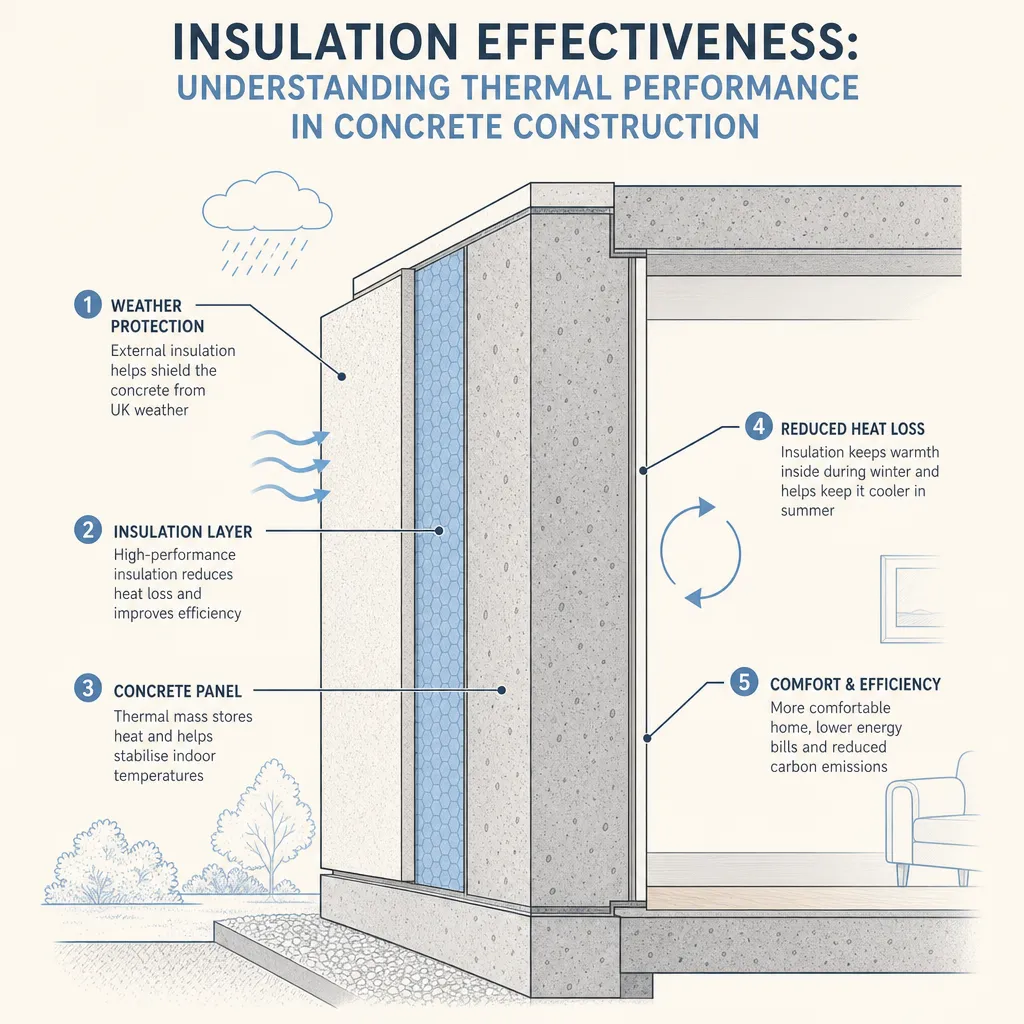
Insulation Effectiveness: Understanding Thermal Performance in Concrete Construction
Concrete is one of the most thermally conductive common building materials — it transmits heat readily and stores thermal mass, which can be an asset or a liability depending on how a building is used and insulated. For owners of concrete-frame or concrete-panel homes — a significant proportion of the UK's post-war housing stock — understanding how insulation interacts with concrete construction is essential before commissioning energy-efficiency improvements. Get the approach wrong and you risk interstitial condensation, hidden moisture damage, and long-term harm to the structure and its finishes.
Key points
- Concrete has a thermal conductivity (λ value) of approximately 1.0–2.0 W/mK depending on mix and density; mineral wool insulation typically achieves 0.030–0.044 W/mK, making concrete around 30–60 times more thermally conductive.
- Building Regulations Approved Document L1B sets a target U-value of 0.30 W/m²K or better for upgraded external walls in existing dwellings — most modern insulation systems can achieve 0.15–0.25 W/m²K with adequate thickness.
- PAS 2035:2023 (the publicly available specification for domestic retrofit) requires that a qualified Retrofit Assessor or Retrofit Coordinator evaluate moisture risk before any insulation is installed in solid or non-traditional concrete construction.
- Non-traditional concrete housing types — including Airey, Cornish Unit, Reema Hollow Panel, and Wimpey No-Fines — may require specialist structural assessment before retrofit can safely proceed.
- External wall insulation (EWI) is generally the preferred technical solution for concrete panel homes because it keeps the thermal mass on the warm side of the insulation layer, reducing the risk of interstitial condensation at the wall-to-insulation interface.
Why concrete construction presents specific insulation challenges
Standard cavity-wall insulation, which works well for brick-cavity homes, is not applicable to solid concrete-panel or concrete-frame construction — there is no cavity to fill. Homeowners typically choose between:
- External wall insulation (EWI) — applied to the outer face of the wall, then rendered or clad
- Internal wall insulation (IWI) — fixed to the inner face, usually mineral wool batts or rigid phenolic board
- Thermal rendering — thin-coat insulating render systems applied externally
Each approach has different implications for condensation risk, breathability, and thermal bridging at junctions such as floor edges, window reveals, and structural ties. The specification must be matched to the specific construction type and the property's existing moisture condition.
Comparison of insulation strategies for concrete walls
Strategy | Achievable U-value | Condensation risk | Effect on room size | Planning consideration | Best for |
|---|---|---|---|---|---|
External wall insulation (EWI) | 0.15–0.30 W/m²K | Lower (thermal mass on warm side) | None | May need planning permission in some locations | Concrete panel homes, solid-wall terraces |
Internal wall insulation (IWI) | 0.15–0.30 W/m²K | Higher (cold bridge risk at junctions) | Reduces by 75–100 mm per treated wall | Rarely requires planning | Flats where EWI is not permitted or feasible |
Thermal render | 0.35–0.50 W/m²K | Low–moderate | None | As for EWI | Partial improvement where full EWI is not viable |
Insulated cavity boards (where cavity exists) | 0.18–0.28 W/m²K | Low | None | Not usually required | Concrete-frame buildings with cavity infill panels |
U-values are indicative and depend on system thickness and substrate. Always confirm performance with a certified assessor.
The role of thermal mass in concrete buildings
Concrete's high thermal mass means it absorbs heat slowly and releases it slowly. In a well-insulated home, this can smooth out internal temperature swings and reduce peak heating demand. However, thermal mass only delivers its benefit when insulation is correctly positioned relative to it:
- Insulation outside the thermal mass (EWI): the concrete continues to exchange heat with the internal environment, moderating temperature swings. This is the preferred configuration for most whole-house retrofit scenarios and is the approach most commonly recommended by PAS 2035 assessors.
- Insulation inside the thermal mass (IWI): the concrete is effectively separated from the internal environment. The building heats and cools more quickly, which can suit intermittent heating patterns, but condensation risk at the insulation-to-concrete interface is higher and requires careful hygrothermal analysis.
For most UK homes with concrete panel construction, EWI is the configuration recommended where local planning constraints allow it.
Moisture, condensation, and why specification errors are costly
The most serious risk associated with insulating concrete construction is interstitial condensation — moisture that forms within or behind the insulation layer when warm humid indoor air meets a cold surface. In poorly specified internal insulation systems, this can lead to:
- Mould growth on and behind wall surfaces
- Timber rot where structural timbers contact the concrete substrate
- Delamination of insulation boards and wall finishes
- Exacerbation of existing damp ingress through the concrete panel
PAS 2035:2023 requires a condensation risk analysis — using BS EN ISO 13788 or dynamic hygrothermal modelling — before insulation is installed in any solid or non-traditional construction. This is not optional: work carried out without this assessment may be ineligible for ECO4 funding or the Great British Insulation Scheme, and may need to be removed and reinstalled correctly at the homeowner's expense.
Thermal bridging at concrete junctions
Concrete floor slabs, lintols, and columns that connect or penetrate an insulated wall create thermal bridges — paths of high conductivity that bypass the insulation layer. In concrete panel construction, structural ties and floor-to-wall junctions are common thermal bridge locations. Left unaddressed, thermal bridges can account for 20–30% of total fabric heat loss and create localised cold spots where condensation risk is elevated.
A thorough retrofit specification should include a linear thermal bridge calculation (Ψ-values per BS EN ISO 10211) at key junctions, particularly if the target is EPC band C or higher.
Important limitations
This article provides general guidance on insulation principles for concrete construction. Actual thermal performance, condensation risk, and the suitability of any insulation system depend on the specific property, its construction type, orientation, occupancy pattern, ventilation, and existing moisture conditions. In particular:
- Non-traditional and defective concrete housing types require specialist structural assessment before retrofit work begins.
- Moisture risk analysis must be carried out by a qualified Retrofit Assessor or Retrofit Coordinator under PAS 2035:2023.
- Grant-funded work under ECO4 or the Great British Insulation Scheme must comply with TrustMark and MCS requirements; non-compliant installations may need to be removed at the homeowner's expense.
A Retrofit Coordinator and, where appropriate, a structural engineer should be involved in any insulation project on non-standard concrete construction.
When this becomes urgent
Seek specialist advice before proceeding with any insulation work if:
- Your property is a known non-traditional concrete type (Airey, Cornish Unit, Reema, Wimpey No-Fines, or similar) and shows signs of structural deterioration
- There is active damp, black mould, or persistent condensation on internal walls
- A previous insulation installation has caused or appears to have worsened moisture problems
- You are about to accept grant funding for insulation without having received a PAS 2035-compliant assessment
- You are planning to install a heat pump alongside insulation — correct sequencing and fabric performance targets are critical to system sizing
What to ask a qualified professional
Before instructing an insulation assessor or Retrofit Coordinator, ask:
- Is this property classified as non-traditional or defective construction, and if so what additional structural assessment is required?
- Will a condensation risk analysis compliant with PAS 2035:2023 and using BS EN ISO 13788 or dynamic hygrothermal modelling be carried out before the system is specified?
- What U-values will the proposed system achieve, and how does this compare to the Approved Document L1B target of 0.30 W/m²K?
- How will thermal bridges at floor edges, window reveals, and structural ties be addressed in the specification?
- Is the installer TrustMark registered, and is any associated renewable technology MCS certified?
- What ventilation provisions will be made — will the improved airtightness require mechanical ventilation with heat recovery (MVHR)?
- What warranty does the system carry, and who is liable if condensation or damp develops after installation?
When to get professional help
Always seek a qualified insulation assessor or Retrofit Coordinator before proceeding if:
- Your home is a non-traditional concrete type (Airey, Cornish Unit, Reema, Wimpey No-Fines, or similar)
- There is existing damp, mould, or a history of condensation in the property
- You are applying for government grant funding (ECO4 or the Great British Insulation Scheme)
- You are planning to install a heat pump — insulation and heat pump sizing must be coordinated
- You are unsure of your property's wall construction type
How Housey can help
Housey connects you with qualified professionals for insulation assessments and energy-efficiency consultants who can carry out PAS 2035-compliant evaluations for concrete construction. Compare accredited assessors and request quotes before committing to any specification.
Frequently asked questions
Can I insulate a concrete panel home under the ECO4 scheme?
Potentially yes, but non-traditional concrete construction is subject to additional checks under ECO4 rules. The property must be assessed by a Retrofit Assessor to confirm suitability and identify the appropriate insulation system. Some defective concrete types may not qualify for grant funding until structural issues are resolved, and all installations must meet PAS 2035:2023 requirements.
Does external wall insulation require planning permission?
In most cases, external wall insulation on a house falls within permitted development rights and does not require planning permission. However, properties in conservation areas, listed buildings, or those subject to Article 4 directions may require consent. Always check with your local planning authority before work starts, as permitted development rights can be removed by condition.
What U-value should I aim for in an existing concrete wall?
The Approved Document L1B guideline for upgraded external walls in existing dwellings is 0.30 W/m²K. Many modern EWI and IWI systems can achieve 0.15–0.20 W/m²K with sufficient insulation thickness, closer to new-build standards under Part L 2021. Confirm the appropriate target with a certified assessor for your specific property and construction type.
How do I find out what type of concrete construction my home is?
Your local authority may hold records of estate construction types, particularly for post-war council-built properties. A surveyor experienced in non-traditional construction can identify the type from inspection. The Airey, BISF, and Reema types are often recognisable from characteristic structural patterns, and your council's housing records may confirm the original build specification.
Sources and further reading
- Building Regulations Approved Document L (Conservation of Fuel and Power) — GOV.UK
- PAS 2035:2023 Retrofitting dwellings for improved energy efficiency — BSI
- Solid wall insulation — Energy Saving Trust
- TrustMark — find a registered installer — TrustMark
- Energy Company Obligation (ECO4) scheme guidance — GOV.UK
Useful next reads
 Energy & Retrofit
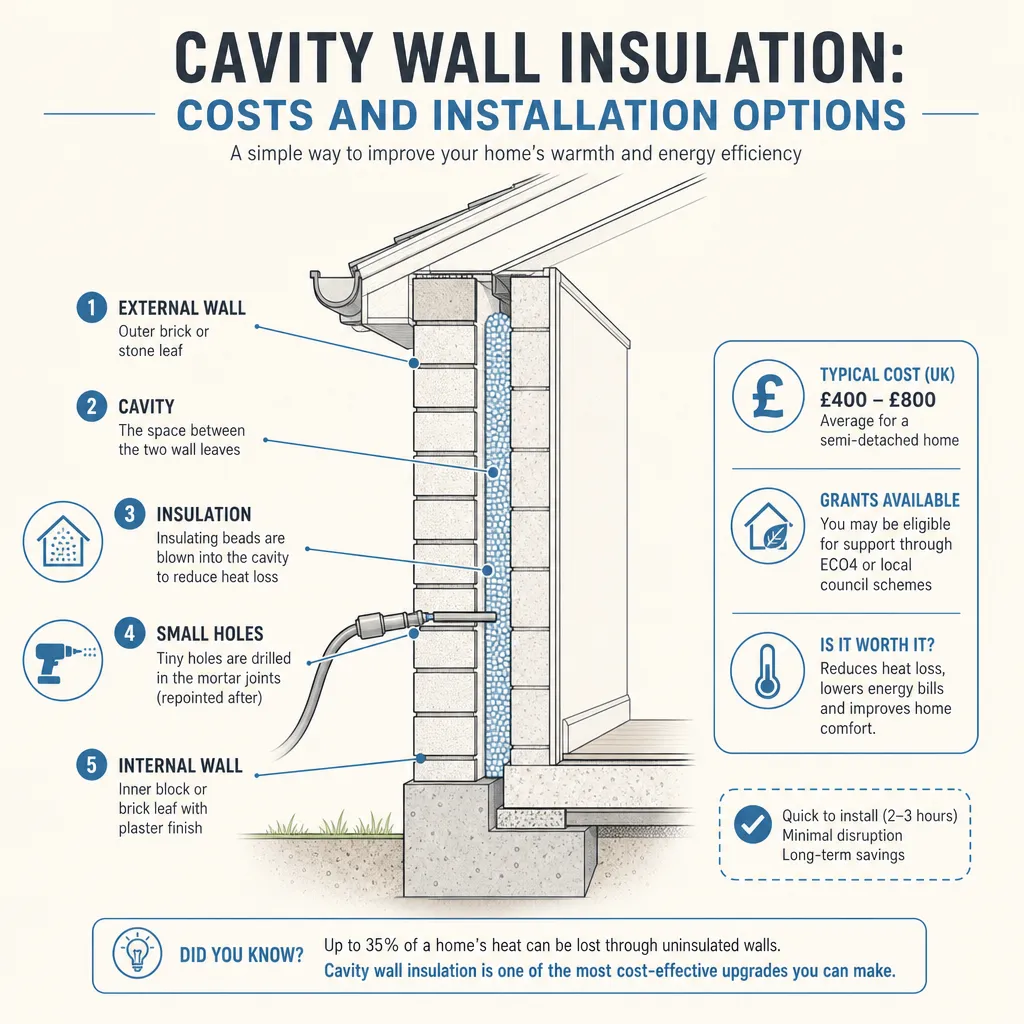
Cavity Wall Insulation: Costs and Installation Options
Cavity wall insulation typically costs £400–£1,200 for a standard UK semi-detached home, though eligible households may pay nothing under ECO4.
 Energy & Retrofit
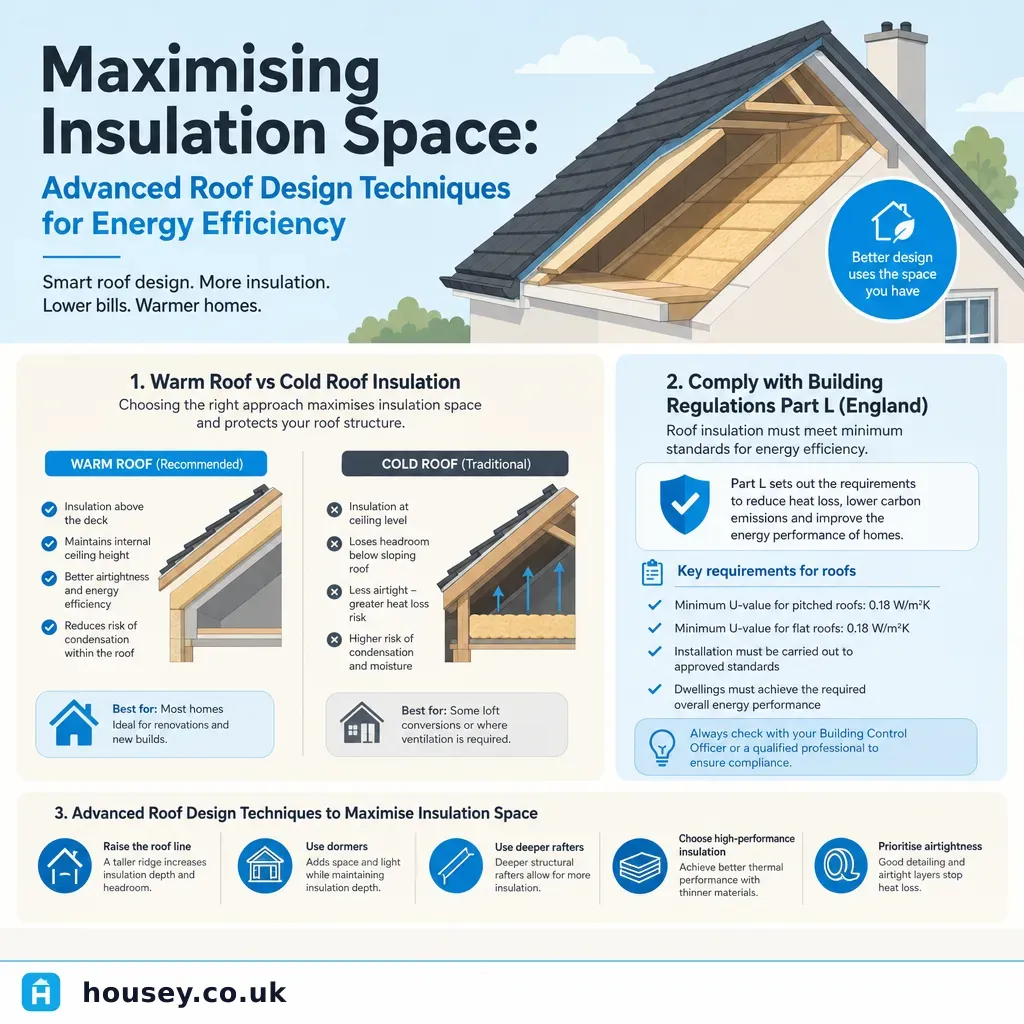
Maximising Insulation Space: Advanced Roof Design Techniques for Energy Efficiency
Maximising insulation space in a roof depends on the roof type, construction era, and energy targets.
 Energy & Retrofit
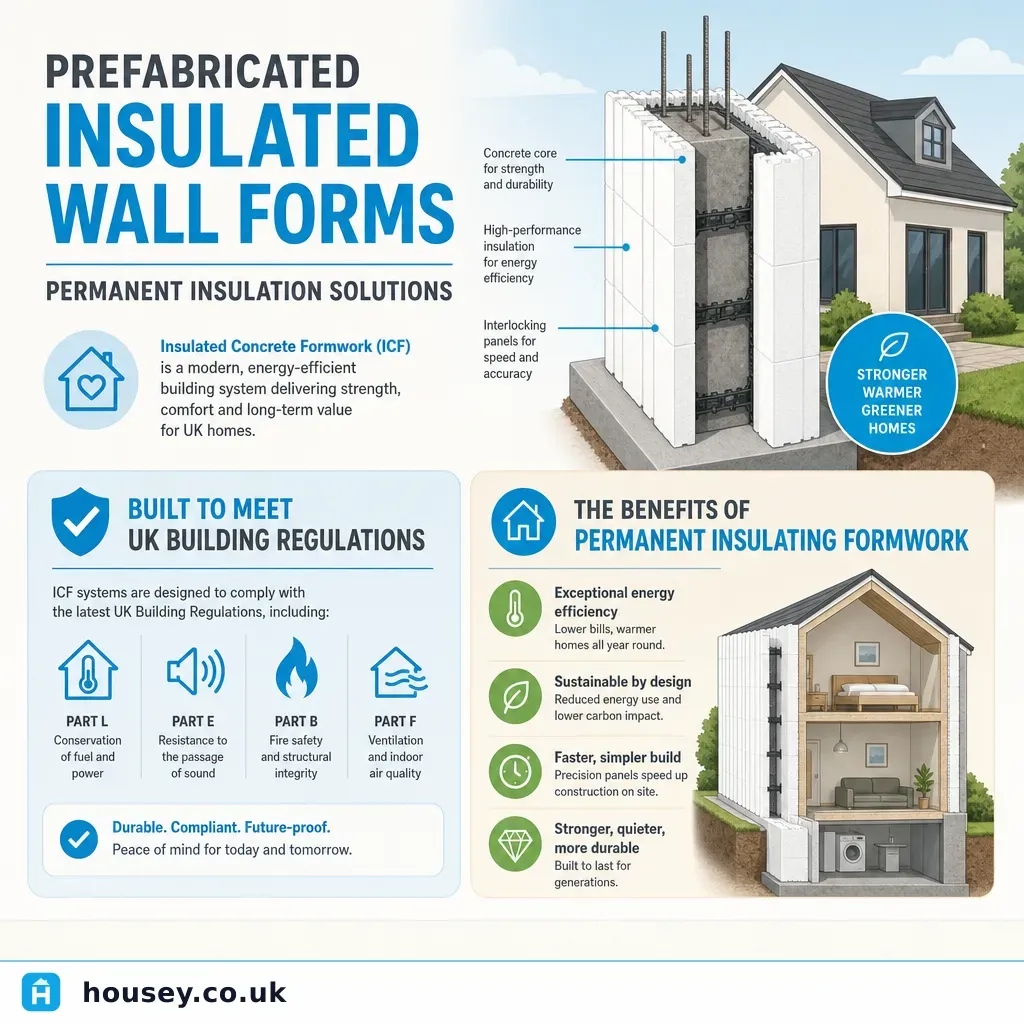
Prefabricated Insulated Wall Forms: Permanent Insulation Solutions
Prefabricated insulated wall forms — including ICF and SIPs systems — deliver high thermal performance by combining permanent insulation with structural concrete or timber in a single wall assembly.
 Energy & Retrofit
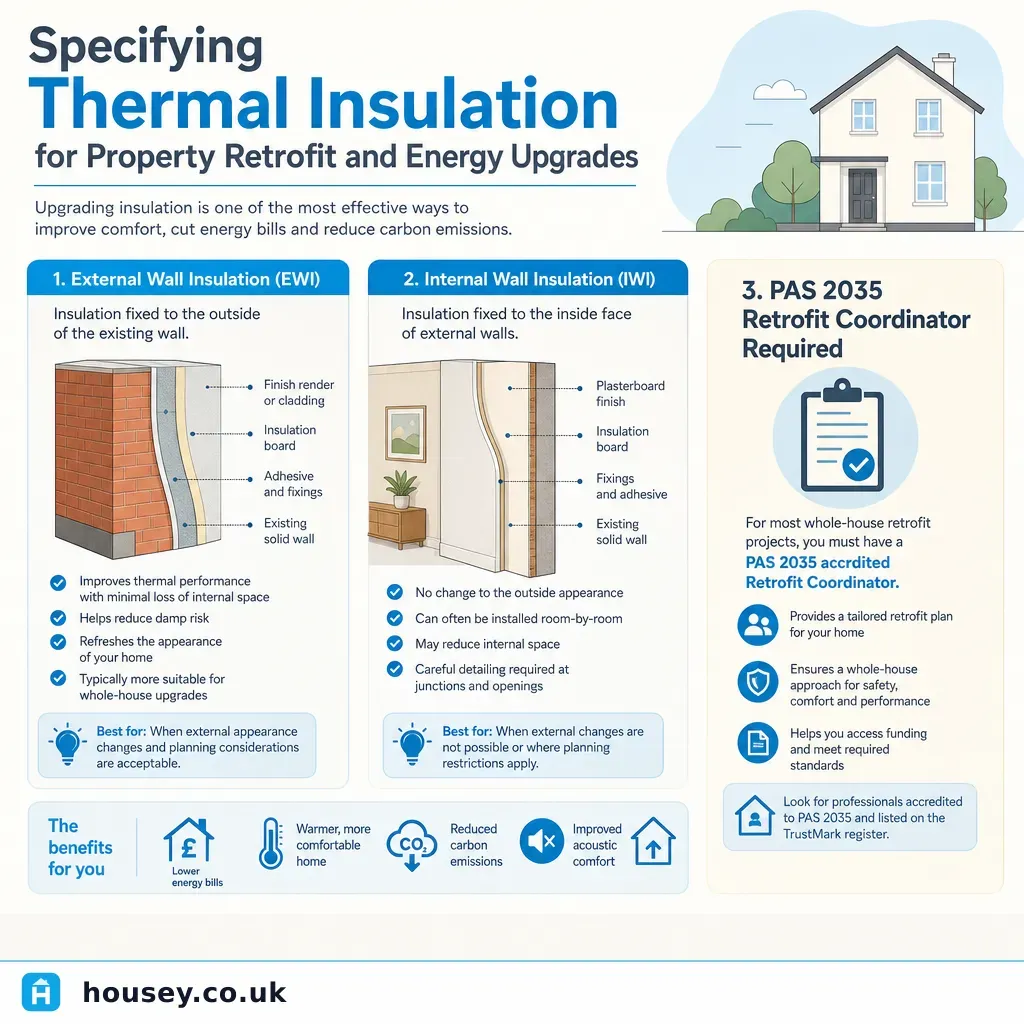
Specifying Thermal Insulation for Property Retrofit and Energy Upgrades
Specifying thermal insulation for UK retrofit requires matching the product to your property's construction, moisture conditions, and heating system.
 Energy & Retrofit
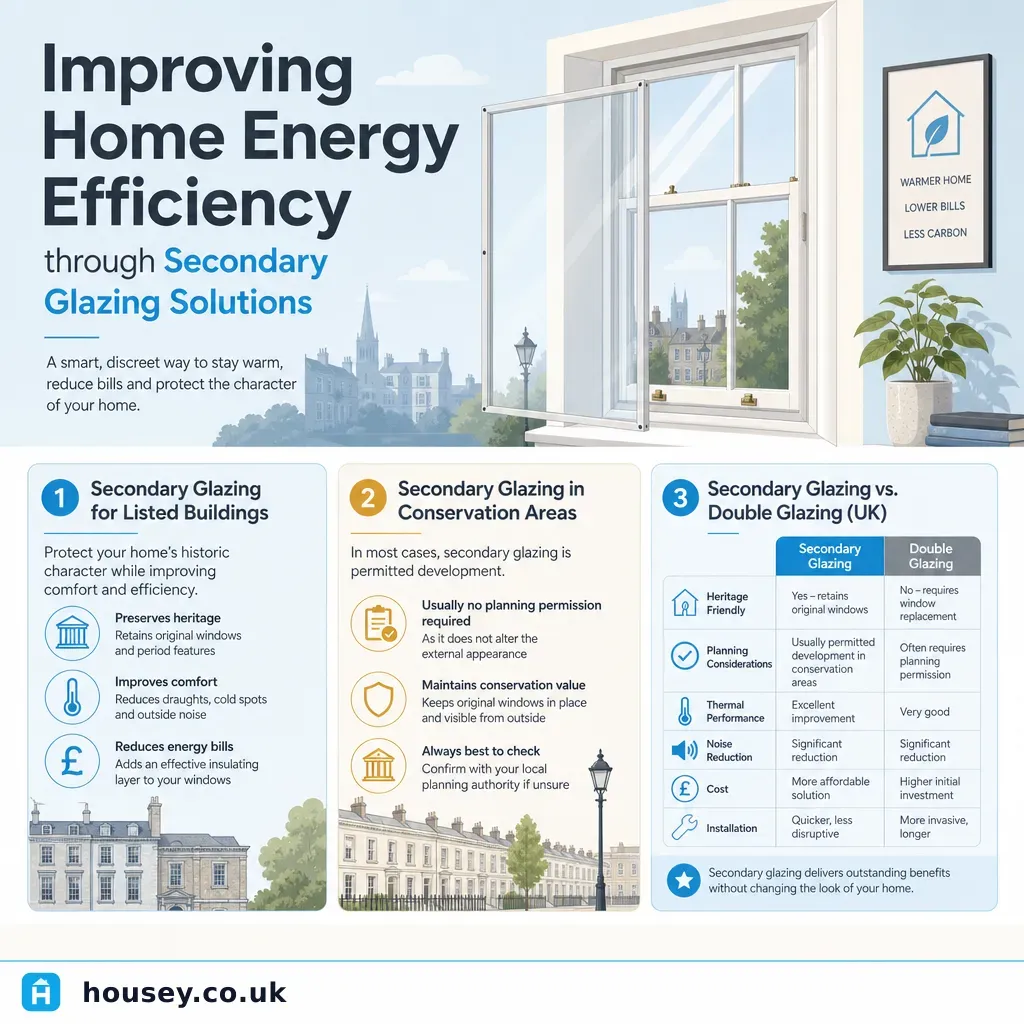
Improving Home Energy Efficiency through Secondary Glazing Solutions
Secondary glazing fits an additional pane inside your existing window reveal, reducing heat loss and noise without replacing the original frame.