Energy Efficiency Trends in UK Housing
By Housey · Last reviewed 30th of May 2026
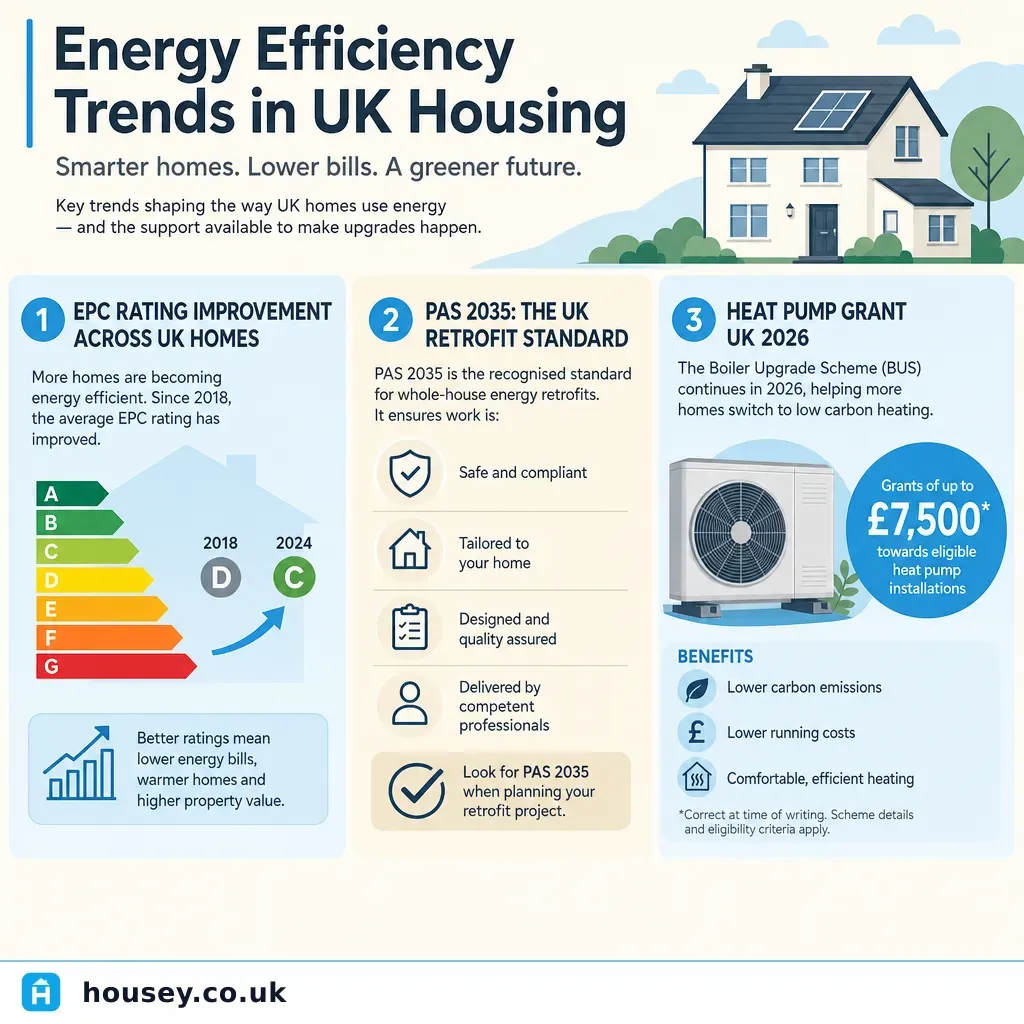
Energy Efficiency Trends in UK Housing
The push to decarbonise UK housing is reshaping what homeowners, landlords, and developers are required — and incentivised — to do. From tighter energy standards in the private rented sector to whole-house retrofit grants for existing homes, the regulatory and funding landscape changes frequently. Whether you are planning improvements to cut running costs, preparing a property for sale or let, or simply trying to understand where UK housing policy is heading, knowing the current direction helps you prioritise spending and avoid work that may need revisiting.
Key points
- Around 55% of English homes hold an EPC rating of D or below, according to the English Housing Survey — well below the government's target for homes to reach Band C by 2035 where practical and cost-effective.
- Building Regulations Part L was uplifted in 2022 as an interim step toward the Future Homes Standard, targeting approximately 80% lower carbon emissions from new homes compared with the 2013 standard.
- PAS 2035:2023 is the British Standard governing retrofit of existing dwellings — all publicly funded retrofit work under ECO4 and the Great British Insulation Scheme must follow this framework.
- The Boiler Upgrade Scheme (BUS) provides grants of £7,500 for air source heat pump installations in England and Wales; all installations must be carried out by MCS-certified contractors.
- Adding insulation to solid-wall homes without addressing ventilation and moisture pathways can cause interstitial condensation and structural damage — PAS 2035 requires a Retrofit Coordinator to identify and manage these risks before work is specified.
Where UK housing stands on energy performance
England has roughly 24 million homes, and improving their energy performance is central to the UK's legally binding net-zero 2050 target under the Climate Change Act 2008. The English Housing Survey 2022–23 reported that approximately 55% of English homes hold an EPC rating of D or below. Around 8% of existing homes are solid-walled — the hardest and most expensive category to insulate effectively — and the pre-1919 housing stock presents particular challenges around moisture and thermal bridging.
EPC ratings are based on the Standard Assessment Procedure (SAP) methodology, updated to SAP 10 to better reflect the lower carbon intensity of the electricity grid. EPCs are valid for 10 years, but an older EPC may not reflect improvements already made — commissioning a new one after retrofitting is usually worthwhile, particularly when selling or letting.
Current retrofit standards: PAS 2035 and TrustMark
The UK's primary technical framework for domestic energy retrofit is PAS 2035:2023 (Specification for the retrofit of dwellings for improved energy efficiency), published by BSI. It applies to all publicly funded retrofit work and is increasingly adopted for private projects.
Under PAS 2035:
- A Retrofit Assessor surveys the property and produces a whole-house assessment covering fabric, heating, ventilation, and moisture.
- A Retrofit Coordinator (TrustMark-registered) oversees the retrofit plan, manages risks across the project, and coordinates installers.
- Measures must be installed by TrustMark-registered or MCS-certified contractors where applicable.
The framework explicitly addresses moisture and ventilation risk — a critical concern for solid-wall homes and properties with limited natural ventilation. Adding insulation without managing moisture pathways can cause interstitial condensation, damp, and long-term structural damage. A qualified Retrofit Coordinator should identify and mitigate these risks before any measures are specified.
Comparing key energy improvement measures
Measure | Best suited to | Typical EPC benefit | Key standard or accreditation | Main risk if poorly specified |
|---|---|---|---|---|
Loft insulation top-up to 270mm | Homes with accessible loft and less than 100mm existing insulation | Moderate; fast payback | TrustMark installer | Minimal if roof ventilation maintained |
Cavity wall insulation | Post-1930 cavity-wall homes with a clear, dry cavity | Moderate to significant | CIGA guarantee scheme | Moisture ingress if cavity is contaminated or exposed |
External wall insulation (EWI) | Solid-wall homes, typically pre-1919 | High | TrustMark / PAS 2030:2023 | Moisture trapping and cold bridging if detailing is poor |
Air source heat pump (ASHP) | Well-insulated homes with adequate heat emitters | High when replacing gas; dependent on fabric | MCS certification | Underperformance if fabric is not upgraded first |
Solar photovoltaic panels | South-facing roof with suitable pitch and low shading | Moderate to high for bills | MCS certification | Low risk if correctly sized and installed |
Mechanical ventilation with heat recovery (MVHR) | New build or deep whole-house retrofit with high airtightness | High in airtight homes | BPEC or manufacturer training | Moisture and overheating risk if poorly commissioned |
Indicative UK costs and EPC impact vary significantly by property type, size, and existing condition. Last reviewed 2026-05-30. Always obtain at least two independent quotes.
Government funding and schemes
Boiler Upgrade Scheme (BUS) — provides grants of £7,500 for air source heat pumps and £7,500 for ground source heat pumps in England and Wales (verify current amounts on GOV.UK before planning works). Installations must be carried out by MCS-certified contractors. Available to homeowners and landlords.
ECO4 — the fourth phase of the Energy Company Obligation requires large energy suppliers to fund insulation and heating upgrades for eligible households. Eligibility is means-tested and property-based (typically EPC D or below combined with certain benefits criteria). Apply via GOV.UK or directly through your energy supplier.
Great British Insulation Scheme (GBIS) — targets EPC D-or-below homes in Council Tax bands A–D for insulation measures including loft, cavity wall, and solid wall insulation. Funded through Ofgem-regulated energy suppliers.
Home Upgrade Grant (HUG2) — targeted at off-gas-grid homes in England, providing insulation and low-carbon heating for lower-income households. Administered through local authorities; check your council for current availability.
Eligibility criteria and scheme terms change frequently. Always verify current conditions on GOV.UK or with your energy supplier before planning works or making investment decisions based on grant assumptions.
Worked example: 1930s semi-detached, EPC rating D
A typical 1930s semi-detached with cavity walls, replacement double glazing, and a gas combi boiler currently rated EPC D (around 55–60 SAP points) might pursue the following phased retrofit:
- Top up loft insulation to 270mm if not already done — low cost, quick payback, minimal disruption, and a straightforward first step.
- Commission a cavity wall survey before installing insulation — check that the cavity is clear, dry, and suitable; a contaminated cavity can worsen damp rather than reduce it.
- Commission a whole-house retrofit assessment under PAS 2035 before specifying a heat pump — this assesses fabric performance, moisture risk, ventilation, and heating demand, and identifies whether radiators need upgrading.
- Upgrade heat emitters where necessary so the ASHP can operate efficiently at lower flow temperatures (typically 35–45°C).
- Install an air source heat pump via the Boiler Upgrade Scheme using an MCS-certified contractor.
- Commission a new EPC after works are complete to record the improvement.
This sequence manages moisture risk, ensures the heat pump is correctly sized for the fabric, and maximises the chance of reaching EPC Band C.
Retrofit and EPC requirements for landlords
Proposed regulations for privately rented homes in England have sought to require EPC C for new tenancies, but the policy position has shifted under successive governments. The direction of travel is clearly toward higher minimum energy performance standards in the private rented sector — but check the current legal position via GOV.UK and take specialist landlord advice before making investment decisions based on regulatory expectations that may still be subject to change.
Important limitations
This article reflects UK energy policy and scheme information as of May 2026. Grant amounts, scheme eligibility, and regulatory requirements change frequently. Retrofit moisture risk is specific to each property and depends on construction type, exposure, ventilation, and occupancy. A qualified Retrofit Assessor or Retrofit Coordinator should assess your specific property before measures are specified. Nothing here constitutes professional advice or a substitute for a PAS 2035-compliant whole-house assessment.
What to ask a qualified professional
Before commissioning retrofit work or appointing a contractor:
- Are you TrustMark-registered and, where relevant, MCS-certified for the measures you are installing?
- Does the project follow PAS 2035, and will a Retrofit Coordinator oversee it?
- How will you assess and manage moisture and ventilation risk for this specific property type?
- What improvement in SAP points or EPC band can I expect, and what assumptions does that estimate rely on?
- What funding am I eligible for, and will you assist with applications?
- What warranties and guarantees come with the installation, and are they backed by an insurance-backed guarantee?
- Is VAT charged at 0% on the measures being installed?
When to get professional help
Do not specify major retrofit measures — particularly solid-wall insulation, heat pump installation, or MVHR systems — without a qualified whole-house assessment first. Seek professional advice immediately if:
- A previous insulation installation has led to damp, mould, or condensation in the property.
- Your surveyor or mortgage lender has raised EPC-related concerns on a property you are buying or remortgaging.
- You are a landlord approaching a compliance threshold and are uncertain of your current legal position.
How Housey can help
Housey connects homeowners with qualified energy professionals across the UK. An energy-efficiency consultant can advise on the right measures for your property and help prioritise spending. An insulation assessment before works begin ensures the correct product is specified for your wall type and moisture conditions. For a full picture of your home's retrofit potential, a retrofit assessment following PAS 2035 is the recommended starting point.
Frequently asked questions
How often does an EPC need to be renewed?
EPCs are valid for 10 years. You should commission a new assessment if you have made significant energy improvements since the last one — for example, adding insulation, a heat pump, or solar panels — as the current certificate will not reflect those changes. A new EPC is also required before marketing a property for sale or let if the existing one has expired.
Does installing a heat pump automatically improve my EPC rating?
Not necessarily. SAP 10 methodology takes into account heating system efficiency and carbon intensity of the fuel, but fabric performance matters significantly. An air source heat pump in a poorly insulated home may not achieve the expected EPC improvement. A whole-house retrofit assessment under PAS 2035 before specifying the heat pump helps ensure a predictable outcome.
What is the difference between an EPC assessor and a Retrofit Assessor?
An EPC assessor produces a Standard Assessment Procedure rating based on property characteristics — they do not design retrofit solutions. A Retrofit Assessor, qualified under PAS 2035, conducts a more detailed whole-house assessment covering moisture risk, ventilation, heating systems, and occupancy. The two roles are distinct, though some practitioners hold both qualifications.
Is VAT charged on energy-saving home improvements?
Most qualifying energy-saving materials installed in residential properties attract 0% VAT under current HMRC rules. This includes insulation, heat pumps, and solar panels when installed by a VAT-registered contractor. Eligibility depends on the specific measure and circumstances — confirm with your installer and check HMRC guidance before committing to a quote.
Sources and further reading
- English Housing Survey 2022–23 Headline Report — Ministry of Housing, Communities and Local Government
- Future Homes and Buildings Standards: 2023 consultation — GOV.UK
- Boiler Upgrade Scheme — GOV.UK
- Great British Insulation Scheme — GOV.UK
- MCS Certification Scheme — Microgeneration Certification Scheme
- Energy Saving Trust — Energy Saving Trust
Useful next reads
 Energy & Retrofit
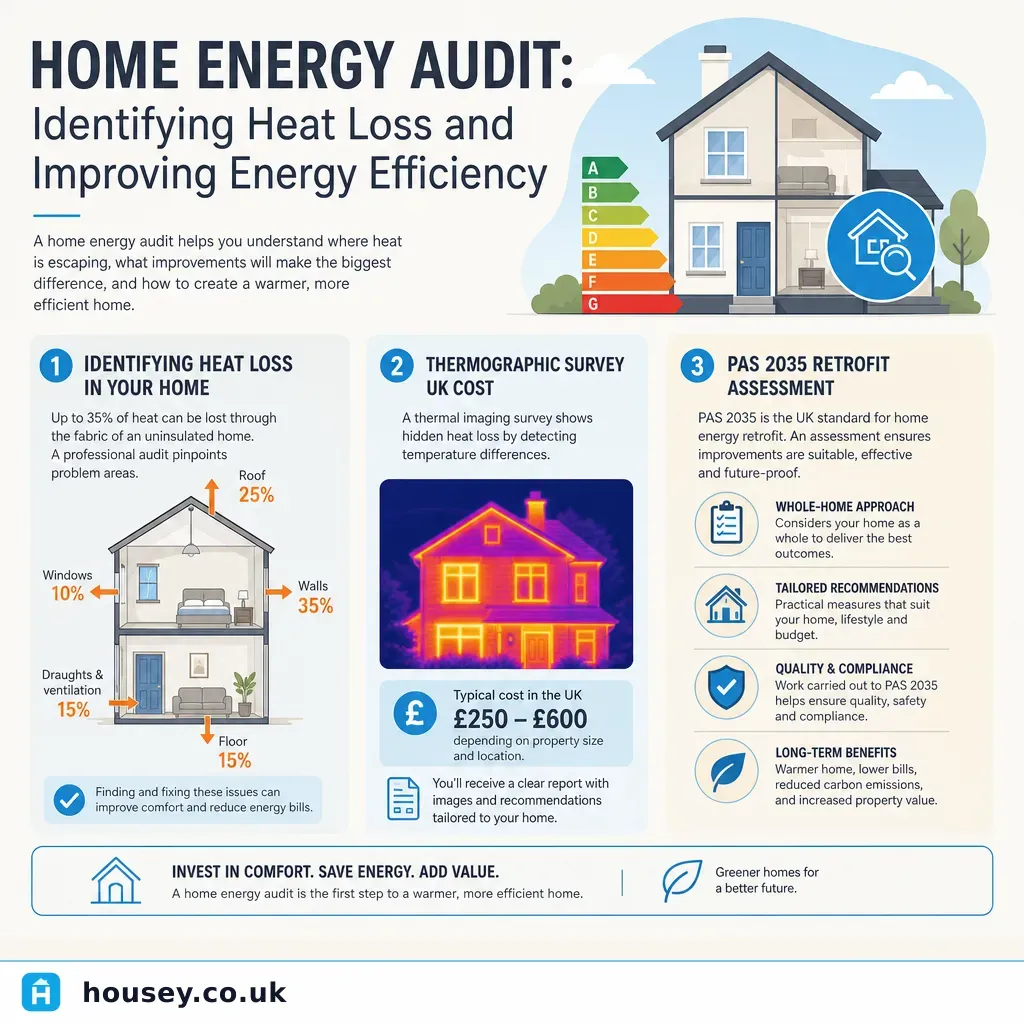
Home Energy Audit: Identifying Heat Loss and Improving Energy Efficiency
A home energy audit is a structured assessment of where your property loses heat and how efficiently it uses energy.
 Energy & Retrofit
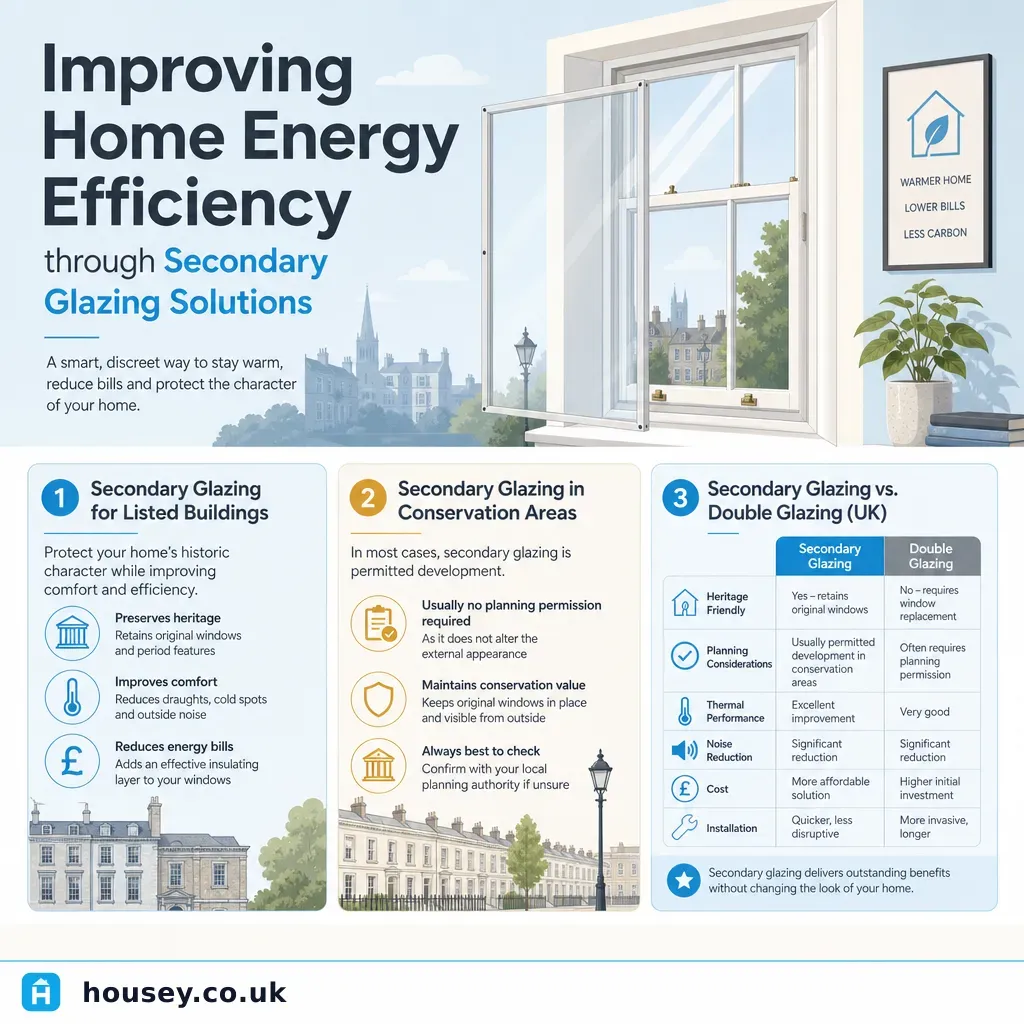
Improving Home Energy Efficiency through Secondary Glazing Solutions
Secondary glazing fits an additional pane inside your existing window reveal, reducing heat loss and noise without replacing the original frame.
 Energy & Retrofit
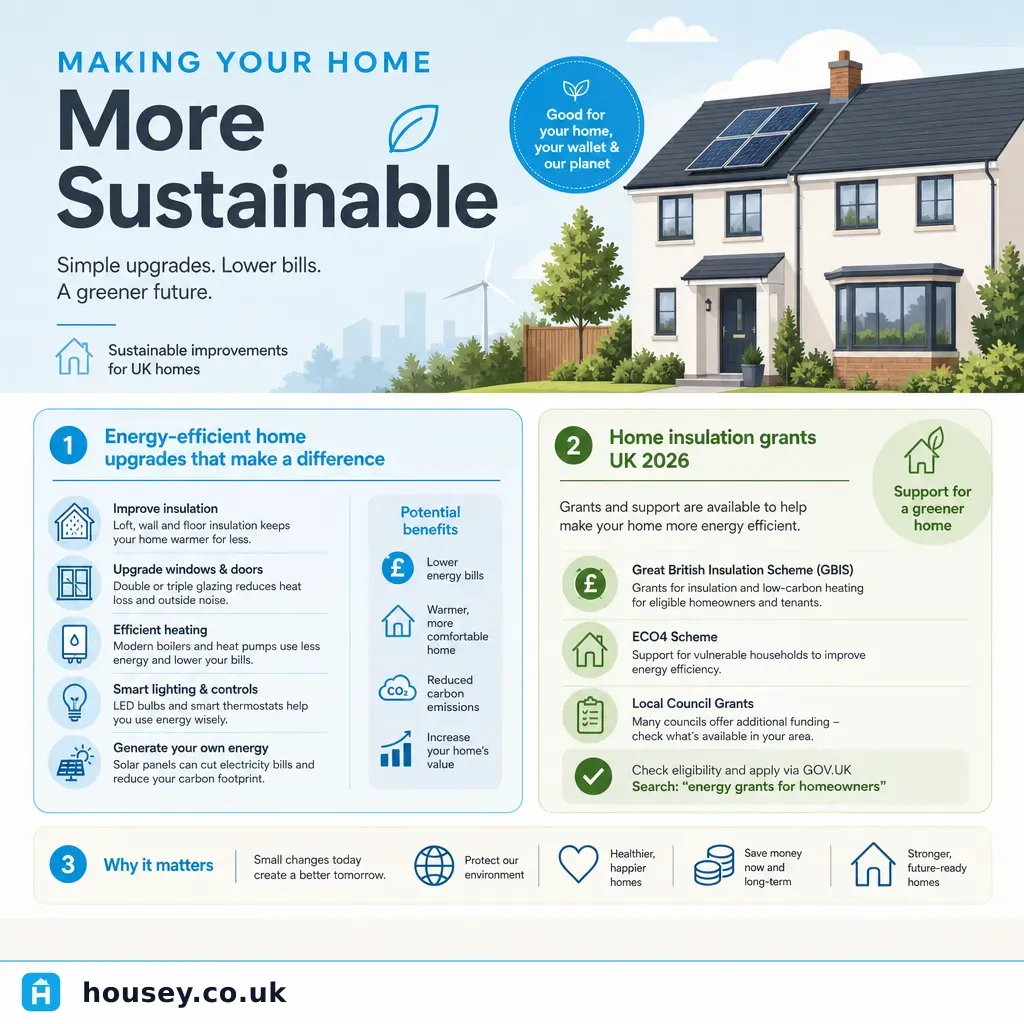
Making your home more sustainable
Making a UK home more sustainable usually starts with fabric-first improvements such as insulation, draught-proofing, and efficient glazing before adding renewable energy systems like solar panels or a heat pump.
 Energy & Retrofit
Maximising Energy Efficiency: Smart Tips for UK Homes
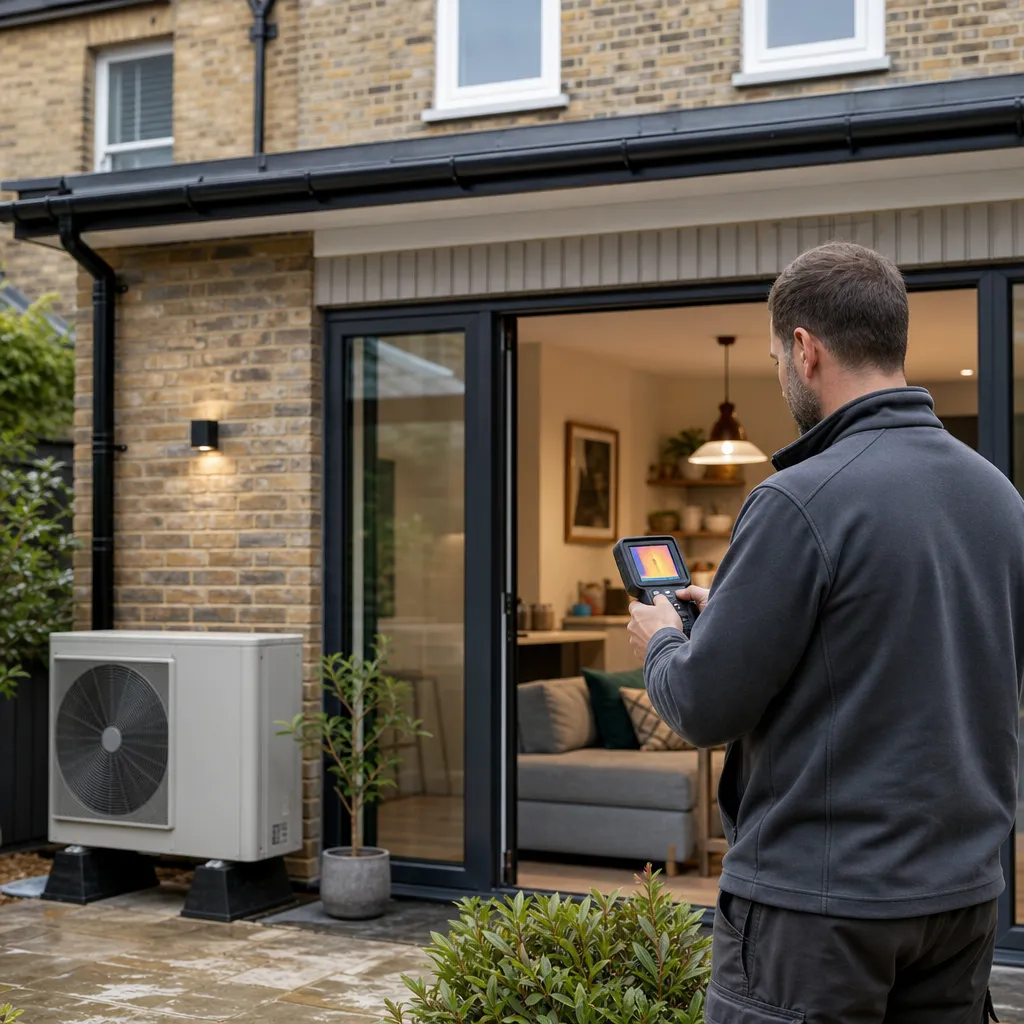
Improving energy efficiency in a UK home typically starts with draught-proofing and loft insulation — the measures with the fastest payback — before moving to wall insulation, heating system upgrades, and low-carbon technologies such as heat pumps or solar panels.
 Energy & Retrofit
Energy Efficiency Improvements for Reducing Household Running Costs
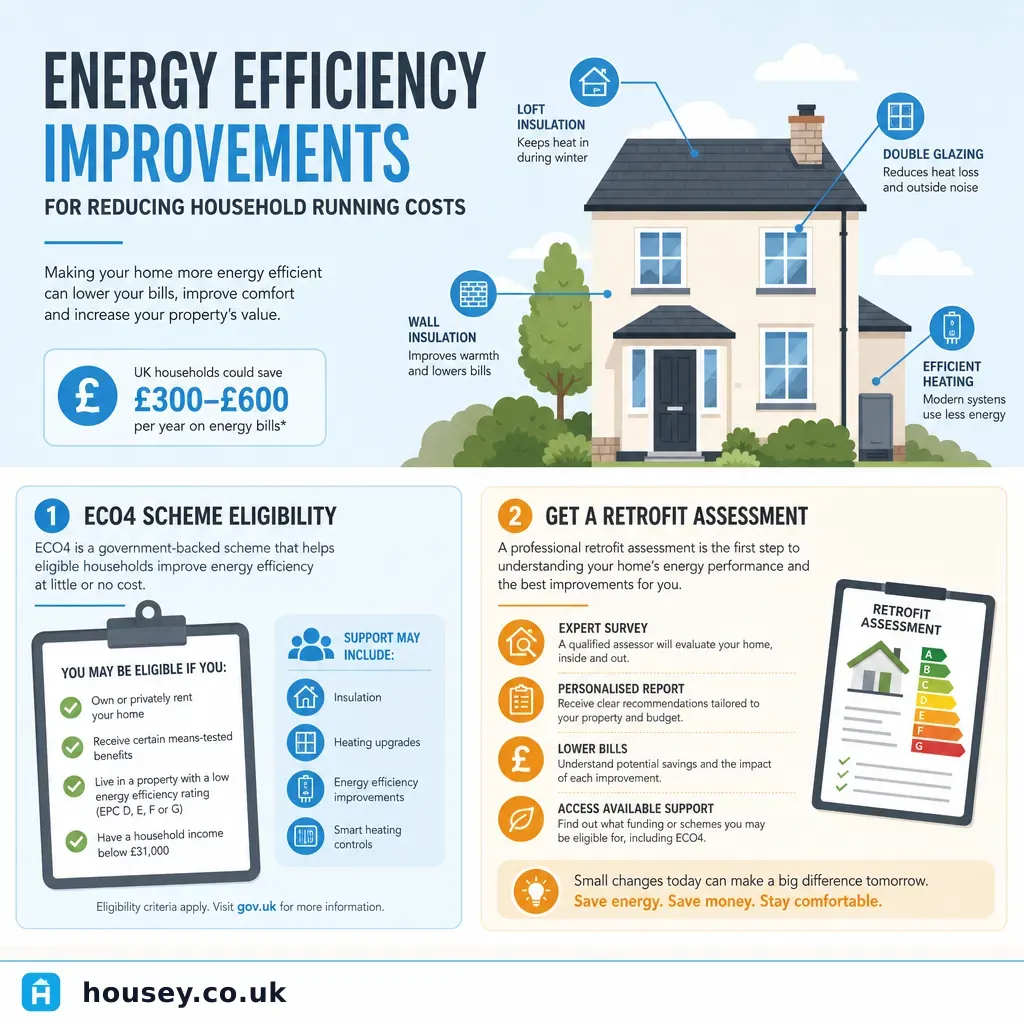
Reducing household running costs usually starts with draught-proofing and loft insulation — the measures with the best savings-to-cost ratio.