Maximising Energy Efficiency: Smart Tips for UK Homes
By Housey · Last reviewed 19th of May 2026
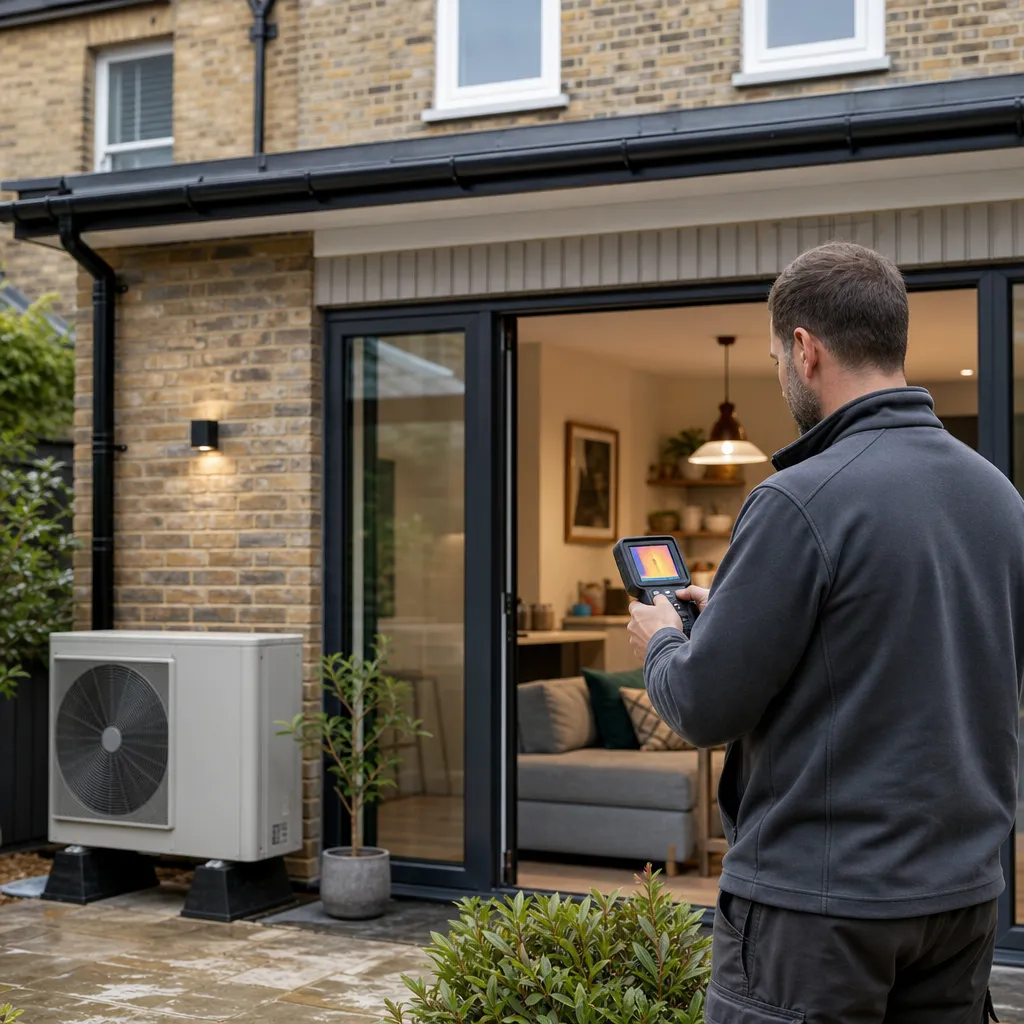
Maximising Energy Efficiency: Smart Tips for UK Homes
Rising energy costs and the UK's net-zero commitments mean that improving a home's energy performance has never been more relevant for homeowners. Whether you are motivated by lower bills, improving an EPC rating before a sale or let, or reducing your carbon footprint, the measures available range from straightforward draught-proofing to significant fabric and heating system upgrades — each with different costs, disruption levels, and technical risks.
Key points
- Loft insulation to a depth of 270mm, as recommended by the Energy Saving Trust, is one of the fastest-payback energy measures for UK homes with accessible roof spaces.
- Solid wall insulation (external or internal) typically costs £8,000–£22,000 and is subject to PAS 2030 installation standards when funded through schemes such as ECO4 or the Great British Insulation Scheme (GBIS).
- Heat pumps sized incorrectly for a dwelling's heat loss can underperform significantly; sizing must follow MCS 020 methodology, which accounts for fabric, ventilation, and domestic hot water load.
- Part L of the Building Regulations (conservation of fuel and power) sets minimum energy efficiency standards for new builds and some notifiable works in existing homes.
- England's Minimum Energy Efficiency Standards (MEES) require private rental properties to hold an EPC rating of at least E; proposed increases to a minimum of C by 2030 are under active consultation.
Why the order of measures matters
Retrofit measures interact with each other and with a building's structure. Adding insulation without addressing ventilation can create interstitial condensation — moisture trapped within walls or floors that causes mould, rot, and structural damage over time. This risk is particularly relevant in older UK housing stock, including pre-1919 solid-wall properties, 1920s–1950s cavity-wall homes, and post-war system-built types.
The PAS 2035:2023 standard — the publicly available specification for domestic retrofit — sets out a whole-house approach: assess first, then plan, then install, then verify. For properties using government-funded schemes such as ECO4 or GBIS, the standard requires a Retrofit Assessor and a Retrofit Coordinator to be involved before installation begins.
A typical recommended sequence for most UK homes:
- Draught-proofing (gaps around windows and doors, letter boxes, unused chimneys)
- Loft insulation (if accessible; top up to 270mm)
- Cavity wall insulation (where the cavity is suitable — a pre-installation survey is advisable)
- Suspended timber floor insulation
- Heating controls (programmable thermostats, thermostatic radiator valves, smart controls)
- Boiler replacement or heat pump installation
- Solid wall insulation (highest cost and disruption; most impactful for solid-wall homes)
- Solar photovoltaic panels and battery storage
Comparing key energy efficiency measures
Measure | Typical UK cost | Annual saving (indicative) | Best property type | Main risk | Qualified installer required? |
|---|---|---|---|---|---|
Draught-proofing | £80–£300 | £60–£100 | Most properties | Minimal | No (DIY viable) |
Loft insulation (top-up) | £300–£700 | £150–£300 | Homes with accessible loft | Low | Recommended |
Cavity wall insulation | £500–£1,500 | £150–£400 | 1930s+ cavity-wall homes | Moderate (moisture if cavity unsuitable) | Yes — cavity survey first |
Internal wall insulation | £5,000–£12,000 | £200–£500 | Solid-wall homes | Higher (condensation risk) | Yes — PAS 2035 |
External wall insulation | £8,000–£22,000 | £200–£500 | Solid-wall homes | Higher (planning, moisture) | Yes — PAS 2035 |
Air source heat pump | £7,000–£15,000 (after BUS grant) | Varies by tariff and fabric | Well-insulated homes | High if undersized | Yes — MCS certified |
Solar PV | £5,000–£9,000 | £400–£800 | South-facing roofs | Low–moderate | Yes — MCS certified |
Indicative UK costs, last reviewed 2026-05-19. Savings are illustrative, based on Energy Saving Trust estimates for a typical semi-detached home. Actual figures depend on property size, insulation levels, occupancy, energy tariff, and local climate.
Smart heating controls: a low-cost starting point
Smart thermostats and heating controls allow homeowners to set zone-by-zone programmes, control heating remotely, and monitor energy use in real time. The Energy Saving Trust estimates that effective heating controls can reduce heating bills by around 10–15% compared with a basic timer-only system.
Key controls worth considering:
- Programmable or smart thermostat: sets heating to your household's schedule rather than a fixed on/off timer
- Thermostatic radiator valves (TRVs): allow room-by-room temperature control, reducing heat in unused rooms
- Smart heating apps: provide remote monitoring and control, often with energy usage data and alerts
- Hot water cylinder controls: avoid heating water during peak tariff periods if you are on a time-of-use energy tariff
Available grants and funding
As at May 2026, the following UK schemes are or have recently been active. Eligibility criteria, funding levels, and availability change frequently; always check GOV.UK energy grants guidance and the Energy Saving Trust grants finder for current information.
- Boiler Upgrade Scheme (BUS): grants of £7,500 towards an air source or ground source heat pump; administered by Ofgem and applied through an MCS-certified installer.
- ECO4 (Energy Company Obligation): free insulation and heating improvements for low-income households; delivered through energy suppliers.
- Great British Insulation Scheme (GBIS): additional insulation funding for homes with an EPC rating of D or below.
- Home Upgrade Grant (HUG): funding for off-gas-grid homes in England with lower EPC ratings; administered through local authorities.
Local authority top-up grants and area-based schemes vary across England, Scotland, Wales, and Northern Ireland — check your council's website for area-specific offers.
Which professional do I need?
Task | Right professional | Key accreditation |
|---|---|---|
Home energy assessment / EPC | Domestic Energy Assessor (DEA) | UKAS-accredited scheme (e.g. Elmhurst, ECMK) |
Whole-house retrofit plan | Retrofit Assessor + Retrofit Coordinator | PAS 2035:2023 |
Insulation installation (funded scheme) | TrustMark-registered installer | PAS 2030:2023 |
Heat pump design and installation | MCS-certified heat pump installer | MCS 020 |
Solar PV installation | MCS-certified solar installer | MCS |
Cavity wall suitability survey | Independent surveyor or CIGA-registered assessor | CIGA (Cavity Insulation Guarantee Agency) |
Homeowner checklist: before commissioning retrofit work
Important limitations
This article provides general guidance for UK homeowners. Energy efficiency measures interact with a property's specific fabric, construction type, exposure, ventilation, and occupancy patterns in ways a generic guide cannot fully capture. Retrofit decisions — particularly wall insulation in older or moisture-sensitive buildings, and heat pump sizing — carry real risk if carried out without proper professional assessment.
Rules on planning permission, permitted development, and scheme eligibility also change. For properties with suspected damp, existing structural issues, or listed building status, always commission a professional survey before any fabric measures. This article does not constitute technical, legal, or regulatory advice.
When this becomes urgent
Seek professional advice promptly if:
- You have signs of existing damp, mould, or condensation before adding insulation — installing insulation over a damp wall can significantly worsen the problem.
- Cavity wall insulation installed under a previous scheme has led to new internal damp patches — contact CIGA (Cavity Insulation Guarantee Agency), which operates a guarantee and remediation scheme.
- A heat pump is failing to heat the property adequately after installation — undersizing or inadequate emitters are common causes requiring engineering diagnosis.
- You are a landlord with a property at EPC rating F or G and are approaching or have exceeded the Minimum Energy Efficiency Standards compliance threshold.
What to ask a qualified professional
Before instructing a retrofit assessor, insulation contractor, or heat pump installer:
- What assessment methodology will you use? For PAS 2035 work: which software and thermal model?
- Have you worked on similar properties in this area? What moisture risks are typical in this construction type?
- Are you registered under TrustMark, MCS, or both — and can I verify this on the public registers?
- Will the installation require planning permission or listed building consent?
- What ventilation provision is included in the specification, and how does it prevent interstitial condensation?
- What guarantees or warranties come with the installation, and how long do they last?
- How will I monitor energy performance after installation to confirm that savings are being achieved?
How Housey can help
Housey connects homeowners with accredited energy-efficiency consultants, insulation assessors, heat pump surveyors, solar surveyors, and retrofit assessors across the UK. Get expert guidance and compare quotes from qualified professionals — all in one place.
Frequently asked questions
What is an EPC and do I need one?
An Energy Performance Certificate (EPC) rates a property's energy efficiency from A (most efficient) to G (least efficient). An EPC is legally required when selling or letting a residential property in the UK. Certificates are valid for ten years. Check the national EPC register to see whether your property already holds a current certificate before commissioning a new assessment.
Can I install cavity wall insulation myself?
No — cavity wall insulation requires specialist equipment to inject material into the wall cavity and a pre-installation survey to confirm the cavity is suitable and free from defects. DIY installation is not viable or safe. Always use a CIGA-registered installer and obtain a CIGA guarantee certificate on completion.
Will a heat pump work in an older UK home?
Heat pumps can work in older properties, but they perform most efficiently in well-insulated homes with low-temperature heat distribution such as underfloor heating or oversized radiators. An older solid-wall property will typically need fabric improvements before a heat pump operates cost-effectively. A heat loss calculation following MCS 020 methodology is essential before specifying any system.
Do solar panels need planning permission in the UK?
In most cases, solar panels on a domestic roof are permitted development and do not require planning permission. Exceptions include listed buildings, properties in conservation areas where panels would be visible from a public road, and some flat roofs. Check your local planning authority and GOV.UK permitted development guidance before installation.
Sources and further reading
- Energy Saving Trust: Grants and schemes — Energy Saving Trust
- GOV.UK: Improve your home's energy efficiency — GOV.UK
- MCS: Find a certified installer — MCS
- TrustMark: Find a registered business — TrustMark
- Ofgem: Boiler Upgrade Scheme — Ofgem
- CIGA: Cavity Insulation Guarantee Agency — CIGA
- National EPC Register — GOV.UK
Useful next reads
 Energy & Retrofit
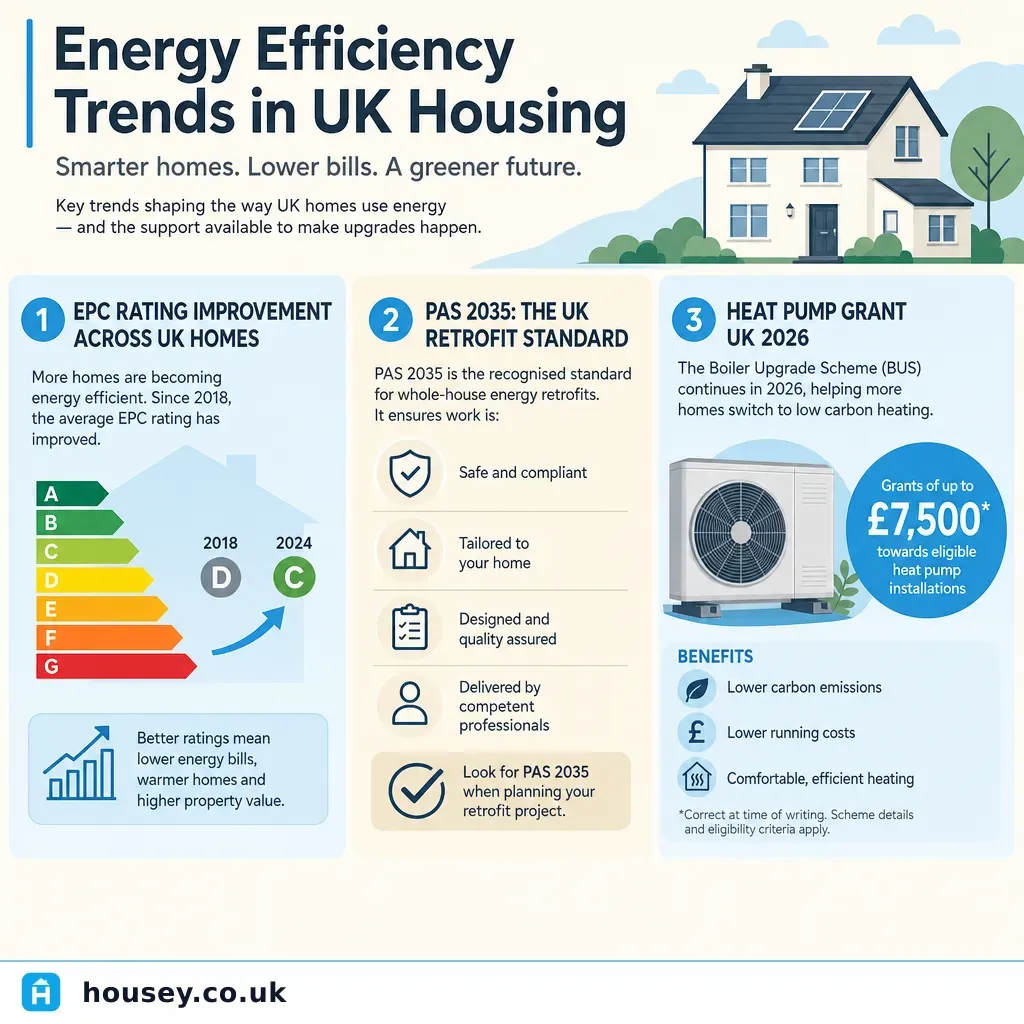
Energy Efficiency Trends in UK Housing
UK housing faces significant pressure to improve energy performance ahead of the 2050 net-zero target, with around 55% of English homes currently rated EPC D or below.
 Energy & Retrofit
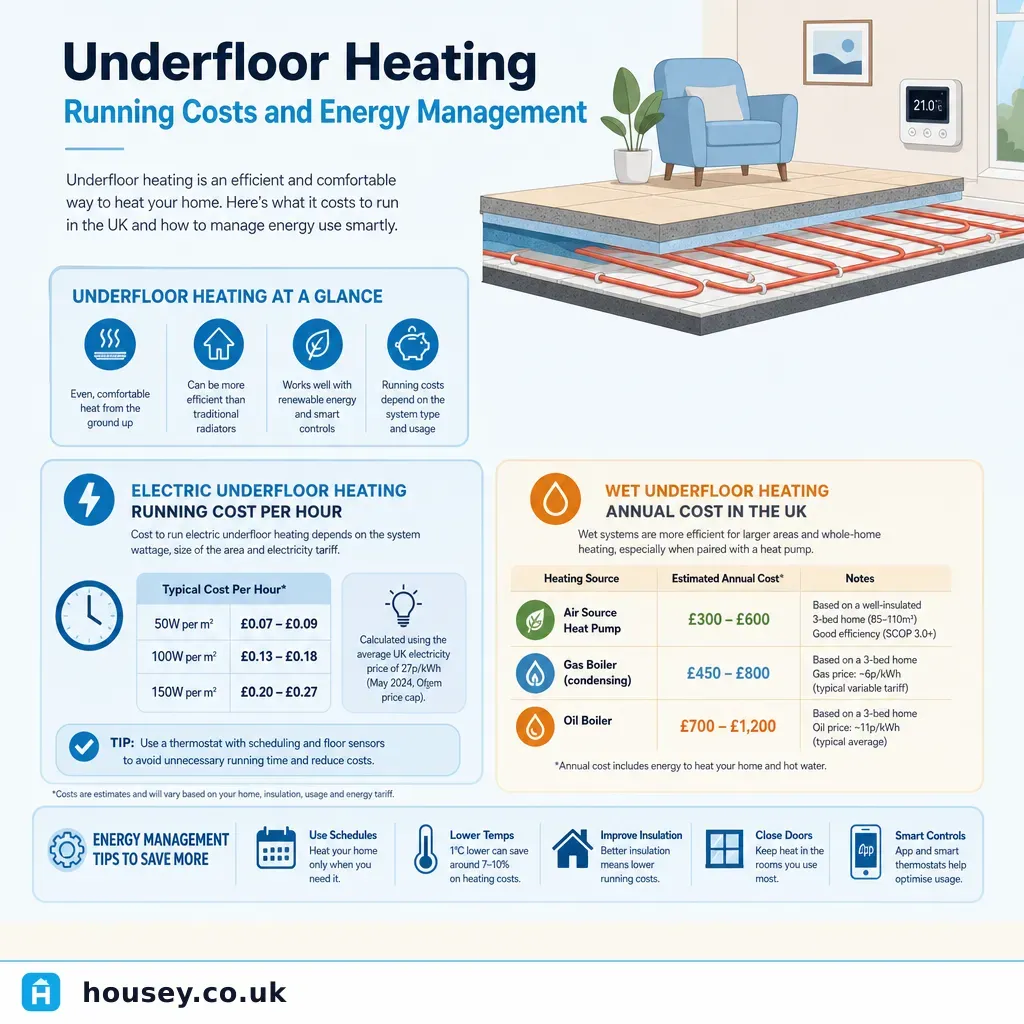
Underfloor Heating Running Costs and Energy Management
Underfloor heating running costs depend on system type, heat source, insulation, and controls.
 Energy & Retrofit
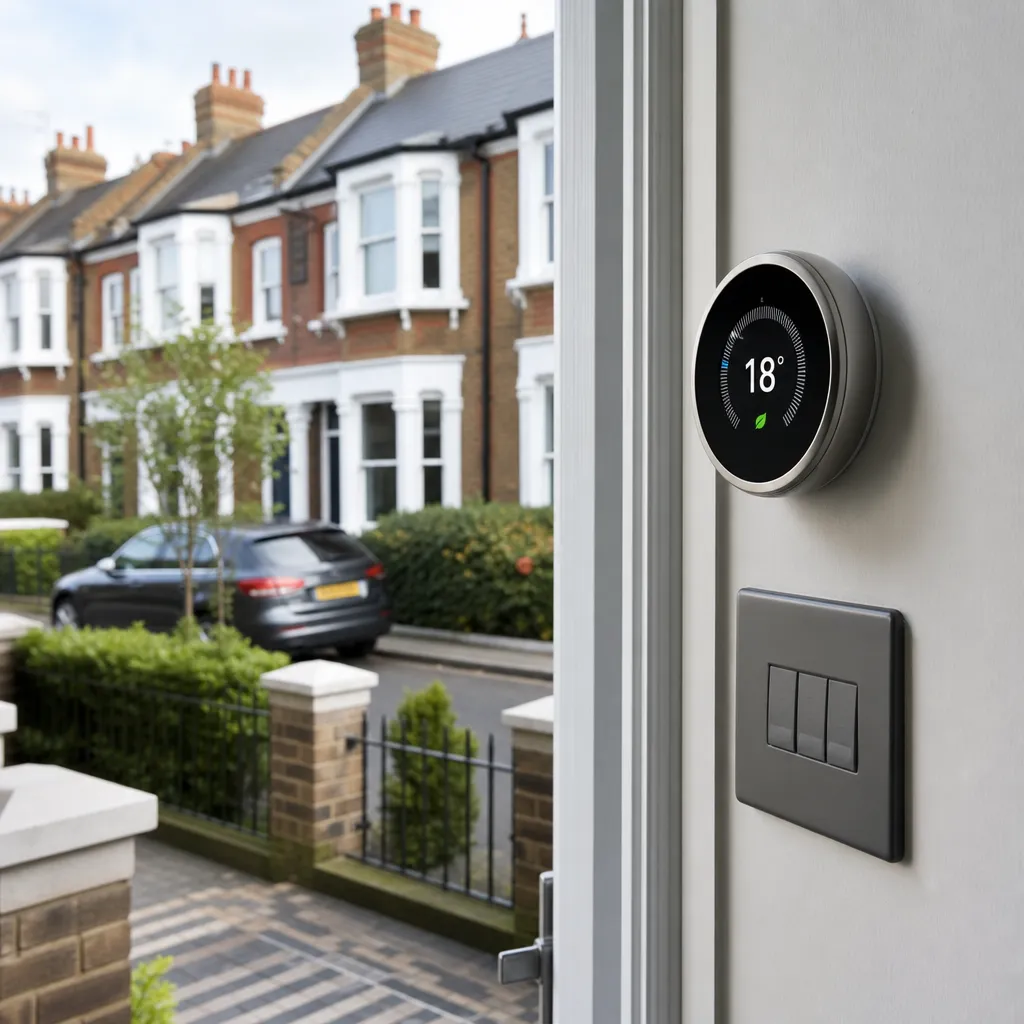
Smart Home Technology That Saves Energy: A Practical Approach To Reducing Bills
Smart home technology can reduce household energy bills by automating heating, lighting, and appliances to run only when needed.
 Energy & Retrofit
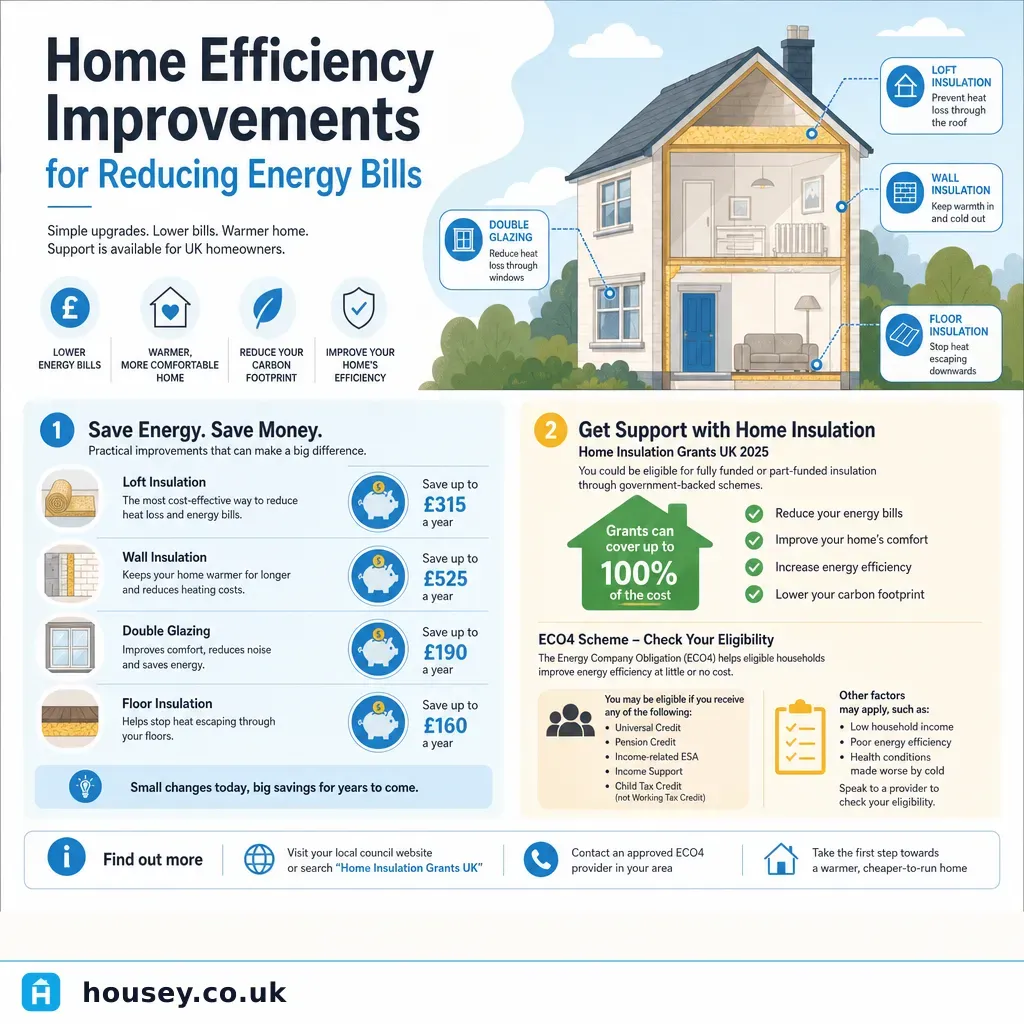
Home Efficiency Improvements for Reducing Energy Bills
The most cost-effective UK home efficiency improvements are usually loft insulation, cavity wall insulation, draught-proofing, and upgrading heating controls.
 Energy & Retrofit
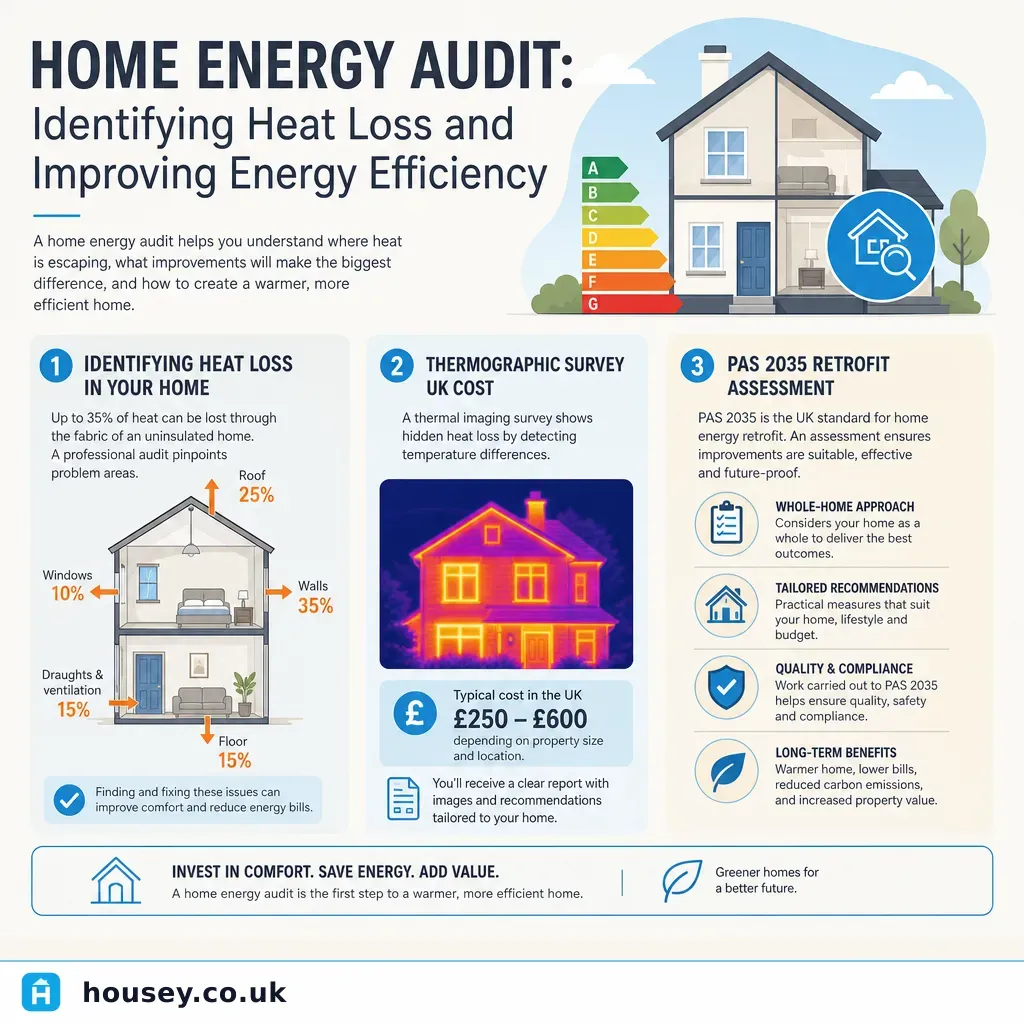
Home Energy Audit: Identifying Heat Loss and Improving Energy Efficiency
A home energy audit is a structured assessment of where your property loses heat and how efficiently it uses energy.