Energy-Efficient Door Draught Seals: Reduce Heat Loss and Lower Heating Bills
By Housey · Last reviewed 24th of May 2026
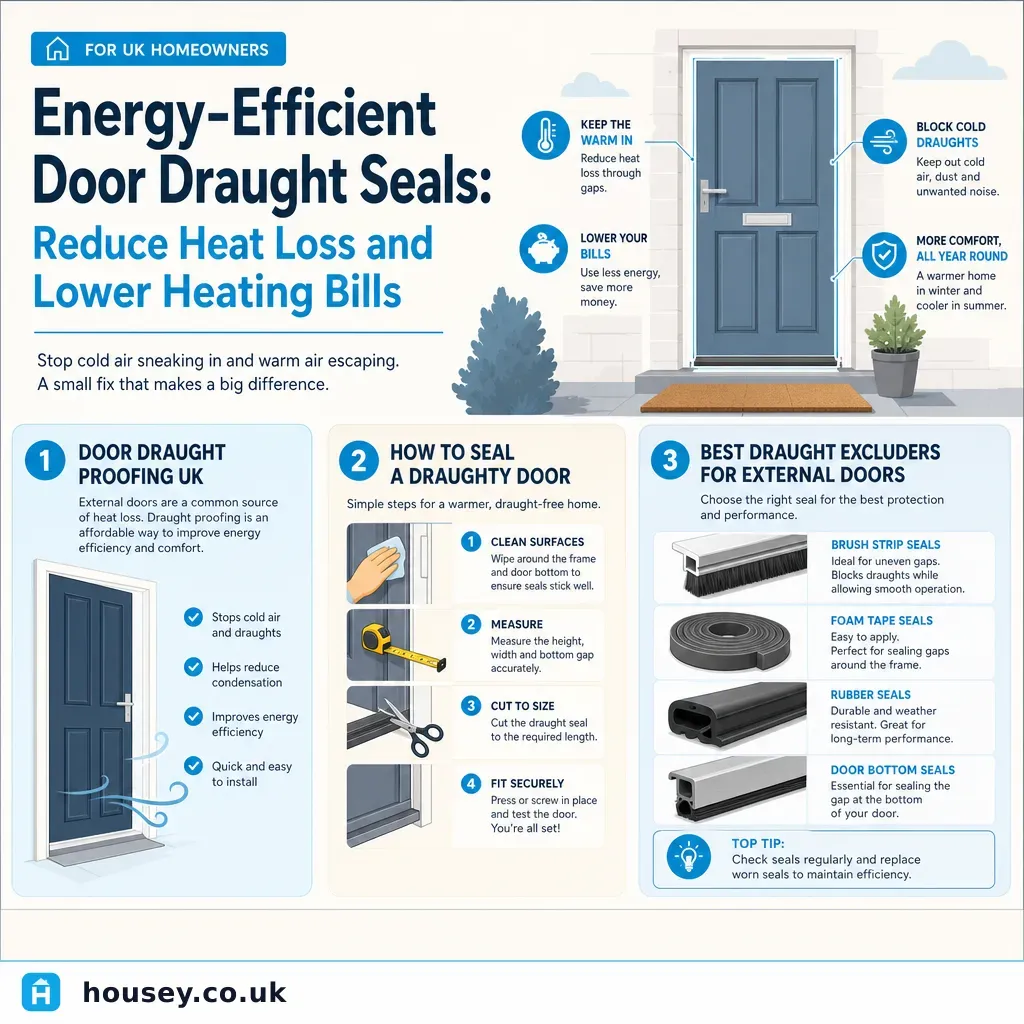
Energy-Efficient Door Draught Seals: Reduce Heat Loss and Lower Heating Bills
Draughty doors are one of the most common sources of heat loss in UK homes, particularly in older properties built before the 1990s where original timber frames have shrunk and settled over decades. Whether you are preparing for winter, responding to a higher energy bill, or working through a broader home retrofit, understanding which draught seals suit your door type will help you prioritise spending and achieve the fastest return on investment.
Key points
- The Energy Saving Trust estimates that professional draught-proofing of all doors and windows in a typical gas-heated semi-detached home can save around £45–£60 per year on heating bills.
- Different seal types suit different positions: brush strips for the sides and top, compression seals for the hinge side, threshold strips or drop-down seals for the bottom of the door.
- Letterboxes and keyholes are frequently overlooked; a letterbox draught excluder and keyhole cover together can meaningfully reduce air infiltration on a front door.
- Under the Great British Insulation Scheme (GBIS) and ECO4, eligible low-income or fuel-poor households may receive funded draught-proofing — check eligibility via GOV.UK.
- Building Regulations Approved Document L sets air permeability targets for new and replacement doors; professionally fitted seals help existing doors approach these standards without full replacement.
Types of door draught seal: which is right for your door?
No single seal type suits every door. The frame material, door weight, gap width, and whether the door is internal or external all affect which product will perform best and last longest.
Seal type | Best for | Not ideal for | Typical lifespan | Approximate cost (DIY) |
|---|---|---|---|---|
Brush strip (pile seal) | Sides and top of external doors; doors with slight warp | Gaps wider than 6 mm | 5–10 years | £5–£20 per door |
Compression seal (rubber or foam) | Hinge side of inward-opening doors; consistent gap | Doors that rub or drag | 3–7 years | £5–£15 per door |
Threshold strip (aluminium with rubber insert) | Base of external doors; uneven thresholds | Deeply recessed thresholds | 10+ years | £15–£40 |
Automatic door bottom (drop-down seal) | High-performance sealing on heavier external doors | Lightweight internal doors | 10–15 years | £30–£80 |
Letterbox draught excluder (brush or flap) | Front doors with original letterboxes | Doors without letterboxes | 5–10 years | £5–£20 |
Foam tape (self-adhesive) | Quick fix on low-traffic internal doors | External doors with heavy use | 1–3 years | £2–£8 |
Indicative UK costs, last reviewed 2026-05-24. Prices vary by retailer and specification.
How much heat loss do doors cause?
Doors account for around 10–20% of uncontrolled air infiltration in older UK homes, though the exact figure depends on the number, type, and condition of doors as well as the home's overall airtightness. A gap of just 3 mm around a door frame is broadly equivalent, in air leakage terms, to leaving a small window permanently open.
External doors — particularly Victorian- and Edwardian-era timber front doors — are the highest priority. French doors, patio doors with worn rubber seals, and loft hatches are also common weak points. Internal doors matter less for heating bills but can significantly affect comfort in rooms where you want to retain warmth.
DIY draught-proofing vs professional fitting
Many draught seals are suitable for confident DIY installation, especially self-adhesive foam tape and clip-on letterbox excluders. However, threshold strips and automatic door bottoms require accurate measurement and may involve cutting or screwing into door frames — mistakes can affect how the door closes and seals.
A homeowner draught-proofing checklist:
Professional draught-proofing across the whole house (doors and windows) typically costs £150–£350, depending on the number of openings and the property size. A professional installer will also identify issues a DIY approach might miss, such as gaps around door linings where they meet masonry.
Indicative UK costs, last reviewed 2026-05-24.
ECO4 and funded draught-proofing schemes
If your household receives certain qualifying benefits, or if you live in a property with a low EPC rating (band E, F, or G), you may be eligible for free or subsidised draught-proofing under:
- ECO4 (Energy Company Obligation 4): energy suppliers fund insulation and draught-proofing measures for eligible homes; check via GOV.UK or contact your energy supplier directly.
- Great British Insulation Scheme (GBIS): extended support for households in the lower half of EPC ratings; draught-proofing is an eligible measure.
- Local authority schemes: some councils offer additional grants or referrals — contact your local authority's energy team or check the Simple Energy Advice website.
Draught-proofing alone is rarely the sole funded measure, but it is often bundled with loft insulation or cavity wall insulation, so it is worth asking about the full package available under any scheme.
What to ask before hiring a professional draught-proofer
- What products do you use, and are they covered by a manufacturer warranty?
- Will you check all external doors, including French doors, back doors, and loft hatches?
- Is the letterbox seal included in the quote?
- What saving do you estimate based on my property type and heating fuel?
- Is the work TrustMark registered or covered by a trade body guarantee?
- Is VAT included in the quote?
- What happens if a seal fails within the first year?
When to get professional help
Draught-proofing is generally low-risk, but professional input is valuable when:
- Your door frame is visibly rotten, cracked, or pulling away from the wall — sealing over a failing frame will not address the root cause.
- You have tried several seal types and air infiltration persists — there may be gaps in the subfloor, around the door lining, or through the wall itself.
- You are planning a broader retrofit and want a whole-house air permeability assessment — a retrofit assessor working under PAS 2035 can identify all infiltration points and recommend a sequenced improvement plan.
- You are applying for GBIS or ECO4 funding — an installer registered with TrustMark or the Ofgem ECO scheme is required.
How Housey can help
If you want a professional to assess your home's air infiltration and recommend draught-proofing and insulation measures in the right order, energy-efficiency consultants on Housey can provide whole-home advice. For a broader picture of where your property is losing heat, an insulation assessment will identify the highest-priority improvements and help you make an informed case for funded support.
Frequently asked questions
How much can I save by draught-proofing my doors?
The Energy Saving Trust estimates that draught-proofing all doors and windows in a gas-heated semi-detached home can save around £45–£60 per year. Savings vary depending on how draughty the property currently is, the heating fuel used, and how well the rest of the home is insulated. In an older property with significant gaps, savings may be higher.
Can I draught-proof my doors myself?
Many draught seals — including self-adhesive brush strips, foam tape, and letterbox excluders — are straightforward DIY jobs. Threshold strips and automatic door bottoms require more accurate installation and may affect how the door closes, so a professional fitter is worth considering for external doors where thermal performance matters most.
What is the best draught seal for an external front door?
For most external front doors, a combination of a brush strip on the sides and top, a threshold strip or automatic drop-down seal at the bottom, and a letterbox draught excluder delivers the best results. The right specific products depend on the gap width, door weight, and whether the frame is timber or uPVC.
Does draught-proofing help with noise as well as heat?
Yes — sealing gaps around external doors also reduces the transmission of traffic noise and other external sounds. The improvement is most noticeable on front doors facing a busy road. It is not equivalent to acoustic double glazing, but it is a low-cost improvement for both thermal comfort and noise reduction.
Sources and further reading
- Draught-proofing guide — Energy Saving Trust
- Energy Company Obligation (ECO4) — GOV.UK
- Great British Insulation Scheme — GOV.UK
- Approved Document L: Conservation of fuel and power — GOV.UK / DLUHC
- Simple Energy Advice — GOV.UK
Useful next reads
 Energy & Retrofit
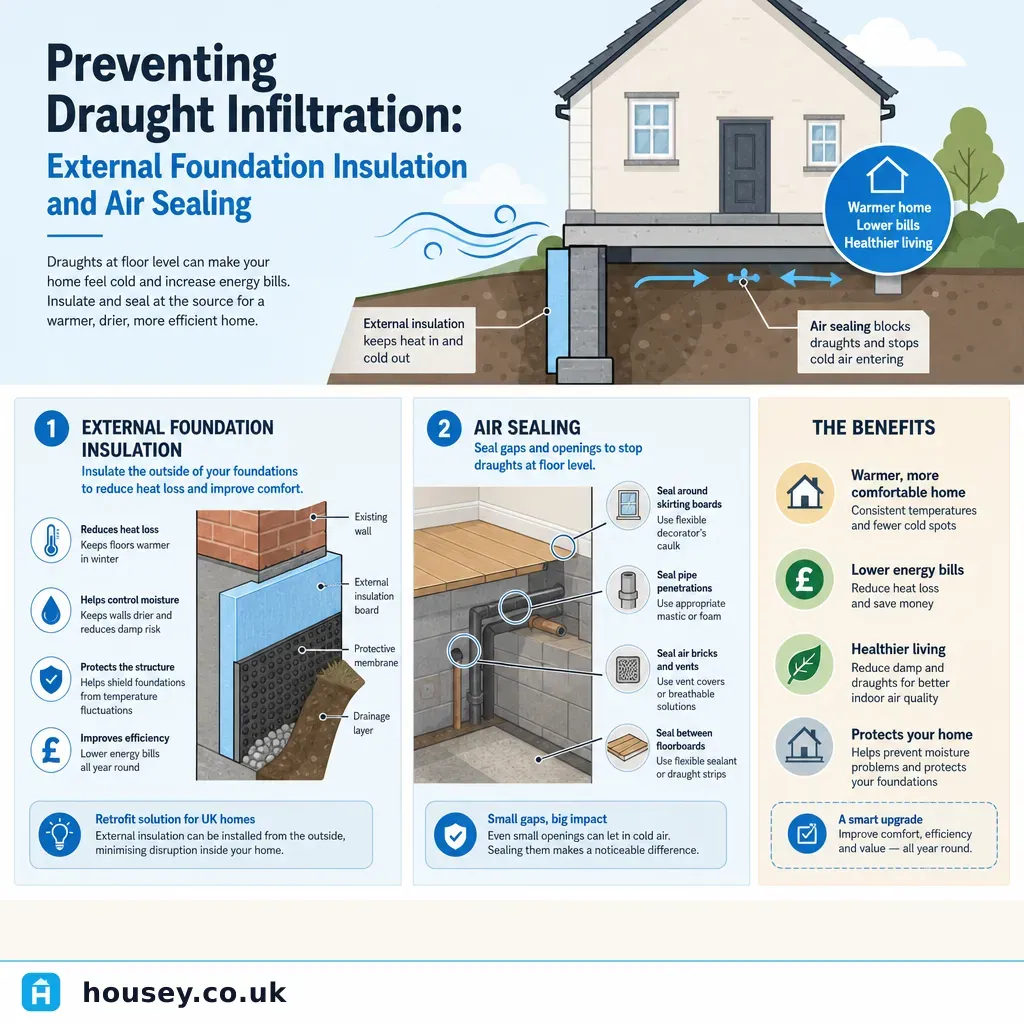
Preventing Draught Infiltration: External Foundation Insulation and Air Sealing
External foundation insulation and air sealing target heat loss and cold draughts at the building's base — particularly common in older UK homes with suspended timber floors or solid masonry.
 Energy & Retrofit
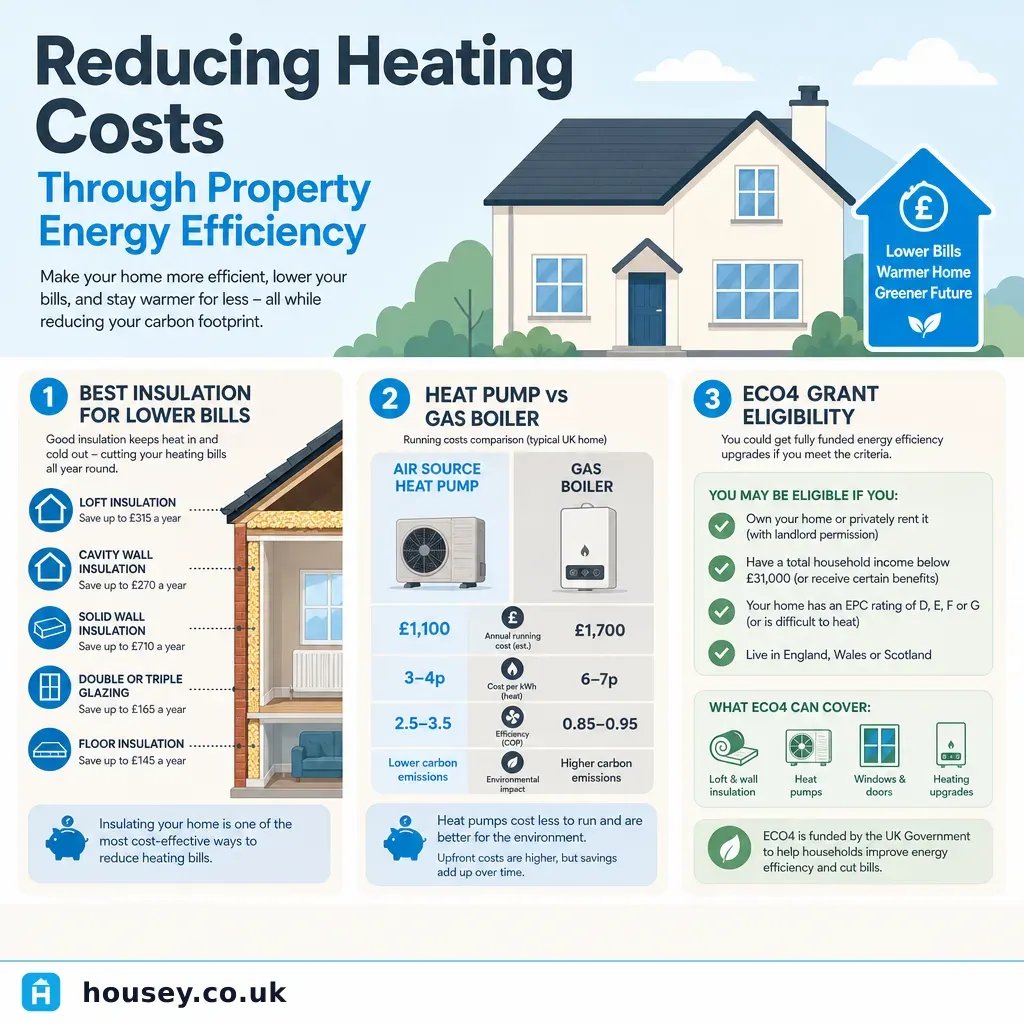
Reducing Heating Costs Through Property Energy Efficiency
Reducing heating costs starts with identifying where heat is lost — typically walls (30–35%), roof (20–25%), and windows.
 Energy & Retrofit
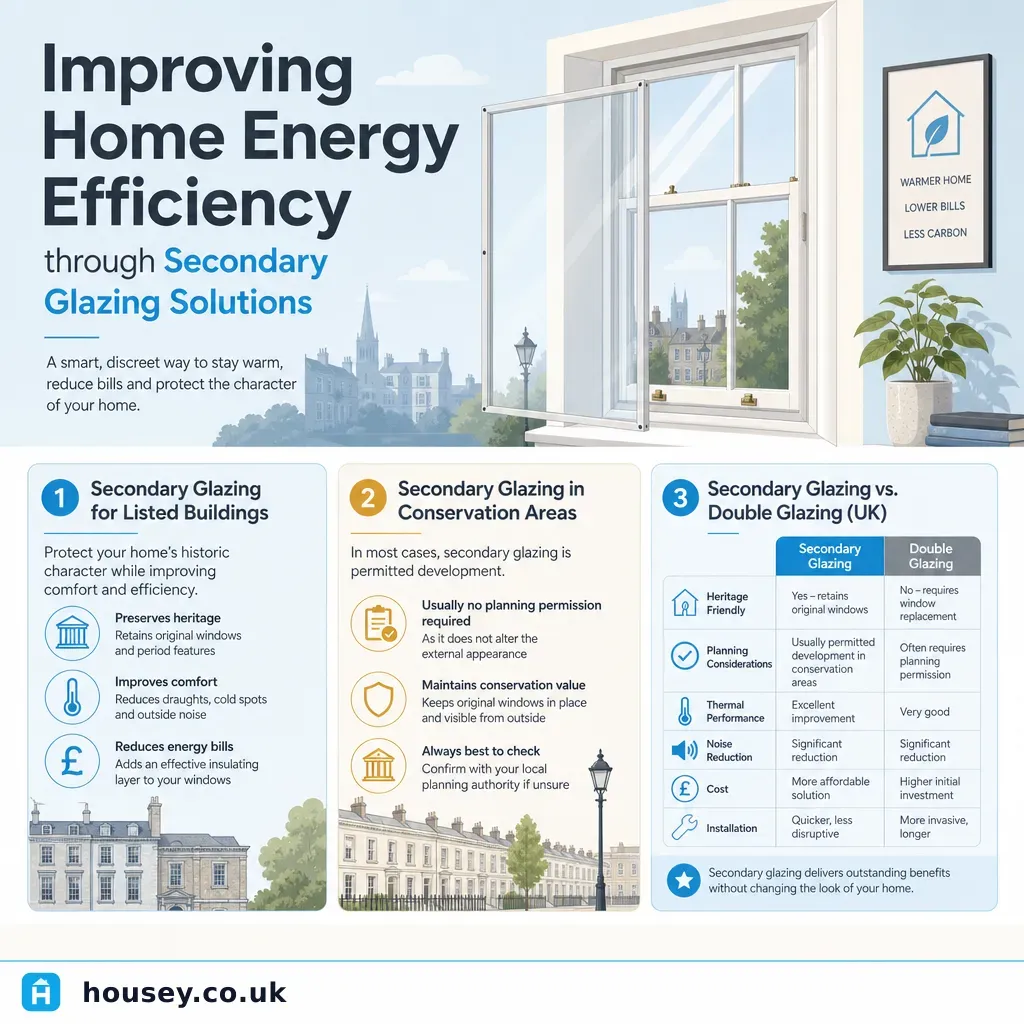
Improving Home Energy Efficiency through Secondary Glazing Solutions
Secondary glazing fits an additional pane inside your existing window reveal, reducing heat loss and noise without replacing the original frame.
 Energy & Retrofit
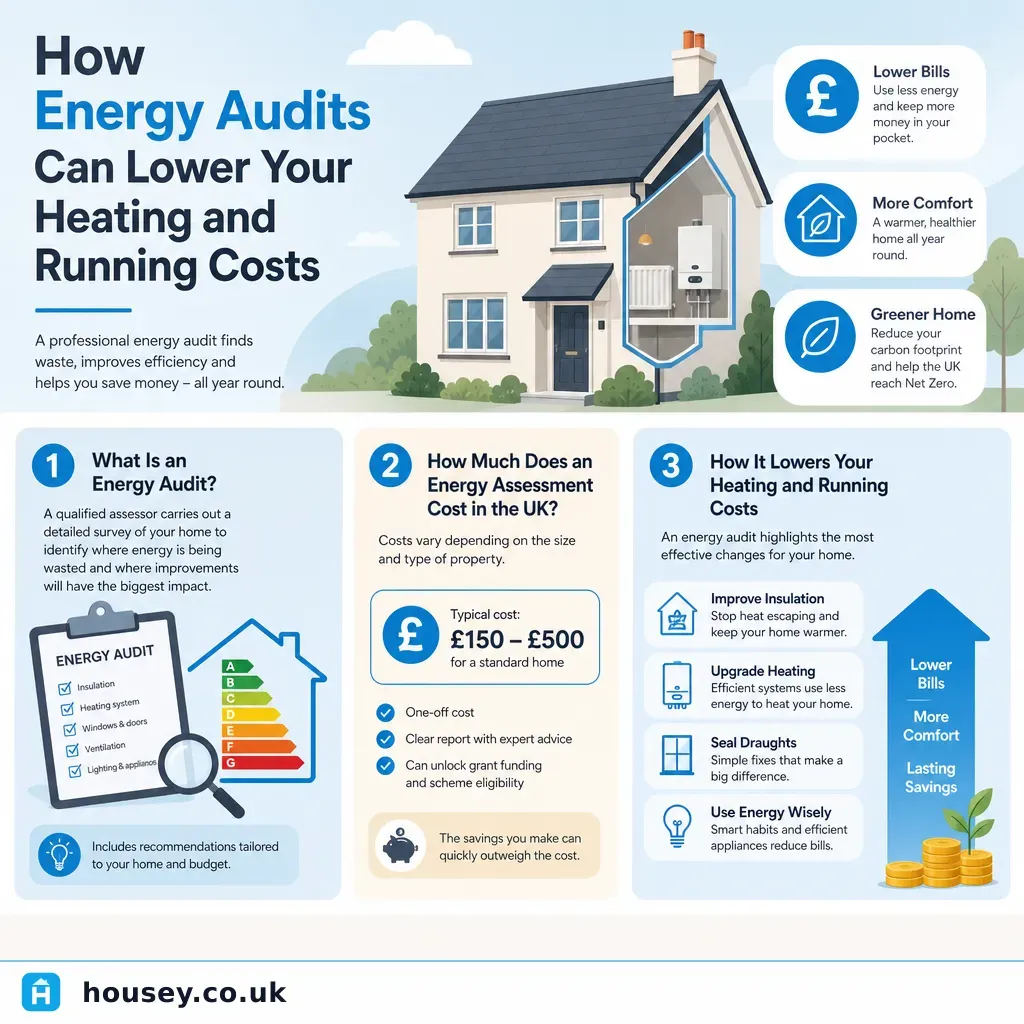
How Energy Audits Can Lower Your Heating and Running Costs
A home energy audit is a detailed inspection of your property's insulation, heating system, glazing, and ventilation to identify where energy is lost and recommend improvements.
 Energy & Retrofit
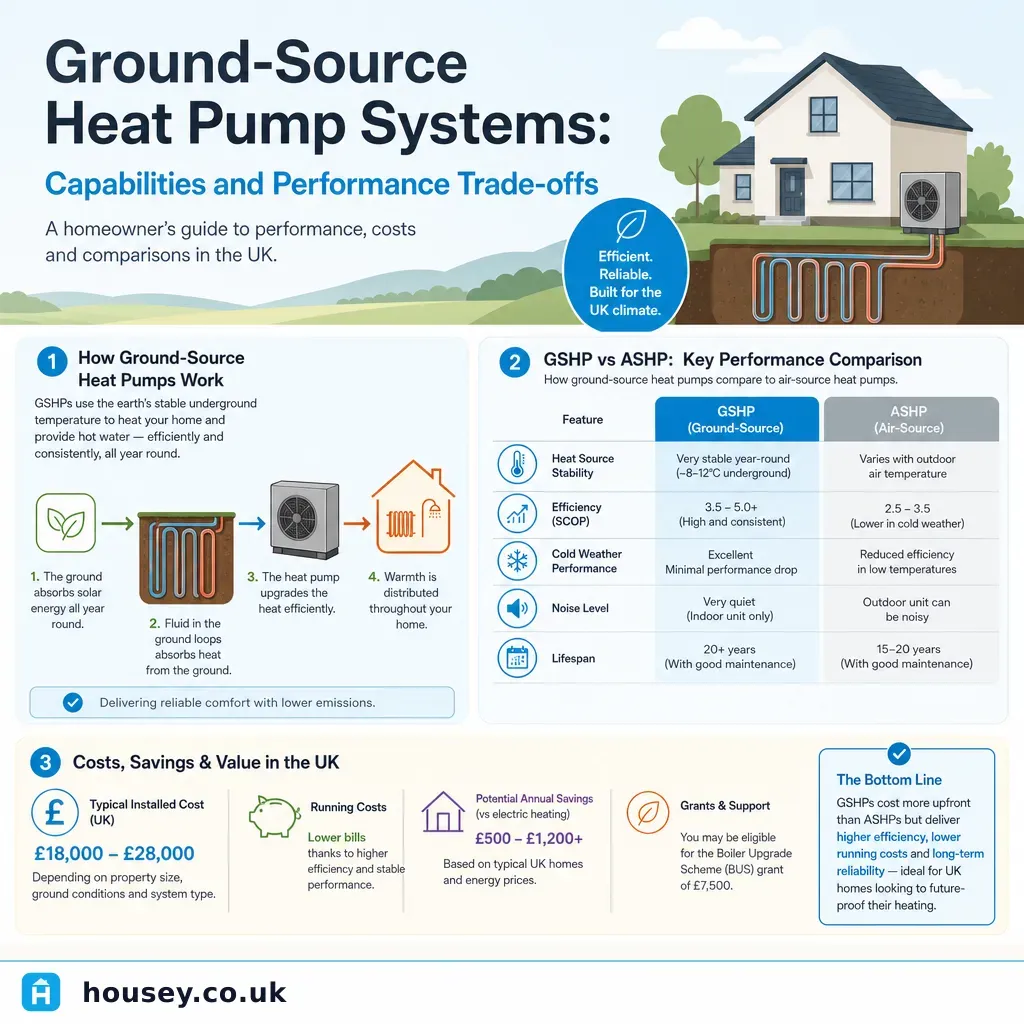
Ground-Source Heat Pump Systems: Capabilities and Performance Trade-offs
A ground-source heat pump extracts heat from the ground via buried loops, typically achieving a COP of 3.