Energy-Efficient Homes: Improvements, Assessment, and Cost-Benefit Analysis
By Housey · Last reviewed 19th of May 2026
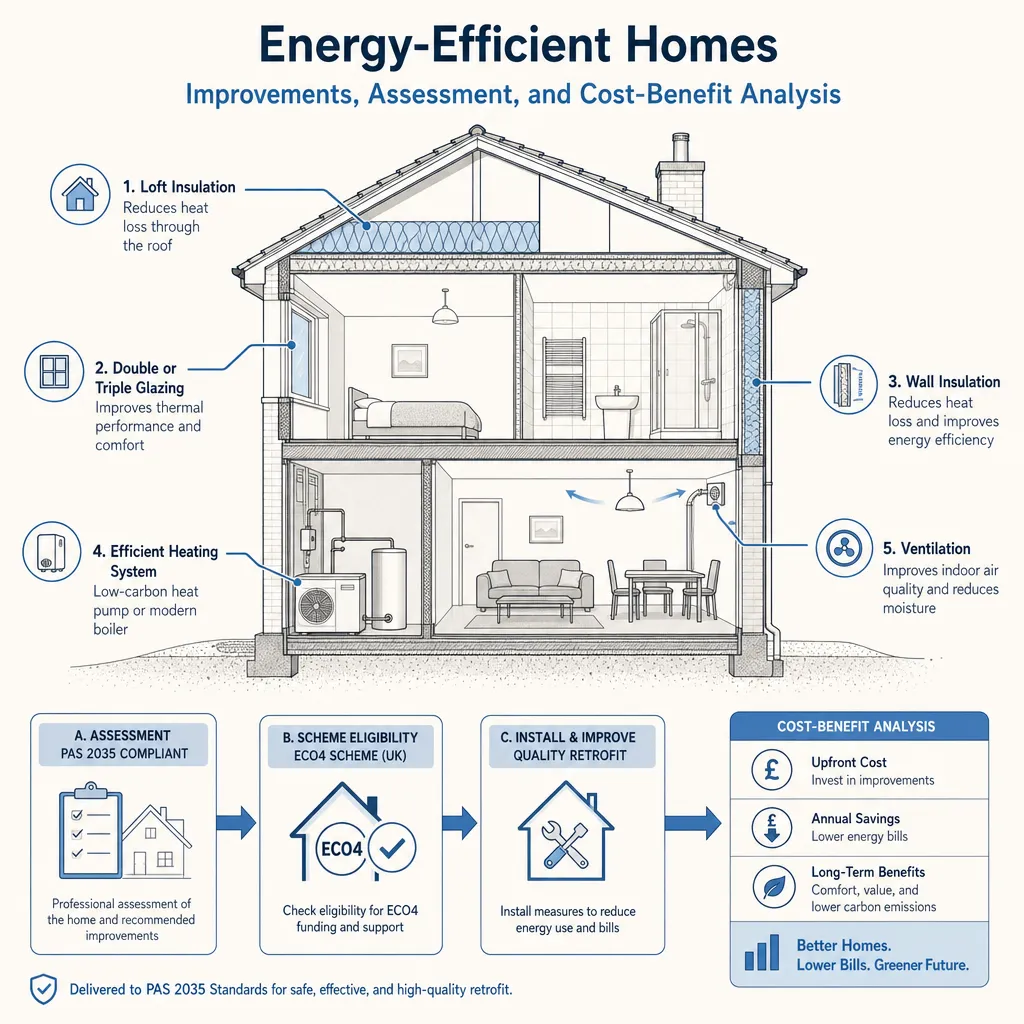
Energy-Efficient Homes: Improvements, Assessment, and Cost-Benefit Analysis
With energy bills among the highest they've been in a generation and rental and sale regulations increasingly tied to EPC ratings, improving your home's energy performance has moved from a nice-to-have to a practical priority for many UK homeowners and landlords. The challenge is that not every measure suits every property — a solid-wall Victorian terrace and a 1990s cavity-wall semi require fundamentally different approaches — and some interventions, if poorly designed or installed, can introduce moisture damage that outweighs the energy savings.
Key points
- The average UK home currently holds an EPC rating of D; the government's Heat and Buildings Strategy sets an ambition to bring all homes to EPC C or above where cost-effective.
- Under PAS 2035:2023, a whole-house assessment by a qualified Retrofit Coordinator is required before most publicly-funded energy improvement works, to ensure measures are sequenced to avoid moisture and ventilation risks.
- ECO4 (Energy Company Obligation, phase 4) provides grant funding for insulation and first-time central heating for eligible low-income and fuel-poor households in Great Britain.
- Building Regulations Part L (Conservation of Fuel and Power) sets minimum thermal performance standards for new builds, extensions, and material changes of use.
- Heat pump installation should be preceded by a heat loss calculation to BS EN 12831 to ensure the system is correctly sized — an oversized or undersized heat pump will be less efficient and may struggle to maintain comfortable temperatures.
Understanding your home's energy performance baseline
Before committing to any improvement measure, it helps to understand what you currently have. An Energy Performance Certificate (EPC) provides a standardised snapshot — useful for identifying the most significant areas of heat loss — but it is not a detailed audit. For a more nuanced picture, a retrofit assessment or energy audit examines:
- U-values of walls, floors, roof, and windows (how quickly heat passes through each element).
- Air permeability — draughts and gaps in the building fabric.
- Heating system efficiency and controls.
- Ventilation provision — critical when fabric improvements tighten a building and reduce natural air exchange.
- Moisture dynamics — particularly important in solid-wall and older buildings where internal insulation can affect dew point and cause interstitial condensation.
The PAS 2035:2023 standard (Retrofitting dwellings for improved energy efficiency) defines the roles and responsibilities for publicly-funded retrofit work, including the requirement for a Retrofit Coordinator to produce a whole-house plan before individual measures are installed.
Comparing common energy-efficiency measures
Measure | Typical applicability | Indicative annual saving | Key considerations |
|---|---|---|---|
Loft insulation (mineral wool, 270mm) | Homes with accessible pitched roof void | £150–£300 | Usually the highest-value, lowest-cost first measure |
Cavity wall insulation | Post-1920 homes with unfilled cavity walls | £150–£350 | Requires a cavity survey; unsuitable in exposed or damp locations |
External wall insulation (EWI) | Solid-wall homes, typically pre-1920 | £300–£500 | High upfront cost; affects appearance; may need planning permission |
Internal wall insulation (IWI) | Solid-wall homes where EWI is not feasible | £200–£400 | Reduces floor area; significant moisture risk if not designed carefully |
Floor insulation (ground floor) | Suspended timber floors; some solid floors | £50–£100 | Useful but usually lower priority than walls and loft |
Double or triple glazing | Single-glazed or failed double-glazed homes | £100–£250 | FENSA or BFRC certification required; listed building consent for listed properties |
Air source heat pump (ASHP) | Well-insulated homes with adequate heat emitters | Varies by replaced fuel | Requires heat loss calculation to BS EN 12831; MCS installation required for Boiler Upgrade Scheme grant |
Solar PV (4kWp system) | South-facing roof with suitable pitch, no heavy shading | £400–£600 | MCS installer required; Smart Export Guarantee tariff for exported electricity |
Draught proofing | Almost all older homes | £50–£100 | Low cost, high value; largely DIY-feasible |
Indicative UK annual savings, last reviewed 2026-05-19. Actual savings depend on occupant behaviour, fuel prices, property size, and baseline condition. Figures informed by Energy Saving Trust guidance.
Which measures to prioritise — and in what order
The sequencing of retrofit measures matters significantly. A common mistake is installing a heat pump before improving the building fabric — the heat pump then has to work harder and may underperform expectations.
Decision tree: where to start with energy improvements
- Start with loft insulation if your roof void has less than 100mm of existing insulation — it is usually the highest-value, lowest-cost first step.
- Address draughts next — draught-proofing around windows, doors, and loft hatches is low cost and largely DIY-feasible.
- Consider cavity wall insulation if your walls are uninsulated cavity construction — have a surveyor check suitability first, particularly in exposed or damp locations.
- Commission a PAS 2035 assessment before solid-wall insulation — moisture risk is significant if internal or external wall insulation is not designed correctly for your property.
- Upgrade heating controls before the heating system — smart thermostats and zoning can yield meaningful savings at relatively low cost.
- Consider a heat pump only once the fabric is in good shape and a heat loss calculation has confirmed feasibility and heat emitter adequacy.
- Add solar PV once your consumption is reduced — panels offset more of your bills if your baseline demand is already lower.
Funding and grants available in England
- ECO4 (Energy Company Obligation): energy suppliers fund insulation and heating measures for eligible low-income and fuel-poor households. Check eligibility on GOV.UK or through your local authority's ECO Flex route.
- Great British Insulation Scheme (GBIS): broader eligibility than ECO4; targets homes rated EPC D–G.
- Boiler Upgrade Scheme (BUS): provides a £7,500 grant towards an air or ground source heat pump; MCS-certified installer required; homeowner applies through their chosen installer.
- Smart Export Guarantee (SEG): energy suppliers pay for solar electricity exported to the grid.
- Home Upgrade Grant (HUG2): for off-gas-grid low-income households; delivered through local authorities.
Funding rules, eligibility criteria, and amounts change regularly. Check current schemes at the GOV.UK energy help page and the Energy Saving Trust's scheme finder.
Important limitations
This article provides general information about energy-efficiency measures commonly applicable to UK homes. It is not a substitute for a professional retrofit assessment, energy audit, or engineering advice. Suitability of specific measures varies significantly by property type, age, construction, condition, and occupancy. In particular:
- Solid-wall insulation carries genuine moisture risk if not designed by a qualified professional following PAS 2035.
- Heat pump sizing and system design must be carried out by an MCS-certified engineer based on a heat loss calculation for your specific property.
- EPC ratings are modelled assessments, not measured energy consumption — improvements may yield different savings in practice depending on occupant behaviour and fuel prices.
- Grant eligibility criteria change; always verify current rules directly with the relevant scheme before committing to works.
When this becomes urgent
Seek professional advice promptly if:
- You are a landlord and your rental property has an EPC rating of F or G — Minimum Energy Efficiency Standards (MEES) regulations require EPC E or above for private tenancies in England and Wales, with limited exemptions.
- You notice damp, mould, or condensation worsening after insulation was installed — this may indicate moisture being trapped in the fabric.
- A recently installed heat pump is failing to maintain comfortable temperatures — this suggests either undersizing or inadequate heat emitter capacity.
- You are applying for a publicly-funded grant that requires a Retrofit Coordinator sign-off under PAS 2035.
What to ask a qualified professional
Before commissioning an energy assessment or specific improvement measures, ask:
- Are you qualified to PAS 2035 as a Retrofit Coordinator or Retrofit Assessor, or are you a TrustMark-registered installer?
- Will you carry out a whole-house assessment, or assess only the specific measure proposed?
- How will you assess moisture risk, particularly for solid-wall insulation?
- For a heat pump: can you provide a heat loss calculation to BS EN 12831 and confirm my existing radiators are adequate?
- What MCS certification does the installation carry, and does that make me eligible for the Boiler Upgrade Scheme?
- What ventilation provision is included alongside any fabric improvement?
- Will work comply with Building Regulations Part L, and will you handle any necessary building control approvals?
When to get professional help
An energy-efficiency consultant or PAS 2035-qualified Retrofit Assessor should be your first call if you are considering multiple measures, solid-wall insulation, or a heat pump installation. An insulation assessment can establish what you currently have and confirm what is appropriate before you commit to a contractor or a grant application.
A Gas Safe registered engineer must carry out any gas boiler work. An MCS-certified contractor is required for heat pump or solar PV installation to access grant funding under the Boiler Upgrade Scheme or Smart Export Guarantee.
How Housey can help
Housey connects you with qualified energy-efficiency consultants who can carry out whole-house assessments and help you prioritise improvements in the right order, and with professionals offering insulation assessments to establish the current fabric condition of your home before any works begin.
Frequently asked questions
What EPC rating do I need to rent out my property in England?
Under the Minimum Energy Efficiency Standards (MEES) regulations, privately rented homes in England and Wales must have an EPC rating of E or above to be lawfully let. Stricter requirements have been proposed but not enacted as of May 2026. Check the GOV.UK MEES guidance for the current position; exemptions exist but must be registered with your local authority.
How long does it take to get a return on energy-efficiency investment?
Payback periods vary considerably. Draught-proofing and loft insulation typically have payback periods of 1–5 years. Solid-wall insulation, triple glazing, and heat pumps may have payback periods of 10–25 years depending on the baseline system, grant funding received, and prevailing energy prices. An energy assessor can model indicative payback for your specific home and fuel type.
Do I need planning permission for external wall insulation?
External wall insulation is generally permitted development for most houses in England. However, it requires planning permission in conservation areas, national parks, Areas of Outstanding Natural Beauty, and for listed buildings. Building regulations approval is required regardless of whether planning permission is needed. Check with your local planning authority if you are in any doubt about your property's status.
Is an EPC the same as a retrofit assessment?
No. An EPC is a standardised assessment used for conveyancing and rental compliance, typically taking 30–60 minutes and modelling performance against standard occupancy assumptions. A retrofit assessment under PAS 2035 is a detailed whole-house evaluation — examining construction, condition, moisture risk, ventilation, and heating — that informs a sequenced retrofit plan. For publicly-funded works, a PAS 2035 assessment is required.
Sources and further reading
- PAS 2035:2023 — Retrofitting dwellings for improved energy efficiency — BSI Group
- Energy Company Obligation: ECO4 — GOV.UK
- Boiler Upgrade Scheme: homeowner guidance — GOV.UK
- Building Regulations Approved Document L — GOV.UK
- Home insulation advice — Energy Saving Trust
- Minimum energy efficiency standards: landlord guidance — GOV.UK
Useful next reads
 Energy & Retrofit
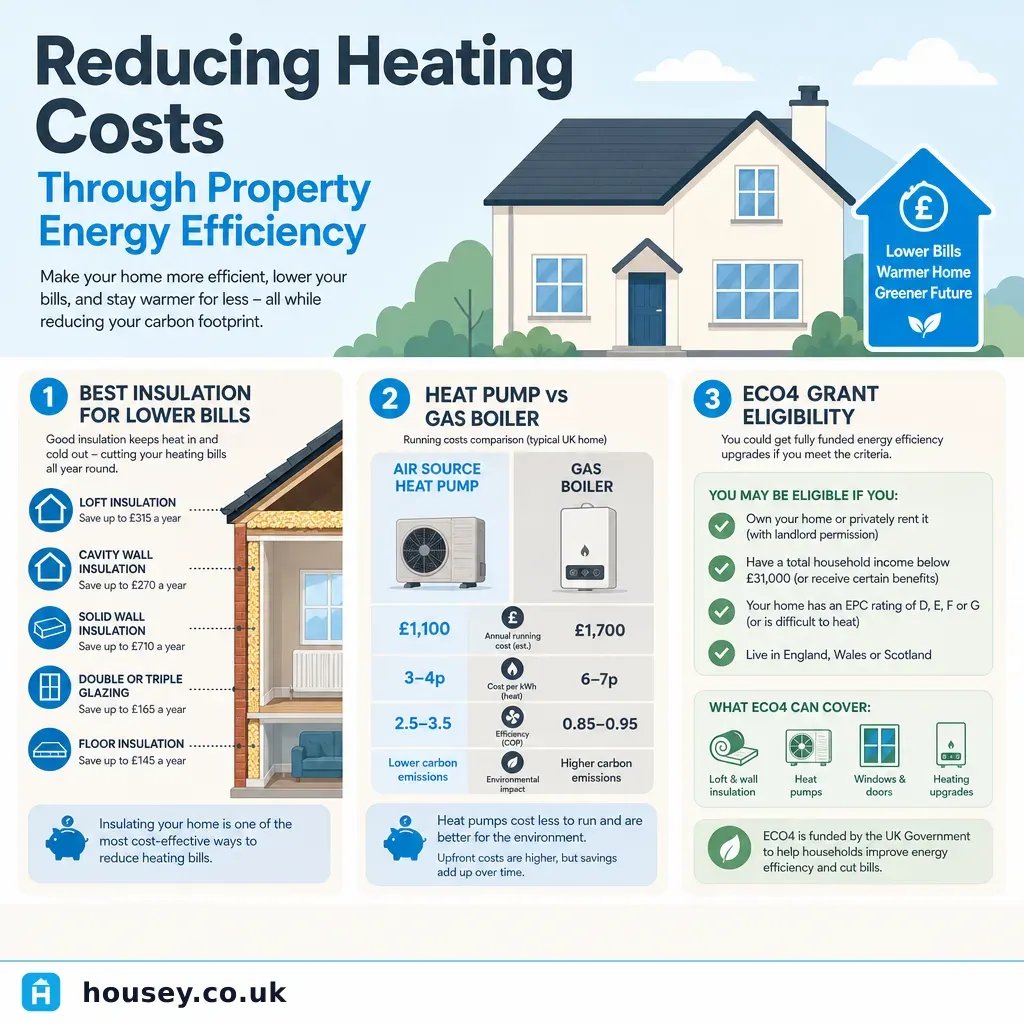
Reducing Heating Costs Through Property Energy Efficiency
Reducing heating costs starts with identifying where heat is lost — typically walls (30–35%), roof (20–25%), and windows.
 Energy & Retrofit
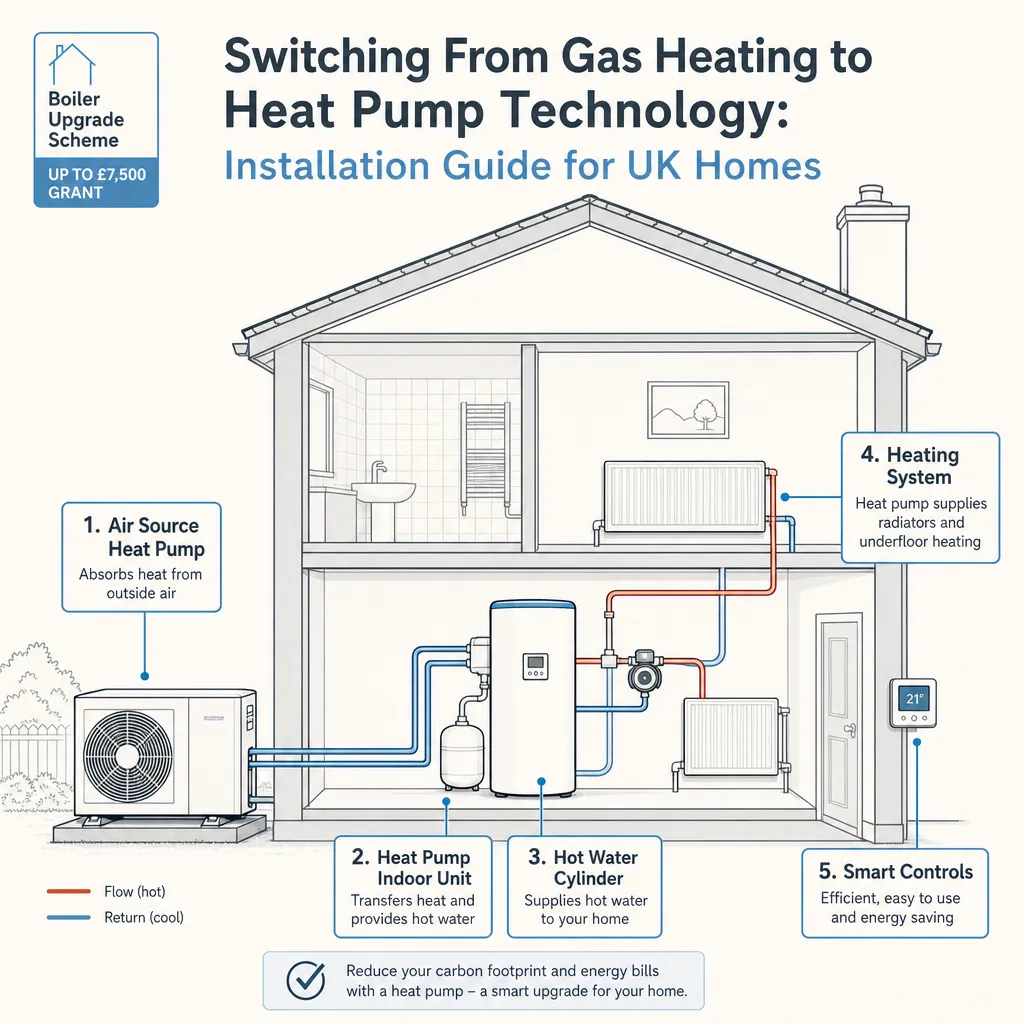
Switching From Gas Heating to Heat Pump Technology: Installation Guide
Switching from gas to a heat pump requires a heat loss calculation, correctly sized equipment, and often radiator upgrades before installation.
 Energy & Retrofit
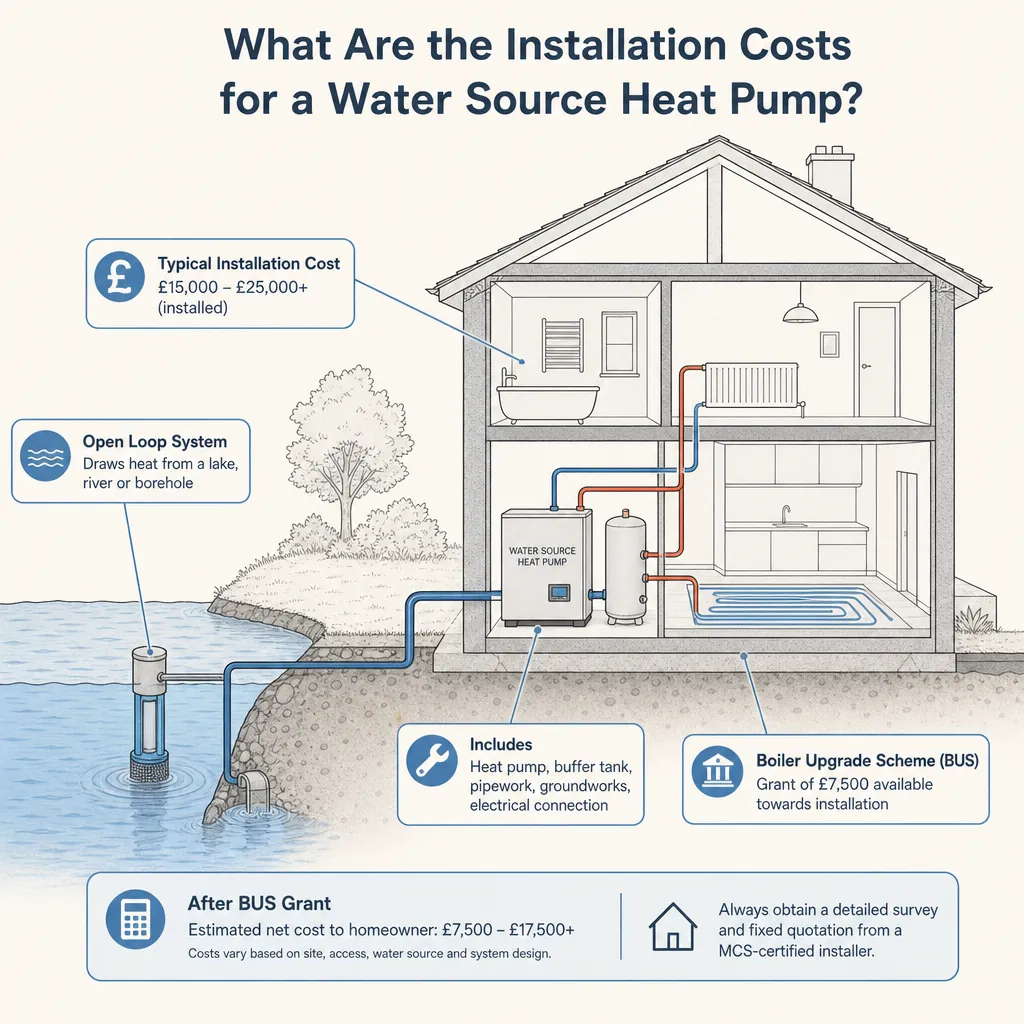
What Are the Installation Costs for a Water Source Heat Pump?
Water source heat pump installation in the UK typically costs £15,000–£45,000, depending on system type (open-loop or closed-loop), required heat output, and site complexity.
 Energy & Retrofit
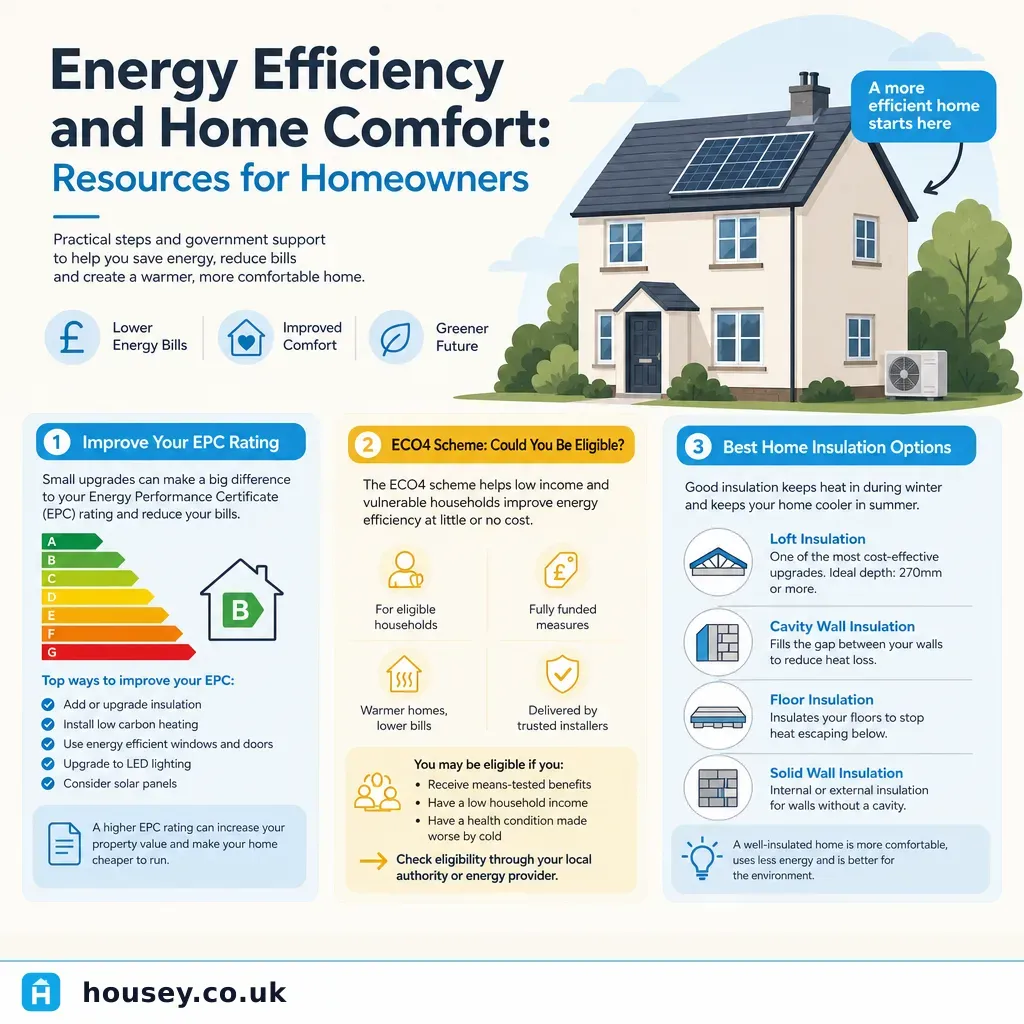
Energy Efficiency and Home Comfort: Resources for Homeowners
Start with your Energy Performance Certificate to understand where your home loses heat, then prioritise improvements by property type.
 Energy & Retrofit
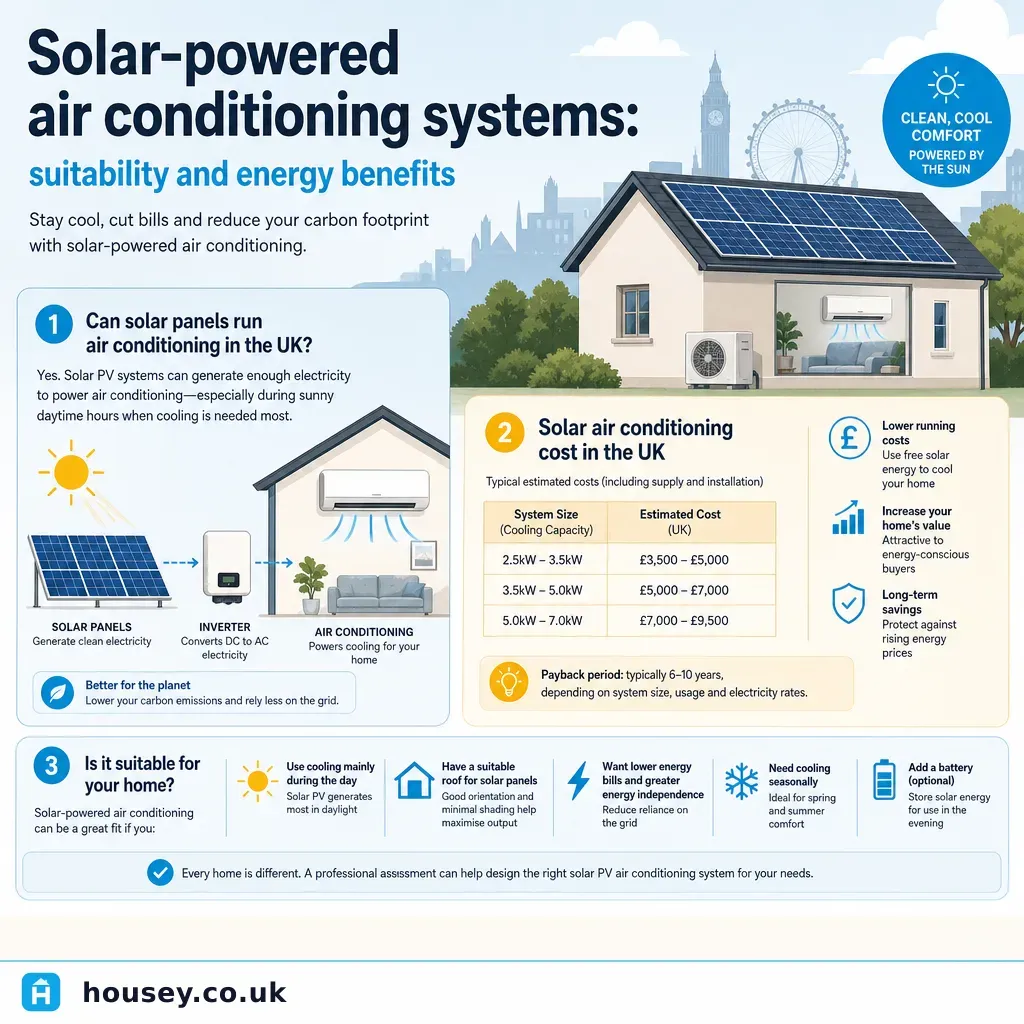
Solar-powered air conditioning systems: suitability and energy benefits
Solar-powered air conditioning pairs photovoltaic panels with an inverter-driven air conditioning unit to cool a home using renewable electricity.