Energy-Efficient Roofing Materials and Systems for UK Homes
By Housey · Last reviewed 25th of May 2026
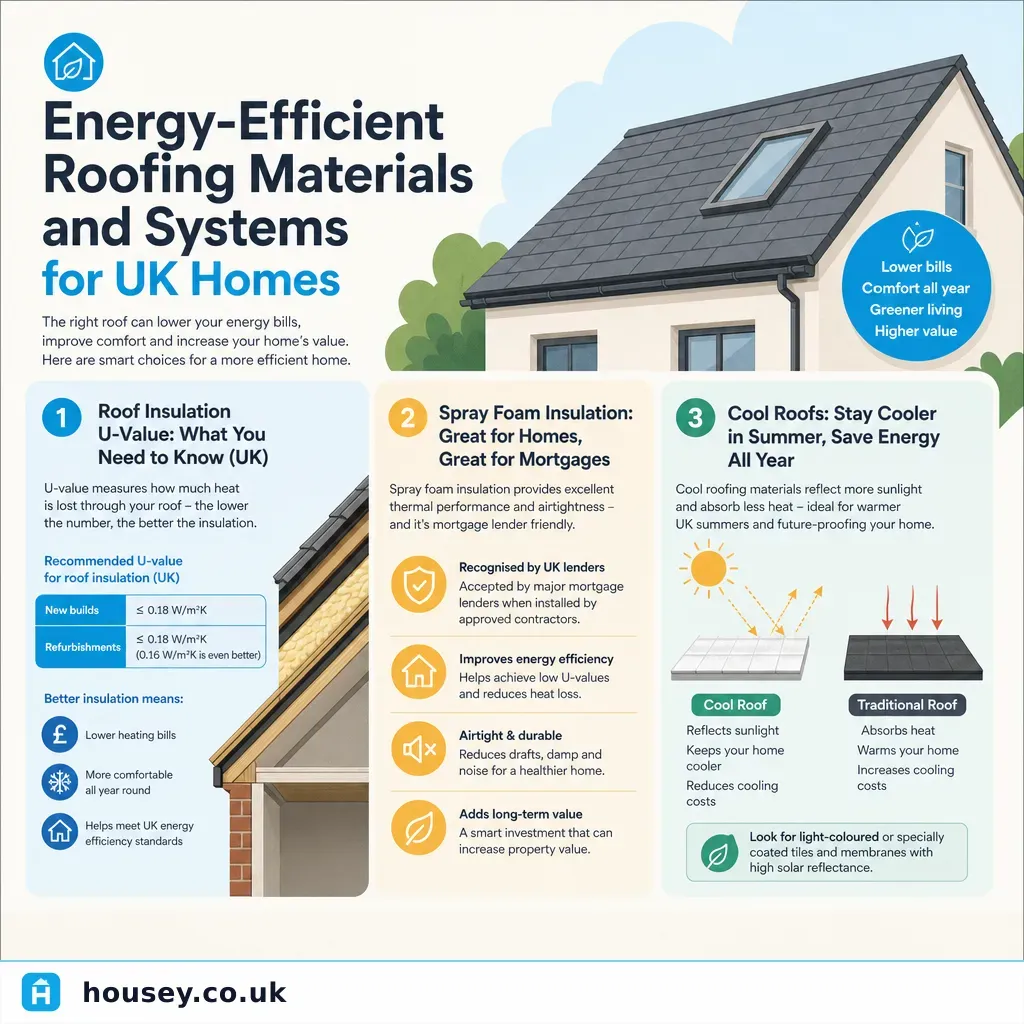
Energy-Efficient Roofing Materials and Systems for UK Homes
The roof accounts for up to 25% of heat loss in an uninsulated UK home, according to the Energy Saving Trust, making it one of the highest-impact elements to address in an energy retrofit programme. For homeowners considering roof replacement or upgrade, the choice of material and system affects not only thermal performance but also planning compliance, long-term maintenance costs, and eligibility for funding such as ECO4 and the Great British Insulation Scheme. Getting the specification right from the start avoids costly remedial work and missed opportunities to improve the property's energy performance rating under Standard Assessment Procedure (SAP).
Key points
- Roof insulation at rafter or ceiling level typically achieves a U-value of 0.16 W/m²K or better when meeting Building Regulations Approved Document L (Conservation of Fuel and Power).
- Mineral wool, rigid foam board (PIR/PUR), and spray foam are the main insulation types for UK roof retrofits; spray foam can complicate re-mortgaging and resale, so seek independent advice from a RICS surveyor before specifying it.
- Replacing a roof covering is not usually notifiable under Building Regulations unless the thermal element is also being changed, which triggers a requirement to upgrade insulation to Part L standards.
- Solar roof tiles and integrated photovoltaic roofing systems require MCS certification from the installer to qualify for Smart Export Guarantee (SEG) payments.
- In England, most new homes granted planning permission from April 2024 must demonstrate 10% Biodiversity Net Gain under the Environment Act 2021; green roofs count towards this target.
Understanding U-values and thermal performance
U-value measures how quickly heat passes through a construction element — the lower the number, the better the insulation. For roofs in England, Wales, and Scotland, Approved Document L sets minimum standards:
- New dwelling pitched roof (insulation between rafters): target U-value of 0.13 W/m²K
- Thermal element upgrade on an existing pitched roof: typically 0.16 W/m²K
- Flat roofs (new build or upgraded): typically 0.15 W/m²K
These are guidance values — actual requirements depend on whether you are carrying out a new build, an extension, or a thermal element upgrade during a re-roof. Confirm requirements with a building control officer or energy assessor for your specific project, as the calculation may also depend on the whole-dwelling energy balance.
Roof insulation options for UK homes
Pitched roofs: cold loft vs warm roof
Most UK homes have a pitched roof. Insulation is placed at one of two levels:
- At ceiling level (cold loft): The most accessible and usually the most cost-effective approach. Mineral wool laid to 270 mm depth achieves the Approved Document L U-value target. The loft space remains unheated, so water pipes, tanks, and any services in the loft must be insulated separately to prevent freezing.
- At rafter level (warm roof): Insulation is fitted between and below rafters, bringing the loft into the heated envelope. Used when converting a loft or removing the ceiling below. Typically combines rigid PIR/PUR board with mineral wool. More expensive but essential for habitable loft spaces.
Flat roofs
Flat roof thermal upgrades are typically specified as:
- Warm deck: Insulation above the structural deck, below the waterproofing membrane. The most common modern approach.
- Inverted roof: Insulation sits above the waterproofing layer, protected by ballast or paving. Well suited to green roof build-ups.
- Cold deck: Insulation below the structural deck. Now rarely specified in new works due to interstitial condensation risk.
Flat roof membrane materials include single-ply (TPO, PVC, EPDM rubber), torch-on felt, and liquid-applied coatings. Reflective membranes in light grey or white can reduce summer solar gain, though in the UK's winter-dominated climate thermal retention usually takes priority in the specification.
Roofing materials: energy performance comparison
Material or system | Typical application | Thermal role | Energy credentials | Key considerations |
|---|---|---|---|---|
Concrete or clay tiles with loft insulation | Pitched roofs | Tile alone has low thermal resistance; insulation does the work | Widely available; long lifespan | Insulation depth and continuity determine energy performance |
Natural slate with loft insulation | Pitched roofs, period and listed properties | As above | Durable; recyclable | Higher cost; conservation areas may restrict alternatives |
Metal standing-seam (zinc, aluminium, steel) | Contemporary pitched or low-pitch roofs | Good airtightness potential when detailed correctly | Recyclable; 40–70 year lifespan | Higher upfront cost; specialist installation required |
EPDM rubber membrane | Flat roofs | Excellent airtightness; pairs with PIR insulation | 25–50 year lifespan; cold-applied options reduce fire risk | Good value retrofit option for flat-roof extensions |
Cool roof membrane (TPO or white PVC) | Flat roofs | Reflects solar radiation (Solar Reflectance Index typically above 80) | Reduces summer cooling loads | Marginal benefit in UK winter-dominated climate |
Sedum or wildflower green roof | Flat or low-pitch roofs | Adds thermal mass and modest additional insulation | Biodiversity Net Gain credits; SUDS drainage benefit | Structural load assessment required before specification |
Integrated solar roof tiles | Pitched roofs | Replaces tile covering; generates electricity | MCS-eligible; SEG payments; SAP score improvement | High cost; MCS-registered installer required |
Spray foam insulation | Pitched roofs (between existing rafters) | Can achieve required U-values | Potentially mortgage-affecting | RICS and many lenders flag as a valuation concern |
Indicative UK costs and product performance, last reviewed 2026-05-25. Always obtain a full specification from a qualified roofer or energy assessor.
Spray foam insulation: a specific caution
Spray foam has been marketed as a convenient roof insulation retrofit, but its use in UK residential properties has become a significant issue in property transactions. RICS guidance and many mortgage lenders require specialist investigation of spray foam installations before lending, because spray foam bonds to and obscures the roof structure, making condition inspection difficult and potentially masking defects. It can also affect the ability to re-mortgage or sell.
The Energy Saving Trust and RICS advise homeowners to seek independent advice before specifying spray foam in a roof and not to rely solely on the installing company's assessment. If spray foam is already present in a property you are buying or own, disclose this to your surveyor and solicitor at the earliest opportunity.
Green roofs and biodiversity net gain
Sedum or wildflower green roofs provide a modest additional thermal benefit (roughly equivalent to an additional 0.1–0.2 W/m²K improvement) but are primarily specified for:
- Sustainable Urban Drainage Systems (SUDS) compliance on planning applications
- Biodiversity Net Gain credits under the Environment Act 2021 — a requirement for most new homes in England from April 2024
- Acoustic performance improvement
- Urban heat island mitigation, particularly on flat-roofed extensions in urban areas
Green roofs require a structural assessment before specification to confirm the roof deck and supporting structure can carry the additional saturated weight, which can exceed 150 kg/m² for deeper growing-medium systems.
Planning and building regulations
- Like-for-like roof covering replacement (e.g., replacing broken tiles with the same tile type) does not usually require a Building Regulations application; however, if the thermal element is also being changed, Approved Document L applies.
- Conservation areas: Changing the external appearance of a roof — for example switching from natural slate to concrete tile, or adding rooflights — may require planning permission. Check with your LPA before specifying.
- Listed buildings: Any works to the roof of a listed building require listed building consent. The use of non-original materials is commonly refused; contact Historic England or your LPA's conservation officer early.
- Solar roof tiles and panels: Solar panels on pitched roofs are generally permitted development unless the building is listed or in a designated area, but MCS certification from the installer is required to qualify for Smart Export Guarantee payments.
Homeowner checklist: planning a roof upgrade for energy efficiency
Work through this checklist before instructing a roofer or energy assessor:
When to get professional help
Roof work presents specific risks beyond working at height — including structural, moisture, and building regulations compliance issues that affect future lending and resale:
- If planning a warm roof or loft conversion, a structural engineer should check rafter sizes and loading before work begins.
- If considering spray foam, commission an independent assessment from a RICS-registered surveyor — do not rely on the spray foam installer's own evaluation.
- A retrofit assessment by a qualified Retrofit Assessor (to PAS 2035) should precede any significant fabric upgrade, to check for unintended moisture and ventilation interactions.
- Always use a qualified roofer registered with a recognised trade body for any work above gutter level.
How Housey can help
Housey connects you with qualified roofers across the UK who can advise on energy-efficient systems and materials suited to your property type and budget. If you want to understand how a roof upgrade fits into a whole-house retrofit plan, our energy-efficiency consultants and retrofit assessment specialists can help you prioritise measures, model SAP improvements, and access available grant funding.
Frequently asked questions
Does replacing my roof require building regulations approval?
A like-for-like tile replacement does not usually require a Building Regulations application. However, if the thermal element is being changed — for example insulation is being added or replaced as part of the work — you will need to comply with Approved Document L and may need to notify building control. If in doubt, contact your local building control office before starting.
Can energy-efficient roofing improve my EPC rating?
Yes. Improving roof insulation to Part L standards typically has a meaningful impact on your Standard Assessment Procedure (SAP) score and EPC rating, particularly where existing loft insulation is absent or below 100 mm. An energy assessor can model the improvement before you commit to the cost of works, which helps you prioritise measures.
Is spray foam insulation a good choice for my roof?
Spray foam can achieve the required U-value, but RICS and many mortgage lenders require specialist surveys of spray foam installations before lending, as it makes roof structure inspection difficult. Most independent advisers recommend mineral wool or PIR board for pitched roof insulation where the roof structure is accessible. Seek independent advice before specifying spray foam.
Are solar roof tiles worth it in the UK?
Integrated solar roof tiles cost significantly more than conventional solar panels, but may be preferable aesthetically or in conservation areas where panel profiles are restricted. MCS certification from the installer is required to qualify for Smart Export Guarantee payments. The Energy Saving Trust has up-to-date guidance on solar PV economics for UK homes.
What grants are available for roof insulation in the UK?
ECO4 (Energy Company Obligation 4) and the Great British Insulation Scheme offer funding for insulation in eligible households. Eligibility depends on household income, current EPC rating, and benefit status. Contact your energy supplier or local authority for an ECO4 referral, or check GOV.UK for Great British Insulation Scheme eligibility criteria and how to apply.
Sources and further reading
- GOV.UK: Building Regulations Approved Document L — GOV.UK
- Energy Saving Trust: roof and loft insulation — Energy Saving Trust
- RICS: spray foam insulation in domestic properties — RICS
- GOV.UK: Great British Insulation Scheme — GOV.UK
- Historic England: energy efficiency and historic buildings — Historic England
- GOV.UK: Biodiversity Net Gain — GOV.UK
Useful next reads
 Energy & Retrofit
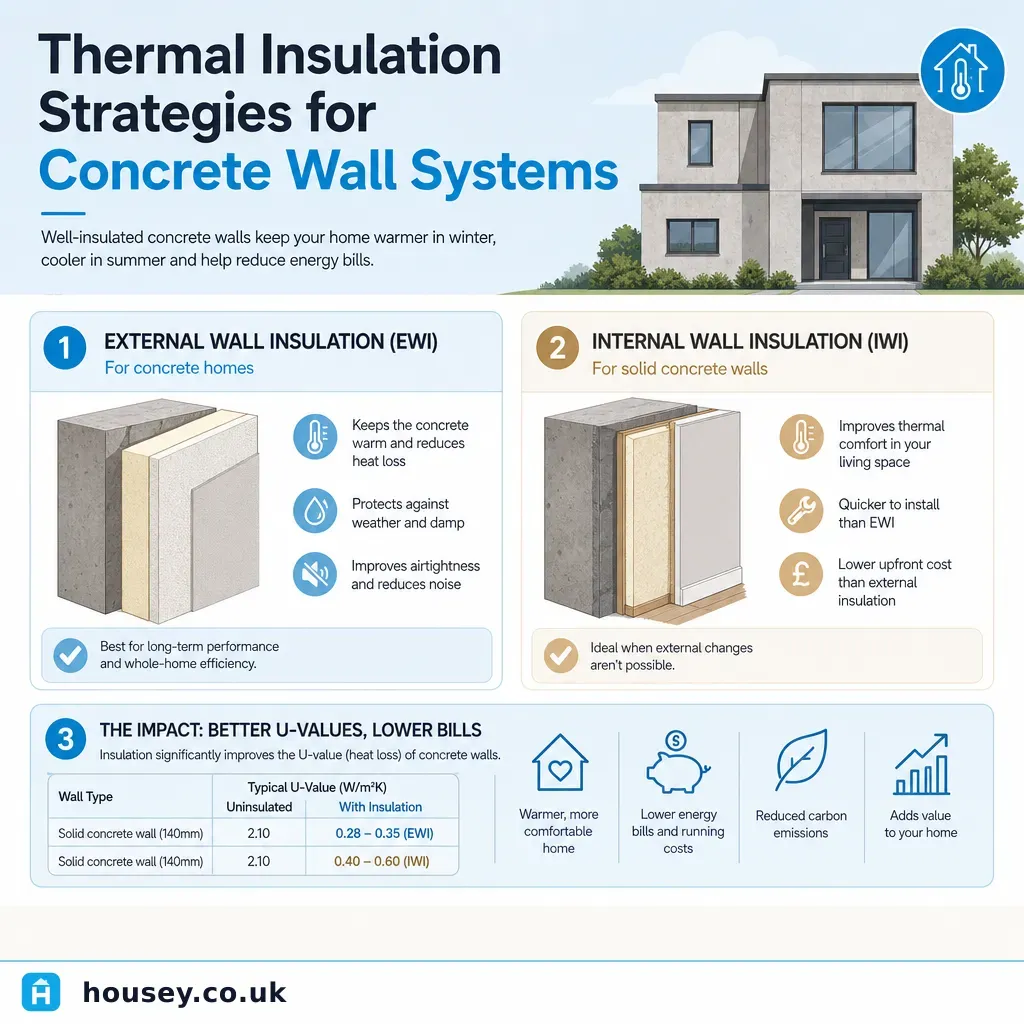
Thermal Insulation Strategies for Concrete Wall Systems
Concrete walls can be insulated using three main approaches: external wall insulation (EWI), internal wall insulation (IWI), or — where a cavity exists — cavity fill.
 Energy & Retrofit
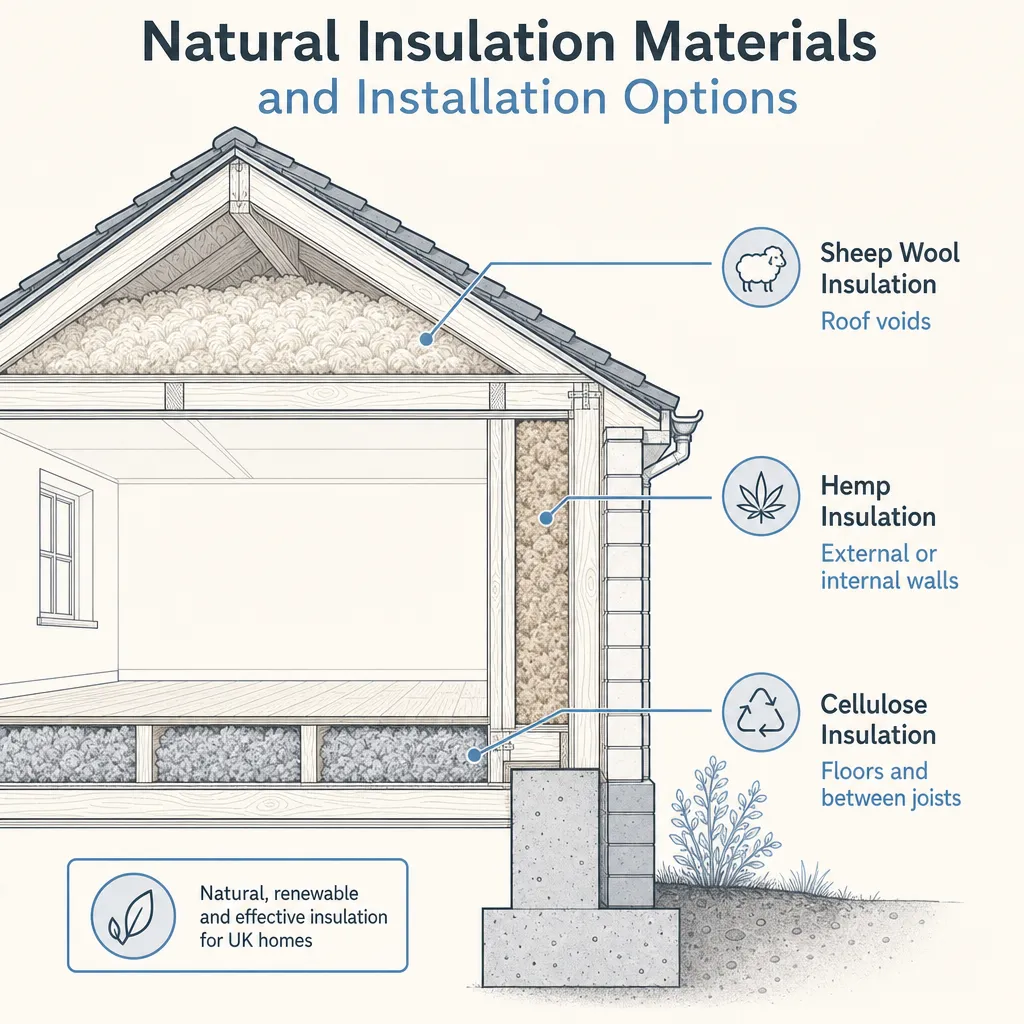
Natural Insulation Materials and Installation Options
Natural insulation materials such as sheep wool, hemp, cellulose, wood fibre, and cork can match mineral wool for thermal performance and offer additional benefits including moisture buffering and lower embodied carbon.
 Energy & Retrofit
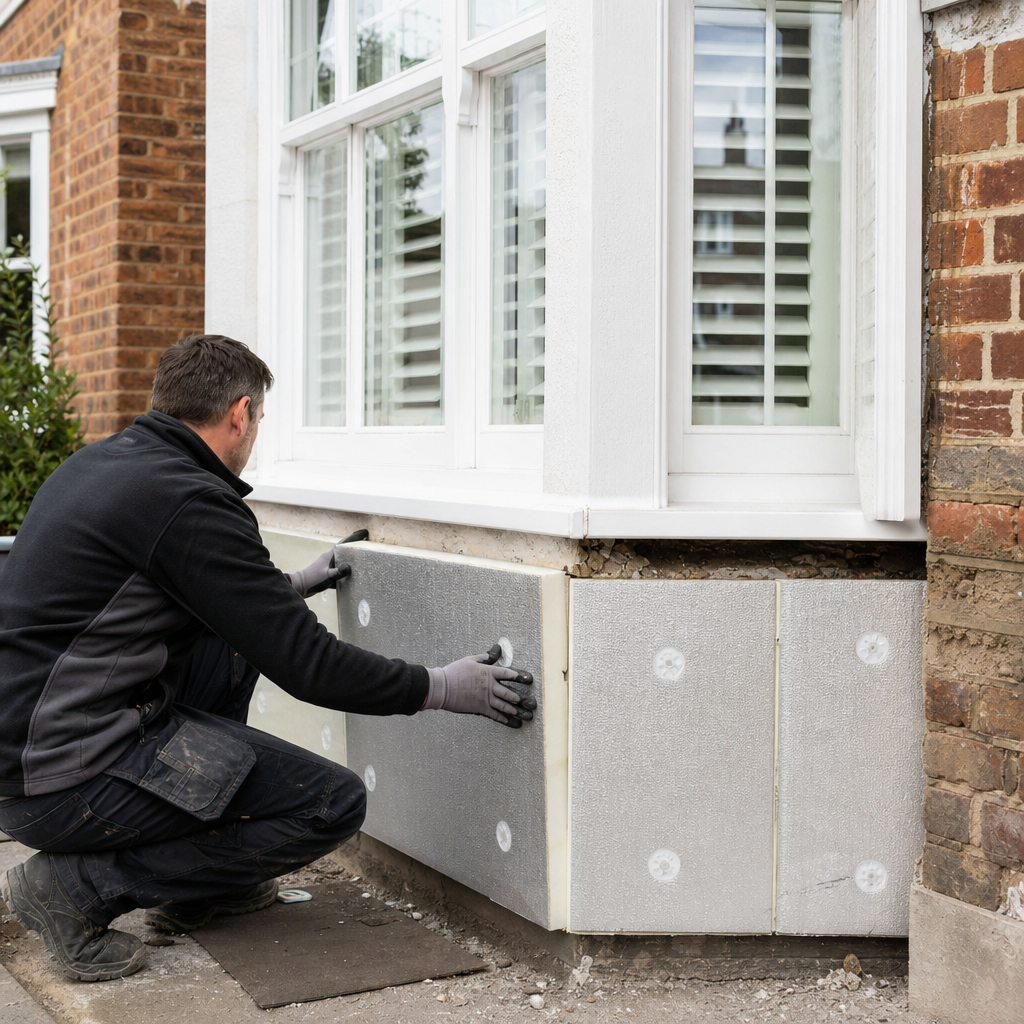
Insulating Solid Masonry Walls Under Bay Windows: Technical Guidance
Insulating solid masonry walls under bay windows requires specialist detailing at angled wall faces, window reveals, and the bay floor and ceiling junctions.
 Energy & Retrofit
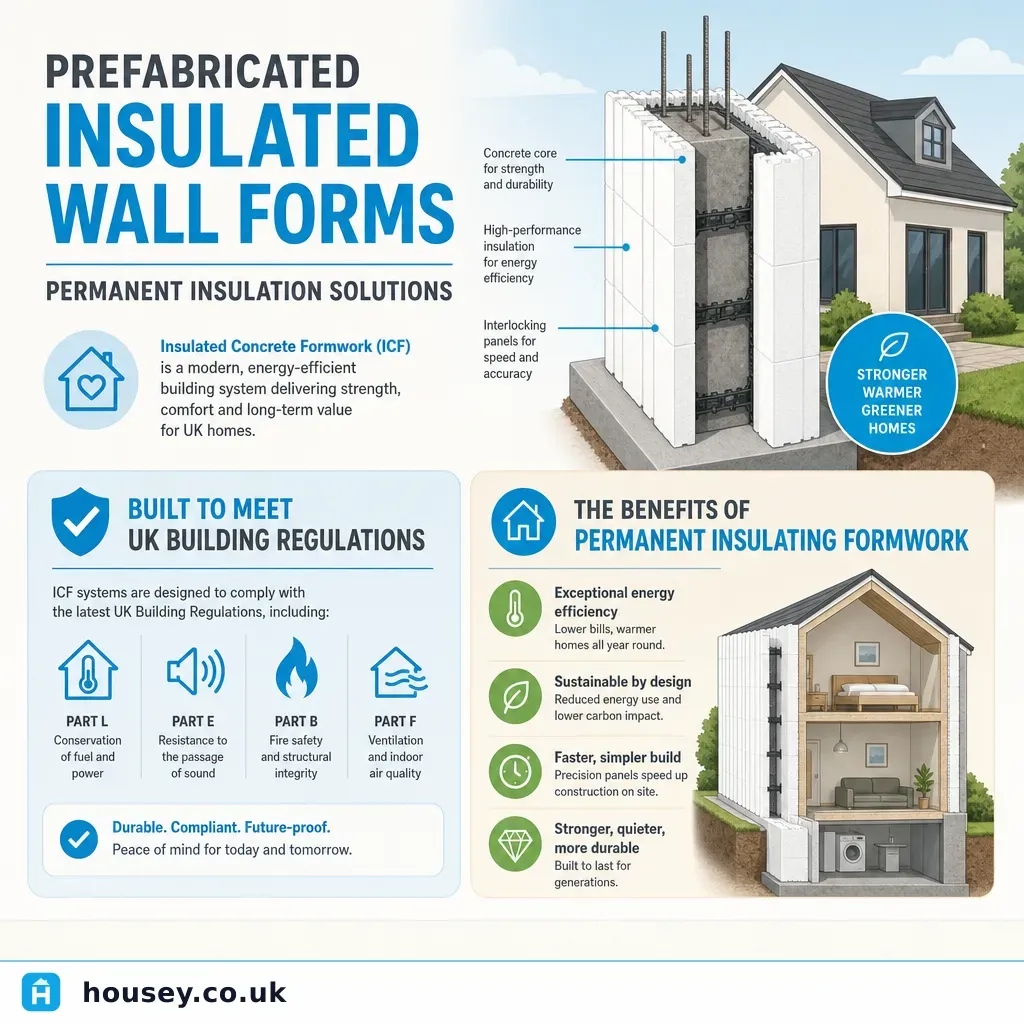
Prefabricated Insulated Wall Forms: Permanent Insulation Solutions
Prefabricated insulated wall forms — including ICF and SIPs systems — deliver high thermal performance by combining permanent insulation with structural concrete or timber in a single wall assembly.
 Energy & Retrofit
Climate-Ready Home Improvements for the Future
Climate-ready home improvements tackle four main risks for UK properties: overheating, increased rainfall and flooding, storm damage, and energy cost volatility.