Energy-Efficient Window Films and Window Upgrade Options for Your Property
By Housey · Last reviewed 30th of May 2026
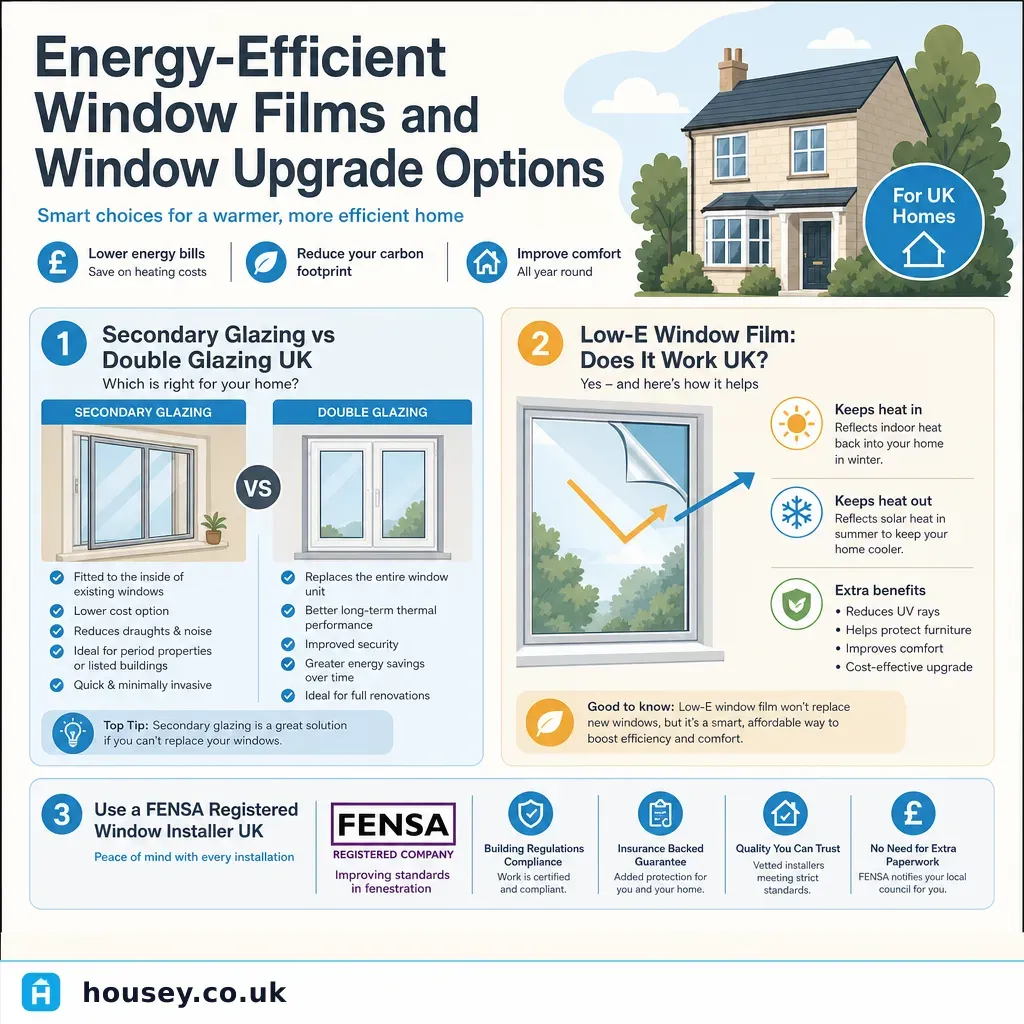
Energy-Efficient Window Films and Window Upgrade Options for Your Property
Windows are consistently one of the largest sources of heat loss in UK homes — a fact that becomes financially tangible as energy bills remain high. Whether you are weighing window film as a cost-effective stopgap, considering secondary glazing for a Victorian terrace with original sash windows, or planning a full replacement programme in a 1930s semi, the decision involves thermal performance, upfront cost, planning implications, and Building Regulations compliance. The right solution depends heavily on your property type, budget, tenure, and whether the existing windows are original features worth retaining.
Key points
- Windows and glazed doors account for roughly 18–25% of heat loss in a typical UK home, according to the Energy Saving Trust.
- Building Regulations Part L requires replacement windows to achieve a whole-window U-value of no worse than 1.4 W/m²K; the installer must be FENSA- or Certass-registered, or the work must be notified to local authority building control.
- Secondary glazing — a second independent frame fitted inside the original window — can reduce heat loss through that window by up to 60% (Energy Saving Trust) and is often the preferred approach for listed buildings and conservation areas.
- Low-emissivity (low-E) window film can improve a single-glazed window's U-value by approximately 0.5–1.0 W/m²K, though it does not reach the thermal performance of double or triple glazing.
- Replacing single-glazed windows with A-rated double glazing can save a typical semi-detached UK home approximately £235 per year on energy bills, according to Energy Saving Trust estimates — check for current figures as fuel prices vary.
How windows lose heat: the basics
Heat escapes through windows by three mechanisms: conduction (heat passing directly through glass and frame), convection (air movement within the sealed unit or around single-glazed panes carrying warm air to the cold glass surface), and radiation (warm internal surfaces radiating heat toward the colder glass).
The U-value measures the rate of heat transfer through a material in W/m²K — the lower the figure, the better the insulation. Single glazing has a U-value of approximately 5.8 W/m²K; standard air-filled double glazing around 2.8 W/m²K; and modern double glazing with argon fill and a low-E coating can achieve 1.4 W/m²K or below — the current Part L threshold for replacement windows.
Comparing window upgrade options
Option | Typical U-value (whole window) | Best for | Not ideal for | Indicative fitted cost per window | Planning/regs note |
|---|---|---|---|---|---|
Low-E window film | ~3.5–4.5 W/m²K (treated single glazing) | Temporary improvement, rented homes, tight budget | Listed buildings (may affect appearance), meeting Part L | £5–£20 per m² (DIY) | No notification needed in most cases |
Secondary glazing | ~1.7–2.5 W/m²K | Listed buildings, conservation areas, period properties, acoustic insulation | Where inward protrusion is impractical | £300–£900 | Usually no planning permission; check if listed |
Double glazing replacement (uPVC frame) | ~1.2–1.4 W/m²K | Post-war homes, cost-effective full replacement | Period properties where appearance is a priority | £400–£900 | FENSA/Certass or building control; planning needed in conservation areas |
Double glazing replacement (timber or aluminium frame) | ~1.2–1.4 W/m²K | Conservation areas, period properties | Very tight budgets | £600–£1,500 | As above; timber frames often accepted in conservation areas |
Triple glazing | ~0.6–0.8 W/m²K | High-performance retrofits, north-facing elevations, new builds | South-facing windows where solar gain is desirable | £700–£2,000 | FENSA/Certass or building control |
Indicative UK costs, last reviewed 2026-05-30. Costs vary by property, specification, and region; always obtain at least three comparative quotes.
Window film: what it does and does not do
Low-E window film is applied directly to the interior glass surface of an existing single-glazed pane. The metallic coating reflects radiated heat back into the room, reducing heat loss without changing the window's structure or requiring any building consent.
What window film can do:
- Reduce heat loss through single-glazed panes meaningfully, particularly on north-facing elevations with high exposure
- Provide some solar control on south-facing elevations (solar-reflective films also reduce overheating in summer)
- Marginally reduce the cold-surface convection draught effect near the glass
What window film cannot do:
- Achieve the thermal performance of double or triple glazing
- Satisfy Building Regulations Part L compliance for replacement windows
- Eliminate condensation — which is driven by the temperature of the inner glass surface relative to room humidity
- Match the acoustic performance of secondary glazing or replacement double glazing
Window film is best treated as a cost-effective interim measure — particularly useful in rented properties, listed buildings where window replacement is restricted, or where a full replacement programme is being phased over several years.
Secondary glazing: the period property option
For listed buildings, conservation areas, and properties with original sash windows or period casements worth retaining, secondary glazing offers meaningful thermal improvement without altering the existing window. Secondary glazing units are fitted on the room side of the original frame, in sliding, hinged, or removable configurations.
Because secondary glazing is not permanently fixed to the structure and does not alter the exterior appearance, it frequently satisfies Listed Building Consent requirements where replacement glazing would not. Historic England guidance supports secondary glazing as the preferred approach for thermally upgrading windows in historic buildings.
Thermal performance: a well-fitted secondary unit brings the combined system to roughly 1.7–2.5 W/m²K depending on the gap and specification.
Acoustic benefit: secondary glazing with a wider air gap (100–200 mm is ideal) provides significant noise attenuation — making it particularly valuable for urban properties near roads or rail lines.
Planning permission and Building Regulations
Replacing like-for-like windows in most properties is permitted development — no planning application is required. However, there are important exceptions:
- Conservation areas: replacement windows visible from a public highway require planning permission if they materially alter the building's appearance.
- Listed buildings: any replacement glazing requires Listed Building Consent. The local planning authority's conservation officer can advise on acceptable specification and frame materials.
- New openings: adding a window where there was none, or substantially enlarging an existing opening, typically requires planning permission.
For Building Regulations, replacement windows are notifiable work. The simplest route is using a FENSA- or Certass-registered installer who self-certifies compliance with Part L and issues a certificate on completion. That certificate should be retained and passed to buyers on sale. If the installer is not registered, the work must be notified to local authority building control and inspected before completion.
Homeowner checklist: before upgrading your windows
When to get professional help
Most window upgrades are straightforward purchasing decisions, but professional advice is worthwhile in specific circumstances:
- The property is listed or in a conservation area and you are uncertain what consent or specification is required
- You are planning a whole-house retrofit and need to understand how window improvements interact with ventilation, airtightness, and moisture risk — particularly in solid-wall homes where tighter envelopes can increase condensation risk
- You are a landlord with Minimum Energy Efficiency Standards (MEES) obligations under the Energy Efficiency (Private Rented Property) (England and Wales) Regulations 2015 and need to understand how window upgrades contribute to an improved EPC rating
- The existing window reveals, lintels, or sills are in poor condition and need professional assessment before new frames are fitted
How Housey can help
Our network of energy-efficiency consultants can help you identify the most cost-effective thermal envelope improvements for your property, including where window upgrades will have the greatest impact alongside wall insulation, loft insulation, and draught-proofing measures. When you are ready to proceed, window and door installers listed on Housey are FENSA-registered and can provide compliant installations with the certification required for Building Regulations sign-off.
Frequently asked questions
Does window film actually reduce my heating bills?
Low-E window film provides a real but modest improvement to heat retention in single-glazed windows, reducing the U-value by roughly 0.5–1.0 W/m²K. The saving depends on the number of single-glazed panes, their orientation, and the heating system. It is unlikely to match savings from replacing single glazing with modern double glazing, but it is a low-cost measure useful in homes where replacement is not currently feasible.
Do I need planning permission to replace my windows?
In most properties, replacing windows on a like-for-like basis is permitted development — no planning application is needed. If your property is in a conservation area, replacement glazing visible from a public highway requires planning permission. All listed buildings require Listed Building Consent. In all cases, replacement windows must comply with Building Regulations Part L, certified through a FENSA- or Certass-registered installer, or notified to local authority building control.
Are there grants available for window upgrades in the UK?
As of May 2026, window replacement is not directly funded under the Boiler Upgrade Scheme. The ECO4 scheme and the Great British Insulation Scheme primarily target insulation, but some local authority flexible eligibility schemes include windows as part of a broader retrofit package. The government's Warm Homes Plan is extending retrofit funding — check GOV.UK for current eligibility, as schemes are updated regularly.
Sources and further reading
- Double glazing and windows — Energy Saving Trust
- Building Regulations: conservation of fuel and power (Part L) — GOV.UK
- FENSA — find a registered installer and check certificates — FENSA
- Windows and historic buildings — Historic England
- ECO4 scheme — GOV.UK
Useful next reads
 Energy & Retrofit
Improving Home Energy Efficiency through Secondary Glazing Solutions
Secondary glazing fits an additional pane inside your existing window reveal, reducing heat loss and noise without replacing the original frame.
 Energy & Retrofit
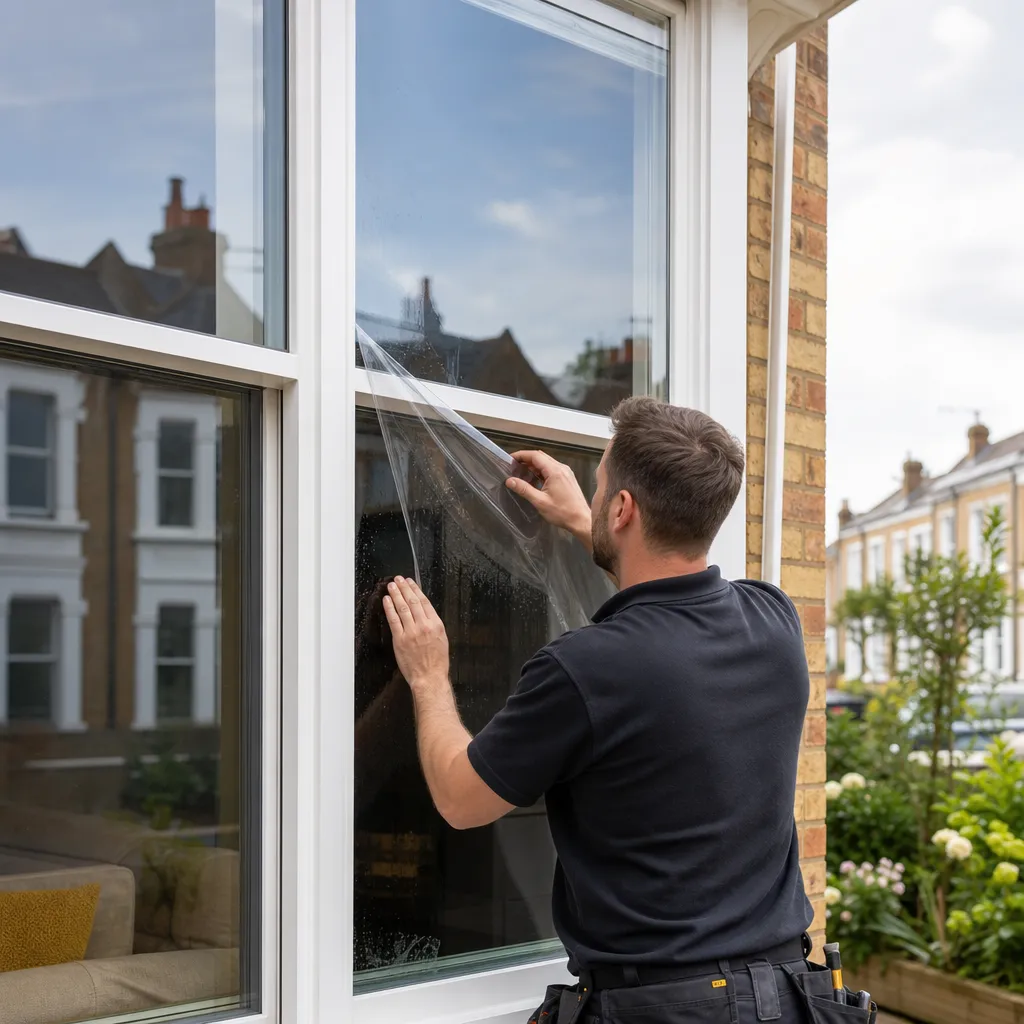
Solar window film: enhancing thermal performance and energy efficiency
Solar window film is a thin laminate applied to glass that reduces solar heat gain by 30–80% depending on specification.
 Energy & Retrofit
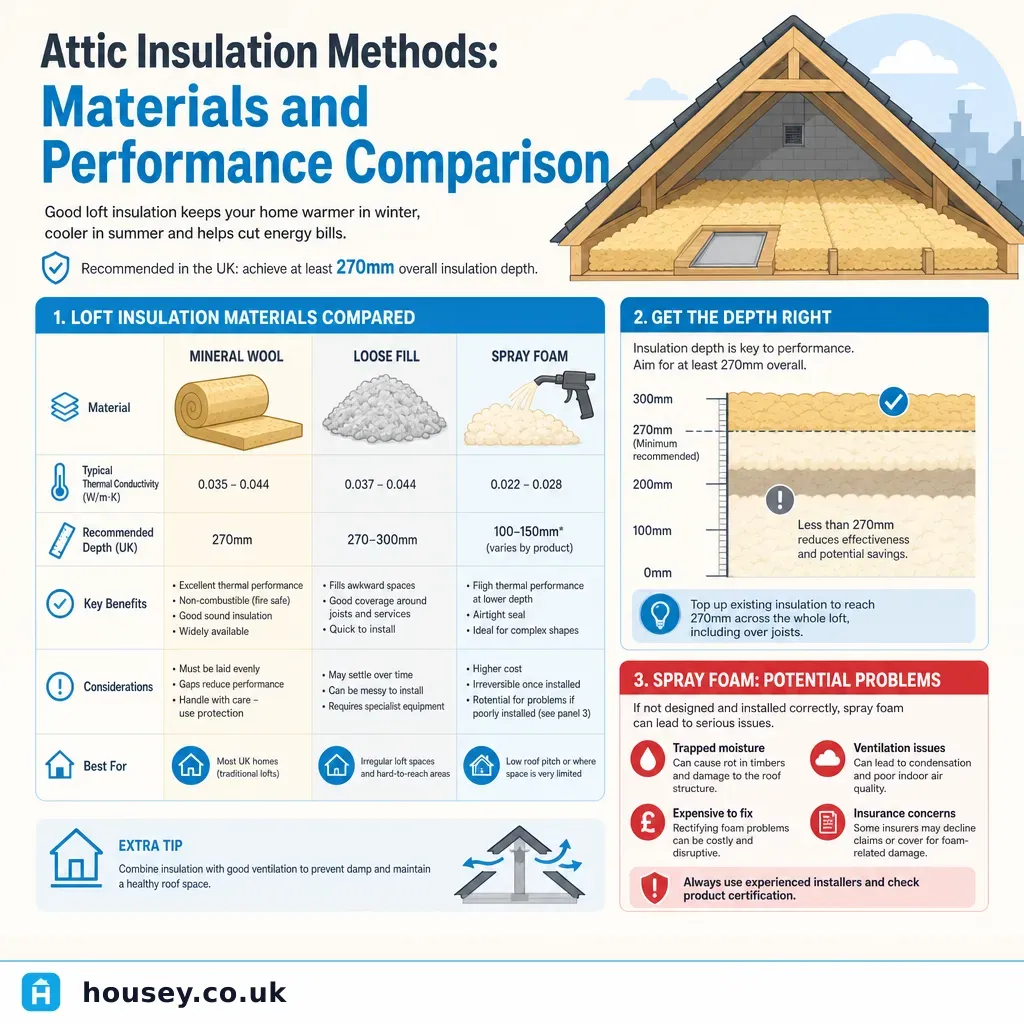
Attic Insulation Methods: Materials and Performance Comparison
UK loft insulation options include mineral wool rolls (most common and grant-funded), blown loose-fill for irregular lofts, and rigid PIR board for warm roof conversions.
 Energy & Retrofit
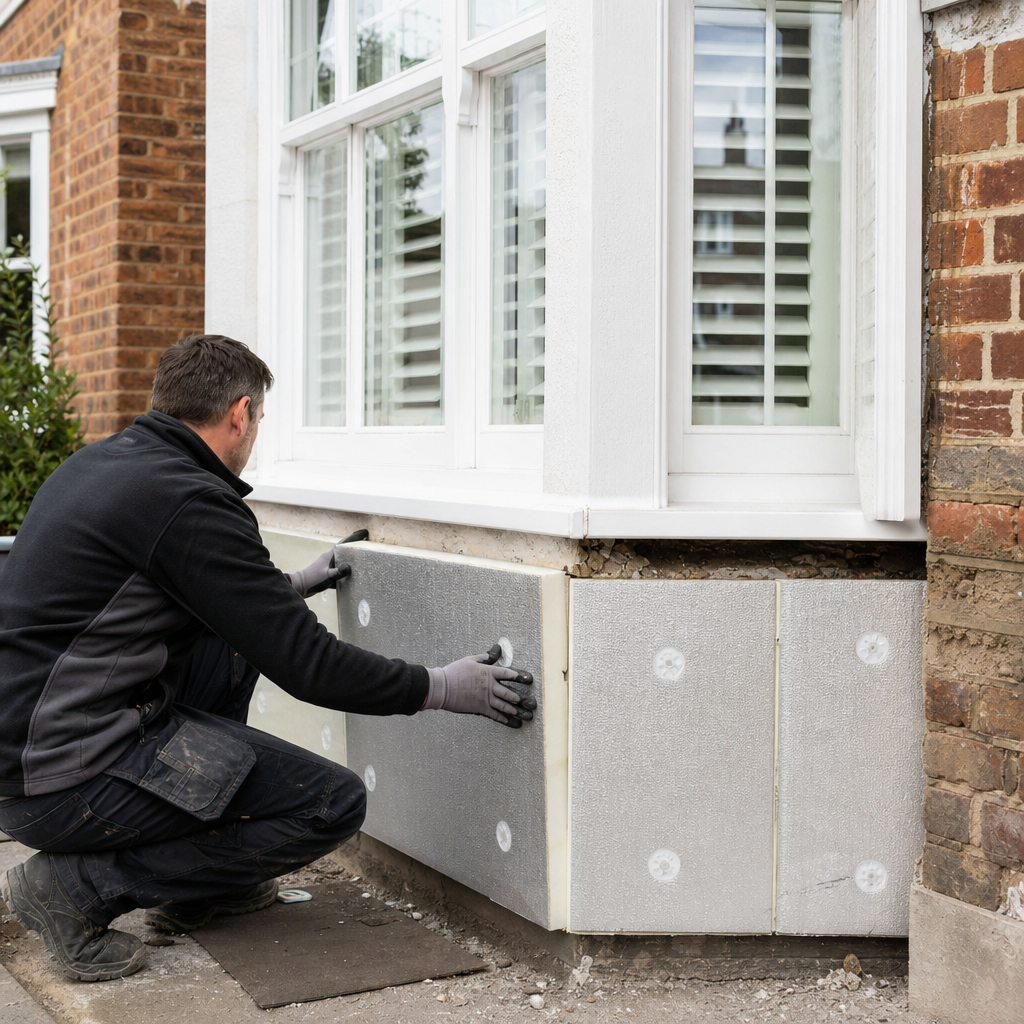
Insulating Solid Masonry Walls Under Bay Windows: Technical Guidance
Insulating solid masonry walls under bay windows requires specialist detailing at angled wall faces, window reveals, and the bay floor and ceiling junctions.
 Energy & Retrofit
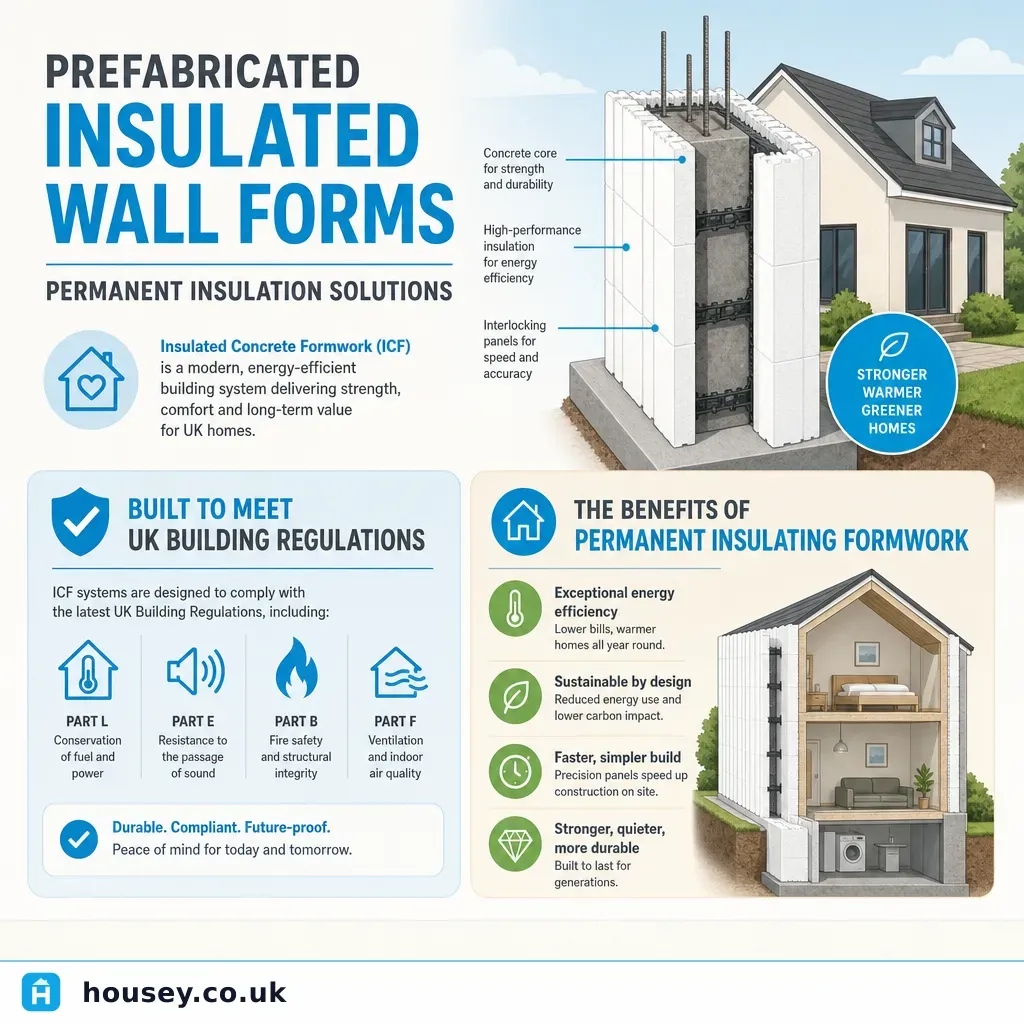
Prefabricated Insulated Wall Forms: Permanent Insulation Solutions
Prefabricated insulated wall forms — including ICF and SIPs systems — deliver high thermal performance by combining permanent insulation with structural concrete or timber in a single wall assembly.