Energy Retrofit Grants and Incentives: Improving Your Home's Efficiency
By Housey · Last reviewed 18th of May 2026

Energy Retrofit Grants and Incentives: Improving Your Home's Efficiency
Rising energy bills, EPC requirements for landlords, and the UK's net-zero commitments have combined to put home retrofit at the centre of many homeowners' planning decisions. Whether you are considering cavity wall insulation, a heat pump, or rooftop solar panels, understanding which grants and incentives apply to your property and circumstances is the essential first step. The landscape of UK government funding changes regularly; this article reflects publicly available information as of May 2026 — always verify current eligibility and funding levels at GOV.UK and Ofgem before applying.
Key points
- The Boiler Upgrade Scheme (BUS) provides a voucher of up to £7,500 toward an air source or ground source heat pump, applied directly to the installer's invoice by an MCS-certified installer.
- ECO4 (Energy Company Obligation 4) targets households receiving qualifying means-tested benefits in England, Scotland, and Wales, and can fund insulation, heat pumps, and solar panels at no cost to the eligible household.
- The Great British Insulation Scheme (GBIS) has broader income eligibility than ECO4 and focuses on cavity wall and loft insulation for homes with an EPC rating of D or below.
- Since April 2022, energy-saving materials — including insulation, heat pumps, solar panels, and draught-proofing — qualify for 0% VAT when both supplied and installed by a VAT-registered trader.
- All government-funded retrofit work on homes with an EPC of D or below must follow PAS 2035:2023, requiring a Retrofit Assessment and a Retrofit Coordinator before work begins.
What grants and incentives are available?
The main UK-wide schemes are summarised below. Scotland, Wales, and Northern Ireland also operate additional regional programmes; consult the relevant government or energy agency for local eligibility.
Scheme | Who it is for | What it funds | Indicative support | Administered by |
|---|---|---|---|---|
Boiler Upgrade Scheme (BUS) | Owner-occupiers in England and Wales; valid EPC with no outstanding insulation recommendations | Air source or ground source heat pump | Up to £7,500 voucher | Ofgem (via MCS installer) |
ECO4 | Households on qualifying benefits (e.g. Universal Credit, Pension Credit) in England, Scotland, Wales | Insulation, heat pumps, first-time central heating, solar PV | Full cost, subject to assessment | Energy suppliers (obligated by Ofgem) |
Great British Insulation Scheme (GBIS) | Owner-occupiers and private renters in England; EPC D–G; broader income threshold than ECO4 | Cavity wall and loft insulation primarily | Partial or full cost (varies) | Energy suppliers and local authorities |
Home Upgrade Grant (HUG2) | Low-income households in England not connected to the gas grid; EPC D–G | Insulation, low-carbon heating, solar PV | Up to £10,000 (indicative) | Local authorities |
Warm Home Discount | Households on Pension Credit (core group) or low income with high energy costs | Rebate off electricity bill | £150 per year | Energy suppliers (obligated by Ofgem) |
0% VAT on energy-saving materials | All UK households (supply and install by a VAT-registered trader) | Insulation, heat pumps, solar panels, draught-proofing, wind turbines | 20% VAT saving on qualifying works | HMRC (applied automatically by installer) |
Indicative UK costs and eligibility, last reviewed 2026-05-18. Scheme availability, funding levels, and eligibility criteria change regularly — verify at GOV.UK and Ofgem before applying.
The Boiler Upgrade Scheme explained
The Boiler Upgrade Scheme (BUS) is administered by Ofgem and is designed to accelerate uptake of low-carbon heating in England and Wales. To qualify, you must own the property, hold a valid EPC with no outstanding recommendations for loft or cavity wall insulation, and use an MCS-certified installer — the installer applies for the voucher on your behalf and deducts it from the invoice.
The current voucher value is £7,500 for an air source or ground source heat pump. Heat pump sizing must be based on a full heat loss calculation to MCS 020 standards — an incorrectly sized unit will underperform and may not comply with MCS installation requirements. If your current EPC flags outstanding insulation recommendations, address these first; they are a prerequisite for BUS eligibility.
ECO4 and the Great British Insulation Scheme
ECO4 (Energy Company Obligation 4) requires large energy suppliers to fund energy efficiency improvements for low-income and vulnerable households. Eligible measures include loft insulation, cavity wall insulation, solid wall insulation, and low-carbon heating systems. There is no central government application portal — contact your energy supplier or an approved ECO4 installer to check eligibility and initiate an assessment.
The Great British Insulation Scheme (GBIS) targets a broader group, including households not on benefits, provided the home has an EPC of D or below and meets income thresholds. It primarily funds loft and cavity wall insulation. Contact your energy supplier or local authority to find out whether your property qualifies.
For both schemes, all funded work must comply with PAS 2035:2023. This means a Retrofit Assessment must be completed before any installation begins, and a Retrofit Coordinator must oversee the project. This requirement exists to prevent poorly specified measures causing moisture, ventilation, or condensation problems — a genuine risk when insulation is added without considering a building's whole performance.
Do you qualify? A decision guide
- If you receive Universal Credit, Pension Credit, income-based Jobseeker's Allowance, or another qualifying means-tested benefit — contact your energy supplier about ECO4 eligibility.
- If your home has an EPC of D or below and you are not on qualifying benefits — ask your energy supplier or local authority about the Great British Insulation Scheme.
- If you want to install a heat pump and own your home in England or Wales — check the Boiler Upgrade Scheme via an MCS-certified installer; confirm your EPC has no outstanding insulation recommendations first.
- If you are off the gas grid, on a low income, and in England — enquire about the Home Upgrade Grant (HUG2) through your local authority.
- If you are installing solar panels, insulation, or other qualifying measures — 0% VAT applies regardless of income, provided a VAT-registered trader supplies and installs the materials.
- If your home is listed or in a conservation area — many standard retrofit measures require additional planning consents; speak with a retrofit assessor before proceeding.
Important limitations
This article provides general information about UK energy retrofit grant schemes as of May 2026. Eligibility rules, funding amounts, scheme availability, and application processes change regularly and may differ between England, Scotland, Wales, and Northern Ireland.
This guide does not constitute financial, legal, or technical advice. Retrofit decisions — particularly those involving heat pump sizing, solid wall insulation, or changes to ventilation — can have significant unintended consequences if poorly specified. A qualified Retrofit Assessor or Retrofit Coordinator (as defined under PAS 2035:2023) should assess your specific property before any funded or unfunded work proceeds. Always verify current eligibility at GOV.UK and Ofgem, and use TrustMark-registered and MCS-certified professionals for grant-funded work.
When this becomes urgent
Seek professional advice without delay if:
- Funded installation work is about to begin and you have not yet received confirmation that a PAS 2035-compliant Retrofit Assessment has been completed — insist on seeing this document before work starts.
- You notice increased condensation, damp patches, or mould in your home in the weeks after insulation has been installed — this can indicate a ventilation imbalance requiring urgent investigation.
- You are a private landlord with rental properties rated below EPC band E — Minimum Energy Efficiency Standards (MEES) regulations may already require action, and non-compliance carries civil penalties of up to £30,000 per property.
- You have received notification from your local authority or energy company about a scheme with a closing deadline — check eligibility promptly, as funding is often allocated on a first-come, first-served basis.
What to ask a qualified professional
Before instructing a retrofit assessor, energy consultant, or installer, ask:
- Are you TrustMark-registered and, where relevant, MCS-certified? Can you provide your registration number?
- Will you carry out a PAS 2035-compliant Retrofit Assessment before recommending any measures?
- What is your approach to moisture risk and ventilation — particularly for solid wall insulation or airtightness improvements?
- Will I need to upgrade my ventilation system as part of this project, and is that included in your quote?
- What EPC improvement can I realistically expect, and how is that modelled?
- Can you identify which grant schemes I may be eligible for, and will you manage the application process?
- What warranties or guarantees come with the installation, and are they backed by a recognised protection scheme?
- For heat pumps: is sizing based on a full heat loss calculation to MCS 020 standards?
When to get professional help
Retrofit can go seriously wrong when measures are installed without a whole-house assessment. Instruct a professional if:
- You are considering solid wall insulation (internal or external) — this requires careful moisture management and may need planning consent on listed or older properties.
- You are installing a heat pump — correct sizing is critical; an undersized or oversized unit will be inefficient and may not qualify for BUS funding.
- Your home is listed or in a conservation area — planning consent may be required for externally visible measures.
- You have existing damp, condensation, or poor ventilation — these must be resolved before additional insulation is installed or the problems are likely to worsen.
How Housey can help
Housey connects you with qualified professionals for every stage of the retrofit process. Arrange a retrofit assessment to understand your home's starting point, speak to an energy-efficiency consultant to identify the right package of measures, or book a heat pump survey or solar survey before committing to an installation. An insulation assessment can confirm which grants your property is likely to qualify for.
Frequently asked questions
How do I apply for ECO4?
You do not apply directly to a government department. Contact your energy supplier or an Ofgem-approved ECO4 installer, who will check your eligibility based on the benefits you receive, your income, and your property's EPC rating. If eligible, they manage the installation and funding on your behalf. Your energy supplier's website should have a starting point for enquiries.
Can I get a Boiler Upgrade Scheme grant if my current boiler still works?
Yes — the Boiler Upgrade Scheme does not require your existing boiler to be broken or beyond repair. However, your property must have a valid EPC with no outstanding recommendations for loft or cavity wall insulation. If your EPC flags outstanding insulation recommendations, these must be addressed before a BUS voucher can be issued. Your MCS-certified installer will confirm eligibility.
Does 0% VAT apply if I buy materials and fit them myself?
No. The 0% VAT relief on energy-saving materials applies only when materials are both supplied and installed by a VAT-registered trader. Purchasing materials yourself and carrying out DIY installation does not qualify for the reduced rate. Always confirm VAT treatment with your installer before work begins.
What is PAS 2035 and why does it matter for retrofit?
PAS 2035:2023 is a British Standard setting out a whole-house approach to retrofit. It requires a Retrofit Assessment and a Retrofit Coordinator for funded works on homes with an EPC of D or below. It exists to ensure that insulation and heating upgrades do not cause unintended moisture, condensation, or ventilation problems — a real risk when measures are installed without considering how they interact.
Will retrofit improvements raise my EPC rating?
Usually, yes — insulation upgrades and low-carbon heating typically improve an EPC rating. However, the scale of improvement depends on the property's current rating, construction type, and the measures installed. A retrofit assessor can model the expected EPC improvement before work starts, helping you prioritise measures that deliver the most benefit for your situation.
Sources and further reading
- Boiler Upgrade Scheme: apply for a grant — GOV.UK
- Energy Company Obligation (ECO4) — Ofgem
- Great British Insulation Scheme — GOV.UK
- Grants and schemes for your home — Energy Saving Trust
- PAS 2035:2023 — BSI
- TrustMark — government-endorsed quality scheme for home improvement work
- MCS Certified: find a certified installer — Microgeneration Certification Scheme
Useful next reads
 Energy & Retrofit
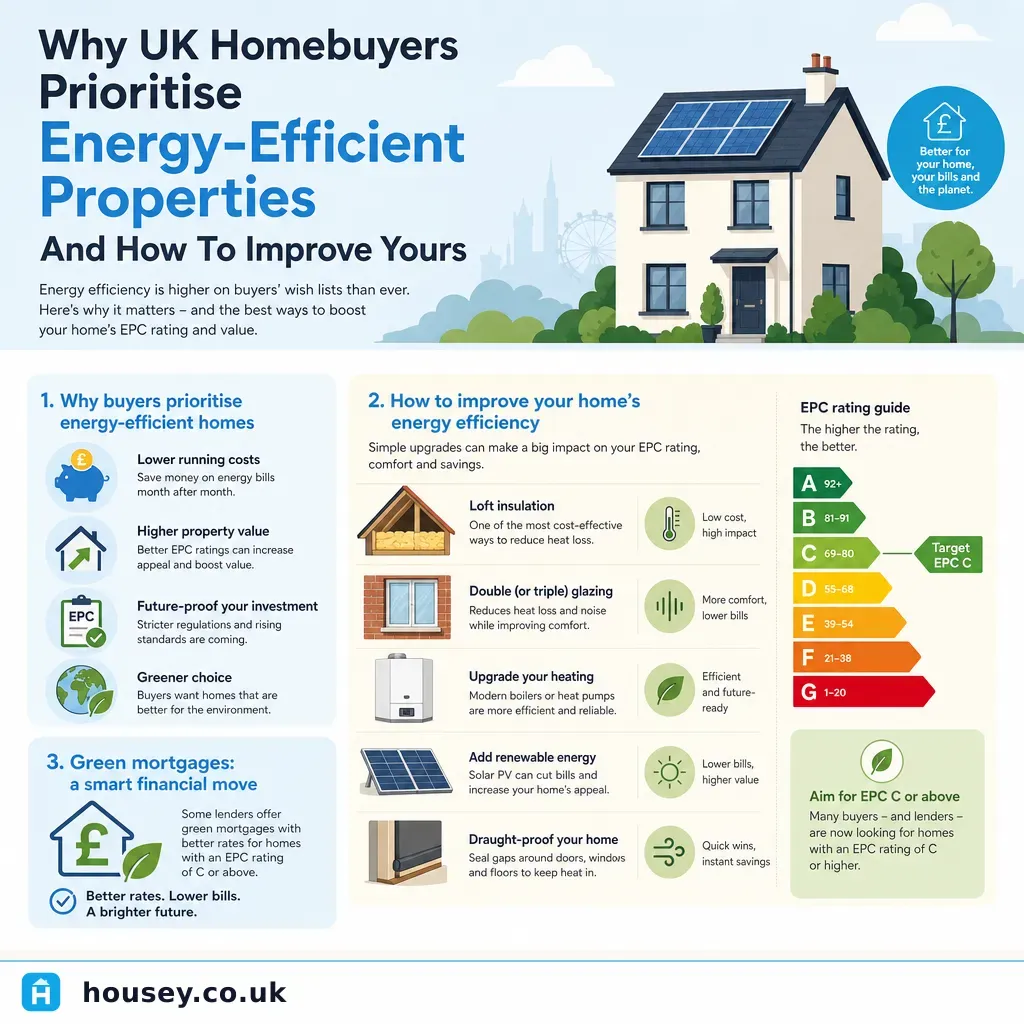
Why UK Homebuyers Prioritise Energy-Efficient Properties And How To Improve Yours
UK homebuyers increasingly favour energy-efficient properties because lower EPC ratings translate directly to higher heating bills — a significant concern after the 2021–23 energy crisis.
 Energy & Retrofit
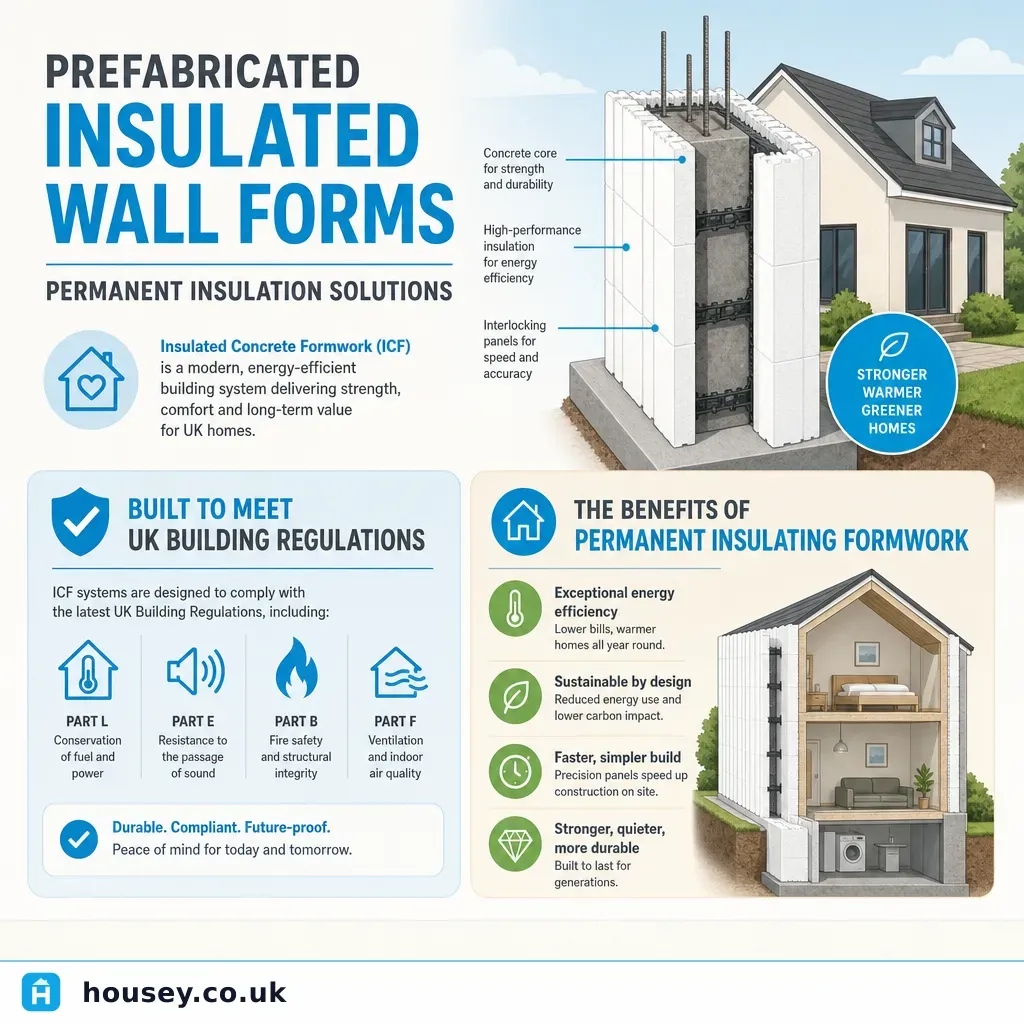
Prefabricated Insulated Wall Forms: Permanent Insulation Solutions
Prefabricated insulated wall forms — including ICF and SIPs systems — deliver high thermal performance by combining permanent insulation with structural concrete or timber in a single wall assembly.
 Energy & Retrofit
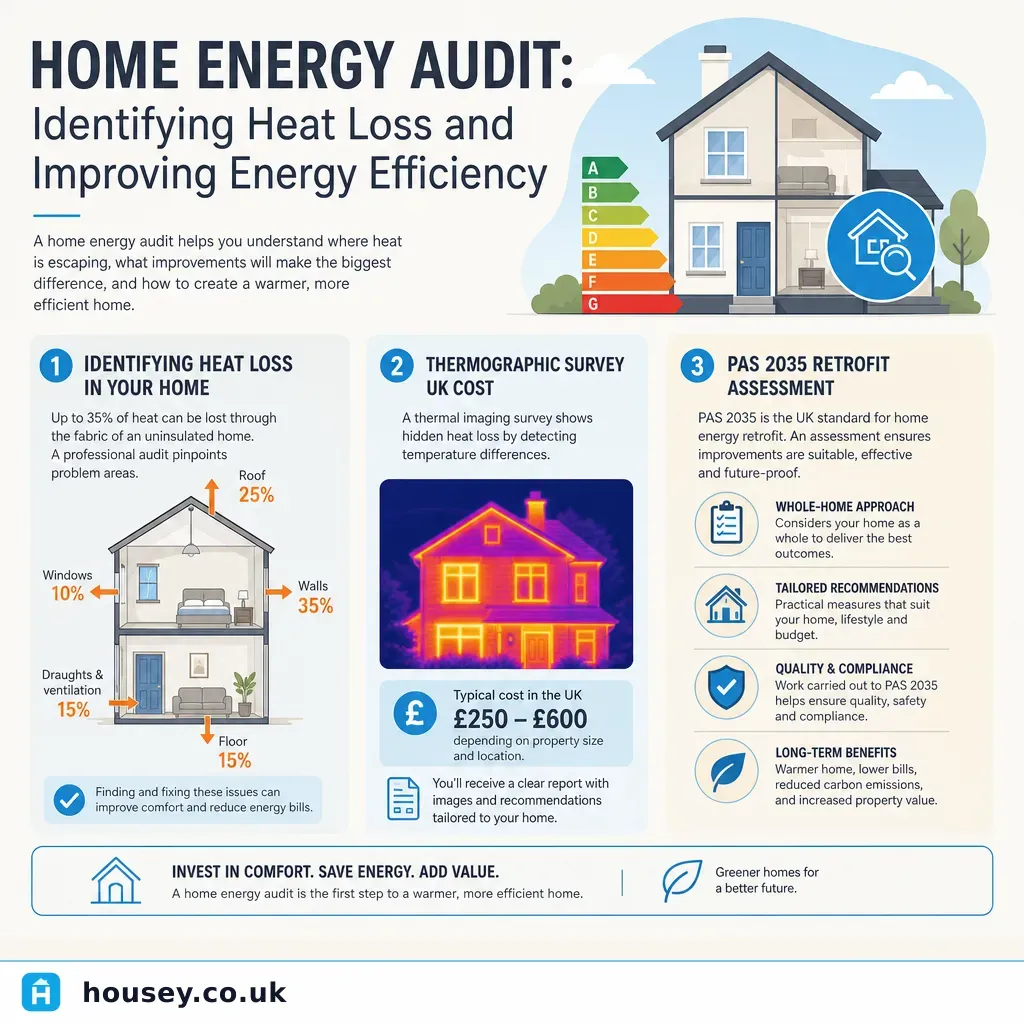
Home Energy Audit: Identifying Heat Loss and Improving Energy Efficiency
A home energy audit is a structured assessment of where your property loses heat and how efficiently it uses energy.
 Energy & Retrofit
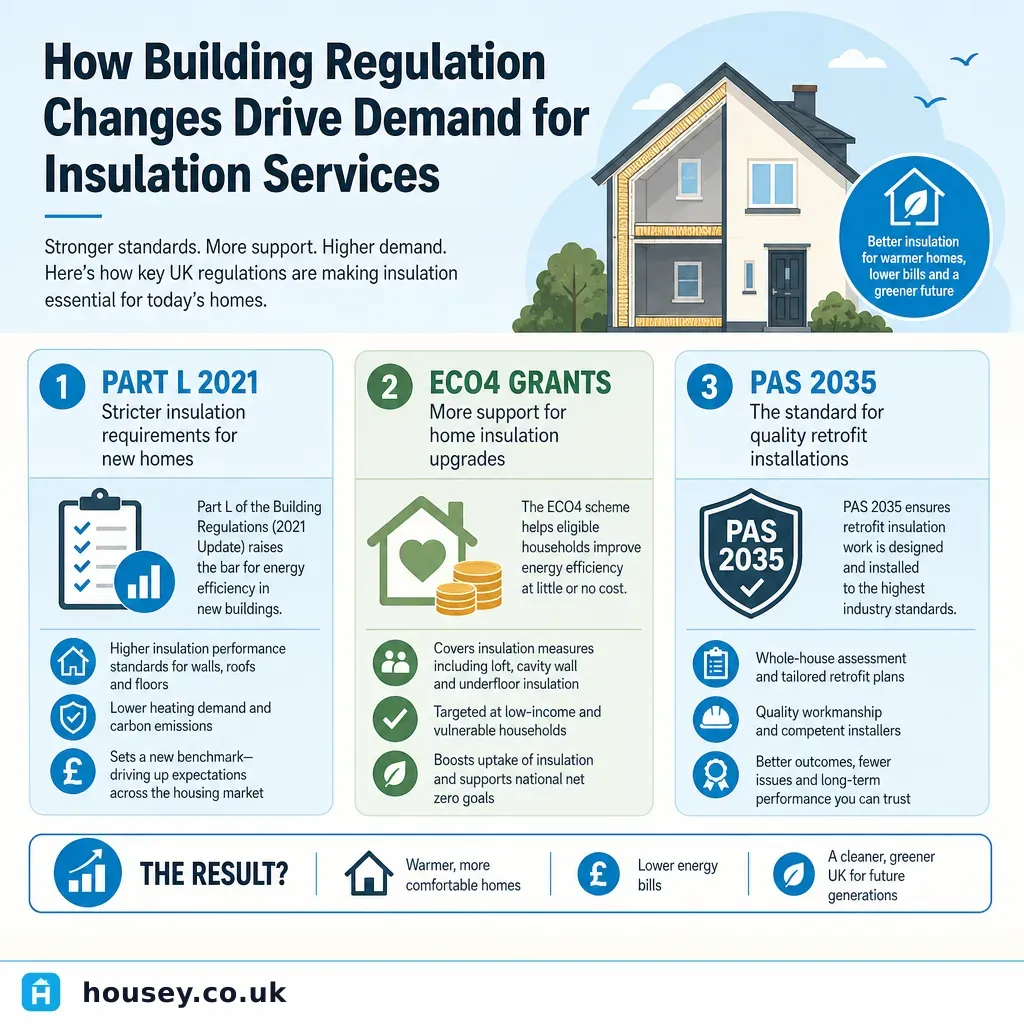
How Building Regulation Changes Drive Demand for Insulation Services
Building regulation changes — including 2021 updates to Approved Document L, ECO4 funding obligations, and proposed MEES tightening — are creating sustained demand for insulation services across the UK.
 Energy & Retrofit
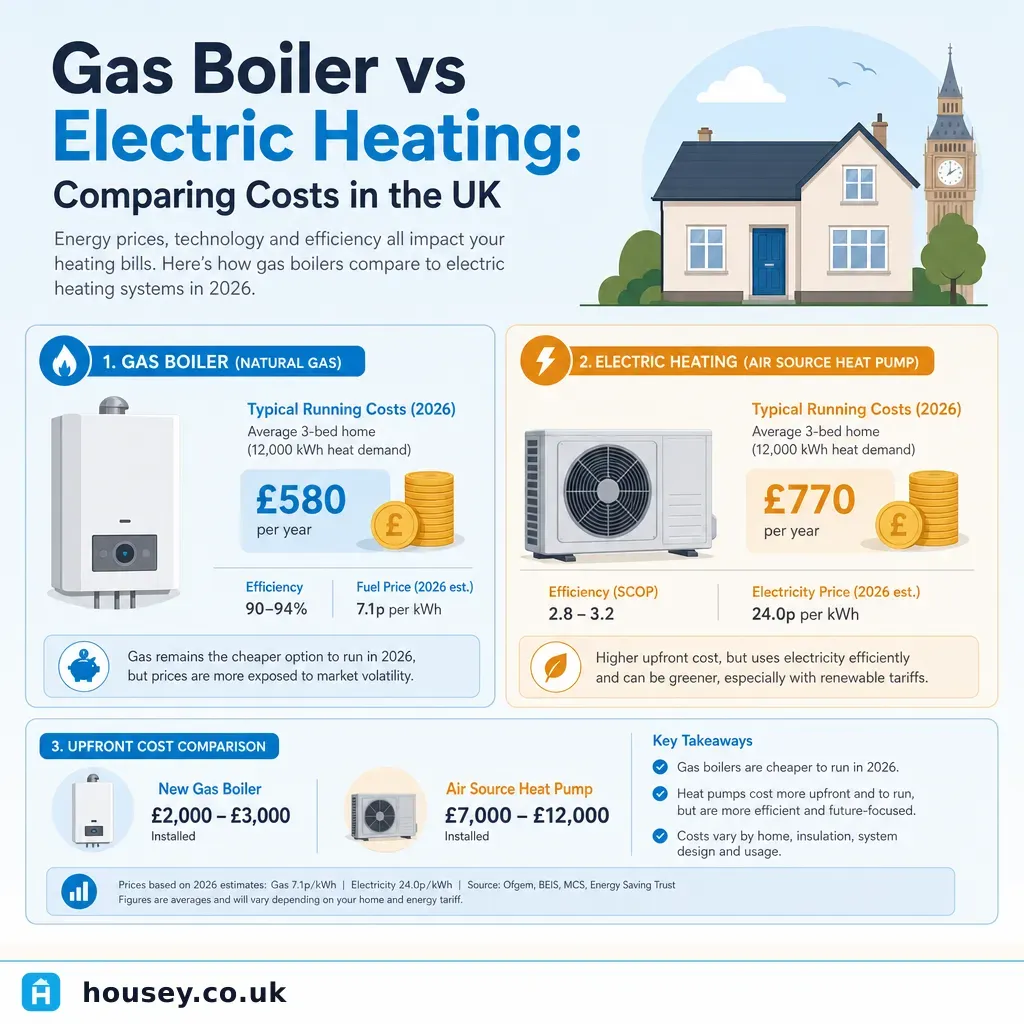
Gas Boiler vs Electric Heating: Comparing Costs in the UK
Gas boilers currently cost around 6.