Why UK Homebuyers Prioritise Energy-Efficient Properties And How To Improve Yours
By Housey · Last reviewed 10th of May 2026
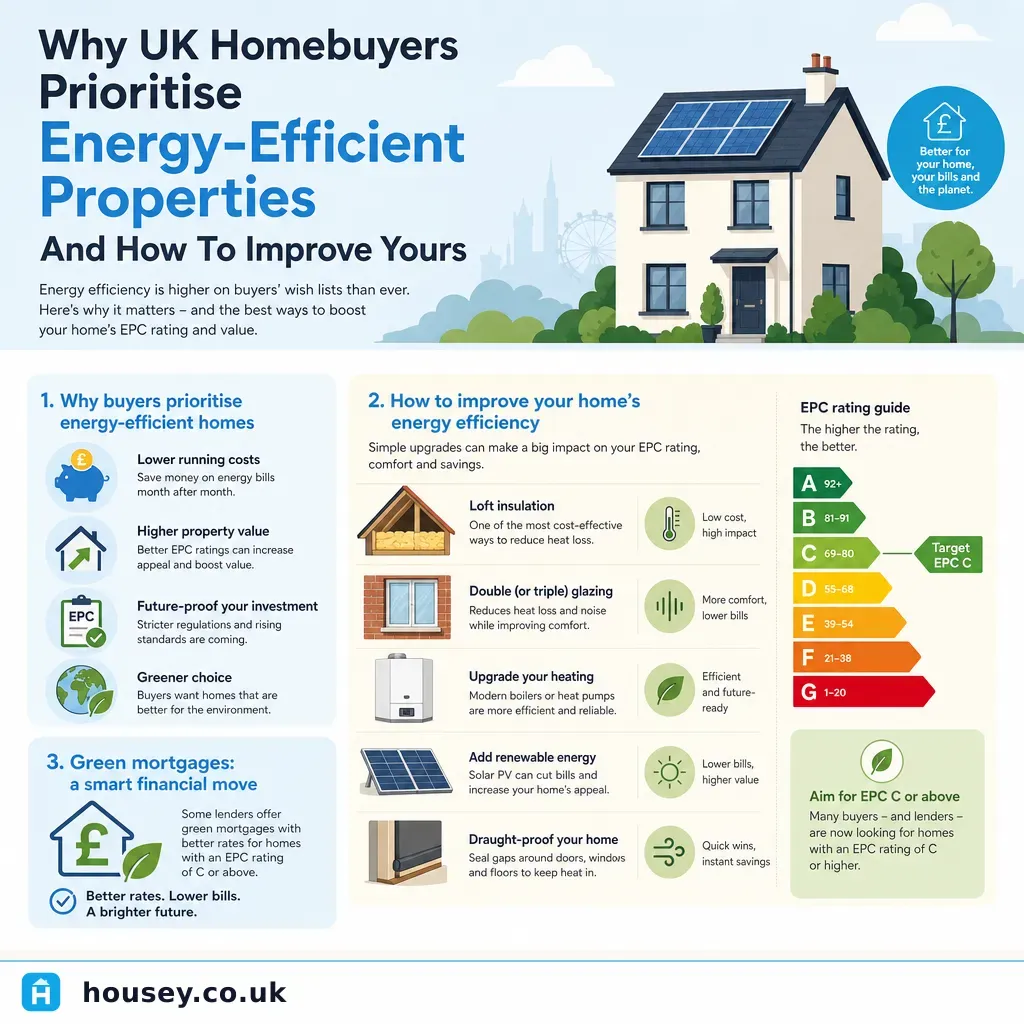
Why UK Homebuyers Prioritise Energy-Efficient Properties And How To Improve Yours
The energy price rises of 2021–23 changed how UK buyers approach the property search in a lasting way. What was once a minor checkbox — the EPC band on a listing — has become a meaningful filter for buyers navigating affordability pressure, green mortgage eligibility, and the prospect of future retrofit costs. Sellers of poorly rated homes are increasingly finding that improving efficiency before marketing can shorten time on market and support a stronger asking price.
Key points
- Rightmove research has indicated homes with EPC A or B ratings sell for a premium compared to equivalent D-rated homes in the same postcode, with the gap widening since 2022.
- Under MEES Regulations, rental properties in England and Wales must meet at least EPC E; proposed reforms would raise this to EPC C, creating a known improvement liability for investor buyers.
- Cavity wall insulation typically costs £400–£1,500 and can move a D-rated property toward C; solid wall external insulation costs £8,000–£20,000 or more but delivers proportionally larger SAP gains (indicative UK costs, last reviewed 2026-05-10).
- Loft insulation topped up to 270 mm is among the most cost-effective single measures recommended by the Energy Saving Trust for most pre-2000 UK homes.
- The Boiler Upgrade Scheme (BUS) offers grants of up to £7,500 for eligible air source or ground source heat pump installations as of 2026.
Why buyers increasingly use EPC ratings as a filter
The bill impact is real and quantifiable
EPC certificates include estimated annual energy costs for heating, hot water, and lighting under standardised assumptions. The difference between a band E and a band C property can be several hundred pounds per year — a tangible and recurring figure buyers can compare across listings.
After the 2021–23 energy crisis, when annual dual-fuel bills for average UK households rose above £2,500, buyers began treating EPC bands as a proxy for financial risk. An F-rated property is not just uncomfortable to heat; it represents a potential five-figure improvement bill if minimum standards for renting tighten further.
Green mortgages reward efficient properties
Several major lenders — including Halifax, Nationwide, Barclays, and Virgin Money — have offered preferential mortgage rates for properties at EPC C or above at various points since 2021. While product availability and discount sizes fluctuate, the direction of travel is clear: the mortgage market is beginning to price energy performance into risk. Buyers with broker advice are increasingly factoring green mortgage eligibility directly into their property shortlists.
Rental compliance risk affects investor buyers
For buy-to-let investors, the EPC is a compliance requirement, not a nice-to-have. Under current MEES rules, a property rated F or G cannot be legally let in England and Wales without an approved exemption. Proposed reforms to raise the minimum to EPC C add further urgency. Investors buying properties below C face a known improvement liability, which informed buyers increasingly reflect in their offers.
Which improvements move the needle most?
Not all retrofit measures deliver the same return on SAP score. The table below summarises common improvements, their typical cost range, approximate EPC impact, and whether a professional assessment is strongly advisable before committing.
Measure | Typical cost range (England) | Approximate EPC gain | Professional assessment needed? |
|---|---|---|---|
Loft insulation top-up to 270 mm | £300–£600 | 2–5 SAP points | Recommended |
Cavity wall insulation | £400–£1,500 | 5–10 SAP points | Yes — cavity suitability check required |
Double or triple glazing (per window) | £350–£800 | 2–6 points total | No, but use FENSA-registered installer |
Air source heat pump | £8,000–£15,000 before BUS grant | 10–20+ points (varies) | Yes — sizing survey required |
Solar PV (4 kW system) | £6,000–£10,000 | 8–18 SAP points | Yes — solar survey required |
Solid wall insulation (external) | £8,000–£20,000+ | 15–25 SAP points | Yes — retrofit coordinator recommended |
Hot water cylinder insulation jacket | £15–£30 | 1–3 SAP points | No |
Smart thermostat and thermostatic radiator valves | £150–£400 | 1–3 SAP points | No |
Indicative UK costs, last reviewed 2026-05-10. Actual costs vary significantly by property type, size, and region. Always obtain multiple quotes.
Worked example: 1930s semi-detached in the East Midlands
Consider a typical 1930s three-bedroom semi-detached, currently rated EPC D (58), with a gas boiler, unfilled cavity walls, and 100 mm of roof insulation.
Step 1 — Quick wins first. Topping up loft insulation to 270 mm and fitting a smart thermostat costs approximately £600–£900 in total. This could move the score to D (63–65) and reduce estimated annual heating costs by £100–£180.
Step 2 — Cavity wall insulation. An installer surveys the cavity and confirms it is suitable. Cost: approximately £700. This takes the score toward EPC C (70–72) and may be eligible for ECO4 or Great British Insulation Scheme funding for eligible households.
Step 3 — Renewable technology. To move above C toward B, a solar PV installation or, if the property and heating system are suitable, an air source heat pump with BUS grant would be the next step. Each requires a dedicated assessment — a solar survey or heat pump survey — to confirm technical suitability and size the system correctly.
The total route from D (58) to B for this property could cost £10,000–£20,000 depending on heating choices, grant availability, and whether major system replacement is needed. A retrofit assessor can plan the sequence and identify grant eligibility before you commit.
Homeowner checklist: preparing to sell an energy-efficient home
When to get professional help
Most simple measures — loft insulation top-up, hot water cylinder jacket, smart thermostat — can be installed by reputable tradespeople without specialist pre-assessment. However, seek professional advice before:
- Installing cavity or solid wall insulation in a property with suspected damp, non-standard cavity width, or in a conservation area.
- Sizing or specifying an air source or ground source heat pump — undersizing or oversizing leads to poor efficiency and higher running costs.
- Installing solar PV on a roof with unusual pitch, significant shading, or structural concerns.
- Undertaking any deep retrofit involving multiple fabric and system changes simultaneously — a retrofit coordinator qualified under PAS 2035 should plan and oversee the work to manage moisture and ventilation risk.
An insulation assessment or consultation with one of Housey's energy-efficiency consultants before committing to larger measures can save significant cost and prevent installation problems.
How Housey can help
Housey connects UK homeowners with qualified energy-efficiency consultants, retrofit assessors, and specialists for solar surveys, heat pump surveys, and insulation assessments. Use Housey to compare quotes from accredited local professionals before committing to any improvement works.
Frequently asked questions
Does improving my EPC rating actually increase my property's value?
Research from lenders including Nationwide suggests a measurable premium for EPC A or B properties over equivalent D-rated homes in the same postcode, though the gap varies by location and property type. The effect is more pronounced in higher-value markets and areas with strong buyer awareness of energy costs.
Can I get grants to improve my EPC rating?
Potentially yes. ECO4 funds insulation and heating improvements for eligible lower-income households. The Great British Insulation Scheme targets properties rated EPC D or below. The Boiler Upgrade Scheme offers grants of up to £7,500 for eligible heat pump installations. Eligibility criteria change — check GOV.UK for current schemes.
How long does it take to commission a new EPC?
A domestic EPC assessment typically takes one to two hours for a standard property and costs approximately £60–£120. The certificate is usually issued within 24–48 hours of assessment. Results are lodged on the national Energy Performance of Buildings Register automatically by accredited assessors.
Will every improvement recommended on my EPC actually suit my property?
Not necessarily. EPC recommendations are generated algorithmically and may not account for specific construction type, damp risk, or planning constraints. A listed building may face restrictions on external insulation or glazing replacement. Always seek independent advice before investing in solid wall insulation or heat pump systems.
Sources and further reading
- Boiler Upgrade Scheme — GOV.UK
- Great British Insulation Scheme — GOV.UK
- Home insulation — Energy Saving Trust
- PAS 2035: Retrofitting dwellings for improved energy efficiency — BSI Group
- Domestic private rented property: minimum energy efficiency standard — GOV.UK
Useful next reads
 Energy & Retrofit
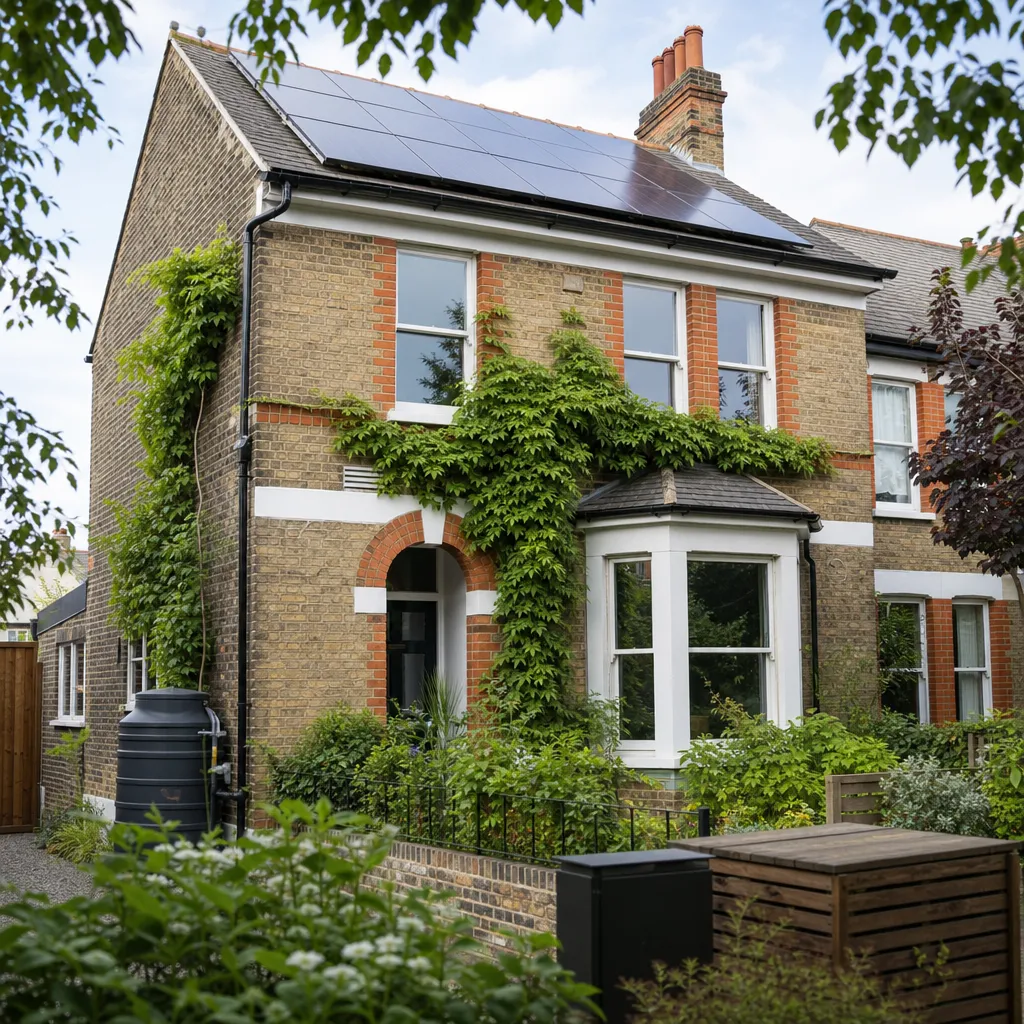
Sustainable Homes: Features That Reduce Environmental Impact
Sustainable homes reduce environmental impact through high levels of insulation, airtight construction, low-carbon heating such as heat pumps, solar energy generation, efficient water use, and responsibly sourced materials.
 Energy & Retrofit
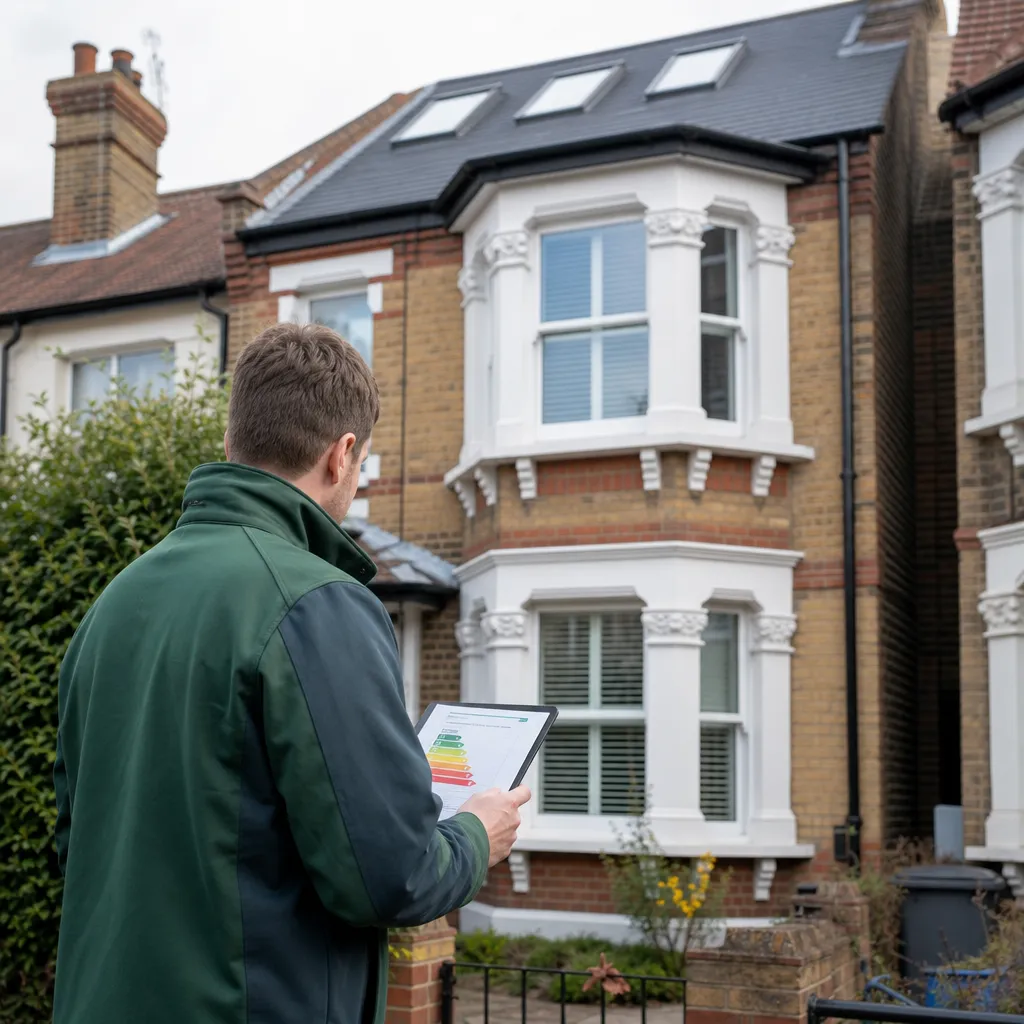
Energy Retrofit Grants and Incentives: Improving Your Home's Efficiency
UK homeowners may be eligible for retrofit grants including ECO4 (insulation and heating for low-income households), the Great British Insulation Scheme, and the Boiler Upgrade Scheme, which provides up to £7,500 toward an air or ground source heat pump.
 Energy & Retrofit
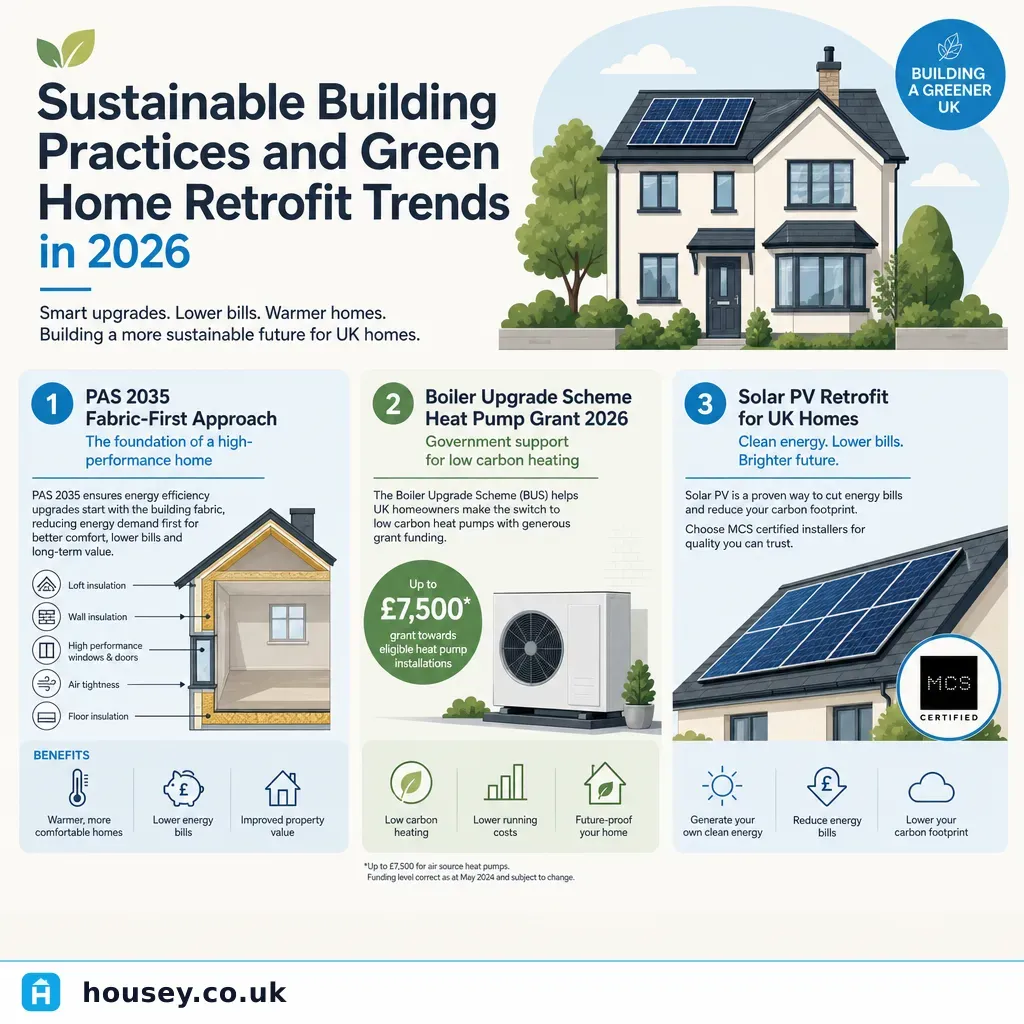
Sustainable Building Practices and Green Home Retrofit Trends in 2026
Green home retrofit in 2026 is shaped by PAS 2035's fabric-first principle, Boiler Upgrade Scheme grants of £7,500 for air source heat pumps, and growing solar PV adoption backed by the Smart Export Guarantee.
 Energy & Retrofit
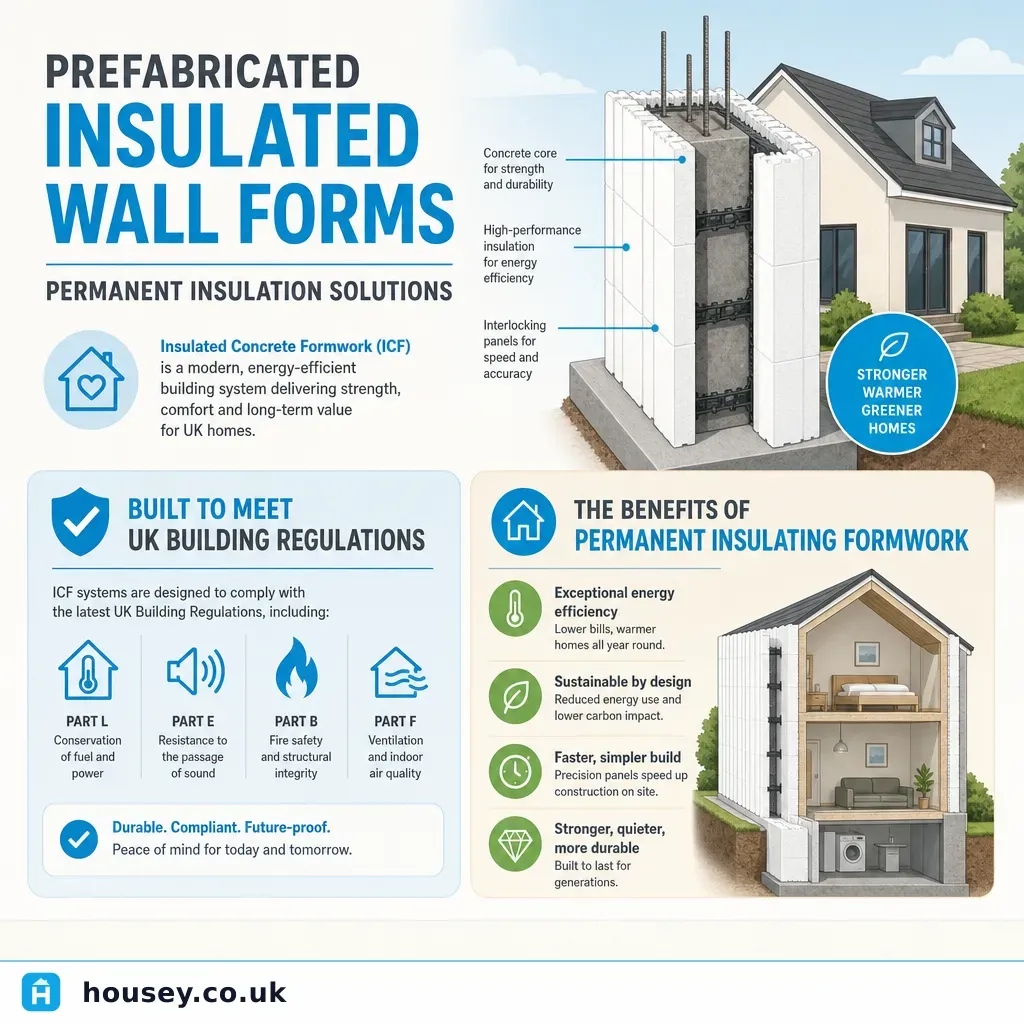
Prefabricated Insulated Wall Forms: Permanent Insulation Solutions
Prefabricated insulated wall forms — including ICF and SIPs systems — deliver high thermal performance by combining permanent insulation with structural concrete or timber in a single wall assembly.
 Energy & Retrofit
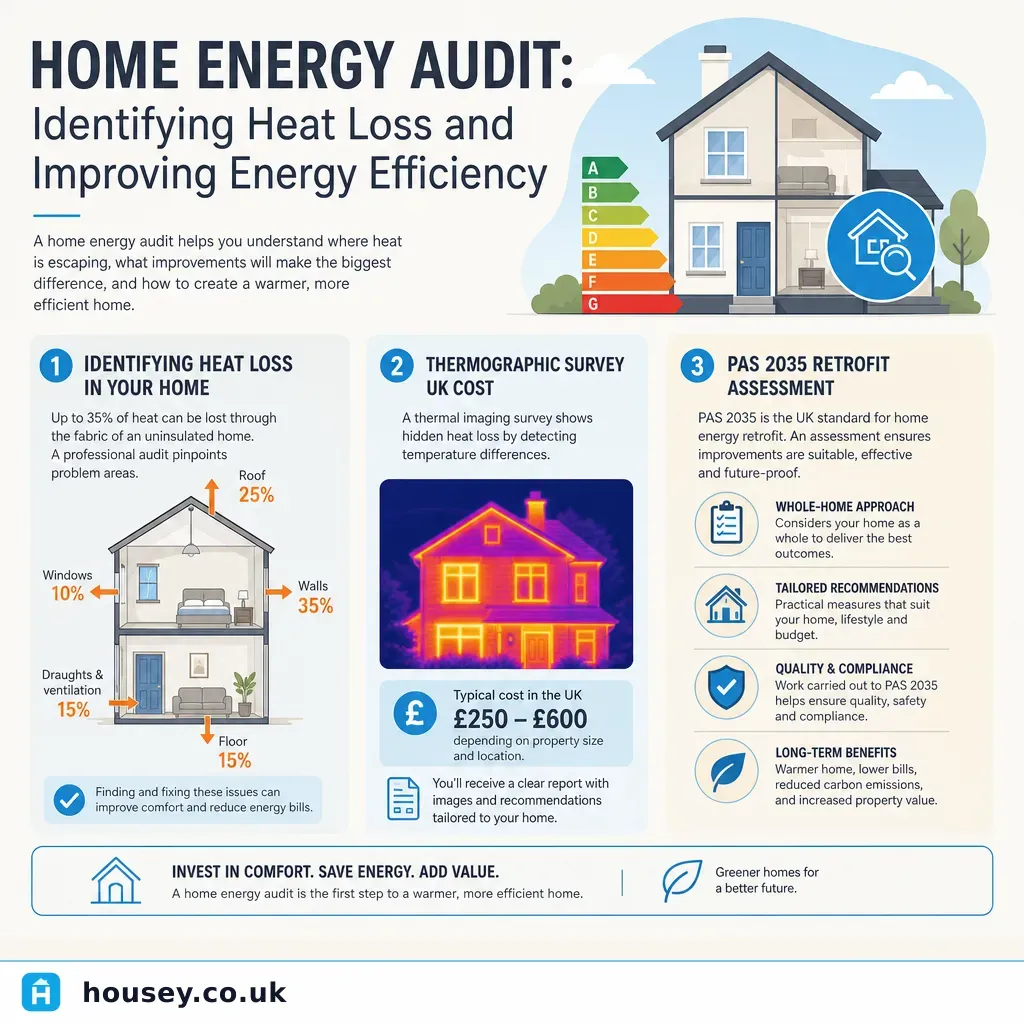
Home Energy Audit: Identifying Heat Loss and Improving Energy Efficiency
A home energy audit is a structured assessment of where your property loses heat and how efficiently it uses energy.