Planning Your Garden: Design and Growth Considerations
By Housey · Last reviewed 31st of May 2026
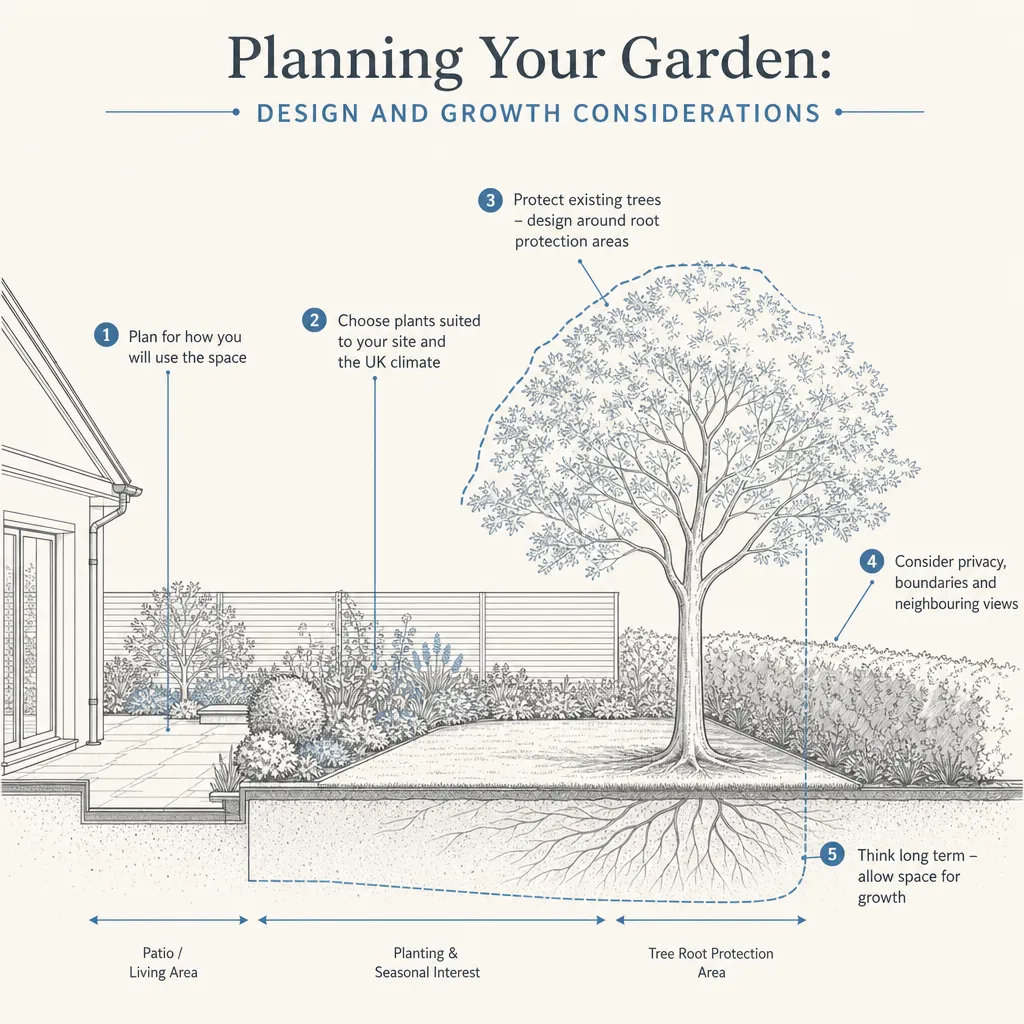
Planning Your Garden: Design and Growth Considerations
A well-planned garden adds measurable value and usability to a UK property, yet many homeowners begin planting or paving without thinking through soil conditions, aspect, drainage, or long-term growth. Whether you are starting from scratch after a new build handover, redesigning a Victorian terraced garden, or rethinking an overgrown plot, the planning stage determines how much the finished garden serves your household — and how much ongoing maintenance it demands.
Key points
- Soil pH significantly affects plant health: most ornamental plants prefer a pH of 6.0–7.0, while acid-loving species such as rhododendrons require 4.5–6.0; a basic soil test costs around £5–£15 from a garden centre.
- Aspect (the direction your garden faces) determines sun exposure; a south-facing garden receives significantly more direct sun than a north-facing one, which affects plant selection, seating areas, and vegetable growing.
- In England, Wales, and Scotland, trees with a trunk diameter over 75 mm at 1.5 m height in a conservation area are automatically protected; removing or pruning them without consent is a criminal offence.
- Permitted development rules apply to garden structures: outbuildings, sheds, and greenhouses have height, footprint, and proximity limits under Part 1 of the Town and Country Planning (General Permitted Development) (England) Order 2015.
- The RHS Plant Finder database lists over 70,000 plants with hardiness ratings relevant to UK growing conditions, which is a useful cross-reference when selecting species for a specific postcode and microclimate.
Understanding your plot before you design
Successful garden design starts with assessment, not planting. Before committing to any layout, work through the following:
Soil type and pH
Clay, sandy, chalky, and loamy soils each behave differently — clay holds moisture but compacts and drains poorly; sandy soil drains fast but loses nutrients quickly. A simple ribbon test (press a handful of moist soil — if it ribbons into a sausage, it is clay-heavy) gives a quick steer. For planting, a pH test from a garden centre provides more precision. Amending soil with organic matter (well-rotted compost or leaf mould) improves structure over one to three seasons.
Aspect and sun mapping
Walk your garden at different times of day over a few days and note where shade falls in the morning, midday, and afternoon. South and west-facing borders receive the most light and suit sun-loving Mediterranean plants, fruit trees, and vegetables. North and east-facing areas suit shade-tolerant species: hostas, ferns, astilbes, and certain climbing hydrangeas.
Drainage
After heavy rain, observe where water pools. Persistent pooling indicates a high water table, compacted subsoil, or a drainage problem. Solving a drainage issue before laying paths, patios, or lawn is far easier than retrofitting a French drain through an established garden. Options range from simple gravel soakaways for minor issues to proper land drainage systems for larger plots.
Existing features
Note trees (including root spread, which can extend 1–1.5 times the canopy radius underground), boundary structures, drainage inspection covers, and utility routes. Moving a drain inspection cover is possible but adds cost; redesigning around it is usually easier.
Design considerations by garden type
Different property types and garden sizes call for different approaches.
Garden type | Key design consideration | Common challenge | Suitable professional |
|---|---|---|---|
Small urban terraced (under 30 m²) | Maximise perceived space; vertical planting | Overlooking, shade, hard landscaping costs | Garden designer |
Victorian semi, medium plot | Balance lawn, planting, and hard surface; period-appropriate planting | Mixed levels, mature trees, TPO constraints | Garden designer or landscape contractor |
New-build estate garden | Building up soil quality from compacted subsoil | Topsoil depth often minimal; drainage tied to surrounding infrastructure | Garden designer or landscaper |
Large rural or suburban | Manage boundary, wildlife, and maintenance load | Long-term growth of specimen trees; neighbour shading | Landscape architect or garden designer |
Front garden | Parking, planting, and kerb appeal; drainage for hard surfaces | Planning permission required for impermeable paving over 5 m² in England | Garden designer or paving contractor |
Plant selection: matching species to conditions
Choosing plants based on aesthetic preference alone, without matching them to soil, aspect, and climate zone, is one of the most common causes of garden failure.
Right plant, right place
Every plant label specifies aspect (sun/partial shade/shade) and soil preference. The RHS website allows filtering by these criteria. For long-lived planting — hedging, specimen trees, climbing plants — invest in plants that genuinely suit the site rather than forcing a preferred species into unsuitable conditions.
Hardiness and climate
Most of the UK falls within RHS hardiness zones H4–H6 (tolerates down to −10°C to −15°C in inland areas). Coastal areas can be milder. Check hardiness ratings particularly for plants marketed for Mediterranean climates, which may not survive a hard midlands winter.
Growth rates and long-term form
Fast-growing screening plants (leylandii, cherry laurel) solve a privacy problem quickly but require regular maintenance and can cause disputes if they overhang boundaries. Slower-growing alternatives (hornbeam, beech, yew) are often more appropriate for long-term hedging. Check the expected height and spread at 10 and 20 years, not at the point of purchase.
Native planting for biodiversity
The Environment Act 2021 introduced Biodiversity Net Gain requirements for development. For homeowners, the practical consideration is that native species (hawthorn, blackthorn, field maple, ox-eye daisy, native grasses) tend to support local invertebrates and birds far more effectively than ornamental cultivars. The RHS Plants for Pollinators scheme identifies suitable options.
Phasing your garden project
Large-scale garden redesigns need not happen all at once. A phased approach often produces better results and spreads cost.
Phase 1 — Hard landscaping and structure (Year 1)
Levels, drainage, paths, patios, retaining walls, and boundary structures. These are disruptive to install and expensive to alter later. Complete these before any planting investment is made.
Phase 2 — Trees, large shrubs, and hedging (Year 1–2)
Structural planting takes the longest to establish. Plant hedging, specimen trees, and climbing plants early so they develop while other planting evolves around them.
Phase 3 — Perennial borders and lawn (Year 2–3)
Herbaceous perennials fill borders, suppress weeds, and improve soil structure. Lawn — whether seeded or turfed — is typically one of the last elements to install, following ground preparation.
Phase 4 — Seasonal and annual planting
Bulbs, annuals, and container planting can be adjusted each year as the garden matures.
Homeowner garden planning checklist
Before instructing a garden designer or beginning work:
When to get professional help
A garden designer is worth consulting whenever the project involves hard landscaping (retaining walls, patios, drainage), protected trees, planning permission questions, or a larger budget. They can also identify potential problems — poor drainage, unstable boundaries, tree root conflicts — that are not immediately obvious.
Seek advice before proceeding if:
- A tree you want to remove may have a Tree Preservation Order or may be in a conservation area.
- You want to add a front garden driveway (planning permission is required for impermeable hard standing over 5 m² in England).
- The site has significant level changes requiring retaining structures.
- You are uncertain about boundary ownership or rights of light affecting new planting.
How Housey can help
Housey connects you with experienced garden designers across the UK. Submit your requirements and compare quotes from local professionals who can assess your plot, work to your budget, and produce a phased design that suits your household and climate.
Frequently asked questions
Do I need planning permission for a garden shed or outbuilding?
In most cases, no. Under permitted development in England, a rear outbuilding no more than 2.5 m tall if within 2 m of a boundary (or 4 m with a dual-pitched roof further from the boundary) and covering no more than 50% of the curtilage (excluding the original house footprint) does not need planning permission. Rules vary in Wales, Scotland, and Northern Ireland, and do not apply to listed buildings or flats. Check GOV.UK's Planning Portal for your specific situation.
How much does a garden designer cost in the UK?
Indicative UK costs, last reviewed 2026-05-31. A basic garden design consultation for a small-to-medium urban garden typically costs £300–£800. A full design package including planting plan, materials specification, and supervision can range from £1,000 to £5,000 or more for larger or more complex plots. Some designers charge an initial site visit fee that is deductible from the full design fee. Quotes vary considerably by region, garden size, and design complexity.
What is a Tree Preservation Order and how do I check for one?
A Tree Preservation Order (TPO) is a legal instrument issued by a local planning authority to protect specific trees or groups of trees. Carrying out any work on a TPO tree without consent is a criminal offence. You can check for TPOs via your local planning authority's online tree register or the Planning Portal. Trees in conservation areas are automatically protected if the trunk is over 75 mm in diameter at 1.5 m height, even without a specific TPO.
When is the best time of year to start planting in the UK?
For most herbaceous perennials and shrubs, autumn planting (September–November) allows root establishment before winter and generally produces better first-year results than spring planting. Spring planting (March–May) works well for tender plants after the last frost. Container-grown plants from garden centres can be planted at most times of year provided the ground is not frozen or waterlogged, but summer planting requires consistent watering to establish.
Sources and further reading
- Permitted development: outbuildings and other structures — Planning Portal
- RHS Plants for Pollinators — Royal Horticultural Society
- Tree Preservation Orders and trees in conservation areas — GOV.UK
- Biodiversity Net Gain guidance — GOV.UK
- Soil: improving and conditioning — Royal Horticultural Society
Useful next reads
 Improvement & Build
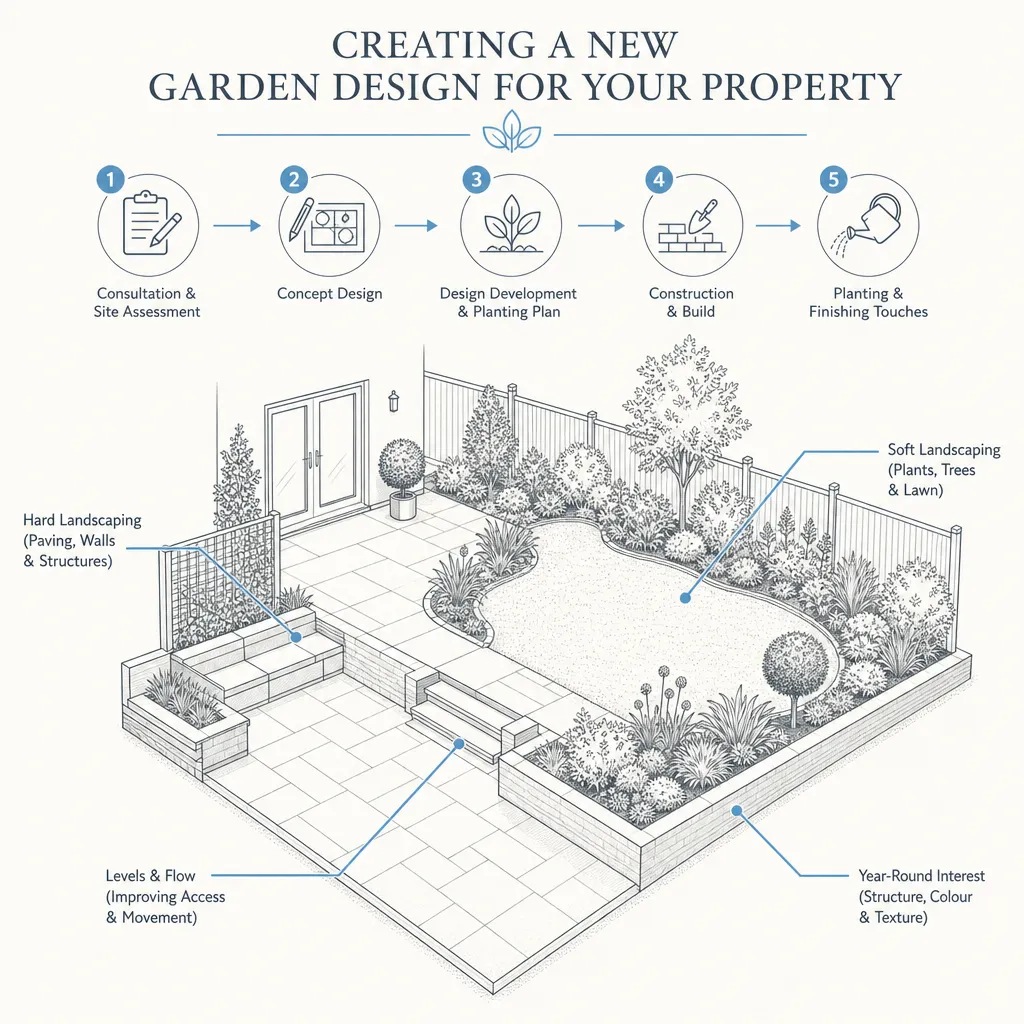
Creating a New Garden Design for Your Property
Creating a new garden design involves assessing your space, setting a realistic budget, deciding on hard and soft landscaping, and choosing a planting scheme suited to your soil and aspect.
 Improvement & Build
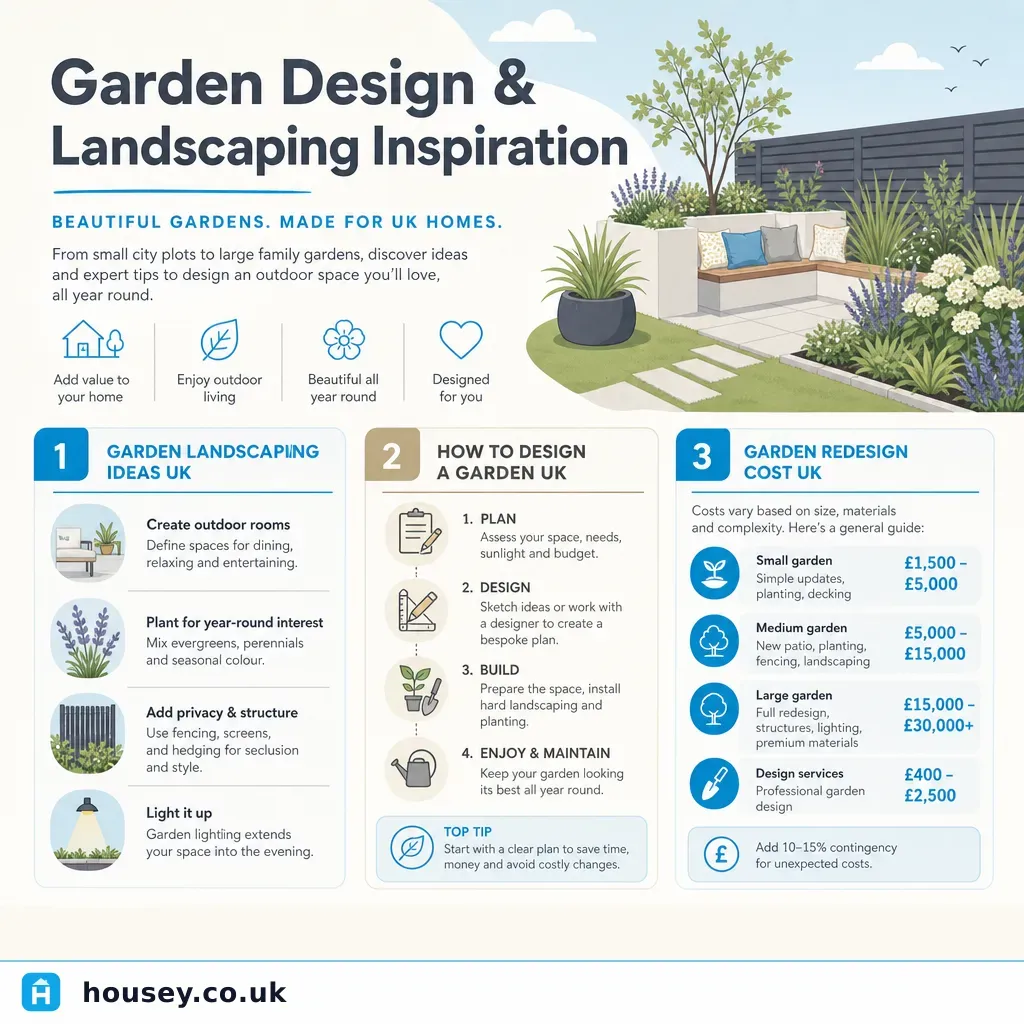
Garden Design and Landscaping Inspiration
Effective garden design starts with assessing your aspect, soil type, and existing features before commissioning any planting or hard landscaping.
 Improvement & Build
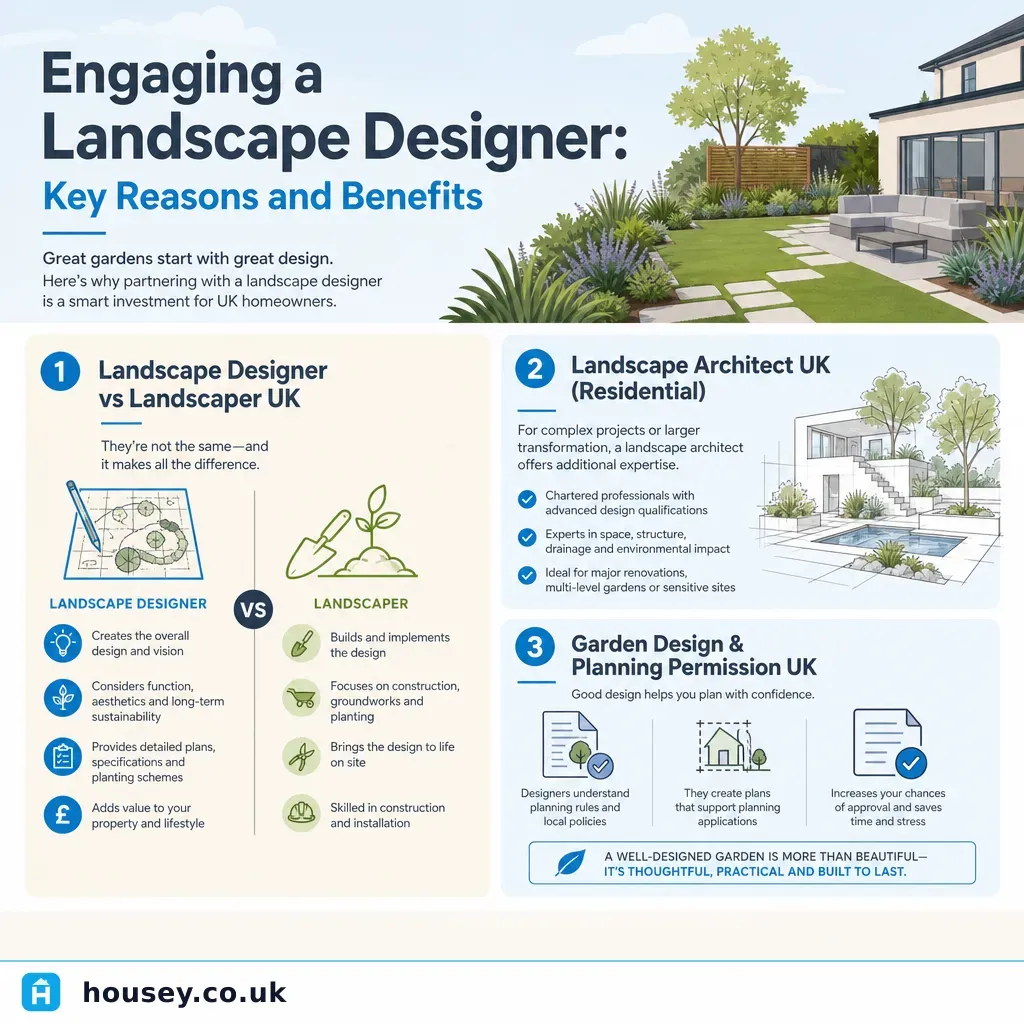
Engaging a Landscape Designer: Key Reasons and Benefits
A landscape designer assesses your site's drainage, aspect, levels, and intended use before producing drawings and specifications for a landscaper to build from.
 Improvement & Build
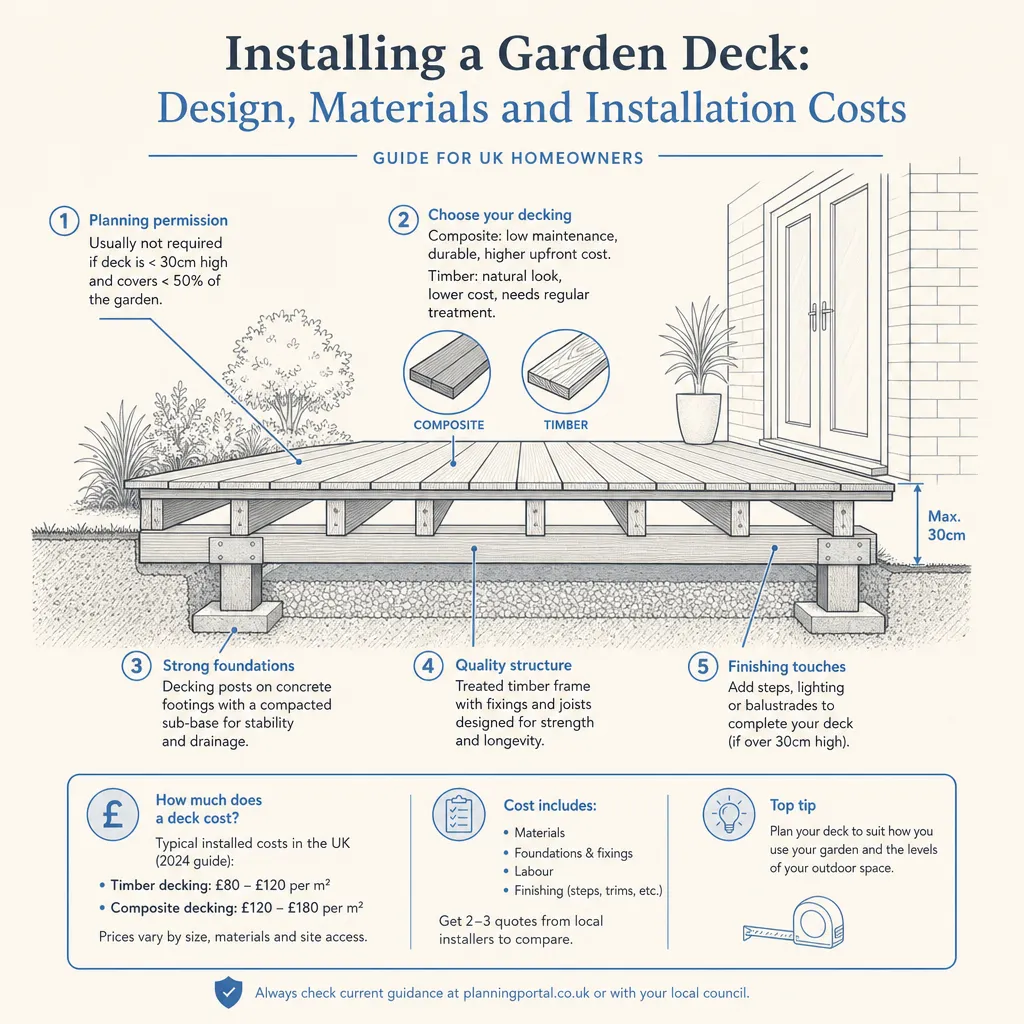
Installing a Garden Deck: Design, Materials and Installation Costs
Garden decking costs £80–250 per m² installed in the UK depending on material — softwood is cheapest, composite the most durable.
 Improvement & Build
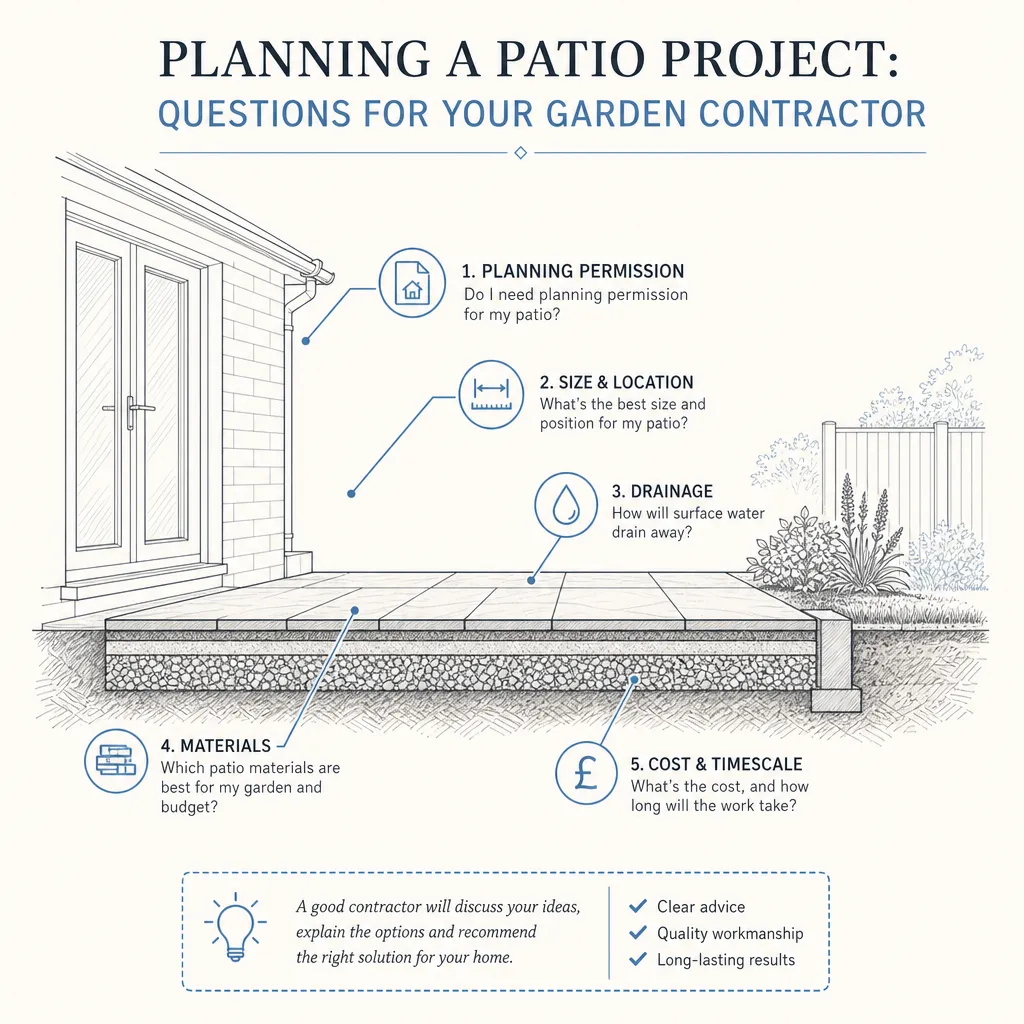
Planning a Patio Project: Questions for Your Garden Contractor
When planning a patio, ask your contractor about sub-base depth, bedding method, drainage gradient (typically 1:60 away from the house), and the frost-resistance rating of the paving.