Essential Home Improvements to Boost Appeal Before Selling
By Housey · Last reviewed 24th of May 2026
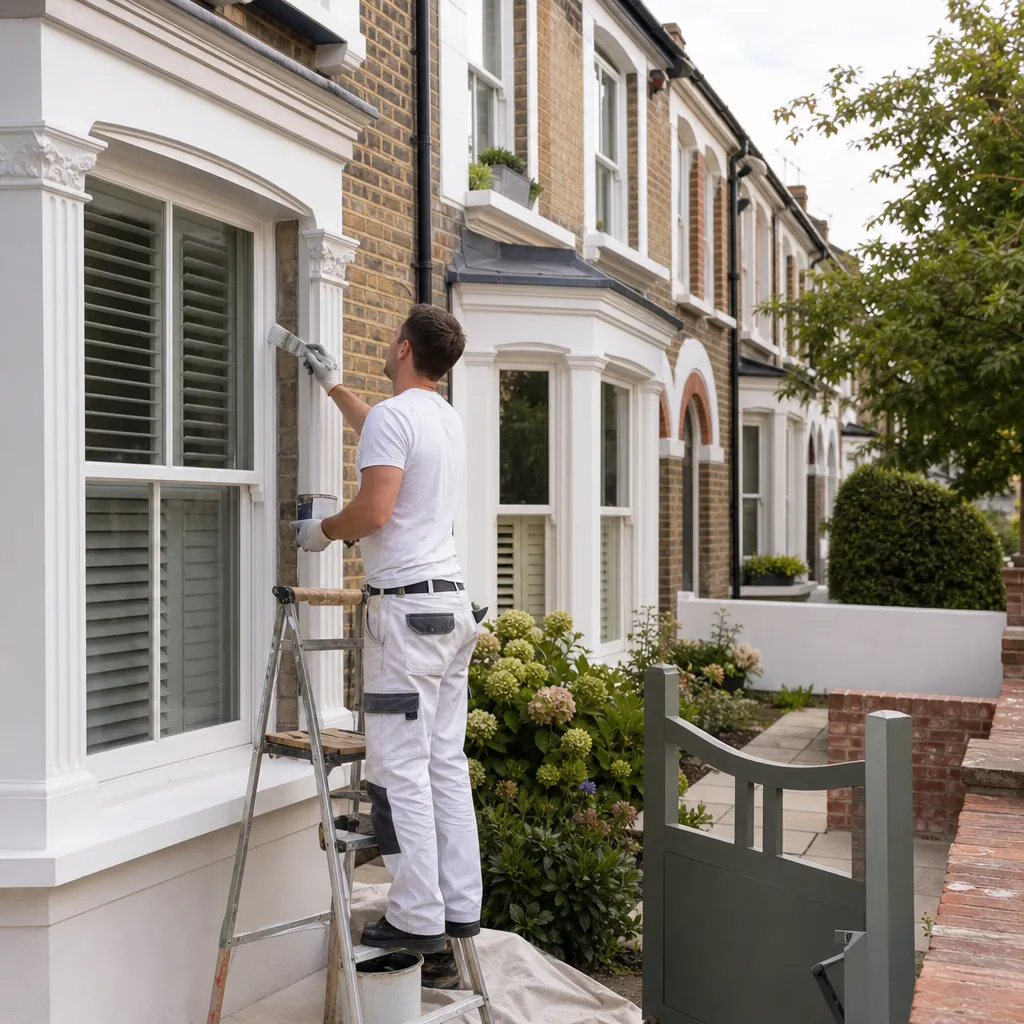
Essential Home Improvements to Boost Appeal Before Selling
Deciding which improvements to make before putting your home on the market is one of the most practically important decisions in the selling process. With property transactions in England and Wales typically taking three to six months from offer to completion, first impressions — both online through portal photographs and in person during viewings — have measurable influence on offer levels and time on market. The challenge is identifying which investments genuinely pay off and which simply cost money.
Key points
- Kerb appeal is assessed almost immediately by a potential buyer; a clean exterior, well-maintained front door, and tidy front garden are among the lowest-cost, highest-impact improvements a seller can make before marketing.
- An EPC rating of D or above is increasingly expected by buyers and some mortgage lenders; properties rated F or G may narrow the buyer pool and attract lower offers, making targeted energy improvements worth considering before marketing.
- SDLT (Stamp Duty Land Tax) thresholds mean buyers are particularly price-sensitive at key valuation break-points; a well-presented property commands stronger initial offers and reduces buyer attempts to renegotiate following a survey.
- Loft conversions and extensions can add 10–20% to property value in markets where local price-per-square-metre is high, but building work typically takes 3–6 months or more — making large structural projects rarely practical if you plan to sell within 12 months.
- Minor cosmetic improvements — neutral decoration, deep cleaning, and decluttering — typically offer the highest return relative to cost for sellers with limited budgets or short timelines.
What adds value and what doesn't?
Not all improvements translate into sale price uplift. The key question is whether the improvement removes something a buyer would otherwise negotiate down on — or whether it simply reflects your personal taste.
Improvement | Typical return signal | Notes |
|---|---|---|
Fresh neutral décor and professional deep clean | High | Low cost; removes objections; broadens buyer appeal across price brackets |
Kitchen refresh (new doors, worktops, handles, tap) | Medium–high | Targeted refresh usually outperforms full replacement for return on investment |
Bathroom refresh (re-grout, new taps, replace toilet seat) | Medium–high | As with kitchens, targeted works often outperform full replacement |
New front door and windows where dated or draughty | Medium | Improves first impression and may improve EPC rating |
Kerb appeal: path repair, fresh planting, repaint or render | Medium | Strong influence on portal photography click-through and viewing first impression |
Loft conversion (where not already done) | Medium | Adds significant floor area; requires building control and usually permitted development or planning |
Extension | Medium | ROI is location-dependent; most valuable where local £/m² is high |
New boiler (if existing is clearly ageing) | Medium | Reassures buyers; may improve EPC rating |
Garden landscaping | Low–medium | Neatness and usability matter more than elaborate design |
Full bathroom or kitchen replacement | Low–medium | Often over-capitalised; buyers may prefer to choose their own finishes |
Conservatory addition | Low | Rarely adds proportional value; carries planning, insulation, and building control implications |
Return signals are illustrative based on general UK market experience. Actual uplift depends on property type, location, price bracket, and market conditions. Always seek estate agent advice for your specific property and area.
Pre-sale homeowner checklist
Work through this checklist before instructing an estate agent or arranging professional photography:
Exterior and kerb appeal
Interior — condition
Interior — presentation
Practical and legal
Kerb appeal: where to start
The exterior is what buyers see in portal photographs before they book a viewing, and what forms their first physical impression on arrival. Improvements that make the exterior look clean, cared-for, and well-maintained are nearly always worth making before marketing.
A new front door or replacement windows can transform the appearance of a 1930s semi or 1960s terrace where the originals are visibly deteriorating or draughty. Equally, a well-kept front garden designed by a garden designer or a clean, level driveway installed by a qualified driveway installer makes a meaningful difference to how a property is perceived before anyone steps inside.
For properties where the roof is visibly in poor condition — missing or broken tiles, a sagging ridgeline, or heavy moss coverage — it is usually worth obtaining an assessment and attending to obvious defects before marketing. A buyer's surveyor will flag roofing condition, and an adverse survey report typically prompts renegotiation. A roofing inspection and repair before marketing can pre-empt this.
Larger structural improvements: when do they make sense?
Adding floor space through a loft conversion specialist or an extension builder can add meaningful value in markets where local £/m² is above roughly £3,000–£4,000, but the calculation depends on several factors:
- Your current floor area relative to comparable properties in the street — adding a bedroom in a road of mostly three-bedroom homes is more likely to lift value than adding a fourth bedroom where most are already four-bed.
- The cost of the work versus the expected uplift in asking price, ideally confirmed by an estate agent valuation before you commit.
- Your timeline — building work typically takes 3–6 months or more and may delay marketing.
- Whether the project falls within permitted development rights or requires a full planning application. Most single-storey rear extensions on semi-detached or detached homes up to 3 m (semi-detached) or 4 m (detached) from the rear wall may be permitted development, but always confirm with your local planning authority before starting work.
If you plan to sell within 12 months, large structural works are usually better avoided in favour of cosmetic improvements — unless the property is significantly under-sized compared with its local comparables.
When to get professional help
Certain pre-sale improvements benefit from professional input rather than a DIY approach:
- If any building work has been carried out without building control sign-off, speak to a solicitor about whether an indemnity insurance policy is appropriate, and consider a retrospective building control regularisation application.
- If you have lost key compliance certificates — Gas Safe, FENSA, building control completion — a solicitor can advise on how to address this before exchange.
- If the property has a low EPC rating (F or G), an energy assessor can identify the most cost-effective measures to improve it before marketing.
- Before committing to any significant improvement, obtain an estate agent valuation both as-is and with the proposed works incorporated, to confirm the investment is likely to pay off in your specific market.
How Housey can help
Housey connects homeowners with vetted local tradespeople across every stage of pre-sale preparation. Whether you need a loft conversion specialist to add floor space, a garden designer to boost kerb appeal, or a driveway installer to smarten up the frontage, Housey makes it straightforward to get multiple quotes and compare professionals in your area.
Frequently asked questions
How much should I spend on improvements before selling?
There is no universal rule, but a useful starting point is to focus spending on improvements that remove objections — things buyers and their surveyors will notice and negotiate on. For most properties, spending 1–3% of the expected sale price on targeted improvements is a reasonable approach. Always ask your estate agent which specific improvements are most likely to improve your offer level or reduce time on market.
Should I replace the kitchen before selling?
A full kitchen replacement rarely recovers its full cost in a higher sale price. More often, targeted upgrades — new cabinet doors and handles, a fresh worktop, and a new tap — deliver a near-equivalent visual improvement at a fraction of the cost. If the kitchen is genuinely dilapidated, a basic replacement may be worthwhile; ask your estate agent for a valuation with and without the work before committing.
Does improving the EPC rating before selling matter?
Increasingly, yes. Mortgage lenders are starting to factor EPC ratings into lending decisions, and buyers are more aware of energy running costs. A property rated F or G may narrow the buyer pool or attract lower offers. Low-cost measures — loft insulation top-up, draught-proofing, or a heating controls upgrade — can sometimes raise a rating from E to D. An energy assessor can identify the most cost-effective route.
Do I need planning permission for pre-sale home improvements?
Most cosmetic improvements and minor external work do not require planning permission. Extensions, loft conversions, and changes to external appearance may require planning permission or building control approval, or must fall within permitted development limits. Installing replacement windows requires either FENSA registration by a competent person or a building control notification. Check with your local planning authority if you are unsure about any specific work.
Sources and further reading
- Energy Performance Certificates: guidance for home sellers — HM Government
- Permitted development rights for householders — Planning Portal
- Home improvements: energy saving advice — Energy Saving Trust
- FENSA: glazing standards and certification — FENSA
- Home surveys: guidance for buyers and sellers — RICS
Useful next reads
 Improvement & Build
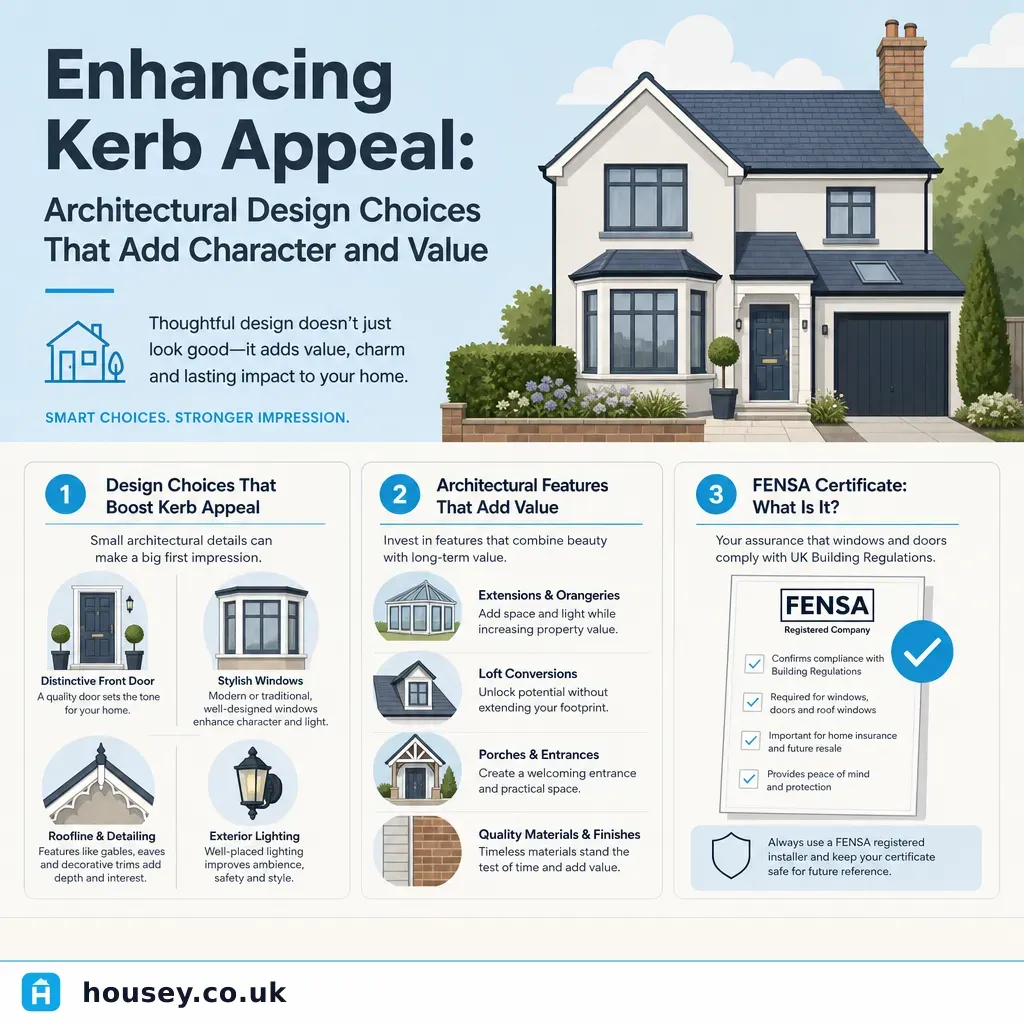
Enhancing Kerb Appeal: Architectural Design Choices That Add Character and Value
Improving kerb appeal in the UK starts with windows, doors, and boundary treatments matched to your property's era and planning context.
 Improvement & Build
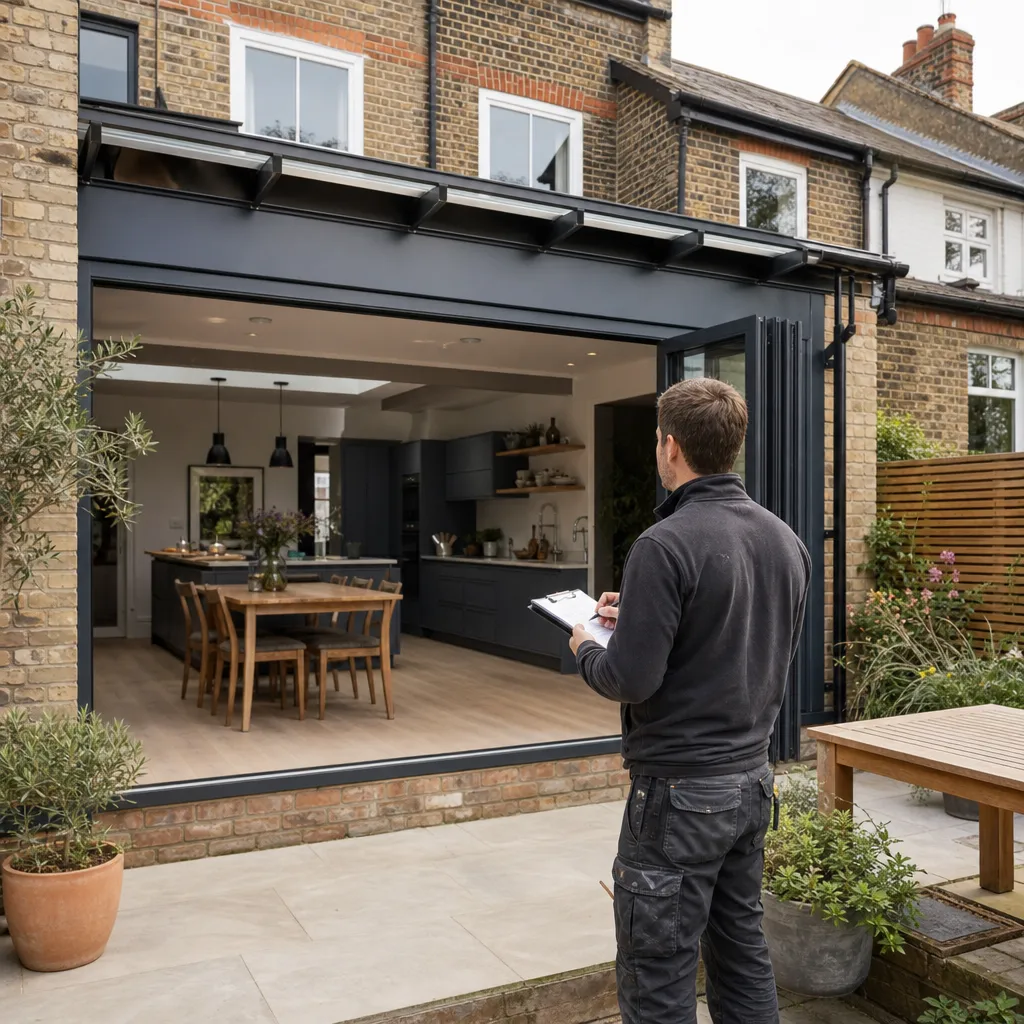
Maximising Value Through Strategic Home Improvement Projects
In the UK, loft conversions and kitchen extensions tend to deliver the strongest return on investment, with loft conversions potentially adding around 20% to property value according to Nationwide data.
 Improvement & Build
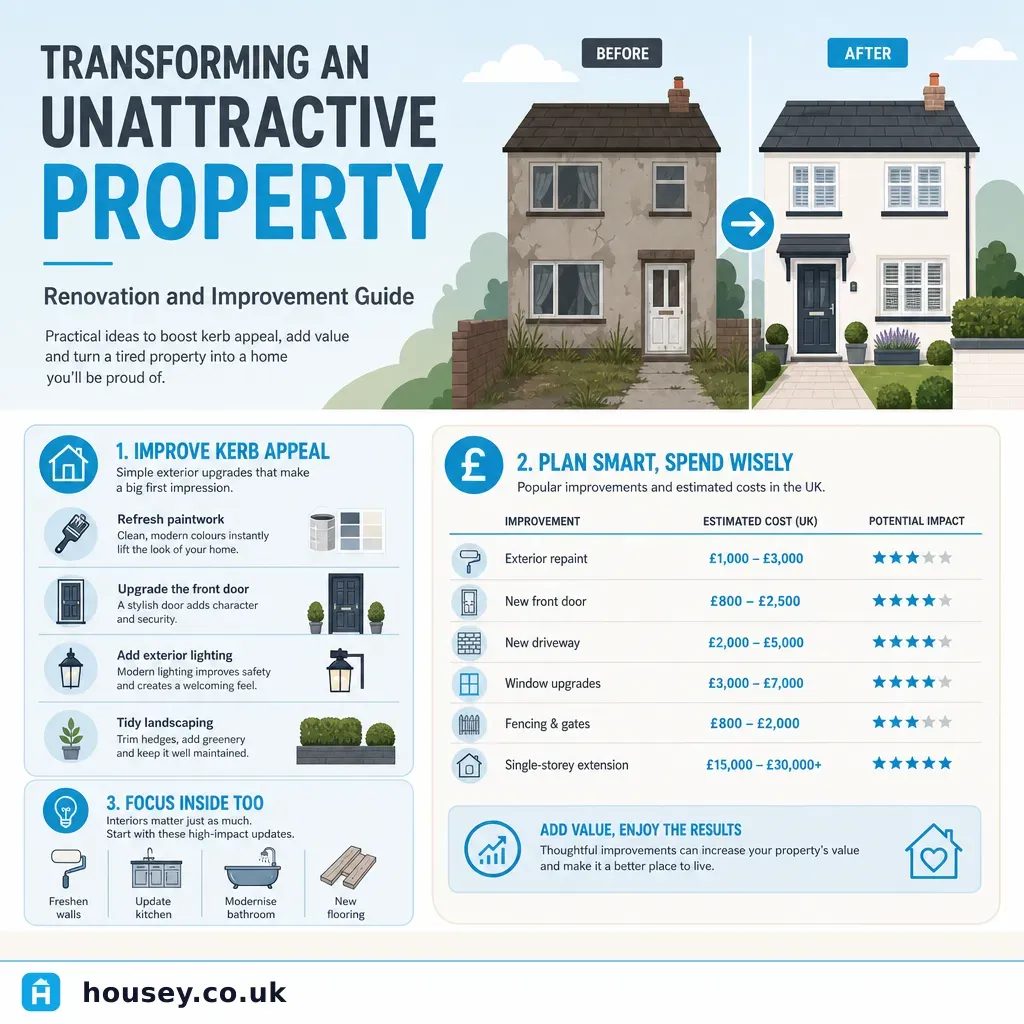
Transforming an Unattractive Property: Renovation and Improvement Guide
Transforming an unattractive UK property usually starts with surface-level improvements — render, windows, doors, and front landscaping — before tackling structural changes like extensions.
 Improvement & Build
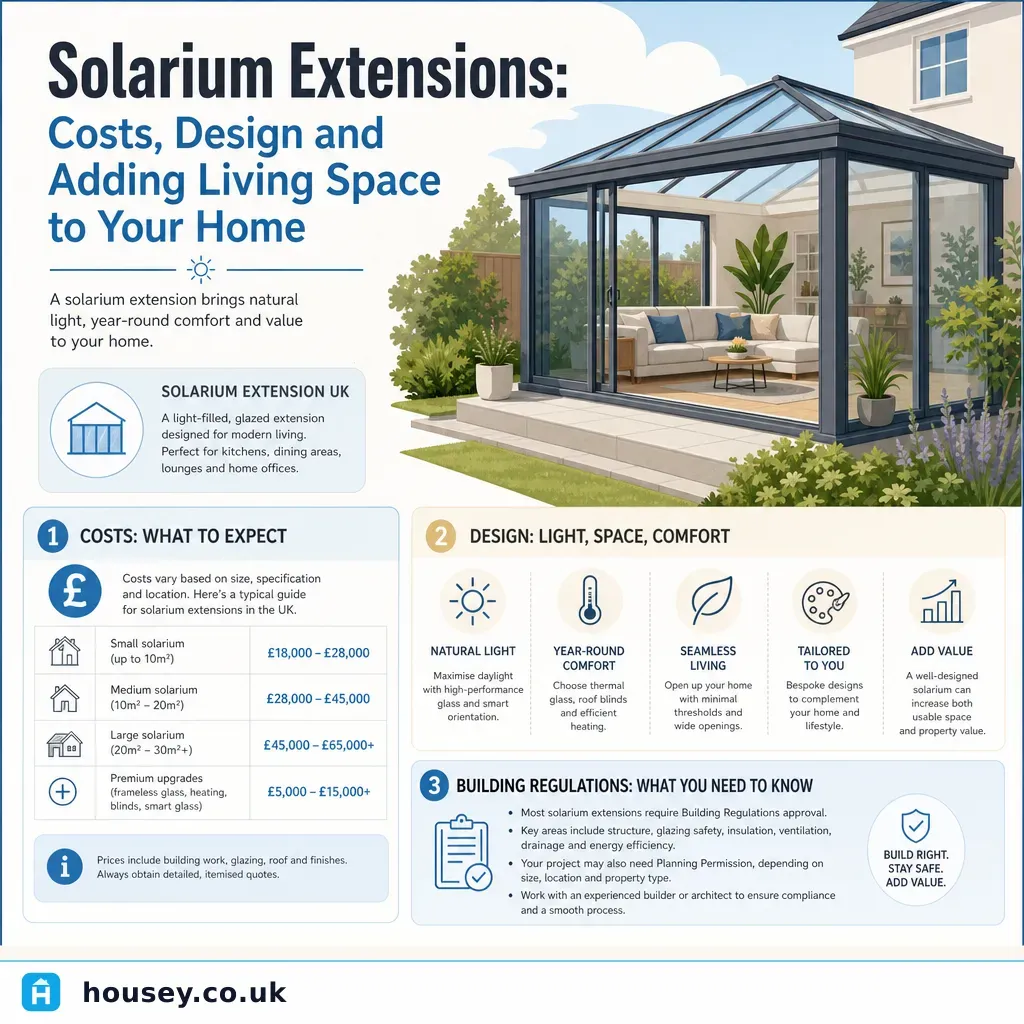
Solarium extensions: costs, design and adding living space to your home
A solarium extension is a predominantly glazed room addition with a structural glass roof, typically costing £28,000–£130,000 in the UK depending on size and specification.
 Improvement & Build
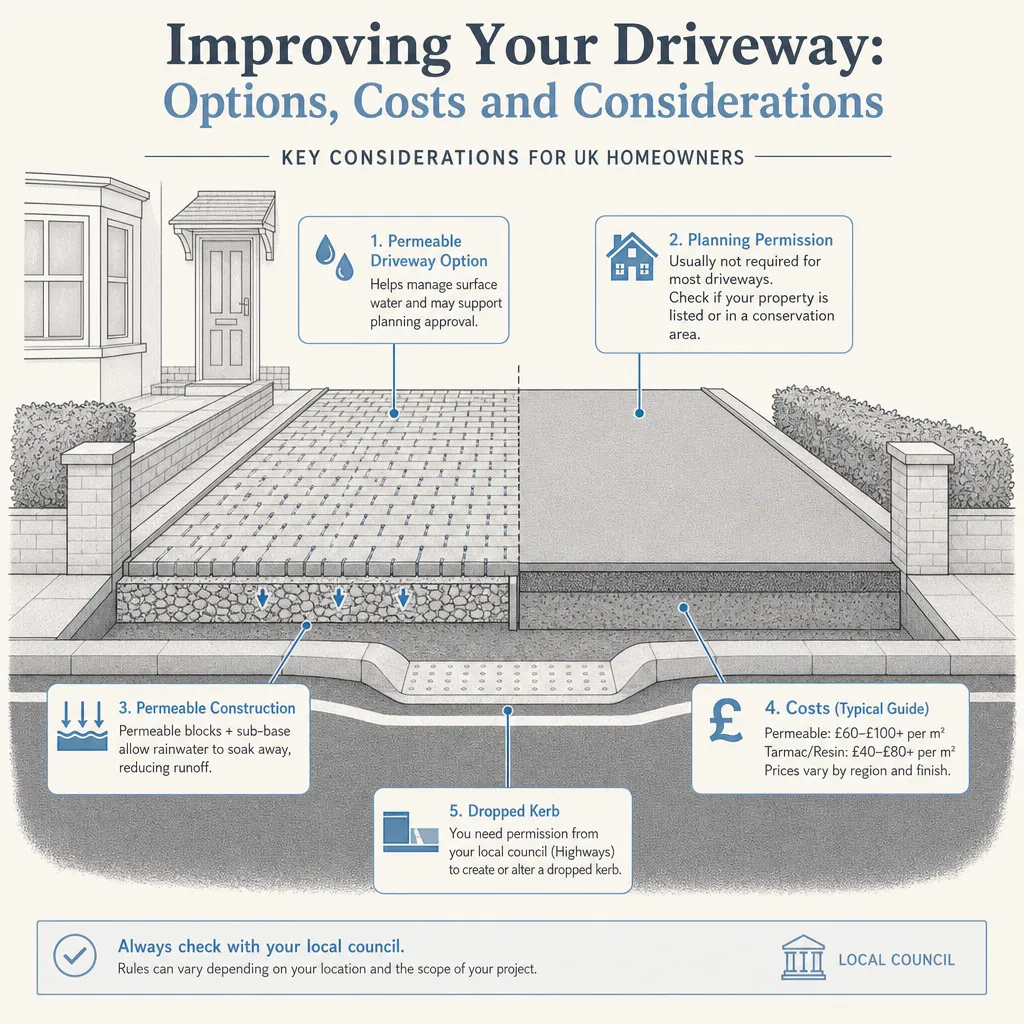
Improving Your Driveway: Options, Costs and Considerations
Installing a new driveway with a non-permeable surface larger than 5m² over a front garden in England requires planning permission unless water drains to a permeable area.