Solarium extensions: costs, design and adding living space to your home
By Housey · Last reviewed 12th of May 2026
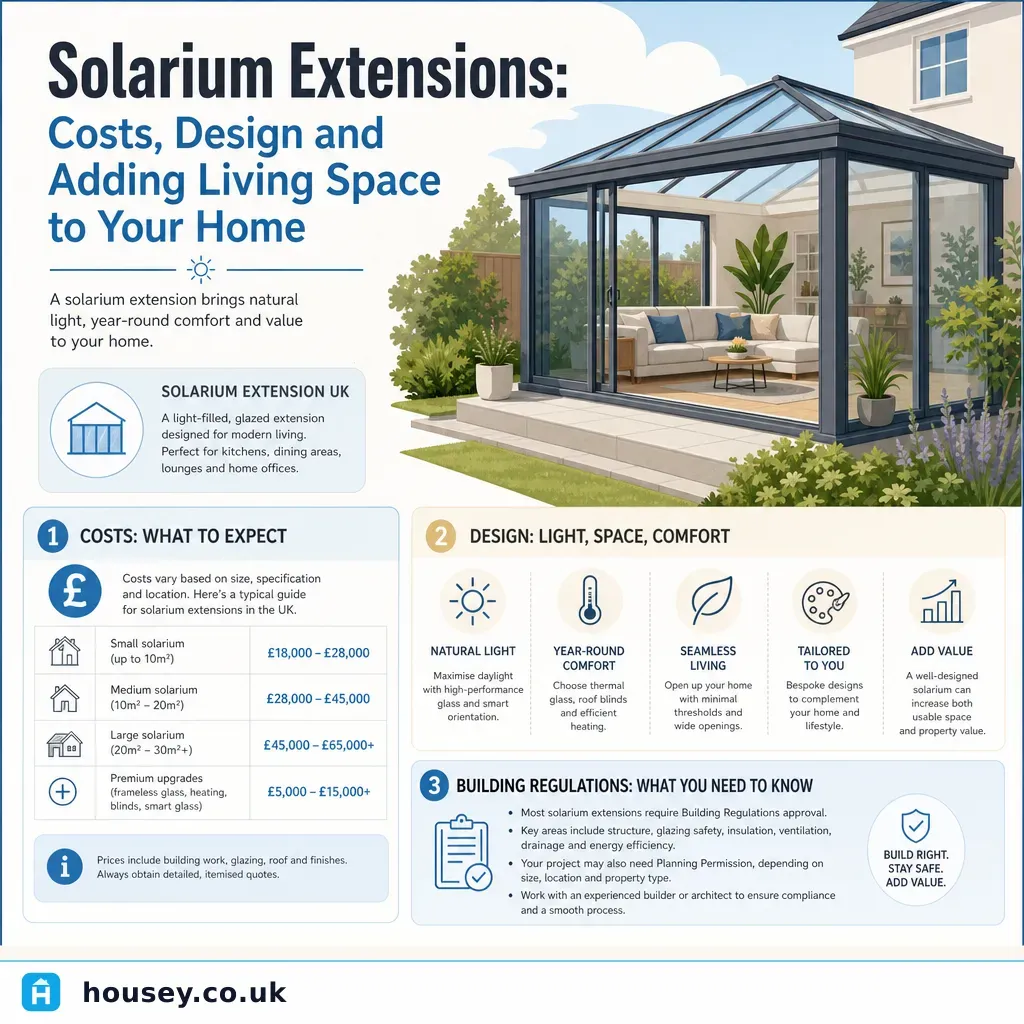
Solarium extensions: costs, design and adding living space to your home
Homeowners planning a glazed addition often find that the term solarium covers a wider range of structures than they initially expect — from modest aluminium-framed glass rooms to bespoke structural-glazing projects with architect-designed rooflines. In the UK, a solarium extension typically describes a predominantly or wholly glazed room with a glass or structural roof, and the decision to build one involves planning permission, building regulations approval, specialist structural glazing, and careful management of thermal performance. Getting the regulatory groundwork right before construction begins saves significant cost and avoids complications at resale.
Key points
- A solarium extension is not automatically exempt from Building Regulations — the conservatory exemption requires at least 75% translucent roof area, thermal separation from the dwelling, and an independent heating system; most solariums do not meet these conditions.
- Planning permission is required where the footprint exceeds permitted development limits: 4m rear depth for detached houses, 3m for semi-detached or terraced properties in England (as of 2026).
- Part L of the Building Regulations limits total glazed roof area relative to overall thermal performance — large south-facing glass roofs require careful specification to comply.
- Structural glazing requires engineer-designed fixings and specialist accredited installation; standard builders without structural glazing experience are not appropriate contractors for this work.
- Indicative costs range from £28,000 to £130,000+ depending on size, frame type, and glazing specification (indicative UK costs, last reviewed 2026-05-12).
What is a solarium extension?
In UK practice, solarium describes a predominantly or wholly glazed room addition — more extensively glazed than a standard kitchen extension and typically featuring a structural glass or polycarbonate roof. Key characteristics include:
- A roof that is largely or wholly glazed using laminated safety glass or polycarbonate
- Walls that are predominantly glazed, often using curtain walling, sliding, or bifold systems
- Aluminium, steel, or timber structural framing rather than standard uPVC profiles
- Design intent to maximise natural light and indoor-outdoor visual connection
The term overlaps with glass room, glazed extension, and orangery — though orangeries traditionally feature a solid perimeter roof with a central glazed lantern rather than a fully glazed roof structure.
Planning permission and building regulations
Planning permission
Under Permitted Development Rights (PDR) for dwellinghouses in England, a single-storey rear extension may be built without planning permission if it stays within set limits:
- Detached house: maximum 4m depth beyond the original rear wall
- Semi-detached or terraced house: maximum 3m depth
- Maximum eaves height 3m and overall height 4m
- Does not extend beyond the principal elevation or cover more than 50% of the garden
Extensions between the standard and extended limits (up to 8m for detached, 6m for semi/terraced) may qualify under the Prior Approval neighbour consultation scheme. Always confirm PDR eligibility with your local planning authority (LPA) — listed buildings, conservation areas, and Article 4 Direction areas have different requirements.
Building regulations
Unlike a standard conservatory meeting the specific exemption criteria, most solariums require full Building Regulations approval:
- Structural calculations for the glazed roof, structural members, and any new openings in the host wall
- Part L thermal compliance — glazed roofs have a higher U-value than solid roofs, affecting the overall thermal performance calculation for the extension
- Part K safety glazing compliance — overhead glazing must use toughened or laminated safety glass
- Part B fire safety — where the extension affects existing escape routes or fire compartmentation
- Building control completion certificate — essential for conveyancing; extensions without sign-off create problems at sale
A Full Plans Building Regulations application (rather than a Building Notice) is strongly recommended for structural glazing projects, as it involves checking drawings before construction begins.
Design options and glazing specification
Approach | Best for | Thermal performance | Relative cost | Key consideration |
|---|---|---|---|---|
Aluminium curtain walling, standard double-glazed roof | Contemporary aesthetics, seasonal use | Moderate (roof U-value ~1.4–1.8 W/m²K) | Mid | Overheating risk without solar control glazing or external shading |
Thermally broken aluminium, triple-glazed units | Year-round habitable use, north-facing aspects | Good (roof U-value ~0.8–1.1 W/m²K) | High | Additional structural loading from heavier glass units |
Hardwood timber framing, double-glazed | Period properties, traditional character | Moderate-good | High | Ongoing maintenance required in exposed locations |
Polycarbonate multi-wall roof | Budget projects, informal garden link | Poor-moderate | Lower | Not suitable for year-round habitable rooms; condensation risk |
Indicative values; actual U-values depend on product and installation specification.
Overheating management is important for south or west-facing glass roofs. Effective options include: solar control glass specified from manufacture; external blind systems, which are the most effective option; high-level opening vents to allow convective cooling; or solar control window film applied retrospectively.
Costs
Indicative UK costs, last reviewed 2026-05-12:
Project type | Indicative cost range |
|---|---|
Small solarium (12–16 sq m), aluminium frame, double-glazed | £28,000–£45,000 |
Medium solarium (20–30 sq m), thermally broken framing, solar control glass | £50,000–£80,000 |
Large or bespoke structural glass solarium (30 sq m+) | £80,000–£130,000+ |
Ranges exclude: landscaping, internal decoration, furniture, and planning application fees (currently £258 for householder applications in England). VAT at 20% applies to most new construction work on existing properties.
Key cost drivers: span and size (wider spans require heavier structural members), glazing specification, frame material, foundation type, and site access conditions.
Homeowner checklist: before you commit
Important limitations
This article provides general information only. Planning permission and Building Regulations requirements vary by property type, location, planning history, and local planning authority policies. The cost figures given are indicative — actual costs should be confirmed by obtaining itemised quotes from specialist contractors. Do not rely on this guide as a substitute for advice from a qualified architect, structural engineer, planning consultant, or building control officer before committing to a contract.
When this becomes urgent
Seek immediate professional advice if:
- Work has begun without Building Regulations approval — a regularisation application may still be possible, but unauthorised structural work creates serious problems at conveyancing.
- A contractor has told you that planning permission or building control is not needed for a fully glazed structural extension — obtain independent confirmation before proceeding.
- Cracks appear in the host wall or existing structure during or after construction — stop works and instruct a structural engineer immediately.
- A buyer's solicitor has raised a query about the extension at conveyancing — take professional advice before responding.
What to ask a qualified professional
Before appointing a contractor or designer:
- Do I need planning permission for this extension on this specific property?
- Will you provide a structural engineer's calculations for the glazed roof and any new structural openings?
- Will you submit a Full Plans Building Regulations application and manage the building control process through to a completion certificate?
- What glazing specification will achieve Part L compliance while managing overheating risk?
- Do I need to serve Party Wall Act 1996 notices on any neighbours?
- Who provides the building control completion certificate, and what happens if issues arise at final inspection?
When to get professional help
Appoint a qualified professional at the design stage — before contracts are signed. Red flags that mean you need specialist input now:
- The proposed footprint is close to a boundary (Party Wall Act implications likely)
- The site has a significant slope, suspected made ground, or nearby trees requiring specialist foundation assessment
- The property is listed or in a conservation area
- The existing rear wall shows signs of movement, past repairs, or defects
- A contractor is suggesting no regulatory approvals are needed for a fully glazed extension
How Housey can help
Housey connects you with vetted extension builders experienced in glazed and structural extensions, as well as design-and-build firms who can manage planning, structural engineering, and construction under one contract — reducing the coordination burden on a project of this complexity.
Frequently asked questions
Does a solarium extension add value to a home?
A well-specified solarium with full Building Regulations sign-off and any required planning permission can add value, particularly if it creates a genuinely usable space. Poorly insulated or non-compliant glazed additions tend to be viewed negatively by buyers' surveyors and mortgage lenders, and can complicate conveyancing significantly.
Do I need a structural engineer for a solarium extension?
In almost all cases, yes. Structural glazing carries loads requiring engineering design, and building control will expect structural calculations as part of any Full Plans application. Errors in structural design for glazed roofs can be dangerous and expensive to remedy — this is not a cost to cut.
How long does a solarium extension take to build?
A typical solarium of 15–25 sq m takes around 8–16 weeks on site once planning and building control approvals are in place. Lead times for bespoke structural glazing from specialist manufacturers can add a further 4–8 weeks to the overall programme.
Is VAT payable on a solarium extension?
Standard-rate VAT at 20% applies to most new construction work on existing residential properties. Certain works on listed buildings may qualify for zero-rating — always check with your contractor and relevant HMRC guidance before finalising your budget, as this can represent a significant saving.
Sources and further reading
- Planning Portal — Extensions and permitted development — PDR rules for householder extensions in England
- GOV.UK — Approved Document L: Conservation of Fuel and Power — thermal performance requirements for extensions
- GOV.UK — Approved Document K: Protection from Falling — safety glazing requirements for overhead glass
- GOV.UK — Party Wall etc. Act 1996 guidance — when Party Wall notices are required
- GOV.UK — Building Regulations overview — when Building Regulations apply to home improvement work
Useful next reads
 Improvement & Build
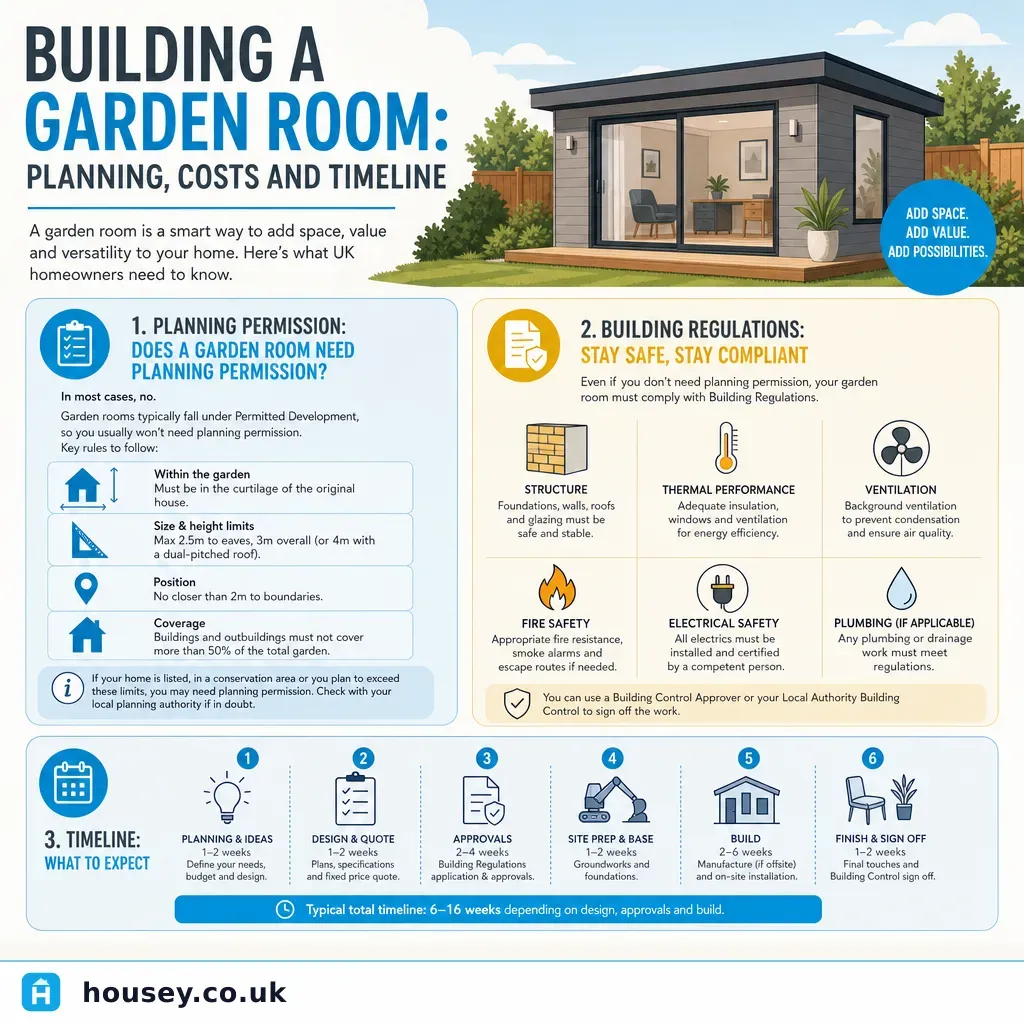
Building a Garden Room: Planning, Costs and Timeline
Most garden rooms in England fall under permitted development and don't need planning permission, provided the structure meets height, coverage, and boundary conditions.
 Improvement & Build
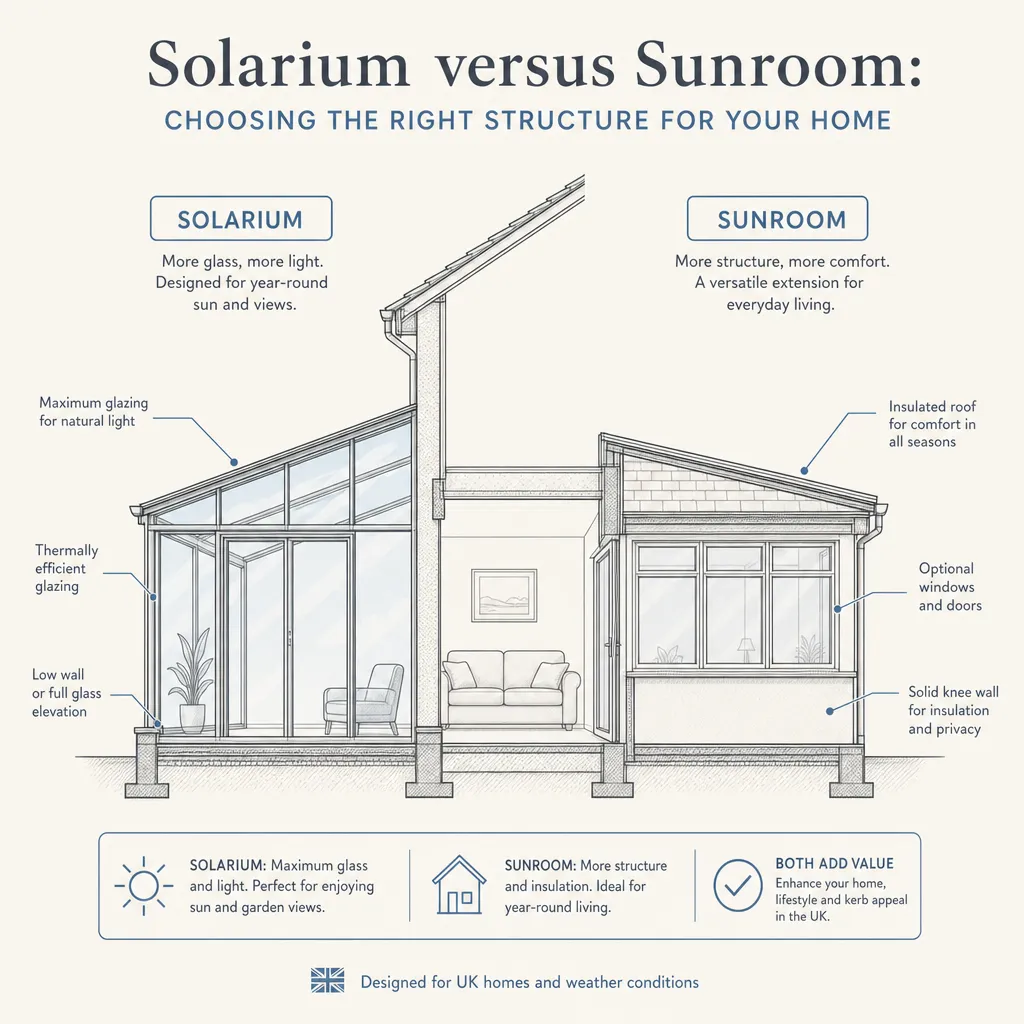
Solarium versus sunroom: choosing the right structure for your home
A solarium is a predominantly glazed structure designed for light and solar connection, best suited to seasonal use.
 Improvement & Build
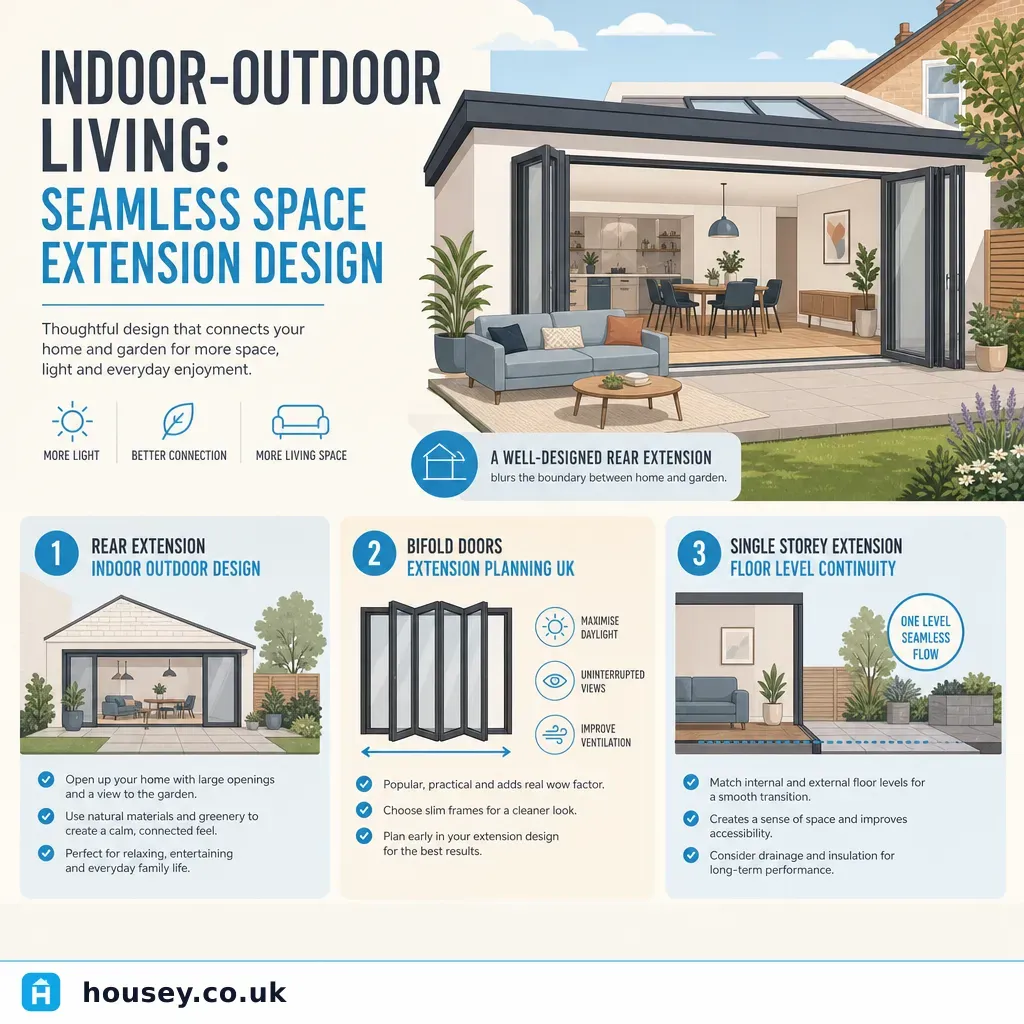
Indoor-Outdoor Living: Seamless Space Extension Design
Creating a seamless indoor-outdoor extension requires coordinating floor levels, glazing performance, structural openings, and garden design as one package.
 Improvement & Build
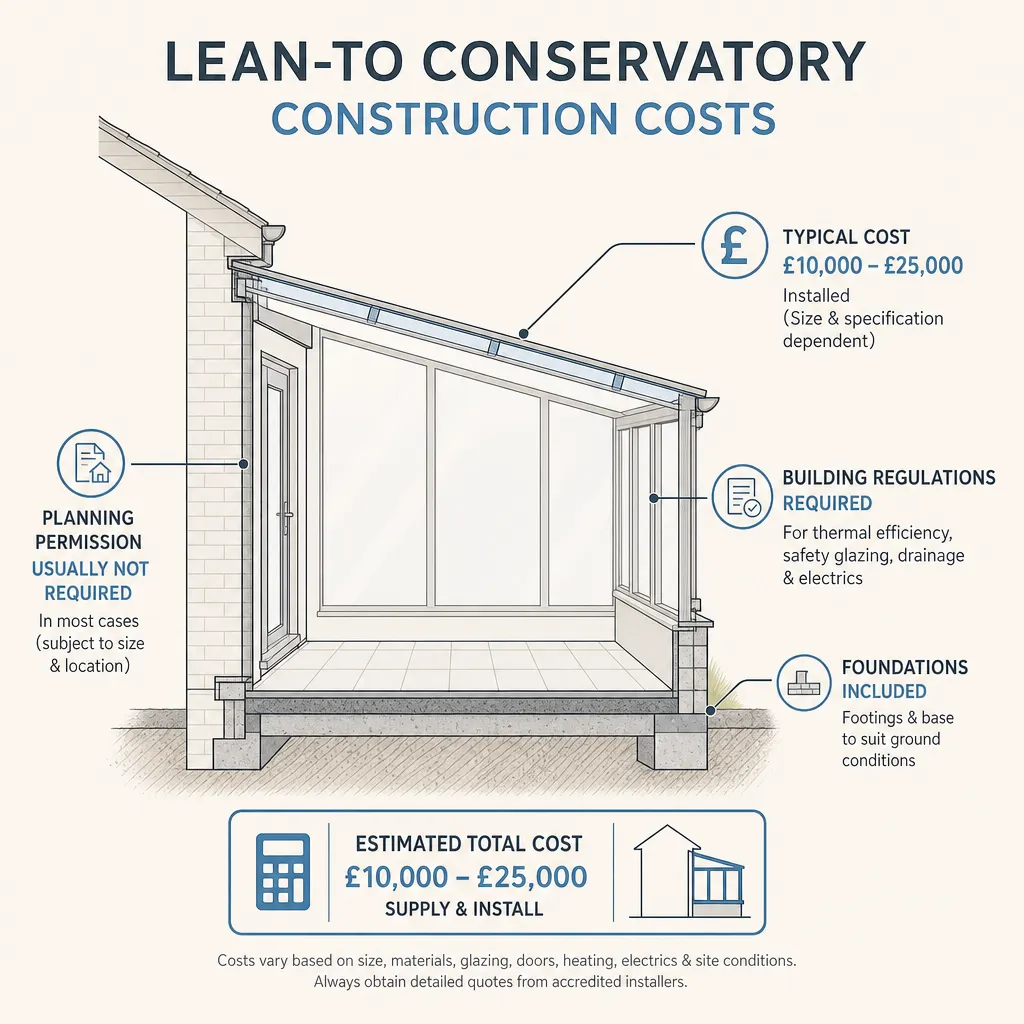
Lean-to Conservatory Construction Costs
A lean-to conservatory typically costs £8,000–£25,000 in the UK, depending on size, glazing specification, base type, and roof material.
 Improvement & Build
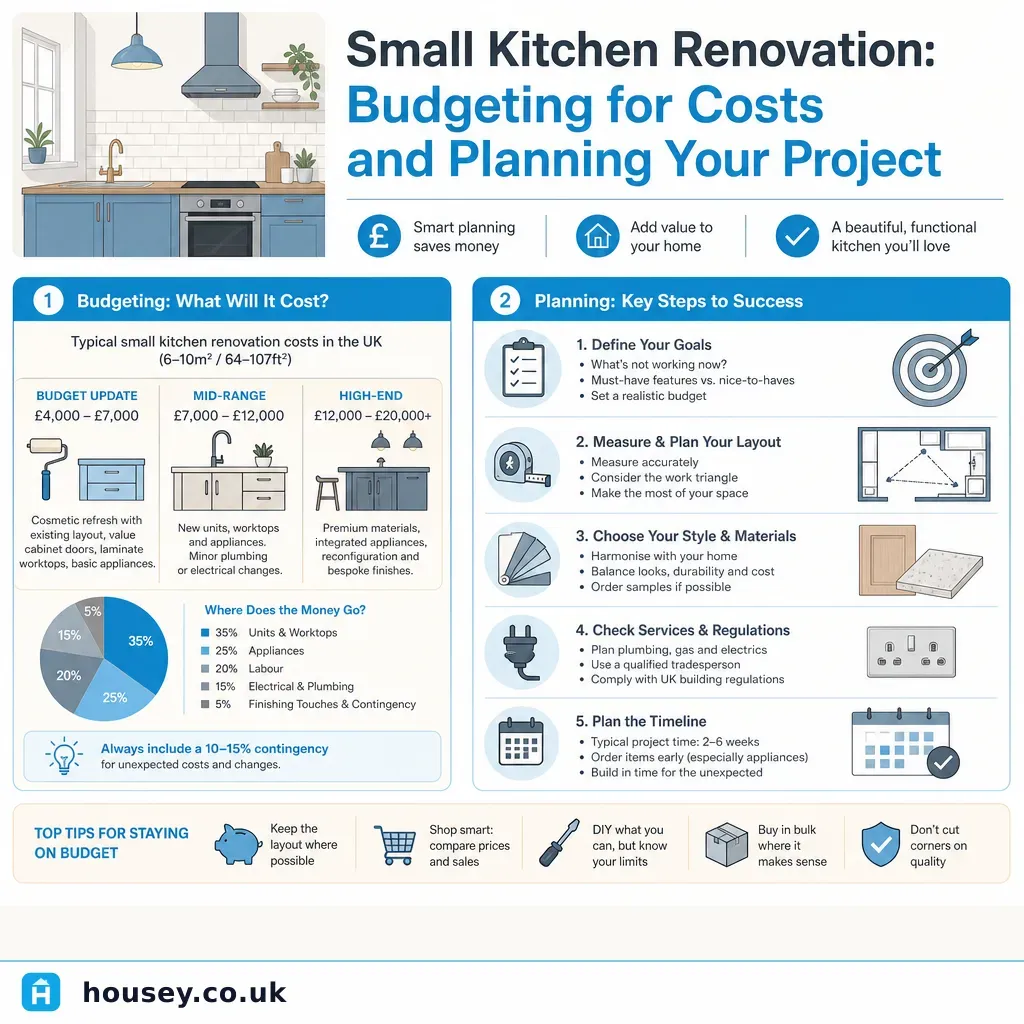
Small kitchen renovation: budgeting for costs and planning your project
A small kitchen renovation in the UK typically costs £5,000–£15,000 for a full refresh including new units, worktops, tiling, and appliances, though costs vary widely by specification, region, and whether structural changes or rewiring are involved.