Frontage Enhancement: Creating Powerful Kerb Appeal
By Housey · Last reviewed 30th of May 2026
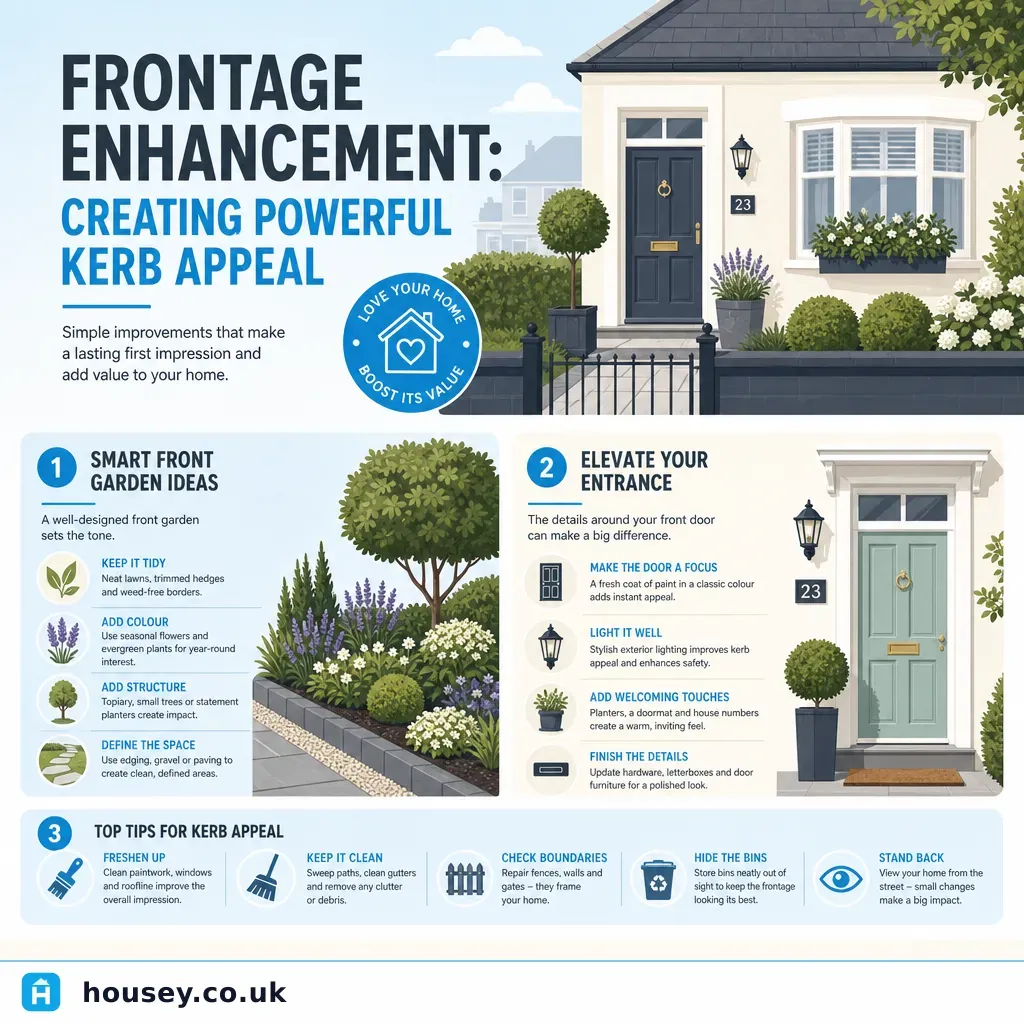
Frontage Enhancement: Creating Powerful Kerb Appeal
The front of a property sets expectations before a buyer steps through the door or a visitor rings the bell. In the UK, where Victorian terraces, 1930s semis, and post-war housing estates often stand in close proximity to one another, the visual quality of a frontage is immediately noticed — and remembered. Whether the objective is supporting a property sale, improving the daily experience of coming home, or addressing years of gradual neglect, frontage work tends to be among the more cost-effective property improvements available.
Key points
- Front garden hard surfacing above 5 m² requires either a permeable material or planning permission under the Town and Country Planning (General Permitted Development) Order 2015 — standard concrete and most tarmac do not meet the permeability test.
- Boundary walls and fences facing a highway are limited to 1 metre in height under permitted development rights (Schedule 2, Part 2, GPDO 2015); exceeding this threshold requires planning permission.
- A dropped kerb to create a new vehicle access always requires Local Highway Authority consent and must typically be completed by an approved contractor — this applies even where off-street parking already exists.
- Properties in Conservation Areas and listed buildings may require consent for exterior changes including painting external woodwork, replacing gates, or altering boundary walls — always check with your Local Planning Authority first.
- The RHS recommends drought-tolerant species for south or west-facing front gardens, where hard surfacing and solar gain create dry microclimates; suitable choices include lavender, sedums, ornamental grasses, and alliums.
What contributes to kerb appeal? A comparison of frontage elements
Element | Visual impact | Planning considerations | Approximate cost |
|---|---|---|---|
Front door repaint or replacement | High | Listed / Conservation Area: check before painting | £50–£1,500 |
Boundary wall repair or repoint | High | Rebuild above 1 m facing highway: planning required | £200–£2,000 |
Path or driveway resurfacing | High | Impermeable surface over 5 m²: planning required | £1,500–£8,000+ |
Planted borders or window boxes | Medium–high | Generally permitted development | £100–£800 |
External lighting | Medium | Generally permitted development | £100–£600 |
Guttering and fascia refresh | Medium | Generally permitted development | £300–£1,500 |
Wheelie bin storage | Low–medium | Generally permitted development | £150–£800 |
Indicative UK costs, last reviewed 2026-05-30. Costs vary by material, property type, and region.
Front garden improvement: a homeowner checklist
Before instructing a designer or contractor, work through this list:
- Confirm planning status. Check your LPA's planning portal for Conservation Area or listed building designation. Note the 1 m boundary wall rule and the 5 m² impermeable surfacing rule before specifying any works.
- Assess drainage. If the front garden already has hard surfacing, establish where water currently drains. New surfacing should not direct run-off to the highway or adjacent properties.
- Check for buried services. Request a utility trace before any excavation — gas pipes, water mains, and telecoms ducts are common under front garden soil in terraced and semi-detached properties.
- Record what is already there. Photograph the existing frontage. Period properties may have original quarry tiles, York stone paths, or ornate brickwork — matching or complementing these tends to produce more coherent results.
- Check for Tree Preservation Orders. Established trees in front gardens may be covered by TPOs — check via your LPA before pruning or removing.
- Consider maintenance costs. Low-maintenance planting and materials (gravel, permeable resin, evergreen species) cost more initially but reduce ongoing time and expense.
- Agree boundaries with neighbours. If any boundary wall or fence is shared, establish ownership via title deeds before instructing work.
Which frontage improvements are right for your situation?
- Repaint the front door if it is structurally sound but the colour is faded, chipped, or dated — this is consistently cited as the single highest-impact low-cost frontage change.
- Repair or restore boundary walls and fences if they are crumbling, leaning, or visibly neglected — visible disrepair signals lack of maintenance and can deter buyers.
- Resurface the path or driveway if the existing surface is cracked, oil-stained, or uneven — choose a permeable material to avoid planning complications.
- Add planted borders if the frontage is entirely hard-surfaced or bare — even a narrow planted strip makes a noticeable visual difference in a street context.
- Consult a garden designer if the front garden is complex, the property is period or listed, or you want a cohesive design rather than piecemeal improvements.
- Check with your LPA before altering boundary walls, adding hardstanding, or making any changes to a listed or Conservation Area property.
- Contact the Local Highway Authority before any works that touch the pavement or kerb, including dropped kerb applications.
When to get professional help
Most frontage works are manageable for a confident homeowner or with a landscaper and basic contractor. Seek professional input when:
- The front garden has significant level changes requiring retaining walls or below-ground drainage engineering.
- Any works involve or affect the public highway (pavement, kerb) — these require Local Highway Authority consent and approved contractors.
- You are applying for a dropped kerb — this is a formal local authority process requiring qualified contractor involvement.
- The property is listed or in a Conservation Area and exterior changes are planned — speak to your LPA's conservation officer before proceeding.
- Trees in the front garden may be linked to foundation movement or subsidence — a structural matter requiring a chartered surveyor and possibly a specialist arborist.
- Japanese knotweed is present — a controlled waste that must not be excavated or removed by an unqualified contractor.
How Housey can help
Housey connects homeowners with vetted garden designers and landscapers who specialise in frontage and front garden projects. Describe your brief, receive up to four quotes, and compare credentials and pricing for your specific property.
Frequently asked questions
Do I need planning permission to pave my front garden?
If the new surface covers more than 5 m² and uses an impermeable material — standard concrete, most tarmac, or non-porous block paving — planning permission is required under the Town and Country Planning (General Permitted Development) Order 2015. Using a permeable surface such as gravel, permeable block paving, or resin-bound gravel avoids this requirement. Conservation Area and listed building properties may face further restrictions regardless of surface type.
How high can my front fence or wall be without planning permission?
Under permitted development rights, boundary structures facing a highway are limited to 1 metre in height. To build above this, planning permission is required. This applies to the boundary facing the highway — other boundaries between gardens can normally reach 2 metres. If an existing wall already exceeds 1 metre, it may have existing use rights; check with your LPA if in doubt.
What plants work best in a UK front garden?
For south or west-facing front gardens with limited moisture, drought-tolerant species are most reliable: lavender, rosemary, ornamental grasses such as festuca glauca and stipa tenuissima, sedums, and alliums. For shadier north-facing frontages, hardy ferns, hellebores, and viburnum perform well. The RHS recommends checking soil pH and aspect before specifying any planting scheme.
Will improving kerb appeal add value to my property?
There is no guaranteed value uplift, but estate agents consistently report that poor frontage presentation can reduce achieved prices and extend marketing periods. Addressing visible disrepair, refreshing the front door, and tidying the front garden are widely considered cost-effective pre-sale steps. Planning-compliant, professionally executed hard landscaping is more likely to be reflected in formal valuations than cosmetic-only changes.
Sources and further reading
- Planning Portal — driveways and hard surfaces in front gardens — Planning Portal
- Town and Country Planning (General Permitted Development) Order 2015 — legislation.gov.uk
- GOV.UK — Tree Preservation Orders and trees in conservation areas — GOV.UK
- RHS — front garden design and planting — Royal Horticultural Society
- CIRIA SuDS Manual C753 — sustainable drainage guidance — CIRIA
Useful next reads
 Improvement & Build
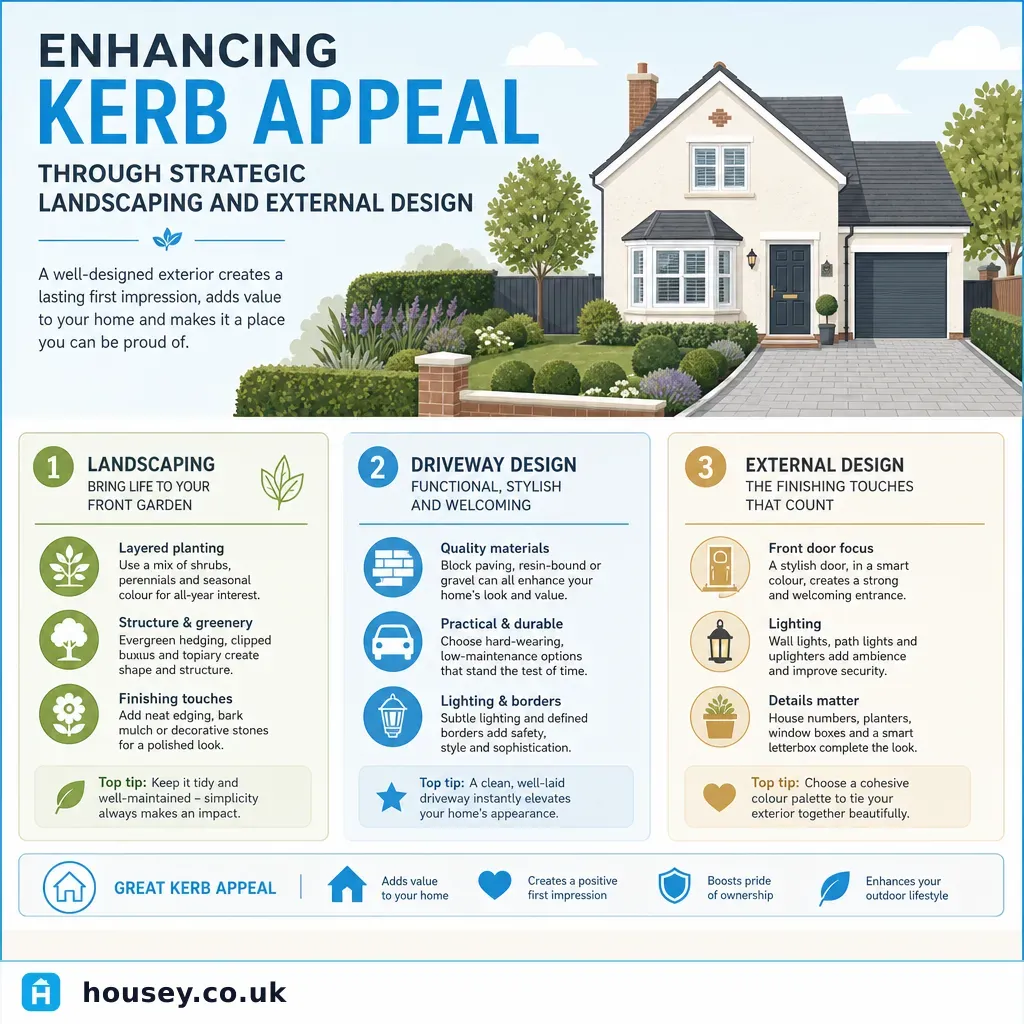
Enhancing Kerb Appeal Through Strategic Landscaping and External Design
Kerb appeal improvements typically combine a well-maintained front garden or driveway, a smart front door, clean gutters and fascias, and appropriate boundary treatments.
 Improvement & Build
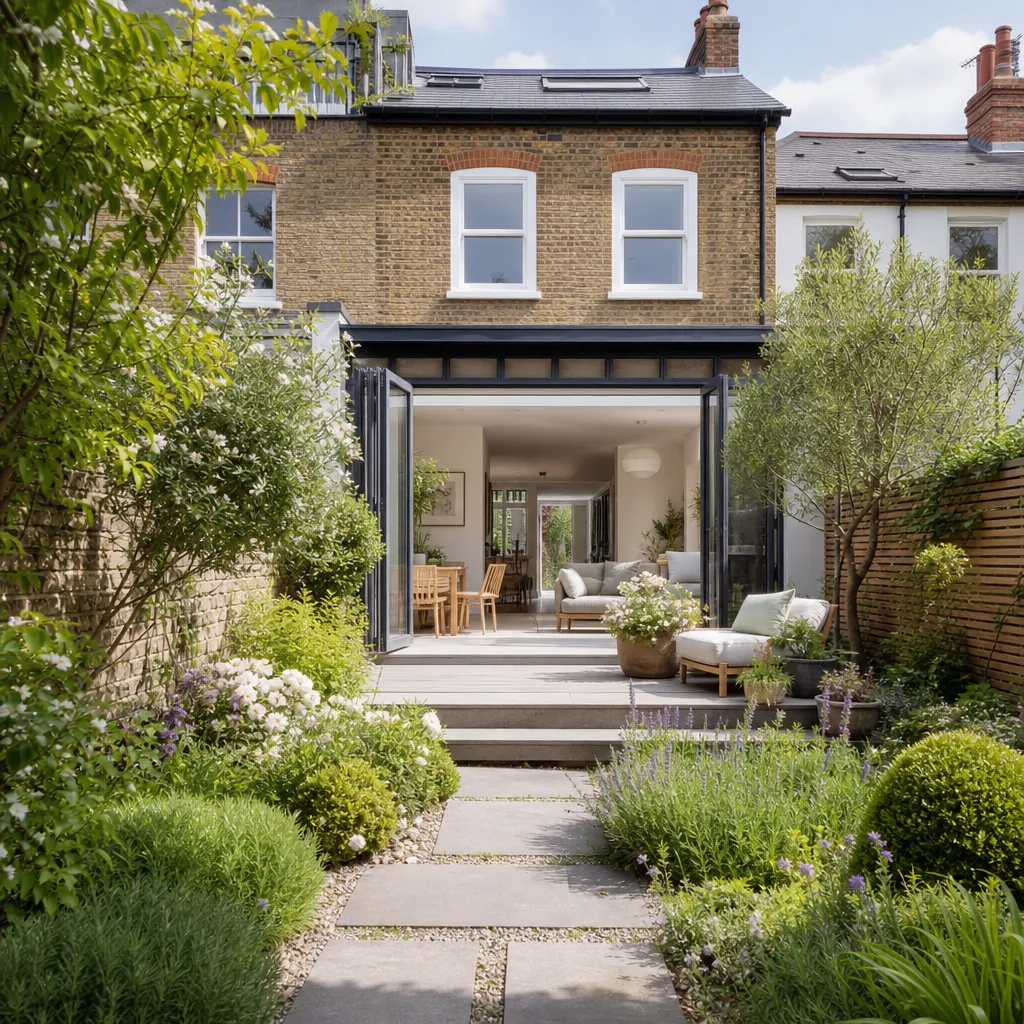
Spring Garden Transformations: Design Ideas to Enhance Your UK Property
Spring is the best time to transform a UK garden, with mild temperatures and longer days ideal for planting and landscaping.
 Improvement & Build
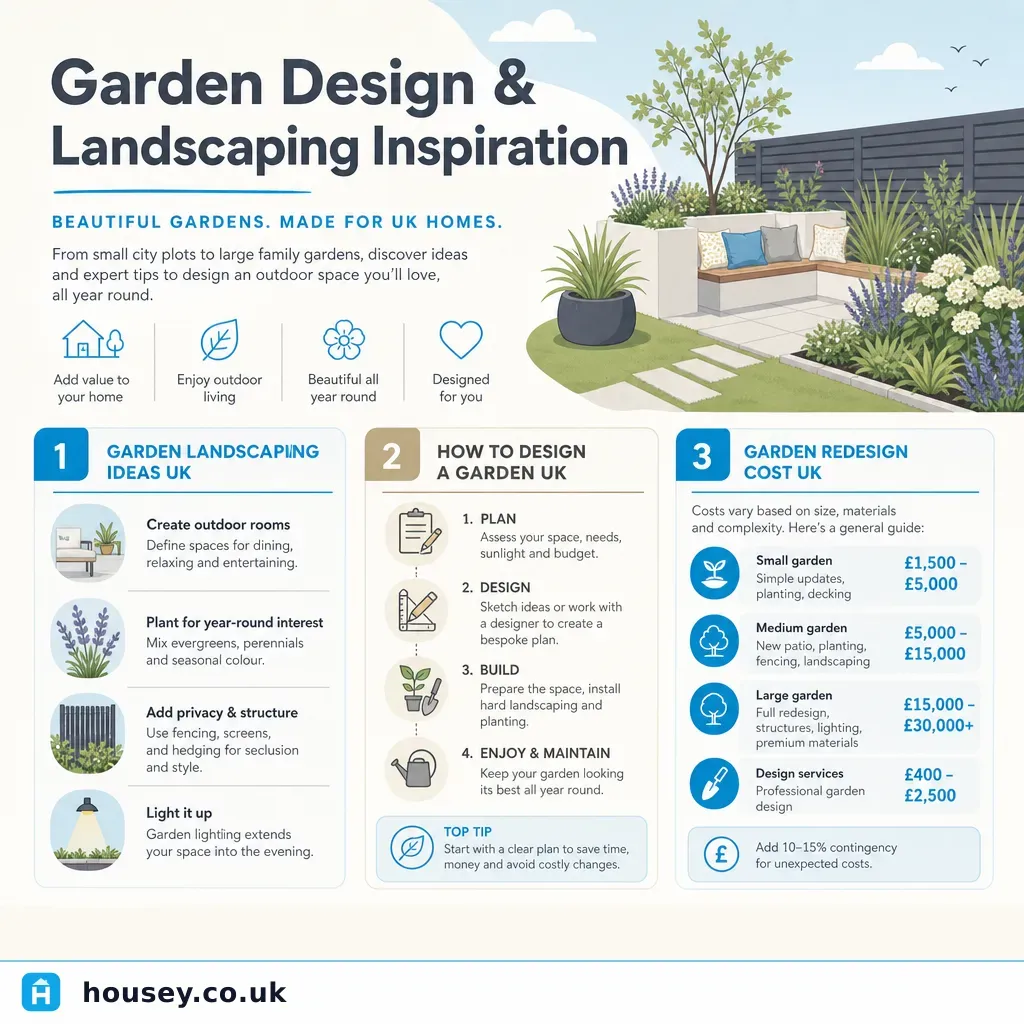
Garden Design and Landscaping Inspiration
Effective garden design starts with assessing your aspect, soil type, and existing features before commissioning any planting or hard landscaping.
 Improvement & Build
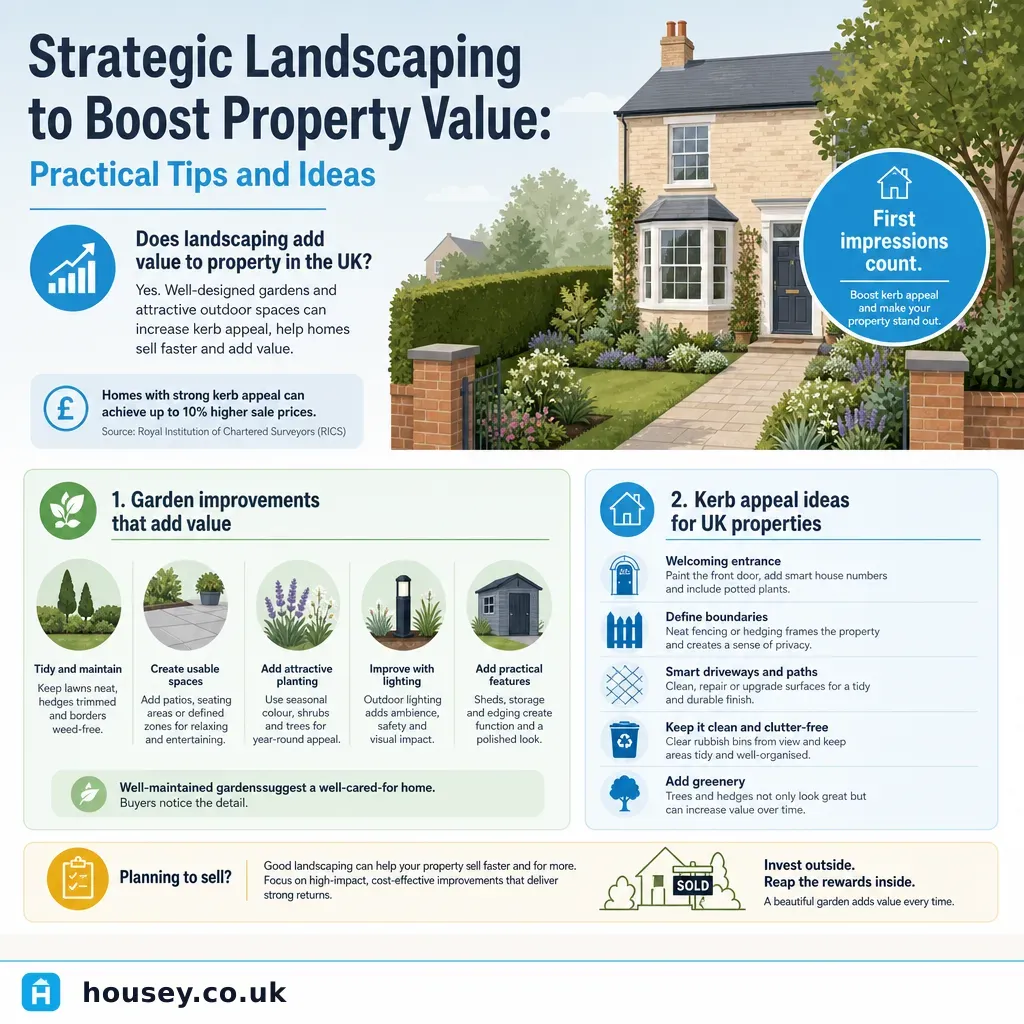
Strategic Landscaping to Boost Property Value: Practical Tips and Ideas
Landscaping can add 5–15% to a UK property's perceived value, though the return varies by improvement type.
 Improvement & Build
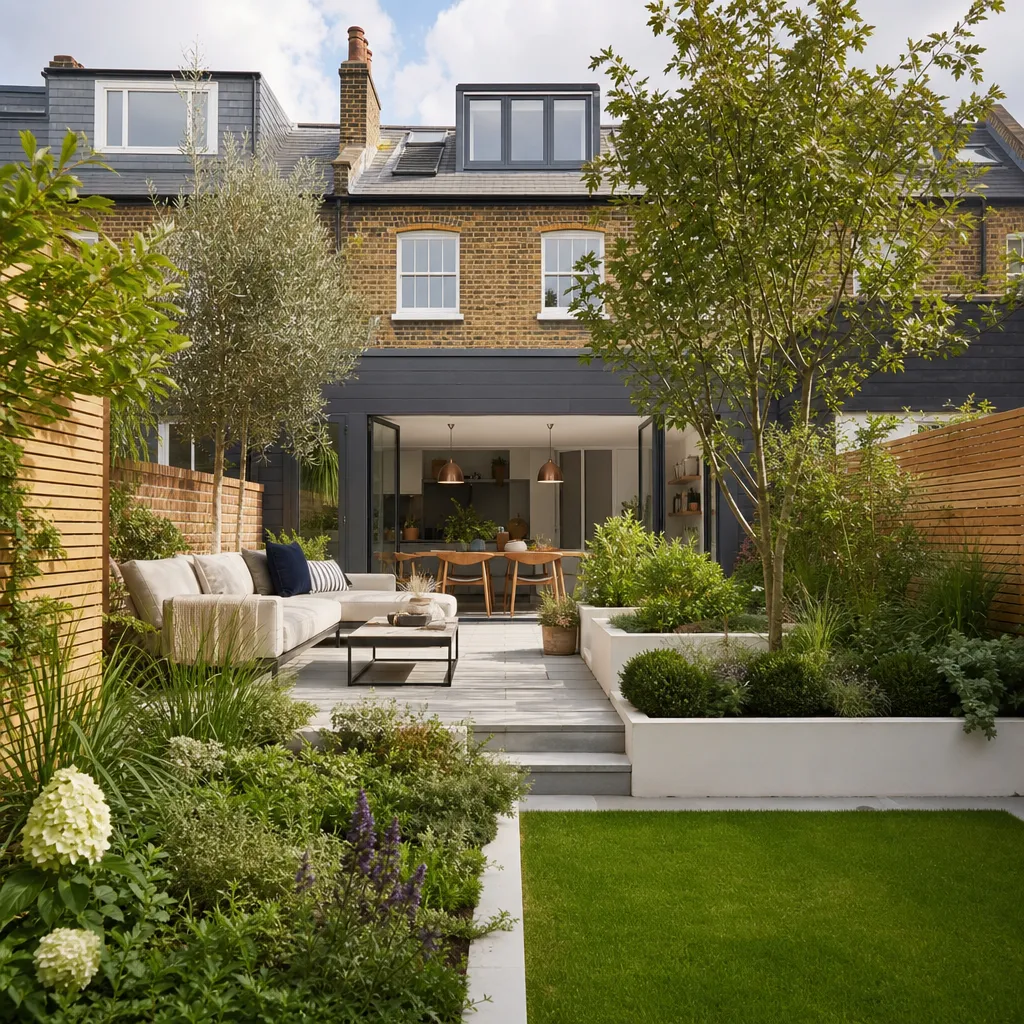
Seasonal Garden Transformations and Outdoor Design Ideas
A successful garden transformation in the UK works with the seasons rather than against them — establishing structure and hard landscaping in autumn or winter, planting in spring, and enjoying the results through summer.