Garden Design Services: What Designers Charge
By Housey · Last reviewed 7th of May 2026
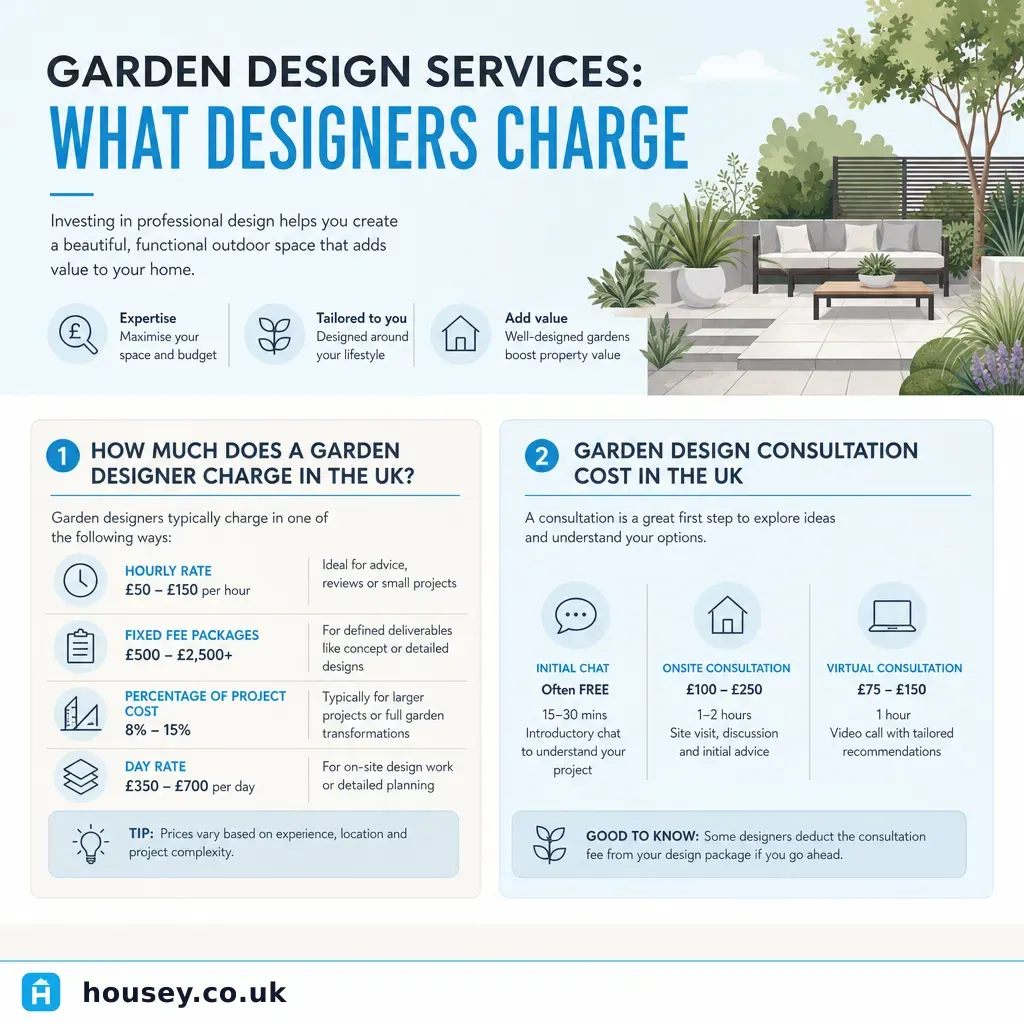
Garden Design Services: What Designers Charge
Garden design fees are easy to underestimate because designers use several different pricing structures — hourly rates, day rates, fixed project fees, or a staged combination — and the scope of work can range from a single on-site consultation to a fully managed planting and construction project. Understanding how fees are structured before you approach a designer helps you compare proposals on a like-for-like basis and avoid scope creep once work is under way. In the UK, designers may be members of the Society of Garden Designers (SGD) or hold qualifications recognised by the Landscape Institute, both of which provide a useful benchmark for professional standards and expected fee levels.
Key points
- SGD members are bound by a code of professional conduct; the Landscape Institute accredits landscape architects who often handle larger-scale or more technically complex projects.
- Hourly rates for UK garden designers typically range from £50 to over £200, with London and South East practitioners usually at the upper end of that range (indicative, last reviewed 2026-05-07).
- Most designers separate their service into distinct stages: initial consultation, concept design, detailed design with planting plan, and optional contract administration during the build.
- VAT at 20% applies to design fees from VAT-registered designers — always confirm whether a quoted fee is inclusive or exclusive of VAT before comparing proposals.
- A written design brief agreed at the outset — covering budget, style, must-have features, and timeline — reduces costly revision rounds and scope disputes later in the process.
How garden designers structure their fees
There is no single standard fee model in the UK garden design industry. The most common approaches are:
Hourly or day rate — the designer charges for time spent on design work, site visits, sourcing, and client correspondence. This suits smaller or more exploratory projects but can be harder to budget without an agreed cap on estimated hours.
Fixed-fee packages — a defined scope (concept plan, planting schedule, detailed drawings) for a set price. This makes proposals easier to compare between designers and helps control total spend.
Percentage of build cost — occasionally used by designers who also project-manage the landscaping works, typically 10–15% of the total build contract value. More common for larger residential or commercial commissions.
Hybrid model — an initial consultation at a fixed rate, followed by a tailored fee proposal for subsequent stages based on site complexity and agreed project scope.
Fee model | Best for | Watch out for |
|---|---|---|
Hourly rate | Smaller gardens, phased advice, ongoing consultancy | Scope creep — agree an estimated total hours cap before work starts |
Fixed-fee package | Medium gardens, defined scope, easier quote comparison | Confirm exactly what is and is not included before signing |
Percentage of build cost | Large projects with construction management | Confirm the design fee is clearly separated from any contractor mark-up |
Hybrid model | Getting started without full commitment | Ensure the consultation fee is credited against subsequent stages if you proceed |
What each design stage typically includes
Understanding what you are paying for at each stage prevents misunderstandings about deliverables and revision expectations.
Initial consultation (1–2 hours on site): The designer visits to assess the space, discuss your requirements, take photographs, and carry out basic measurements. This stage usually produces a written summary or agreed brief rather than formal drawings. Typical cost: £150–350.
Concept design: A scaled layout plan showing zones, levels, key features, circulation routes, and a material palette. Usually accompanied by reference imagery to communicate the design direction. Typical cost for a medium garden (50–100 m²): £500–1,500.
Detailed design and planting plan: Full scaled drawings, section and elevation drawings where required, plant schedules with species, quantities, and sizes, and a construction specification document that a landscaping contractor can use to price the works. Typical cost: £1,000–3,500 depending on garden size and design complexity.
Contract administration: The designer oversees the build phase, verifies the contractor is following the drawings, and certifies stages of completion. Typical cost: 10–15% of the build contract value, or an agreed day rate. This stage is optional but reduces the risk of the finished garden diverging from the design intent.
Indicative UK costs, last reviewed 2026-05-07. Costs vary significantly by designer experience, garden complexity, and region.
Worked example: medium garden redesign in the East Midlands
Consider a 70 m² rear garden attached to a 1990s semi-detached house. The homeowner wants a new patio, raised beds, lawn, mixed planting with year-round structure, and some privacy screening along a shared boundary.
Design stage | Typical cost (excl. VAT) |
|---|---|
Initial on-site consultation | £200 |
Concept design | £800 |
Detailed design and planting plan | £1,400 |
Contract administration (optional) | £600–900 |
Total design fee | £3,000–3,300 |
The landscaping build for this project might cost £15,000–25,000 separately. The design fee represents roughly 10–15% of the total project spend — broadly consistent with industry norms for a mid-range residential commission. Adding VAT at 20% where the designer is VAT-registered would increase these figures accordingly.
What to look for when choosing a garden designer
Professional membership: SGD membership indicates the designer has met entry requirements and adheres to a code of conduct. The Landscape Institute is relevant for larger-scale landscape architecture work. Neither membership is legally required to practise garden design, but both provide a useful independent benchmark.
Portfolio suited to your brief: A designer whose portfolio focuses on small urban courtyards may not be the best fit for a large rural plot, and vice versa. Ask to see completed projects of a similar scale, style, and soil type to your own.
Written fee proposals: A reputable designer should issue a written proposal specifying scope, deliverables, revision allowances, payment schedule, and what happens if the brief changes materially during the project.
References: Ask for examples of completed projects and, where possible, speak with previous clients about the working process as well as the finished result.
What to ask before accepting a quote
- What deliverables are included at each stage, and in what format (PDF, AutoCAD DWG, hand-drawn)?
- Is VAT included in the fee as quoted?
- How many site visits are included, and what is charged for additional visits beyond those?
- How many rounds of revisions are included at the concept and detailed design stages?
- Are plant sourcing, materials advice, or mark-ups on contractor quotes included in the fee or charged separately?
- What is the payment schedule — is a deposit required, and when are subsequent invoices raised?
- Do you hold professional indemnity insurance, and can I see a copy of the certificate?
- What happens to copyright in the drawings if I decide not to proceed to build?
When to get professional help
A garden designer adds most value when:
- The garden has significant level changes, drainage challenges, or structural elements such as retaining walls or built-in seating that need careful design before a landscaper is instructed.
- You want a cohesive planting scheme suited to your specific soil type, aspect, and maintenance capacity over several seasons.
- The project is large enough that errors in the brief or specification could be expensive to correct once physical works have begun.
- You want contract administration to ensure the landscaper builds faithfully to the design drawings rather than making ad hoc substitutions on site.
For smaller or more straightforward improvements — replacing a worn lawn, adding a path, or installing a single patio to an existing garden — an experienced landscaper may be able to proceed from a simple written brief without separate design services.
How Housey can help
Housey connects homeowners with experienced garden designers across the UK. Describe your project and receive fee proposals from designers covering your postcode, allowing you to compare scope of service, professional credentials, and portfolio before committing to any stage of work.
Frequently asked questions
Do I need a garden designer or a landscaper?
A garden designer creates the design plan; a landscaper carries out the physical construction works. For a complex redesign you may need both — the designer produces drawings that the landscaper prices and builds from. For straightforward projects such as adding a patio or replacing a lawn, an experienced landscaper may offer design-and-build services without requiring a separate designer.
How much does a garden design consultation cost in the UK?
An initial on-site consultation typically costs £150–350 for a standard residential garden in the UK, though rates vary by designer experience and location. Some designers offer a free initial phone or video call before charging for a site visit. Always confirm whether the consultation fee is credited against further design stages if you proceed (indicative costs, last reviewed 2026-05-07).
Is a garden designer the same as a landscape architect?
Not exactly. Landscape architects usually hold a degree accredited by the Landscape Institute and often work on larger-scale or commercial projects. Garden designers typically specialise in residential gardens and may hold qualifications from horticultural colleges or specialist design programmes. Both can produce excellent residential results; the key factors are portfolio relevance, professional membership, and relevant project experience.
Should I provide a design brief before requesting quotes?
Yes. A written brief covering your budget, preferred style, key functional requirements, soil type, aspect, and any constraints — listed building status, shared boundaries, overhead cables — helps designers give accurate fee proposals and reduces the risk of misunderstandings about deliverables or revision rounds once design work is under way.
Sources and further reading
- Find a Designer — Society of Garden Designers — Society of Garden Designers
- What is Landscape Architecture — Landscape Institute — Landscape Institute
- VAT on Building and Construction Services (Notice 708) — HMRC
Useful next reads
 Improvement & Build
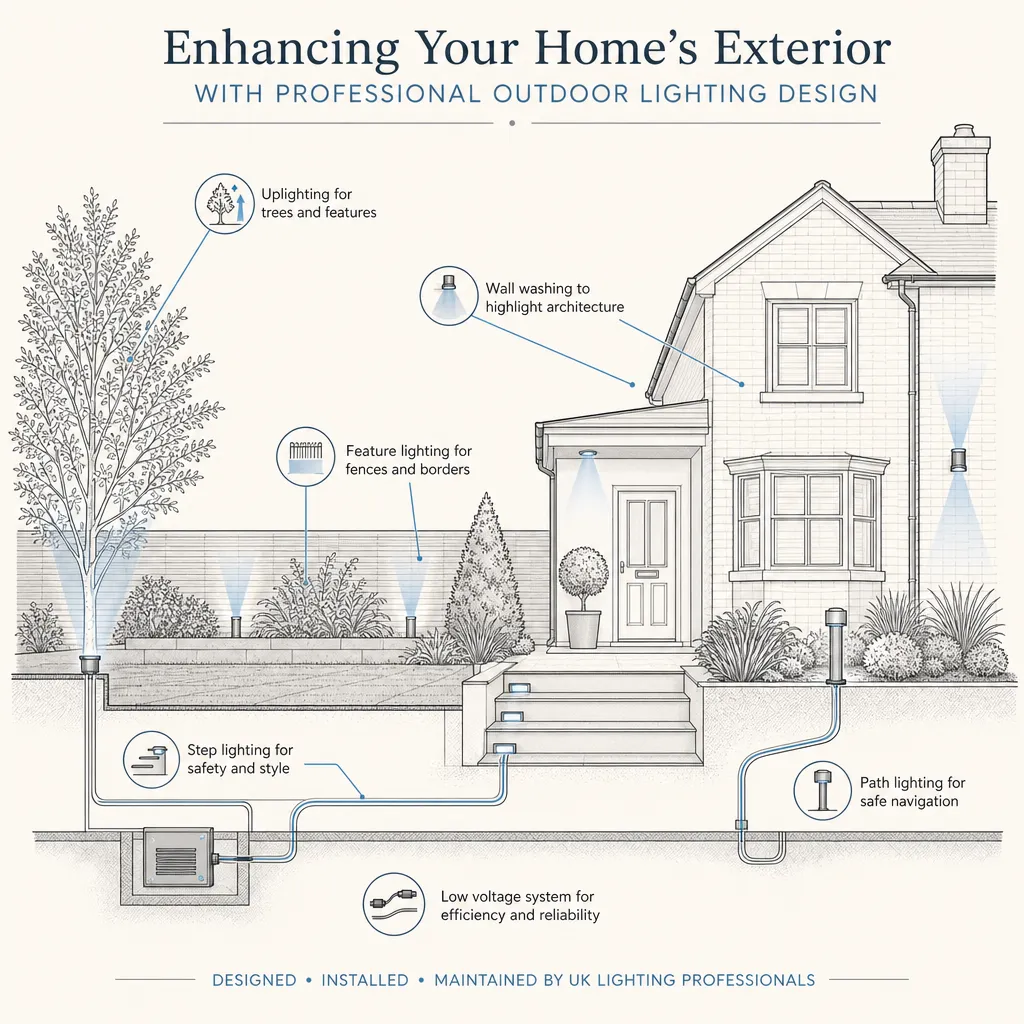
Enhancing Your Home's Exterior with Professional Outdoor Lighting Design
Professional outdoor lighting design improves kerb appeal, extends garden use after dark, and deters intruders.
 Improvement & Build
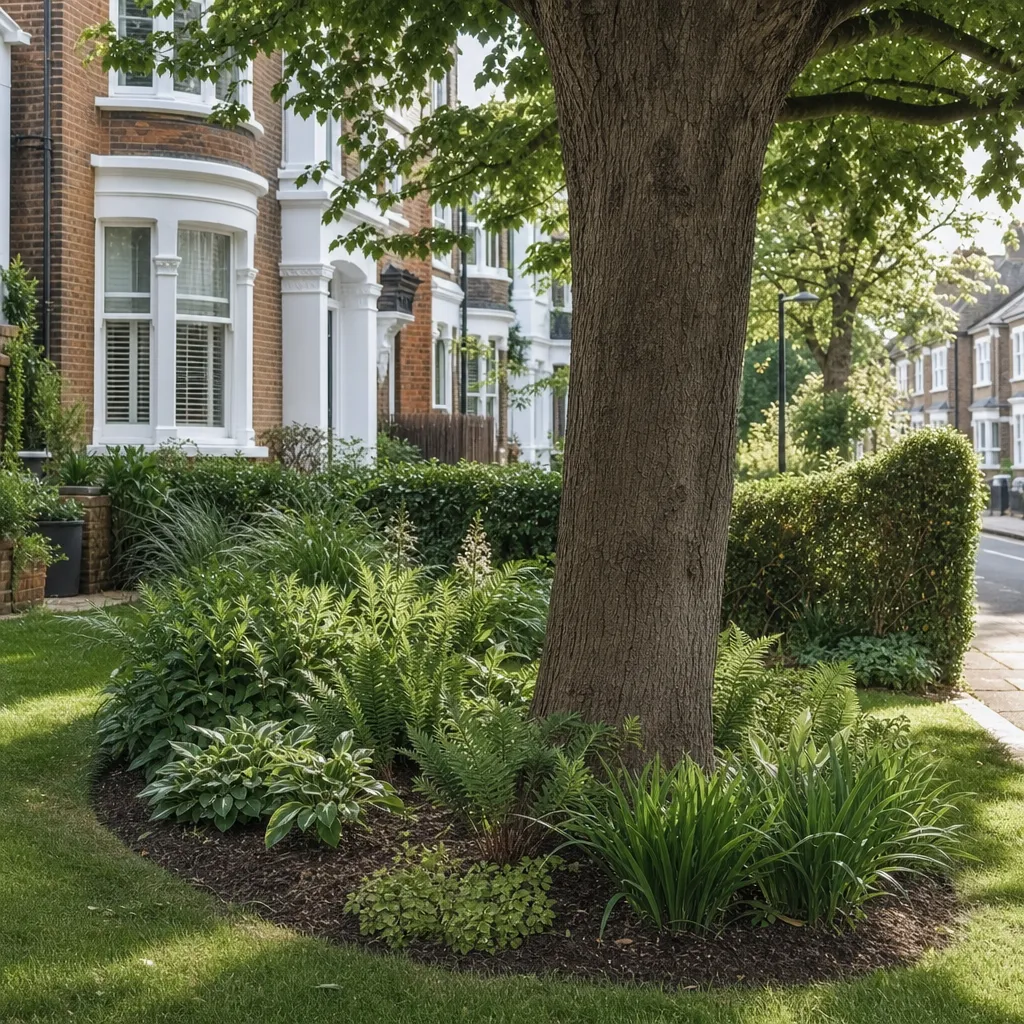
Landscaping Around Trees: Design and Planting Guide
The key to landscaping around trees is working with the tree's conditions rather than against them.
 Improvement & Build
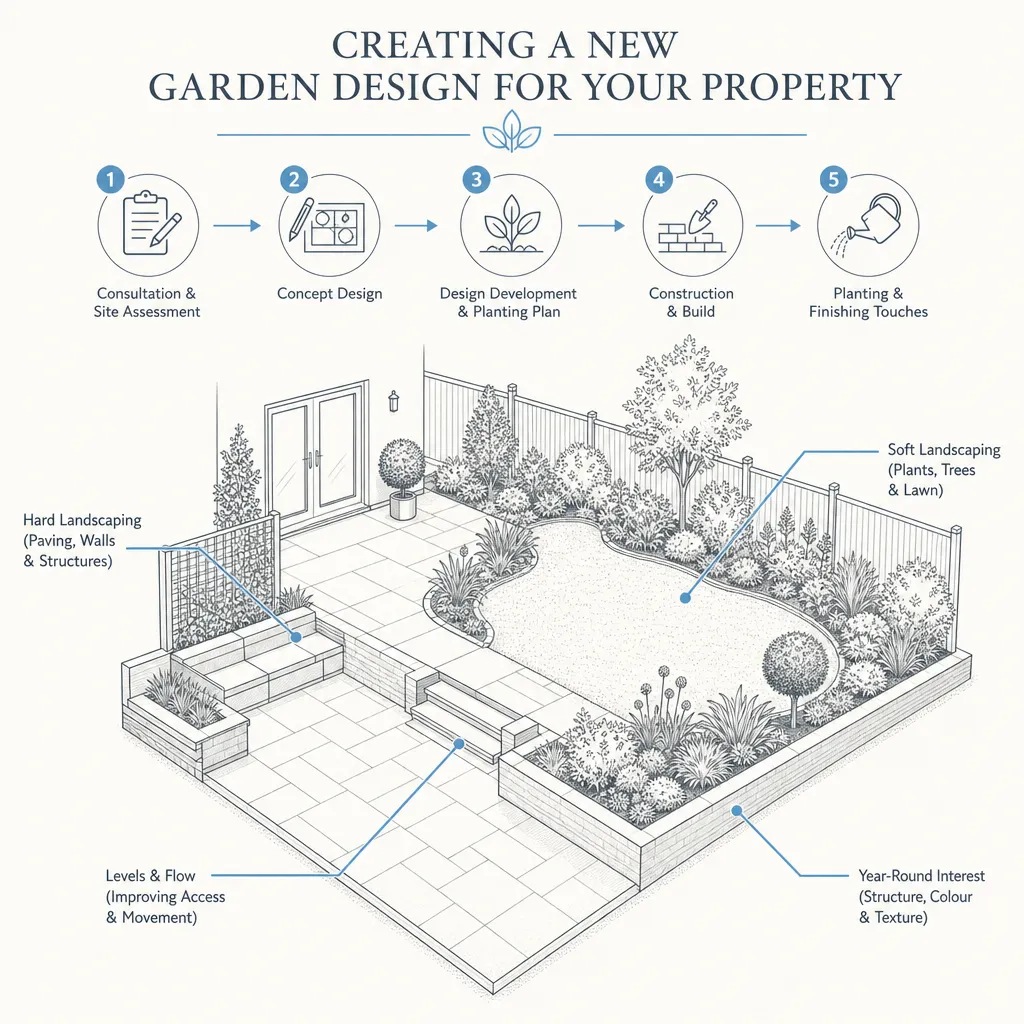
Creating a New Garden Design for Your Property
Creating a new garden design involves assessing your space, setting a realistic budget, deciding on hard and soft landscaping, and choosing a planting scheme suited to your soil and aspect.
 Improvement & Build
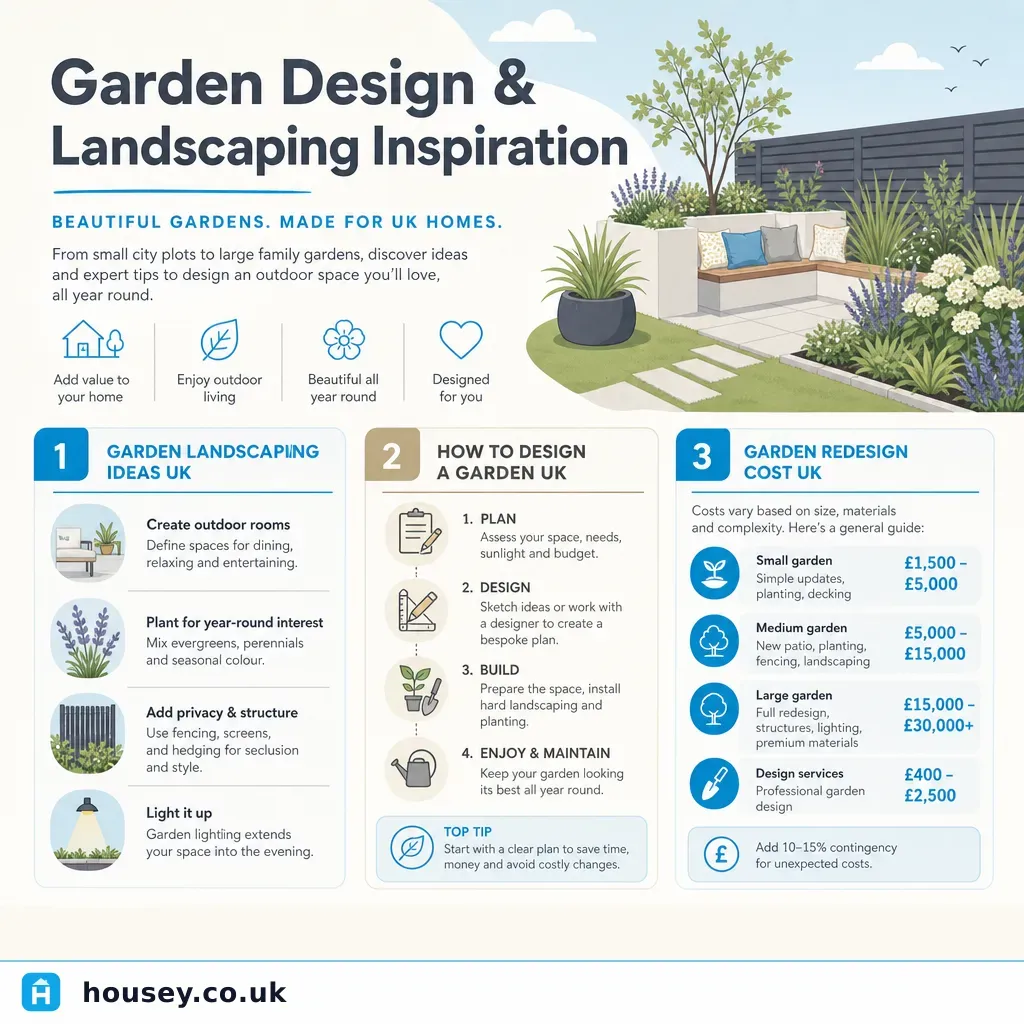
Garden Design and Landscaping Inspiration
Effective garden design starts with assessing your aspect, soil type, and existing features before commissioning any planting or hard landscaping.
 Improvement & Build
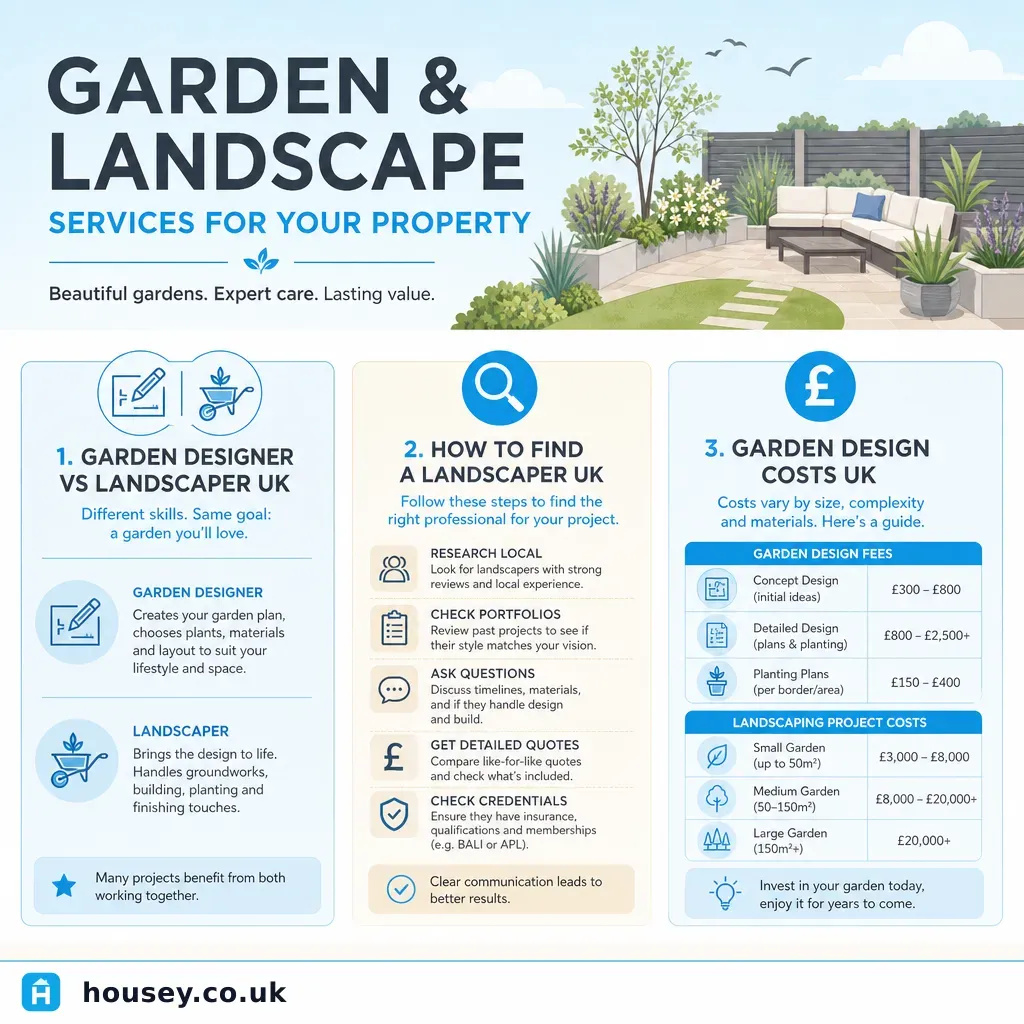
Garden and Landscape Services for Your Property
Garden designers and landscapers both improve outdoor spaces but offer different services.