EPDM Roofing: Properties and Performance Evaluation
By Housey · Last reviewed 7th of May 2026
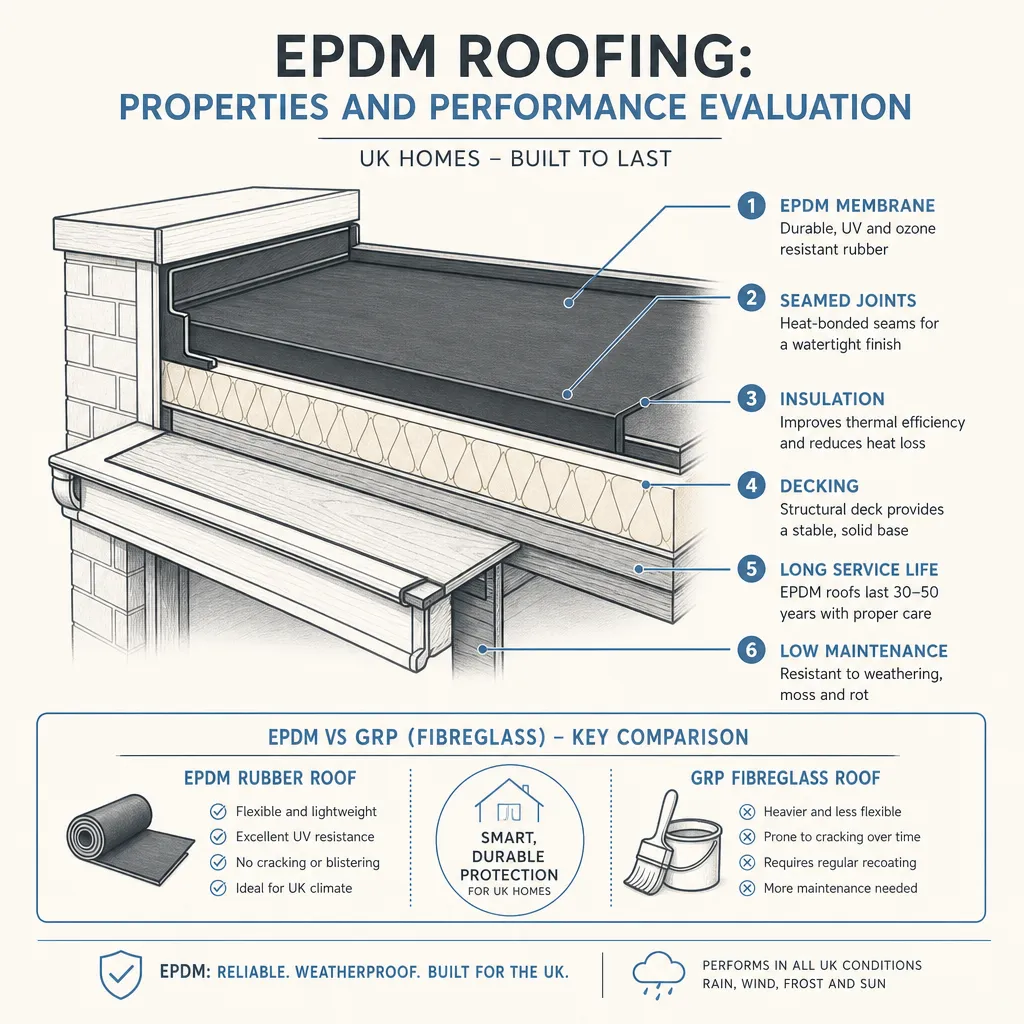
EPDM Roofing: Properties and Performance Evaluation
EPDM flat roofing comes up frequently when homeowners are replacing an ageing felt roof on a garage, extension, or outbuilding — or when a roofer recommends upgrading during routine maintenance. Understanding what the material is, how it performs in UK conditions, and where its limitations lie helps you decide whether it suits your project and whether a quote you have received reflects the full scope of work.
Key points
- EPDM (ethylene propylene diene monomer) is a synthetic rubber membrane available in sheet widths up to 15 metres, allowing most small roofs to be covered in a single piece with no seams.
- Well-installed EPDM typically lasts 25–40 years in UK residential use; manufacturer product warranties often extend to 20 years, with some premium systems warranted longer.
- Flat roof installations on habitable rooms must comply with Building Regulations Part L — the limiting U-value for flat roofs in dwelling extensions under Approved Document L 2021 is 0.20 W/m²K.
- EPDM is fixed using bonded, mechanically fixed, or ballasted systems; the correct method depends on substrate type, structural loading, falls, and wind exposure.
- Falls of at least 1:80 are the recognised minimum under BS 6229 and NHBC standards — inadequate falls cause ponding and accelerate wear at seams and outlets.
What is EPDM roofing?
EPDM is a thermoset synthetic rubber compound in widespread UK residential use since the 1990s. It is resistant to UV degradation and ozone attack — two of the main causes of failure in older natural rubber products — and remains flexible at temperatures as low as approximately -45°C. Sheet widths of up to 15 metres mean a standard garage or single-storey extension roof can often be waterproofed in a single piece, eliminating the seam joints that commonly fail on older multi-layer felt systems.
EPDM compared with other flat roof membranes
System | Typical lifespan (UK) | Seams on standard garage | Cold-weather flexibility | DIYer-suitable? | Relative installed cost |
|---|---|---|---|---|---|
EPDM (rubber) | 25–40+ years | Usually none | Excellent | Small outbuildings only | Mid-range |
GRP fibreglass | 25–40+ years | None (monolithic) | Good; brittle in extreme cold | Not recommended | Mid to high |
TPO membrane | 20–30 years | Heat-welded seams | Good | Not recommended | Mid-range |
Modified bitumen felt (torch-on) | 10–20 years | Multiple | Moderate | No — heat required | Low to mid |
Liquid-applied membrane | 15–25 years | None | Good | Some products on small areas | Mid to high |
Indicative UK costs vary by roof area, access, substrate condition, and insulation specification. Always obtain written quotes. Last reviewed 2026-05-07.
How EPDM is installed
EPDM is laid over a rigid substrate — typically 18 mm WBP plywood or OSB3 board. The substrate must be dry and flat; rotten or softened decking must be replaced before the membrane is laid. Any protruding fixings must be removed or countersunk.
The bonded system, where adhesive is applied to both the substrate and the membrane underside, is the most common residential method. Mechanically fixed systems suit larger roofs or high-wind coastal locations. Ballasted systems, held down by aggregate or paving slabs, require structural capacity for the additional load and are rarely specified on domestic extensions.
Upstand flashings and outlet details are the most common failure point on all flat roofs. A quality EPDM installation uses purpose-made EPDM flashing strips, pre-formed internal and external corners, and manufacturer-compatible bonding adhesives — not improvised overlaps or incompatible sealants.
Performance in UK conditions
- Thermal movement: EPDM's elasticity absorbs the expansion and contraction caused by UK temperature swings without splitting or delaminating from the substrate.
- Ponding: EPDM is waterproof when ponded, but standing water encourages algae growth and stresses seam adhesion over time. Falls of at least 1:80 are essential.
- UV and weathering: Surface greying and a slight chalky appearance are normal weathering, not an indication of membrane degradation.
- Foot traffic: Suitable for occasional maintenance access only; a rated protection layer is required for regular pedestrian use or terrace applications.
- Root resistance: Standard EPDM is not root-resistant. Living roof (green or brown roof) systems require a confirmed root-resistant specification from the membrane manufacturer.
Homeowner checklist: before approving an EPDM roof quote
When to get professional help
For a straightforward garage or outbuilding roof replacement, an experienced roofer is usually sufficient. Seek additional professional input when:
- The roof sits above a habitable room — Part L insulation compliance should be confirmed with building control or a qualified building surveyor before works are signed off.
- You have concerns about joist spans, deck deflection, or grossly inadequate falls — a roof survey by a chartered surveyor or specialist roofing consultant identifies structural or drainage problems before money is spent on a new membrane.
- Significant ponding, visible deflection, or structural movement is present on the existing roof — a new membrane alone will not resolve these.
- A dispute has arisen over a recent installation — an independent RICS-accredited surveyor can identify whether failure is a materials or workmanship issue and specify appropriate remedial action.
How Housey can help
Housey can connect you with experienced roofers who work with EPDM and other membrane systems across the UK. If you want an independent condition assessment before committing to a contractor, a professional roof survey gives you an objective baseline and a written specification to tender from — so every roofer quotes the same scope.
Frequently asked questions
How long does EPDM roofing last in the UK?
Manufacturer product warranties often extend to 20 years, with stated lifespans of up to 50 years in ideal conditions. In practice, well-installed EPDM on a UK residential property typically lasts 25–40 years. Longevity depends on installation quality, substrate condition, adequate falls to prevent ponding, and periodic maintenance of flashings and outlets.
Does EPDM roofing need planning permission?
Like-for-like flat roof replacement does not normally require planning permission and is usually permitted development. However, if the property is in a conservation area, is listed, or works would alter the roof profile or height, check with your local planning authority before starting any work.
Can I install EPDM myself?
Self-adhesive EPDM kits for sheds and small garden structures are suitable for competent DIYers following manufacturer instructions. For roofs above habitable rooms, installations involving rooflights, or where building regulations compliance is required, professional installation by an experienced roofer is strongly advisable.
What causes EPDM flat roofs to fail early?
The most common causes are poorly detailed upstand flashings, damp decking sealed beneath the membrane, insufficient falls causing persistent ponding, and the use of incompatible adhesives or sealants. Failure of the membrane material itself is uncommon when a reputable product is correctly installed by an experienced roofer.
Is EPDM better than GRP fibreglass for a flat roof?
Both are high-performing systems with comparable lifespans. EPDM offers large single-sheet coverage and superior flexibility at low temperatures. GRP provides a hard, seamless, monolithic finish more resistant to surface damage. The better choice depends on roof size, detail complexity, and which system your chosen roofer installs most competently.
Sources and further reading
- Approved Document L: Conservation of fuel and power (2021) — GOV.UK
- BS 6229:2018 — Flat roofs with continuously supported flexible waterproof coverings — BSI Group
- NHBC Standards Chapter 7.1 — Flat roofs and balconies — NHBC
- National Federation of Roofing Contractors — Flat Roofing — NFRC
- Energy Saving Trust — Roof and loft insulation — Energy Saving Trust
Useful next reads
 Improvement & Build
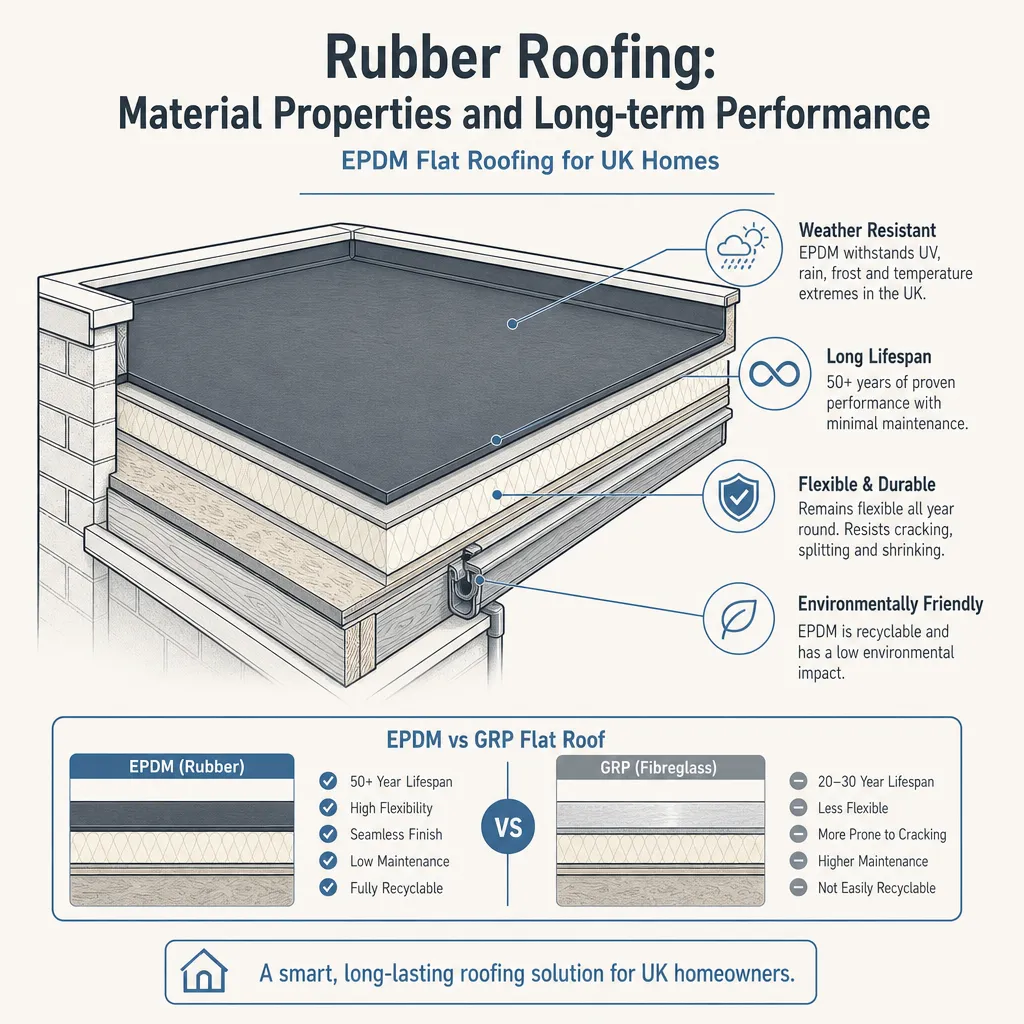
Rubber Roofing: Material Properties and Long-term Performance
EPDM rubber roofing is a synthetic rubber membrane used on UK flat roofs, available in large sheets that minimise seams.
 Improvement & Build
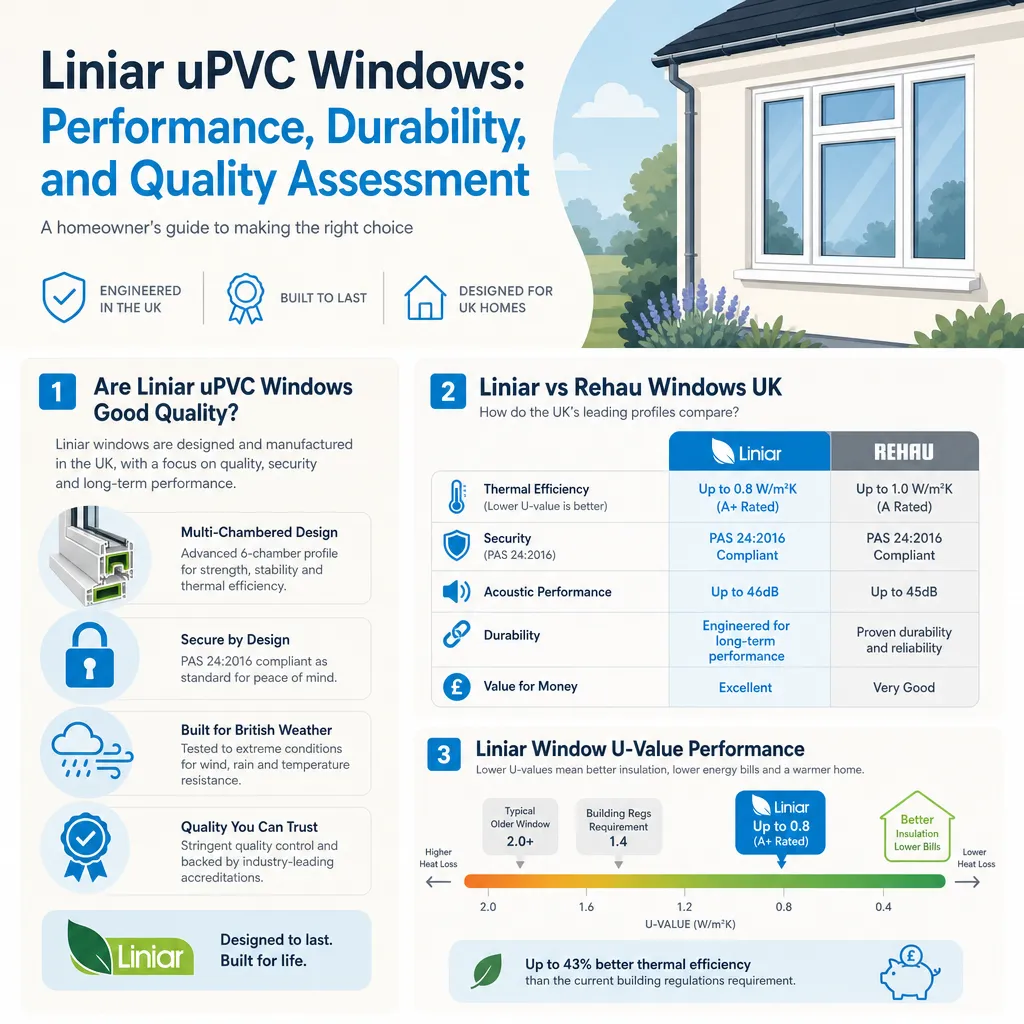
Liniar uPVC Windows: Performance, Durability, and Quality Assessment
Liniar uPVC window profiles are manufactured in the UK using multi-chambered, foamed frames.
 Improvement & Build
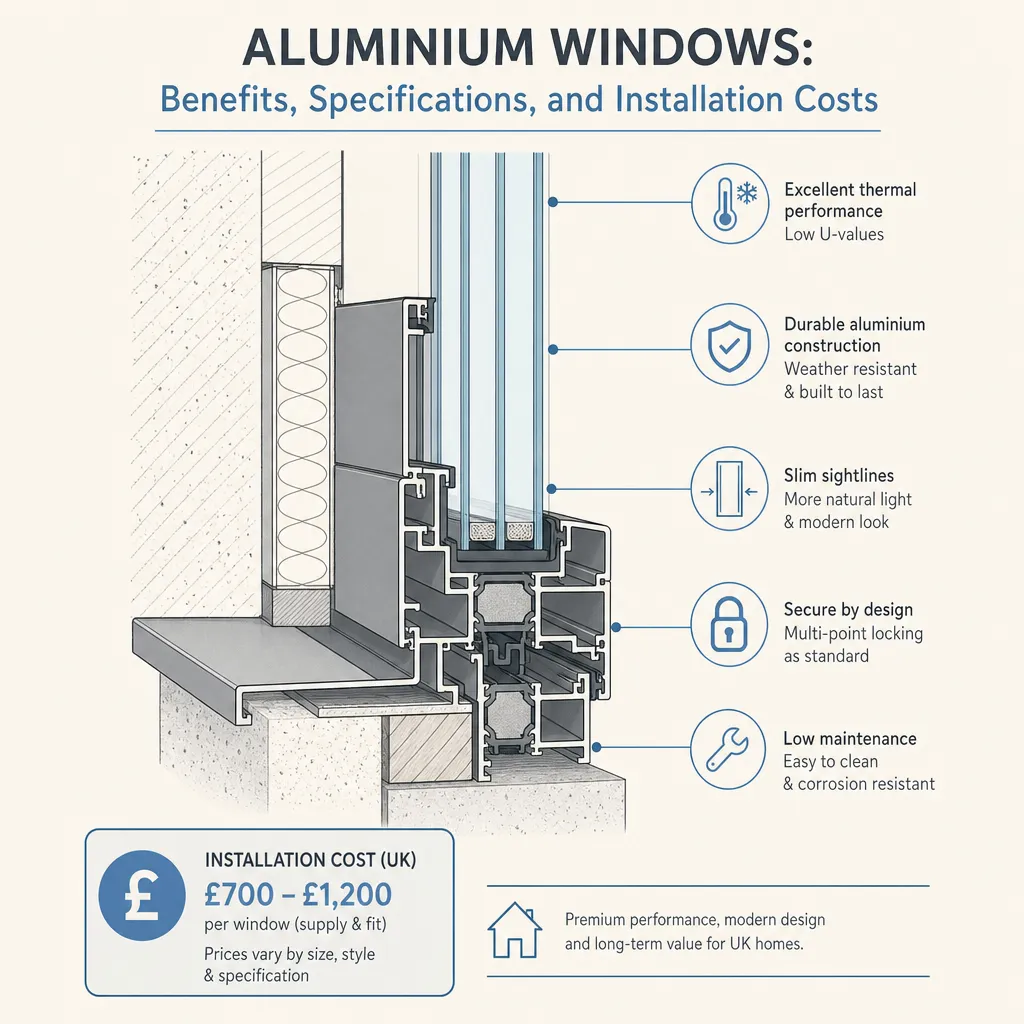
Aluminium Windows: Benefits, Specifications, and Installation Costs
Aluminium windows typically cost £600–£1,800 per window installed in the UK, depending on size and specification.
 Improvement & Build
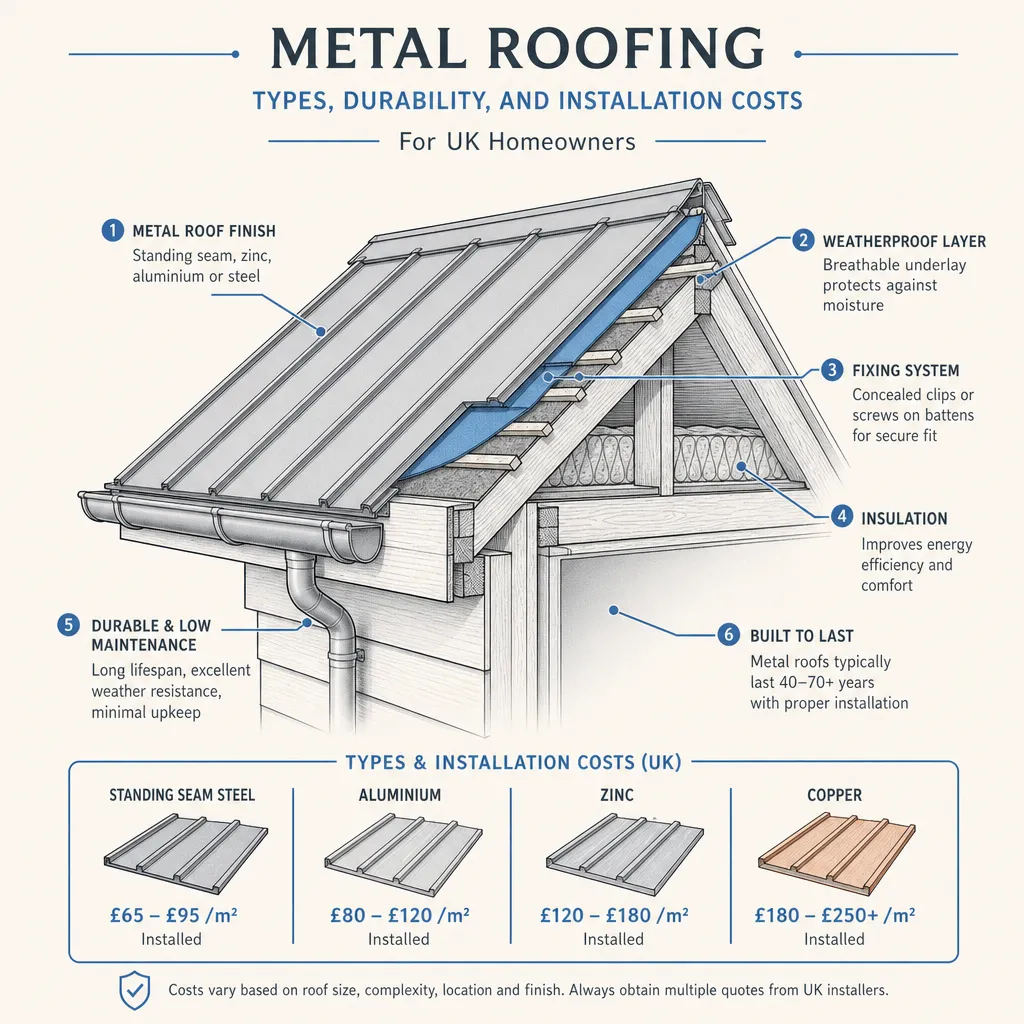
Metal Roofing: Types, Durability, and Installation Costs
Metal roofing in the UK includes standing seam, corrugated sheet, and metal tile systems in steel, aluminium, zinc, or copper.
 Improvement & Build
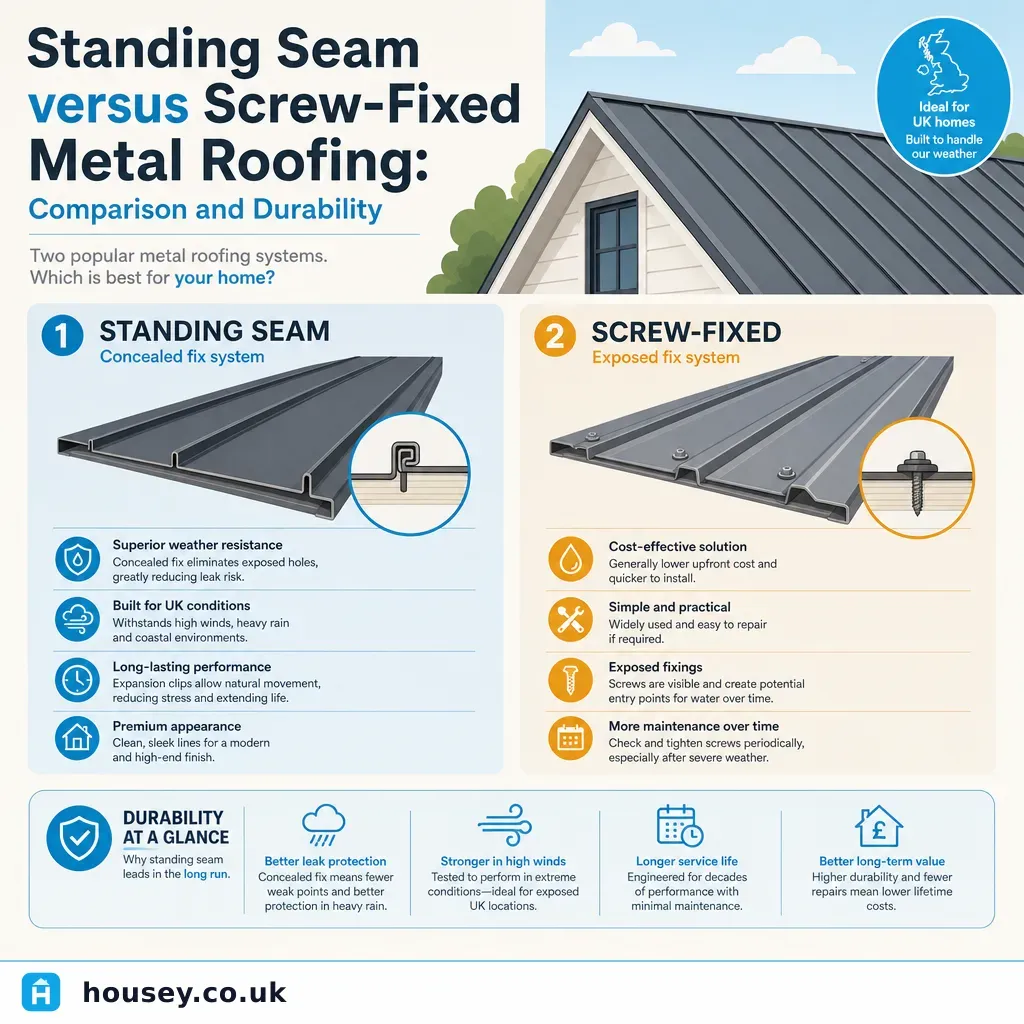
Standing Seam versus Screw-Fixed Metal Roofing: Comparison and Durability
Standing seam uses concealed clips to hold panels, keeping all fasteners out of the weatherline and giving a design life of 40–60 years or more.