Rubber Roofing: Material Properties and Long-term Performance
By Housey · Last reviewed 7th of May 2026
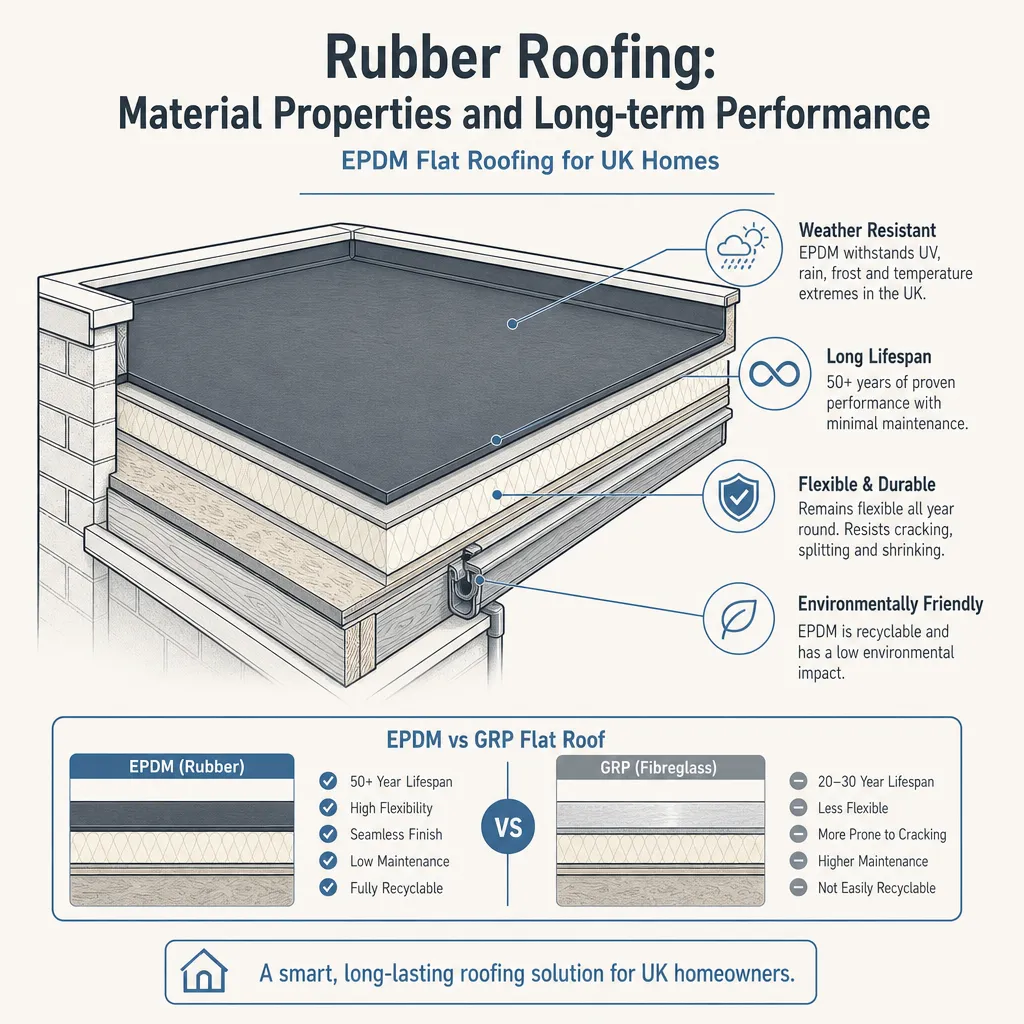
Rubber Roofing: Material Properties and Long-term Performance
Flat roofs are a feature of the majority of UK single-storey extensions, garages, and outbuildings, and the choice of waterproofing membrane has long-term consequences that affect maintenance costs, energy performance, and structural integrity. EPDM rubber roofing has largely displaced traditional mineral felt on domestic flat roofs over the past two decades, yet many homeowners encounter the term for the first time only when a contractor mentions it in a quote. Understanding what EPDM is, how it compares with alternatives, and what correct installation looks like helps you make an informed decision — and spot a poor one.
Key points
- EPDM (ethylene propylene diene monomer) is a synthetic rubber membrane available in factory-vulcanised sheets up to 15.25 metres wide, significantly reducing the number of seams on a domestic flat roof.
- The British Board of Agrément (BBA) has certified EPDM roofing systems with expected service lives exceeding 25 years under UK conditions.
- EPDM performs across an operating temperature range of approximately −45°C to +130°C, making it resistant to UK frost cycles, UV exposure, and summer heat.
- Standard domestic EPDM membranes are 1.14mm or 1.52mm thick; thicker gauges offer greater puncture resistance and are preferred on accessible or trafficked roofs.
- Building Regulations Approved Document C (resistance to moisture) and Approved Document H (drainage) apply to flat roof installations — always confirm compliance is addressed in the contractor's specification.
What is EPDM rubber roofing?
EPDM is a synthetic rubber derived from ethylene, propylene, and a diene monomer. The key manufacturing distinction is that EPDM sheets are vulcanised (cured) in factory conditions before delivery to site. Unlike liquid-applied systems, the membrane's structural integrity is established before installation begins — it is not dependent on site temperature, humidity, or applicator technique in the same way.
In the UK, EPDM is primarily used on:
- Flat or low-pitch roofs (typically up to around 10°) on extensions, garden rooms, garages, and outbuildings
- Balconies and terraces, with appropriate falls and drainage design
- Green roofs as the base waterproofing layer beneath growing medium and drainage boards
The membrane is adhered to a substrate — most commonly 18mm or 22mm OSB/3 or exterior-grade plywood — using a water-based or solvent-based contact adhesive, or a factory-applied adhesive film system supplied by the membrane manufacturer.
How long does rubber roofing last?
When correctly installed on a sound substrate with adequate drainage falls (a minimum gradient of 1:80 to the outlet is widely referenced), EPDM offers exceptional service life for a domestic flat roof product. BBA certificates for major EPDM systems reference expected service lives of 25 years or more; manufacturer technical documentation often cites 50-year lifespans under controlled conditions.
In practice, longevity depends on several factors:
- Installation quality: seams, perimeter upstands, and penetrations such as pipes and rooflights are the most common points of failure
- Substrate condition: a damp, rotten, or inadequately ventilated deck will cause premature problems regardless of membrane quality
- Drainage design: standing water (ponding) after rainfall accelerates stress on joins and should not be accepted as normal
- Foot traffic: EPDM is not rated for regular pedestrian use without a separate protection layer; routine access requires walk boards or a dedicated overlay system
Compared with traditional built-up mineral felt — which typically requires re-covering within 10 to 15 years — EPDM offers a meaningful lifespan advantage on equivalent roofs.
EPDM vs other flat roofing materials
Material | Typical lifespan | Seams on domestic roof | Cold-weather performance | Relative installed cost (indicative) |
|---|---|---|---|---|
EPDM rubber | 25–50 years | Very few (large sheets) | Excellent | £–££ |
GRP fibreglass | 25–40 years | None (monolithic laminate) | Good | ££ |
Modified bitumen felt (torch-on) | 15–25 years | Multiple | Moderate | £ |
TPO membrane | 20–30 years | Hot-air welded seams | Very good | ££ |
Lead | 60+ years | Soldered bossed joints | Excellent | £££ |
Indicative UK costs, last reviewed 2026-05-07. Prices vary significantly by roof area, access requirements, substrate condition, and region. Obtain at least three written quotes from NFRC-registered contractors before committing.
For domestic flat roofs under approximately 50m², EPDM often represents the most cost-effective balance of material cost, installation straightforwardness, and expected service life. GRP may be preferred where a roof has complex details and the reduced seam risk justifies the higher cost.
What affects the installed cost of rubber roofing?
Cost drivers for a UK EPDM flat roofing project include:
- Roof area: most contractors price per m², so the total area is the dominant factor
- Access: scaffolding or a mobile access tower adds to the overall cost
- Substrate condition: a rotten or delaminated deck must be replaced before the new membrane is laid — this is a common discovery on older felt roofs and can add significantly to the final bill
- Drainage specification: achieving correct falls may require tapering insulation boards or new outlets; both add cost
- Penetrations and perimeter details: rooflights, soil pipes, parapet walls, and abutments all require careful detailing with compatible flashings or trim
A professional roofer should provide a written specification that identifies the EPDM system by brand and BBA certificate number, describes the substrate preparation required, and sets out the drainage strategy. A quotation that omits any of these elements warrants further questions.
Red flags: what to watch for when hiring a roofer
Poor installation is the primary cause of premature EPDM failure. These warning signs suggest a contractor may cut corners:
- No mention of substrate assessment or deck condition inspection before pricing
- The quotation does not name the EPDM system or cite a BBA certificate number
- Drainage falls are not discussed or specified in the written quote
- No separate workmanship guarantee is offered beyond the manufacturer's product warranty
- The contractor proposes laying the new membrane directly over existing felt without stripping
- The contractor is not registered with the National Federation of Roofing Contractors (NFRC) or a recognised Competent Person scheme and cannot provide evidence of public liability insurance
NFRC-registered contractors are bound by the federation's code of conduct and workmanship standards, which provides a route for dispute resolution if problems arise.
What to ask before accepting a quote
- Which EPDM system are you specifying, and what is its BBA certificate number?
- Will you assess the decking condition before starting, and what happens if the substrate needs replacing?
- What drainage falls do you plan to achieve, and how will you create them?
- How will you detail the perimeter upstands, parapet flashings, and any pipe or rooflight penetrations?
- What membrane thickness are you using, and is it appropriate for this roof?
- What workmanship guarantee do you offer, and for how long does it run?
- Are you registered with NFRC or another recognised roofing trade body?
- Is VAT included in the quoted price?
- What factors could change the price once work is under way?
When to get professional help
EPDM flat roofing over habitable space should always be installed by a qualified roofer. While some suppliers offer DIY kits for small garden buildings, errors at seams, flashings, and penetrations cause water ingress that may not become visible until months after completion, by which time roof timbers and ceiling joists may already be deteriorating.
Seek professional help promptly if:
- You notice water staining or active drips through a flat roof ceiling — structural timbers can be damaged quickly by sustained moisture
- An existing flat roof shows blistering, lifting seam edges, or persistent ponding after rain
- You are replacing a felt roof and are uncertain about the underlying deck condition
- A new flat roof will cover a heated or habitable room and requires Building Regulations sign-off
If you are purchasing a property with a flat roof, commissioning a roof survey before exchange identifies the current condition, likely remaining service life, and any remedial works that should be addressed before completion.
How Housey can help
Housey connects homeowners with vetted local roofers for flat roof replacements and repairs, and with independent specialists who carry out roof surveys before exchange or as part of planned maintenance programmes. Request and compare quotes through Housey to check credentials, NFRC registration, and workmanship guarantee terms before committing.
Frequently asked questions
How long does EPDM rubber roofing last in the UK?
A correctly installed EPDM roof on a sound substrate with adequate drainage falls typically lasts 25 to 50 years. BBA certificates for leading systems reference expected service lives above 25 years. In practice, the first decade of performance reflects installation quality — particularly the handling of seams, flashings, and penetrations around rooflights or pipes.
Does rubber roofing need maintenance?
EPDM requires minimal routine maintenance compared with felt. An annual inspection — clearing debris and outlets, checking seam edges and flashings — is sufficient for most roofs. Minor splits or lifted seams can often be repaired with compatible EPDM adhesive or lap sealant. Avoid walking on the surface unless necessary, and use protective boards if regular access is required.
Can I install EPDM rubber roofing myself?
Some suppliers sell EPDM kits for small outbuildings. For any roof over habitable space, professional installation is strongly recommended. Seam and perimeter detailing require skill; poor lap joins are the most common cause of early failure. A workmanship guarantee from a registered contractor provides recourse that a DIY installation cannot.
Is rubber roofing Building Regulations compliant?
EPDM is an accepted waterproofing solution under the Building Regulations. Thermal performance (Approved Document L), structural adequacy of the deck, and drainage (Approved Document H) still need addressing as part of any flat roof project. For a new extension, Building Regulations approval is required — your contractor or local building control authority can advise on the application process.
What is the difference between EPDM and GRP flat roofing?
EPDM is a rubber membrane laid in large pre-vulcanised sheets; GRP (fibreglass) is a liquid-applied resin that cures on-site to form a seamless laminate. GRP has no seams, which suits complex roofs with many details, but it is more sensitive to site temperature and humidity during application and typically costs more than EPDM. Both can perform well over 25 years when correctly installed.
Sources and further reading
- British Board of Agrément certificate search — British Board of Agrément
- Approved Document C: Site preparation and resistance to contaminants and moisture — GOV.UK
- Approved Document H: Drainage and waste disposal — GOV.UK
- National Federation of Roofing Contractors: find a contractor — NFRC
- Planning Portal: flat roofs and permitted development — Planning Portal
Useful next reads
 Improvement & Build
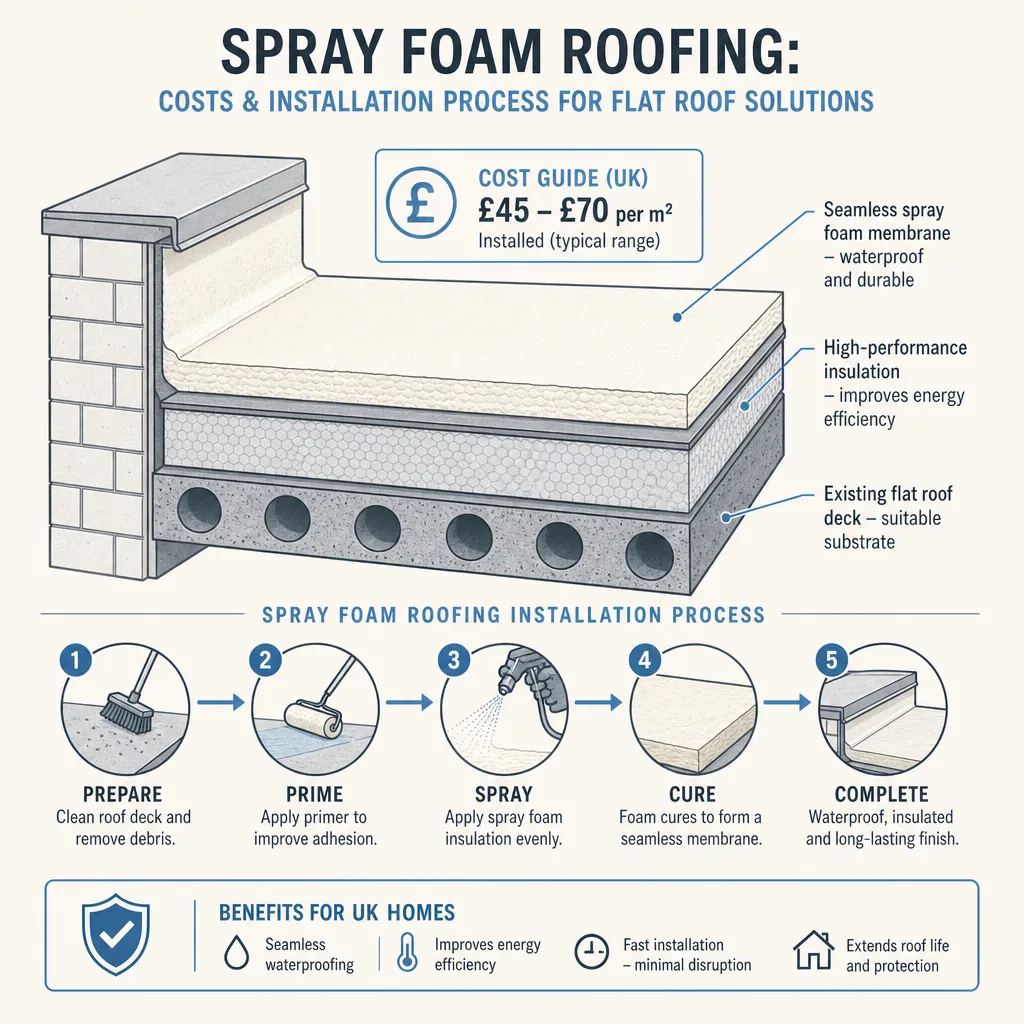
Spray foam roofing: costs and installation process for flat roof solutions
Spray foam roofing for a domestic flat roof in the UK typically costs between £70 and £120 per square metre including preparation, foam application, and UV-protective topcoat, though prices vary with roof size, access, existing substrate condition, and region.
 Improvement & Build
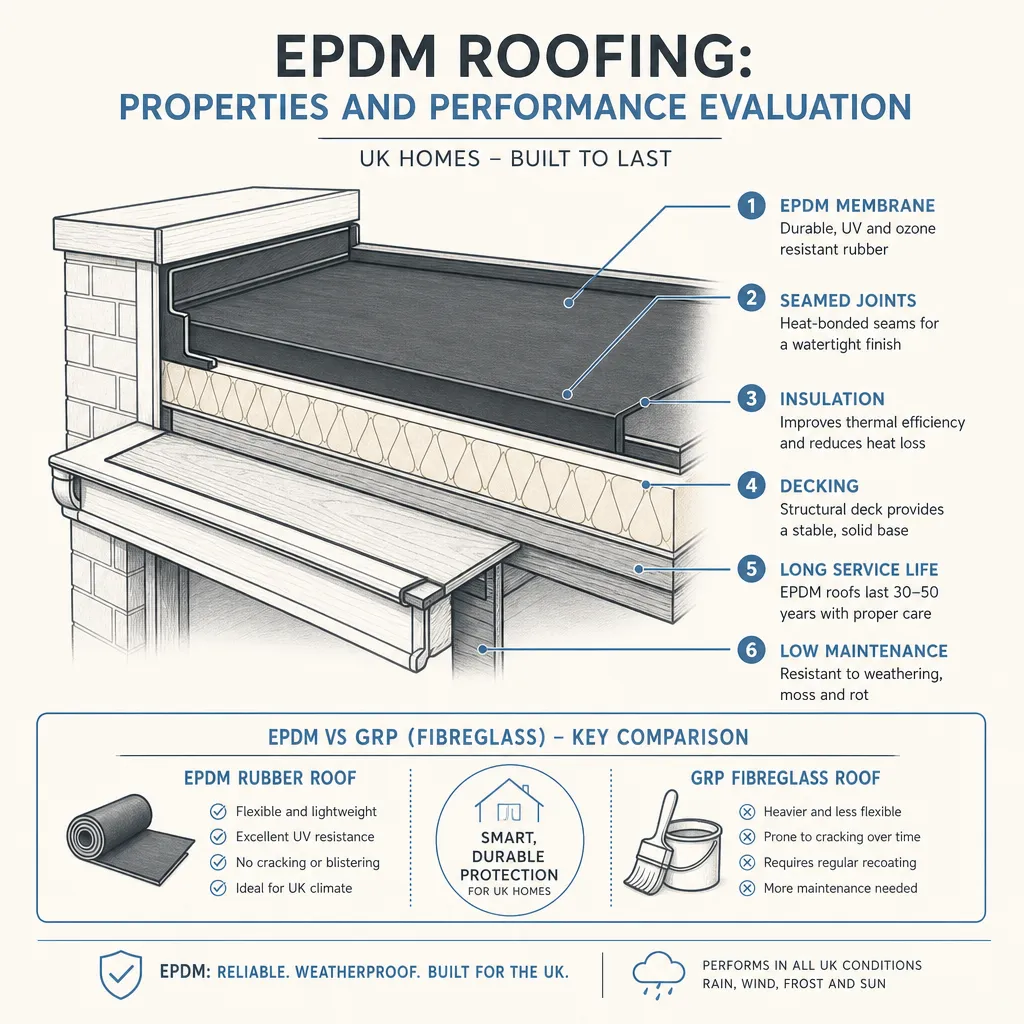
EPDM Roofing: Properties and Performance Evaluation
EPDM is a synthetic rubber membrane used on flat roofs that typically lasts 25 to 40 years in UK conditions when professionally installed.
 Improvement & Build
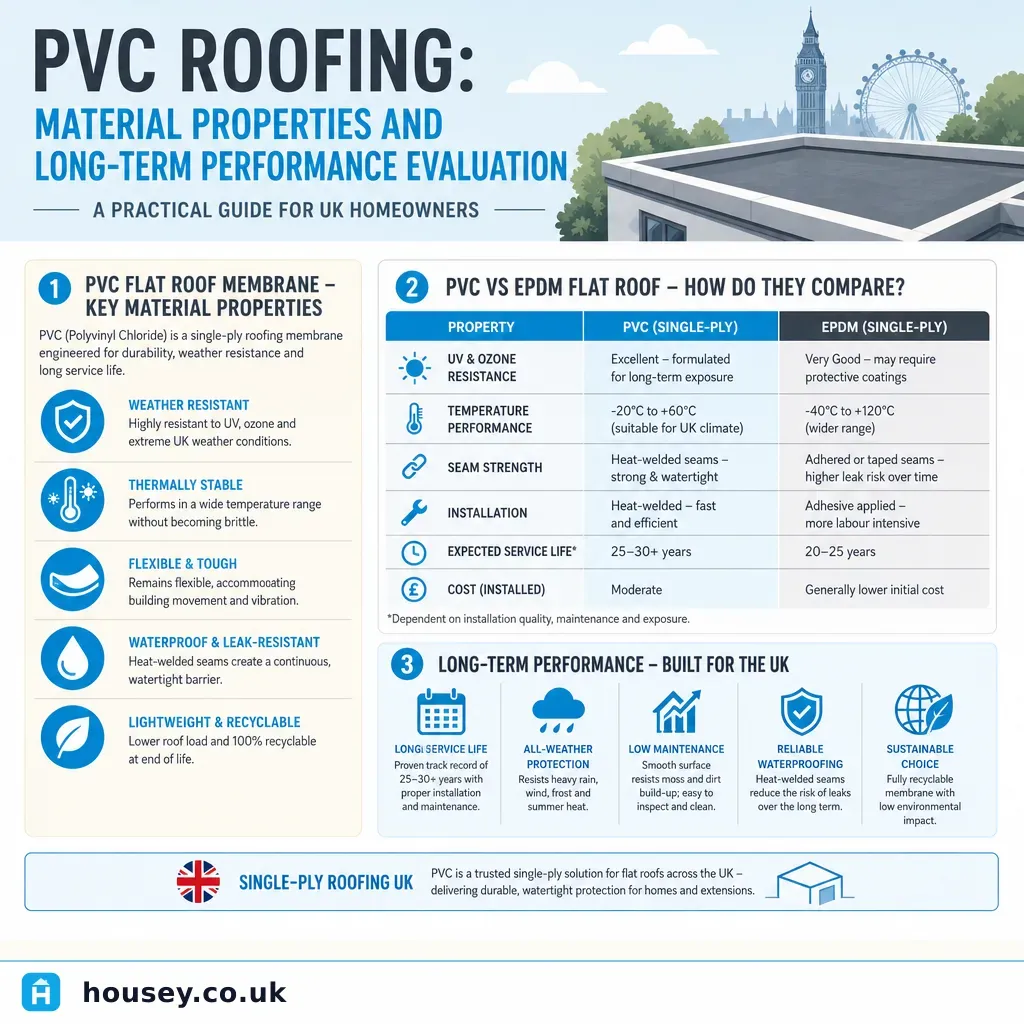
PVC Roofing: Material Properties and Long-term Performance Evaluation
PVC single-ply roofing is a thermoplastic flat roof membrane with manufacturer warranties typically ranging from 15 to 25 years.
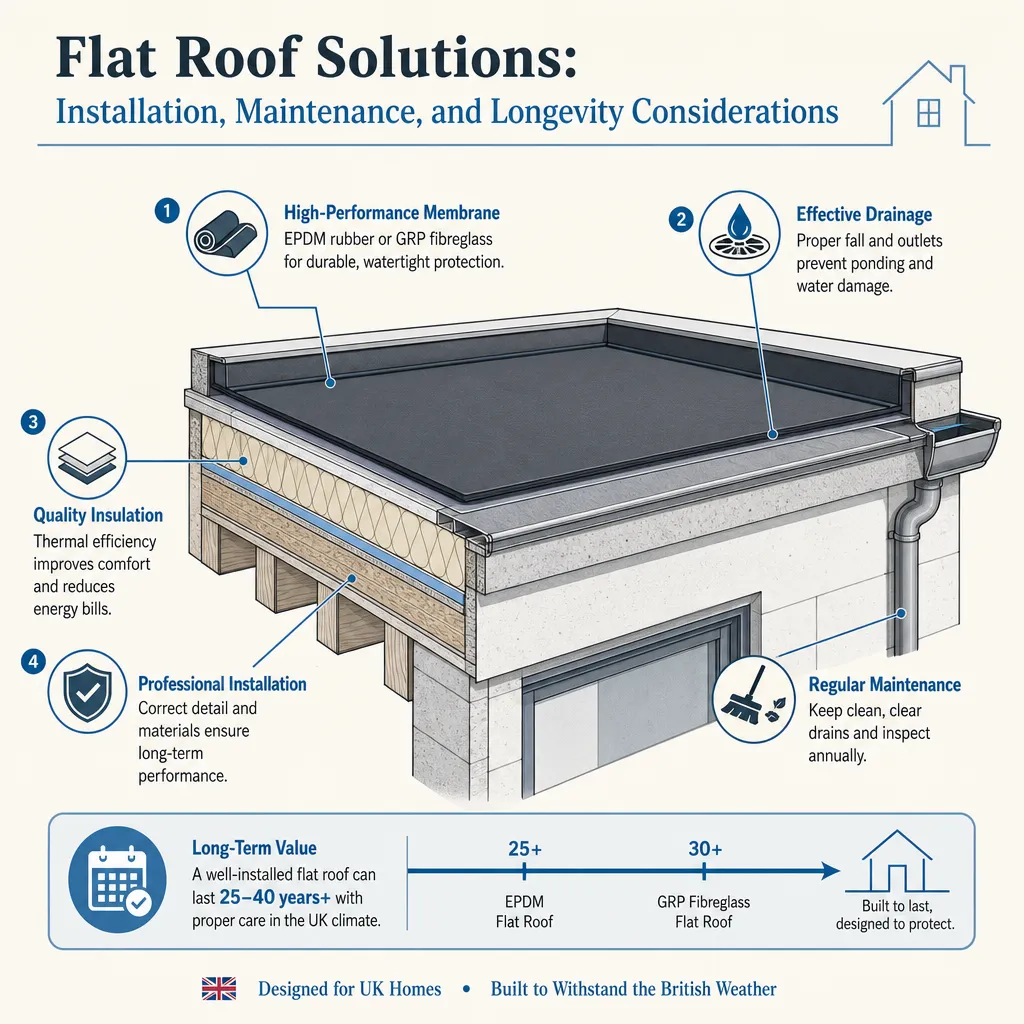 Improvement & Build
Flat Roof Solutions: Installation, Maintenance, and Longevity Considerations
Flat roofs use several waterproofing systems — EPDM rubber, GRP fibreglass, liquid-applied coatings, modified bitumen felt, lead, and zinc — each with different lifespans and installation requirements.
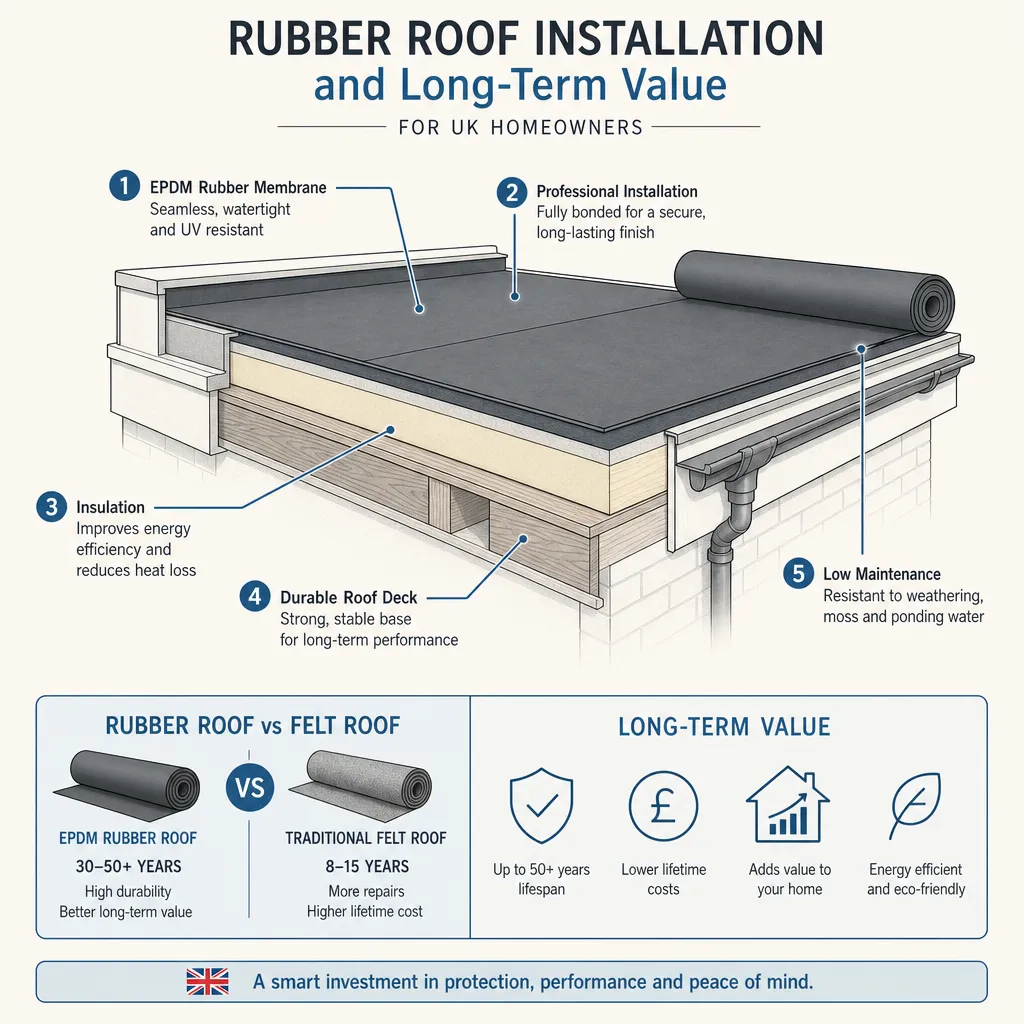 Improvement & Build
Rubber Roof Installation and Long-Term Value
EPDM rubber roofing is a synthetic membrane for flat and low-pitch roofs that typically lasts 30–50 years with minimal maintenance.