Improving Your Driveway: Options, Costs and Considerations
By Housey · Last reviewed 19th of May 2026
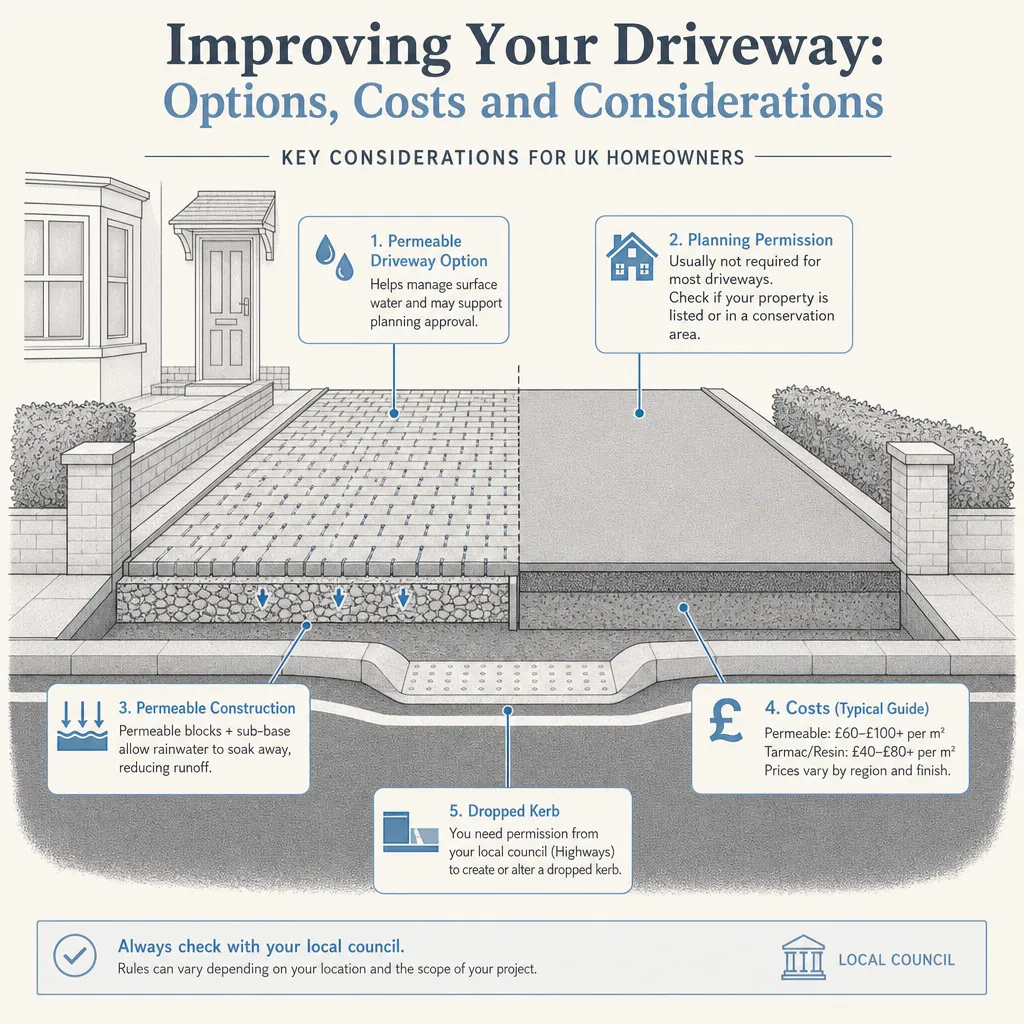
Improving Your Driveway: Options, Costs and Considerations
Driveway improvements are one of the UK's most popular home projects — enhancing kerb appeal, creating reliable off-street parking, and often adding practical value to a property. The question most often arises when an existing surface has cracked or become uneven, when a tired tarmac strip no longer reflects the rest of the property, or when a front garden could usefully yield a parking space. What many homeowners do not anticipate is that the planning and drainage rules in England are more prescriptive than they appear, and that creating or widening a vehicular access requires separate approval from the local highway authority regardless of what surface is chosen.
Key points
- In England, paving a front garden with a non-permeable surface larger than 5m² requires planning permission unless surface water is directed to a permeable area such as a lawn or planted border rather than to the highway.
- A dropped kerb (vehicular crossover) requires approval from the local highway authority before installation — starting without it is an offence under the Highways Act 1980.
- Permeable surfaces — including gravel, permeable block paving, porous asphalt, and resin bound aggregate — are generally Permitted Development regardless of size for a single dwelling house's front garden.
- Indicative installed costs (last reviewed 2026-05-19): gravel £15–£30/m², tarmac £25–£50/m², block paving £50–£110/m², resin bound £60–£130/m² — costs vary by site preparation requirements and region.
- Building regulations do not normally apply to a standard domestic driveway, but drainage works near a public sewer may require a Build Over Agreement with the sewerage undertaker.
Understanding the planning rules for front garden driveways
The Town and Country Planning (General Permitted Development) (England) Order 2008 changed how front garden hard surfacing is regulated. The rule in practice:
Permeable surfaces — gravel, permeable block paving, porous asphalt, and properly specified resin bound aggregate — are Permitted Development for a front garden driveway at a single dwelling house, regardless of the area covered.
Non-permeable surfaces — standard concrete, conventional tarmac without drainage channels, and non-porous block paving — require planning permission if the area being surfaced exceeds 5m² and surface water will drain to the highway or a public drain rather than to a permeable area (lawn, planted border, or properly designed soakaway) on the property.
In practice, most homeowners can avoid a planning application either by choosing a permeable surface or by ensuring run-off from a non-permeable surface is directed to a lawn or planted border rather than the pavement. Your installer should be able to advise on which products qualify and how to design the drainage accordingly.
Conservation areas and listed buildings: Different rules apply. Even apparently minor changes to the front curtilage may require consent. Always check with your local planning authority before starting any works if your property is listed or sits within a designated area.
Dropped kerbs: a separate and essential requirement
If you want to create a new vehicular access from the highway to your property — or widen or reposition an existing one — you need a vehicular crossover (dropped kerb) approved by the local highway authority. This is entirely separate from any planning position on the driveway surface itself.
The process typically involves:
- Applying to the council's highways department — fees vary by authority and the complexity of works involved, typically £300–£1,000 or more.
- The council or its approved contractor carrying out the physical kerb alteration (in most highway authorities, private contractors are not permitted to modify the public highway).
- In some cases, a separate planning application for the access point may also be required — particularly on classified or busy roads, or in conservation areas.
Creating a new or widened access without a dropped kerb approval is an offence under the Highways Act 1980 and can result in enforcement action, forced reinstatement at the owner's cost, and complications on sale of the property.
Comparison of driveway surface materials
Surface | Permeable? | Typical installed cost per m² | Lifespan | Maintenance | Planning position (front garden) |
|---|---|---|---|---|---|
Gravel or shingle | Yes | £15–£30 | 10+ years with replenishment | Regular raking and edge maintenance | Generally Permitted Development |
Tarmac / asphalt | No | £25–£50 | 15–25 years | Sealing every 5–7 years | Planning needed >5m² draining to highway |
Standard concrete | No | £40–£80 | 20–30 years | Low; stains and difficult to repair | Planning needed >5m² draining to highway |
Block paving (non-permeable) | No | £50–£110 | 20–30 years | Weeding; occasional re-levelling | Planning needed >5m² draining to highway |
Permeable block paving | Yes | £60–£120 | 20–30 years | Joint replenishment every few years | Generally Permitted Development |
Resin bound aggregate | Yes (if correctly specified) | £60–£130 | 15–25 years | Low; occasional pressure washing | Generally Permitted Development |
Resin bonded (surface dress) | No | £30–£60 | 5–10 years | Periodic retreatment | Check drainage direction with installer |
Indicative UK costs, last reviewed 2026-05-19. Installed costs vary by sub-base requirements, site access, region, and contractor.
Drainage: the detail that matters most
Poor drainage design is the single most common cause of failed driveway installations and retrospective enforcement issues. Key considerations:
Surface water run-off: Water draining off a hard surface onto the public highway or into a neighbour's property can create civil liability. A properly designed driveway channels run-off to a soakaway, permeable planted border, or a drainage channel leading to an appropriate outlet.
Sub-base specification: A well-constructed domestic driveway requires a minimum 150mm layer of compacted granular sub-base (typically MOT Type 1 crushed stone) over prepared ground. Skimping on sub-base depth is the most common cause of early surface failure and subsidence.
Building over sewers: If the proposed driveway or its sub-base sits above a public sewer, a Build Over Agreement with your sewerage undertaker (such as Thames Water, Anglian Water, or Severn Trent) may be required. Check sewer positions using the undertaker's free online mapping tool before agreeing a final layout.
Flooding risk: In areas with known surface water flooding issues, a Sustainable Drainage Systems (SuDS) approach — using permeable surfaces, swales, or a properly designed soakaway — may be required or strongly advisable. Your Lead Local Flood Authority (typically the county or unitary council) can advise on local requirements.
What to ask before accepting a quote
- Is the proposed surface permeable? Does it comply with the 2008 GPDO rules so that planning permission is not needed?
- How will surface water be managed, and where will it discharge to?
- Is a dropped kerb needed, and is the highways application and any associated works included in the quote?
- What sub-base depth and specification are you using, and how will you prepare the ground?
- Does the quote include all edging, drainage channels, and making-good to adjacent surfaces?
- Are there any underground services in the footprint — gas, electricity, water, telecoms — that need locating before excavation begins?
- What is the guarantee period for materials and workmanship?
- Is VAT included in the price?
Decision tree: do I need planning permission for my driveway?
- Rear or side garden hardstanding, not front? → Generally Permitted Development for any surface type.
- Front garden, permeable surface (gravel, permeable block paving, resin bound), single dwelling house? → Permitted Development — no planning permission needed.
- Front garden, non-permeable surface, ≤5m², run-off directed to lawn or planted border? → No planning needed; ensure drainage is correctly directed away from the highway.
- Front garden, non-permeable surface, >5m², run-off to highway or public drain? → Planning permission required.
- Listed building or conservation area? → Check with your local planning authority before starting any works.
- New or widened vehicular access to the highway? → Dropped kerb approval from the local highway authority required, regardless of the above.
Red flags: when to pause before work starts
- The installer has not mentioned drainage or the 2008 GPDO permeable surface rules at any point during the quotation process.
- You are in a conservation area and the installer has said planning permission is not needed without verifying the local authority position.
- The quote does not specify the sub-base depth or material used.
- There are inspection covers, marker posts, or yellow or green marker poles in or near the proposed area — these may indicate buried services that must be located before any excavation.
- The property is leasehold or on a managed estate — check whether the lease or any restrictive covenants require consent from the freeholder or management company before hard surfacing the frontage.
- The existing surface shows widespread cracking or persistent sinking, which may indicate an unresolved drainage or ground condition issue that a new surface alone will not solve.
When to get professional help
Most domestic driveway projects are well within the scope of a reputable driveway installer or groundworker. Seek specialist or professional input when:
- Ground conditions appear soft, waterlogged, or unstable — this may indicate poor drainage, made ground, or a more significant subsoil issue that needs investigation before design.
- You want to create a new access to the highway and are unsure of the approval process, timescales, or likely costs.
- The property is in a conservation area, is listed, or is subject to an Article 4 direction that may affect the consent position.
- There are signs of existing drainage problems — persistent standing water in the front garden, or damp at ground-floor level — that a new hard surface could worsen.
- You are unsure whether covenants or leasehold conditions restrict hard surfacing in the front curtilage.
How Housey can help
Housey connects you with vetted driveway installers and groundworkers who can advise on surface materials, drainage compliance, and the planning position for your specific property. When comparing quotes, use the checklist above to ensure every contractor is pricing the same scope and that drainage provision is clearly specified in writing.
Frequently asked questions
Do I need planning permission for a new driveway in England?
It depends on the surface and drainage. Permeable surfaces (gravel, permeable block paving, resin bound) are generally Permitted Development for front garden driveways. Non-permeable surfaces over 5m² that drain to the highway or a public drain require planning permission. Rear and side garden hardstanding is usually Permitted Development regardless of surface type. Conservation areas and listed buildings may have additional restrictions.
How much does a new driveway cost in the UK?
Indicative UK costs, last reviewed 2026-05-19. Installed prices vary widely: gravel £15–£30/m², tarmac £25–£50/m², block paving £50–£110/m², resin bound £60–£130/m². A typical single-car driveway of 20–25m² might cost £500–£3,250 depending on surface choice, sub-base condition, drainage requirements, and regional labour rates. Always obtain at least three itemised quotes.
How do I get a dropped kerb?
Apply to the highways department of your local authority. They will check road safety and the position of buried services, and either approve or refuse. In most areas, the council or its approved contractors must carry out the physical kerb alteration — private contractors may not legally modify the public highway. Allow 6–12 weeks and budget for fees that typically range from £300 to £1,000 or more depending on the works involved.
Is resin bound better than block paving?
Both have merits. Resin bound aggregate is fully permeable if correctly specified, gives a smooth contemporary finish, and requires minimal maintenance, with a typical lifespan of 15–25 years. Block paving is highly durable (20–30 years), can be lifted and re-laid if services need accessing, and suits traditional or period homes well. Resin bound generally costs slightly more to install but less to maintain over time.
How long does a driveway installation take?
Most domestic installations take 1–3 days depending on area, sub-base condition, drainage works, and surface material. A straightforward gravel or tarmac driveway may be complete in a single day; block paving and resin bound projects typically take 2–3 days plus curing time before the surface can safely be driven on. A new dropped kerb may add further time depending on the highways authority's programme.
Sources and further reading
- When is permission required? — front gardens and hard surfaces — GOV.UK / MHCLG
- Town and Country Planning (General Permitted Development) (England) Order 2008 — legislation.gov.uk
- Highways Act 1980 — legislation.gov.uk
- The SuDS Manual (C753) — CIRIA
- SusDrain — sustainable drainage guidance — SusDrain / CIRIA
Useful next reads
 Improvement & Build
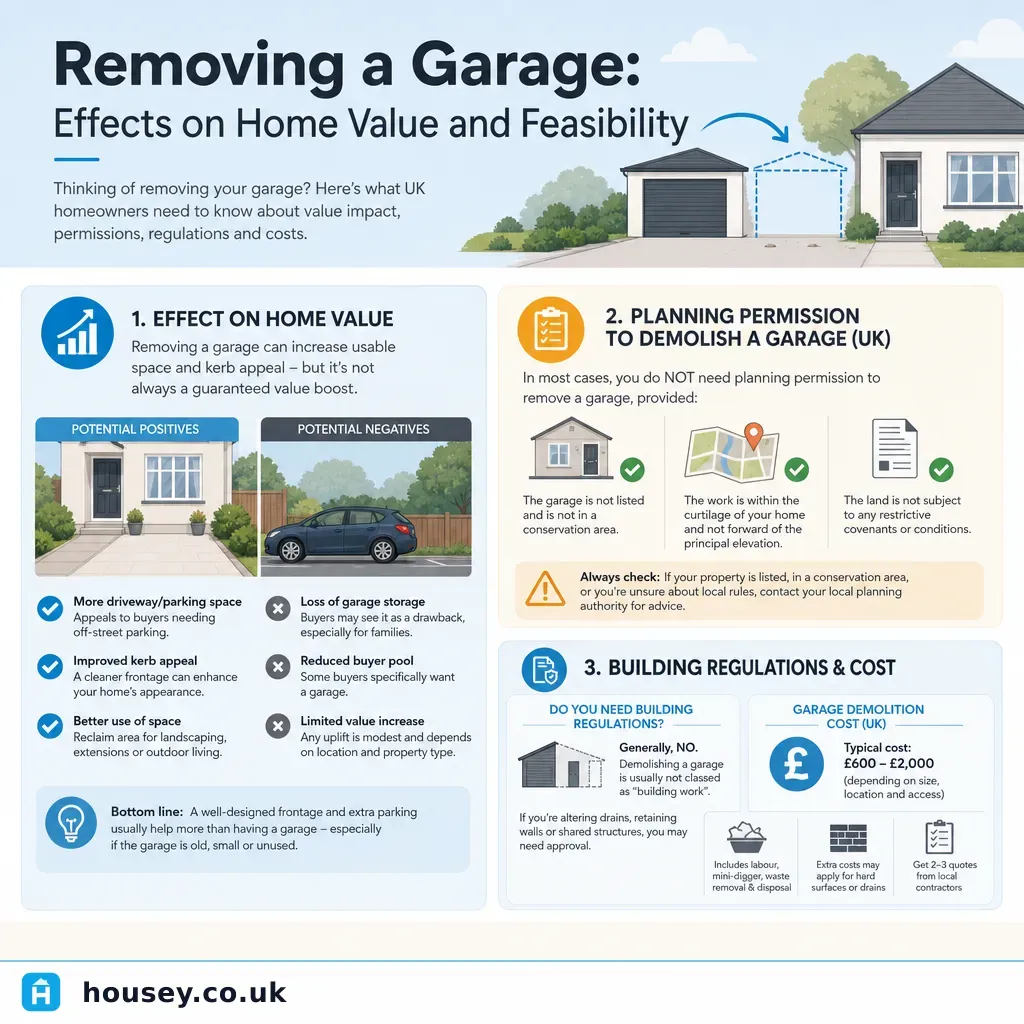
Removing a Garage: Effects on Home Value and Feasibility
Demolishing a garage in England may require prior notification to the local planning authority, and structural or building regulations assessments are often needed if the garage is attached to or integral with the house.
 Improvement & Build
Strategic Landscaping to Boost Property Value: Practical Tips and Ideas
Landscaping can add 5–15% to a UK property's perceived value, though the return varies by improvement type.
 Improvement & Build
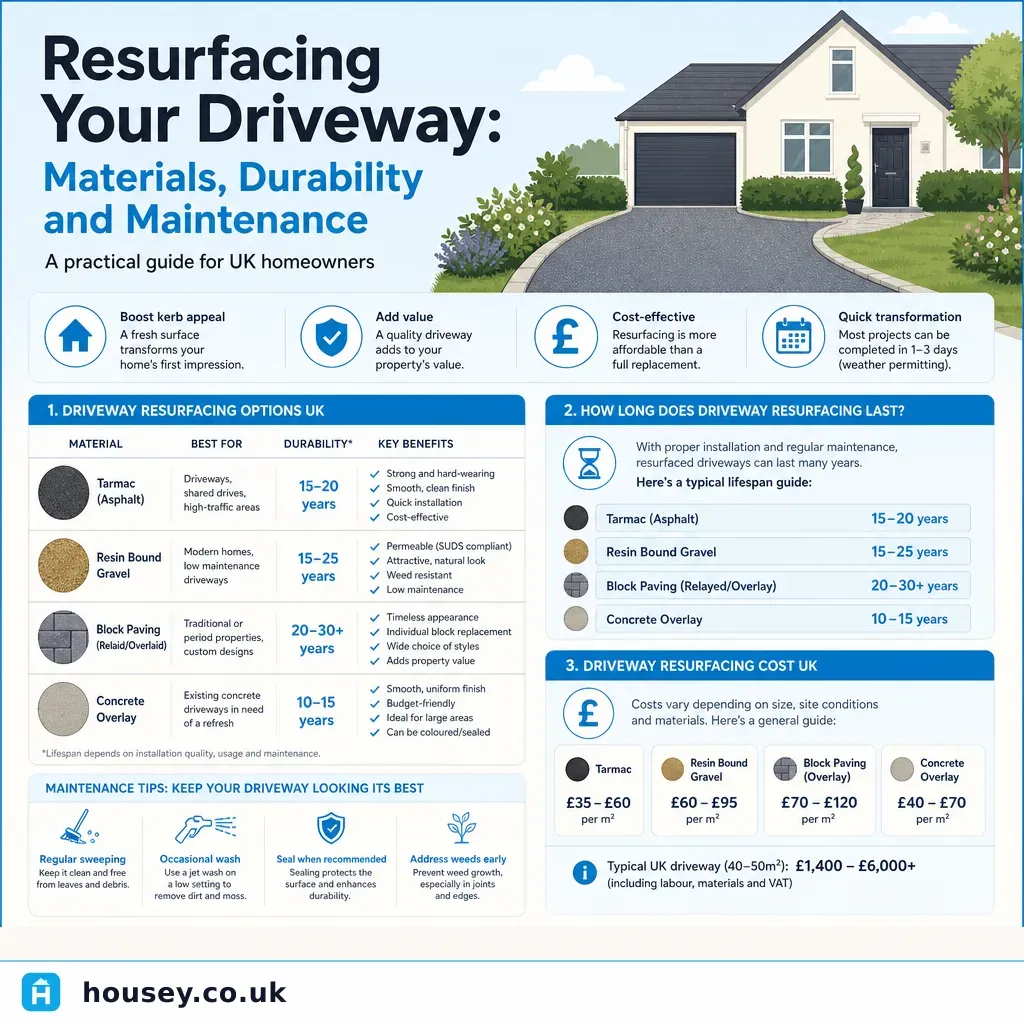
Resurfacing Your Driveway: Materials, Durability and Maintenance
Driveway resurfacing involves overlaying or replacing the existing surface with tarmac, block paving, resin-bound aggregate, gravel, or concrete.
 Improvement & Build
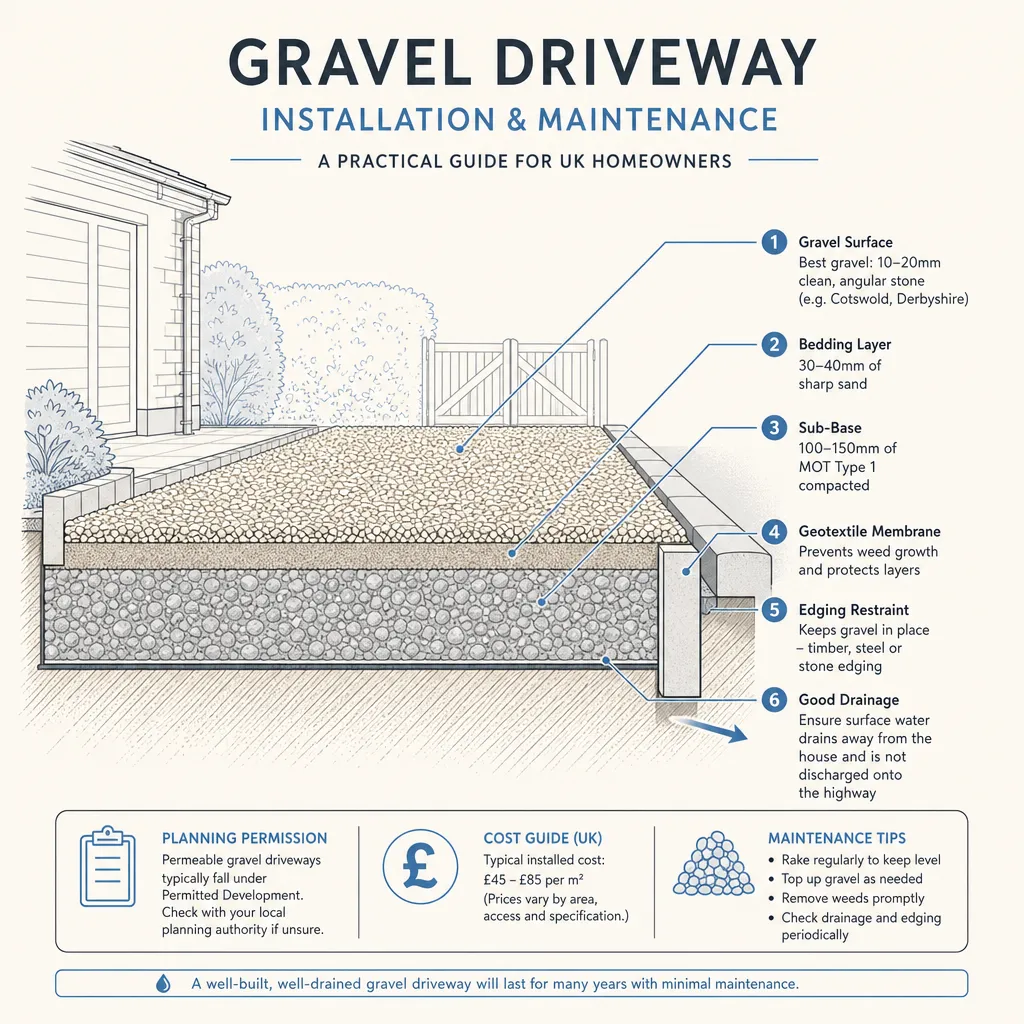
Gravel Driveway Installation and Maintenance
Gravel is one of the most practical and affordable driveway surfaces for UK homes.
 Improvement & Build
Drainage Systems: Understanding Your Property's Water Management and Maintenance
Most UK homes have separate foul water and surface water drainage systems.