Specialist Gas Installation and Safety for Kitchen Appliances
By Housey · Last reviewed 1st of June 2026
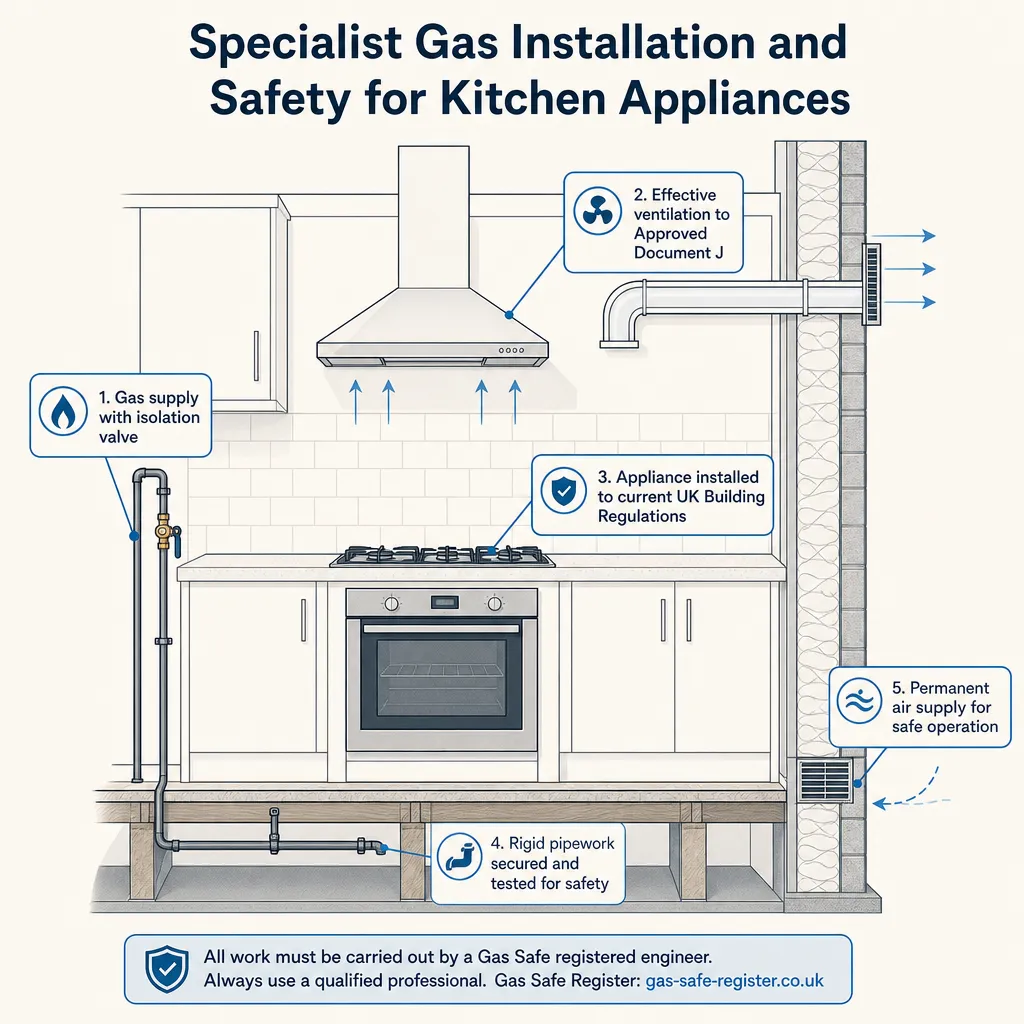
Specialist Gas Installation and Safety for Kitchen Appliances
Gas appliances in the kitchen — hobs, ranges, cookers, and built-in ovens — are among the most frequently used energy sources in UK homes, and any work on the gas supply serving them is governed by a strict legal framework. The question of who can carry out the work, and what documentation you should hold afterwards, arises whenever a new appliance is fitted, a supply is relocated, or an existing installation is checked before a property sale or tenancy. Getting it wrong carries legal, safety, and insurance consequences for homeowners and landlords alike.
Key points
- Under the Gas Safety (Installation and Use) Regulations 1998 (SI 1998/2451), all gas work on domestic premises in Great Britain must be carried out by a Gas Safe registered engineer; it is a criminal offence for anyone else to do so.
- Gas Safe registration can be verified for free on gasregister.co.uk; an engineer's ID card lists the specific appliance categories they are authorised to work on.
- On completion, the engineer must issue a Gas Safety Record confirming the installation meets safety requirements — retain this document with your property records.
- Approved Document J (Building Regulations) sets out ventilation and combustion air requirements for gas appliances in habitable rooms, including kitchens; relocating a hob to a new position may trigger compliance checks.
- A gas isolation valve must be accessible within 1 metre of a gas appliance under IGEM/UP/7 guidance; if one is not present, the engineer must fit one before completing the installation.
Who can legally carry out gas work on kitchen appliances
The Gas Safety (Installation and Use) Regulations 1998 make it a criminal offence for any person who is not Gas Safe registered to carry out gas work on domestic premises in Great Britain. In practice, this covers:
- Connecting or disconnecting a gas cooker, hob, or range
- Moving or extending a gas supply pipe
- Installing or replacing a gas isolation valve
- Commissioning a newly acquired gas appliance
Checking a Gas Safe engineer's ID card
Every Gas Safe registered engineer carries a photo ID card with a unique licence number and a list of the appliance categories they are authorised to work on. For kitchen installation work, the relevant categories are typically domestic gas natural installation pipework (CEN1) and domestic gas cookers (CCN1). Always verify the card by searching the Gas Safe Register at gasregister.co.uk before work begins — not after.
Appliance types and installation requirements
Appliance type | Typical gas connection | Key regulation or standard | Points to confirm |
|---|---|---|---|
Freestanding gas cooker | Bayonet connector or flexible hose | Gas Safety Regs 1998; IGEM/UP/7; BS 6172 | Isolation valve within 1 m; pipework diameter adequate |
Built-in gas hob | Rigid or semi-rigid connection | Approved Document J; BS 6172 | Ventilation adequate; hob clear of combustible surrounds |
Range cooker (gas or dual fuel) | Rigid supply pipe | IGEM/UP/7; BS 6173 | May need upgraded supply pipe to maintain correct pressure |
LPG appliance (rural properties) | Dedicated LPG pipework | Gas Safety Regs 1998; BS 5482 | Different operating pressure from natural gas mains |
Indicative technical references. Last reviewed 2026-06-01. Confirm current requirements with your Gas Safe engineer for your specific appliance and installation.
Ventilation and Approved Document J
Approved Document J of the Building Regulations governs combustion appliances and fuel storage systems. For gas kitchen appliances, the principal requirements cover:
Combustion air supply: Sufficient air must be available to support complete combustion and prevent carbon monoxide (CO) formation. In a well-sealed modern kitchen, purpose-provided ventilation openings may be required depending on room volume and the appliance's gas rating.
Cooker hood and extract ventilation: Gas hobs and cookers do not generally require a flue, but a ducted cooker hood must not create negative pressure that draws combustion products back into the room. A recirculating cooker hood avoids this risk. Where a ducted hood is preferred, extract rate and positioning must be assessed alongside the appliance's combustion air requirements.
Carbon monoxide detection: Audible CO alarms to BS EN 50291-1 are strongly advisable in any kitchen or habitable room containing a gas appliance, and are required in new and changed tenancies in England and Wales under the Smoke and Carbon Monoxide Alarm (Amendment) Regulations 2022. The HSE provides guidance on domestic CO alarms.
Red flags: when to stop and call a professional
Do not attempt to use or reconnect a gas appliance yourself if you notice any of the following:
- A smell of gas near the appliance, supply pipe, or meter
- A hissing or whistling sound from pipework or fittings
- Soot, yellow staining, or scorch marks around a gas appliance
- A gas flame that burns orange or yellow rather than blue
- A previous engineer's Gas Safety Record that cannot be located for the property
- Corroded pipework, non-standard fittings, or no identifiable isolation valve
If you smell gas, leave the building immediately, do not operate any electrical switches, and call the National Gas Emergency Service on 0800 111 999 (free, 24 hours).
Important limitations
This article provides general information about the UK regulatory framework for gas installation and kitchen appliance safety. Requirements vary depending on appliance type, gas supply type (natural gas or LPG), property construction, kitchen design, and local building control decisions. Only a Gas Safe registered engineer with the appropriate category authorisations can assess and certify your specific installation. Nothing in this article constitutes a gas safety assessment or replaces professional inspection.
When this becomes urgent
Seek immediate professional help — or call the Gas Emergency Service — if:
- You can smell gas anywhere in your property
- A carbon monoxide detector alarms
- Any occupant experiences unexplained headaches, nausea, dizziness, or confusion — these may be symptoms of CO poisoning; leave immediately, seek fresh air, and call 999
- A newly installed or reconnected gas appliance produces an abnormal flame colour or fails to operate normally
What to ask a qualified professional
Before instructing a Gas Safe registered engineer for kitchen appliance installation, ask:
- Can I see your Gas Safe ID card, and does it cover both pipework (CEN1) and cookers (CCN1)?
- Will you carry out a gas tightness test on the supply pipework before and after the work?
- What Gas Safety Record documentation will I receive on completion?
- Does this installation require a building regulations notification, and if so, will you handle it?
- Is my existing supply pipe diameter and route suitable for the new appliance?
- Are there any ventilation requirements for this appliance in my kitchen layout?
- Is VAT included in your quoted price?
When to get professional help
All gas work on kitchen appliances requires a Gas Safe registered engineer — there are no DIY exceptions, regardless of experience or competence. Beyond the legal requirement, seek professional input especially when:
- You are relocating the gas supply to a new kitchen position or extending pipework through a wall or floor
- You are installing a high-output range cooker that may require a larger supply pipe diameter
- The property is served by LPG rather than mains natural gas
- You are purchasing a property and no Gas Safety Record can be located for the current kitchen installation
- You are a landlord: the Gas Safety (Installation and Use) Regulations 1998 require an annual gas safety check on all gas appliances in tenanted properties, with a copy of the Gas Safety Record provided to tenants before they move in and within 28 days of each subsequent annual check
How Housey can help
Housey helps homeowners find and compare vetted tradespeople across all stages of home improvement and safety compliance. If you need a Gas Safe registered engineer for kitchen appliance installation, supply extension, or an annual safety inspection, you can request and compare quotes from local, accredited professionals through the Housey platform.
Frequently asked questions
Can I connect a gas cooker myself?
No. Connecting or disconnecting a gas cooker is gas work under the Gas Safety (Installation and Use) Regulations 1998 and may only be carried out by a Gas Safe registered engineer. Doing this work yourself is a criminal offence and will typically invalidate your home insurance policy.
What is a Gas Safety Record?
A Gas Safety Record — sometimes called a Gas Safety Certificate — is the document issued by a Gas Safe registered engineer confirming that a gas installation or appliance met safety requirements at the time of inspection. For landlords, providing a copy to tenants within 28 days of each annual check, and to new tenants before they move in, is a legal requirement under the 1998 Regulations.
How often should a gas cooker be serviced?
Manufacturers typically recommend annual servicing for gas cooking appliances. For rental properties, the landlord's annual gas safety check must include all gas appliances. For owner-occupied properties, there is no statutory frequency, but annual servicing is advisable to maintain efficiency, safety, and appliance longevity.
Do I need building regulations approval for a new gas hob?
A like-for-like replacement of a gas appliance in the same position does not normally require a building regulations notification. However, a new gas installation, relocation of the supply pipe, or installation of a gas appliance where none previously existed may require notification to building control. Your Gas Safe engineer should advise on whether notification is needed for your specific installation.
Sources and further reading
- Gas Safety (Installation and Use) Regulations 1998 — legislation.gov.uk
- Gas Safe Register — find a registered engineer — Gas Safe Register
- Approved Document J: combustion appliances and fuel storage systems — GOV.UK
- Carbon monoxide alarms: domestic guidance — Health and Safety Executive
- Landlord gas safety responsibilities — Health and Safety Executive
Useful next reads
 Improvement & Build
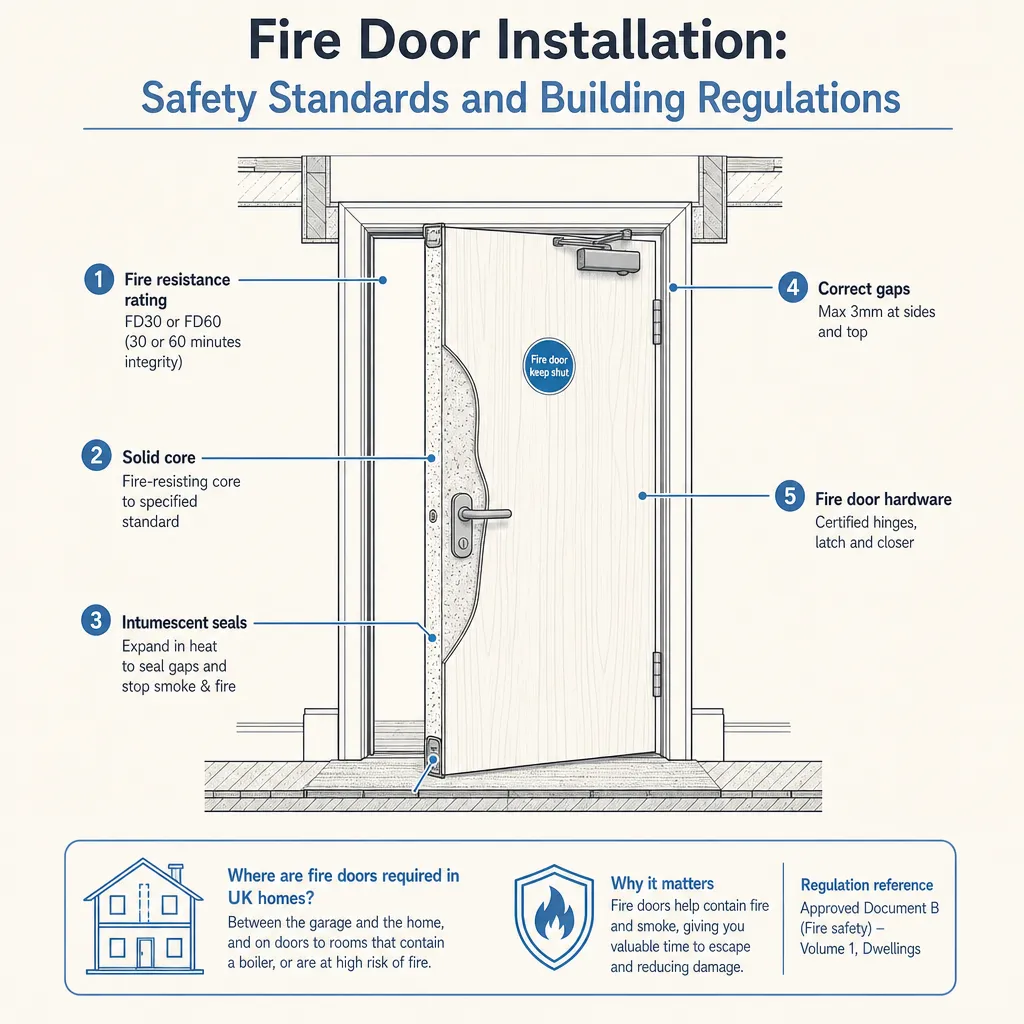
Fire Door Installation: Safety Standards and Building Regulations
Fire doors in UK homes are required by Building Regulations on escape routes, between integral garages and living space, and throughout HMOs.
 Improvement & Build
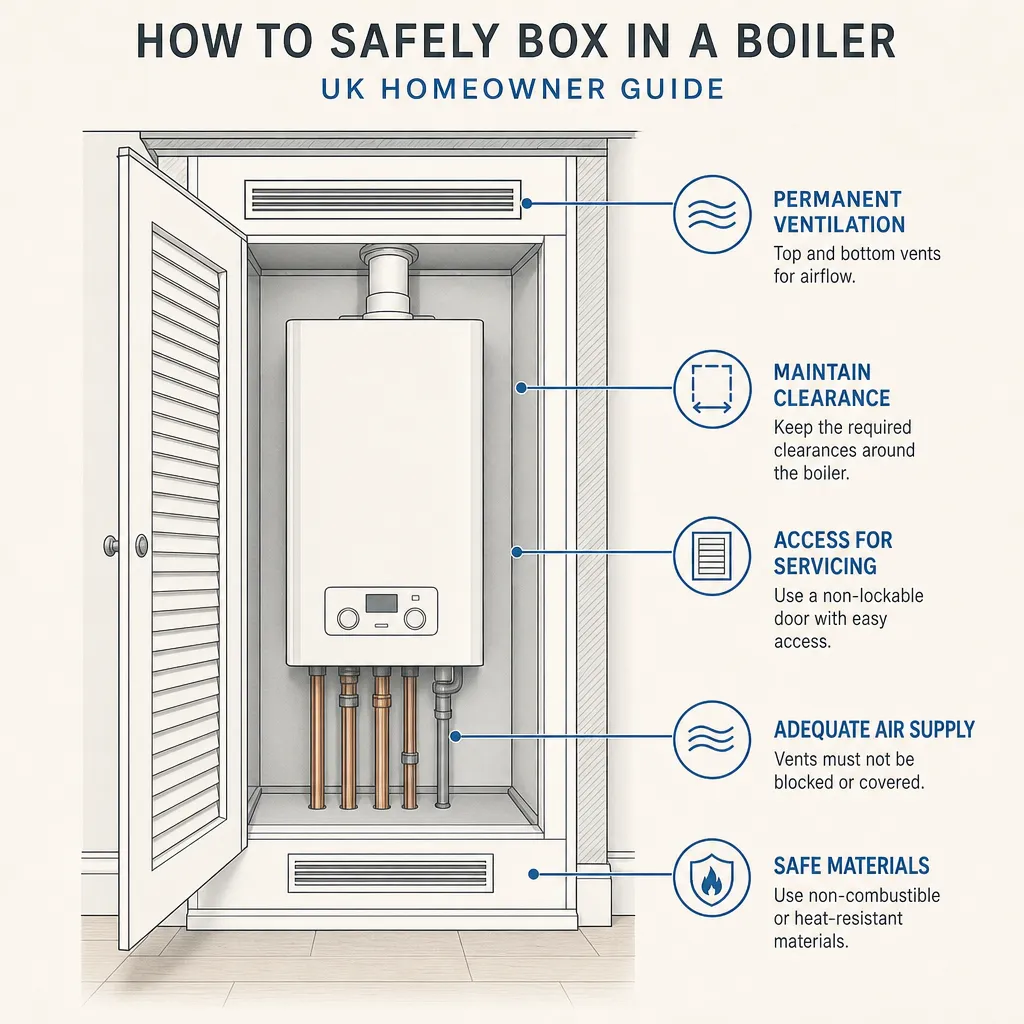
How to safely box in a boiler in your home
Boxing in a boiler is manageable carpentry, but the design must comply with the Gas Safety (Installation and Use) Regulations 1998 and Building Regulations Approved Document J.
 Improvement & Build
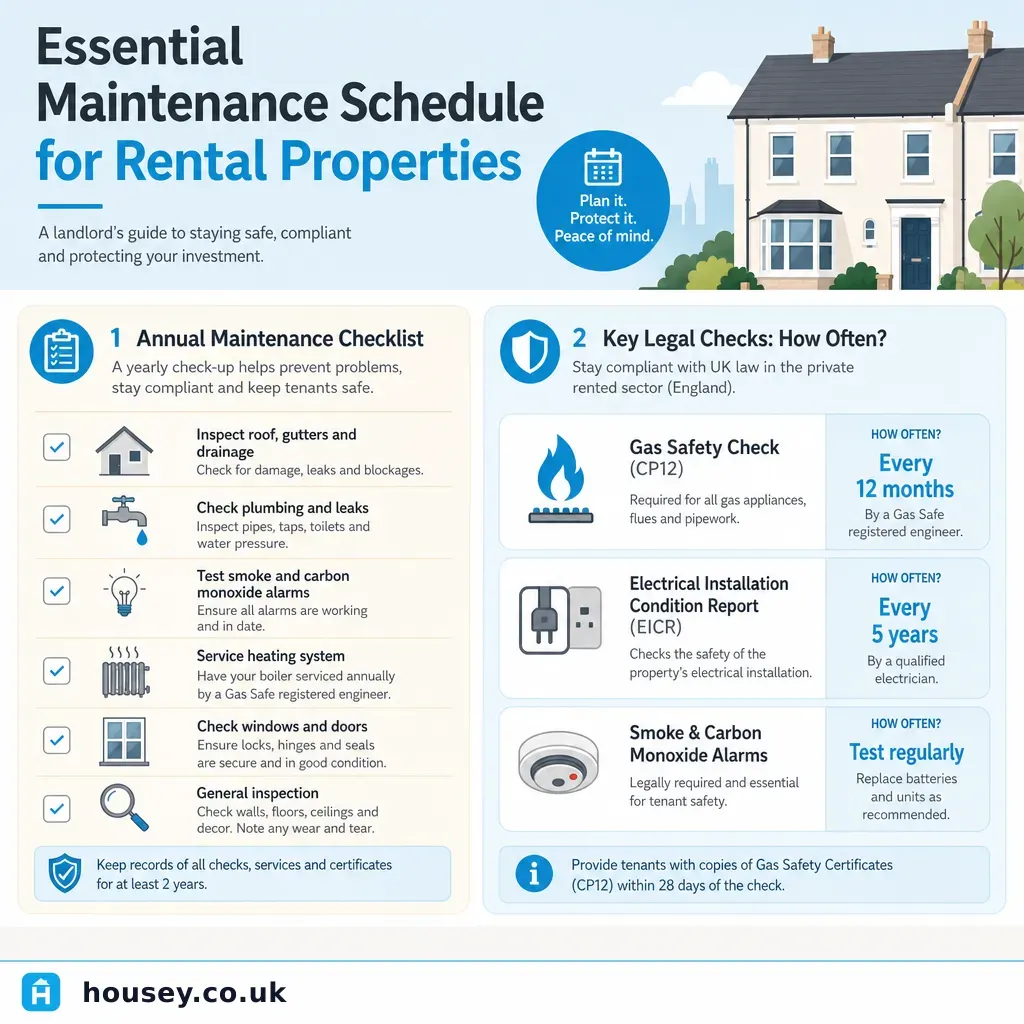
Essential Maintenance Schedule for Rental Properties
UK rental properties need an annual Gas Safety Record, an EICR every five years, smoke alarms on every storey, and seasonal maintenance checks for gutters, roofing, heating, and damp.
 Improvement & Build
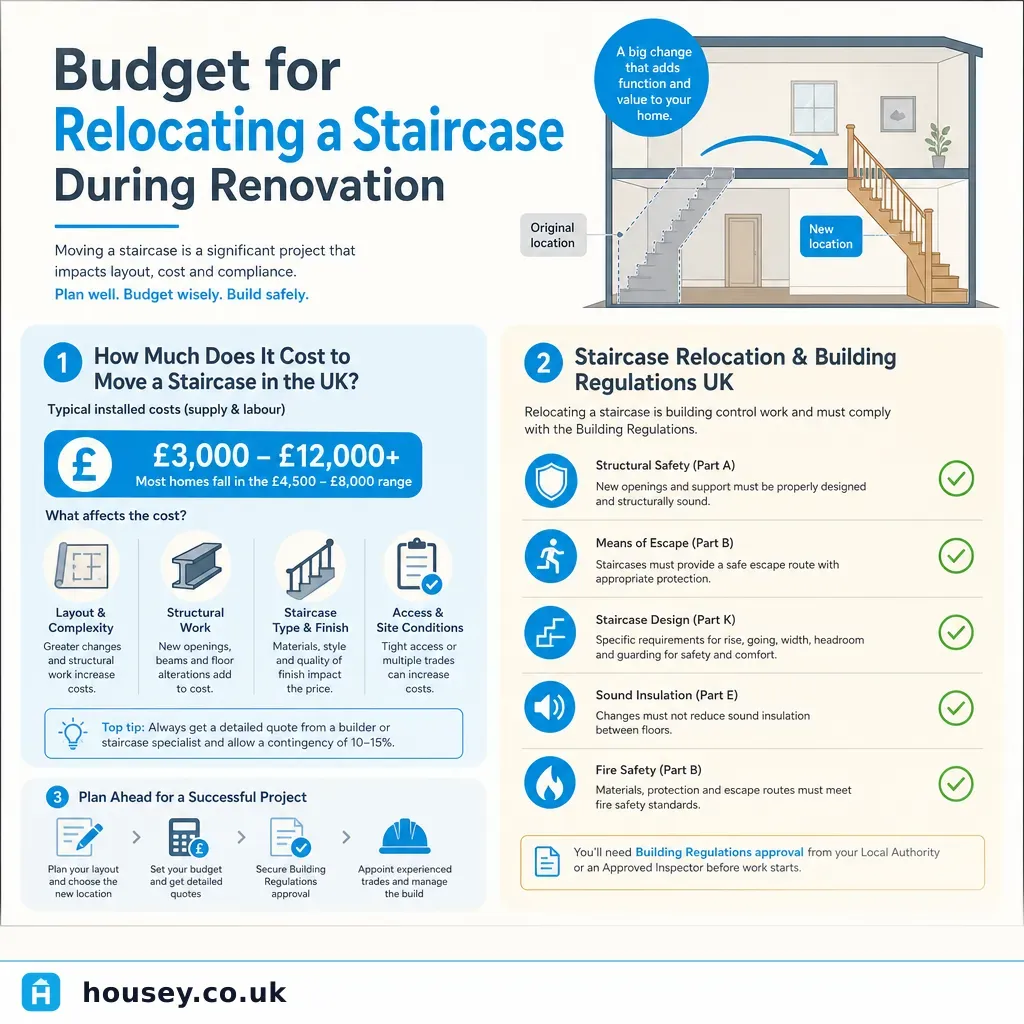
Budget for Relocating a Staircase During Renovation
Relocating a staircase in a UK home typically costs £6,000 to £20,000 or more, depending on structural complexity and staircase design.
 Improvement & Build
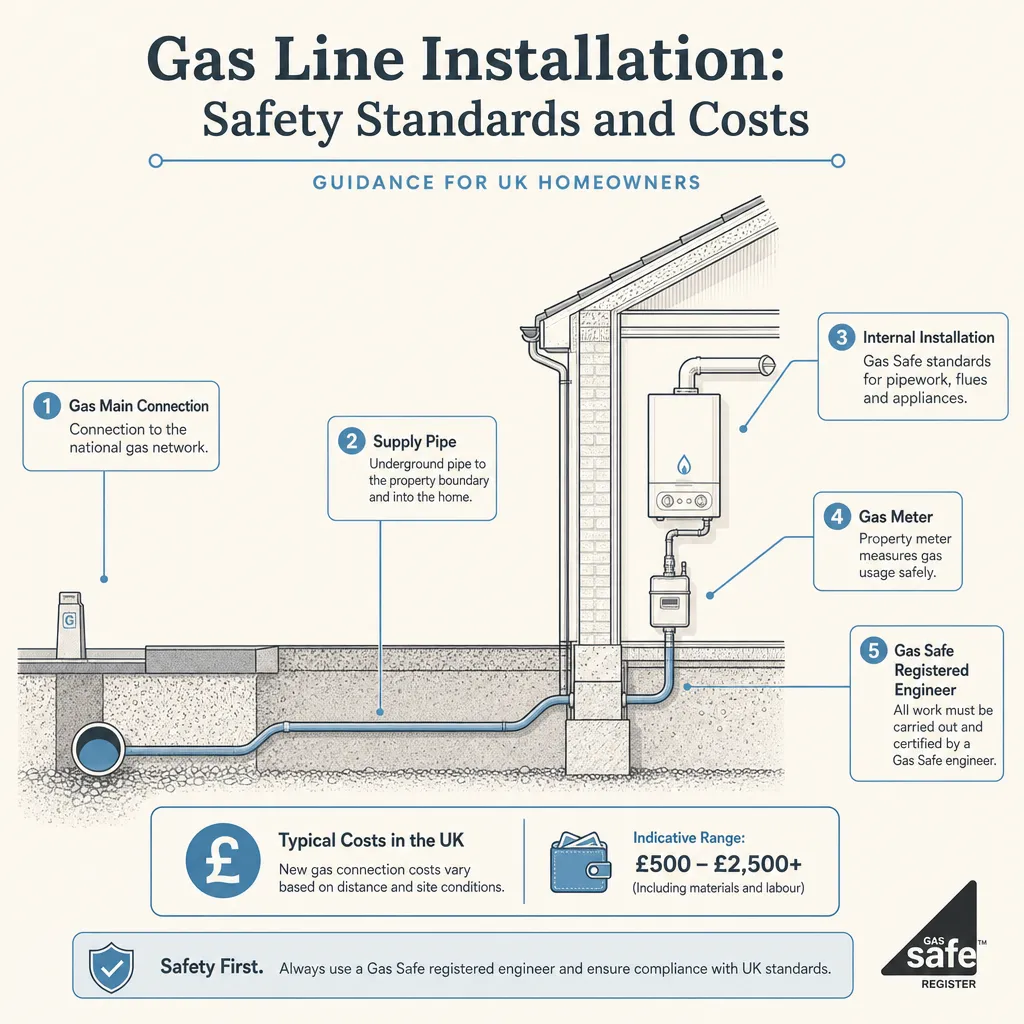
Gas Line Installation: Safety Standards and Costs
All gas line installation in Great Britain must be carried out by a Gas Safe registered engineer — this is a legal requirement under the Gas Safety (Installation and Use) Regulations 1998, not a recommendation.