Maintaining And Caring For Thatched Properties
By Housey · Last reviewed 30th of May 2026
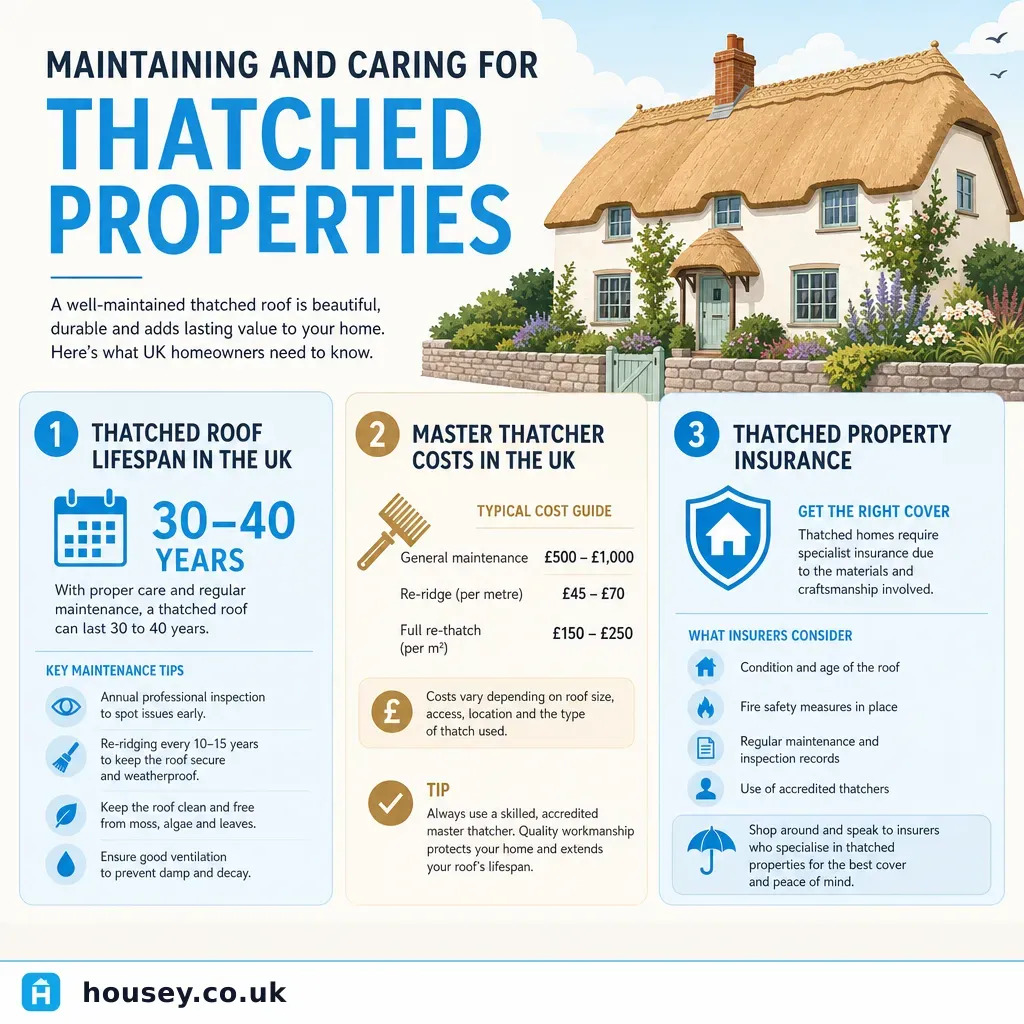
Maintaining And Caring For Thatched Properties
England has around 60,000 thatched properties, concentrated in counties such as Devon, Dorset, Norfolk, Suffolk, and the Cotswolds. These buildings are architecturally distinctive, often listed, and carry maintenance responsibilities unlike any other roof type. Whether you own a thatched cottage already or are considering buying one, understanding the maintenance cycle, fire safety requirements, and insurance landscape is essential for informed, safe ownership.
Key points
- Water reed (Phragmites australis) is the most durable thatch material, lasting 25–40 years; combed wheat reed lasts 25–35 years; long straw has the shortest lifespan at 15–25 years.
- The ridge — the capping at the apex of the roof — deteriorates faster than the main coat and typically requires replacement every 10–15 years regardless of the main thatch condition.
- Listed building consent must be obtained before any work that affects the character of a listed thatched property, including a change of thatch material; proceeding without consent is a criminal offence under the Planning (Listed Buildings and Conservation Areas) Act 1990.
- Chimney fire is the leading cause of thatched property fires in the UK; HETAS and the National Society of Master Thatchers (NSMT) recommend annual chimney sweeping and installation of a spark arrestor cap on active stacks.
- Specialist thatched property insurance is essential; many mainstream insurers do not cover thatch at all, and those that do typically charge a significant premium over standard buildings cover.
Thatch materials: lifespan and suitability compared
Material | Typical lifespan (main coat) | Ridge replacement | Appearance | Notes |
|---|---|---|---|---|
Water reed | 25–40 years | Every 10–15 years | Smooth, uniform, dense | Best longevity; may require specialist sourcing |
Combed wheat reed | 25–35 years | Every 10–15 years | Similar to water reed | Traditional in the West Country |
Long straw | 15–25 years | Every 8–12 years | Shaggy, layered finish | Common in East Anglia and the Midlands |
The material used on your property may be determined by regional tradition, listed building consent conditions, or the preferences of your local conservation officer. Changing from one material to another on a listed property usually requires consent.
The maintenance cycle: what to expect and when
Annual
A master thatcher should inspect the roof every one to two years. Between visits, owners should check for:
- Displaced, bare, or compacted thatch sections
- Damage from birds — sparrows and starlings commonly pull at eaves
- Moss or algae growth, which retains moisture and can accelerate decay
- Condition of the ridgework: is the decorative pattern still intact?
- Gutters and valley drainage — blocked gutters cause moisture to back up into the thatch
An annual chimney sweep (or more frequently with solid fuel) is a fire safety requirement, not an optional extra.
Every 10–15 years
Ridge replacement is the most common maintenance cost for thatched properties. The ridge takes the full force of weather exposure and deteriorates first. A new ridge from a qualified master thatcher typically costs £2,000–£5,000 depending on property size, ridge complexity, and location (indicative UK costs, last reviewed 2026-05-30; quotes vary by region and property).
Every 25–40 years (material-dependent)
A full re-thatch — removing the old material and laying a new main coat — is the largest maintenance cost. Indicative costs range from £15,000 to £50,000 or more for a typical cottage, depending on roof area, material, access, and the complexity of dormers and valleys (indicative UK costs, last reviewed 2026-05-30; quotes vary significantly). Always obtain at least three quotes from NSMT-registered master thatchers.
Fire risk and prevention
Fire is the most serious risk associated with thatched properties. Once thatch ignites it burns rapidly and is very difficult to extinguish. The principal fire risks are:
- Chimney fires — the single largest cause of thatch fires; embers from a blocked or poorly maintained flue can reach and ignite the thatch
- Electrical faults — wiring in roof voids should be inspected regularly by a qualified electrician
- Hot works — any welding, cutting, or grinding near thatch should be accompanied by a fire watch period
Recommended fire precautions:
Your insurer may require some of these measures as a condition of cover. Check your policy schedule carefully before works begin.
Listed buildings and planning considerations
Approximately 50,000 of England's thatched properties are listed. Works that typically require listed building consent include:
- Any change to the thatch material (for example, from long straw to water reed)
- Altering the ridge pattern or decorative ridge design
- Installing wire netting over the thatch (often required by insurers — consent may still be needed)
- Any structural alteration to the roof timbers
Failure to obtain listed building consent is a criminal offence. Contact your local planning authority or historic environment officer before instructing any thatcher on a listed building.
Choosing a master thatcher
Thatching quality varies considerably. When selecting a thatcher:
- Check they are registered with the National Society of Master Thatchers (NSMT) or a comparable recognised body
- Ask for references from comparable properties in your area
- Confirm they carry appropriate public liability and professional indemnity insurance
- Request a written specification covering materials, method, and expected lifespan before any work begins
What to ask before accepting a quote
- What material are you proposing, and why is it appropriate for this property?
- What is the expected lifespan of the main coat and the ridge separately?
- Do you hold NSMT membership or equivalent professional registration?
- Is the quote inclusive of scaffolding, waste removal, and bird-netting reinstatement?
- Is VAT included?
- What happens if additional deterioration is found once the old material is removed?
- Will you include any fire safety recommendations in your written specification?
Important limitations
Thatched property maintenance involves fire safety, listed building consent, and structural considerations that vary significantly by property, material, region, and listing status. This article provides general guidance only. Always consult a qualified master thatcher for your specific roof, your local planning authority on listed building matters, and a HETAS-registered chimney specialist for fire safety advice. Do not use this guide as a substitute for a professional inspection of your property.
What to ask a qualified professional
Before any chimney work or heat-source installation at a thatched property:
- Are you HETAS-registered or certified by another recognised chimney safety body?
- Can you confirm the chimney liner is intact and correctly sized for the appliance in use?
- Do you recommend a spark arrestor for our specific chimney type?
- Is a fire risk assessment of the roof void advisable before or after a re-thatch?
- Are there any current HETAS or insurer requirements for our property type I should be aware of?
When to get professional help
Contact a master thatcher promptly if you notice:
- Sections of thatch sagging, bare, or visibly thinning
- Significant bird damage exposing the underlying fixings or spar work
- Extensive algae or moss covering a large proportion of the roof
- The ridge losing its structure or visibly collapsing at the apex
- Water staining on ceiling timbers or purlins visible from the roof void
If you suspect a chimney defect or have experienced a chimney fire, do not use any solid fuel appliance until a HETAS-registered engineer has inspected and cleared it.
How Housey can help
Housey connects thatched property owners with qualified professionals for roof surveys — including specialist pre-purchase assessments covering remaining lifespan, ridge condition, and fire safety concerns. Compare quotes from vetted local specialists before committing to work.
Frequently asked questions
How often should a thatched roof be inspected?
Most master thatchers recommend inspection every one to two years, with annual inspection preferred — particularly if the property uses solid fuel heating or has experienced storm damage. A specialist roof survey is strongly advisable before purchasing any thatched property, to assess the remaining lifespan of the main coat and ridge.
Does replacing thatch need planning permission?
Like-for-like replacement on an unlisted property in the same material and style is usually permitted development and does not require planning permission. On listed buildings or in conservation areas, contact your local planning authority before instructing a thatcher, as listed building consent may be required even for straightforward repairs.
Is thatched property insurance more expensive?
Yes. Specialist thatched property buildings insurance is available from a limited number of insurers; premiums reflect the elevated fire risk and higher rebuild costs associated with specialist labour and materials. Use a specialist broker rather than standard comparison sites, which may not return appropriate policies for thatch.
Can I install solar panels on a thatched roof?
Solar panels on thatch raise fire risk and structural concerns and are likely to require listed building consent on listed properties. Consult your local planning authority, a structural engineer, and your insurer before proceeding. Some insurers may exclude cover if panels are installed without prior approval.
Sources and further reading
- Historic England — advice on thatched buildings — Historic England
- HETAS — chimney safety and solid fuel guidance — HETAS
- National Society of Master Thatchers — National Society of Master Thatchers
- Planning (Listed Buildings and Conservation Areas) Act 1990 — legislation.gov.uk
- GOV.UK — planning permission — HM Government
Useful next reads
 Improvement & Build
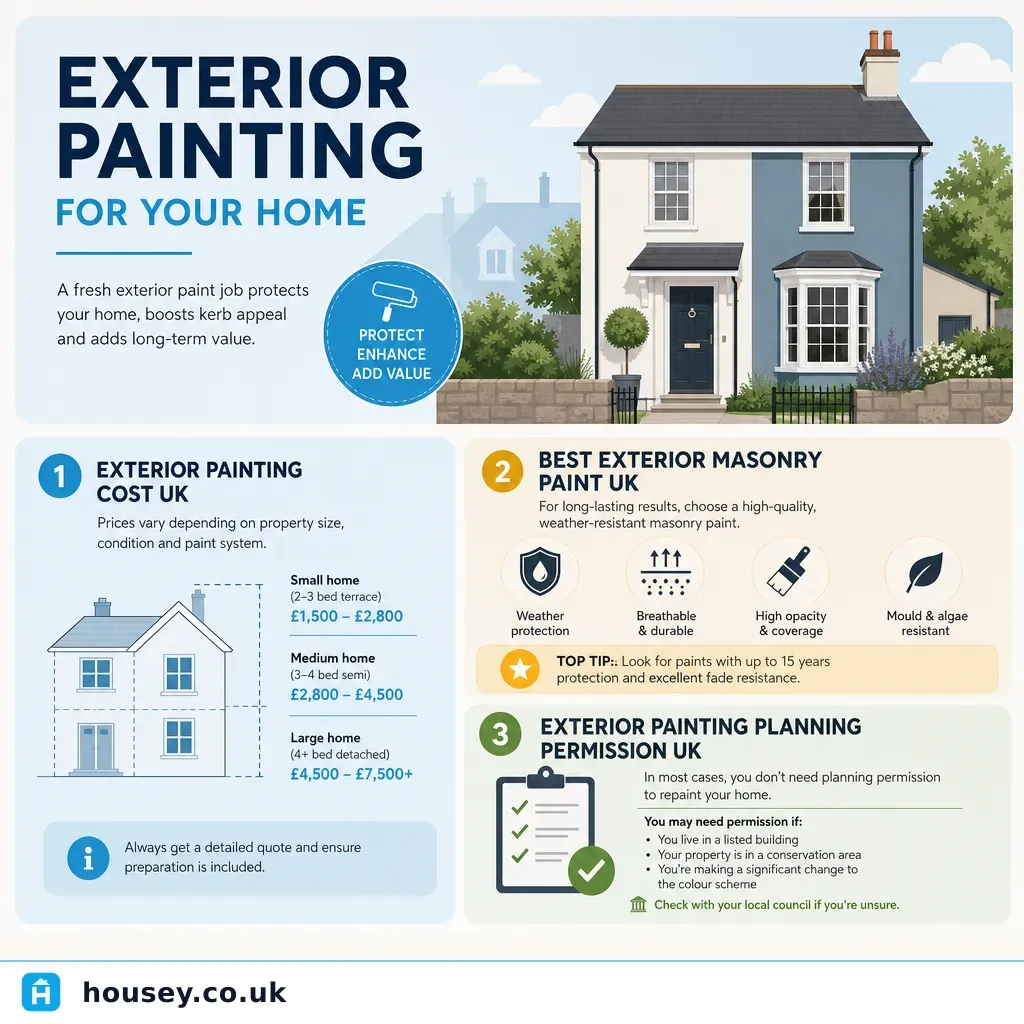
Exterior Painting for Your Home
Exterior painting protects your home from the UK's wet climate and can significantly boost kerb appeal.
 Improvement & Build
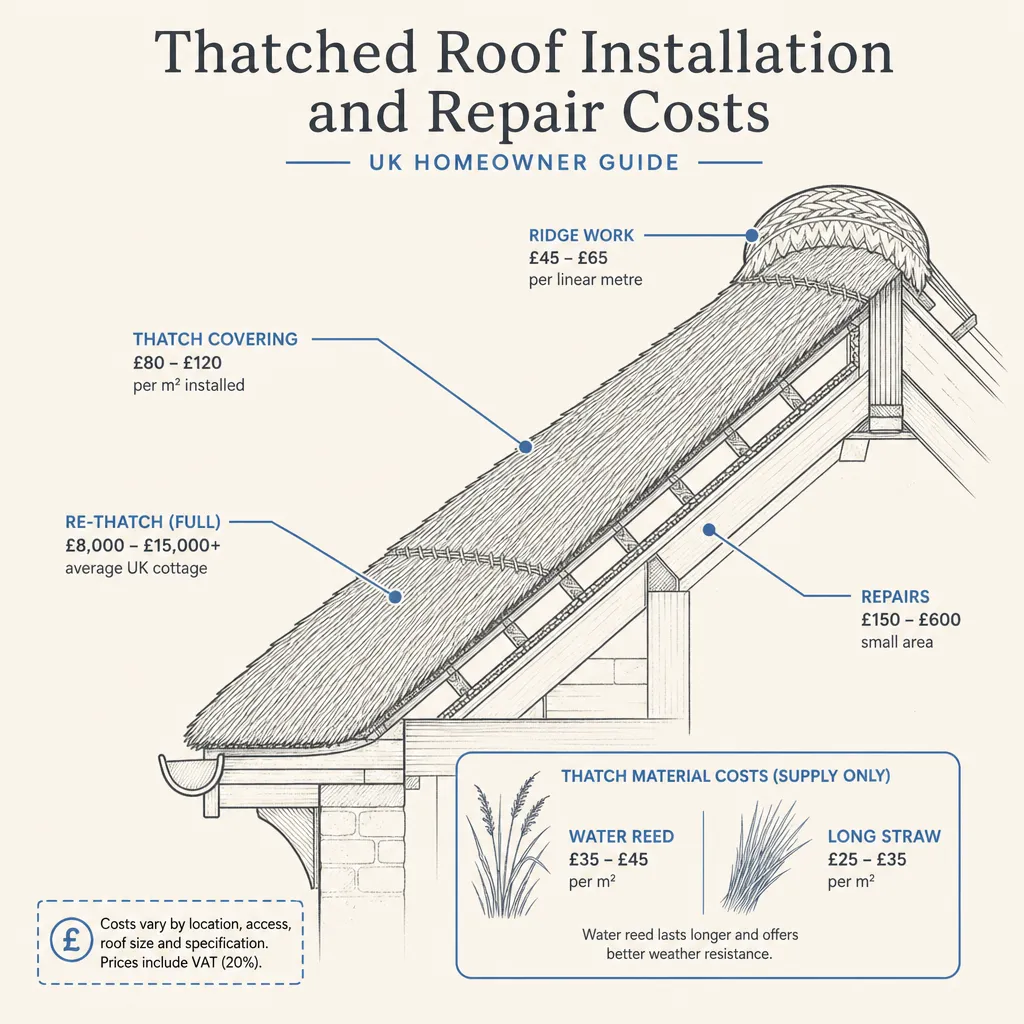
Thatched Roof Installation and Repair Costs
A full re-thatch on a typical UK cottage costs £15,000 to £30,000 or more, depending on material, size, and location.
 Improvement & Build
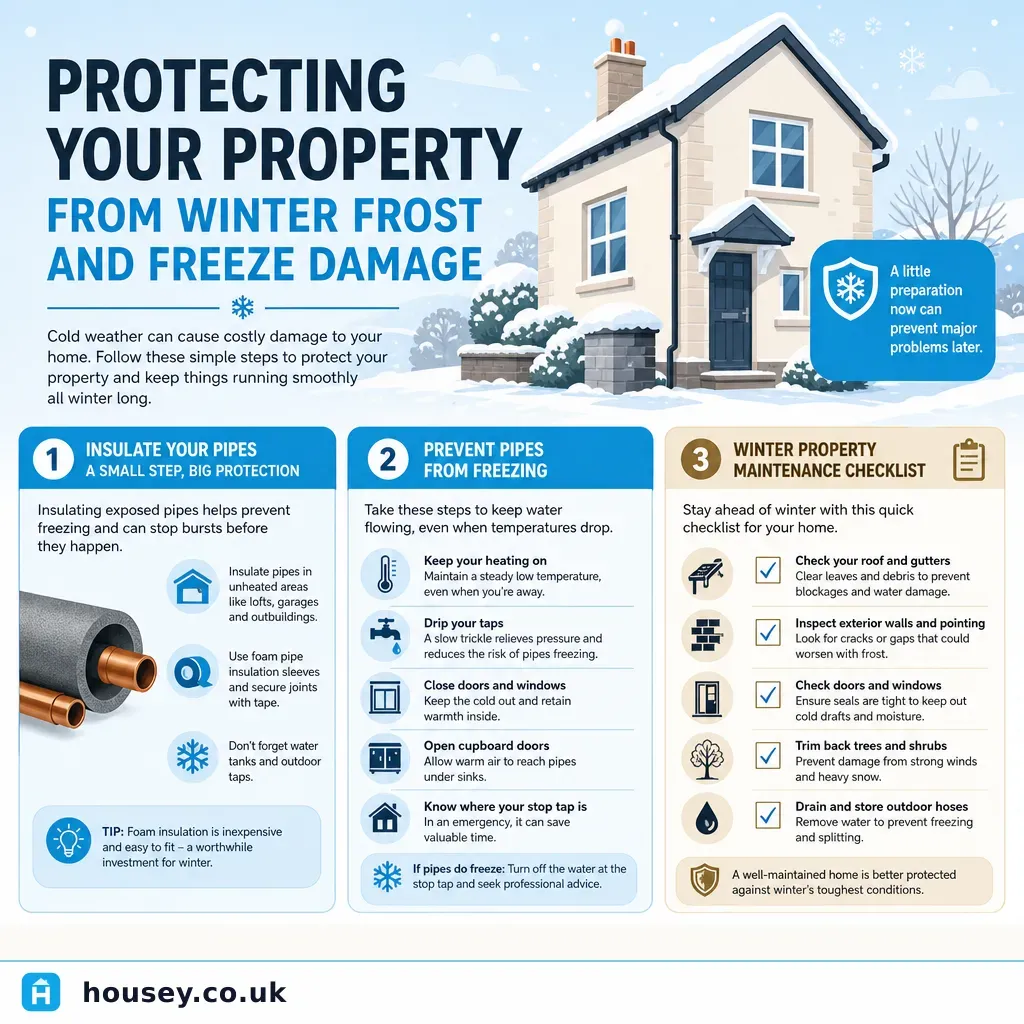
Protecting Your Property from Winter Frost and Freeze Damage
Protecting your home from winter frost damage mainly involves insulating exposed pipes, lagging outdoor taps, maintaining a minimum indoor temperature in unoccupied properties, and clearing drains before cold spells.
 Improvement & Build
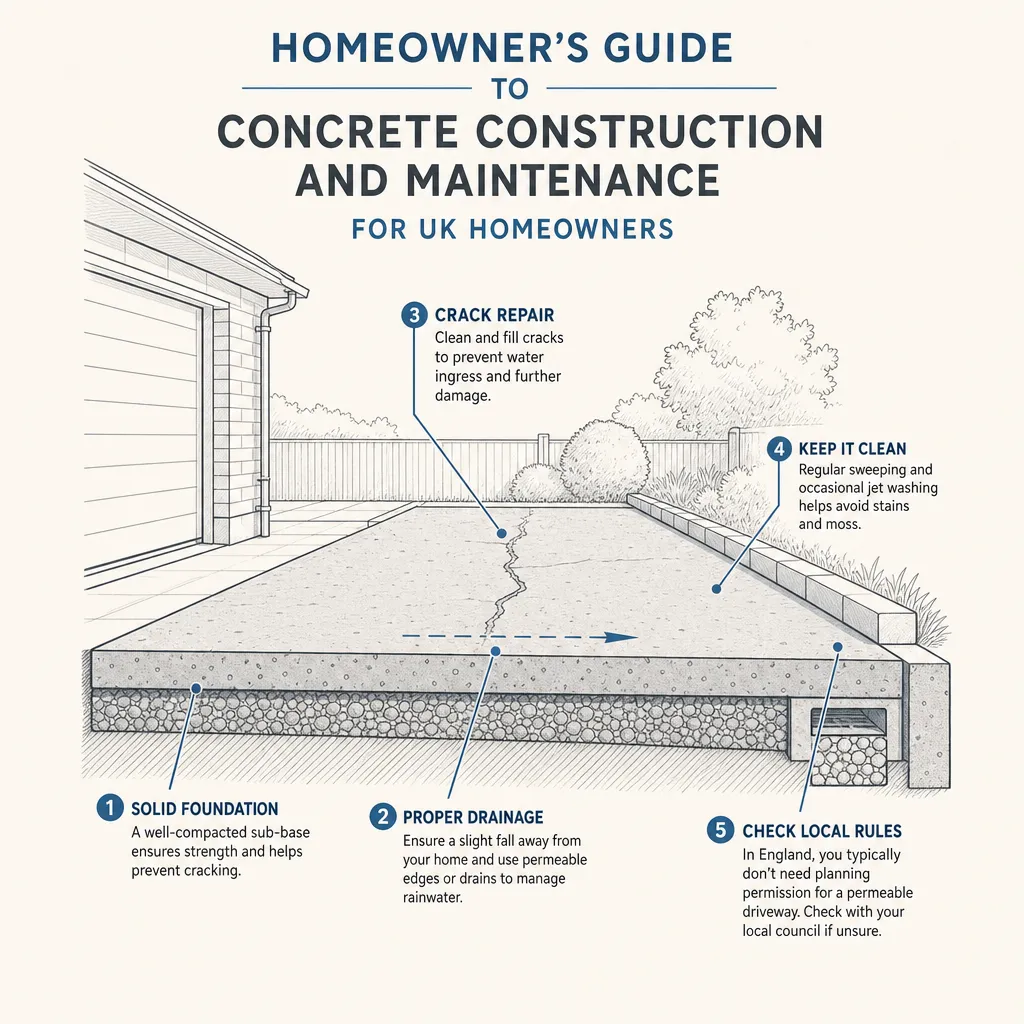
Homeowner's Guide to Concrete Construction and Maintenance
Concrete for residential driveways and paths should be specified to C25/30 grade, laid at least 100 mm thick over a compacted sub-base, and sealed every 3–5 years to resist freeze-thaw and oil damage.
 Improvement & Build
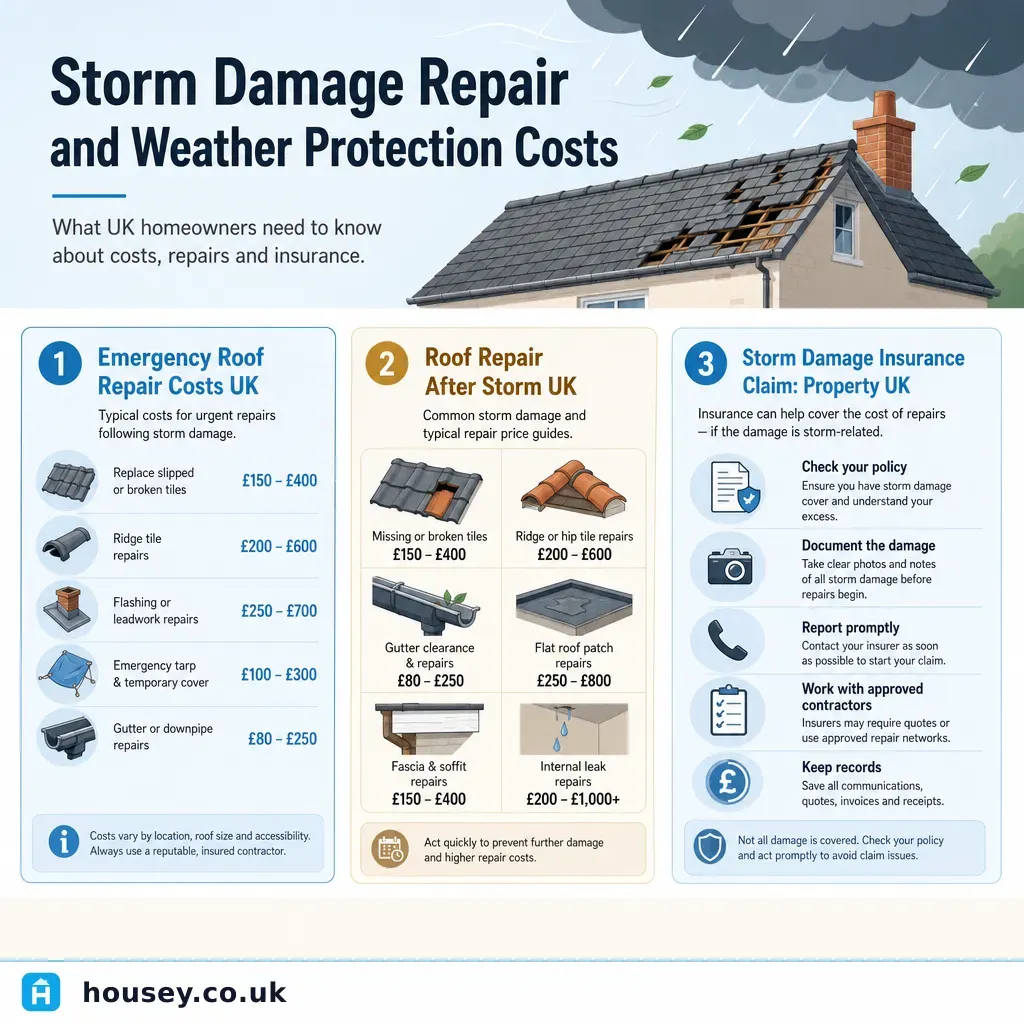
Storm Damage Repair and Weather Protection Costs
Storm damage repair costs in the UK range from around £200–£600 for emergency weatherproofing to £3,000–£15,000 or more for full roof reinstatement.