Fibreglass Roof Installation and Repair Costs
By Housey · Last reviewed 7th of May 2026
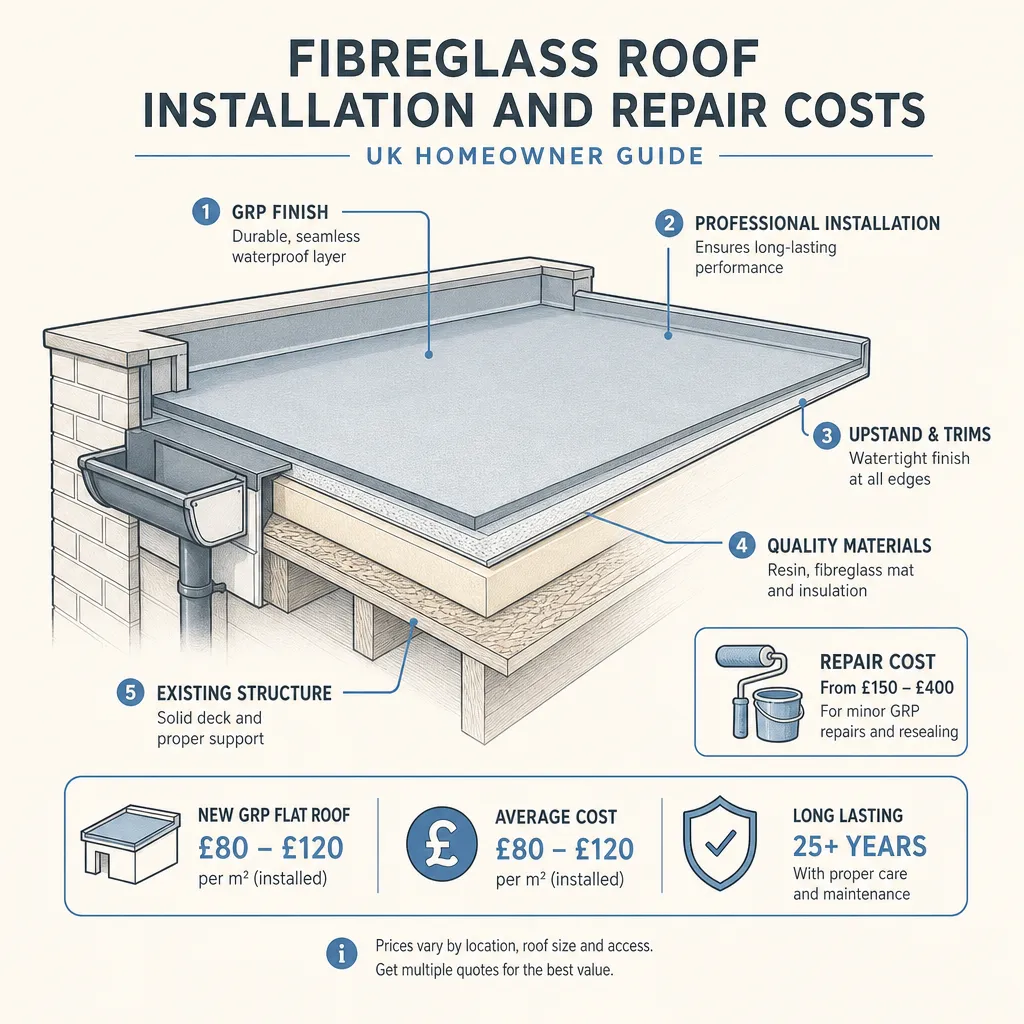
Fibreglass Roof Installation and Repair Costs
Fibreglass (GRP — Glass Reinforced Plastic) flat roofing has become one of the most popular choices for UK extensions, garages, and bay windows over the past two decades, largely because of its seamless finish, long manufacturer guarantees, and low maintenance compared with traditional felt. If you are weighing up a new fibreglass roof or deciding whether to repair or replace an ageing one, understanding realistic UK costs — and the factors that drive them — helps you evaluate contractor quotes with confidence.
Key points
- GRP fibreglass flat roofing costs approximately £70–£110 per square metre installed in the UK; a typical single-car garage roof (around 15 m²) costs £1,200–£2,000 fully installed (Indicative UK costs, last reviewed 2026-05-07).
- A correctly installed GRP roof has a functional lifespan of 25–40 years; most reputable contractors offer a 20–25 year workmanship guarantee backed by the GRP manufacturer.
- Minor repairs — such as a small crack, blister, or failed upstand — typically cost £150–£500 depending on the area affected and access; full replacement becomes more economical once damage affects roughly 30–40% of the surface.
- Building Regulations under Approved Document C (resistance to moisture) and Approved Document L (conservation of fuel and power) may apply when installing a flat roof as part of a new extension or where structural elements are altered.
- GRP must be applied at temperatures above approximately 5°C by an experienced installer — incorrect mixing ratios or cold-weather application can cause premature laminate failure and void the guarantee.
How much does fibreglass roof installation cost in the UK?
Cost depends primarily on roof area, complexity (outlets, upstands, skylights), access, and whether the existing deck needs replacing. The table below gives indicative installed prices for a standard GRP flat roof with new 18 mm OSB3 decking, including all materials and labour.
Indicative UK costs, last reviewed 2026-05-07. Costs vary by region, contractor, roof complexity, and access. Always obtain at least three quotes.
Roof area | Indicative installed cost | Typical scenario |
|---|---|---|
Up to 15 m² | £1,200–£2,000 | Single-car garage, bay window roof |
15–30 m² | £1,800–£3,500 | Double garage, small extension roof |
30–50 m² | £3,000–£5,500 | Large extension or flat-roofed outbuilding |
50–80 m² | £5,000–£9,000 | Larger residential flat roof area |
What a GRP flat roof quote should include
A comprehensive fibreglass roof quote should specify:
- Removal and disposal of the existing roof covering.
- Supply and fitting of new 18 mm OSB3 (orientated strand board) decking substrate where required.
- Two or more layers of fibreglass chopped strand mat with polyester resin.
- A UV-stabilised gelcoat topcoat (grey is standard; other colours are usually available).
- GRP trims, upstands, and drip edges.
- Outlets and gutter connections.
- Guarantee documentation from both the contractor and the GRP product manufacturer.
If the quote does not specify decking replacement, ask whether it is included — reusing rotten or inadequate decking is one of the most common causes of premature GRP failure.
GRP fibreglass vs other flat roofing systems
Roofing system | Installed cost per m² | Typical lifespan | Seams / joins | Best for | Key limitation |
|---|---|---|---|---|---|
GRP fibreglass | £70–£110 | 25–40 years | Seamless | Complex shapes, multiple penetrations | Cold-weather application risk; skilled installer essential |
EPDM rubber | £60–£100 | 30–50 years | Minimal (bonded) | Large, simple rectangular roofs | Repairs less intuitive; can look less premium |
Torch-on felt (2-layer SBS) | £30–£60 | 10–20 years | Overlapped | Budget or short-term replacement | Shorter lifespan; less durable at edges and outlets |
TPO / PVC single-ply | £80–£120 | 20–30 years | Heat-welded | Commercial and large residential areas | Less commonly used in domestic settings |
Green roof build-up | £100–£200+ | 30+ years | N/A | Sustainability goals; some planning requirements | Higher structural load; specialist design required |
Which flat roofing system should you choose?
- Choose GRP fibreglass if the roof has a complex shape, multiple penetrations (skylights, pipes, rooflights), or significant upstands, or if you need a hard walkable surface.
- Choose EPDM if the roof is a large, simple rectangular area and cost per square metre is a primary concern.
- Choose torch-on felt only as a short-term or budget solution — plan for replacement within 10–20 years.
- Ask a qualified roofer if you are uncertain whether the existing deck can be overboarded, if there are structural falls issues, or if water is already pooling on the existing surface.
What does fibreglass roof repair cost?
Minor GRP repairs are usually cost-effective if damage is caught early. The table below shows indicative costs for common repair types.
Indicative UK costs, last reviewed 2026-05-07.
Repair type | Indicative cost | Notes |
|---|---|---|
Small crack or split (up to 0.5 m) | £150–£350 | Patch repair with new GRP laminate and gelcoat |
Blister or delamination (up to 1 m²) | £200–£500 | Grind out area, re-laminate, and gelcoat |
Outlet or drain repair | £100–£250 | GRP collar and reseal |
Failed upstand or edge trim | £150–£400 | Strip and relay GRP trim with new upstand |
Large section replacement (over 5 m²) | £500–£1,500+ | At this scale, full replacement is often better value |
When repair stops making sense: If the existing laminate has widespread delamination, the deck beneath is soft or rotten, or the same areas require repeated repairs, full replacement is usually more cost-effective. A trustworthy roofer will be clear about this — if problems recur within a year of a repair, seek a second opinion.
What affects the cost of a fibreglass flat roof?
Deck condition. If the existing OSB or plywood decking is soft, delaminated, or rotten, it must be replaced before GRP application. Decking replacement adds approximately £15–£25 per m² to overall costs.
Access and scaffolding. Scaffolding requirements — particularly for roofs on rear extensions, terraced houses, or above conservatories — add cost. Confirm whether scaffolding is included in any quote before accepting it.
Insulation specification. Where building control requires insulation upgrades to meet current Approved Document L standards, this adds to the cost but may be a regulatory requirement for a new extension.
Number of penetrations. Each skylight, pipe, or rooflight requires additional GRP detailing, adding to installation time and material cost.
Region. Labour rates in London and the South East are typically 15–30% above the UK average.
Building regulations and planning permission
A like-for-like replacement of an existing flat roof covering does not usually require planning permission. However:
- Building Regulations under Approved Document C and Approved Document L apply when flat roofing is installed as part of a new extension, or where structural elements are altered or insulation is upgraded.
- Properties in conservation areas or listed buildings may require listed building consent or conservation area consent before changing roof materials — even on a like-for-like basis. Check with your local planning authority before proceeding.
- Where building regulations approval is required, contact your local building control body (LABC) or an approved inspector before work starts.
Red flags when hiring a GRP roofer
- No site visit before quoting. Flat roofs vary widely in deck condition, falls, and complexity — a phone or online quote without inspection is unreliable.
- No mention of OSB3 deck inspection or replacement. GRP applied over rotten decking fails quickly and is a common source of callbacks and disputes.
- Application proposed in temperatures below 5°C without winter-grade resin or controlled curing conditions — a sign the contractor may not understand GRP chemistry.
- No manufacturer-backed guarantee, or a guarantee shorter than 15 years. Reputable GRP installers offer 20–25 year guarantees supported by the product manufacturer.
- No discussion of falls and drainage. A flat roof requires a minimum 1:80 fall to drain properly — a contractor who does not raise this may not address ponding water, which significantly shortens lifespan.
What to ask a GRP roofer before accepting a quote
When to get professional help
GRP flat roofing should always be installed by a qualified, insured roofing contractor — working at height above 2 metres is dangerous without the right equipment and training, and should never be attempted as a DIY project. Additionally, seek professional advice before proceeding if:
- You notice widespread bubbling, cracking, or active water ingress through ceilings — these require urgent inspection rather than a monitored wait.
- You suspect the existing deck has rotten timbers — a roofer should probe-test the deck before applying any new material over the top.
- The roof is on a listed building or in a conservation area — contact your local planning authority or historic environment officer before instructing any contractor.
- You are unsure whether building regulations approval is needed — contact your local authority building control body (LABC) or an approved inspector for guidance before work starts.
How Housey can help
Housey makes it straightforward to request quotes from qualified roofers for GRP flat roof installation and repair across the UK. Compare prices, qualifications, and guarantee terms in one place before committing to a contractor.
Frequently asked questions
How long does a fibreglass flat roof last?
A correctly installed GRP flat roof typically lasts 25–40 years. Lifespan depends on the quality of installation, the number of GRP laminate layers, deck condition, and how promptly any minor damage is repaired. Most reputable installers offer a 20–25 year workmanship guarantee supported by the GRP product manufacturer.
Can fibreglass roofing be installed in winter?
GRP resin requires temperatures above approximately 5°C to cure correctly. Most experienced installers use winter-grade resins or supplementary heating for cold-weather applications, but quality of curing is harder to guarantee in very cold or wet conditions. If the project is urgent and cannot wait for warmer weather, confirm that your contractor has specific experience with cold-weather GRP application.
Is fibreglass roofing better than EPDM rubber?
Both are durable modern flat roofing systems. GRP is generally preferred for complex roof shapes, multiple penetrations, and where a hard walkable surface is needed. EPDM is often more cost-effective for large, simple rectangular roofs and has a slightly longer potential lifespan in ideal conditions. The best choice depends on roof geometry, budget, and installer expertise.
Does a GRP flat roof need maintenance?
GRP is low-maintenance compared with felt but is not maintenance-free. Inspect the roof annually for cracks, blisters, ponding water, or failed upstands — use a qualified roofer if you cannot safely access the roof yourself. Keep gutters and outlets clear. Recoating the gelcoat layer approximately every 10–15 years maintains UV resistance and waterproofing integrity.
Will a new fibreglass flat roof need building regulations approval?
A like-for-like covering replacement on an existing building usually does not require building regulations approval. However, if structural elements are altered, new insulation is added, or the roof is part of a new extension, building regulations — particularly Approved Document C and Approved Document L — will apply. Contact your local building control body if you are unsure before work starts.
Sources and further reading
- Building regulations: approved documents — GOV.UK
- Approved Document C: Site preparation and resistance to moisture — GOV.UK / Ministry of Housing, Communities and Local Government
- Approved Document L: Conservation of fuel and power — GOV.UK / Ministry of Housing, Communities and Local Government
- Local Authority Building Control (LABC) — LABC
Useful next reads
 Improvement & Build
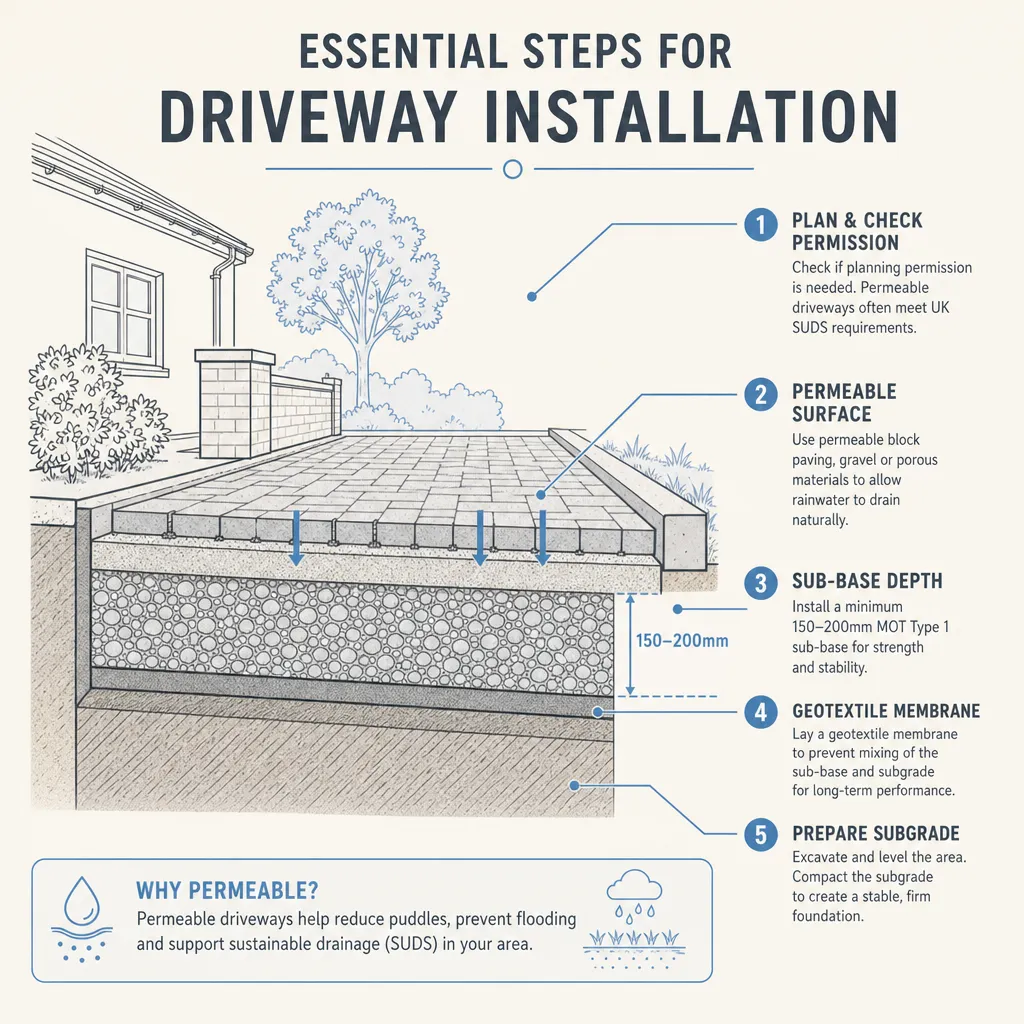
Essential Steps for Driveway Installation
Installing a driveway in England requires planning permission only when using an impermeable surface (standard tarmac, concrete, or block paving) on a front garden area over 5 m².
 Improvement & Build
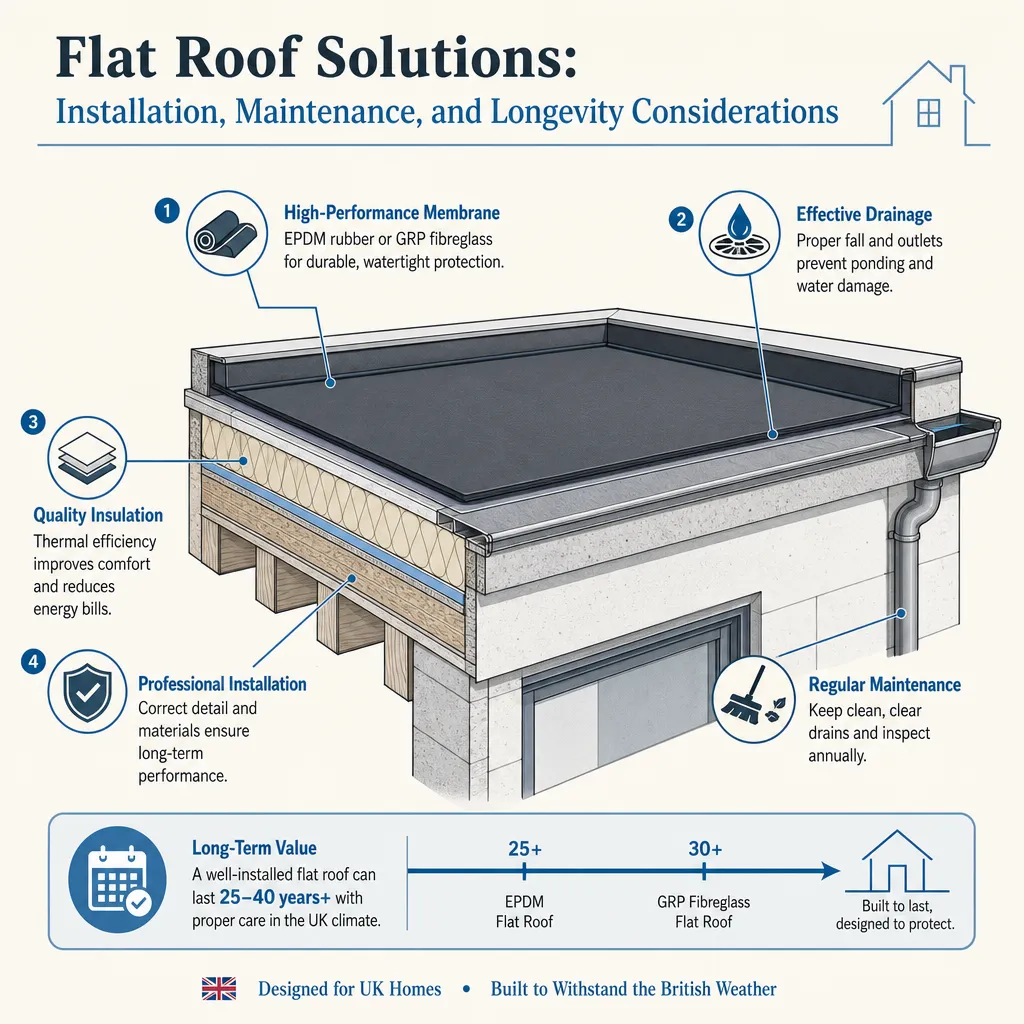
Flat Roof Solutions: Installation, Maintenance, and Longevity Considerations
Flat roofs use several waterproofing systems — EPDM rubber, GRP fibreglass, liquid-applied coatings, modified bitumen felt, lead, and zinc — each with different lifespans and installation requirements.
 Improvement & Build
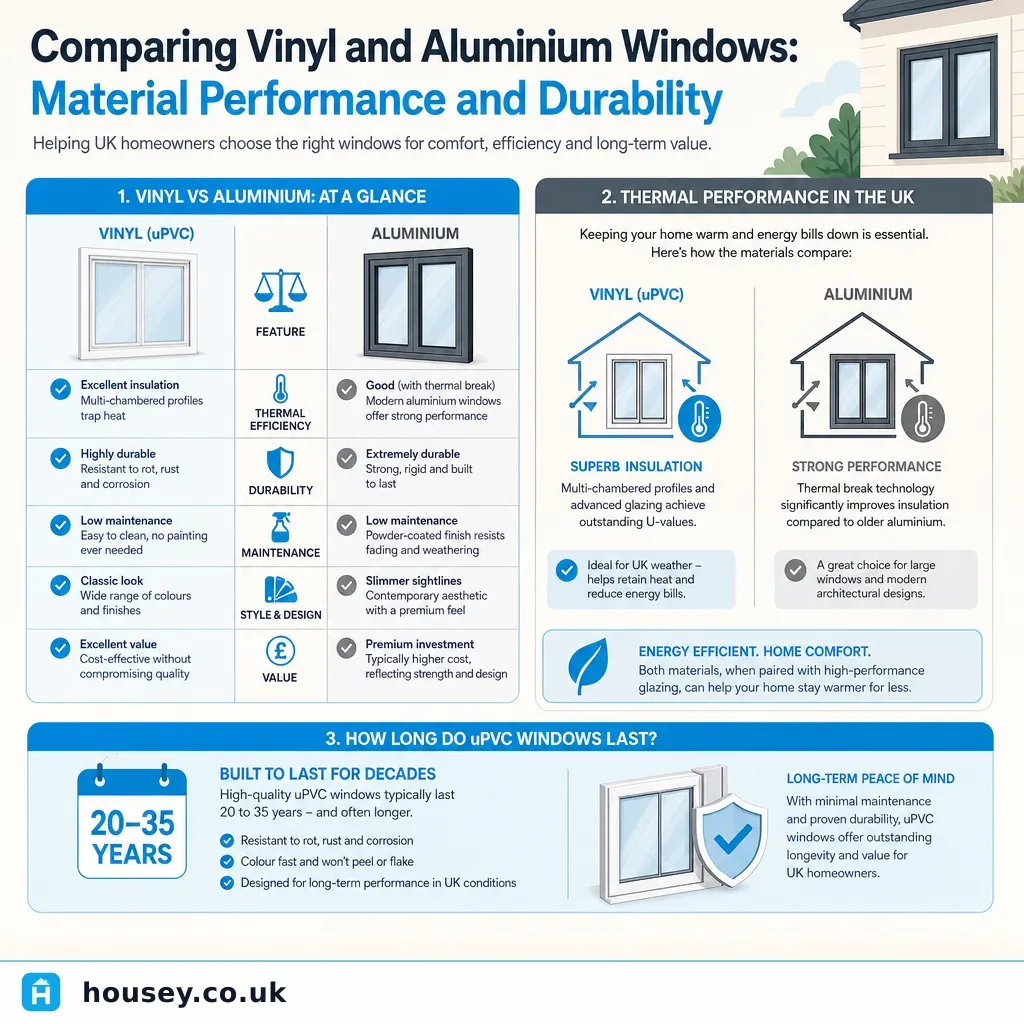
Comparing Vinyl and Aluminium Windows: Material Performance and Durability
uPVC (vinyl) and aluminium windows both meet UK Building Regulations Part L when properly specified.
 Improvement & Build
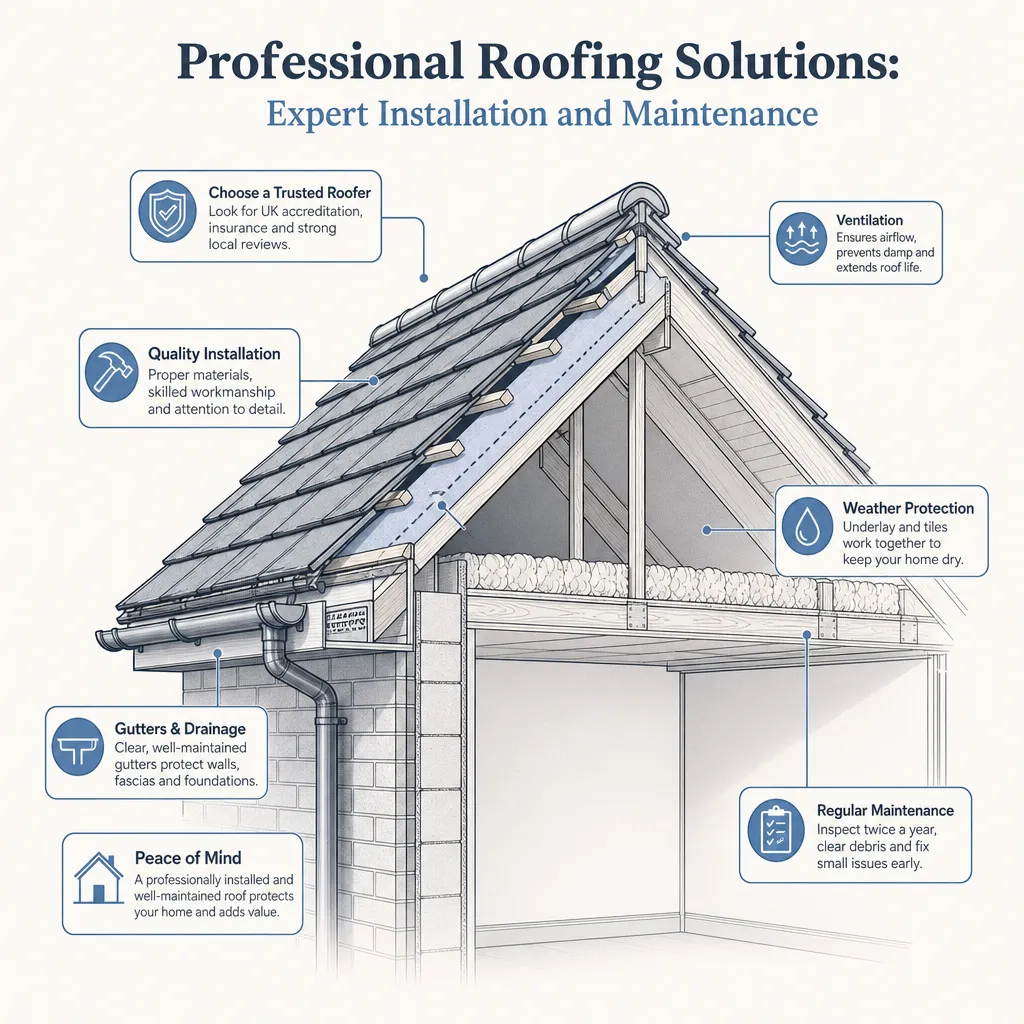
Professional Roofing Solutions: Expert Installation and Maintenance
A professional roofer should hold relevant trade qualifications such as NVQ Level 2 in Roofing Occupations, carry public liability insurance, and provide a written quotation.
 Improvement & Build
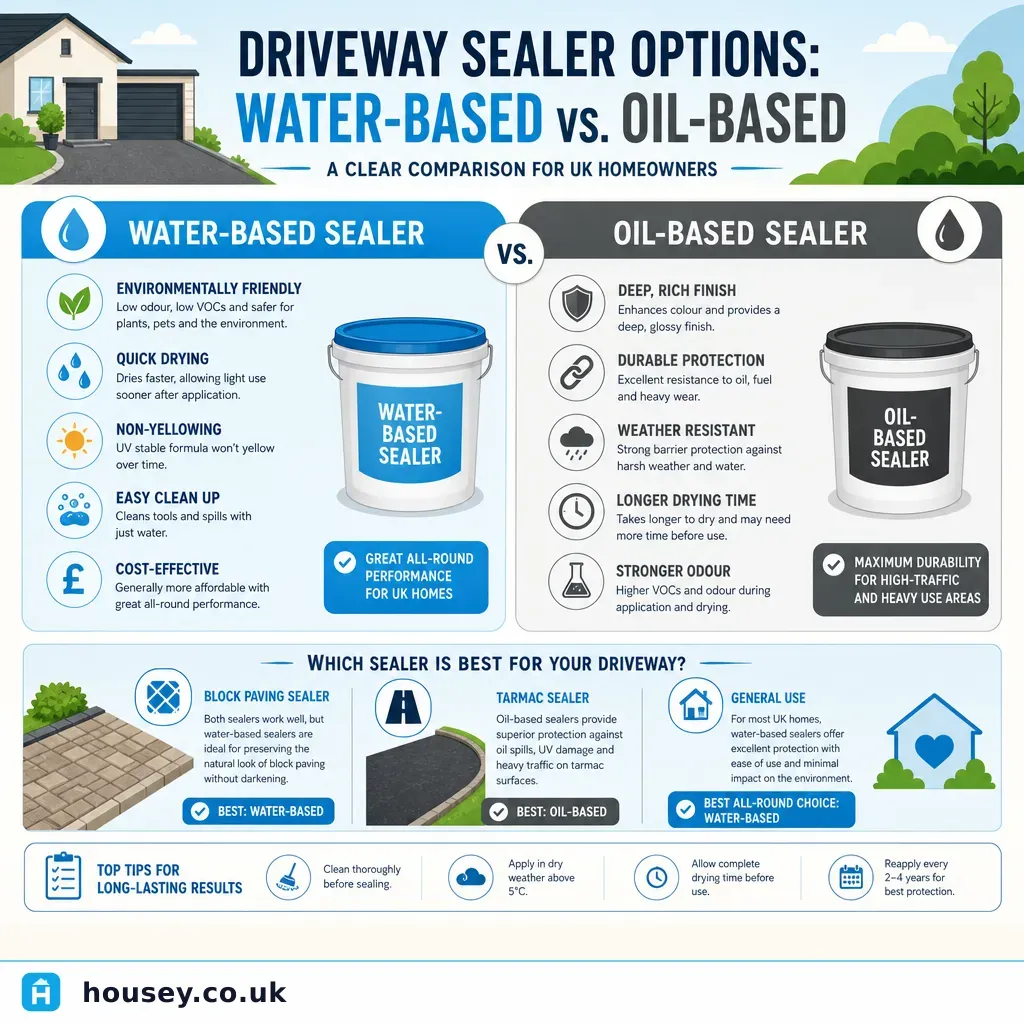
Driveway Sealer Options: Water-Based vs Oil-Based Comparison
Water-based driveway sealers are generally easier to apply, lower in VOCs, and suitable for most block paving and concrete surfaces.