Evaluating Vinyl Windows: Advantages, Limitations, and Suitability
By Housey · Last reviewed 11th of May 2026
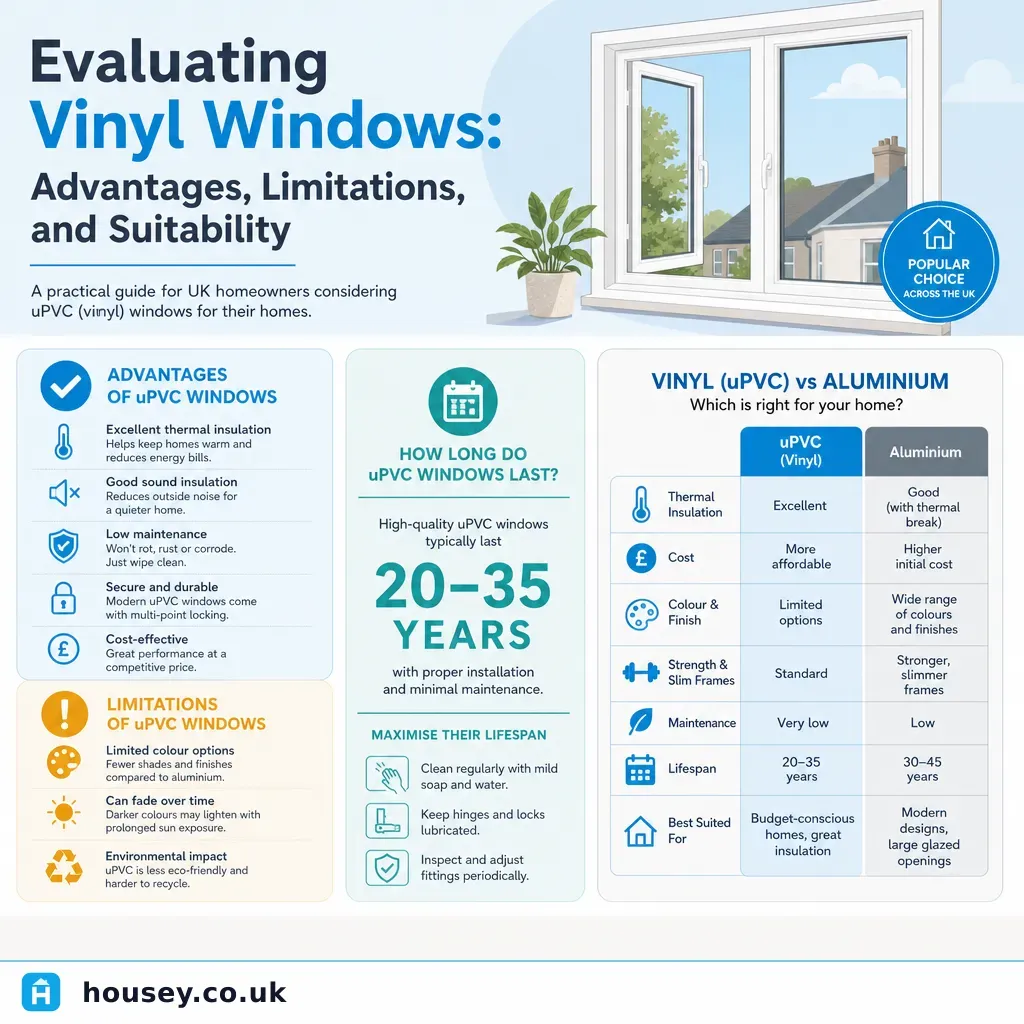
Evaluating Vinyl Windows: Advantages, Limitations, and Suitability
In the UK, unplasticised polyvinyl chloride — universally known as uPVC — accounts for the large majority of replacement window installations, and is what most British homeowners and installers mean by "vinyl windows". Whether you are replacing ageing timber frames in a 1930s semi or specifying new windows for a 1990s estate house, understanding how uPVC performs against alternative materials helps you make a better-informed choice and ask the right questions of a prospective installer.
Key points
- uPVC replacement windows must meet a minimum whole-window U-value of 1.4 W/m²K under Building Regulations Approved Document L (2021), which came into effect in June 2022.
- Installation of replacement windows must be carried out by a FENSA-registered or CERTAS-registered competent person, or notified to your local building control authority, to obtain a compliance certificate.
- uPVC window frames typically have a service life of 20–35 years before discolouration, seal failure, or hardware wear becomes significant enough to require replacement.
- uPVC is generally not approved for conservation areas or listed buildings, where timber or slim-profile aluminium is usually required by local planning authorities.
- Modern multi-chamber uPVC profiles with triple glazing can achieve centre-pane U-values below 0.6 W/m²K, though whole-window performance depends on frame design, spacer bar quality, and installation workmanship.
What are vinyl (uPVC) windows?
uPVC stands for unplasticised polyvinyl chloride — a rigid, low-maintenance plastic that has dominated the UK replacement window market since the 1980s. "Vinyl windows" is the North American term for the same product; in the UK you will almost always see "uPVC" on installer quotes and product data sheets.
The material is extruded into hollow sections with internal chambers that trap air to reduce heat conduction. Steel reinforcing inserts are fitted wherever structural loads, hinge points, or locking hardware require additional rigidity. The number of chambers in the profile — typically three to six — is one of the primary factors affecting thermal performance.
Thermal and acoustic performance
uPVC's multi-chamber profile design delivers competitive thermal performance at a price point below most aluminium equivalents. Most standard double-glazed uPVC units exceed the Part L minimum of 1.4 W/m²K whole-window, and triple-glazed uPVC can reach 0.7–0.8 W/m²K whole-window in well-specified installations.
Acoustic performance depends primarily on the glazing unit rather than the frame. A 6.4 mm acoustic laminated inner pane with an asymmetric gap will reduce noise transmission significantly more than standard 4/16/4 double-glazing, regardless of frame material.
Performance factor | uPVC | Thermally broken aluminium | Softwood timber |
|---|---|---|---|
Typical whole-window U-value | 1.2–1.8 W/m²K | 1.3–1.8 W/m²K | 1.3–1.8 W/m²K |
Cold bridging risk | Low | Moderate if thermal break is poor | Low |
White-frame colour stability | Good for ~15–20 years; may yellow | Powder-coat stable 25+ years | Requires repainting every 5–8 years |
Colour and finish options | Wide (foil-wrapped profiles available) | Wide (powder-coat any RAL colour) | Painted or stained |
Performance values are indicative. Always request verified BFRC energy ratings from your installer for confirmed U-values.
On installed cost, uPVC is generally the most affordable frame option per window opening. Thermally broken aluminium and quality timber typically cost more. Request itemised quotes from at least three FENSA-registered installers for your specific openings and specification.
Durability, maintenance, and lifespan
uPVC does not rot, corrode, or require painting — its primary advantage over timber. However, it is not entirely maintenance-free:
- Seals and gaskets can harden and fail after 15–25 years, allowing water ingress at the frame perimeter.
- Hardware (hinges, handles, multi-point locks) needs annual lubrication and may need replacement after 10–20 years depending on use.
- Discolouration: white uPVC may yellow with prolonged UV exposure, particularly on south-facing elevations. Modern formulations with titanium dioxide additives are more stable than profiles produced before the late 1990s.
- Foil-wrapped coloured profiles can delaminate if the substrate was not adequately prepared or the foil quality is poor.
- Warping is uncommon in quality profiles but can occur in dark-foil south-facing installations with high solar gain.
- Condensation between panes indicates a failed double-glazing unit seal, not frame failure; the unit can usually be replaced without changing the frame.
A well-installed uPVC window from a reputable manufacturer should remain serviceable for 20–35 years. Budget profiles or poor installation can significantly shorten this expectation.
Where uPVC windows are not suitable
Planning policy is the most common constraint homeowners encounter:
- Conservation areas: local planning authorities typically require windows that respect the area's historic character. Timber or slim-profile aluminium is usually preferred; some authorities have approved uPVC in specific circumstances, but always check before ordering.
- Listed buildings: listed building consent is required for any replacement windows on a listed building, and uPVC is almost never approved. Seek advice from your local authority conservation officer before proceeding.
- Article 4 directions: some residential areas outside conservation areas have Article 4 directions removing permitted development rights for front-elevation changes. Check your local planning authority's website to confirm whether your address is affected.
Planning Portal guidance on windows provides a useful overview, but local requirements vary and should always be confirmed directly with your local planning authority.
Which window material should you choose?
- Choose uPVC if: your property is a standard residential building with no planning constraints, you want low maintenance, and cost is a significant factor.
- Consider aluminium if: you want slimmer sightlines, stronger long-term colour retention, or a more contemporary aesthetic.
- Consider timber if: your property is in a conservation area, is listed, or you want to preserve the original joinery character of a Victorian or Edwardian home.
- Check with your local planning authority if: your property is in a conservation area, subject to an Article 4 direction, or is listed — before ordering anything.
- Ask a FENSA-registered installer if: you are unsure whether your proposed replacement meets Part L requirements or requires building control notification.
Environmental considerations
uPVC is recyclable and the UK vinyl industry operates take-back schemes through Recovinyl and the British Plastics Federation. Production is energy-intensive and involves chlorine chemistry. Timber from FSC-certified sources has a lower embodied-carbon footprint; aluminium carries high embodied carbon but offers a very long service life.
If environmental credentials matter to you, ask installers for Environmental Product Declarations (EPDs) for the specific profiles they propose.
What to ask before accepting a quote
- What BFRC energy rating does the window achieve, and what are the U-values (whole window and centre pane)?
- Are you FENSA-registered, and will you provide a FENSA certificate on completion?
- What profile system — manufacturer and series — are you proposing, and what is the chamber count?
- What glazing unit specification — glass thickness, gap width, gas fill, spacer bar type — is included?
- What are the frame, glass, and hardware warranties, and are these with the manufacturer or the installer?
- Is the price VAT-inclusive? Standard installations attract 20% VAT; some energy-saving products may qualify for reduced-rate VAT — verify with HMRC.
- What happens if frame sizes need adjustment or existing openings are found to be out of square on the day?
When to get professional help
For most replacement window projects on unrestricted properties, a FENSA-registered installer is your primary point of contact. Seek additional professional advice if:
- Your property is listed or in a conservation area — consult your local authority conservation officer or a planning consultant before ordering.
- You suspect structural movement has distorted window openings — ask a chartered surveyor or structural engineer to assess the cause before new frames are installed.
- You are replacing windows as part of a wider energy retrofit — a PAS 2035 retrofit assessor may advise on specification to avoid interstitial moisture issues.
- Existing frames contain materials you cannot identify, particularly in pre-2000 properties — some window putties produced before 2000 contained lead.
How Housey can help
If you are ready to compare quotes for uPVC or alternative window installations, Housey connects you with vetted window and door installers who can advise on product specification, planning constraints, and Building Regulations compliance for your specific property.
Frequently asked questions
Do uPVC windows need planning permission in the UK?
Replacement windows in most standard residential properties are permitted development and do not require planning permission, provided they match the existing window's appearance. Conservation areas, listed buildings, and properties subject to Article 4 directions are the main exceptions. Always check with your local planning authority before ordering if your property is in a restricted designation.
How long do uPVC windows last?
Quality uPVC windows from reputable manufacturers typically last 20–35 years before significant degradation of seals, hardware, or profile appearance. Budget products or poor installation can reduce this considerably. Regular maintenance — cleaning tracks, lubricating hardware, and checking seals annually — helps extend service life.
Can uPVC windows be recycled?
Yes. uPVC window profiles are recyclable through industry take-back schemes, including the Recovinyl programme. Many FENSA-registered installers participate in collection schemes for old frames they remove. Ask your installer about disposal arrangements when comparing quotes.
Are uPVC windows good for noise reduction?
The glazing unit specification matters more than the frame material for acoustic performance. An acoustic laminated inner pane with an asymmetric air gap reduces sound transmission significantly compared with standard 4/16/4 double-glazing. If noise reduction is a priority, ask your installer for the Rw weighted sound reduction index of the proposed unit.
Sources and further reading
- Building Regulations Approved Document L (2021) — GOV.UK
- FENSA competent person scheme for windows and doors — FENSA
- British Fenestration Rating Council: window energy ratings — BFRC
- Planning permission guidance for windows — Planning Portal
- Recovinyl: uPVC recycling in the UK — Recovinyl / Vinyl Plus
Useful next reads
 Improvement & Build
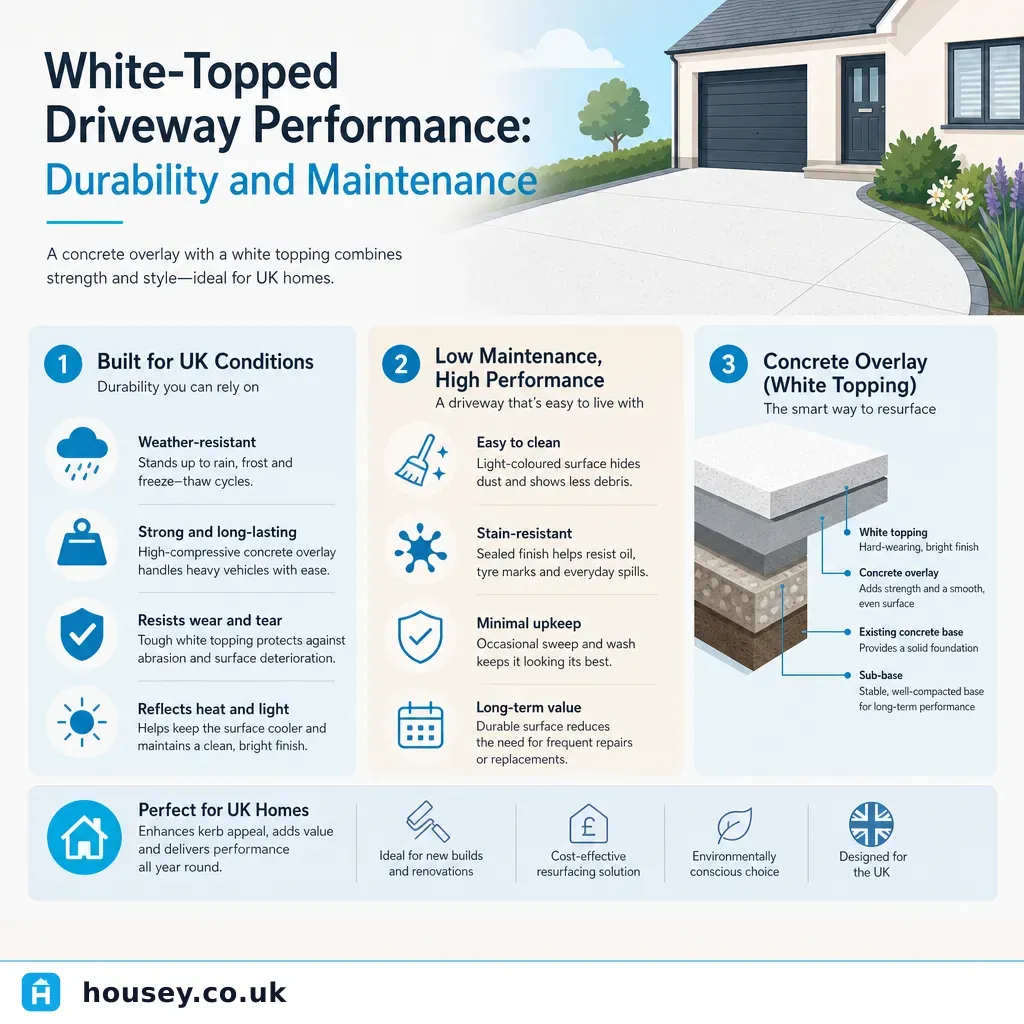
White-Topped Driveway Performance: Durability and Maintenance
A white-topped driveway uses a concrete layer placed over an existing asphalt sub-base, combining the load-spreading of asphalt with the durability of concrete.
 Improvement & Build
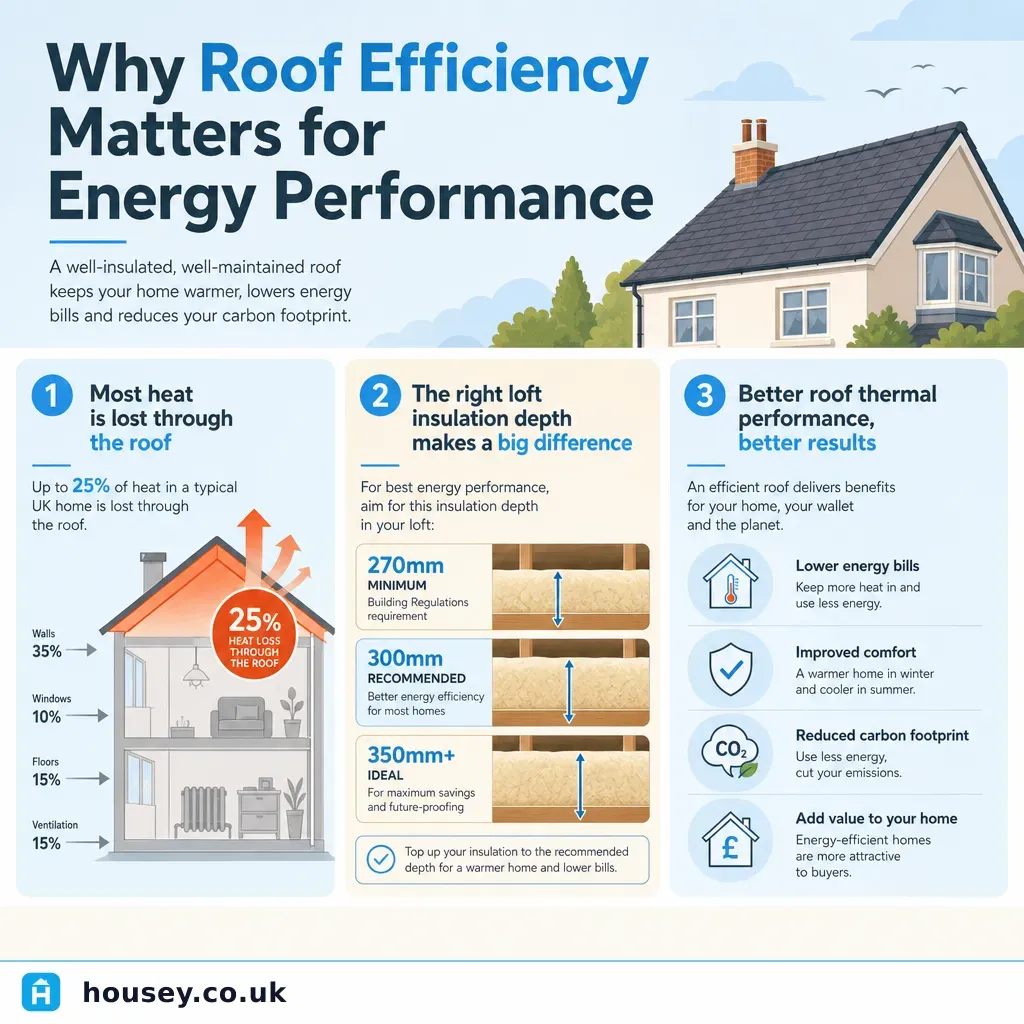
Why Roof Efficiency Matters for Energy Performance
A roof typically accounts for up to 25% of a home's heat loss where uninsulated, making it one of the highest-return areas to address in older UK properties.
 Improvement & Build
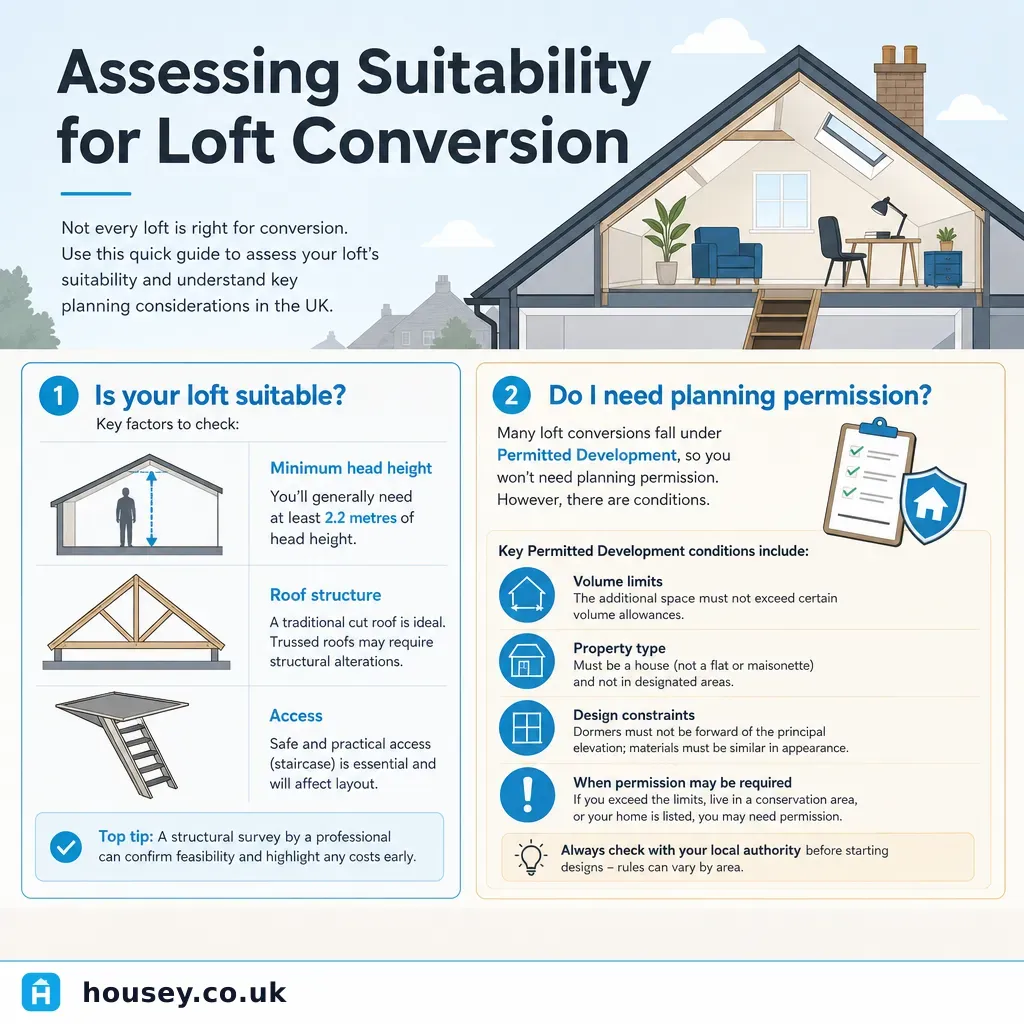
Assessing Suitability for Loft Conversion
Most loft conversions need a minimum ridge height of around 2.
 Improvement & Build
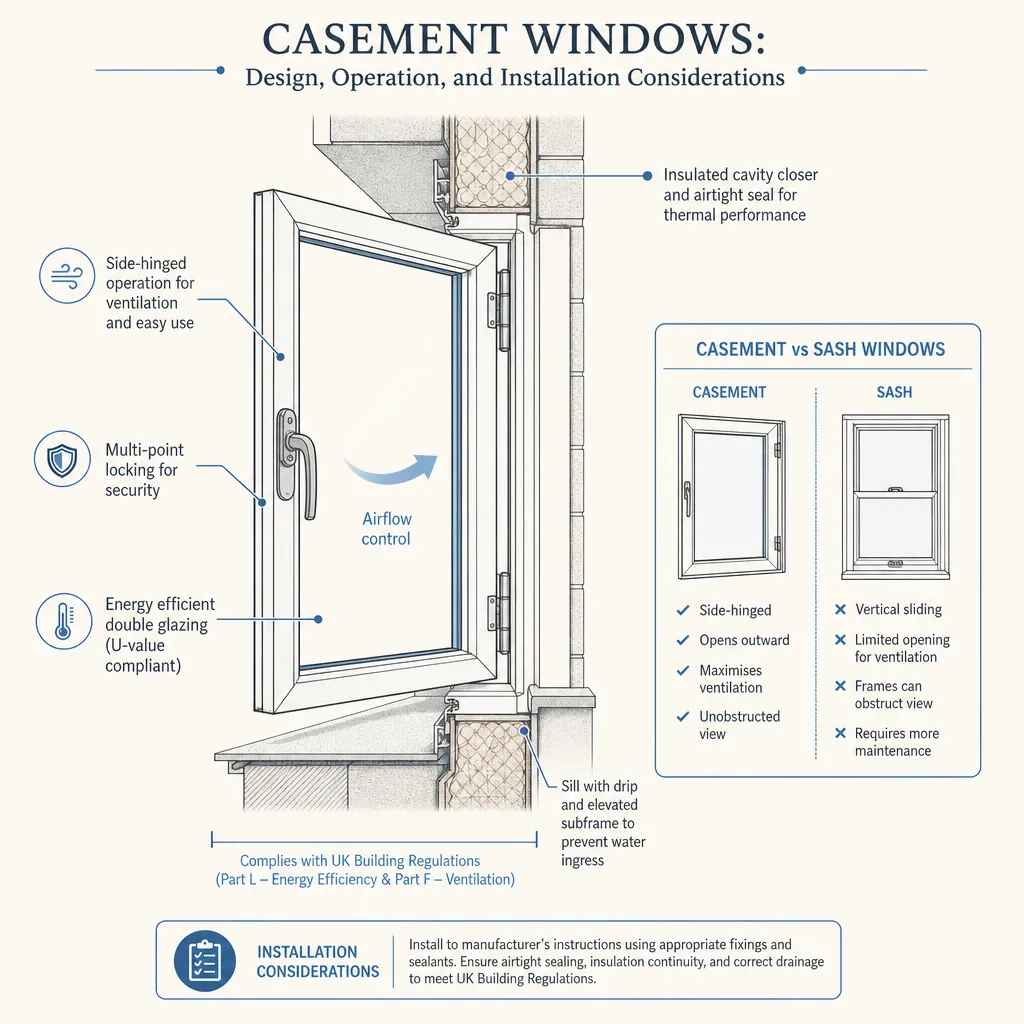
Casement Windows: Design, Operation, and Installation Considerations
Casement windows are hinged on one side and open outward, controlled by a handle and stay bar.
 Improvement & Build
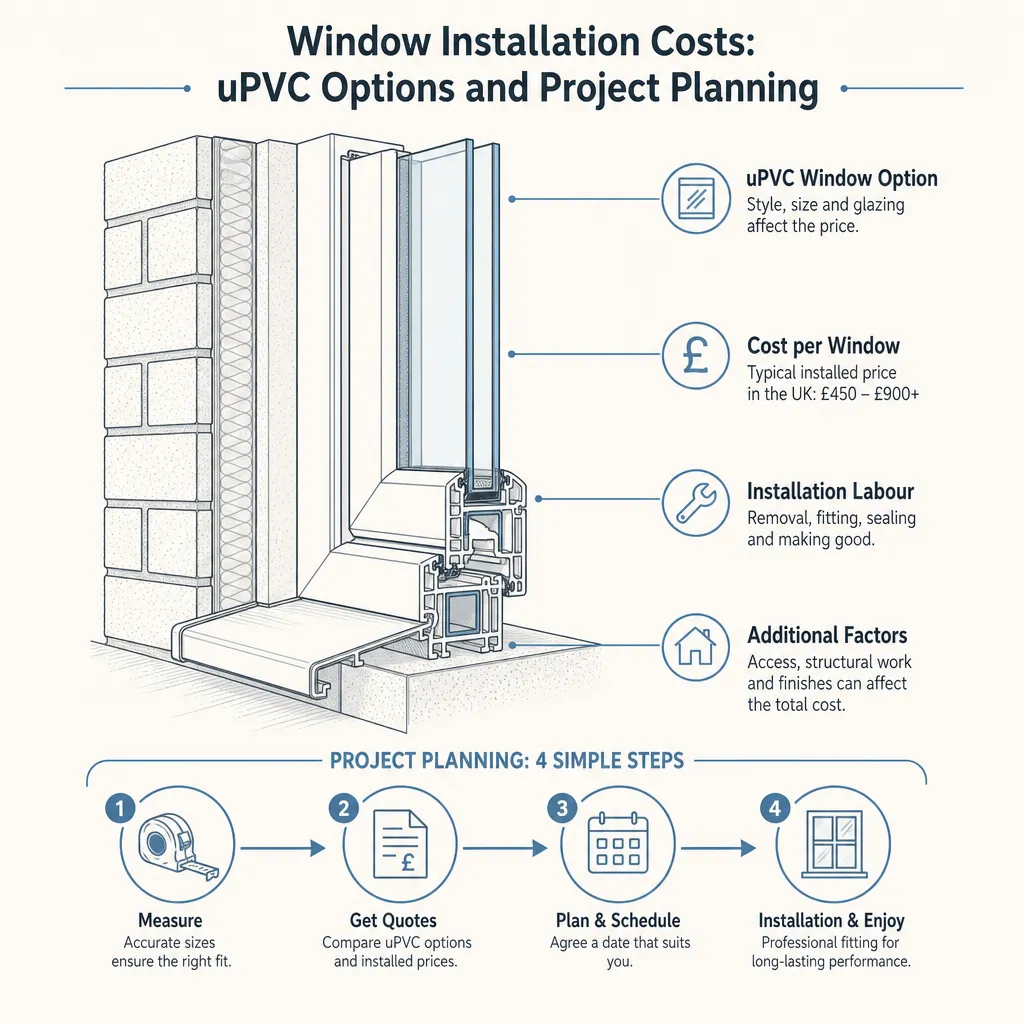
Window Installation Costs: uPVC Options and Project Planning
Replacing uPVC (vinyl) windows in the UK typically costs £400–£900 per casement window installed.