Why Roof Efficiency Matters for Energy Performance
By Housey · Last reviewed 11th of May 2026
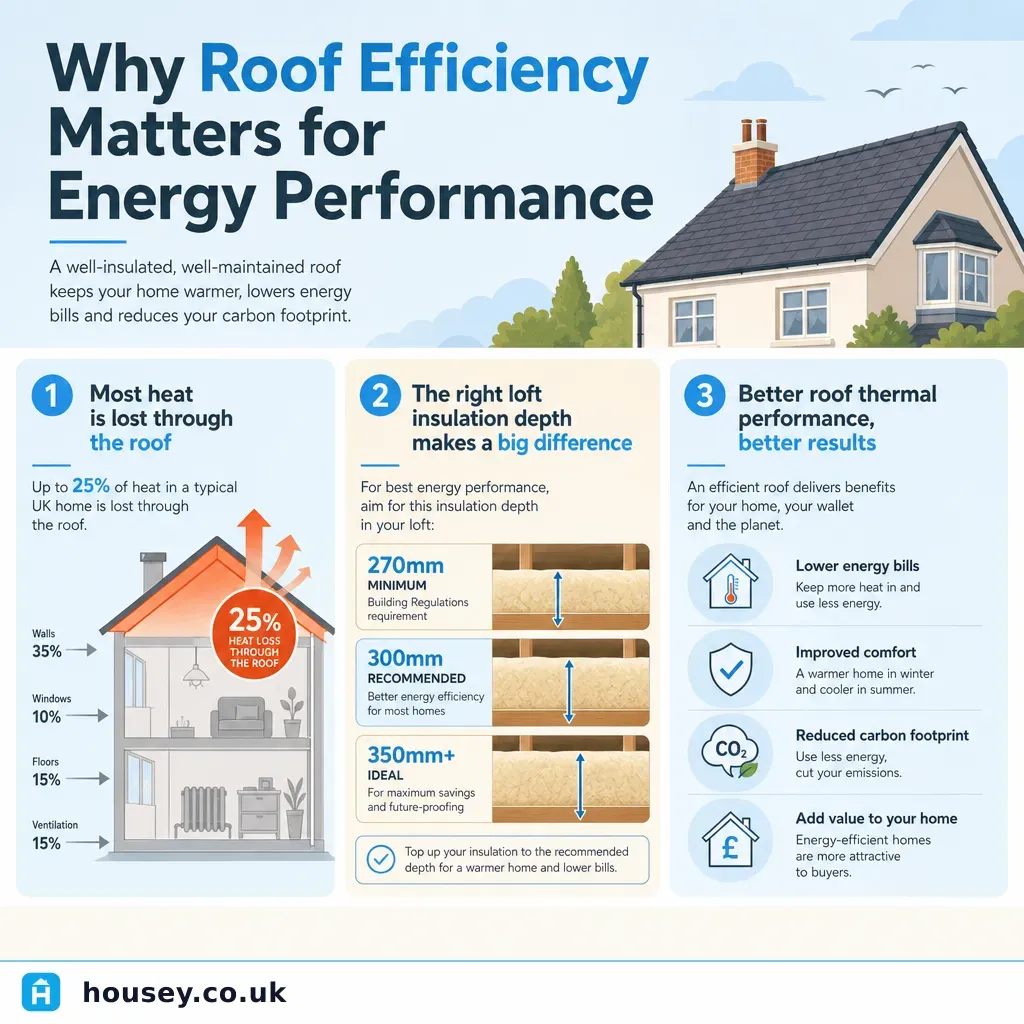
Why Roof Efficiency Matters for Energy Performance
For most UK homes built before the 1990s, the roof is responsible for a significant proportion of total heat loss — and in many cases it receives less scrutiny than walls or windows during renovation planning. Whether you are considering loft insulation, replacing an ageing roof covering, or trying to understand why heating bills remain stubbornly high, the thermal performance of your roof is worth examining as a distinct element of the building envelope.
Key points
- Uninsulated loft spaces can account for up to 25% of a home's heat loss, according to the Energy Saving Trust.
- Current Building Regulations (Approved Document L, 2021 edition) require a U-value of 0.16 W/m²K for insulation at ceiling level in existing dwellings in England — significantly more demanding than older stock, which may have no insulation or only 100mm of mineral wool dating from the 1980s.
- Cold roofs (insulation at ceiling level) and warm roofs (insulation at rafter level) have different technical requirements and moisture risks; applying the wrong approach for a given roof type can cause interstitial condensation.
- A roof covering in poor condition — cracked tiles, failed flashings, or damaged felt underlays — reduces thermal performance even where insulation is adequate, because air infiltration bypasses the insulation layer.
- An MCS-accredited site survey is required before solar PV or solar thermal installation and includes an assessment of roof condition and structural suitability.
How the roof contributes to overall heat loss
Heat moves through building elements by conduction, convection, and radiation. The roof assembly — covering, underlay, rafter space, and ceiling — forms a critical part of the thermal envelope. Where insulation is absent or degraded, heat lost through the roof drives up both gas and electricity demand, and in properties with older heating controls, can cause the boiler or heat pump to work significantly harder than necessary.
A 1930s semi-detached house with no loft insulation is likely losing a disproportionate amount of heat through the ceiling plane. Adding 270mm of mineral wool to the loft floor — the recommended depth under current guidance from the Energy Saving Trust — typically reduces that loss substantially and is one of the most cost-effective measures available for older UK homes.
For rooms-in-roof and dormer conversions, the situation is more complex. Insulation must be fitted between and below rafters to achieve the required U-value, and vapour control layers must be correctly positioned to prevent interstitial condensation forming within the roof structure.
Roof types and their energy performance implications
Roof type | Insulation approach | Key risks | Who to involve |
|---|---|---|---|
Pitched roof, cold loft (accessible) | Insulation at ceiling level — loft floor | Ensure ventilation at eaves; check for cold bridges at perimeter | Insulation installer, energy assessor |
Pitched roof, warm (habitable loft or rooms-in-roof) | Between and below rafters | Vapour control layer position; interstitial condensation | Roofer, insulation specialist, retrofit assessor |
Flat roof | Warm or inverted flat roof board insulation | Water ingress; ballast displacement; junction detailing | Roofer with flat-roof experience |
Green or sedum roof | Insulation layer beneath growing medium | Root barrier integrity; blocked drains; structural loading | Specialist green-roof contractor |
Listed or conservation area property | Breathable or internal insulation — subject to consent | Planning and Listed Building Consent requirements | Local planning authority, conservation officer |
What affects roof thermal performance beyond insulation
Insulation thickness and type are the primary drivers of U-value, but several other factors affect how well the roof performs in practice.
Roof covering condition — Slipped, cracked, or porous tiles allow wind-driven rain and air infiltration. Even well-insulated roofs perform below their theoretical U-value when air is moving freely through gaps in the outer covering.
Underlay and felt — Older bitumen felt degrades over time and can become brittle, torn, or blocked at laps, reducing its function as a secondary weathering layer and allowing draughts into the roof space.
Flashings and abutments — Failed lead or mortar flashings at chimneys, party walls, and dormers are common sources of both water ingress and air infiltration that undermine insulation performance.
Thermal bridging — Timber rafters conduct heat more readily than insulation batts. Where insulation is fitted only between rafters, the rafter depth limits total performance, which is why current practice often adds a continuous layer below rafter level as well.
Roof lights and skylights — These are typically the weakest thermal element in a roof. Double-glazed roof lights have U-values of around 1.6–2.0 W/m²K, compared with 0.16 W/m²K for well-insulated pitched roof construction at ceiling level.
Red flags that suggest roof efficiency problems
Watch for these signs that your roof may be contributing to poor energy performance:
- Persistent cold patches at ceiling level in upstairs rooms, even with the heating running at normal settings.
- Ice forming on the outer edge of the roof (ice dams) during cold spells — a sign that heat is escaping from the loft and melting snow before it reaches the gutter.
- Condensation forming on the underside of roof tiles or on cold rafters, visible during loft inspections.
- Significantly higher heating bills compared with similar properties of the same era and construction.
- An EPC report recommending loft insulation or roof insulation as a measure with high potential annual savings.
- Visible daylight or noticeably cold air when inspecting the loft space, indicating gaps in the covering or eaves boarding.
Decision tree: which roof improvement should you prioritise?
- Choose loft floor insulation first if you have an accessible, unoccupied cold loft with less than 100mm of existing mineral wool — this is typically the highest-return measure available for pre-1990s homes.
- Commission a roof inspection first if you suspect tile, felt, or flashing deterioration — fixing the covering before adding insulation prevents moisture becoming trapped within the structure.
- Consult a retrofit assessor if you have a rooms-in-roof arrangement, a flat roof, or an older property with solid walls — the interaction between roof insulation, ventilation, and moisture risk needs professional assessment under PAS 2035.
- Check with your local planning authority if the property is listed or in a conservation area before specifying any insulation or covering change, as some works require consent.
- Get an MCS-accredited survey before installing solar PV — the installer is required to assess roof condition and structural adequacy as part of the design process.
When to get professional help
Some roof efficiency improvements — particularly adding mineral wool to an accessible loft floor — are straightforward enough that a competent installer can carry them out without specialist assessment. However, professional input is advisable when:
- The loft is partially boarded and existing insulation depth is uneven or compressed.
- The property has a rooms-in-roof, mansard, or dormer arrangement.
- There are signs of existing damp, rot, or structural movement in the roof timbers.
- You are planning solar PV, solar thermal, or a green or sedum roof.
- The property is listed, in a conservation area, or subject to a restrictive covenant.
- You want to achieve Building Regulations compliance as part of a larger project.
Working at height on roof coverings is dangerous and should only be carried out by trained roofing contractors with appropriate access equipment and insurance.
How Housey can help
Housey connects homeowners with qualified roofers who can assess roof condition and advise on covering repairs or replacement, as well as energy-efficiency consultants who can evaluate insulation performance and model potential improvements. For homes where roof efficiency is part of a wider plan, a retrofit assessment can help you understand the right sequence of measures and whether funding through ECO4 or the Great British Insulation Scheme may be available.
Frequently asked questions
How much heat does an uninsulated loft lose?
The Energy Saving Trust estimates that an uninsulated loft can account for around 25% of a home's total heat loss. The precise figure depends on the property's size, construction, and heating system, but it is consistently one of the largest single sources of heat loss in pre-1990s UK homes.
What is the minimum insulation depth recommended for a loft?
Current guidance from the Energy Saving Trust and GOV.UK recommends a total depth of 270mm of mineral wool at loft floor level for accessible cold lofts — typically 100mm between the joists and 170mm laid across them at right angles. Many older homes have only 100mm or less, installed under earlier standards.
Do I need planning permission to insulate my roof?
Loft insulation at ceiling level is generally permitted without planning permission. However, replacing roof coverings with different materials, adding dormers, or altering a listed building or conservation area property may require consent. Always check with your local planning authority before starting significant work.
Can a poorly maintained roof covering reduce insulation effectiveness?
Yes. Damaged tiles, failed flashings, and deteriorated felt underlays allow air infiltration that bypasses insulation and can introduce moisture. A thermal survey may confirm an otherwise well-insulated roof is underperforming because the outer covering is compromised. Fixing the covering before insulating is usually the correct sequence.
Sources and further reading
- Loft insulation guidance — Energy Saving Trust
- Building Regulations Approved Document L (2021) — GOV.UK
- Microgeneration Certification Scheme — MCS
- PAS 2035:2019 — Retrofitting Dwellings for Improved Energy Efficiency — BSI Group
- NHBC Standards — roofs and roof structures — NHBC
Useful next reads
 Improvement & Build
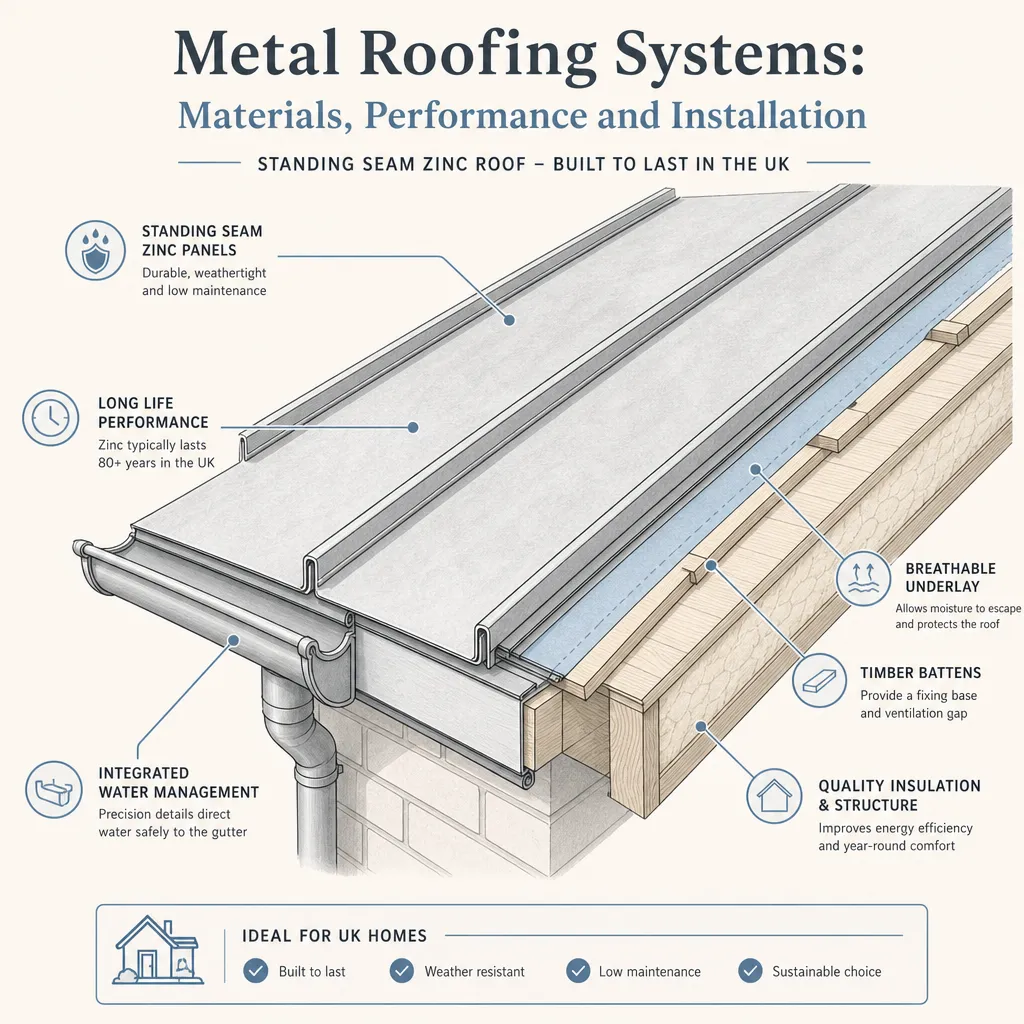
Metal Roofing Systems: Materials, Performance and Installation
Metal roofing systems in the UK include standing seam zinc, coated steel, aluminium, and copper panels, as well as profiled sheets.
 Improvement & Build
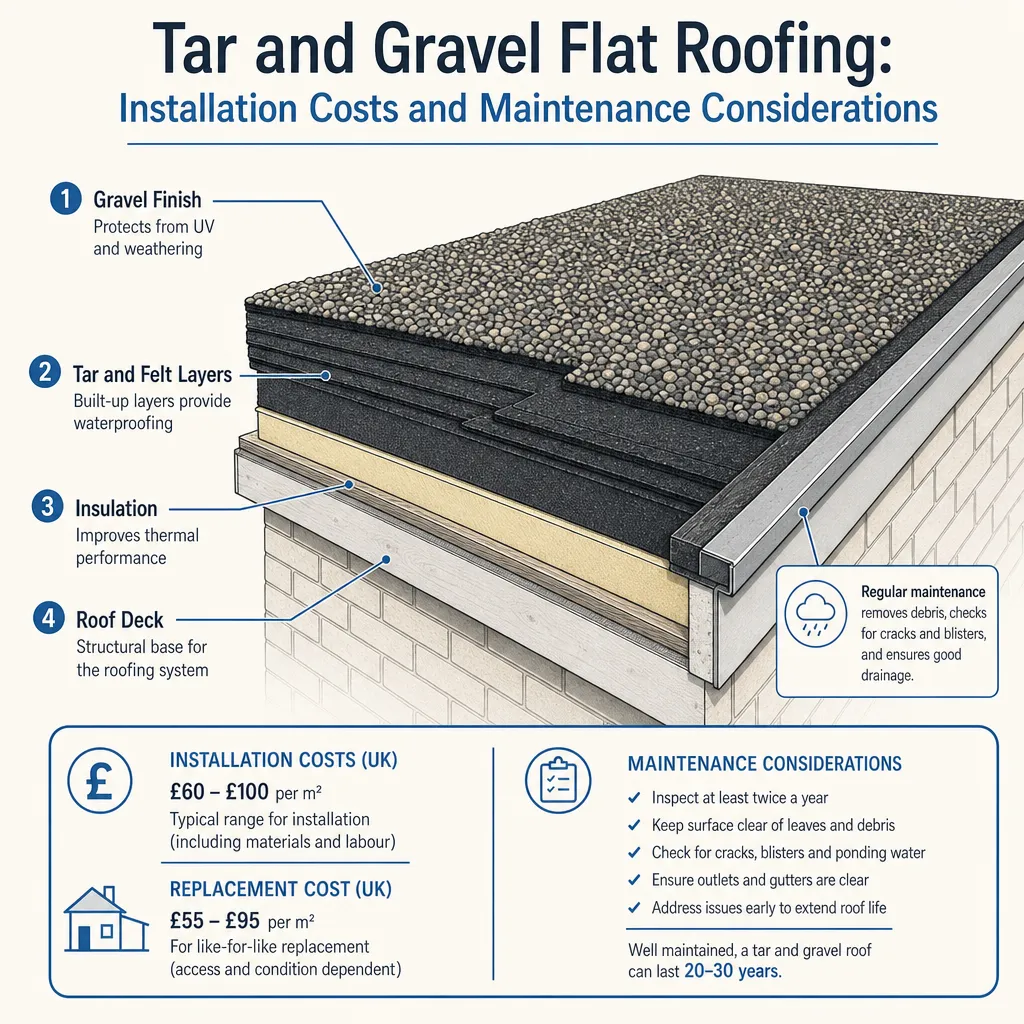
Tar and Gravel Flat Roofing: Installation Costs and Maintenance Considerations
Tar and gravel (built-up felt) flat roofing typically costs £40–£80 per m² installed in the UK, with a standard garage or small extension coming to around £1,000–£3,500.
 Improvement & Build
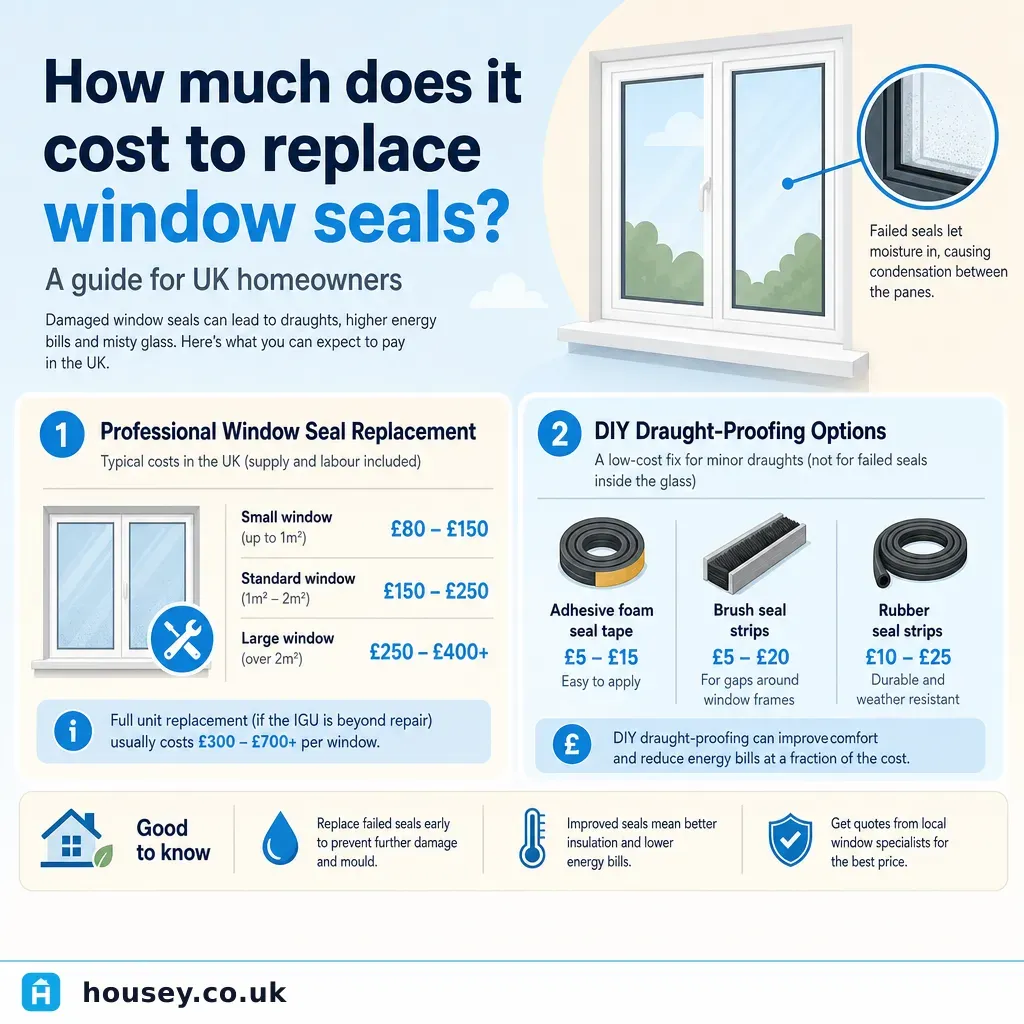
How much does it cost to replace window seals?
Replacing window seals in the UK costs between £40 and £350 per window depending on the repair type.
 Improvement & Build
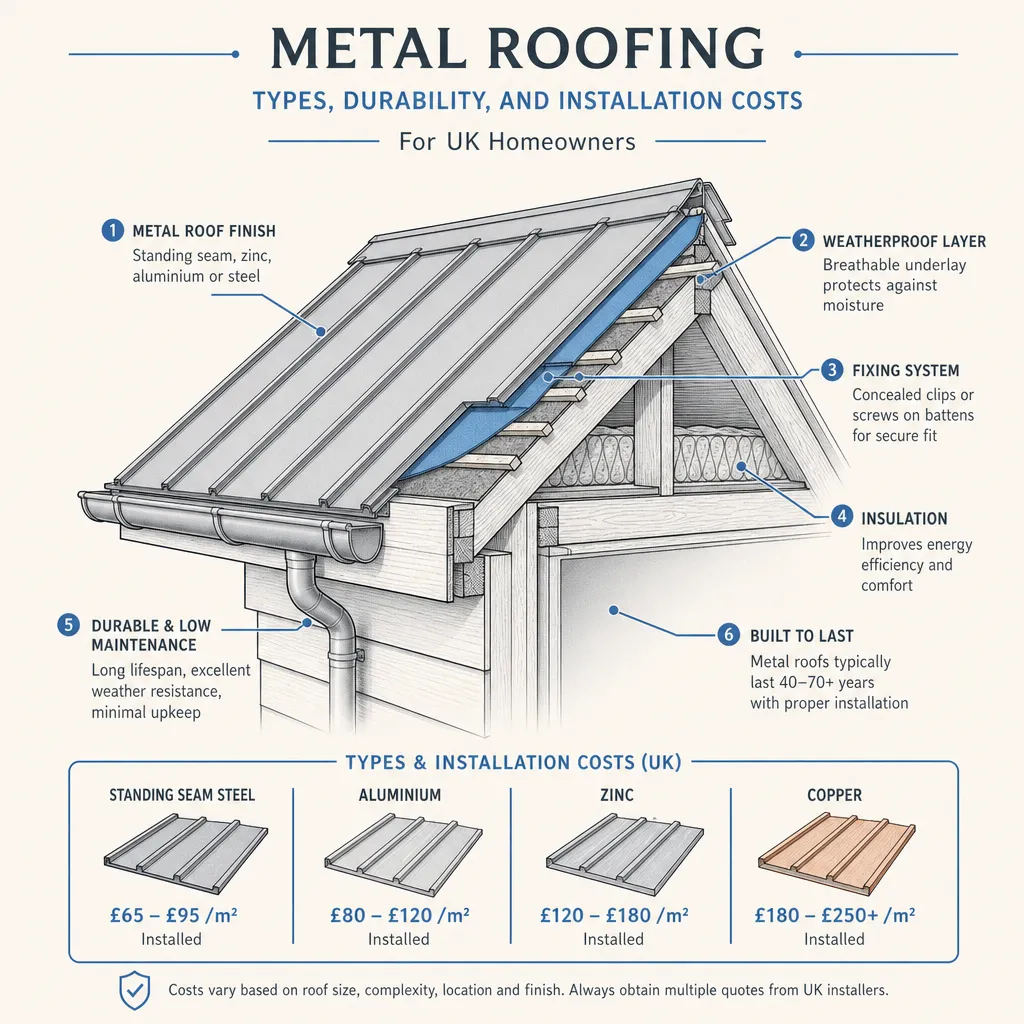
Metal Roofing: Types, Durability, and Installation Costs
Metal roofing in the UK includes standing seam, corrugated sheet, and metal tile systems in steel, aluminium, zinc, or copper.
 Improvement & Build
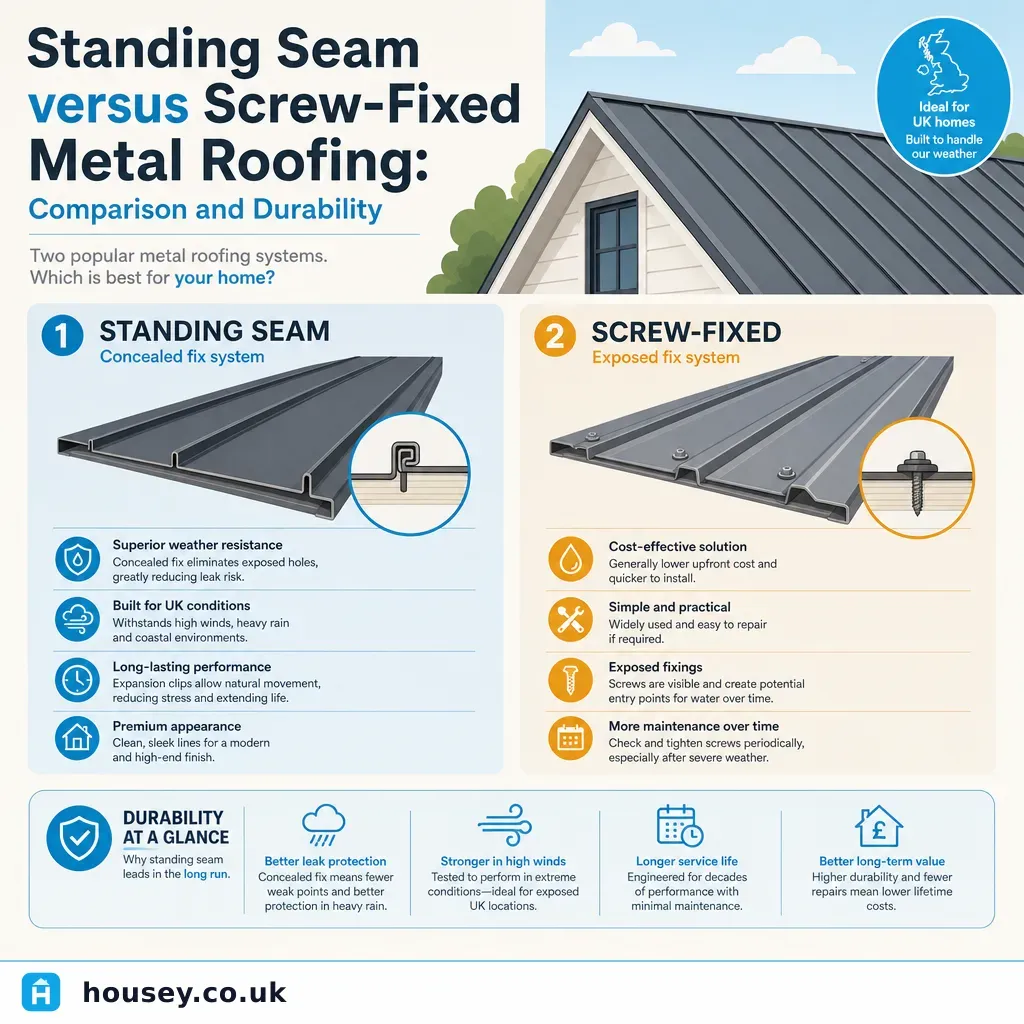
Standing Seam versus Screw-Fixed Metal Roofing: Comparison and Durability
Standing seam uses concealed clips to hold panels, keeping all fasteners out of the weatherline and giving a design life of 40–60 years or more.