Exceptional Extension Projects: Ideas and Professional Execution
By Housey · Last reviewed 10th of May 2026
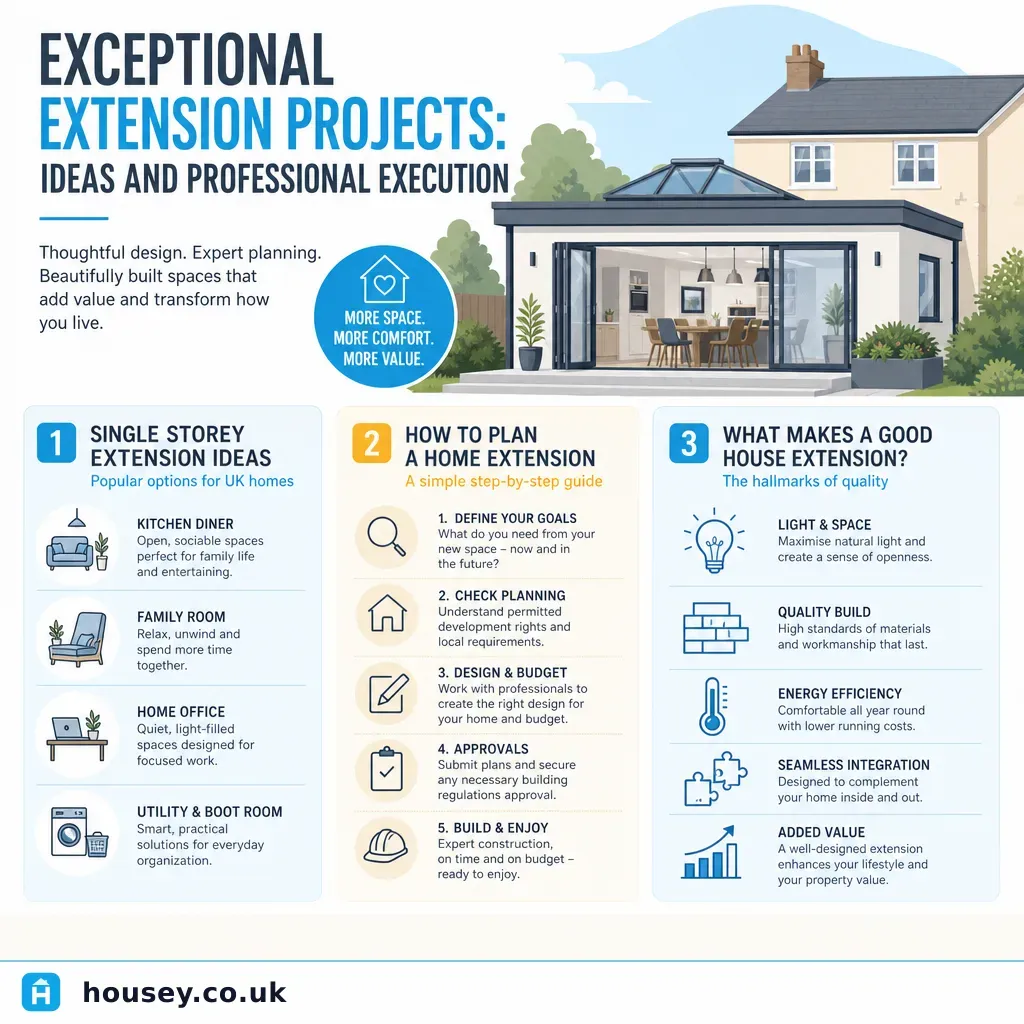
Exceptional Extension Projects: Ideas and Professional Execution
A home extension is one of the most significant investments a UK homeowner can make, and one of the most consequential in terms of design quality, planning compliance, and construction outcome. Poorly designed or executed extensions can cost substantially more to correct than to build in the first place, while an exceptional extension can transform how a home functions and add meaningful value to it. The difference between average and exceptional rarely comes down to budget alone.
Key points
- Most single-storey rear extensions are permitted development for houses in England — up to 4m deep for detached properties and 3m for semi-detached and terraced — but the Prior Approval neighbour consultation process applies for the larger extensions within this limit.
- Building Regulations approval is always required for extensions, even where planning permission is not needed, covering structure, fire safety, drainage, and thermal performance under Approved Document L.
- Indicative UK extension costs range from £1,500–£2,500 per m² for standard specification to £2,500–£4,000+ per m² for high specification (indicative UK costs, last reviewed 2026-05-10; costs vary significantly by region and ground conditions — obtain at least three comparable quotes).
- If any load-bearing wall is removed or altered, a structural engineer must produce a structural design — this is a Building Regulations requirement, not an optional extra.
- Listed buildings and properties in conservation areas typically lose permitted development rights; always verify with your local planning authority before starting work.
Extension types: what suits which home
Extension type | Best suited to | Planning route | Typical use |
|---|---|---|---|
Single-storey rear | Most house types — terraces, semis, detached | Often permitted development | Kitchen-diner, utility, open-plan living |
Double-storey rear | Detached and semi-detached with sufficient garden | Usually full planning permission | Additional bedroom plus ground-floor space |
Side return | Victorian and Edwardian terraces with narrow side alley | Often permitted development | Widened kitchen, improved daylight |
Wrap-around | Corner plots, L-shaped footprints | Usually full planning permission | Significant space gain across two elevations |
Over-garage | Detached garage with suitable existing structure | May be permitted development | Guest room, home office, hobby space |
Basement | Urban properties, especially sloping sites | Planning and possibly listed building consent | Cinema room, utility space, wine cellar |
Permitted development rights can be withdrawn by local planning conditions or Article 4 Directions. Always verify with your local planning authority before proceeding.
What separates exceptional execution from average
Worked example: a 1930s semi-detached in South Manchester
A homeowner extended a 1930s semi-detached with a 6m single-storey rear extension to create an open-plan kitchen-dining space with large south-facing glazing. At 6m depth, the project exceeded permitted development limits and required full planning permission.
An architect produced planning and building regulations drawings. The design used salvaged brick from a local reclamation yard to match the existing walls, a structural steel goal-post frame allowing an uninterrupted 3.5m opening into the original kitchen, and roof lights to bring daylight into the middle of the ground floor. Insulation was specified to exceed Approved Document L minimum requirements.
The on-site build took 16 weeks from groundworks to snagging; planning added a further 10 weeks. Total project cost was approximately £78,000 including professional fees, structural steel, and glazing.
What made it exceptional: a detailed pre-design brief, structural engineer involvement before planning submission, a matched material palette throughout, and a joint snagging inspection before final payment was released.
What would have made it average: choosing a contractor without reviewing comparable completed work, specifying standard PVCu windows against a 1930s brick context, and deferring structural input until building control required it.
Planning and building regulations: the key framework
Extensions in England require separate consideration of two approval processes. Planning permission is needed when an extension exceeds permitted development limits or where those rights have been withdrawn. Building Regulations are always required regardless of planning status, covering structural adequacy, fire safety, drainage, energy efficiency, and ventilation. Work is inspected at foundation, structural frame, pre-plaster, and completion stages by an approved inspector or local authority building control officer.
Where an extension abuts a shared wall or sits close to a neighbour's property, the Party Wall etc. Act 1996 may require serving formal notices before work begins. Wales, Scotland, and Northern Ireland each have different permitted development rules.
The professional team: who does what
Exceptional extensions typically involve more than one professional working together:
- Architect or architectural technologist — design, planning and building regulations drawings, specification, and often contract administration during the build.
- Structural engineer — structural design for foundations, beams, and any load-bearing alterations. Early involvement prevents costly late-stage design changes.
- Project manager — coordinates trades, manages programme and budget, handles site logistics. Most valuable on complex projects or where the homeowner cannot oversee the site day-to-day.
- Builder or main contractor — delivers the physical works, typically subcontracting groundworks, brickwork, roofing, and services trades.
- Building control inspector — statutory inspections at key stages; issues the completion certificate.
What to ask before hiring an extension builder
Before accepting any quote, ask:
- Can you show me completed projects of a similar type and specification?
- Are you a member of the Federation of Master Builders (FMB), or registered with NHBC, LABC Warranty, or Trustmark?
- Who will be on site day-to-day, and are they directly employed or subcontracted?
- What does your quote include and exclude — specifically groundworks, structural steel, glazing, and external finishes?
- How do you handle unexpected site conditions such as deeper-than-expected foundations or underground services?
- How are variations to the agreed scope priced and authorised?
- Is VAT included in the quoted price?
- What is the payment schedule, and is a retention held until snagging is complete?
- What warranty or latent defects cover applies after practical completion?
A reputable contractor will answer all of these questions clearly. Hesitation on variations, insurance, or subcontractor arrangements is a common warning sign.
The build process: stages and timelines
- Groundworks and foundations — excavation, concrete foundations, damp-proof course. First building control inspection.
- Superstructure — brickwork, blockwork, structural frame. Party wall requirements must be met before this stage begins.
- Roof structure and weatherproofing — timber or steel frame, insulation, membrane, tiles or flat roof finish.
- First fix — electrical and plumbing rough-in, structural openings formed. Pre-plaster building control inspection.
- Plastering and boarding — internal walls and ceilings brought to finish level.
- Second fix — electrical fittings, plumbing connections, joinery, kitchen or bathroom installation.
- Finishes, snagging, and completion — flooring, decoration, joint snagging inspection, completion certificate from building control.
A 20–30m² single-storey rear extension typically takes 10–16 weeks on site. Delays from material lead times, adverse weather, or unexpected ground conditions are common; a realistic programme should include contingency.
When to get professional help
Do not proceed without professional design input if:
- The extension exceeds permitted development depth limits — full planning permission is likely required.
- Any load-bearing wall will be removed or significantly altered.
- The extension abuts a neighbour's structure or the Party Wall etc. Act 1996 may apply.
- The property is listed or in a conservation area.
- Unusual ground conditions, a basement, or underpinning are involved.
How Housey can help
Housey connects you with vetted extension builders who can provide competitive quotes for rear, side, and wrap-around projects across the UK. For more complex builds — or where you want professional oversight of the full programme — project managers on Housey can coordinate your entire professional team from planning approval through to snagging.
Frequently asked questions
Do I always need planning permission for a house extension?
Not always. Many single-storey rear extensions are permitted development for houses in England, subject to size limits: 4m deep for detached properties, 3m for semi-detached and terraced. Flats, maisonettes, listed buildings, and properties in conservation areas or with Article 4 Directions do not have these rights. Always check with your local planning authority or through the Planning Portal before proceeding.
How long does a typical single-storey extension take to build?
A 20–35m² single-storey rear extension typically takes 10–16 weeks on site from groundworks to practical completion. Add 8–12 weeks for design, planning, and building regulations approval before work starts. Larger or more complex extensions take longer. Delays from material procurement, adverse weather, or unexpected ground conditions are common; a realistic programme should include contingency time.
Should I hire an architect for a straightforward rear extension?
An architect or architectural technologist is not a legal requirement, but their involvement typically pays for itself through improved planning outcomes, better material specification, and fewer costly on-site variations. For straightforward extensions on standard properties, an architectural technologist often provides a cost-effective service. For design-led or complex projects, a RIBA-chartered architect adds the most value.
What is the difference between permitted development and full planning permission?
Permitted development rights are pre-approved planning consents allowing certain works without a formal application, subject to size and location conditions. Full planning permission requires a formal application assessed against planning policy, with a statutory determination period of 8 weeks. Permitted development is faster and carries no application fee, but non-compliance can result in enforcement action requiring alterations or demolition.
How do I find a reputable extension builder in the UK?
Ask for references and visit completed projects of a similar type where possible. Check for membership of the Federation of Master Builders (FMB) or registration with NHBC or Trustmark. Obtain at least three comparable quotes based on the same drawings and specification. Avoid contractors requesting large upfront payments before work starts. Housey can help you request and compare quotes from vetted extension builders in your area.
Sources and further reading
- Extensions and planning permission — Planning Portal
- Building regulations approval — GOV.UK
- Approved Document L: Conservation of fuel and power — GOV.UK
- Find an architect — RIBA
Useful next reads
 Improvement & Build
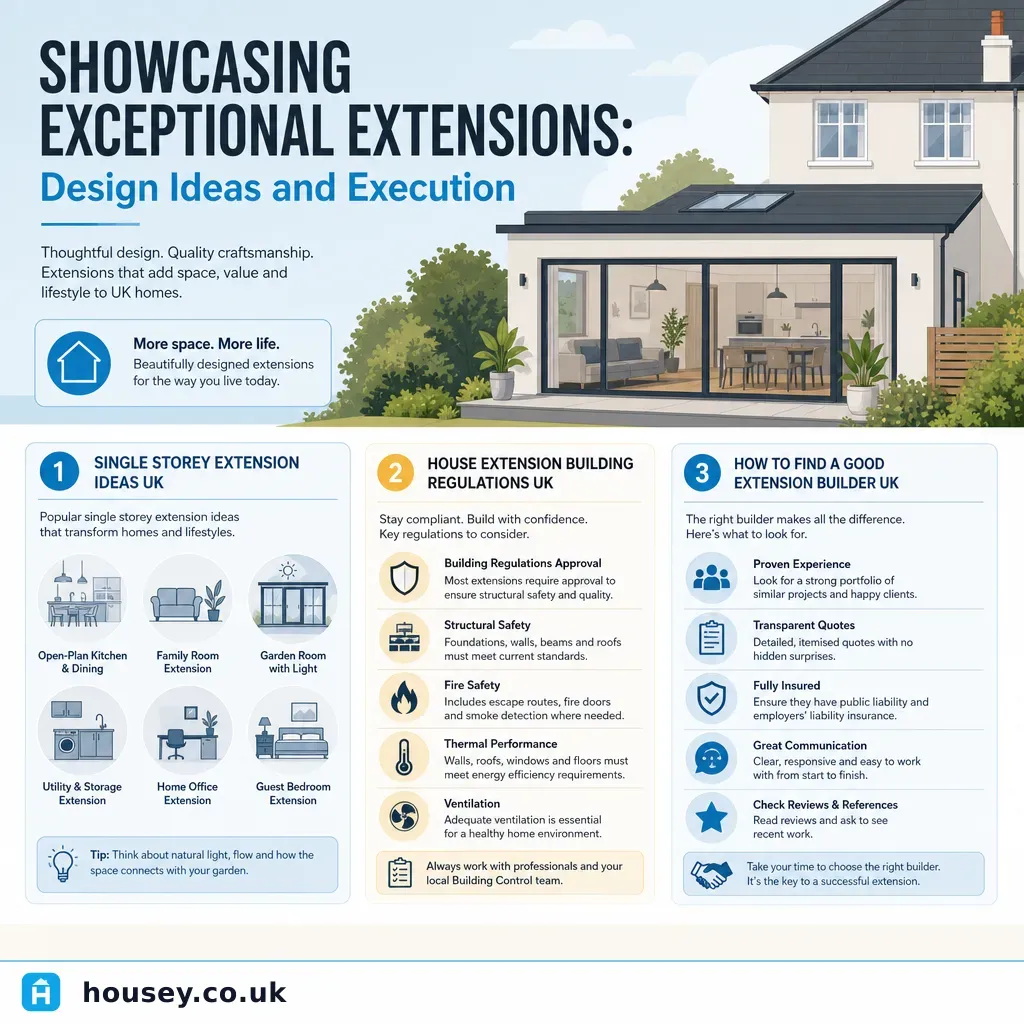
Showcasing Exceptional Extensions: Design Ideas and Execution
An exceptional house extension balances considered design with disciplined execution.
 Improvement & Build
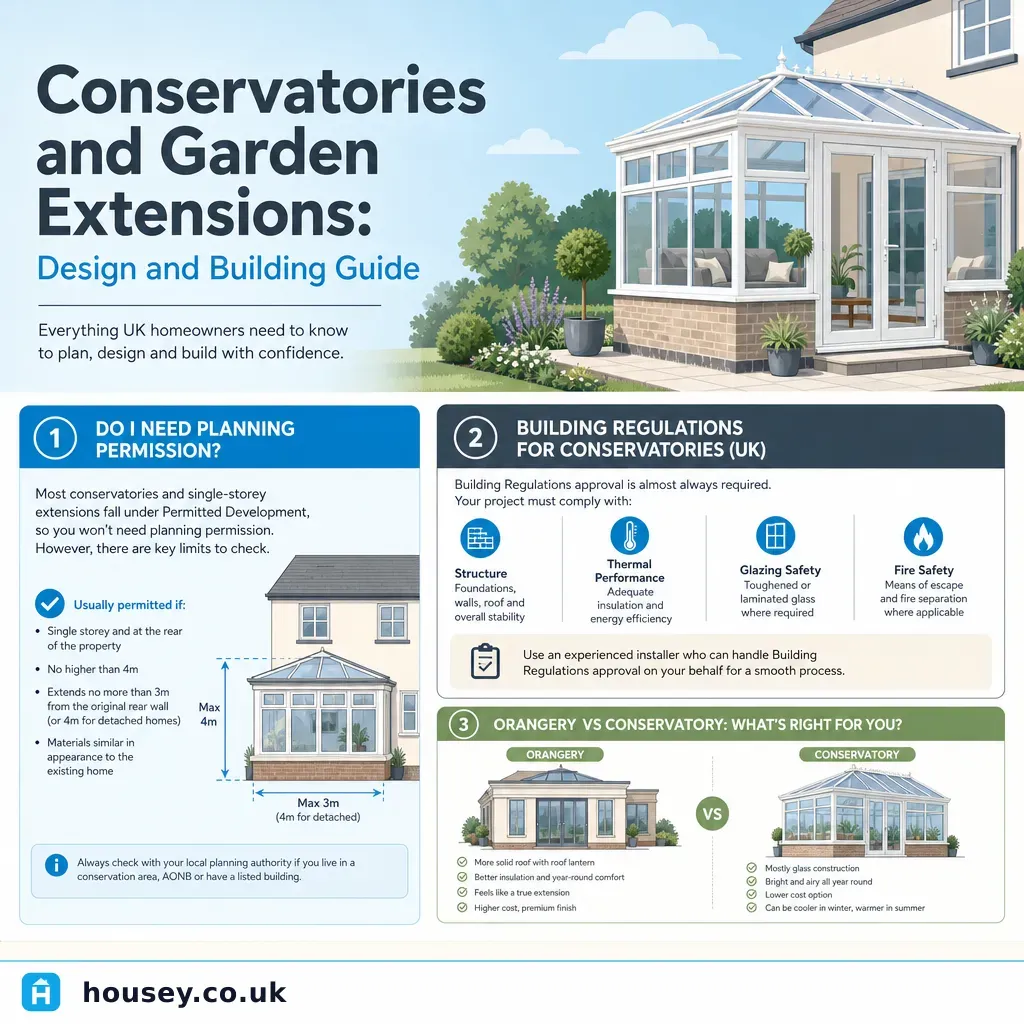
Conservatories and Garden Extensions: Design and Building Guide
Most conservatories qualify as permitted development in England if they are single-storey, within 50% of original curtilage, and meet dimensional limits.
 Improvement & Build
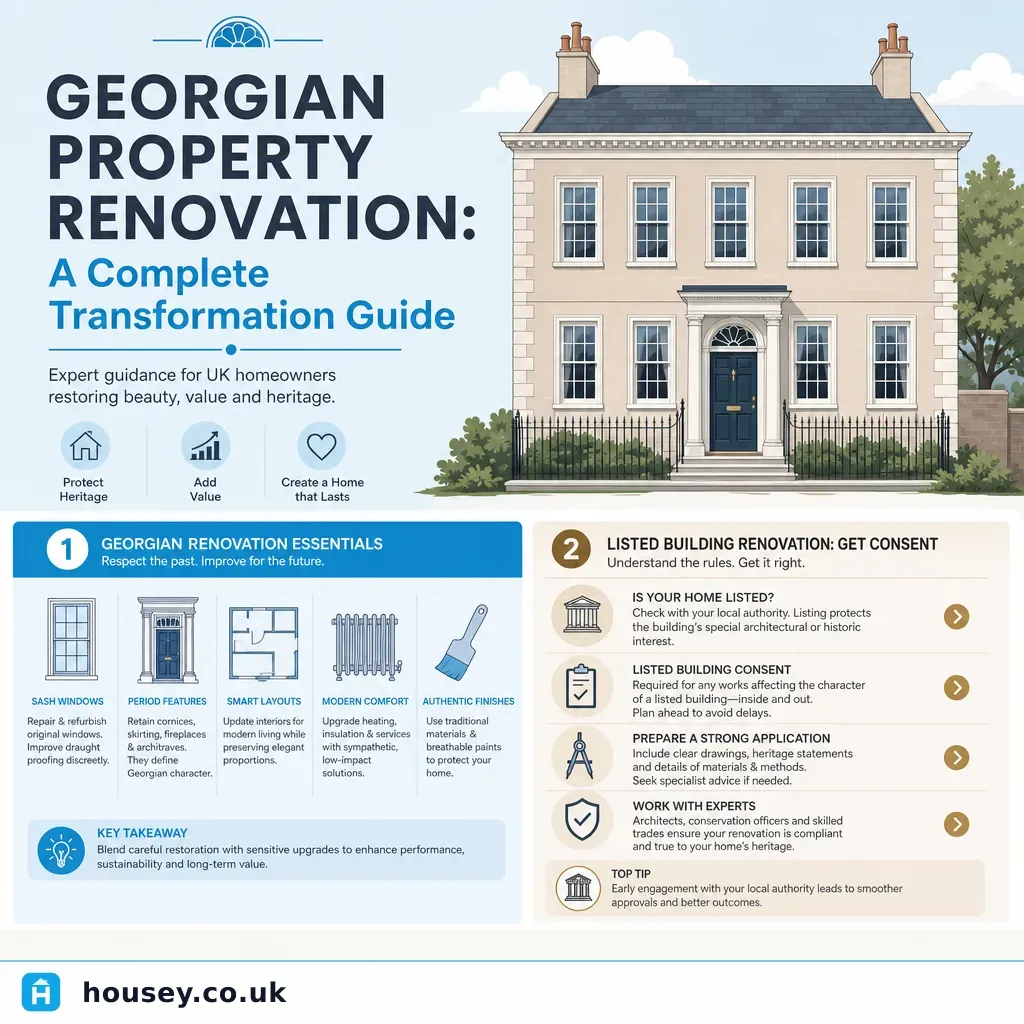
Georgian Property Renovation: A Complete Transformation Guide
Georgian property renovation requires working within heritage constraints.
 Improvement & Build
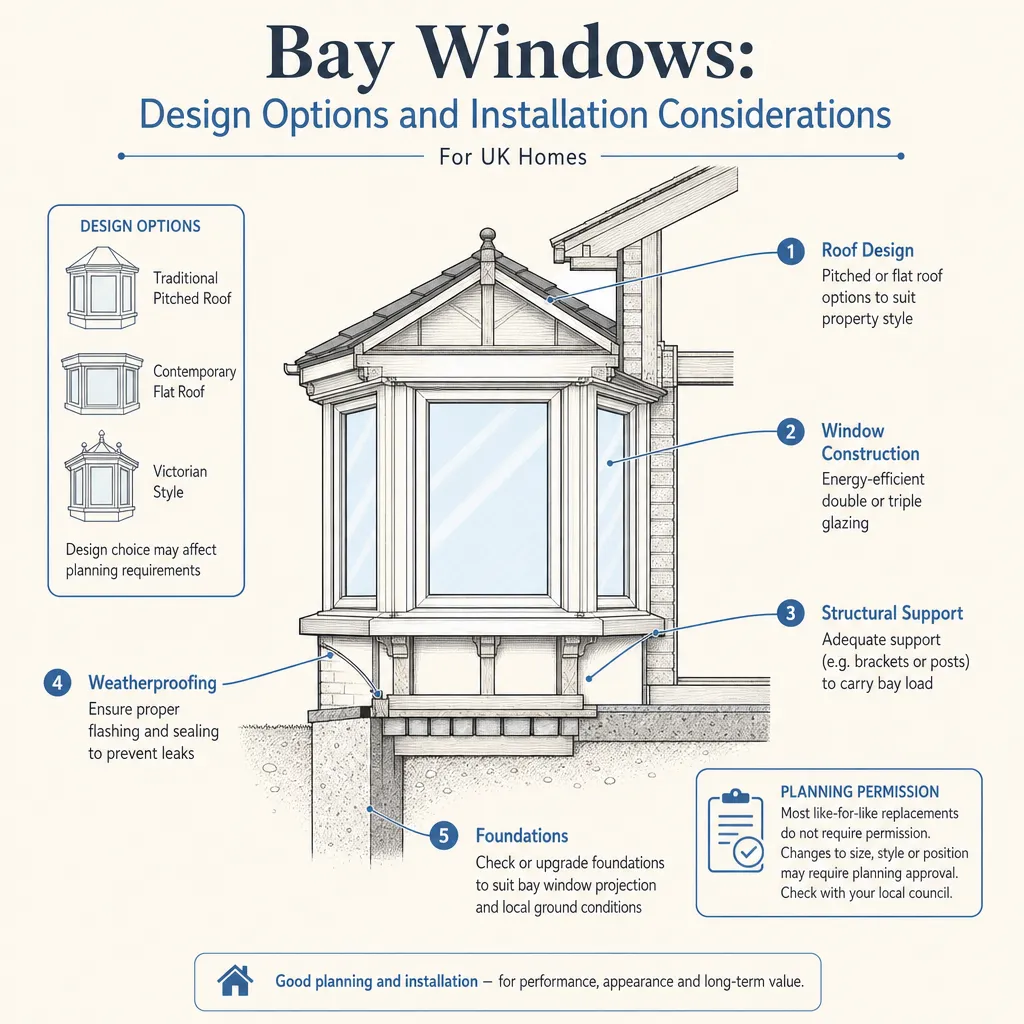
Bay Windows: Design Options and Installation Considerations
Bay windows project beyond the main wall of a house, increasing floor area and natural light.
 Improvement & Build
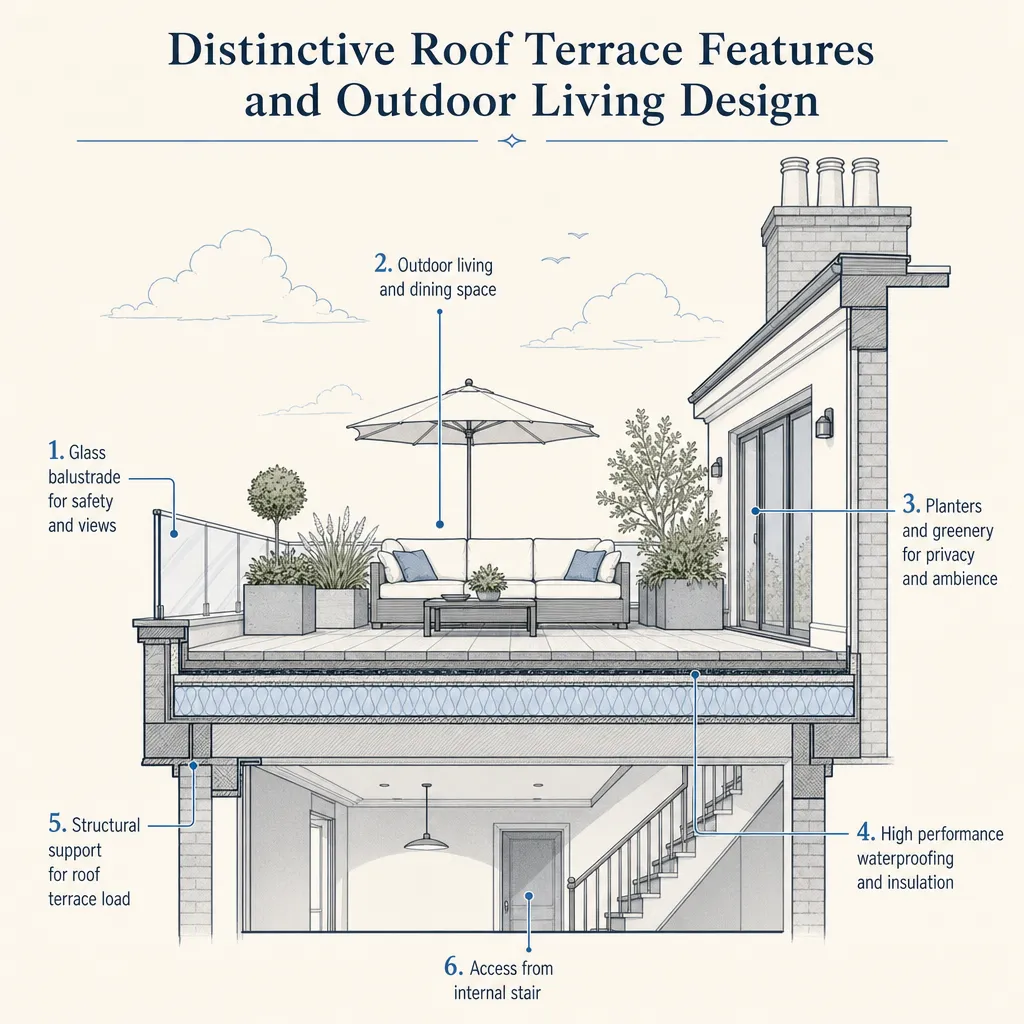
Distinctive Roof Terrace Features and Outdoor Living Design
A roof terrace can transform unused flat-roof space into a functional outdoor room, adding significant appeal to urban properties.