Distinctive Roof Terrace Features and Outdoor Living Design
By Housey · Last reviewed 30th of May 2026
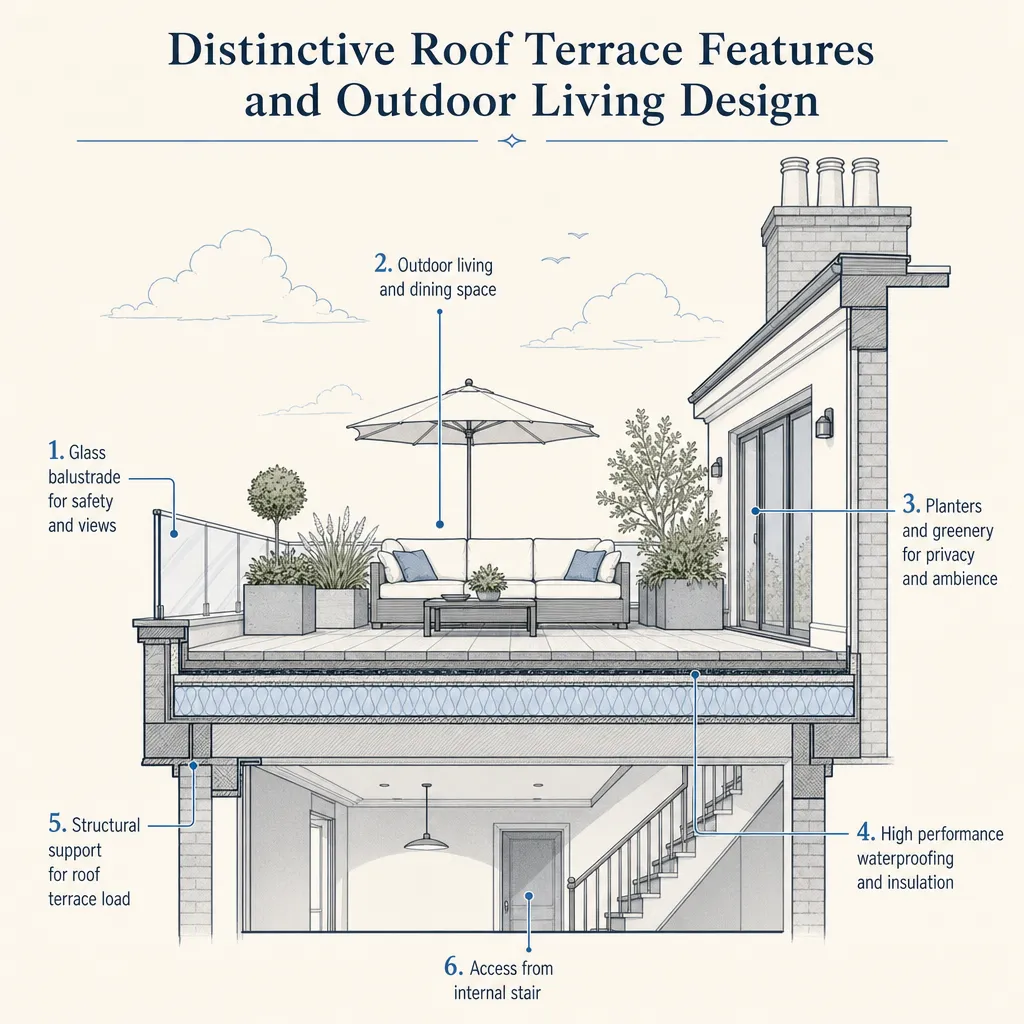
Distinctive Roof Terrace Features and Outdoor Living Design
Urban homeowners are increasingly looking upwards when ground-level space is limited. A roof terrace can convert a redundant flat roof into a usable outdoor room, boosting living space and property appeal without extending the building's footprint into the garden. Whether you are converting an existing flat roof above a rear extension or planning a new terrace as part of a larger build, the design choices you make — and the professional expertise you engage — will shape both the success and the safety of the project.
Key points
- Planning permission is usually required for a new roof terrace in England; roof terraces are specifically excluded from Permitted Development Rights under the Town and Country Planning (General Permitted Development) (England) Order 2015.
- Approved Document K of the Building Regulations requires balustrades and guarding on roof terraces to be at least 1.1 m high, with openings too narrow for a 100 mm sphere to pass through.
- The structural loading capacity of the existing roof must be assessed by a structural engineer before any terrace is built — standard residential flat roofs are designed for maintenance loads of around 0.25 kN/m², not regular occupancy.
- Waterproofing is the most common point of failure on roof terraces; BS 8579:2020 (Guide to the Design of Balconies and Terraces) sets out the relevant design guidance for contractors and designers.
- All electrical installation work on a roof terrace must be carried out by an electrician registered with a Competent Persons Scheme such as NICEIC or NAPIT, in compliance with Part P of the Building Regulations.
Planning permission and building regulations
Planning permission is almost always required when forming a new roof terrace in England. The Town and Country Planning (General Permitted Development) (England) Order 2015 explicitly excludes roof terraces from permitted development rights, meaning any new terrace — or any alteration that creates one where none existed — requires a householder application to your local planning authority.
If your property is in a conservation area or is listed, the requirements are more stringent. Permitted Development Rights may be further restricted by an Article 4 Direction, and Listed Building Consent may be required in addition to planning permission.
Building Regulations approval is also necessary. The key approved documents are:
- Approved Document K (Protection from Falling, Collision and Impact): sets out guarding and balustrade requirements — minimum 1.1 m height for residential terraces.
- Approved Document A (Structure): addresses structural loading and integrity.
- Approved Document C (Site Preparation and Resistance to Contaminants and Moisture): covers waterproofing requirements.
- Approved Document B (Fire Safety): relevant where the terrace forms part of a means of escape route.
Your architect or designer should coordinate building control sign-off throughout the project.
Structural considerations before design work begins
Before any design work can meaningfully begin, a structural engineer must assess whether the existing roof structure can support the additional load of a terrace. A standard residential flat roof is typically designed to carry a maintenance load of around 0.25 kN/m², whereas an occupied terrace must carry a minimum imposed load of 1.5 kN/m² under BS EN 1991-1-1 (Eurocode 1). Furniture, planters, and a gathering of people can increase loads significantly beyond this minimum.
Reinforcement of the existing structure may add cost and programme time — factor this into your feasibility assessment before commissioning detailed designs.
Distinctive design features for roof terraces
Once structural and planning feasibility is confirmed, the design can focus on creating a genuinely usable outdoor room. The most effective roof terraces share several design characteristics.
Defined zones for different uses
Dividing the terrace into a dining zone, a relaxed seating area, and a planting zone — even on a modest footprint — creates a sense of purpose and makes the space feel larger. Low-level dividers made from timber decking frames, raised planters, or wire trellis can delineate zones without blocking sightlines or views.
Privacy screening
In dense urban settings, privacy is often the primary design concern. Effective options include:
- Louvred timber or aluminium screens, which filter wind while maintaining light and airflow.
- Structural planters with tall ornamental grasses or hedging (note the weight implications for structural loading).
- Full-height glazed screens with integrated privacy film or fritted glass.
Flooring choices
Flooring material | Best for | Maintenance | Approx. weight |
|---|---|---|---|
Composite decking | Contemporary look, low maintenance | Occasional cleaning | 7–12 kg/m² |
Natural hardwood decking | Warm, premium aesthetic | Annual oiling | 10–14 kg/m² |
Porcelain tiles on pedestals | Roof terraces; allows drainage beneath | Grout cleaning; check slip rating | 20–30 kg/m² |
Artificial grass | Informal, relaxed spaces | Replace every 5–10 years | 3–6 kg/m² |
All flooring systems on a roof terrace must allow free drainage to prevent water pooling over the waterproofing membrane. Pedestal systems — which lift the tile or board off the membrane surface — are widely used for this reason.
Planting and greening
Roof terraces are exposed to wind, heat, and irregular watering, so plant choice requires careful thought. Hardy, drought-tolerant, and architectural species tend to perform well: ornamental grasses, lavender, agapanthus, box topiary, and olive trees are popular in UK roof garden contexts. Where structural loading allows, raised planter beds can support a broader range of species.
Sedum or wildflower blanket systems can be laid on shallower roof areas adjacent to the terrace, providing acoustic and thermal benefit as well as biodiversity gain — which may be relevant to Biodiversity Net Gain requirements on some planning applications.
Lighting
Low-level LED lighting integrated into decking boards, balustrade uprights, or raised planters extends the usability of the terrace into evenings without adding significant structural load. All electrical installations must comply with Part P of the Building Regulations and be carried out by an electrician registered with NICEIC, NAPIT, or another Competent Persons Scheme.
Roof terrace construction checklist
When to get professional help
A roof terrace is not a DIY project. The combination of planning law, structural engineering, waterproofing, and regulated electrical work means several professionals are typically involved. Seek specialist guidance promptly if:
- You are unsure whether the existing roof can carry additional load — never proceed without a structural engineer's written assessment.
- Your property is listed or in a conservation area.
- The existing flat roof shows signs of ponding water, bubbling felt, or visible leaks — waterproofing remediation should be completed before terrace construction begins.
- You are proposing a terrace above a habitable room — heat gain, acoustic performance, and fire safety implications may all apply.
What to ask before hiring a contractor
- What experience do you have constructing roof terraces, and can you provide references from similar projects?
- Who will coordinate the structural engineer and the waterproofing specialist — you or the contractor?
- What waterproofing system are you proposing, and does it comply with BS 8579:2020?
- Is management of the planning application included in your service, or is that a separate appointment with an architect?
- What building control route are you using, and how will the completion certificate be obtained?
- Is VAT included in the quoted price?
- What is your defects liability period for the waterproofing membrane?
How Housey can help
If you are ready to move from planning to building, Housey can connect you with vetted extension builders experienced in roof terrace construction and with garden designers for rooftop planting schemes who can create an outdoor scheme suited to the constraints and opportunities of a rooftop setting.
Frequently asked questions
Does a roof terrace always require planning permission in England?
In almost all cases, yes. Roof terraces are specifically excluded from permitted development rights in England under the Town and Country Planning (General Permitted Development) Order 2015. You will need to submit a householder planning application to your local planning authority. In conservation areas or for listed buildings, additional consents may also be required.
What balustrade height is required on a roof terrace?
Approved Document K of the Building Regulations requires guarding on roof terraces to be a minimum of 1.1 m in height. The guarding must be designed so that children cannot easily climb it, and any openings must be too narrow for a 100 mm sphere to pass through.
How much does a roof terrace cost to build in the UK?
Costs vary considerably depending on structural requirements, size, specification, and location. A straightforward roof terrace on an existing extension might start from around £15,000–£25,000 for a modest footprint, rising significantly for larger terraces requiring structural reinforcement. Indicative UK costs, last reviewed 2026-05-30. Always obtain at least three detailed quotes.
Can I use my flat roof as a terrace without carrying out any works?
Not safely, and not legally. A flat roof designed for maintenance access is typically not engineered to support regular occupancy loads. Using it informally as a terrace — without planning permission, Building Regulations sign-off, and appropriate waterproofing — creates structural, safety, and insurance risks.
Sources and further reading
- Planning Portal — Roof terraces and balconies — Planning Portal / GOV.UK
- Approved Document K: Protection from Falling, Collision and Impact — HM Government
- Town and Country Planning (General Permitted Development) (England) Order 2015 — legislation.gov.uk
- Biodiversity Net Gain guidance — GOV.UK
- Part P of the Building Regulations — Electrical Safety — HM Government
Useful next reads
 Improvement & Build
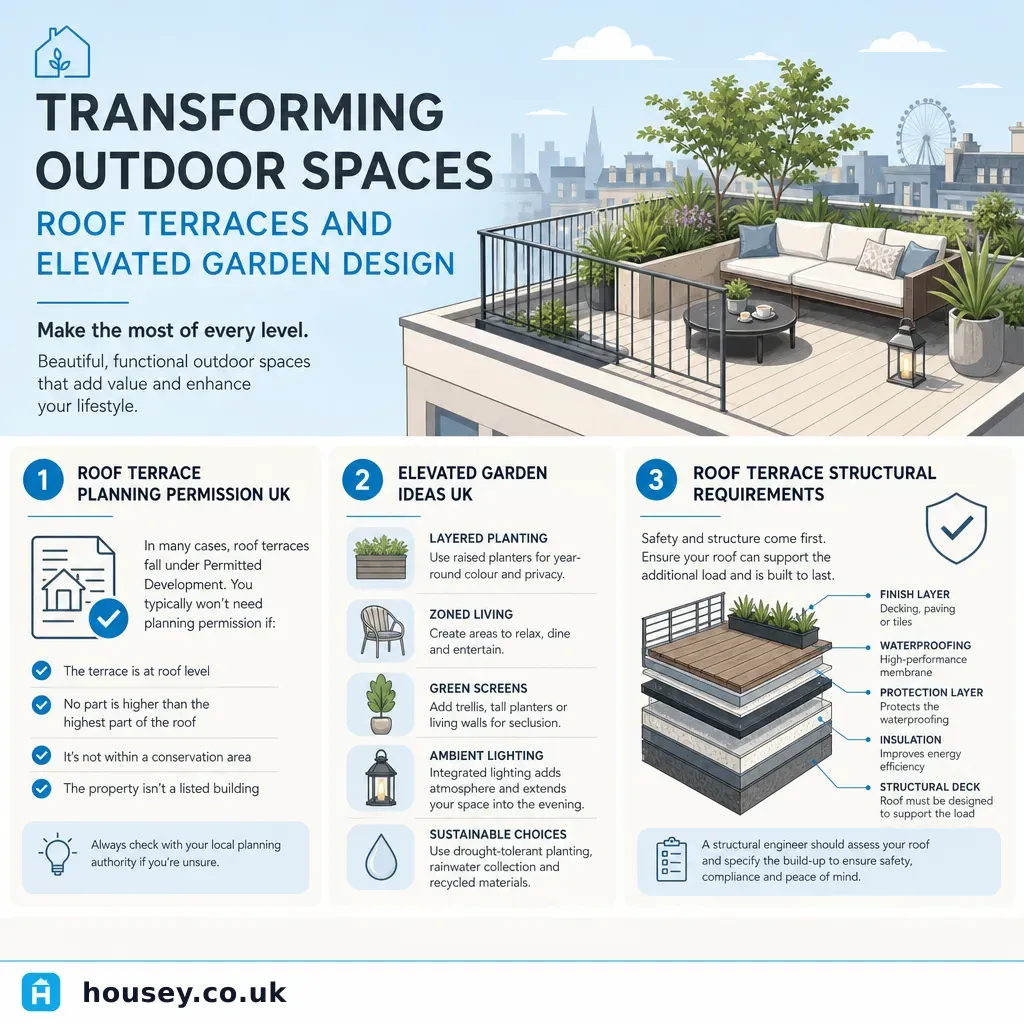
Transforming Outdoor Spaces: Roof Terraces and Elevated Garden Design
Roof terraces in the UK almost always need planning permission and a structural engineer's load capacity assessment before design work begins.
 Improvement & Build
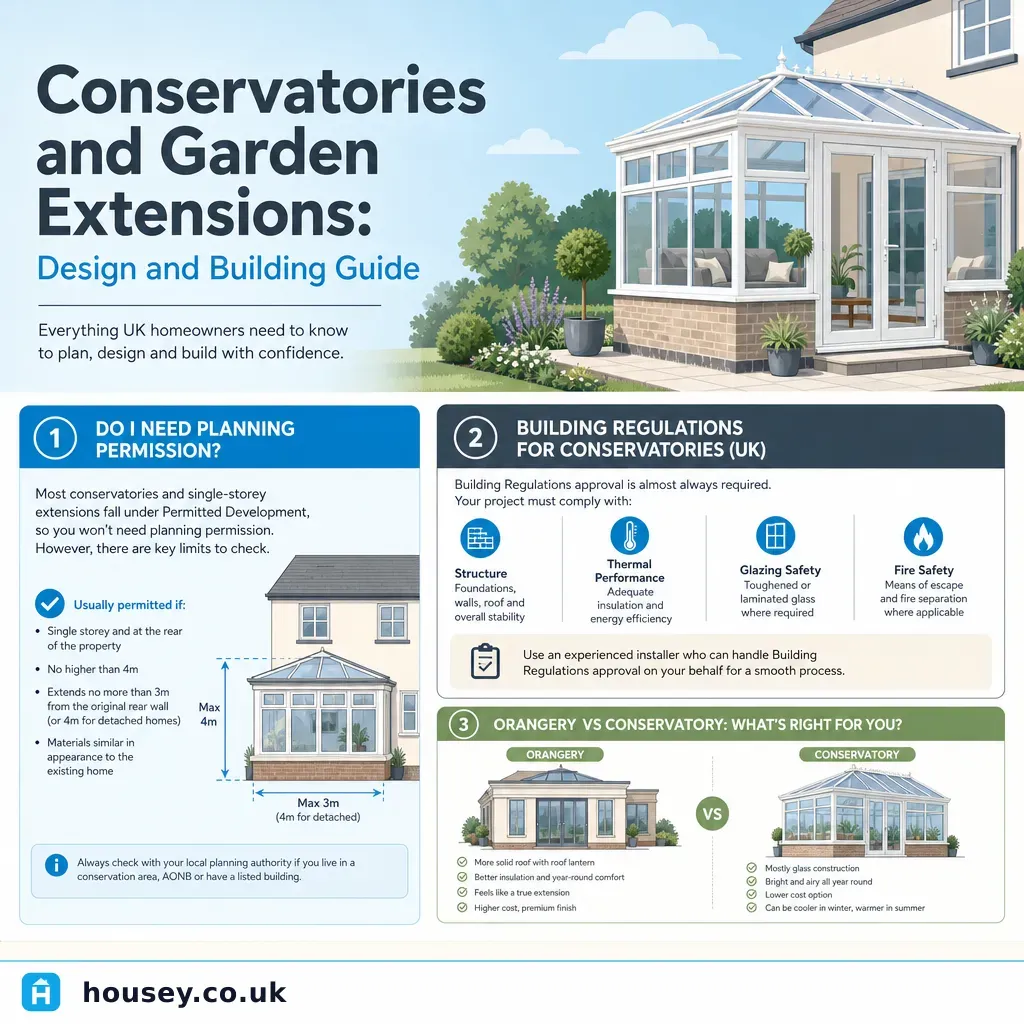
Conservatories and Garden Extensions: Design and Building Guide
Most conservatories qualify as permitted development in England if they are single-storey, within 50% of original curtilage, and meet dimensional limits.
 Improvement & Build
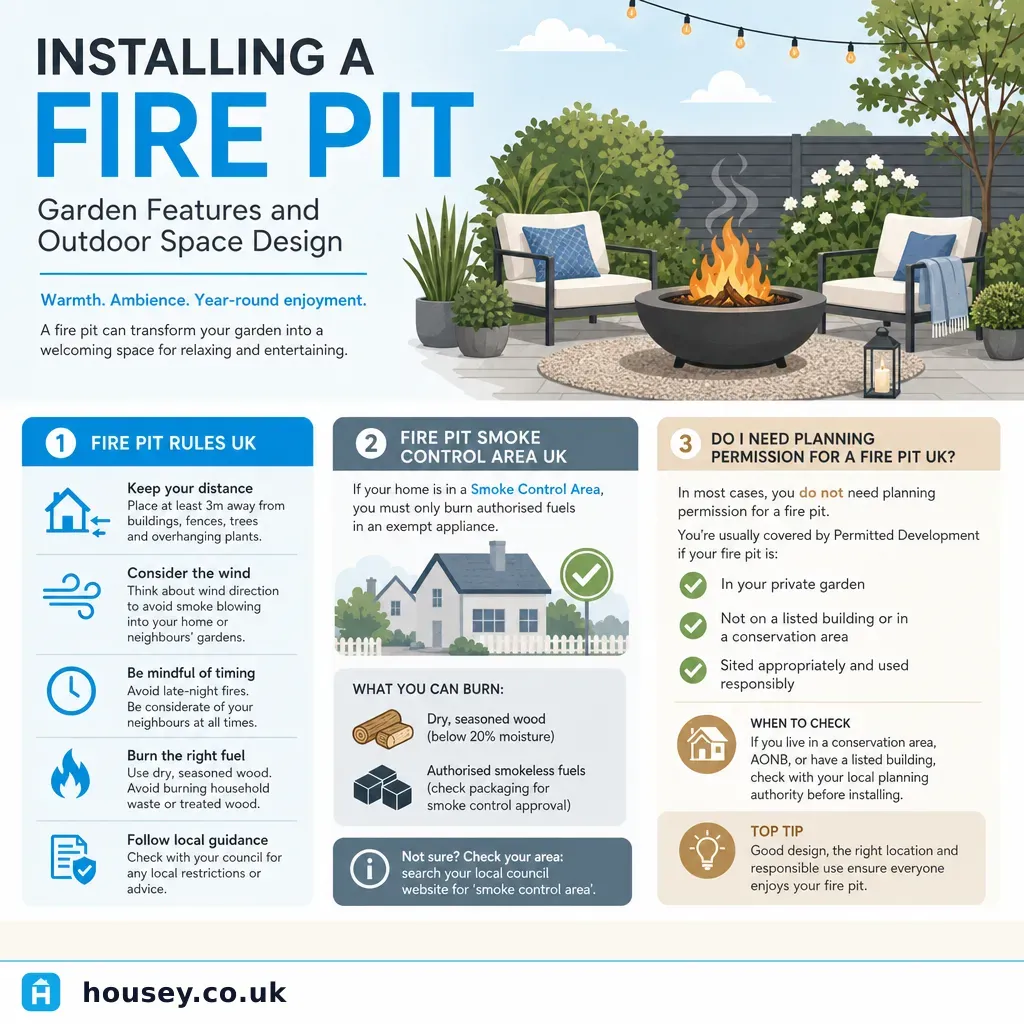
Installing a Fire Pit: Garden Features and Outdoor Space Design
Installing a garden fire pit in the UK is generally permitted, but Smoke Control Area rules prohibit open wood-burning in most towns and cities.
 Improvement & Build
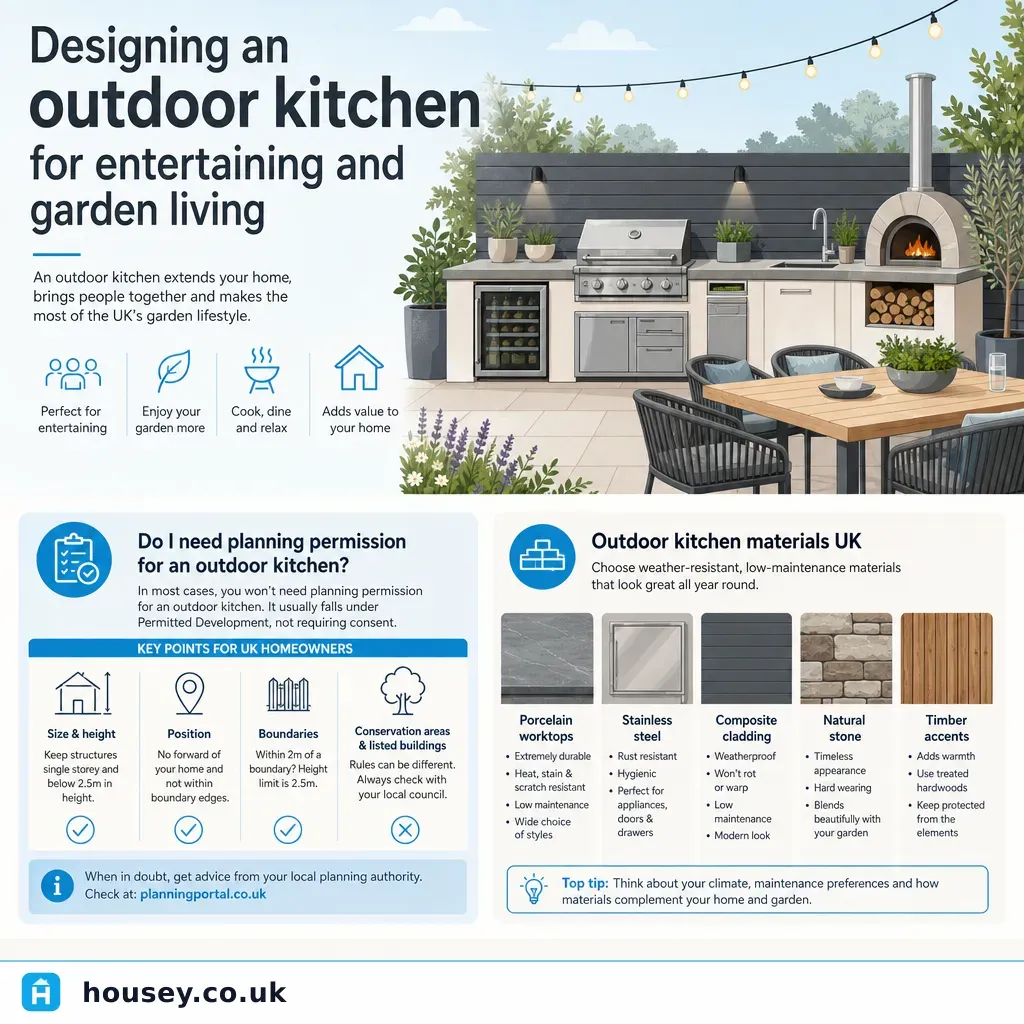
Designing an outdoor kitchen for entertaining and garden living
An outdoor kitchen in a UK garden needs a stable, level base — typically a concrete slab or quality paving — with weather-rated materials such as stainless steel grade 316 or frost-rated porcelain.
 Improvement & Build
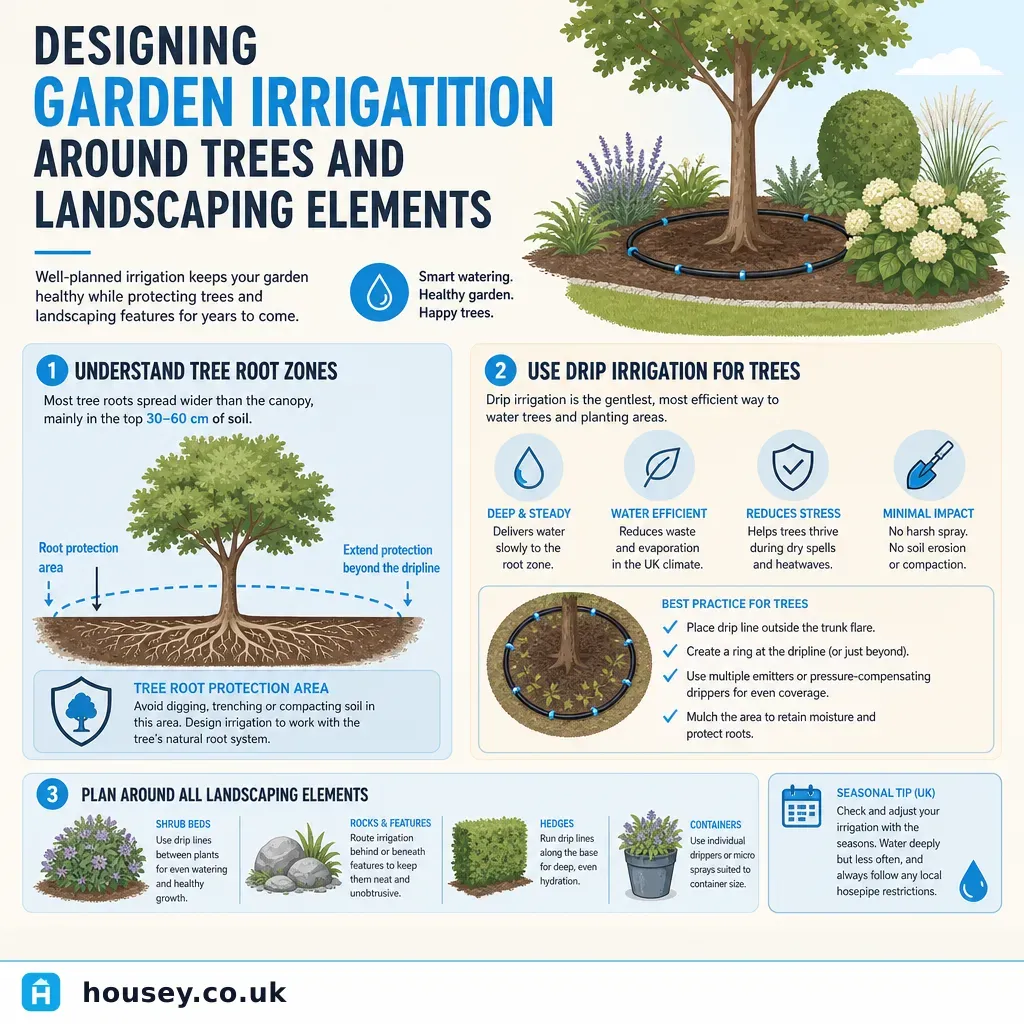
Designing Garden Irrigation Around Trees and Landscaping Elements
Design irrigation around trees by respecting the root protection area defined under BS 5837:2012, using drip or leaky pipe delivery rather than spray heads, and putting the tree zone on its own circuit.