Georgian Property Renovation: A Complete Transformation Guide
By Housey · Last reviewed 10th of May 2026
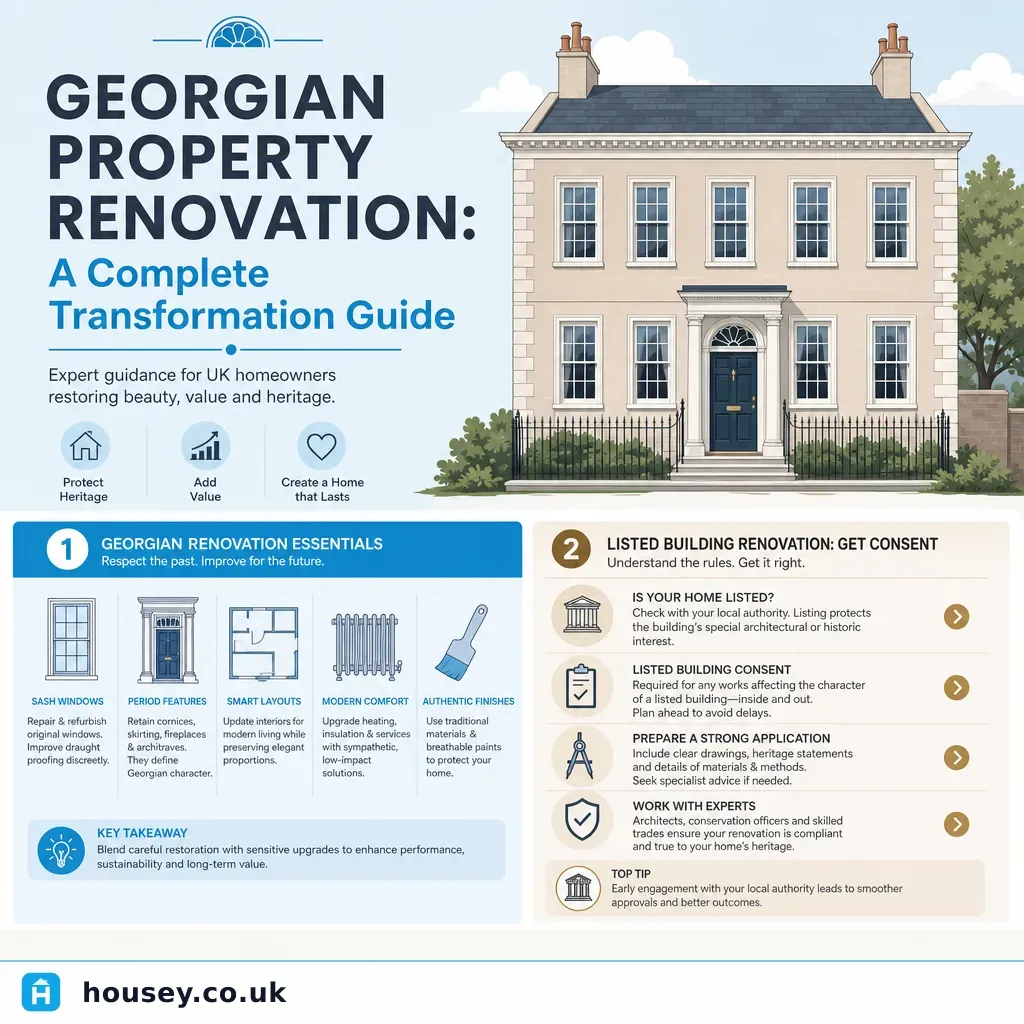
Georgian Property Renovation: A Complete Transformation Guide
Georgian properties — built roughly between 1714 and 1830 — combine genuine heritage value with a distinct set of technical and regulatory challenges. Whether you have purchased a Bristol townhouse or a London terrace, the combination of solid-wall construction, potential listed status, and strict material requirements means approaching renovation quite differently from any modern build.
Key points
- Georgian homes are pre-1919 solid-wall construction — standard cavity-wall insulation does not apply; breathable alternatives such as wood fibre board or lime render systems are required instead.
- Listed Building Consent is required for any works affecting the character of a Grade I, II*, or II listed building, including window replacement, chimney alteration, and internal wall removal.
- The Party Wall etc. Act 1996 requires formal notice to neighbours at least two months before structural work near a shared boundary; failure to serve notice can result in injunctions stopping works mid-project.
- Lime mortar — hydraulic lime NHL 2.5 or NHL 3.5 — is the correct pointing material for Georgian masonry; Portland cement mortar traps moisture and accelerates brick spalling.
- PAS 2035:2019 governs energy retrofit on older homes; ECO4 grant-funded work requires a Retrofit Coordinator to oversee insulation and ventilation strategy.
What makes Georgian renovation different
Georgian homes breathe — moisture moves through solid walls and must be able to escape. Modern impermeable materials such as cement render or closed-cell spray foam trap moisture inside the fabric, causing interstitial condensation, mould, and structural decay. Structural movement is also common in shallowly founded Georgian buildings; not every crack signals an emergency, but all warrant professional assessment before works begin.
Feature | Georgian approach | Modern equivalent | Key risk if wrong |
|---|---|---|---|
Wall insulation | Wood fibre or breathable lime render system | Cavity wall fill or closed-cell spray foam | Interstitial condensation, structural decay |
Window treatment | Secondary glazing or sash restoration | uPVC casement replacement | Planning refusal, loss of heritage character |
Pointing | Hydraulic lime mortar NHL 2.5–3.5 | Portland cement mortar | Moisture entrapment, spalling brickwork |
Roof covering | Like-for-like natural slate or clay tile | Concrete interlocking tile | Planning objection in conservation areas |
Planning permission and listed buildings
Check three things before engaging any contractor:
- Is the property listed? Any works affecting a listed building's character — internally or externally — require Listed Building Consent. Check Historic England's National Heritage List for status.
- Is it in a conservation area? Permitted development rights are significantly reduced; extensions, roof alterations, and external cladding often require full planning permission.
- Does the Party Wall etc. Act apply? Structural work near a shared boundary or within 3 metres of a neighbour's foundations requires formal notice to affected neighbours.
Contact your local planning authority's conservation officer before instructing any trades on a potentially listed or designated property.
A worked scenario: Grade II listed Bristol townhouse
A three-storey mid-terrace (c.1790) had failed pointing, cracked lintels, broken sash windows, and damp penetration to the rear ground floor. A heritage consultant prepared a Listed Building Consent application; consent was granted with conditions requiring lime mortar and like-for-like sash restoration. A structural engineer specified steel needle beams for lintel replacement. A roofer replaced missing slate and repaired lead valley gutters. Cement render to the rear wall was removed and replaced with breathable lime render. An air source heat pump was installed after a PAS 2035 Retrofit Coordinator confirmed the fabric and ventilation specification. EPC rating improved from F to C over 15 months.
This scenario is illustrative; timelines, costs, and consent requirements will vary by property, location, and scope of works.
Homeowner checklist: before works begin
Important limitations
This article provides general information only. Planning requirements, listed building consent conditions, party wall obligations, and retrofit specifications vary significantly by property, local authority, and project scope. Nothing here constitutes legal, planning, structural, or building control advice. A qualified professional must assess your specific property and situation before any works commence.
When this becomes urgent
Seek professional advice immediately if:
- Cracks are widening, stepped through brickwork, or accompanied by sloping floors or sticking doors and windows
- You discover materials that may contain asbestos — common in 20th-century alterations to Georgian buildings — do not disturb; arrange a professional asbestos survey first
- A conservation officer or planning authority has issued a stop notice or enforcement notice relating to works
- You have already started notifiable works without serving party wall notices on affected neighbours
What to ask a qualified professional
Before engaging a heritage and conservation consultant:
- Does this property require Listed Building Consent, Conservation Area Consent, or both for my planned works?
- Which materials and specifications will consent conditions require?
Before engaging a structural engineer:
- Is the movement active or historic, and does it indicate a foundation problem?
- Will the planned works require underpinning or structural strengthening?
Before appointing a PAS 2035 Retrofit Coordinator:
- What is the moisture risk assessment for internal insulation in this specific property?
- Which ventilation strategy is required alongside the insulation works, and am I eligible for ECO4 funding?
When to get professional help
Do not rely on general trades for a Georgian renovation. Engage specialists for lime masonry, sash window restoration, lead roofing, and any structural work. If you are unsure about consent requirements, contact your local planning authority's conservation officer before instructing anyone.
How Housey can help
Housey connects you with experienced heritage and conservation consultants who can advise on consent requirements and appropriate materials, roofers with traditional slate and lead experience for sympathetic roof repair and replacement, and extension builders for period-appropriate rear and side additions. Compare quotes from vetted local specialists with Georgian and period-property experience.
Frequently asked questions
Do I need listed building consent to repair my Georgian windows?
If your property is listed, repairs that alter the character of original windows — replacing glass, changing glazing bar profiles, or fitting secondary glazing units — may require Listed Building Consent. Like-for-like repair using matching materials is generally exempt. Always check with your local planning authority's conservation officer before instructing a contractor.
Can I insulate a Georgian solid-wall home?
Yes, but material choice matters. Breathable internal insulation such as wood fibre board or calcium silicate, or external insulation with a lime-based render system, is appropriate. Impermeable rigid board or spray foam risks interstitial condensation and decay. A PAS 2035 Retrofit Coordinator should assess condensation risk and specify the correct system for your property.
What mortar should I use for Georgian brickwork?
Hydraulic lime mortar — typically NHL 2.5 or NHL 3.5 depending on exposure — is standard for Georgian masonry. Portland cement mortar is too hard; it traps moisture and causes bricks to spall. A specialist mason or conservation consultant can assess the original mortar composition and match it appropriately before any repointing begins.
Does the Party Wall etc. Act apply to a Georgian terrace?
Yes. Structural work near a shared wall — including underpinning, cutting into a party wall, or building within 3 metres of a neighbour's foundations — requires a formal party wall notice under the Party Wall etc. Act 1996. Allow at least two months for neighbours to respond before starting any notifiable works.
Sources and further reading
- Energy efficiency and historic buildings — Historic England
- Listed buildings and conservation areas — Planning Portal
- Party Wall Act guide — GOV.UK
- Solid wall insulation — Energy Saving Trust
Useful next reads
 Improvement & Build
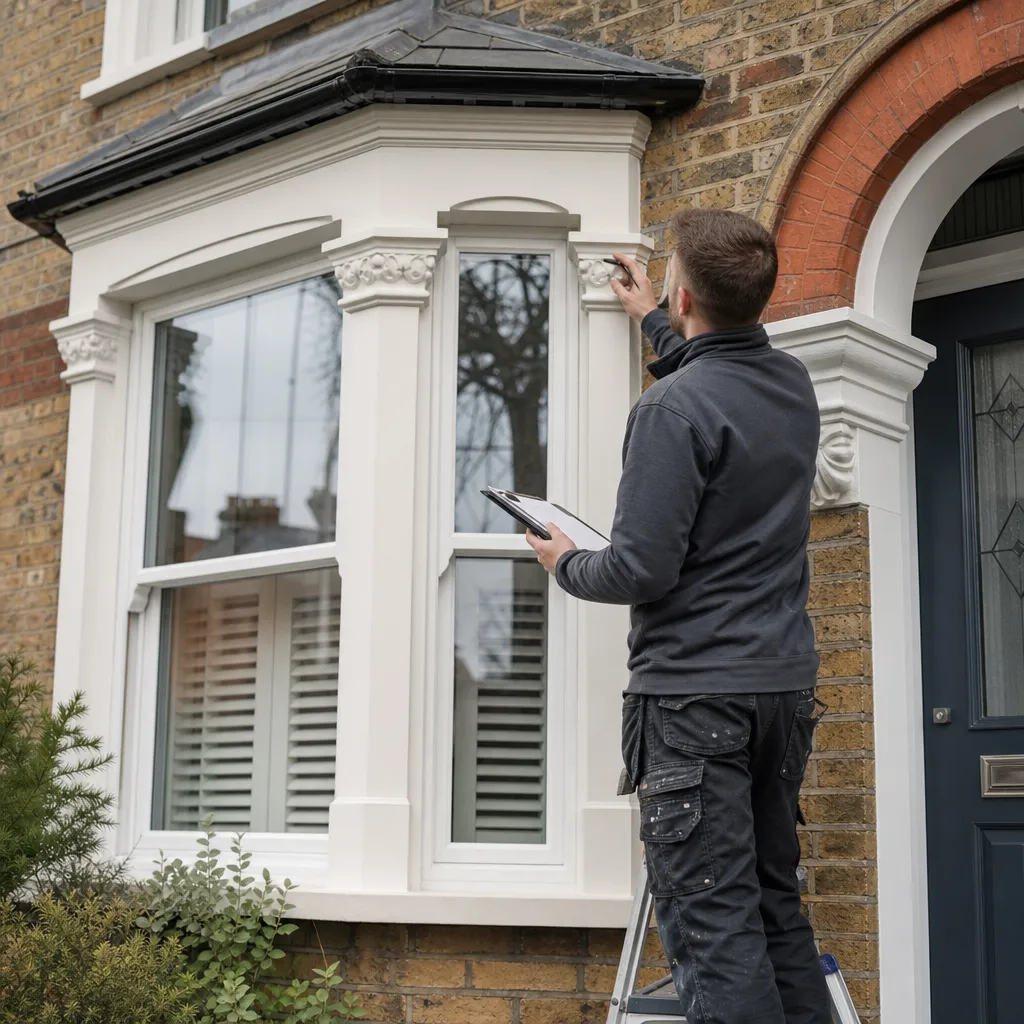
Quality Home Improvement Workmanship: What Good Looks Like
Quality home improvement workmanship shows from the first day on site: clean material storage, accurate setting-out, level and plumb finishes, and correct sequencing of trades.
 Improvement & Build
Exceptional Extension Projects: Ideas and Professional Execution
An exceptional home extension combines thoughtful design, correct planning permissions, and skilled professional execution.
 Improvement & Build
UK Property Transformation Projects: Realistic Renovation Outcomes and Costs
UK renovation projects — from rear extensions to loft conversions and full house overhauls — can add usable space, improve energy performance, and uplift market value, but rarely return the full build cost in added value pound for pound.
 Improvement & Build
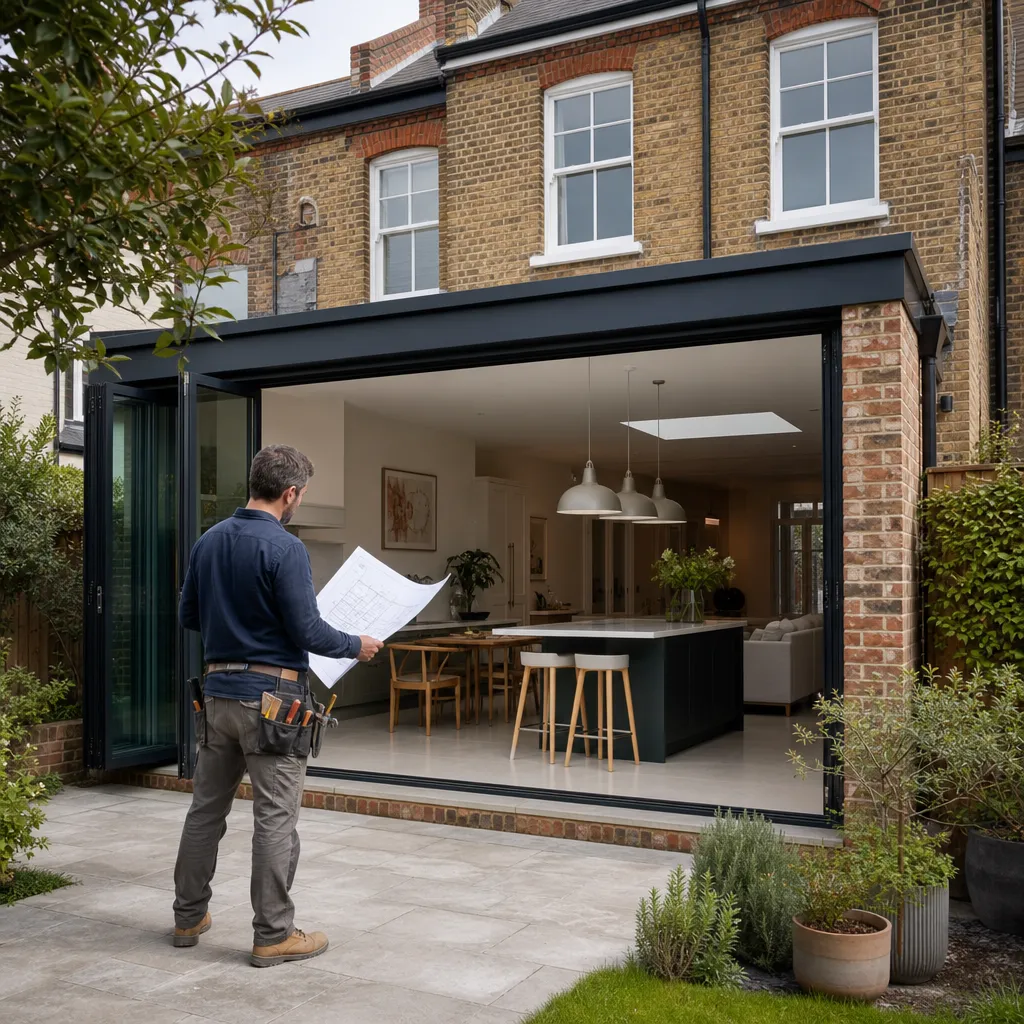
Renovation Case Studies: Learning From Successful Home Transformations
Real UK renovation projects follow common patterns: confirming planning and Building Regulations routes before work starts, commissioning drainage surveys on older properties, and retaining 5% of payment until snagging is resolved.
 Improvement & Build
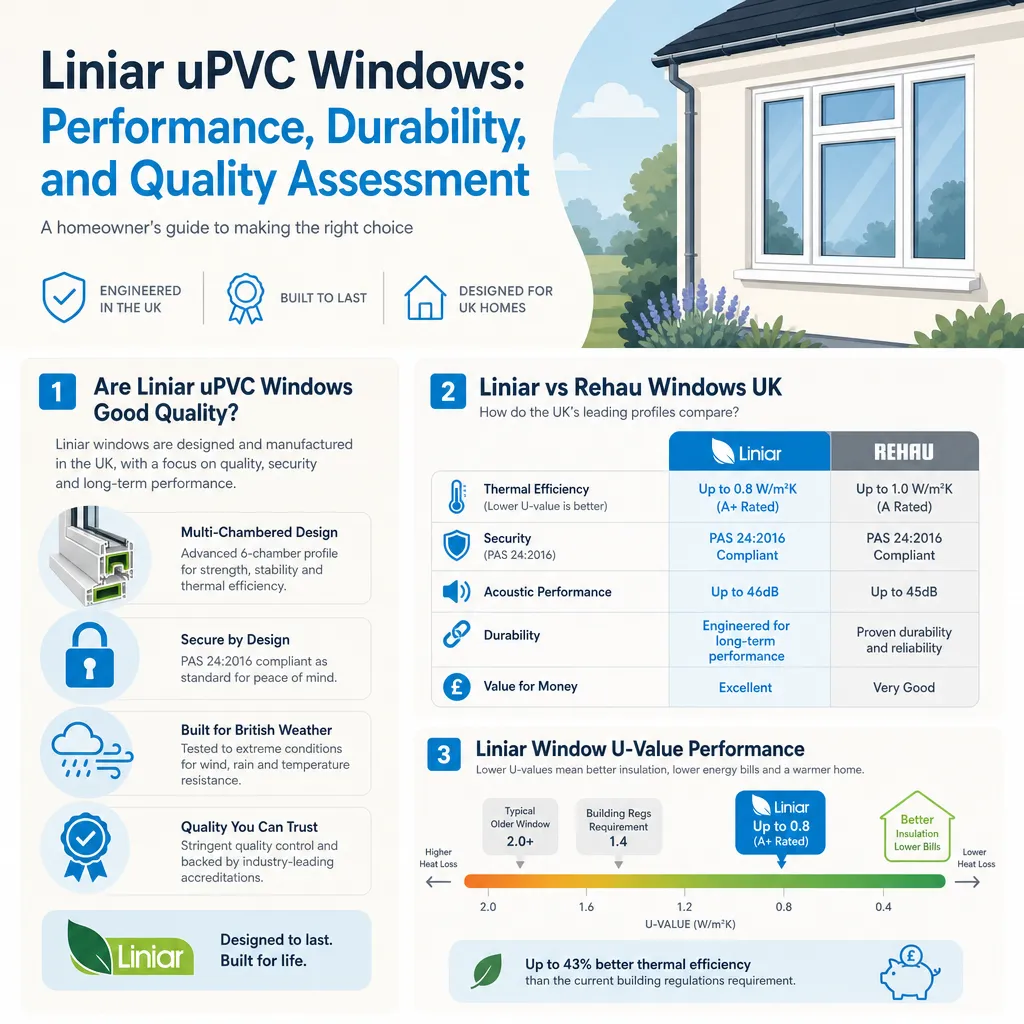
Liniar uPVC Windows: Performance, Durability, and Quality Assessment
Liniar uPVC window profiles are manufactured in the UK using multi-chambered, foamed frames.