Establishing a Parking Strip Garden or Verge Planting Area
By Housey · Last reviewed 1st of June 2026
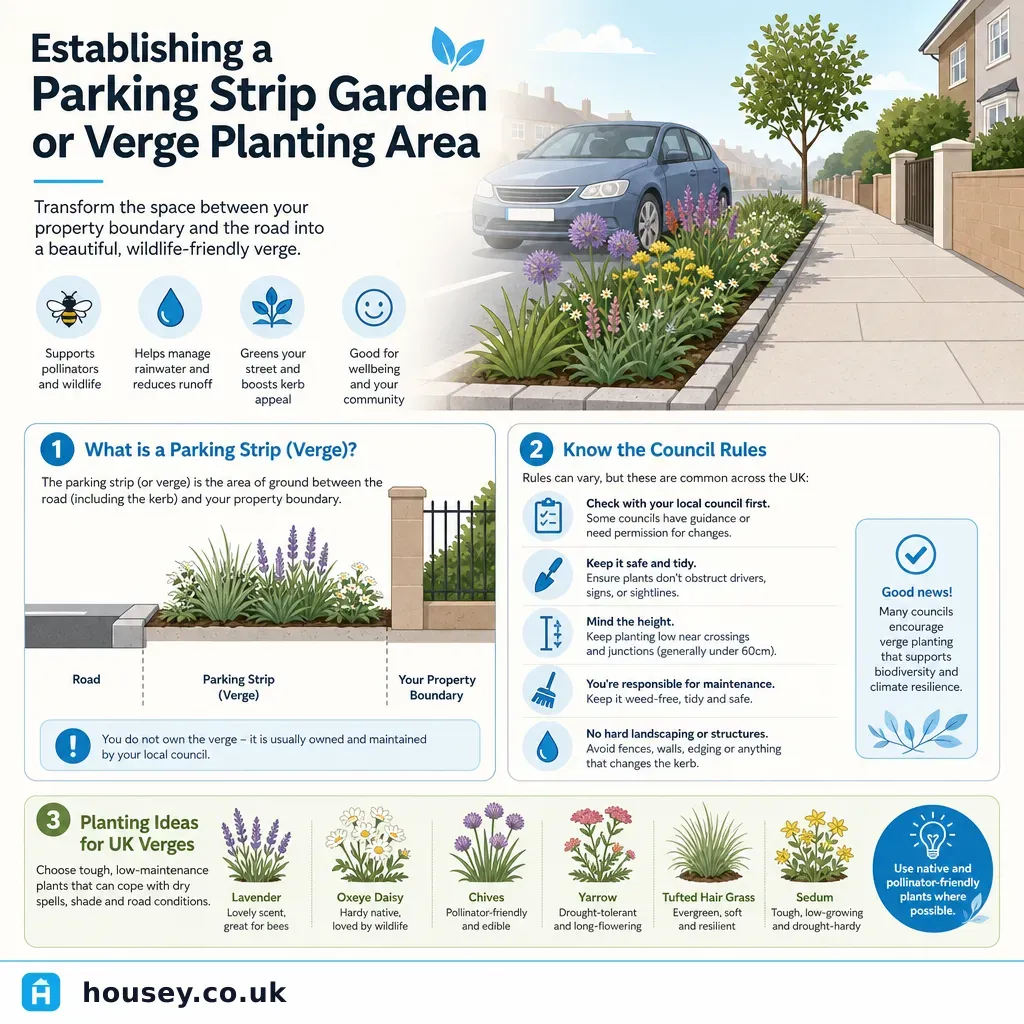
Establishing a Parking Strip Garden or Verge Planting Area
The narrow strip between your garden boundary and the road — sometimes called a parking strip, verge, or road verge — is one of the most overlooked planting opportunities in a UK street. Whether you are tired of mowing a scrubby grass strip, want to improve your home's kerb appeal, or simply want to contribute to local biodiversity, transforming it into a planted area is increasingly popular. But the land's ownership status, local authority rules, and road safety requirements all shape what you can and cannot do before you reach for a spade.
Key points
- In most UK residential streets, the verge outside your property is adopted highway land maintained by the local highway authority — not owned by you — and digging or planting requires consent.
- Under the Highways Act 1980, it is an offence to deposit soil, plant trees, or erect structures on the highway without permission from the highway authority.
- Any planting must not obstruct sightlines for drivers or pedestrians; keep plants below 0.6 m within 2 m of a road junction as a general safety guideline.
- Replacing a grass verge with paving or gravel over 5 m² may trigger planning rules unless permeable materials are used — see GOV.UK guidance on paving front gardens.
- Many councils run community verge adoption schemes — contact your local highways team to find out whether a formal or informal consent route is available.
Who owns the verge outside your house?
This is the first question to answer before doing anything. In most UK residential streets the verge is adopted highway land — the local highway authority (typically the county or unitary council) is responsible for its maintenance. You do not own it, even if your title deeds include the land to the centre of the road, because the highway authority holds a right of way over it.
To check:
- Contact your local highways department and ask whether the strip outside your property is adopted highway.
- Search your title register at HM Land Registry — your title plan shows the registered boundary, but a highway right of way may still apply even if the land falls within it.
- Some newer estates have unadopted verges maintained by a residents' management company or left as the property owner's responsibility.
If you own the land outright, you have far greater freedom. If it is adopted highway, you will need written council consent before planting.
What permission do you need?
Adopted highway verge
Under the Highways Act 1980, planting on adopted highway land without consent can constitute an offence. In practice, most councils encourage low-level planting for biodiversity and amenity, but the process varies:
- Some councils have a formal licence or permit process for verge planting — contact your local highways team.
- Others operate on a lighter touch, accepting a written request and a simple sketch of the proposed planting.
- A growing number of local authorities run community verge adoption schemes, where residents take on maintenance responsibility in exchange for planting rights.
Always get written confirmation before you start work.
Your own land
If the strip falls within your property boundary, low-level planting generally does not require planning permission. However:
- Any new hard-standing (replacing grass with gravel, concrete, or paving) may be subject to planning rules if it exceeds 5 m² and is not permeable. See GOV.UK guidance on paving front gardens.
- Permitted development rights may be restricted if your property is in a conservation area or is listed.
- Check whether your title deeds include any restrictive covenants relating to boundary alterations.
Which plants work best in a parking strip?
Parking strips and road verges are challenging growing environments. The best plants are drought-tolerant, low-growing (ideally under 60 cm), and resilient to occasional foot traffic and heat reflected from tarmac.
Plant type | Examples | Best for | Notes |
|---|---|---|---|
Ornamental grasses | Festuca glauca, Stipa tenuissima | Year-round structure, low maintenance | Drought-tolerant once established |
Creeping perennials | Geranium sanguineum, Sedum spurium | Ground cover, pollinators | Low profile, spreads gradually |
Bulbs | Allium, Crocus, Narcissus | Spring colour, biodiversity | Naturalise well, low upkeep |
Low herbs | Thyme, Chamomile | Fragrance, ground cover | Tolerate light foot traffic |
Native wildflowers | Oxeye daisy, Cornflower | Biodiversity, low input | Check council mowing schedule |
Avoid tall shrubs, thorny plants overhanging the pavement, and vigorous spreaders that could encroach on neighbouring land or block pedestrian sightlines.
Which approach is right for your strip?
Use this decision tree to choose your path forward:
- Do you own the land? If yes → plant within permitted development rules; check hard-standing regulations if replacing grass with paving.
- Is the verge adopted highway? If yes → contact your highways department before any works; ask about a licence or adoption scheme.
- Is the strip in a conservation area or near a listed building? If yes → check with the local planning authority before removing boundary features or adding hard materials.
- Is the strip heavily shaded by street trees? If yes → choose shade-tolerant ground cover such as Ajuga reptans or Vinca minor rather than sun-loving perennials.
- Is the strip very narrow (under 50 cm)? If yes → low creeping ground cover only; larger plants will overhang the pavement or kerb and may need regular cutting back.
Preparing the soil and planting
Road verges often have poor, compacted soil — sometimes rubble-laden from decades of utility works and foot traffic. A little preparation goes a long way.
- Check for utilities first. Request a free search at Linesearch Before U Dig (LSBUD) before digging. Shallow gas, water, electricity, and telecoms runs are common beneath verges.
- Break up compaction. A garden fork to 20–30 cm depth improves drainage and root establishment.
- Improve the soil. Work in compost or well-rotted organic matter. Avoid high-nitrogen improvers that encourage leafy growth over flowering.
- Mulch. A 5–8 cm layer of bark chip or gravel suppresses weeds, retains moisture, and reduces ongoing maintenance.
- Water in well. New plants in exposed, dry strips need consistent watering through the first growing season.
Red flags to watch for
Stop and investigate further if you notice:
- Utility markers or recently disturbed ground on or near the strip — contact the relevant network operator before digging.
- Cracked or settled kerbstones — possible subsidence or historic utility works beneath; report to the council before planting.
- Yellow lines, traffic signs, or proximity to a junction — additional highway restrictions may apply.
- Restrictive covenants in your title deeds — some older properties have covenants preventing alterations to boundary areas or verges.
- Recent council notices in the area — utility or highway works may be planned that could undo new planting.
Homeowner checklist before you start
When to get professional help
Most parking strip planting is a manageable project once ownership and consent are confirmed. Consider instructing a professional if:
- The strip is large and you want a cohesive design with structural planting, lighting, or integrated hard landscaping.
- You are unsure about drainage, soil condition, or the history of utility works in the area.
- You want to create a kerb-appeal improvement that forms part of a wider front garden redesign.
A garden designer can advise on plant selection, layout, maintenance requirements, and any council approval process.
How Housey can help
If your parking strip project extends to a full front garden improvement — or you want a professionally specified planting scheme that will thrive in challenging road conditions — Housey connects you with local landscapers and garden designers who understand UK street planting, council requirements, and low-maintenance design for exposed sites. Describe your project and receive quotes from vetted local professionals.
Frequently asked questions
Can I plant on the grass verge outside my house without asking the council?
If the verge is adopted highway land — which it is in most UK residential streets — you should seek written consent from the local highways authority before planting. The Highways Act 1980 makes it an offence to deposit materials or plant on the highway without permission. Many councils actively encourage verge planting and will grant consent readily, but check first to avoid having your work removed.
What happens if I plant on an adopted verge without permission?
The council has the right to remove any unauthorised planting and may charge the cost to the landowner or occupier. In practice, enforcement is rare for low-level planting, but utility companies retain the right to excavate verges for maintenance at any time, which could destroy your work. Getting written consent from the council protects your investment and avoids disputes.
Do I need planning permission to plant a parking strip?
Low-level planting in most locations does not require planning permission. However, if you are converting a grassed area to paving, gravel, or hard standing over 5 m², you may need to use permeable materials or obtain planning permission. In conservation areas or for listed buildings, additional rules apply. Check with your local planning authority if you are in any doubt about restrictions.
How do I find out if I own the verge outside my property?
Check your title register at HM Land Registry (gov.uk/search-for-land-property-information). Your title plan shows the registered boundary. Even if the boundary extends to the centre of the road, the highway authority may hold a right of way over the verge. Contact your local highways department to confirm the verge's adopted status before starting any work.
Sources and further reading
- Highways Act 1980 — legislation.gov.uk
- Paving your front garden — GOV.UK
- Search for land and property information — HM Land Registry
- Linesearch Before U Dig (LSBUD) — utility search service for safe digging
Useful next reads
 Improvement & Build
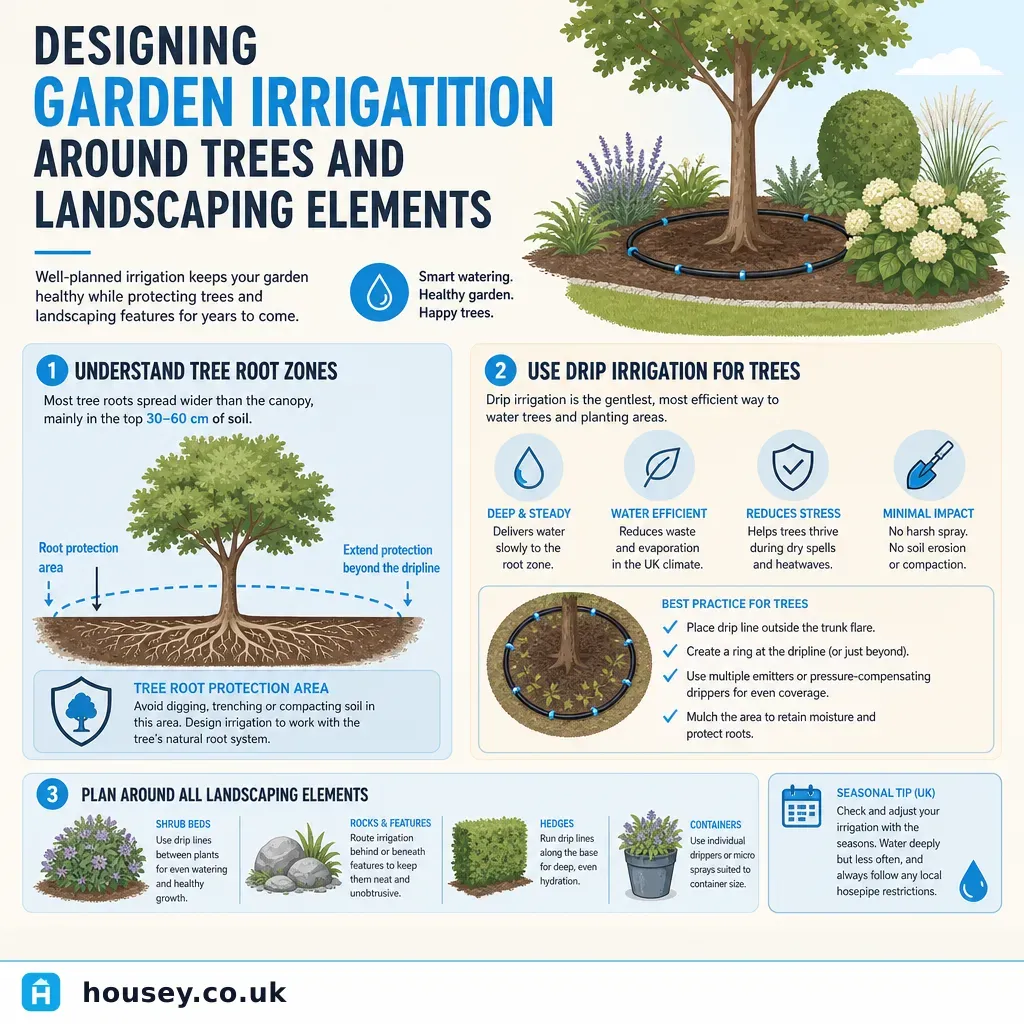
Designing Garden Irrigation Around Trees and Landscaping Elements
Design irrigation around trees by respecting the root protection area defined under BS 5837:2012, using drip or leaky pipe delivery rather than spray heads, and putting the tree zone on its own circuit.
 Improvement & Build
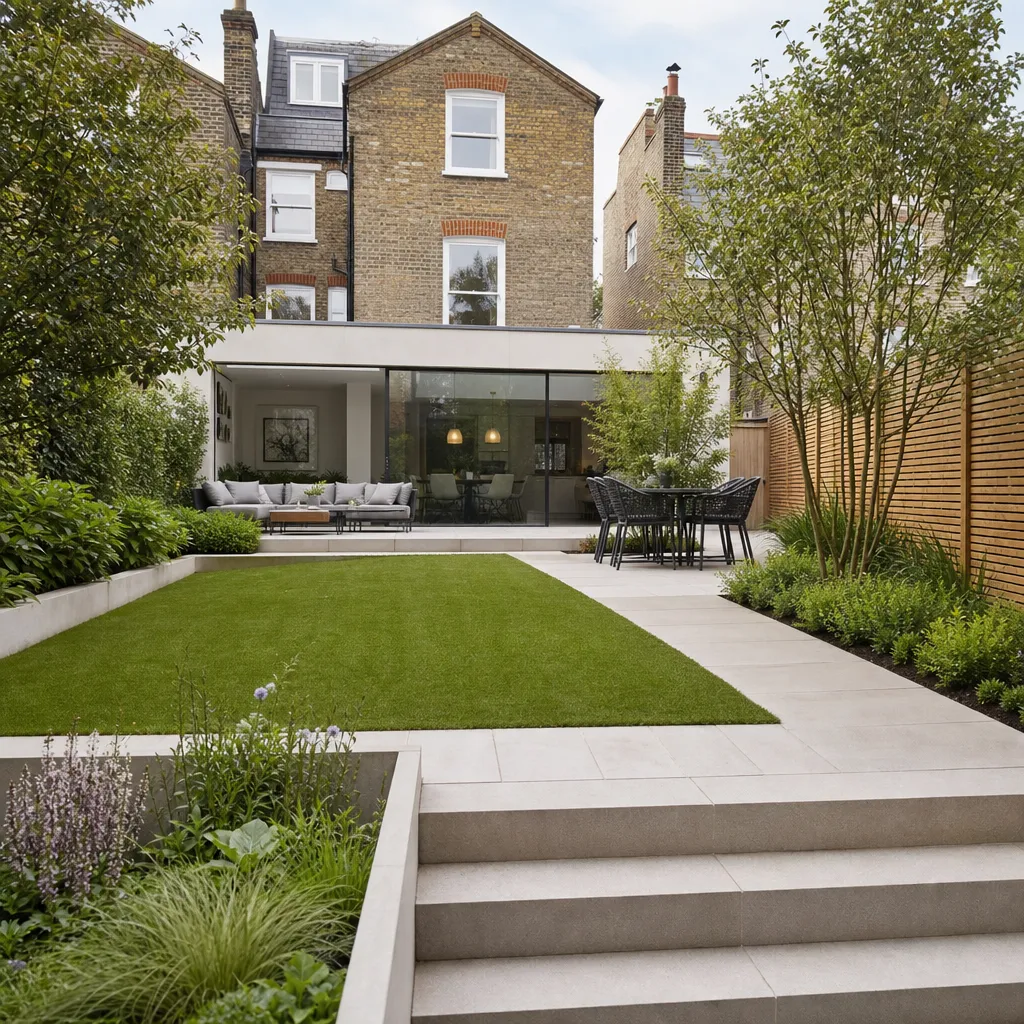
Garden Design Trends and Contemporary Landscaping Ideas
Contemporary UK garden design centres on low-maintenance naturalistic planting, multi-functional outdoor spaces, sustainable hard landscaping materials, and wildlife-friendly rewilded areas.
 Improvement & Build
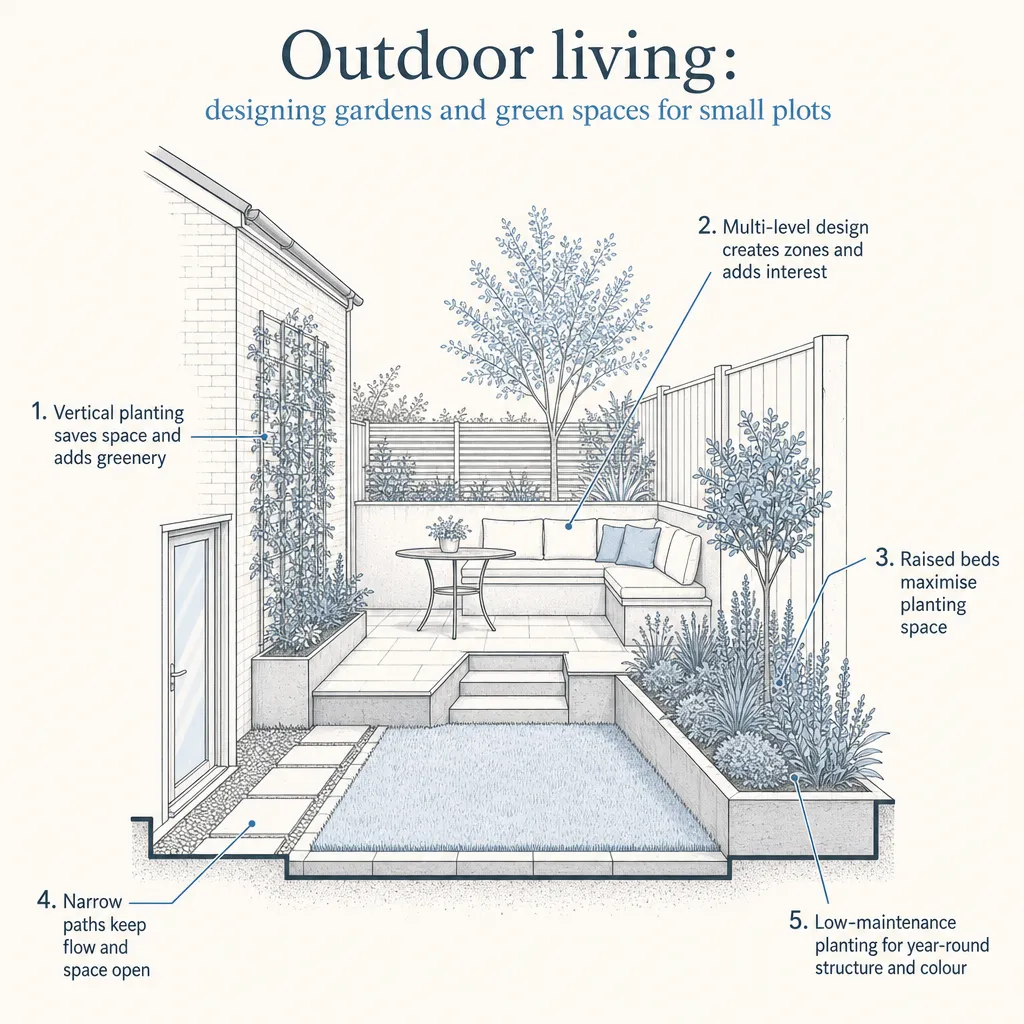
Outdoor living: designing gardens and green spaces for small plots
Small plots work best when divided into defined zones — seating, planting, and utility — before materials are chosen.
 Improvement & Build
Spring Garden Transformations: Design Ideas to Enhance Your UK Property
Spring is the best time to transform a UK garden, with mild temperatures and longer days ideal for planting and landscaping.
 Improvement & Build
Garden Design and Landscaping Inspiration
Effective garden design starts with assessing your aspect, soil type, and existing features before commissioning any planting or hard landscaping.