Farmhouse Renovation Costs and Historic Property Restoration
By Housey · Last reviewed 6th of May 2026
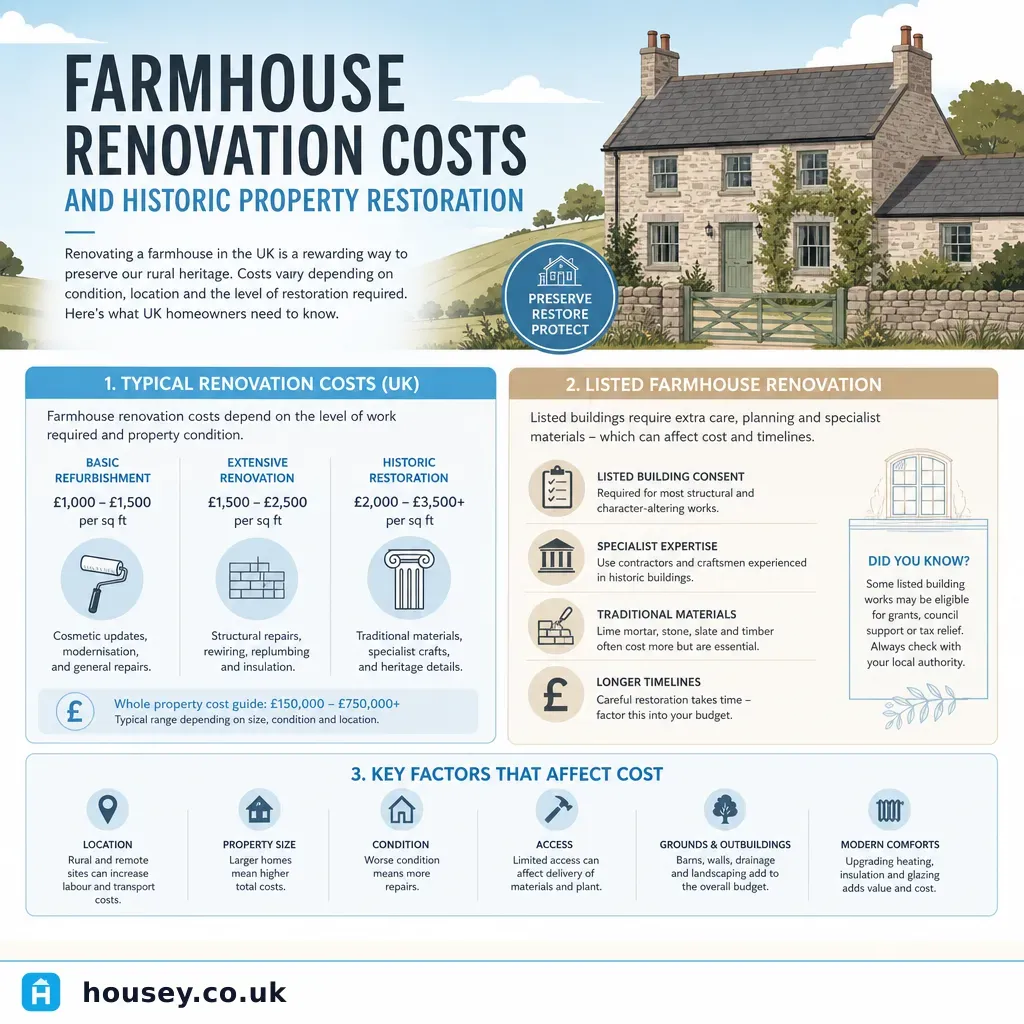
Farmhouse Renovation Costs and Historic Property Restoration
Renovating a farmhouse or other rural historic property is one of the most complex building projects a UK homeowner can undertake. Whether you have purchased a neglected stone longhouse in the Yorkshire Dales or an unmodernised Devon cob farmhouse, the scope, cost, and regulatory landscape differ significantly from standard residential refurbishment. Getting the budget, sequencing, and professional team right from the outset determines whether a project succeeds or stalls.
Key points
- Full farmhouse renovation in the UK typically costs between £80,000 and £350,000 or more, depending on size, structural condition, and heritage status — indicative figures only; always obtain itemised quotes.
- If the farmhouse is a Listed Building, all works affecting its character require Listed Building Consent in addition to any planning permission; unauthorised works are a criminal offence under the Planning (Listed Buildings and Conservation Areas) Act 1990.
- The reduced VAT rate of 5% may apply where a residential property has been empty for at least two years; a VAT specialist should confirm eligibility before you assume the saving.
- A RICS Level 3 Building Survey is strongly recommended for farmhouses of any age — Level 2 reports are not suited to rubble-stone, cob, or timber-frame construction.
- Rural properties are frequently subject to Article 4 Directions, National Park policies, or AONB designations that restrict permitted development rights beyond standard residential rules.
What drives farmhouse renovation costs
Cost variation in farmhouse projects is substantial. A two-bedroom stone cottage needing a new roof, rewiring, and heating will cost far less than a five-bedroom Grade II listed longhouse requiring structural consolidation, lime render, heritage-approved glazing, and a full services replacement.
The main cost drivers are:
- Structural condition: settlement, failed lintels, damp ingress, or missing roof sections push costs up sharply.
- Heritage status: listed buildings require specialist contractors and lime-based materials — both carry a premium over standard products and methods.
- Remoteness: rural sites increase haulage, scaffolding, and contractor travel. Logistics can add 10–20% over equivalent urban projects.
- Services: many farmhouses have no mains gas, inadequate electricity supply, private water, and ageing septic systems — each may need full replacement.
- Energy retrofit: improving a solid-stone farmhouse without creating moisture problems requires specialist assessment under PAS 2038 or BS 7913:2013 (historic buildings).
Cost area | Indicative range (2026) | Notes |
|---|---|---|
Full structural renovation (medium farmhouse) | £150,000–£350,000+ | Commission a cost plan from a quantity surveyor |
New roof (traditional slate, medium) | £15,000–£45,000 | Depends on area, pitch, access, and specification |
Rewiring (4–5 bed) | £6,000–£15,000 | Subject to survey; complex layouts add cost |
New boiler and heating | £4,000–£12,000 | Oil or LPG where no mains gas |
Heritage-approved windows and doors | £15,000–£40,000 | Listed properties may require secondary glazing |
Lime render and repointing | £5,000–£20,000 | Specialist trade; area and condition dependent |
Kitchen and bathrooms | £10,000–£40,000 | Wide specification range |
Indicative UK costs, last reviewed 2026-05-06. Always obtain itemised quotes for your specific property.
Heritage and planning considerations
If your farmhouse is a Listed Building — check the Historic England National Heritage List for England, Coflein for Wales, or Historic Environment Scotland — you cannot carry out works affecting its character without Listed Building Consent from your local planning authority, even for works that would otherwise be permitted development.
Conservation area designation adds a further layer: demolition, cladding, and some extensions require consent even if the building itself is not listed.
Key regulations:
- Planning (Listed Buildings and Conservation Areas) Act 1990 — the legal framework for England and Wales
- National Planning Policy Framework, Chapter 16 — heritage assets policy in England
- Historic England Advice Notes — practical guidance on repairs, alterations, and extensions
- Building Regulations 2010, Regulation 9 — allows relaxations where full compliance would be unacceptable in a listed building
A heritage and conservation consultant can assess what consents are needed before you commit to a design, often saving significant cost compared to enforcement action later.
Worked UK scenario: Grade II listed stone farmhouse, Peak District
This is a representative scenario — costs and consents vary by property and local authority.
A buyer purchases a four-bedroom Grade II listed stone farmhouse built circa 1780: empty for seven years, failing roof, no central heating, original single-glazed windows, and lime render partially over-coated with cement.
Step 1 — Pre-purchase: a RICS Level 3 Building Survey flags structural movement in the rear outshoot, asbestos in the lean-to roof, and cement render as a moisture risk. An asbestos survey and structural engineer's assessment are commissioned before exchange.
Step 2 — Design and consent: an architect and heritage consultant are appointed. Listed Building Consent is obtained for roof repair, like-for-like timber window replacement, removal of the cement render, and a modest single-storey rear extension.
Step 3 — Specification: lime render and lime mortar pointing throughout. Secondary glazing agreed with the local planning authority as more sympathetic than replacement double-glazed units.
Step 4 — Energy retrofit: external wall insulation ruled out by the BS 7913 assessment; internal wall insulation installed in selected rooms with vapour management, plus an MVHR unit.
Step 5 — Build: total project cost approximately £280,000 including professional fees over 18 months. The 5% VAT rate applied to eligible conversion elements after specialist confirmation.
Renovation sequencing: what to tackle first
Poor sequencing is among the most common causes of cost overrun in farmhouse projects.
- Structural and weatherproofing first — roof, external walls, drainage. No interior work until the shell is watertight.
- Services rough-in — electrical, plumbing, and heating first-fix while walls are open.
- Insulation and vapour control — after services, before boarding.
- Internal walls and plastering — lime plaster takes considerably longer to dry than modern plaster; allow time in the programme.
- Second-fix and finishes — joinery, kitchens, bathrooms, decoration.
- External works — hard landscaping, drainage, access tracks last.
What to ask a qualified professional
Before appointing a contractor or committing to a design:
- Do you have experience working on listed buildings or conservation area properties — and can you provide references for comparable rural projects?
- Which heritage materials and methods will you specify, and are your suppliers reliably stocked?
- Who will manage Building Regulations compliance, and have you worked with this local authority's building control team before?
- What is your approach to moisture management in solid-wall or rubble-stone construction?
- Will you project-manage specialist subcontractors — structural engineers, asbestos contractors, lime plasterers — or should I appoint them separately?
- What assumptions underpin your cost plan, and what could cause the price to change?
Important limitations
This article provides general information about farmhouse renovation costs and heritage considerations in the UK. It is not a substitute for professional advice specific to your property. Listed Building Consent rules, permitted development rights, VAT reliefs, structural requirements, and local planning policies all depend on the individual property, its location, its designation, and the works proposed. A heritage consultant, planning consultant, chartered architect, RICS surveyor, and structural engineer should each be consulted as appropriate before committing to significant works.
When to get professional help
Seek professional guidance before starting works if:
- The farmhouse is a Listed Building or within a conservation area
- You have identified cracks, stepped cracking through brickwork, or visible structural movement
- The property has been empty for more than two years and damp penetration may be significant
- You suspect asbestos-containing materials — common in farm outbuildings built or modified before 2000
- Private drainage or water supply is of unknown condition
- You are considering adding insulation to solid rubble or cob walls
- Your budget is within 20% of your maximum — contingencies of 15–20% are standard for rural historic projects
How Housey can help
Housey connects homeowners with qualified professionals for rural and historic renovation projects. Whether you need architectural technologists to produce measured drawings and Building Regulations submissions, heritage and conservation consultants to navigate Listed Building Consent, or extension builders with rural project experience, you can request and compare quotes through Housey in one place.
Frequently asked questions
Do I need planning permission to renovate a farmhouse?
Internal works that do not affect a listed building's character generally do not require planning permission, but do require Listed Building Consent if the building is listed. External works, extensions, and changes to windows or doors may require both. Permitted development rights are often restricted for listed buildings, National Parks, AONBs, and conservation areas. Always check with your local planning authority before starting work.
Can I get VAT relief on a farmhouse renovation?
The 5% reduced rate of VAT can apply to conversions and to properties that have been empty for at least two years. Zero-rating may apply to some approved alterations to listed buildings, though HMRC rules are detailed and property-specific. Always consult a VAT specialist or accountant before relying on a reduced rate — the eligibility criteria are strict and easy to misapply.
How long does a full farmhouse renovation take?
A full renovation of a medium-sized farmhouse typically takes 12 to 24 months from appointment of professionals to practical completion. Complex listed buildings or those requiring major structural works can take longer. Planning and consent processes alone often take 8 to 16 weeks before work starts on site. Rural logistics and specialist material lead times can add further time.
Do I need a structural engineer for a farmhouse renovation?
In most cases, yes. Farmhouses — particularly pre-1919 rubble-stone, cob, or timber-frame properties — behave differently from modern masonry. A structural engineer should assess foundations, roof structure, wall condition, and any areas of movement before you budget or appoint a contractor. Structural issues identified late in a project are among the most expensive surprises in rural renovation work.
What is the difference between a heritage consultant and an architect for listed buildings?
A heritage consultant (often a member of the Institute of Historic Building Conservation, IHBC) specialises in the planning and statutory aspects of working with listed and historic buildings. An architect manages design and construction. On complex listed building projects, both are often needed — the heritage consultant navigates Listed Building Consent, while the architect delivers the design and construction package.
Sources and further reading
- Advice Notes for Historic Buildings — Historic England
- National Heritage List for England — Historic England
- Planning (Listed Buildings and Conservation Areas) Act 1990 — legislation.gov.uk
- Building Regulations 2010, Regulation 9 — legislation.gov.uk
- Planning permission: listed buildings and conservation areas — GOV.UK
Useful next reads
 Improvement & Build
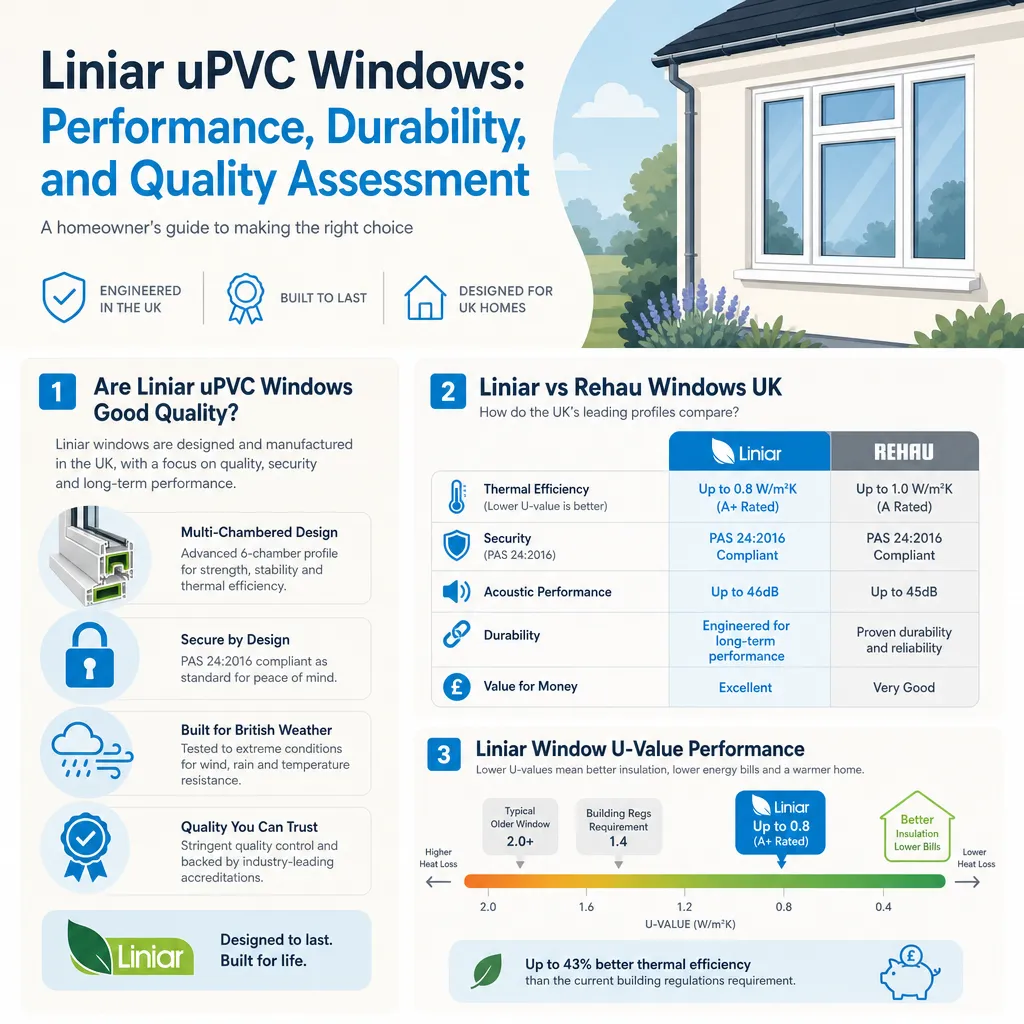
Liniar uPVC Windows: Performance, Durability, and Quality Assessment
Liniar uPVC window profiles are manufactured in the UK using multi-chambered, foamed frames.
 Improvement & Build
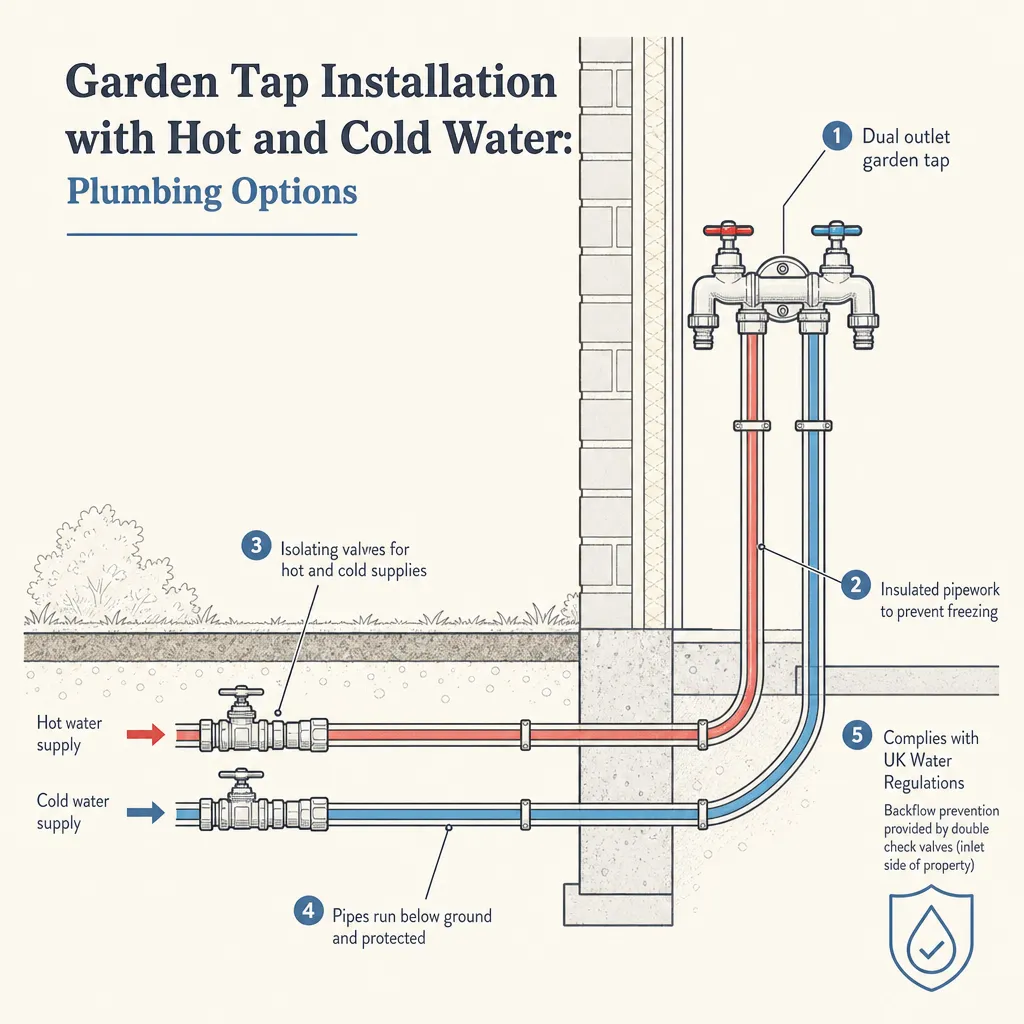
Garden Tap Installation with Hot and Cold Water: Plumbing Options
Adding a cold garden tap is a common DIY project, but routing hot water outdoors requires a plumber to connect to your domestic hot water system and comply with the Water Supply (Water Fittings) Regulations 1999.
 Improvement & Build
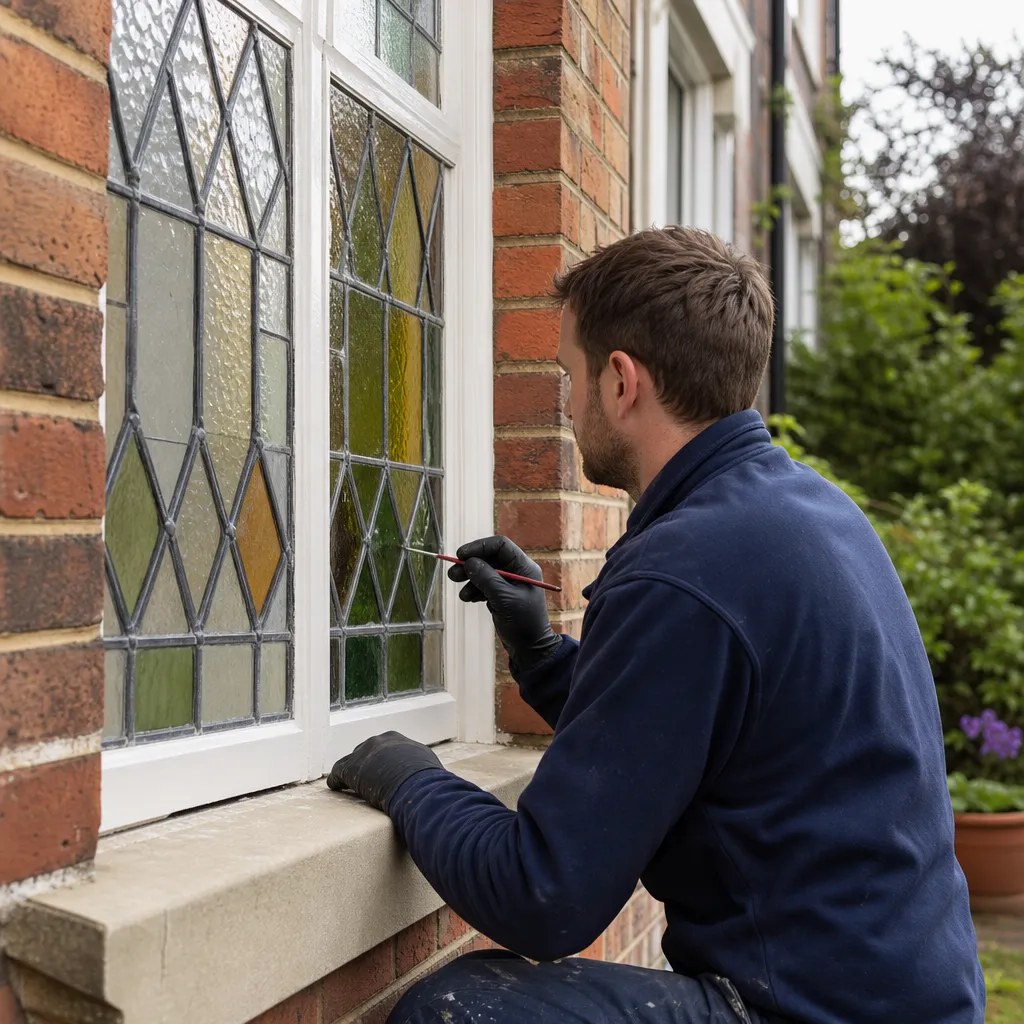
Sealing and Maintaining Historic Leaded Glass Windows: Preservation and Performance
Leaded glass windows are maintained using traditional linseed oil cement — not silicone or modern sealants, which prevent natural movement in the lead came.
 Improvement & Build
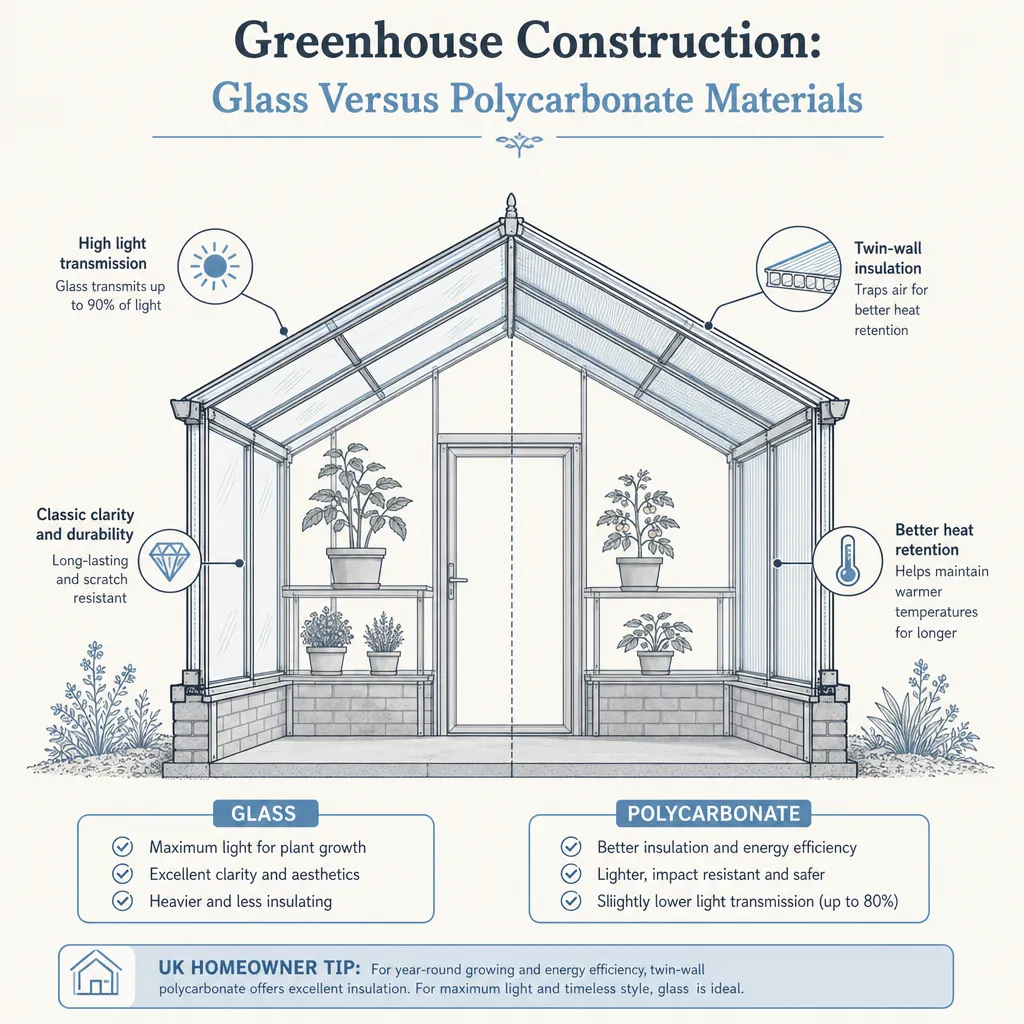
Greenhouse Construction: Glass Versus Polycarbonate Materials
Glass transmits around 90% of available light and lasts indefinitely if unbroken, but insulates poorly and shatters into sharp fragments.
 Improvement & Build
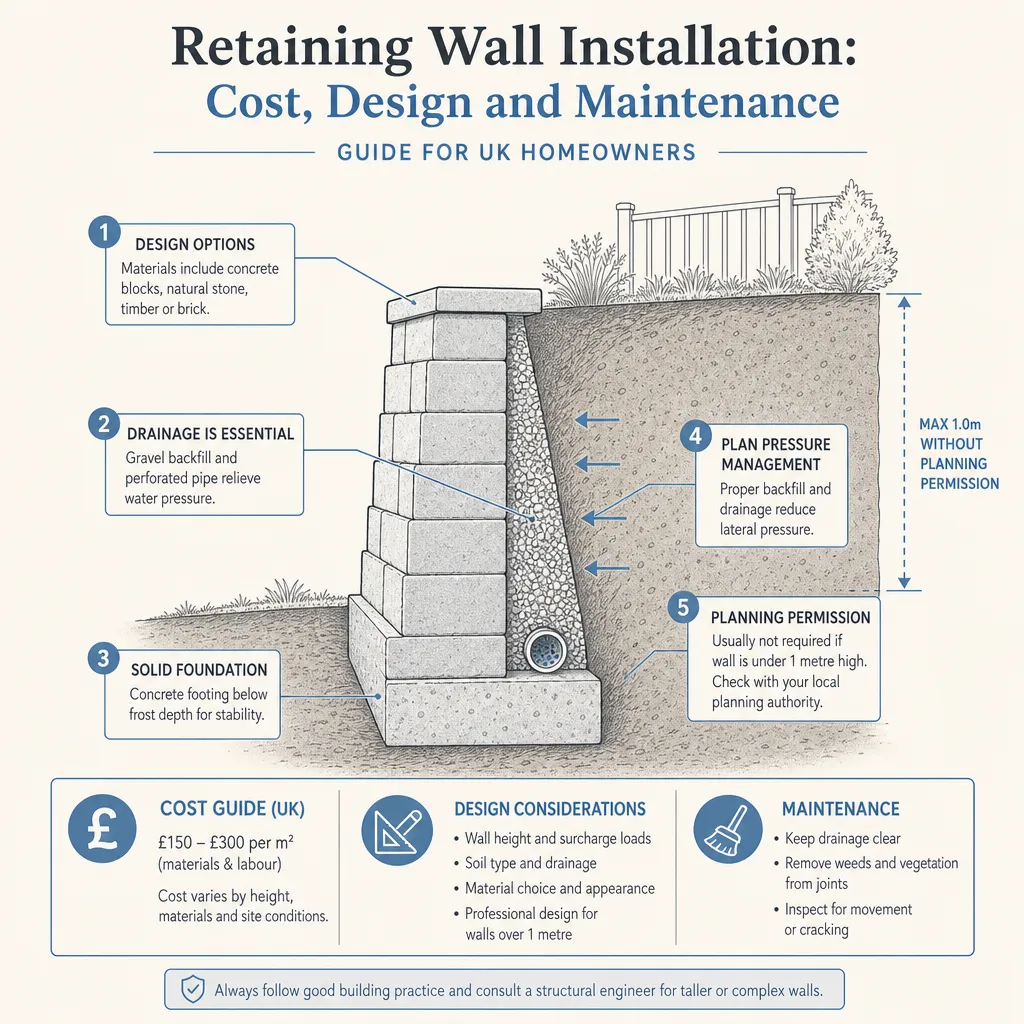
Retaining Wall Installation: Cost, Design and Maintenance
A retaining wall holds back soil on a sloped or banked site.