Spotlight: Female Builders and General Contractors in Construction
By Housey · Last reviewed 30th of May 2026
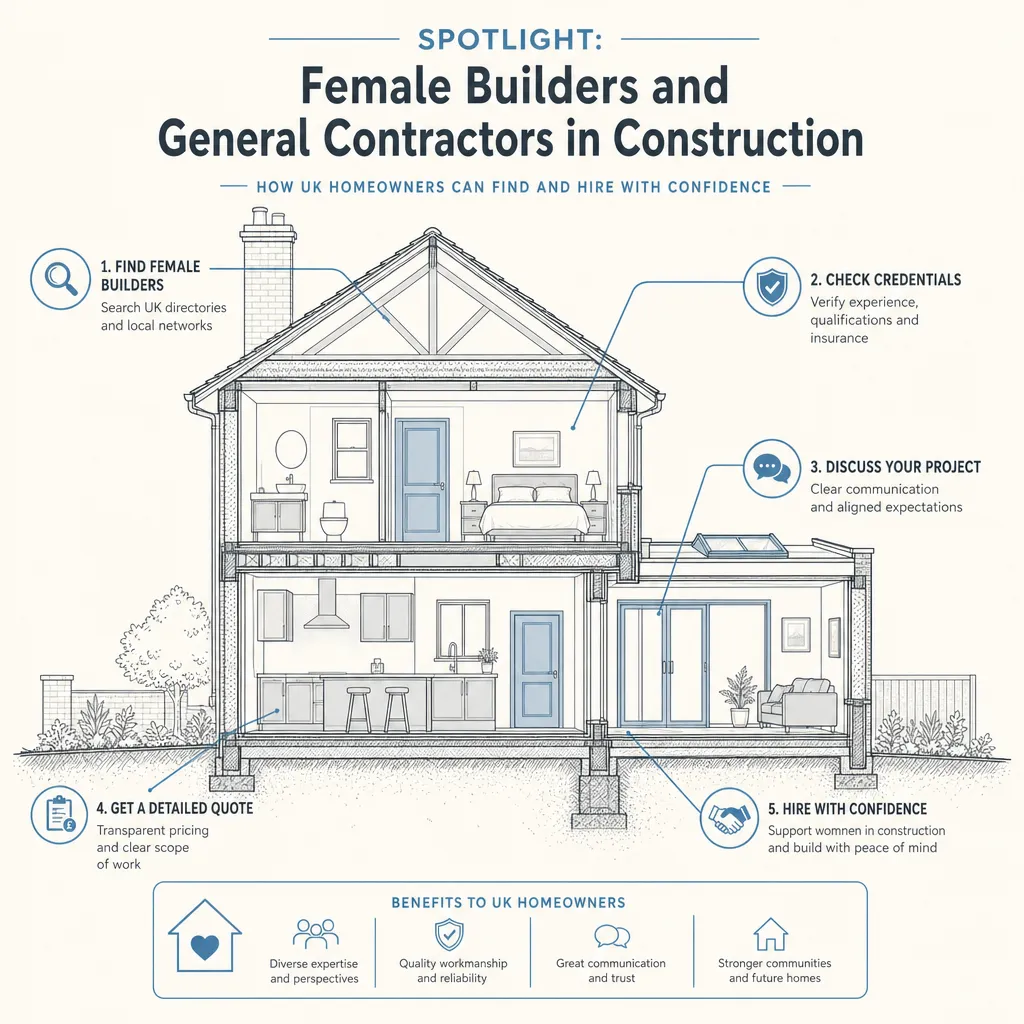
Spotlight: Female Builders and General Contractors in Construction
The UK construction industry is changing. Historically one of the most male-dominated sectors in the economy, it is seeing growing numbers of women working as builders, site managers, general contractors, and project managers at all levels. For homeowners — whether they are specifically seeking a female contractor or simply want to understand how to find and evaluate the right person for a renovation project — the practical considerations around vetting and hiring apply equally, regardless of who is holding the trowel.
Key points
- Women represent approximately 14–16% of the UK construction workforce, according to CITB research and ONS Labour Force Survey data, with numbers gradually increasing year on year.
- The Construction Industry Training Board (CITB) operates active programmes to support women into construction trades, apprenticeships, and management roles.
- All builders and general contractors in the UK should hold a valid CSCS (Construction Skills Certification Scheme) card appropriate to their role — Skilled Worker (blue card), Supervisory (gold), or Management (black).
- There is no legal requirement for builders to be registered with a trade body, but membership of the Federation of Master Builders (FMB), TrustMark, or sector-specific bodies provides an additional layer of accountability and access to dispute resolution.
- A written contract for any building work is strongly advisable — it protects both the homeowner and the contractor if questions about scope, cost, or quality arise.
The landscape of women in UK construction
Construction remains one of the least gender-diverse industries in the UK economy. CITB and ONS data consistently show women are underrepresented in the skilled trades — bricklaying, carpentry, general building — but have higher representation in site management, project management, quantity surveying, and architecture.
This is changing. Organisations including Women into Construction, the National Association of Women in Construction (NAWIC UK), and CITB itself are actively increasing visibility, training access, and opportunity for women at all levels of the industry. Apprenticeship data from the Department for Education shows year-on-year increases in the proportion of women starting construction apprenticeships, from a historically low base.
For homeowners, the practical implication is straightforward: there are more female builders and general contractors operating in the UK than there were a decade ago — and with targeted searching, they are findable.
Why some homeowners specifically seek female contractors
Homeowners choose contractors for a wide variety of reasons. Some specifically prefer to work with a female builder or project manager. Common motivations include:
- Personal comfort during what can be an intrusive process, particularly for homeowners who will be present throughout a lengthy renovation
- A deliberate choice to support gender diversity in a sector where women are still underrepresented
- A recommendation from a friend or neighbour who had a positive experience with a specific contractor
- A preference for a particular communication approach or working style
There is no objective basis for assuming any contractor will be more or less competent based on gender. The considerations that matter — qualifications, references, insurance, a clear written contract, and demonstrated track record — apply equally to all.
How to find a female builder or general contractor in the UK
Specialist networks and directories:
- Women into Construction (womenintoconstructioncic.org.uk) maintains resources and contacts for women working in construction trades across the UK and may be able to signpost regional contacts.
- NAWIC UK (nawic.co.uk) has a member network of women across the industry, including contractors and project managers.
- TrustMark and FMB Find a Builder include female contractors who are registered members; while not gender-filtered, all registered members must meet defined standards of competence and conduct.
General approaches:
- Ask for recommendations in local community groups — Nextdoor and local Facebook groups — specifically requesting female contractors. Word-of-mouth recommendations remain the most reliable route for finding any contractor.
- Contact Women into Construction or NAWIC UK directly; both organisations may be able to provide regional referrals.
- Use platforms that display verified reviews and individual contractor profiles, so you can assess a contractor's track record before making contact.
What to look for in any contractor: homeowner checklist
Whether you are specifically looking for a female contractor or simply the right person for your project, the evaluation criteria are the same.
Comparison: types of contractor for home renovation
Contractor type | Best for | Typical qualifications | Manages subcontractors? | Main risk if wrong choice |
|---|---|---|---|---|
General contractor / main contractor | Whole-project management across multiple trades | CSCS card, FMB or TrustMark membership | Yes | Coordination failures; quality gaps between trades |
Specialist builder (e.g. extension or loft specialist) | Extensions, loft conversions, structural alterations | CSCS card plus relevant trade certificates | Often | May not coordinate finishing trades such as decorating or flooring |
Individual tradesperson (carpenter, bricklayer, plasterer) | Single-trade work within a defined scope | CSCS card plus NVQ or equivalent | No | You must coordinate all other trades yourself |
Design-and-build firm | Projects requiring architectural drawings integrated with construction | RIBA architect plus lead builder | Yes | Higher cost premium; less flexibility to adjust design mid-project |
What to ask before accepting a quote
Before committing to any contractor, use these questions to assess suitability and protect your interests.
- What similar projects have you completed in the past 12 months, and can I see photographs or speak directly to the client?
- Who will be on-site day-to-day — you personally, or subcontractors? If subcontractors, who are they and how are they vetted?
- How do you handle unexpected problems, such as hidden structural issues discovered once work is under way?
- What is the payment schedule, and will you accept stage payments tied to completion milestones rather than to dates alone?
- How do you communicate progress — daily updates, weekly site meetings, or on request?
- What insurance do you hold, and can I see current certificates for public liability and employers' liability?
- Is VAT included in this quote, and can you provide your VAT registration number?
- What dispute resolution process applies if we cannot agree on scope, quality, or cost?
Supporting diversity in construction
Choosing a female contractor when you have the opportunity is a legitimate decision, and one that at an industry level helps normalise gender diversity in trades where women are still underrepresented. It is worth noting, however, that gender is one of the least important factors in evaluating a contractor's suitability for your specific project. Skills, references, insurance, clear communication, and a fair written contract matter far more.
Leaving a review — on Google, TrustMark, or the FMB website — after a positive experience with any contractor contributes to a visible and trustworthy track record that helps other homeowners make better-informed decisions.
When to get professional help
For projects beyond straightforward decoration or single-trade work, consider appointing a project manager, architect, or clerk of works to oversee the main contractor — particularly if:
- The project involves structural alterations (lintels, load-bearing walls, roof structure)
- Planning permission or building control approval has been granted and conditions must be complied with on-site
- You will not be regularly present to monitor progress
- The contract value is significant — typically over £20,000
- The contractor is unfamiliar with a specific construction method or property type involved in your project
How Housey can help
Housey is building a network of vetted tradespeople and contractors across the UK. Post your project, compare quotes from local professionals, and read verified reviews from homeowners who have completed similar work — so you can find the right contractor for your project with confidence, whoever they are.
Frequently asked questions
Are female builders as qualified as male builders?
Qualifications in UK construction are determined by training, assessment, and experience — not gender. A female builder holding a CSCS Skilled Worker card and a relevant NVQ holds exactly the same credentials as a male counterpart with the same record. Evaluate any contractor by their documentation, references, insurance, and track record, regardless of background.
How do I verify a contractor's qualifications?
Check CSCS cards at cscs.uk.com. Verify FMB membership at findabuilder.co.uk and TrustMark registration at trustmark.org.uk. Gas Safe engineers can be checked at gassaferegister.co.uk. Always verify directly with the relevant register rather than relying on a photocopy of a card or a verbal assurance from the contractor.
Is there a directory of female builders in the UK?
Women into Construction (womenintoconstructioncic.org.uk) maintains resources and contacts for women working in construction trades. NAWIC UK (nawic.co.uk) has a professional network across the industry. General directories such as TrustMark and FMB Find a Builder include female contractors who are registered members, though without gender-specific filtering.
Do I need a written contract for building work?
A written contract is strongly advisable for any building work, regardless of scale. For small jobs a detailed written quote accepted in writing may suffice, but for anything involving structural work, multiple trades, or significant cost, a simple contract specifying scope, timeline, payment milestones, and variation procedures protects both parties. The Federation of Master Builders offers contract templates for homeowners.
Sources and further reading
- Women in Construction Research — CITB
- CSCS Card Checker — CSCS
- TrustMark: Find a Tradesperson — TrustMark
- FMB: Find a Builder — Federation of Master Builders
- Women into Construction — Women into Construction CIC
Useful next reads
 Improvement & Build
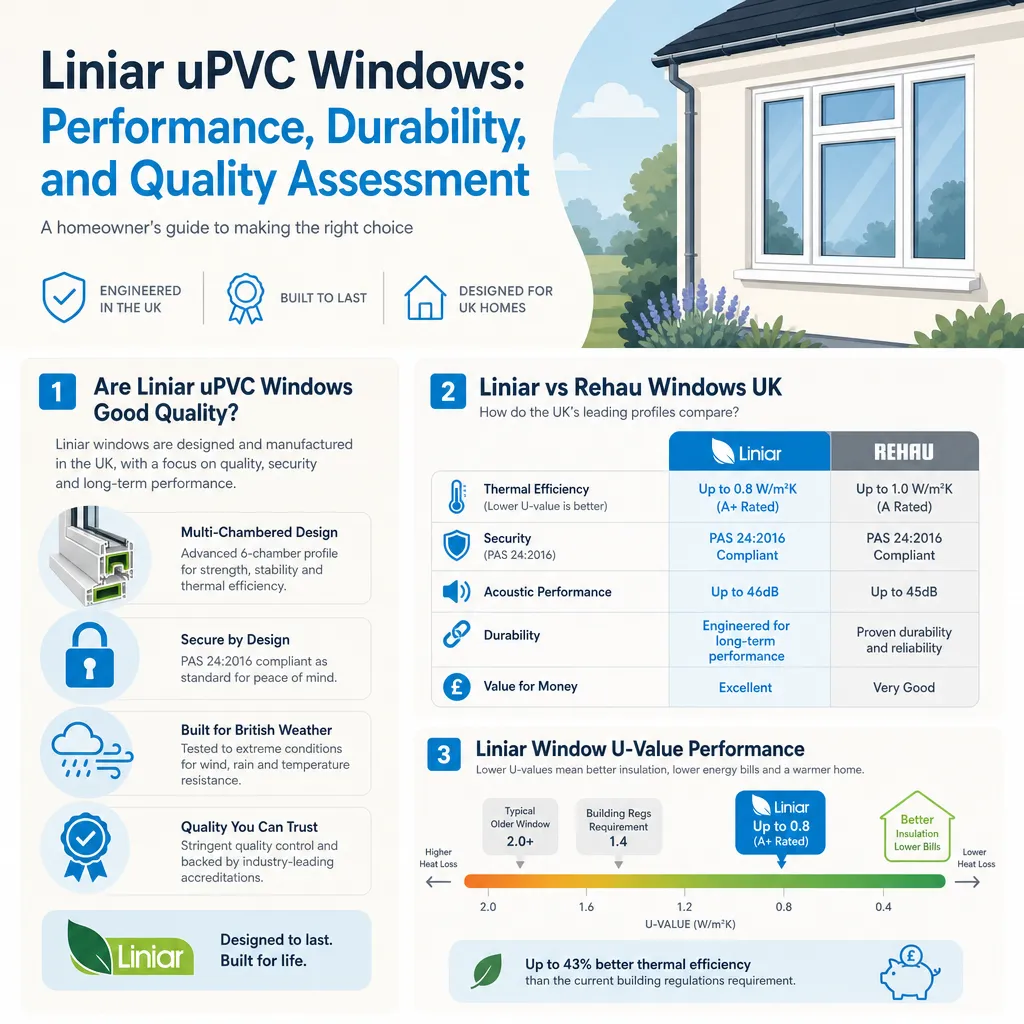
Liniar uPVC Windows: Performance, Durability, and Quality Assessment
Liniar uPVC window profiles are manufactured in the UK using multi-chambered, foamed frames.
 Improvement & Build
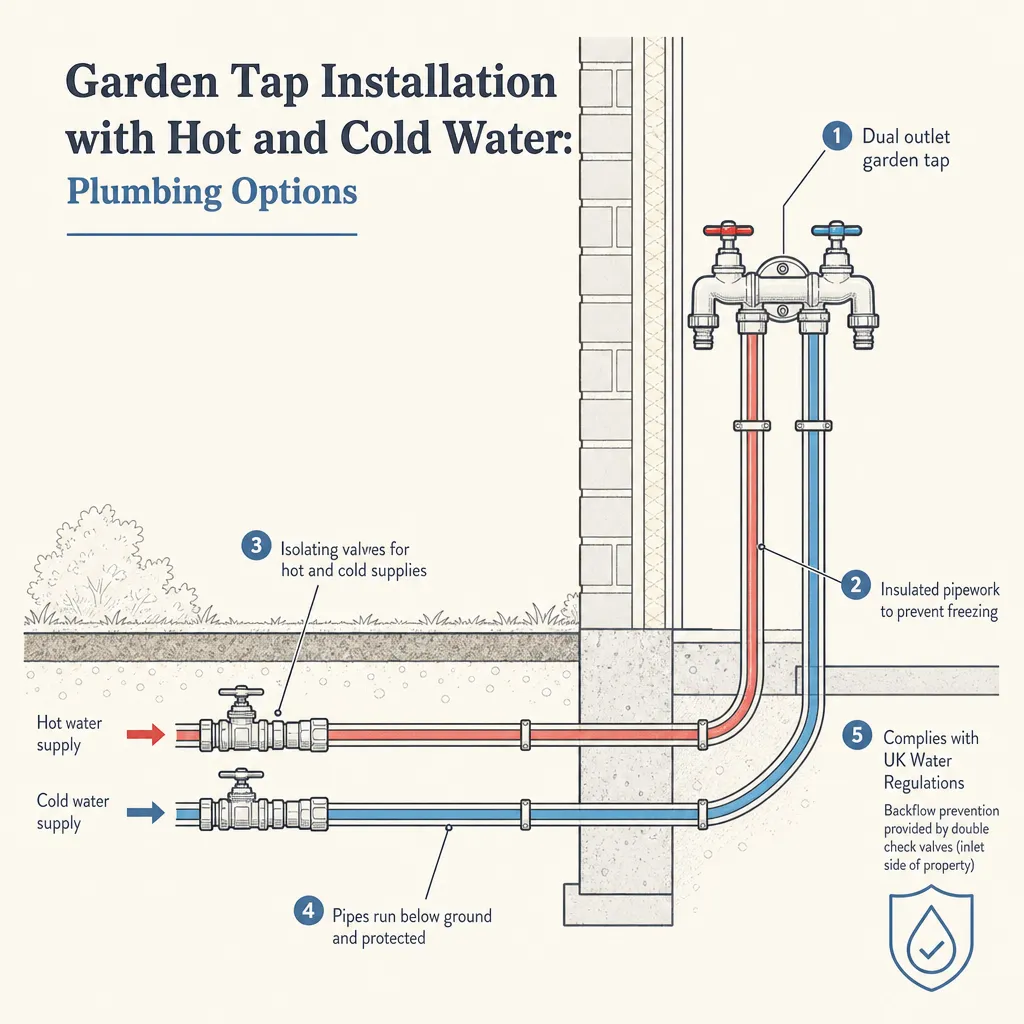
Garden Tap Installation with Hot and Cold Water: Plumbing Options
Adding a cold garden tap is a common DIY project, but routing hot water outdoors requires a plumber to connect to your domestic hot water system and comply with the Water Supply (Water Fittings) Regulations 1999.
 Improvement & Build
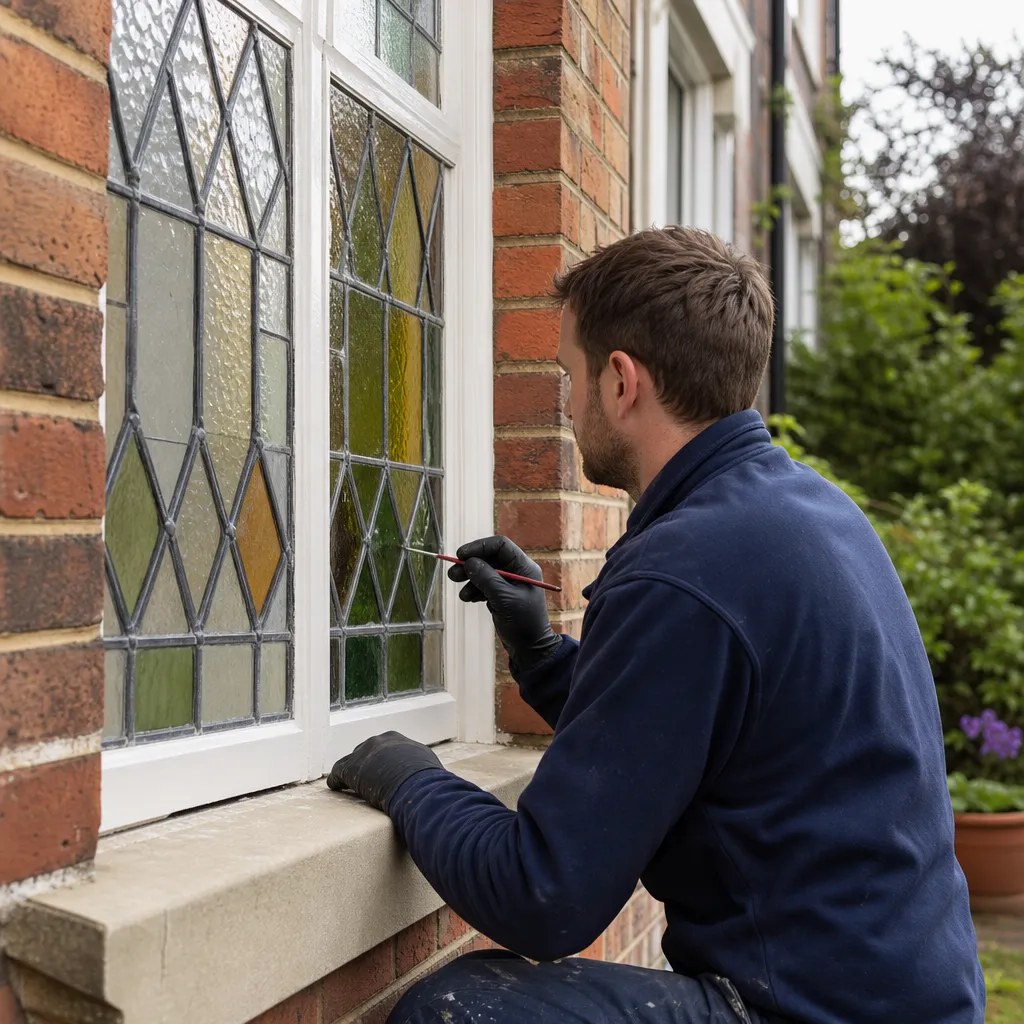
Sealing and Maintaining Historic Leaded Glass Windows: Preservation and Performance
Leaded glass windows are maintained using traditional linseed oil cement — not silicone or modern sealants, which prevent natural movement in the lead came.
 Improvement & Build
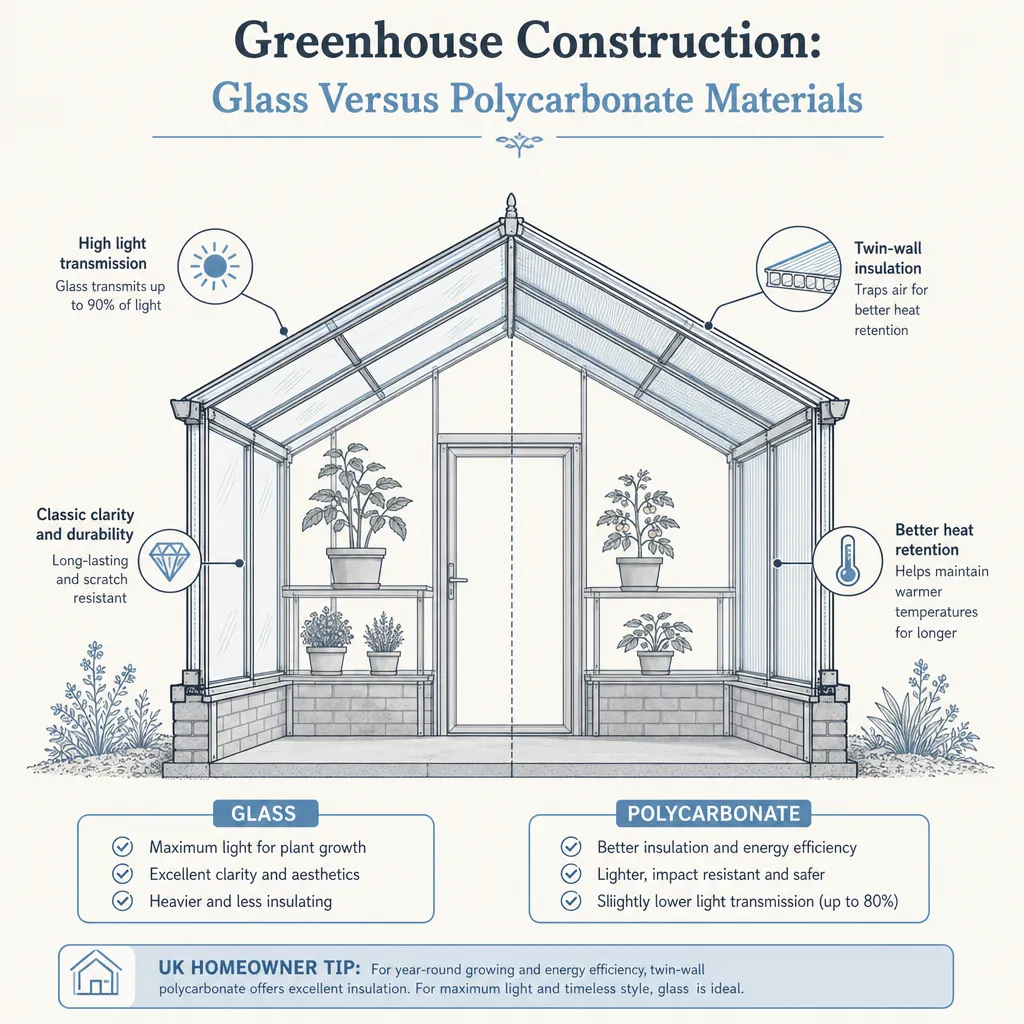
Greenhouse Construction: Glass Versus Polycarbonate Materials
Glass transmits around 90% of available light and lasts indefinitely if unbroken, but insulates poorly and shatters into sharp fragments.
 Improvement & Build
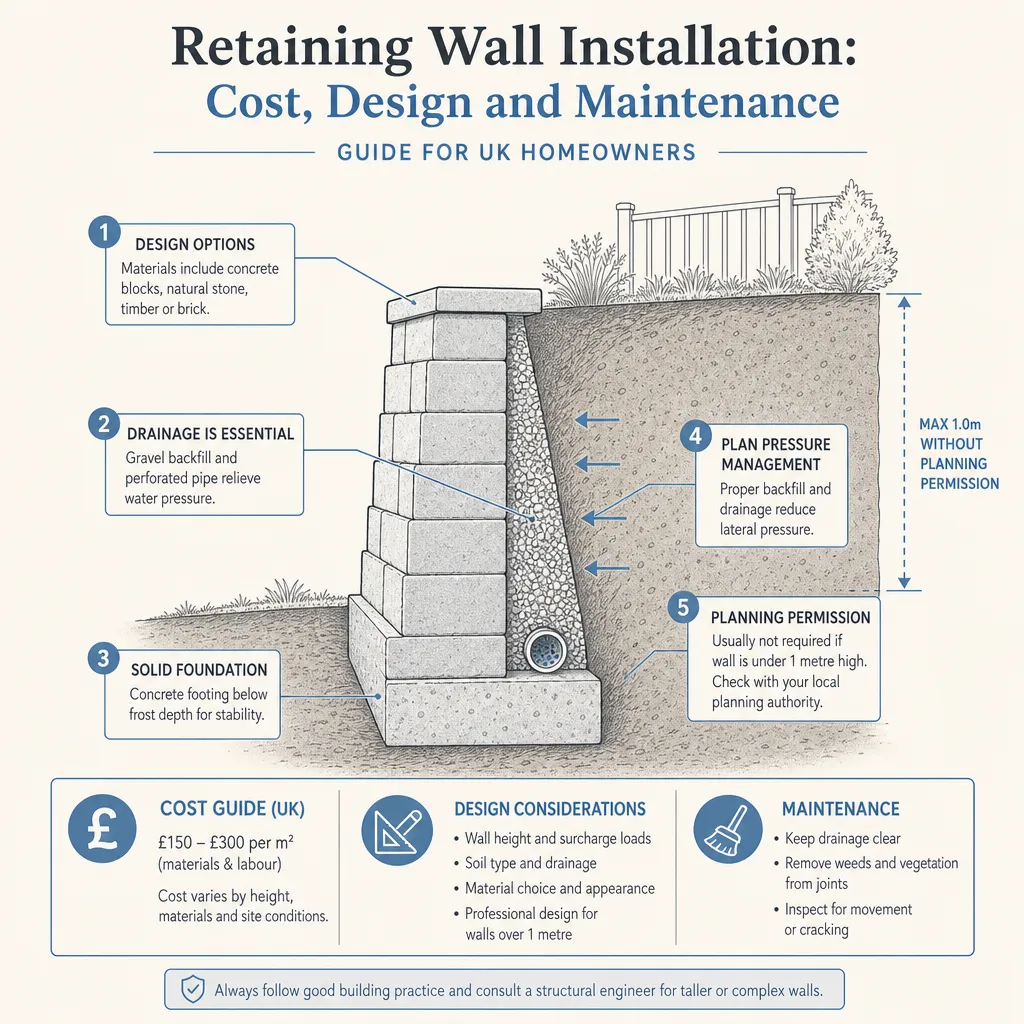
Retaining Wall Installation: Cost, Design and Maintenance
A retaining wall holds back soil on a sloped or banked site.