Fence Painting and Exterior Wood Treatment Costs
By Housey · Last reviewed 7th of May 2026
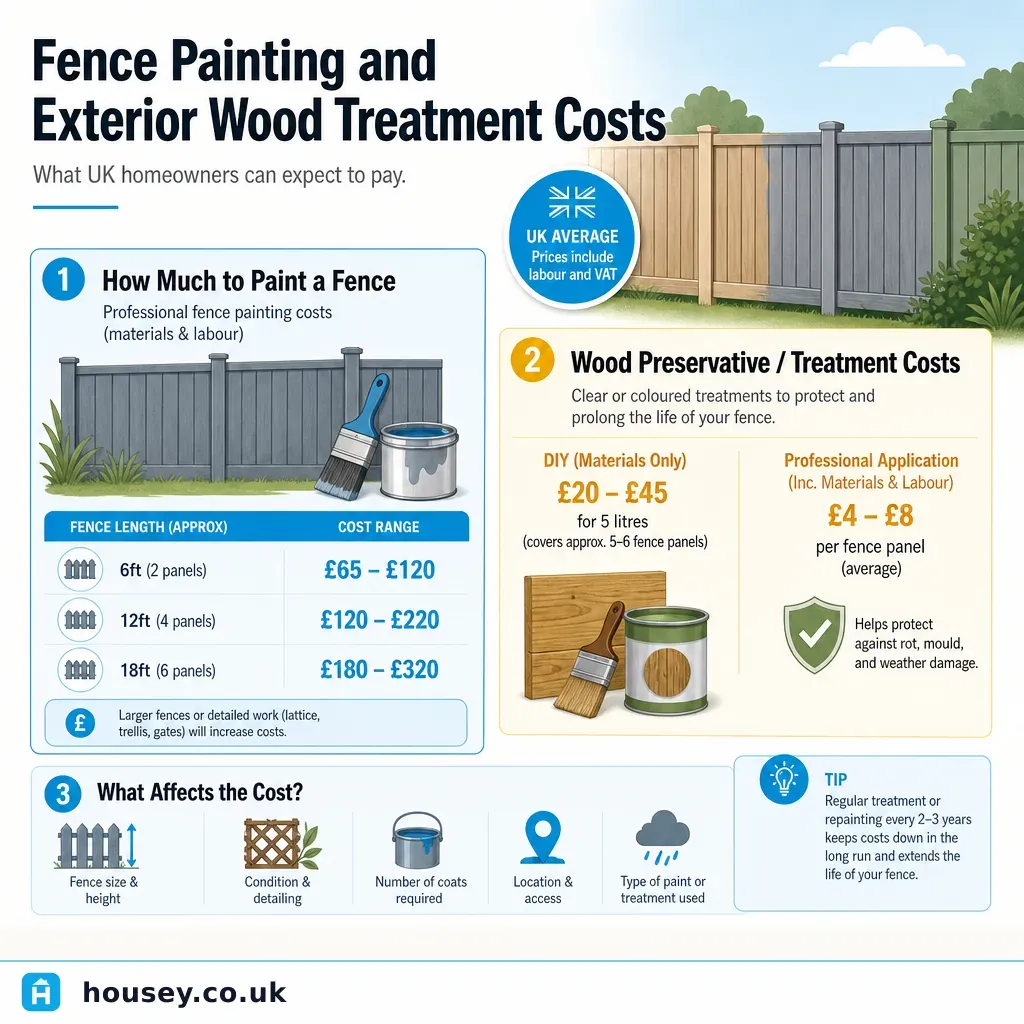
Fence Painting and Exterior Wood Treatment Costs
Timber fencing is one of the most common and most neglected maintenance tasks in UK gardens. Standard softwood close-board, lap, and hit-and-miss panels begin to deteriorate within a few years if left untreated, particularly in wetter parts of the country. The cost question typically arises when a fence looks grey and weathered, when a property is being prepared for sale, or when a homeowner is deciding whether to do the job themselves or hire a painter or decorator.
Key points
- Professional fence painting or wood treatment typically costs £150–£400 for an average 30-panel garden fence, or £5–£15 per panel — indicative UK costs, last reviewed 2026-05-07.
- DIY materials for the same fence cost roughly £70–£170, but preparation time, access to both sides, and result consistency often make professional treatment better value on larger gardens.
- Coal-tar creosote is banned for amateur domestic use in the UK under the Biocidal Products Regulation; legal creosote-substitute products with different formulations are available as alternatives.
- Treatment type determines reapplication frequency: clear or tinted preservatives every one to two years; semi-transparent stains every two to three years; opaque fence paints every three to five years on properly prepared timber.
- Surface preparation — cleaning off algae, lichen, and flaking old product — is the most important factor in how long any treatment lasts; skipping it wastes both materials and labour.
How much does professional fence painting cost in the UK?
Indicative UK costs, last reviewed 2026-05-07. Quotes vary by region, fence condition, and product specification.
Scenario | Approximate professional cost |
|---|---|
15–20 panels, single side, stain or preservative | £80–£180 |
30 panels, single side, stain or preservative | £150–£300 |
30 panels, both sides where accessible | £250–£450 |
50+ panels, single side | £400–£700+ |
Trellis, arched tops, or decorative panels | Add 20–40% to above |
Preparation only (cleaning, minor sanding, repairs) | £80–£200 |
Day rates for a painter or decorator doing fence work typically run £150–£250 depending on location. A standard 30-panel fence in fair condition is usually a half-day to full-day job.
Types of fence treatment: comparison
Treatment type | Finish | Reapplication frequency | Notes |
|---|---|---|---|
Clear wood preservative | Natural / near-invisible | Every 1–2 years | Basic fungal and insect protection |
Tinted fence preservative | Semi-transparent colour | Every 1–2 years | DIY-friendly; widely available |
Fence stain (semi-transparent) | Colour with visible grain | Every 2–3 years | Good all-round choice for most gardens |
Opaque fence paint | Solid colour, hides grain | Every 3–5 years | Can peel on damp or unprepared timber |
Hardwood oil | Natural finish | Every 1–2 years | Not suited to standard softwood panels |
Coal-tar creosote | Dark brown | Banned for domestic use | Use a legal substitute product |
Note on creosote: The Health and Safety Executive confirms that coal-tar creosote is not permitted for amateur residential use under the Biocidal Products Regulation. Legal creosote-substitute products differ in formulation, appearance, and odour — check the product label confirms it is approved for domestic use.
What affects the cost of fence painting?
Beyond fence size, these factors push quotes up or down:
- Fence height: Standard 1.8-metre panels are the pricing baseline; taller estate or ranch fencing takes proportionally longer.
- Condition: Algae, lichen, or flaking paint requires pressure washing or sanding before treatment, adding time and cost.
- Number of sides: Treating both sides approximately doubles time and materials.
- Number of coats: A single preservative coat is quicker than a two-coat opaque paint system that requires drying time between coats.
- Posts and gravel boards: Treating these as well as the panels adds modest cost but improves overall longevity.
- Regional rates: Labour costs in London and the South East are typically higher than in the Midlands, North, or Wales.
Worked example: terraced house garden, Manchester
A homeowner in Manchester had 22 close-board panels across two sides of the garden — 44 faces in total, one side backing onto a shared alleyway with no separate gate access. They received two quotes for a two-coat semi-transparent dark oak stain:
- Quote A — £320: Light pressure wash, two coats of a named brand stain, posts and gravel boards treated, completion in one day.
- Quote B — £195: One coat of an unnamed stain, no preparation or post treatment mentioned.
The homeowner chose Quote A after noticing visible algae on the shaded alleyway side. Quote B's omission of preparation and posts suggested a shorter-lasting result, making it poor value on a cost-per-year basis.
Illustrative scenario using representative UK conditions and costs. Individual quotes will vary.
Homeowner checklist before getting quotes
When to get professional help
Fence painting suits confident DIYers for smaller, accessible fences in fair condition, but professional help is worth considering when:
- The fence is large (50 or more panels), particularly if both sides need treating.
- Significant algae, peeling paint, or rotten sections are present — a contractor can advise whether treatment or panel replacement makes more sense.
- The fence sits within the curtilage of a listed building or in a conservation area — check whether appearance conditions apply before choosing a strongly coloured paint.
- The property is being prepared for sale and a consistent, high-quality finish is needed.
Red flags when evaluating quotes:
- No mention of preparation — any professional should assess whether cleaning or sanding is needed before starting.
- The quote does not specify the product name or number of coats.
- Pressure to accept an unfamiliar product without explanation of why it suits your fence type or condition.
How Housey can help
Housey connects UK homeowners with local decorators and maintenance professionals for fence painting, exterior wood treatment, and related improvement work. Use Housey to find and compare quotes from qualified tradespeople in your area.
Frequently asked questions
How often should you treat a garden fence in the UK?
It depends on the product. Clear or tinted preservatives need reapplying every one to two years. Semi-transparent stains last around two to three years. Opaque fence paints, properly applied to prepared timber, can last three to five years. Shaded fences in wetter areas — the North West, Wales, and Scotland — often need more frequent treatment than fences in drier, sunnier locations.
What is the best time of year to treat a fence in the UK?
Spring and early autumn are generally best: dry conditions, temperatures above 10°C, and no strong direct sunlight that could cause blistering. Avoid treating in winter or when frost is forecast within 24 hours. Most fence paints, stains, and preservatives specify a minimum application temperature on the label — check before buying.
Is it worth pressure washing a fence before painting?
Yes, in most cases. Algae, lichen, and old loose product all reduce adhesion. A light pressure wash followed by 24–48 hours drying time is sufficient for fencing in fair condition. Heavily fouled timber may also need a biocidal pre-treatment wash. Skipping preparation is one of the most common reasons a fence treatment fails prematurely.
Can you paint or stain pressure-treated (tanalised) timber?
Yes, but timing matters. Newly tanalised green timber should dry for several months before painting or staining; applying a coating to wet pressure-treated wood traps moisture and causes peeling. Check the paint or stain manufacturer's data sheet for the recommended drying period. Most standard fence treatments are compatible with fully dried tanalised softwood.
Who is responsible for maintaining a shared boundary fence?
Responsibility is determined by the property title deeds, not a universal rule. The common assumption that you own the left fence as viewed from inside your garden is not a legal standard and is frequently wrong. Check your title deeds or Land Registry title plan. Where ownership is genuinely unclear, a boundary specialist or conveyancer can advise.
Sources and further reading
- Creosote: use of wood preservatives — Health and Safety Executive (HSE)
- Conservation areas — GOV.UK
- Search for property information — HM Land Registry
Useful next reads
 Improvement & Build
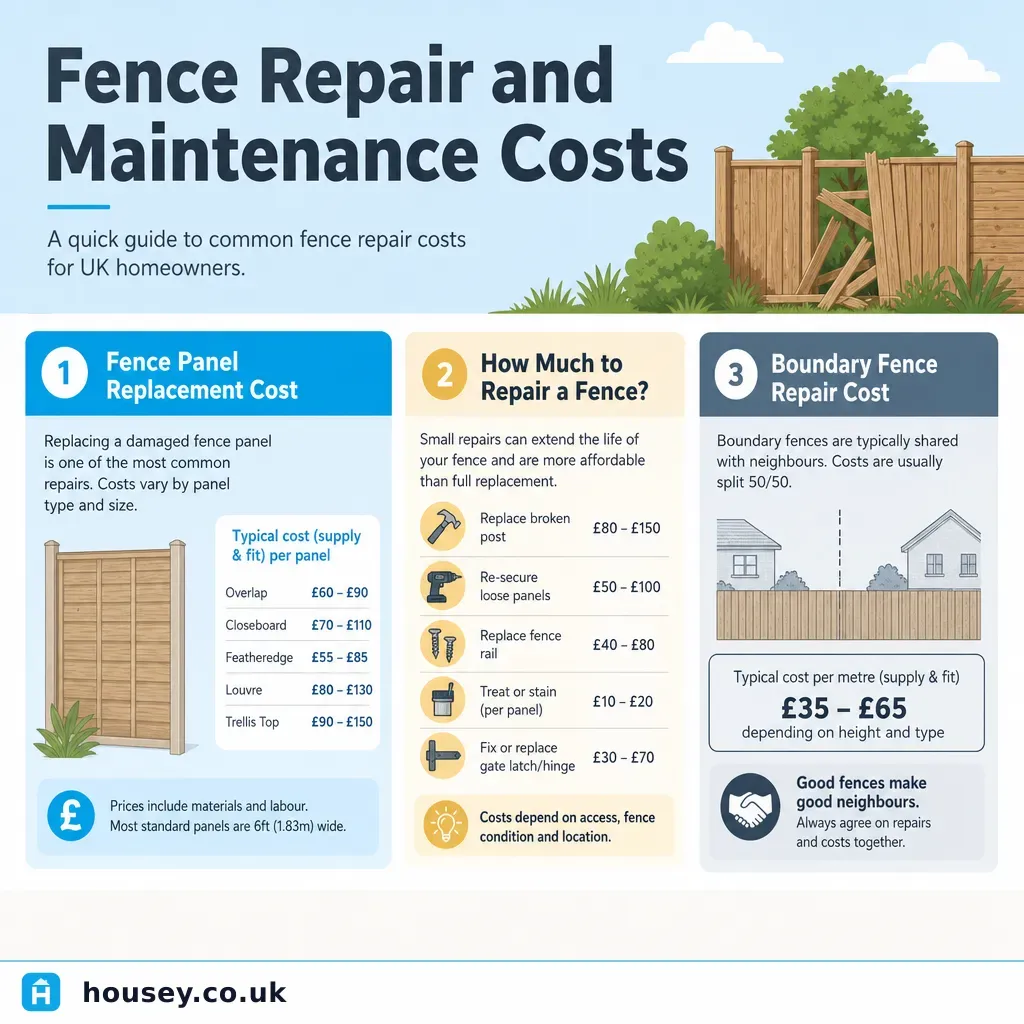
Fence Repair and Maintenance Costs
Fence repair costs in the UK typically range from £100–£250 for a single panel replacement to £500–£1,500 or more for multiple panels or post repairs.
 Improvement & Build
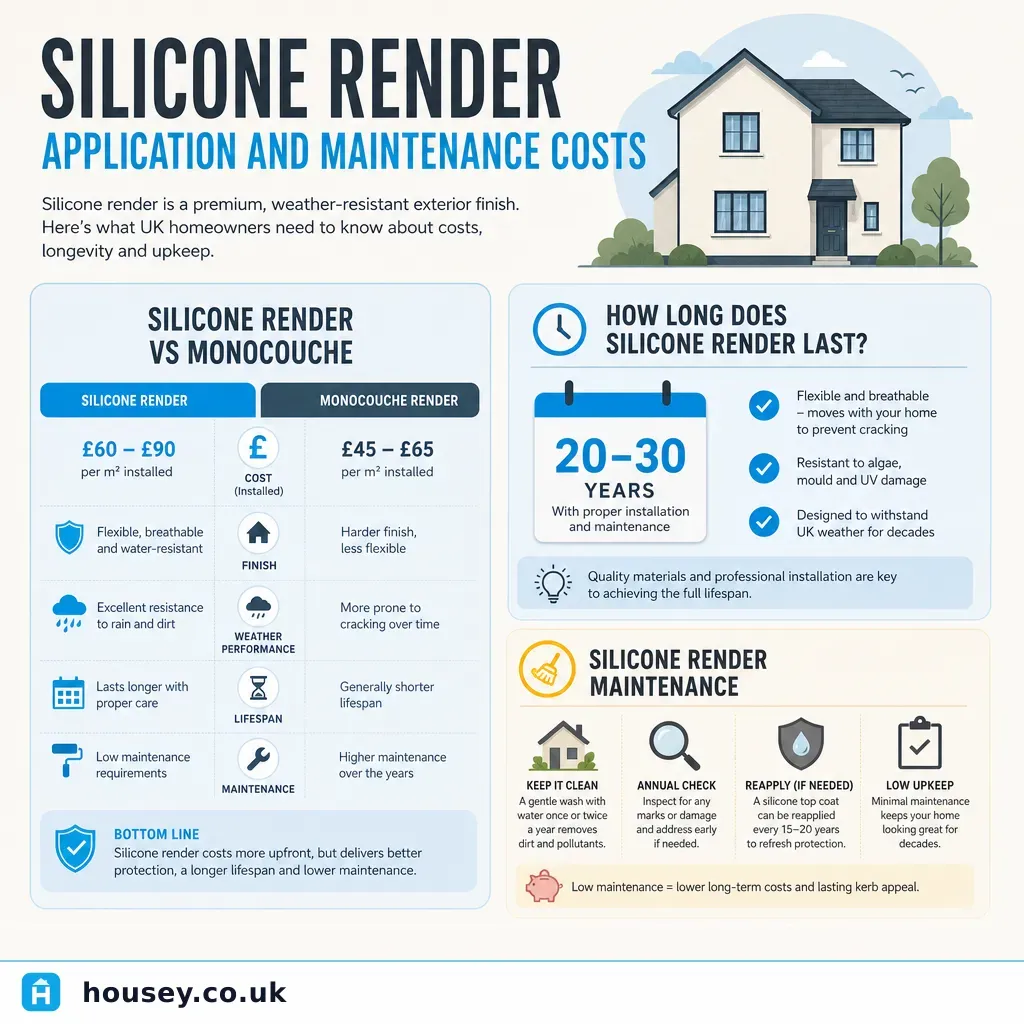
Silicone Render Application and Maintenance Costs
Silicone render typically costs £30–£70 per square metre installed across the UK, making a standard semi-detached house treatment around £3,000–£8,000.
 Improvement & Build
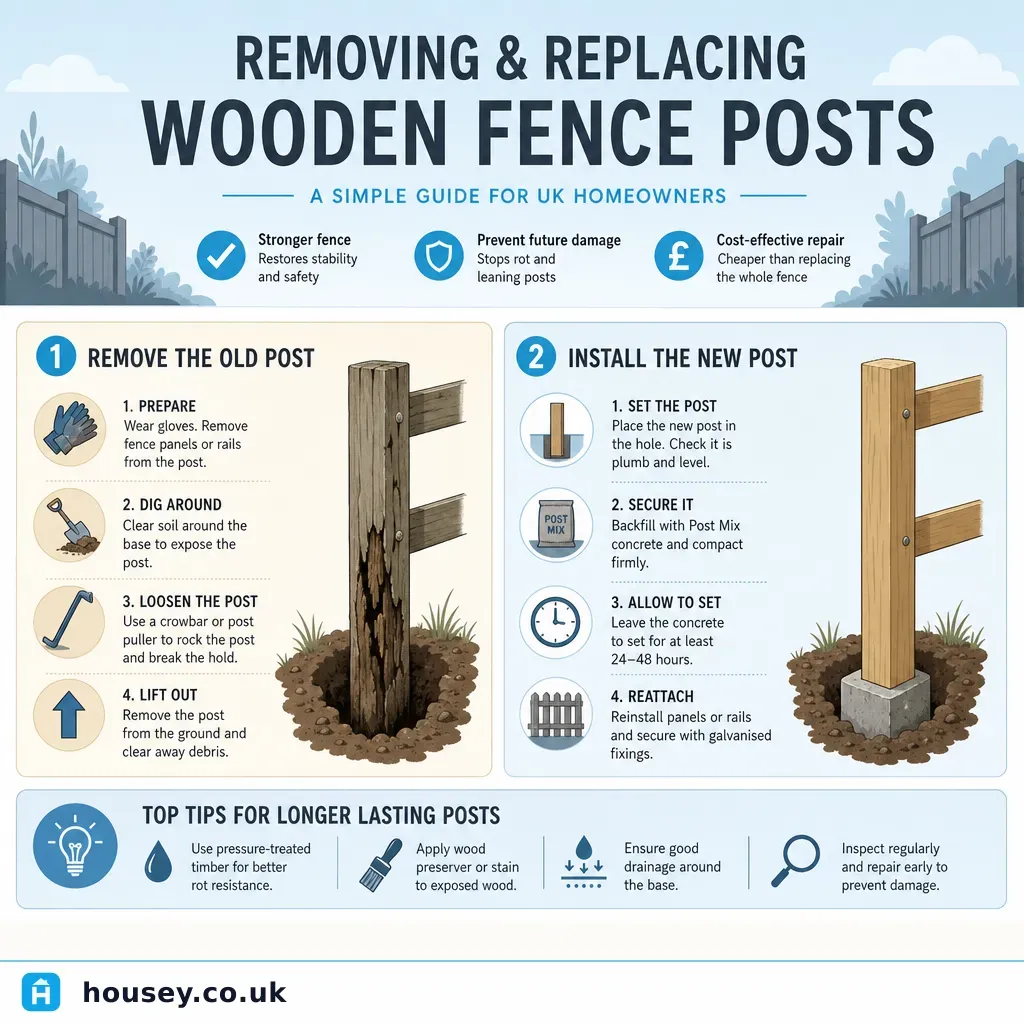
Removing and Replacing Wooden Fence Posts
Replacing a wooden fence post involves removing the old post and its footing, then setting a new post in either a concrete footing or a metal spike, and refixing the panels or rails.
 Improvement & Build
Specialist Coating Products for Building Protection
Specialist building coatings include exterior masonry waterproofers, liquid roof membranes, damp-proof injection systems, cementitious tanking, and anti-carbonation treatments.
 Improvement & Build
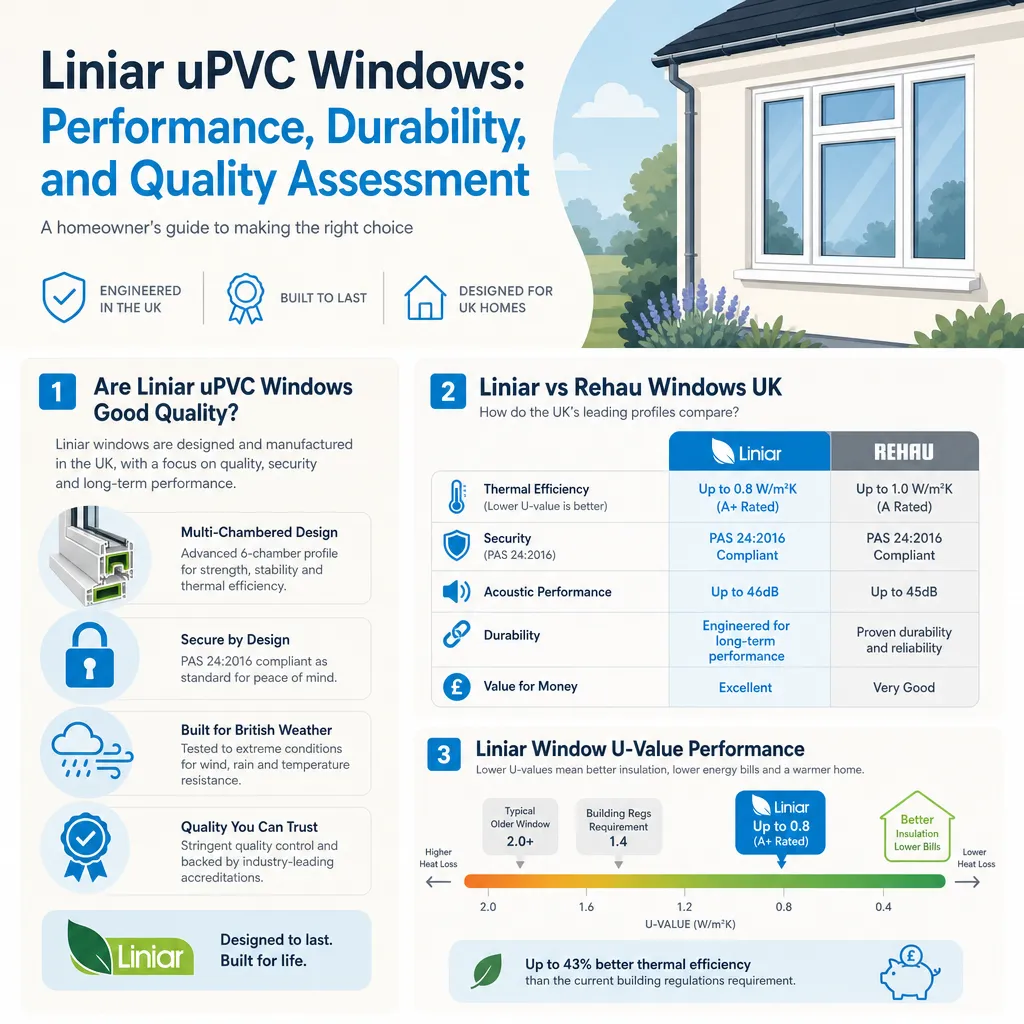
Liniar uPVC Windows: Performance, Durability, and Quality Assessment
Liniar uPVC window profiles are manufactured in the UK using multi-chambered, foamed frames.