Specialist Coating Products for Building Protection
By Housey · Last reviewed 7th of May 2026
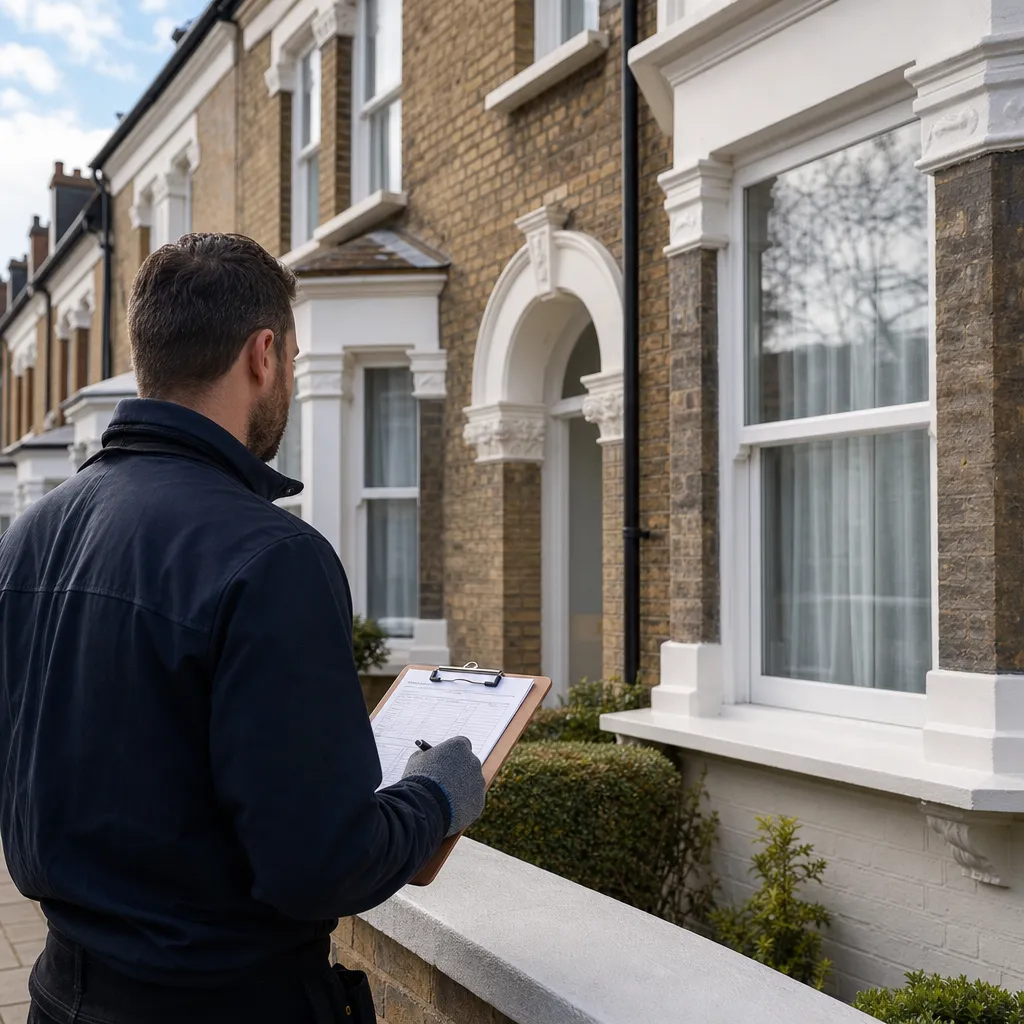
Specialist Coating Products for Building Protection
Choosing the wrong coating for a wall, roof, or concrete surface can trap moisture, accelerate decay, or simply fail within a few seasons — wasting money and potentially making the underlying problem worse. UK homeowners and landlords encounter coating decisions across a wide range of situations: a flat roof reaching the end of its serviceable life, an external render that lets in driving rain, a basement wall weeping moisture, or a concrete element showing early signs of carbonation. Understanding the main categories of specialist coatings and when each applies is essential before specifying products or instructing a contractor.
Key points
- British Board of Agrément (BBA) certification is a reliable indicator that a coating has been independently tested for performance and durability in UK conditions — look for it on product technical data sheets before specifying.
- Silicone-based exterior masonry coatings are breathable (vapour-open) and allow moisture to escape from the wall while repelling rain; non-breathable film-forming coatings can trap moisture and worsen damp in solid-wall properties.
- Damp-proof injection creams and chemical damp-proof courses carried out to BS 6576:2005 by a Property Care Association (PCA) member contractor provide the most recognised assurance of quality for rising damp treatment.
- Liquid-applied waterproofing membranes for flat roofs must be applied at the manufacturer's specified film thickness — under-application is the leading cause of premature failure.
- Anti-carbonation coatings for exposed reinforced concrete should be specified to BS EN 1504-2: Products and Systems for the Protection and Repair of Concrete Structures.
Types of specialist building coating
The table below sets out the main coating categories, their typical substrates, primary function, and who normally applies them.
Coating category | Typical substrate | Primary function | Key standard or body | Usually applied by |
|---|---|---|---|---|
Silicone masonry waterproofer | Brick, stone, render | Repels rain; breathable | BBA-certified products | Specialist contractor or DIY (small areas) |
Polymer or silicone render coat | Masonry, EWI substrate | Weather protection and finish | BBA / KIWA | Specialist renderer |
Liquid waterproofing membrane | Flat roofs, balconies, gutters | Seamless waterproofing | BBA; BS 8747 | Roofing contractor |
Damp-proof injection cream | Solid or cavity wall base course | Chemical damp-proof course | BS 6576:2005 | PCA-member contractor |
Cementitious tanking | Basement walls and floors | Hydrostatic water exclusion | BS 8102:2022 | Waterproofing specialist |
Anti-carbonation coating | Exposed reinforced concrete | Protects steel reinforcement | BS EN 1504-2 | Specialist contractor |
Intumescent coating | Structural steel, timber | Passive fire protection | Approved Document B | BWIC or approved applicator |
Bituminous coating | Below-ground masonry, gutters | General waterproofing and damp exclusion | BS 6920 (water contact) | General builder or specialist |
Exterior masonry coatings
Exterior masonry coatings are one of the most commonly misapplied coating categories in the UK. The critical distinction is breathability.
Breathable (vapour-open) coatings — typically silicone or silicone-siloxane formulations — allow water vapour to pass outward from the wall while repelling liquid water from outside. They are generally the correct choice for solid-wall properties, particularly those built before approximately 1920 using lime mortar and traditional masonry. In solid-wall construction, trapping moisture by applying an impermeable coating can damage lime mortar joints, cause masonry spalling in frost, and worsen internal damp and timber decay.
Film-forming non-breathable coatings — including some acrylic and polyurethane masonry paints — may be appropriate for newer cavity-wall construction in sound, dry condition, but are generally unsuitable for solid-wall or damp-affected masonry.
Before applying any exterior masonry coating, the surface must be dry, structurally sound, free from moss, algae, and biological growth, and any failed mortar joints should be repointed. Applying a coating over a wall with active rising or penetrating damp will shorten the product's life and may conceal a problem that continues to worsen beneath the coating.
Liquid waterproofing coatings for flat roofs
Flat roofs and low-pitch roofs across the UK are frequently refurbished with liquid-applied waterproofing systems when the existing felt or built-up covering shows signs of failure — blistering, cracking, ponding, or visible joints lifting. Common systems include:
GRP (fibreglass) laminate: A glass fibre mat and polyester resin system applied cold, producing a seamless rigid membrane. Well suited to complex roofs with upstands, penetrations, and drainage outlets. When installed by a manufacturer-approved contractor, GRP systems typically carry a 20–25 year guarantee.
Polyurethane liquid membrane: Flexible, UV-stable, and relatively fast-curing. Widely used for refurbishment of existing roofs, balconies, and walkways. Guarantee periods vary by manufacturer and specification — typically 10–25 years.
EPDM liquid systems: Elastomeric coatings related to EPDM rubber sheet; used for cold-applied refurbishment where flexibility is needed.
Bituminous coatings: Traditional and lower-cost; appropriate for gutters, parapet walls, and localised repairs rather than whole-roof waterproofing systems.
Application quality is the most important variable in flat-roof coating performance. Liquid membranes applied below the specified film thickness — whether through poor workmanship or material dilution — are the leading cause of premature failure and voided guarantees. Always verify that the contractor holds current manufacturer approval for the specific system being installed.
Damp-proof and basement waterproofing coatings
For walls affected by rising damp, penetrating damp, or basement water ingress, coatings form one part of a broader remediation strategy, not a standalone solution.
Chemical damp-proof courses: Injection creams or fluids introduced into a mortar bed course form a barrier interrupting capillary rise. Work carried out to BS 6576:2005 by a PCA-member contractor gives the best assurance of quality and is recognised by most mortgage lenders. A PCA-backed guarantee is typically transferable on sale.
Cementitious tanking: Two- or three-coat cementitious slurry systems applied to basement walls and floors resist positive hydrostatic water pressure. Correct preparation is critical — failed render must be removed, floor-wall junctions properly formed, and the structure confirmed to be sound. Specification should follow BS 8102:2022 (Protection of Below-Ground Structures Against Water Ingress).
Cavity drain membranes: Studded HDPE membranes that channel water arriving through the structure to a sump and pump, rather than attempting total exclusion. Often the preferred solution for habitable basements where complete exclusion cannot be guaranteed by a coating alone. This is a drainage system, not a coating in the traditional sense, but is regularly confused with one.
What to ask before choosing a coating or instructing a contractor
Before specifying a coating product or accepting a quote, work through these questions:
- What is the substrate condition? Is there active moisture, structural cracking, spalling, or failed bonding that must be addressed before any coating is applied?
- Is the proposed coating BBA-certified or does it carry another independent UK test certificate appropriate to its intended use?
- What surface preparation is required — and is this included in the quoted price?
- What film thickness or application rate is specified, and how will compliance be verified on site?
- What is the guarantee period, who underwrites it, and what does it cover? Are consequential losses included?
- Is the applicator approved by the system manufacturer — and can this be confirmed in writing?
- Does the contractor hold appropriate public liability and professional indemnity insurance for this type of work?
- Is VAT included in the quoted figure?
When to get professional help
Coatings that address structural defects, moisture problems, or fire-safety requirements should always be specified and applied by a qualified contractor. Seek professional input if:
- The wall, roof, or concrete element shows active cracking, structural movement, or spalling — coating alone will not remedy a structural defect and may mask deterioration that continues to worsen.
- Basement or below-ground waterproofing is involved — incorrect specification or poor workmanship can result in hydrostatic failure and serious structural damage.
- Active damp has not been properly diagnosed — a damp survey by a PCA-qualified surveyor should precede any coating works to avoid treating a symptom rather than the cause.
- The building is listed or in a conservation area — some coatings alter external appearance and may require listed building consent or conservation area consent.
- Intumescent (fire-protection) coatings are involved — specification must comply with Approved Document B and may require a structural fire engineer's input.
How Housey can help
Housey connects you with vetted contractors for coating-related property work across the UK. If your project involves a failing flat roof or liquid roof waterproofing, request quotes from qualified roofers through Housey. For damp-related coatings, cementitious tanking, or below-ground waterproofing, damp proofing specialists listed on Housey can carry out a proper diagnosis and recommend the right system for your property.
Frequently asked questions
Are exterior masonry coatings a permanent solution to damp walls?
No. An exterior masonry coating addresses surface water penetration but will not cure rising damp, condensation, or structural water ingress from failed pointing or cracks. Any active moisture source must be properly diagnosed and treated before a coating is applied — otherwise the product will fail prematurely and the underlying problem will persist or worsen behind the coating.
How long do liquid roof waterproofing coatings last?
This varies considerably by product and application quality. A correctly applied GRP laminate system may last 20–25 years; polyurethane membranes typically carry 10–25 year guarantees depending on the specification and manufacturer. Bituminous coatings used for minor repairs have shorter life expectancies. Always request a written guarantee backed by the system manufacturer, and check that the applicator is manufacturer-approved.
Do I need planning permission to apply a coating to my building exterior?
In most cases, no. Applying a sealant or coating to an existing wall or roof does not usually require planning permission. However, if the property is listed or in a conservation area, changing the appearance of the exterior — including applying a coloured or textured coating — may require listed building consent or conservation area consent. Check with your local planning authority if there is any doubt.
What is BBA certification and why does it matter?
The British Board of Agrément (BBA) independently tests construction products against UK standards and site conditions. A BBA certificate provides assurance that a product has been assessed for performance, durability, and fitness for purpose in UK climates and construction types. Many mortgage lenders and building control bodies expect BBA-certified products to be used for structural or waterproofing applications.
Can I apply specialist coatings myself?
Some exterior masonry sealers and minor roof-repair products are available for DIY use on small areas. However, liquid waterproofing membranes for flat roofs, damp-proof injection systems, cementitious tanking, and intumescent fire-protection coatings should be applied by qualified contractors — both to achieve the manufacturer's guarantee and to ensure compliance with Building Regulations and relevant standards.
Sources and further reading
- British Board of Agrément — Product Certification — British Board of Agrément
- Property Care Association — Standards and Guidance — Property Care Association
- BS 8102:2022 — Protection of Below-Ground Structures Against Water Ingress — BSI
- Approved Document B: Fire Safety — GOV.UK
- Planning Portal — Listed Buildings and Conservation Areas — Planning Portal
Useful next reads
 Improvement & Build
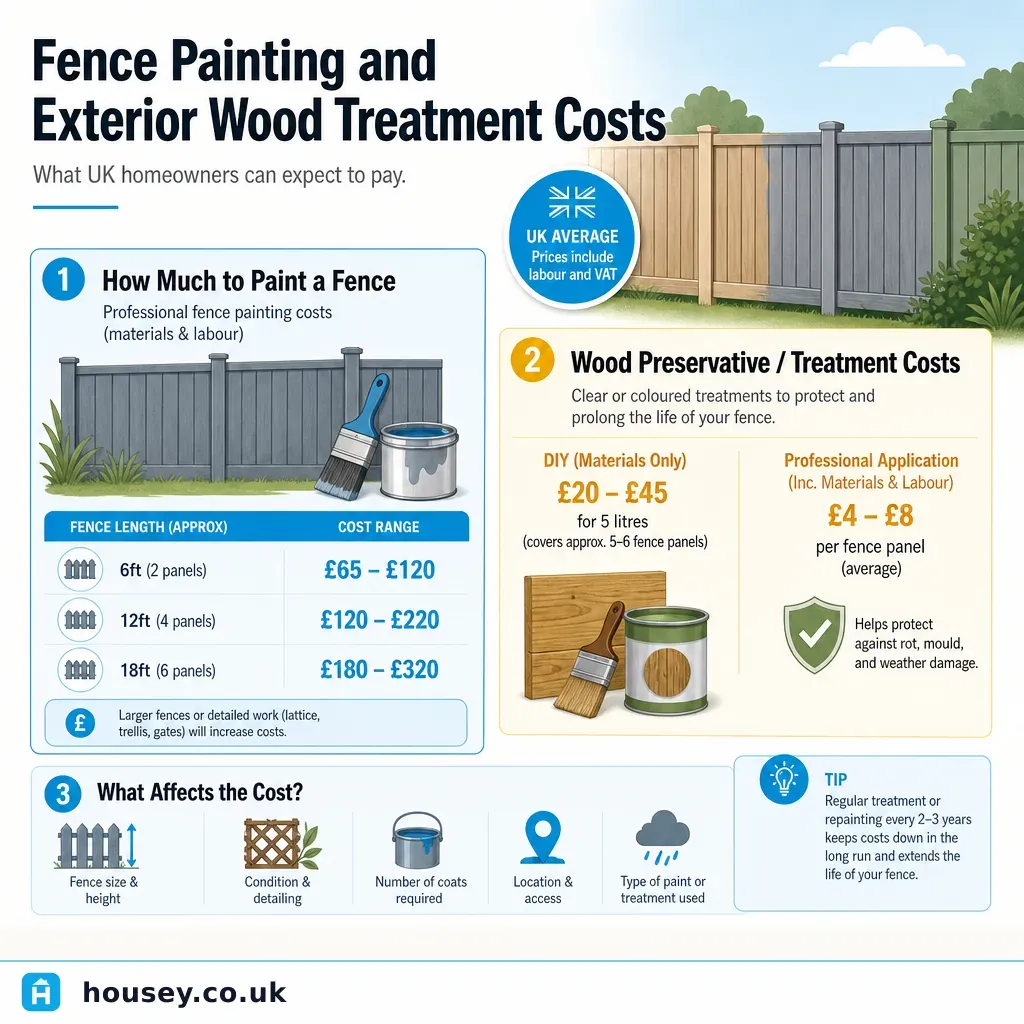
Fence Painting and Exterior Wood Treatment Costs
Professional fence painting or wood treatment in the UK typically costs £150–£400 for an average 30-panel garden fence, or roughly £5–£15 per panel.
 Improvement & Build
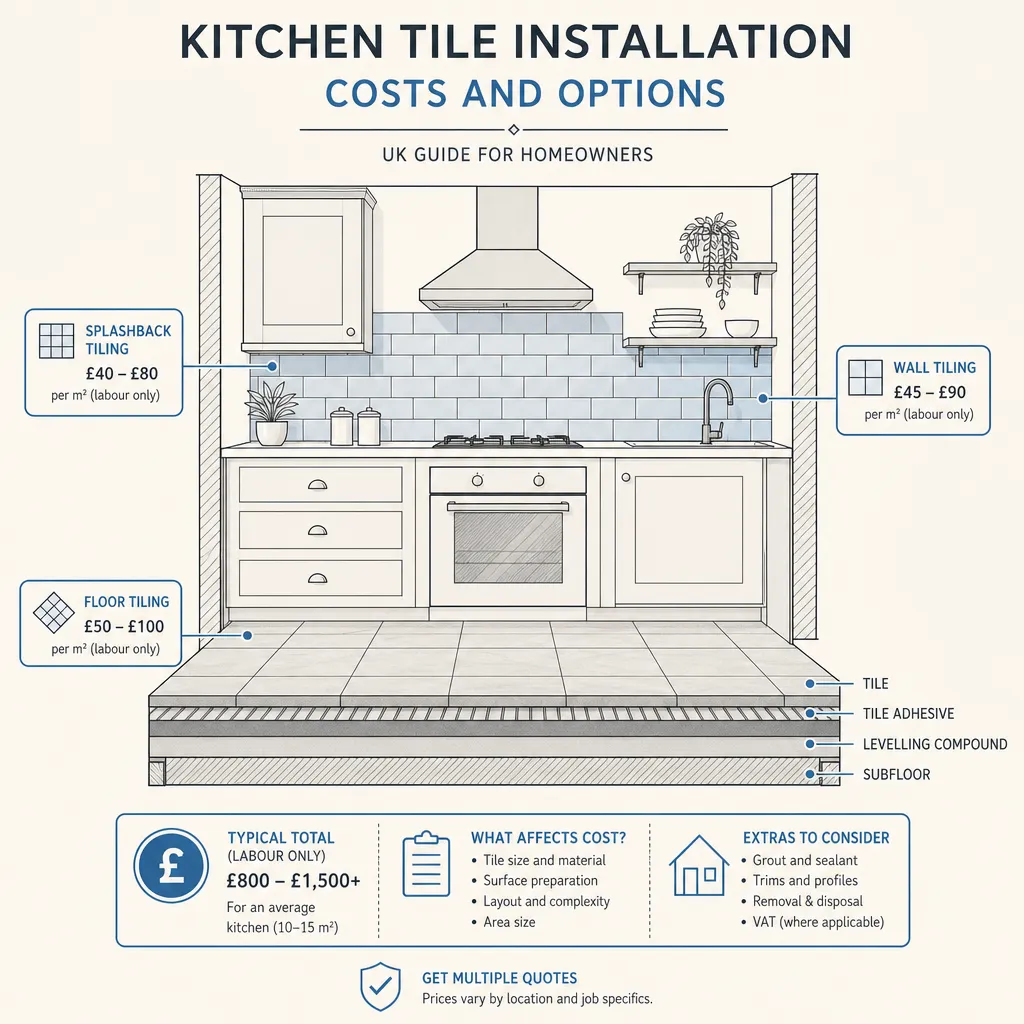
Kitchen Tile Installation Costs and Options
Kitchen tiling in the UK costs roughly £20–£40 per square metre for labour, plus £15–£80 per square metre for materials depending on tile type.
 Improvement & Build
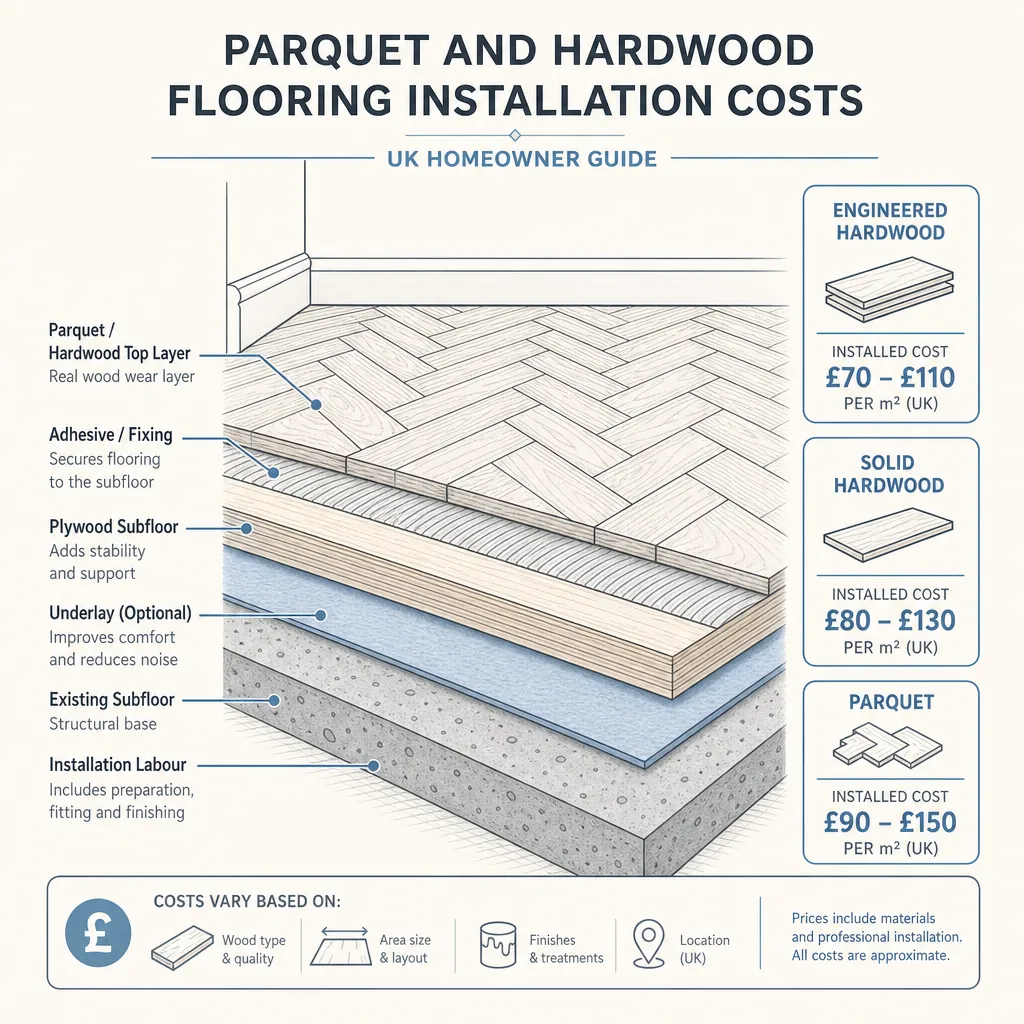
Parquet and Hardwood Flooring Installation Costs
Parquet and hardwood flooring typically costs £50–£160 per m² installed in the UK, depending on wood species, board format, and subfloor condition.
 Improvement & Build
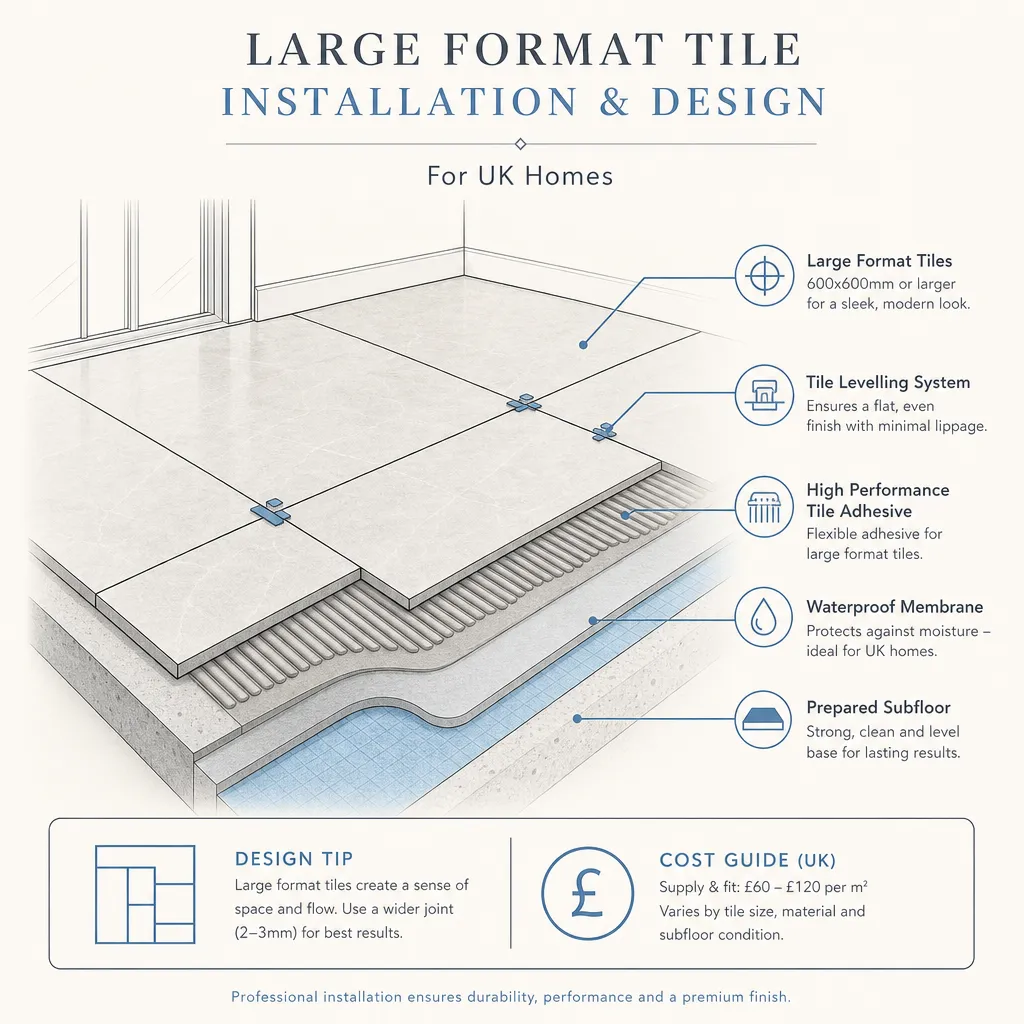
Large Format Tile Installation and Design
Large format tiles (600mm × 600mm or larger) need a substrate flat to within 3mm under a 2m straightedge, a C2-rated flexible adhesive, and a minimum 2mm grout joint.
 Improvement & Build
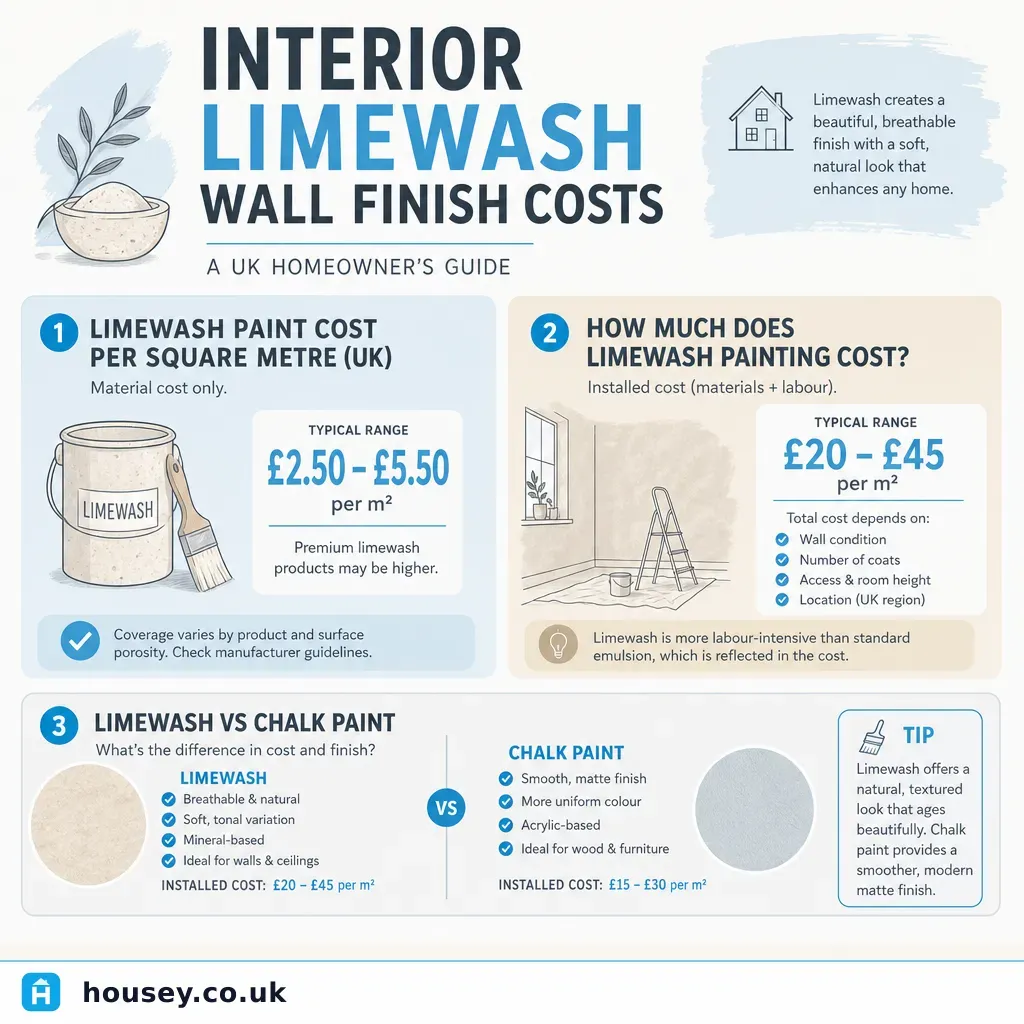
Interior Limewash Wall Finish Costs
Interior limewash wall finishes typically cost £15–£45 per square metre for professional application in the UK, depending on the product, number of coats, and wall preparation required.