Fence Repair and Maintenance Costs
By Housey · Last reviewed 7th of May 2026
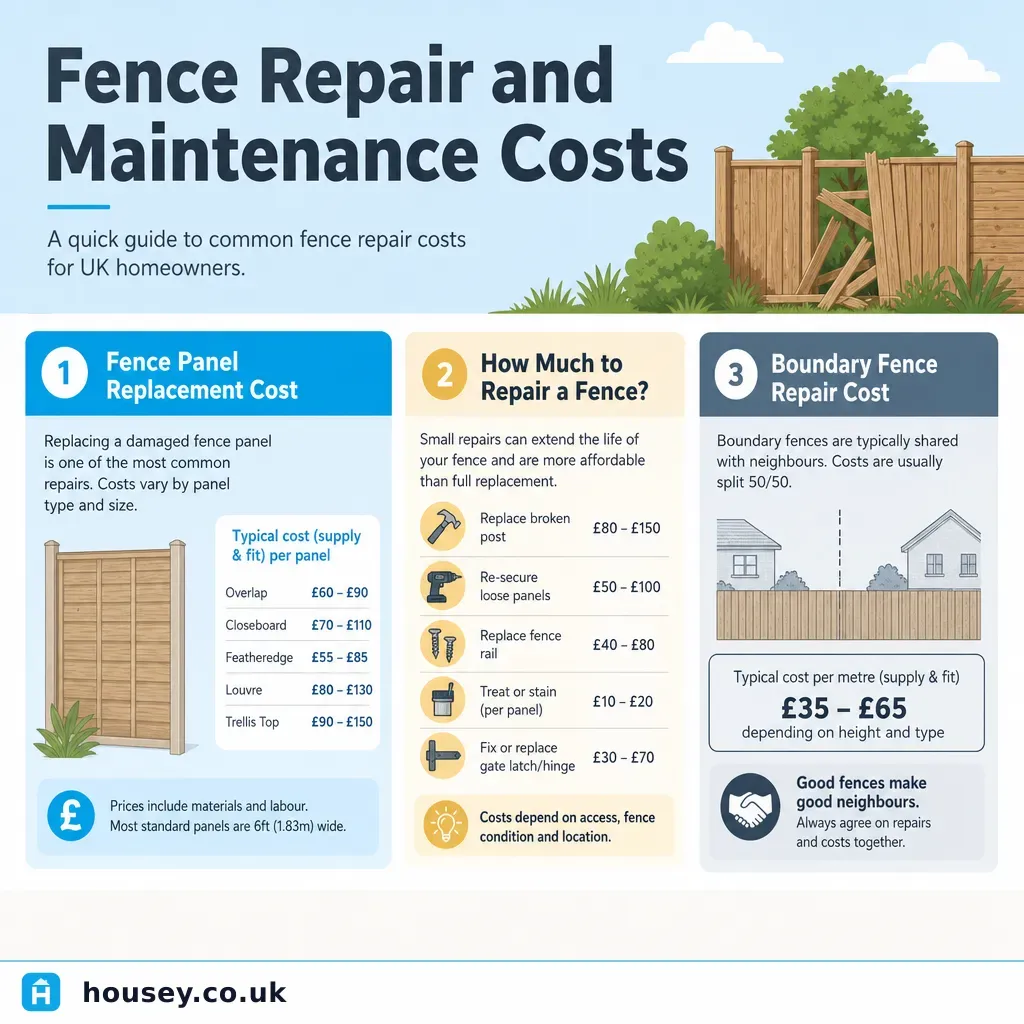
Fence Repair and Maintenance Costs
Fence repairs often come up unexpectedly — after a storm, when a post finally gives way, or when a homebuyer's survey flags boundary condition. For many UK homeowners, the first question is whether the repair is their legal responsibility at all, and the second is how much it will actually cost. Timber fencing accounts for the vast majority of residential boundary structures in England and Wales, and the age of the nation's housing stock means ageing close-board and lap panels are a constant maintenance consideration.
Key points
- Boundary ownership in England and Wales is determined by your title deeds or transfer documents — not the commonly repeated 'left-hand rule', which has no legal basis.
- Concrete fence posts typically last 20–30 years; pressure-treated timber posts usually last 10–15 years, but untreated posts in poor drainage conditions can fail in as few as 5 years.
- Arris rails — the horizontal supports behind feather-edge panels — are one of the most common failure points and can often be replaced without removing the entire panel.
- Gravel boards at the base of a fence prevent direct soil contact with panels, significantly extending their lifespan; replacing worn gravel boards is often cheaper than waiting until the panels themselves rot.
- BS 1722 sets out dimensional and structural standards for common UK fence types, including Part 6 for close-boarded timber fencing — relevant when specifying replacement materials to match an existing run.
Who is responsible for repairing the fence?
Responsibility for a boundary fence is not automatic. In England and Wales, the obligation to maintain a fence sits with whoever the title deeds say owns that boundary. Ownership is often indicated by a 'T' mark on the title plan — the T faces towards the land of the owner responsible for that boundary.
If the deeds are silent on maintenance obligation, neither neighbour is automatically required to repair or replace a boundary structure. Shared ownership ('party fences') exists but is less common than people assume.
Before commissioning any repairs, obtain a copy of your title register and title plan from HM Land Registry (currently £3 for an official copy online). If you own the boundary, you bear the full cost. If your neighbour does, you may need to raise the matter with them before instructing anyone.
What does fence repair typically cost in the UK?
Costs vary widely by fence type, extent of damage, access, and region. The figures below are indicative UK costs, last reviewed 2026-05-07. Always obtain at least two or three written quotes.
Repair type | Indicative cost (materials + labour) | DIY feasible? |
|---|---|---|
Single timber panel replacement | £100–£250 | Possible with experience |
Timber post replacement | £150–£350 per post | Usually requires post-hole equipment |
Arris rail replacement | £50–£150 per rail | Manageable for accessible rails |
Gravel board replacement | £50–£150 per board | Yes |
Full run (5–10 panels + new posts) | £600–£2,000 | Partial DIY possible |
Whole-garden timber treatment | £150–£400 | Yes — DIY or professional |
Costs in London and the South East are typically 20–35% higher than national averages. Remote or difficult-access properties may attract additional charges.
What affects the cost of fence repair?
Several factors push costs up or down:
- Fence type: Close-board and feather-edge fencing are the most straightforward and common to repair. Composite, metal, or acoustic fencing is more expensive to source and work with.
- Post condition: If posts are sound, repairs are far cheaper. Rotten or leaning posts require excavation, re-concreting, and setting time — the most labour-intensive element of most repair jobs.
- Access: Narrow side entrances, sloped gardens, or vegetation close to the fence line add time and cost.
- Materials specification: Pressure-treated timber costs more upfront but lasts considerably longer than untreated softwood.
- Disposal: Removal and disposal of old panels and posts may or may not be included in a quote — always confirm before agreeing a price.
- Ground conditions: Rocky or root-heavy ground makes post replacement considerably harder and may require specialist equipment.
Maintaining timber fencing to extend its life
Routine maintenance is far cheaper than full replacement. Key tasks for UK homeowners:
- Annual inspection: Check for post movement (lean, rock, or rot at ground level), cracked or split arris rails, loose or missing fixings, and panel warping.
- Timber treatment: Apply a quality fence paint, stain, or preservative every one to two years. Treatment works best on a dry day when the timber is clean.
- Gravel board condition: Ensure gravel boards are intact and not allowing soil to accumulate against panel bases.
- Vegetation clearance: Remove climbing plants, ivy, or heaped soil from the fence line — moisture retention is the primary driver of timber decay.
- Post caps: Fit post caps or finials to protect exposed end grain at the top of posts, a primary entry point for moisture.
Homeowner checklist before getting repair quotes
Prepare the following before contacting contractors to ensure accurate, like-for-like quotes:
Red flags when getting fence repair quotes
- A quote significantly lower than others with no explanation — often indicates thinner or untreated materials, or gravel boards omitted
- No site visit offered before quoting, especially for post replacement work
- Pressure to accept immediately or pay the full amount upfront
- No written quotation or contract provided
- Vague description of materials — ask specifically for timber grade and pressure-treatment standard
- No mention of how old materials will be disposed of
What to ask a fence repair contractor
- Are the replacement panels pressure-treated, and to what standard (UC3 for above ground, UC4 for ground contact)?
- Are gravel boards included in the quote?
- How will new posts be set — post mix, traditional concrete, or drive-in spikes?
- Is removal and disposal of old materials included?
- Will you provide a written breakdown of materials and labour costs?
- Is VAT included in the quoted price?
- Do you carry public liability insurance?
- What is the expected lifespan of the repair with normal maintenance?
When to get professional help
Most single panel replacements can be managed by a competent DIYer with basic tools. Professional help is advisable when:
- Multiple posts require replacement, particularly concrete posts requiring excavation
- The fence is on a slope, near underground services, or has restricted access
- There is a dispute with a neighbour about boundary ownership or responsibility
- The fence borders a highway, where height rules and liability differ
- You intend to raise the height of the fence, which may require planning permission
If there is a boundary dispute, seek advice from a solicitor or a chartered surveyor with boundary expertise before commissioning any works.
How Housey can help
If you need a reliable tradesperson for fence repairs or maintenance, Housey can connect you with vetted landscapers and fencing specialists in your area. Compare quotes, check reviews, and instruct with confidence.
Frequently asked questions
How much does it cost to replace a fence panel in the UK?
Replacing a single standard close-board or lap timber fence panel typically costs £100–£250 in the UK, including materials and labour (indicative, last reviewed 2026-05-07). The exact figure depends on panel size, whether the post also needs replacing, your location, and contractor rates. Fixing only arris rails or gravel boards is generally cheaper.
Who is responsible for repairing a boundary fence?
Responsibility depends on your title deeds, not on which side of the fence you stand or any assumed 'left-hand rule'. Look for a 'T' mark on your HM Land Registry title plan — the T faces towards the owner responsible for that boundary. If the deeds are silent, neither party is automatically obliged to maintain the fence.
Does fence repair need planning permission?
Most like-for-like repairs do not require planning permission in England. However, replacing with a fence over 2 metres in height, or over 1 metre adjacent to a highway, may need permission. Conservation areas and listed building curtilages can have additional restrictions. Check with your local planning authority before making significant changes.
How long do timber fences last in the UK?
With annual treatment, pressure-treated close-board timber fences typically last 15–25 years. Untreated timber in exposed or wet conditions may deteriorate within 5–10 years. Concrete posts significantly outlast timber posts, often lasting 25–40 years, which is why mixing concrete posts with timber panels is a popular and cost-effective combination.
Can I repair a fence myself?
Panel replacements and arris rail repairs are within reach of a competent DIYer with basic tools. Post replacement is more demanding, requiring excavation, correct depth and alignment, and adequate concrete curing time. If you are unsure about ground conditions, underground services, or boundary alignment, it is worth getting a professional to carry out or at least assess the work.
Sources and further reading
- Boundaries and neighbours — GOV.UK
- Official copies of register of title — HM Land Registry
- Fences, gates and garden walls — Planning Portal
- Disputes about boundaries — Citizens Advice
- Safe digging — LSBUD (Lines and Structures Before You Dig)
Useful next reads
 Improvement & Build
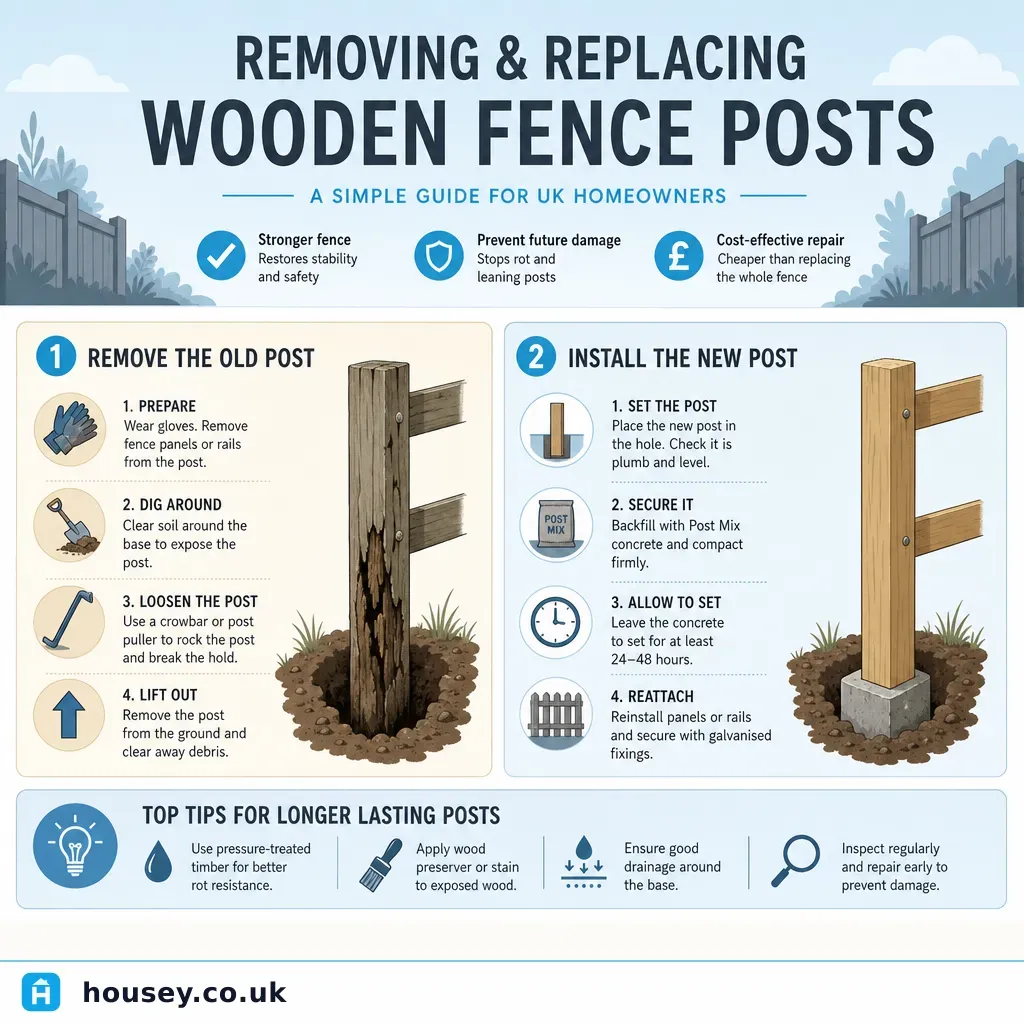
Removing and Replacing Wooden Fence Posts
Replacing a wooden fence post involves removing the old post and its footing, then setting a new post in either a concrete footing or a metal spike, and refixing the panels or rails.
 Improvement & Build
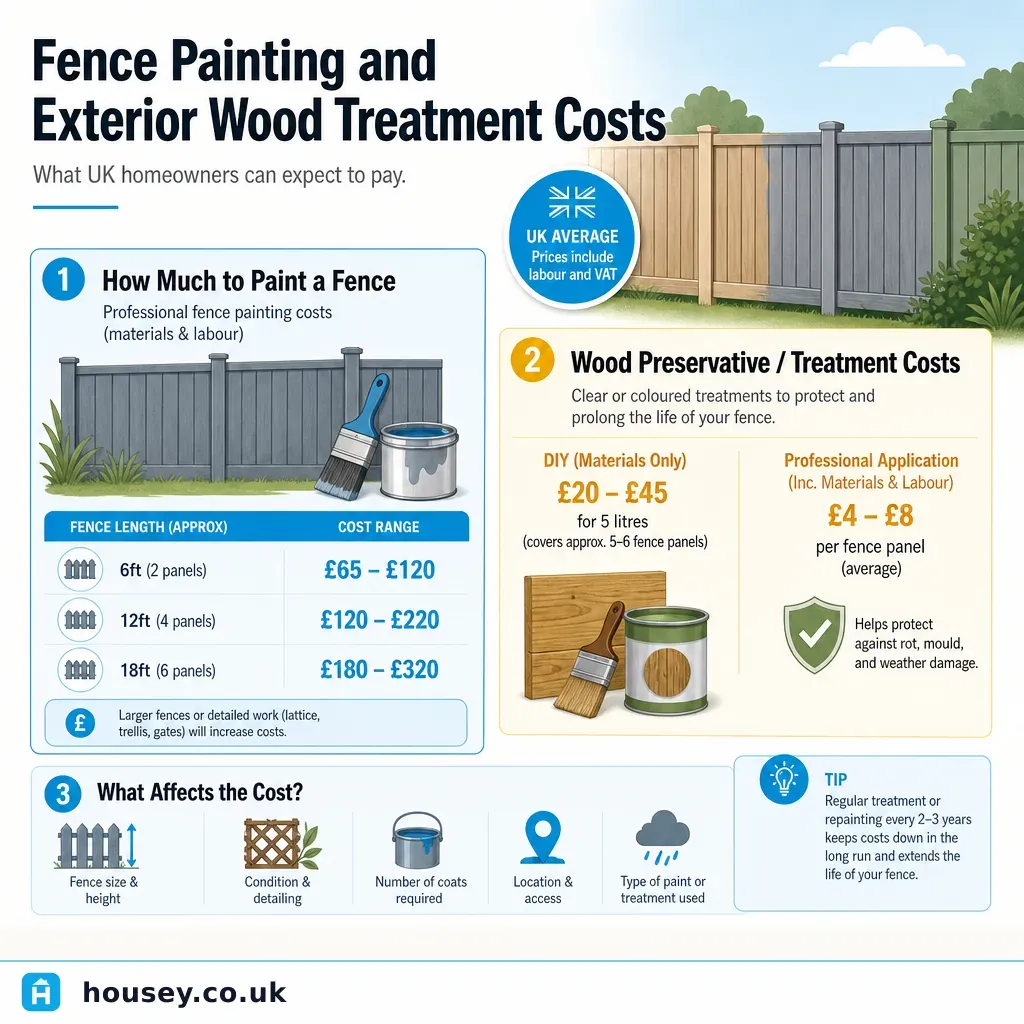
Fence Painting and Exterior Wood Treatment Costs
Professional fence painting or wood treatment in the UK typically costs £150–£400 for an average 30-panel garden fence, or roughly £5–£15 per panel.
 Improvement & Build
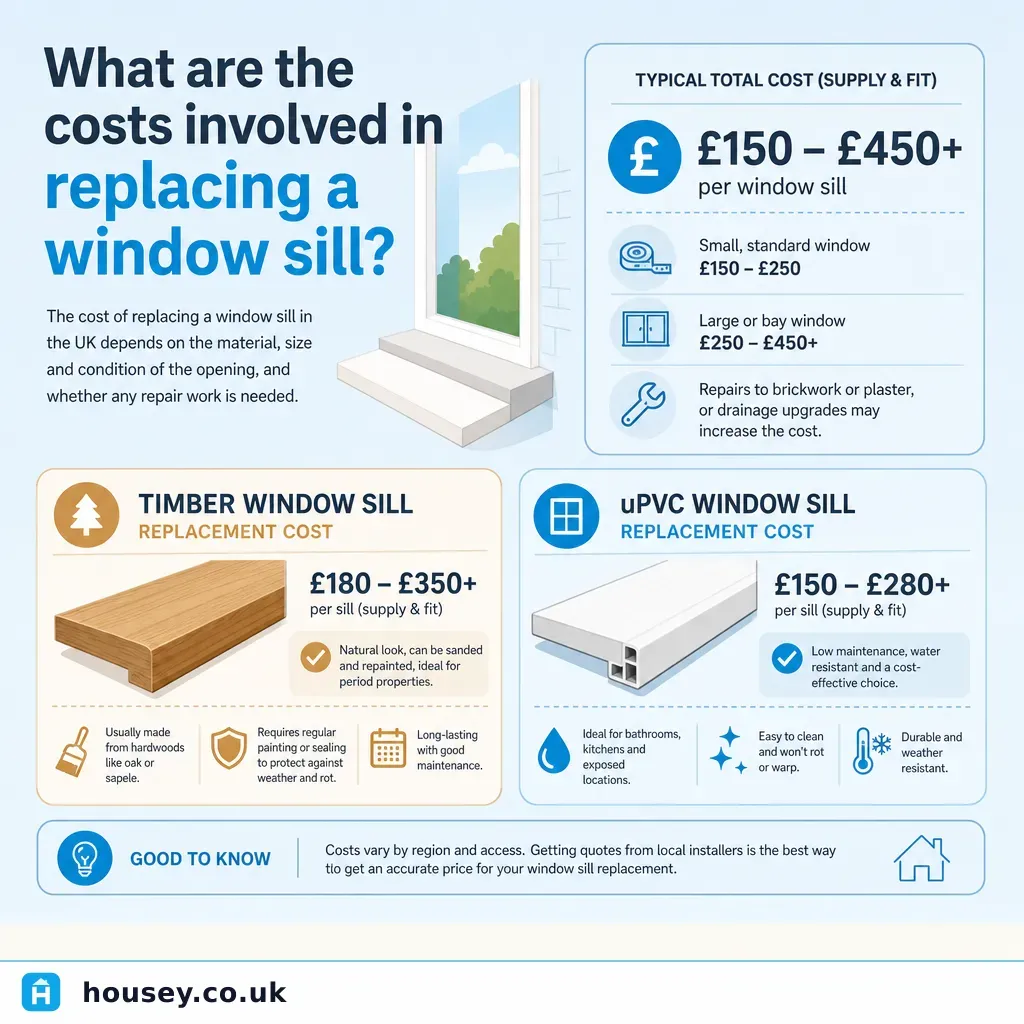
What are the costs involved in replacing a window sill?
Window sill replacement in the UK typically costs £100–£350 per window, depending on material, sill length, and access.
 Improvement & Build
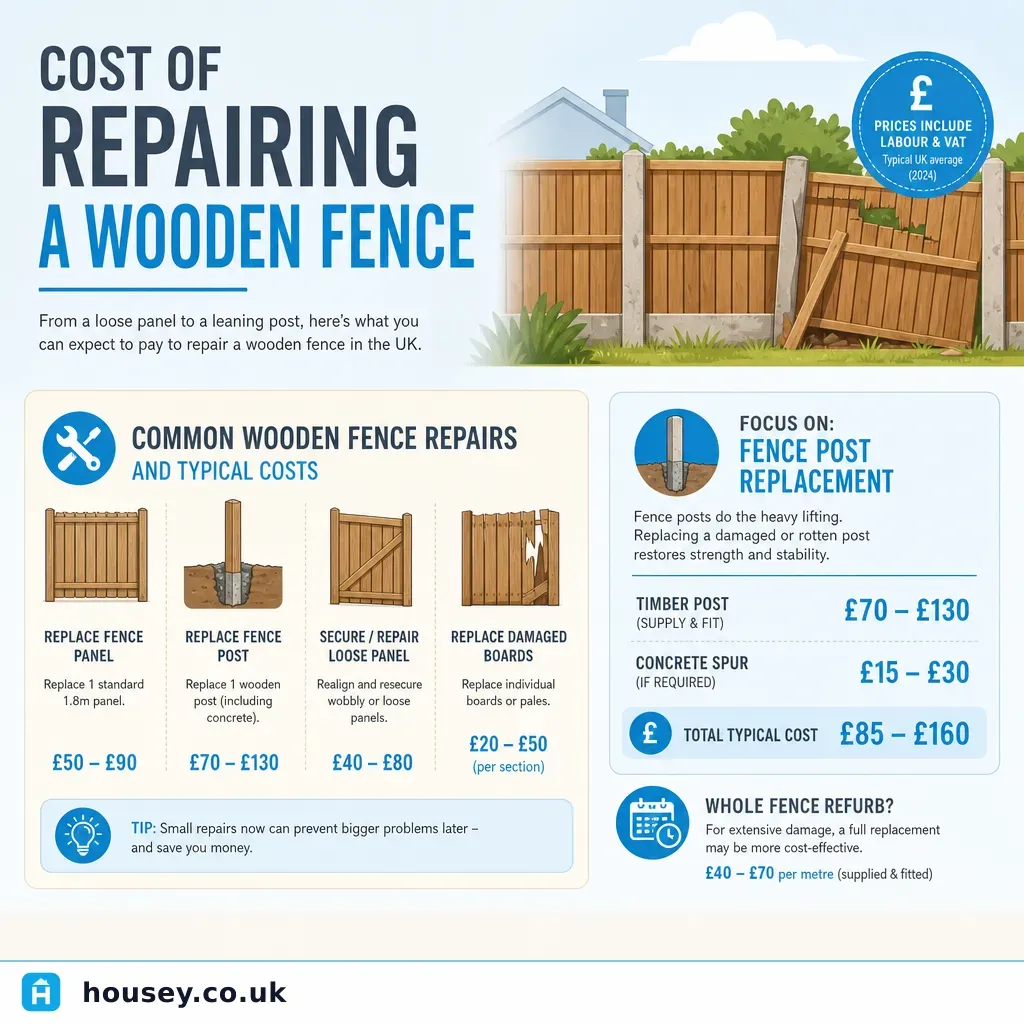
Cost of repairing a wooden fence
Repairing a wooden fence in the UK typically costs £100–£400 for minor work such as replacing boards or refixing panels, rising to £500–£1,500 for more extensive repairs including post replacement.
 Improvement & Build
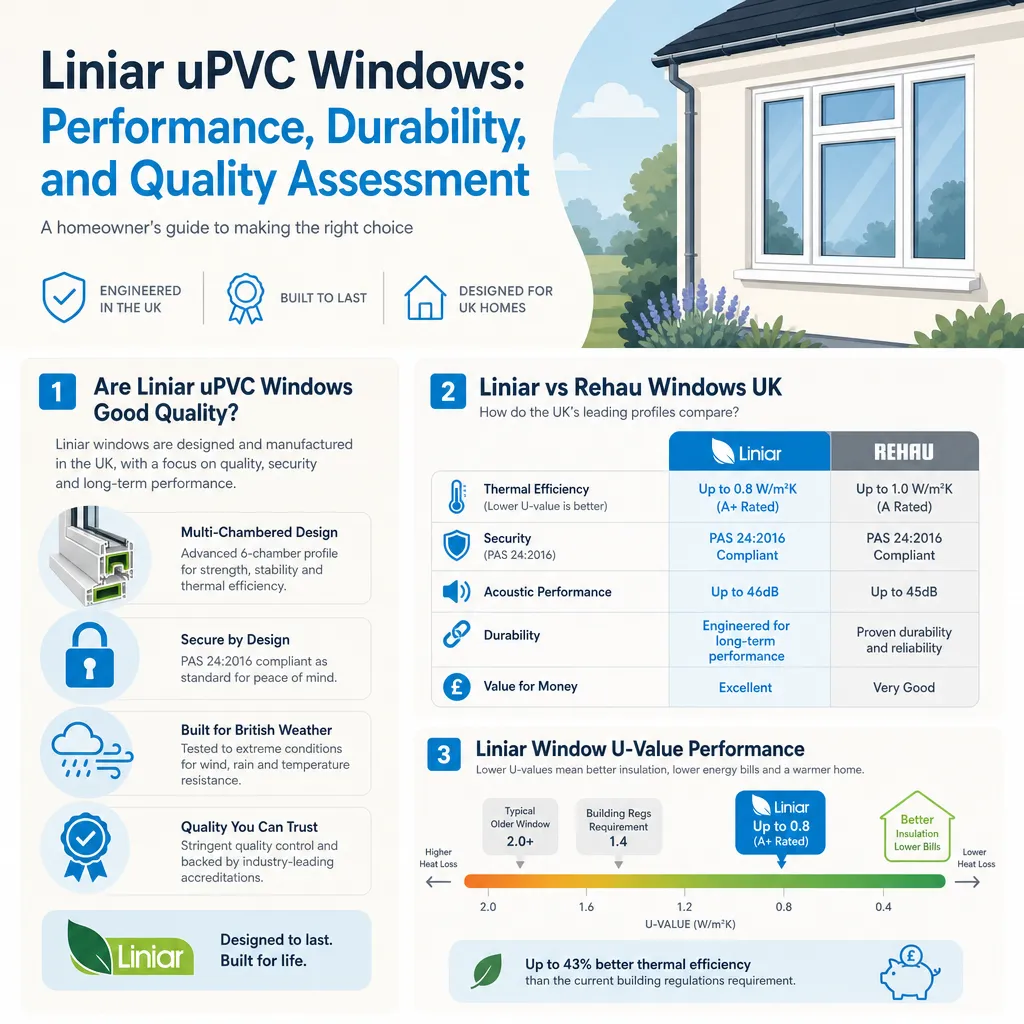
Liniar uPVC Windows: Performance, Durability, and Quality Assessment
Liniar uPVC window profiles are manufactured in the UK using multi-chambered, foamed frames.