Fencing Installation Cost Estimator and Planning Guide
By Housey · Last reviewed 8th of May 2026
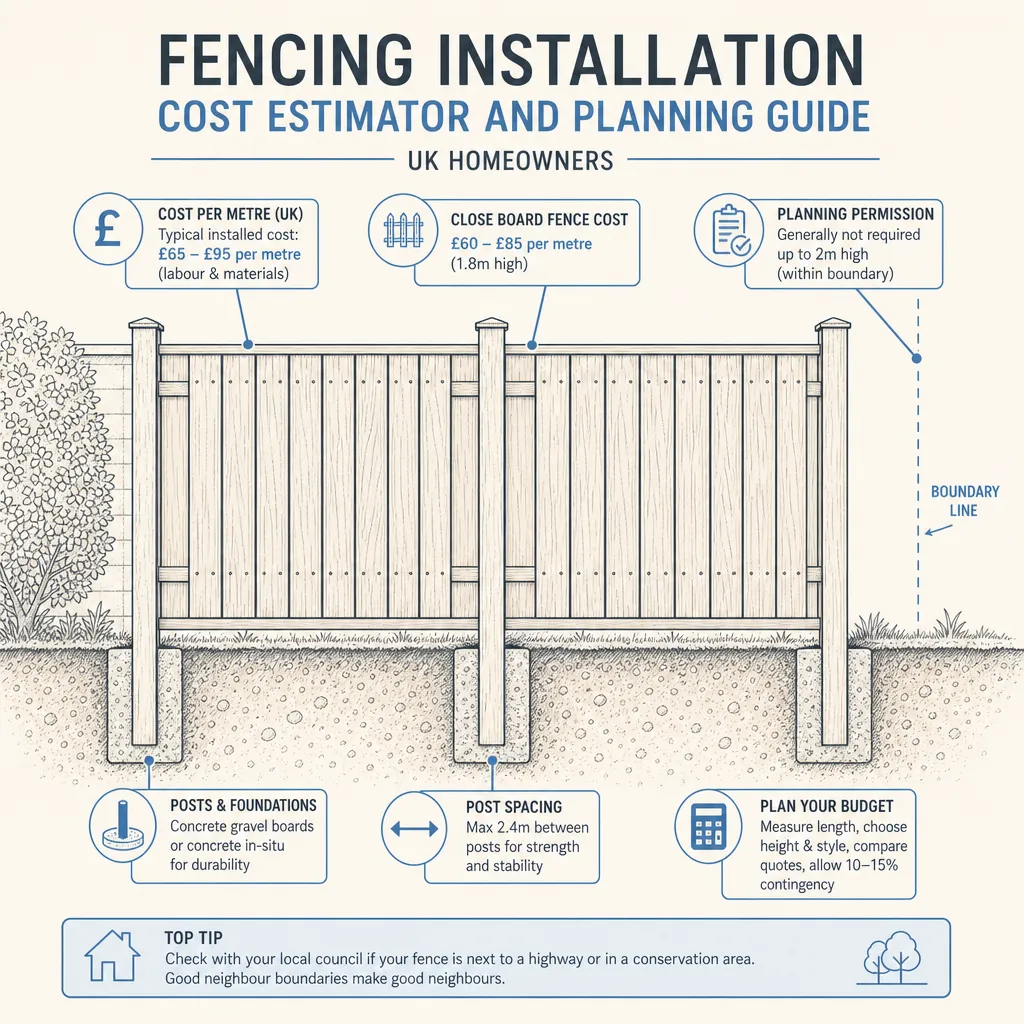
Fencing Installation Cost Estimator and Planning Guide
Replacing or erecting a new garden fence is one of the most common home improvement projects in the UK, yet costs vary considerably depending on fence type, boundary length, ground conditions, and whether planning permission applies. Whether you are dividing a new-build plot, replacing storm-damaged panels, or installing close-board fencing on a sloping rear garden, understanding what drives the cost before you request quotes helps you compare like-for-like and avoid surprises at the invoice stage.
Key points
- Close-board (feather-edge) fencing typically costs £80–£160 per metre installed, including posts and gravel boards (indicative UK costs, last reviewed 2026-05-08).
- Fences over 2 metres in height generally require planning permission; fences adjacent to a highway are limited to 1 metre without consent under the Town and Country Planning Act 1990, Schedule 2, Part 2.
- Boundary responsibility depends on your title deeds and deed plan — the T-mark convention is a guide but not legally definitive; always check your HM Land Registry title documents before instructing a contractor.
- Post-and-concrete installation adds 10–30% to cost but significantly extends fence life on soft or waterlogged ground.
- Removing and disposing of an existing fence typically adds £5–£20 per metre to the overall project cost.
Fence types and indicative UK costs
Costs below are for supply and installation per linear metre, including posts set into the ground and gravel boards where applicable, on level ground with reasonable access. Sloping sites, rocky ground, or restricted access will increase costs.
Fence type | Installed cost per metre | Typical lifespan (treated timber) | Best for | Not ideal for |
|---|---|---|---|---|
Lap panel (overlap) | £50–£100 | 10–15 years | Budget boundaries, low-exposure gardens | High-wind sites, long-term privacy |
Close-board (feather-edge) | £80–£160 | 15–25 years | Exposed sites, long runs, sloping ground | Very tight budgets |
Picket fence | £60–£120 | 10–20 years | Front gardens, decorative boundaries | Full privacy or security |
Trellis | £40–£80 | 8–15 years | Garden zoning, climbing plants | Privacy or security screening |
Post-and-rail | £30–£70 | 15–20 years | Rural plots, paddocks | Urban privacy requirements |
Metal railings | £200–£500+ | 40+ years (with maintenance) | Period properties, front boundaries | Countryside or informal settings |
Concrete panel | £90–£180 | 25+ years | High-noise or exposed urban sites | Aesthetic flexibility |
Indicative UK costs, last reviewed 2026-05-08. Prices vary by region, ground conditions, and contractor. Obtain at least three written quotes.
What drives fencing costs up or down?
Factors that increase cost:
- Sloping or uneven ground — stepped or raked panels add 20–40% to labour costs.
- Rocky, clay, or waterlogged ground — may require specialist boring equipment or deeper concrete footings rather than standard postcrete.
- Removal and disposal of existing fence or old posts — typically £5–£20 per metre additional.
- Concrete spurs or full concrete posts instead of timber — higher material cost but significantly longer service life.
- Hardwood species such as oak or iroko rather than pressure-treated softwood.
- Poor or restricted site access — back gardens with no side access for machinery or material delivery.
- Gate installation — a standard timber gate typically costs £150–£400 including fitting; automated or metal gates are considerably more.
Factors that reduce cost:
- Long, straight runs on level ground with good vehicular access.
- Removing and disposing of old fencing yourself before the contractor arrives (check local household waste recycling centre policies).
- Standard pressure-treated softwood rather than hardwood or composite materials.
- Reusing sound existing posts where the contractor inspects and confirms them adequate.
Does your fence need planning permission?
Under the Town and Country Planning Act 1990 (Schedule 2, Part 2), the following permitted development allowances apply in England for most residential properties:
- Fences, walls, and gates up to 2 metres in height do not normally require planning permission if they are not adjacent to a highway.
- Where adjacent to a highway used by vehicles (including a shared driveway, public road, or pavement), the maximum permitted height without consent is 1 metre.
- In a conservation area or on a listed building curtilage, permitted development rights may be restricted or withdrawn — check with your local planning authority before starting any work.
- Some new-build estates have Article 4 Directions that remove permitted development rights — check your title documents or contact the local planning authority to confirm.
A householder planning application in England currently costs £258 (as of April 2024 — check GOV.UK for the most current fee). Applications typically take around 8 weeks for straightforward cases.
Whose fence is it? Boundary responsibility in the UK
Boundary ownership in England and Wales is determined by the title deeds and accompanying deed plan — not by the physical position of a fence or any informal convention about left or right sides of the plot.
How to check:
- Download your title register and title plan from HM Land Registry (currently £3 per document at the time of publication).
- Look for a T-mark on the title plan — a T-mark on your side of the boundary line generally indicates that you are responsible for maintaining that boundary.
- If the T-mark is on your neighbour's side of the line, they are usually responsible for that boundary feature.
- Where deeds are unclear or silent, responsibility can be disputed. A property solicitor or RICS-accredited boundary surveyor can advise in these cases.
Neighbours have no automatic legal right to insist on a particular fence type, colour, or finish unless a covenant in the title deeds specifically requires it. Discussing significant boundary changes in advance is generally advisable to avoid disputes.
What to ask before accepting a fencing quote
- What species and grade of timber is included — is it pressure-treated to Use Class UC4 for ground-contact posts?
- How deep will posts be set, and what concrete or post-fixing method will be used?
- Are gravel boards included? (These keep panel bases off the ground and significantly extend panel life.)
- Is removal and disposal of the existing fence and old posts included in the quoted price?
- What guarantee does the contractor offer on materials and workmanship?
- Is VAT at 20% included in the price shown, or will it be added on top?
- Who applies for any necessary planning permission — and is the application fee included in the quote?
- Will the contractor confirm the boundary ownership position before starting installation?
Red flags when comparing fencing quotes
- No site visit before quoting — ground conditions, access, and existing post condition vary too much to quote accurately from photographs alone.
- No mention of post depth or fixing method — posts set too shallow or without adequate concrete will fail in wind.
- No timber specification — untreated or Use Class UC3-only timber used in ground contact will begin to rot within a few years.
- Unusually low quotes with no panel specification — these often use thinner or underspec rails and panels that warp or deteriorate rapidly.
- Request for full payment upfront — a reasonable deposit of 10–25% is standard; full payment before work commences is a warning sign.
- No written contract or confirmed start date — always get terms, scope, and timeline confirmed in writing before work begins.
When to get professional help
Straightforward panel replacement in a garden setting is a project many competent contractors handle routinely. Seek specialist or professional input when:
- A boundary is genuinely disputed with a neighbour — obtain legal advice before erecting or removing any fence.
- Ground conditions are poor: heavily waterlogged, rocky, contaminated, or sloping more than approximately 1-in-5.
- You are in a conservation area, on a listed property, or subject to an Article 4 Direction removing permitted development rights.
- The fence will exceed 2 metres in height, or be positioned adjacent to a public highway.
- A Party Wall etc. Act 1996 matter may arise — less common for timber garden fences, but relevant for masonry walls or gate piers built on or astride the boundary line.
How Housey can help
Whether you need a landscaper for a straightforward panel replacement or a groundworker for post installation on difficult or sloping ground, Housey can help you request quotes from vetted local tradespeople. Browse landscapers on Housey for garden fencing projects, or find groundworkers on Housey for post installation on challenging sites.
Frequently asked questions
How much does it cost to fence a typical garden in the UK?
A standard back garden requiring 20 metres of close-board fencing would typically cost £1,600–£3,200 installed, including posts and gravel boards (indicative UK costs, last reviewed 2026-05-08). The exact figure depends on ground conditions, whether existing fencing needs removing, and the contractor's location. Always obtain at least three written quotes before committing.
Do I need planning permission for a 2-metre fence?
In England, for most residential properties not adjacent to a highway, fences up to 2 metres do not require planning permission under permitted development rights. However, conservation areas, listed buildings, and some new-build estates with Article 4 Directions may have restrictions. Always check with your local planning authority if you are uncertain about your specific situation.
How long does a wooden fence last?
Pressure-treated softwood close-board fencing typically lasts 15–25 years with minimal maintenance. Lap panel fencing usually lasts 10–15 years. Key factors are timber treatment class (UC4 for ground-contact posts), post installation quality, and exposure to wind and moisture. Concrete spurs or concrete posts significantly extend post life on soft or waterlogged ground.
Can I replace a fence without my neighbour's agreement?
If the fence is on your boundary and your title deeds show you are responsible for it, you can generally replace it within permitted development height limits without your neighbour's consent. It is courteous to inform them in advance, particularly where the style or finish might affect their outlook or garden use.
What is the cheapest fencing option in the UK?
Lap panel (overlap) fencing is usually the most affordable option, typically costing £50–£100 per metre installed (indicative, last reviewed 2026-05-08). However, it is less durable on exposed sites than close-board fencing, and the lower upfront cost may be offset by earlier replacement, particularly in high-wind or high-moisture environments.
Sources and further reading
- Planning permission for fences, walls and gates — GOV.UK
- Get information about property and land — HM Land Registry
- Town and Country Planning Act 1990 — legislation.gov.uk
Useful next reads
 Improvement & Build
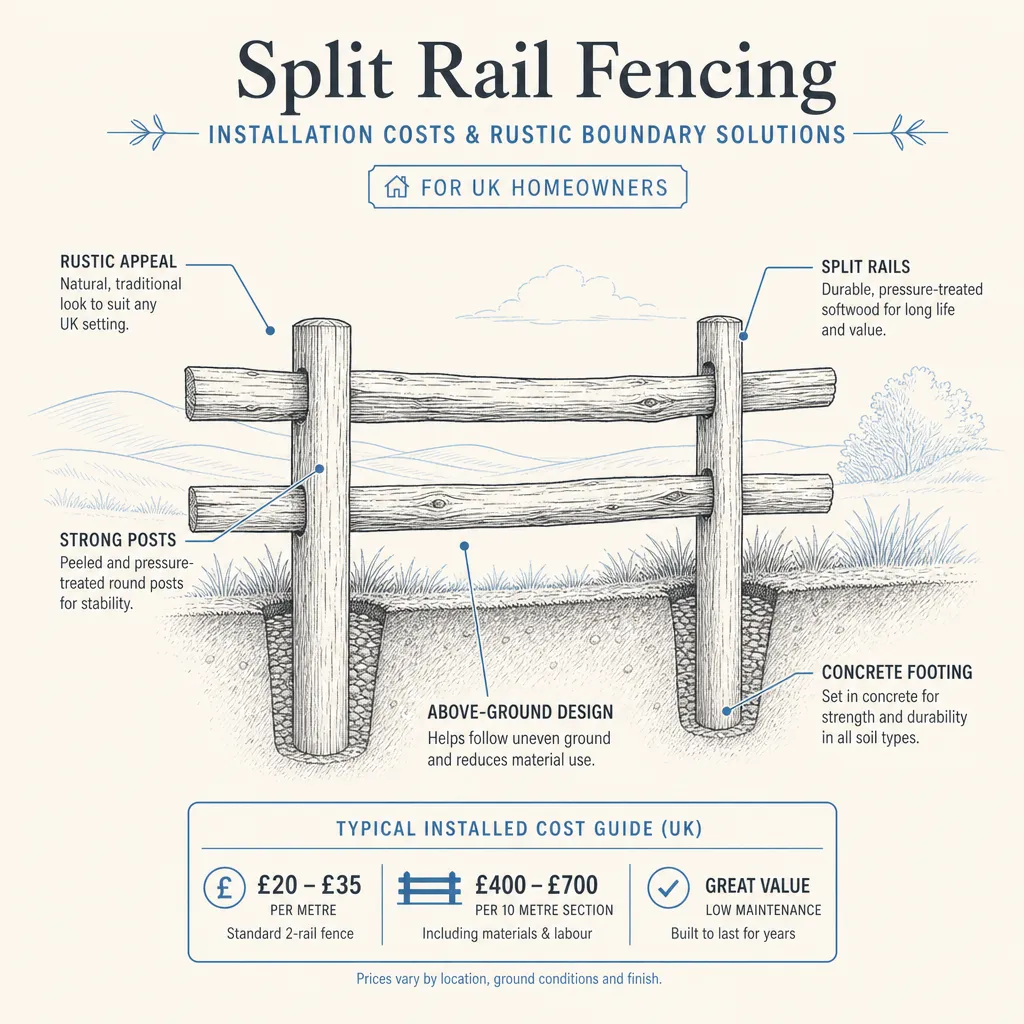
Split rail fencing: installation costs and rustic boundary solutions
Split rail fencing typically costs between £30 and £60 per linear metre installed in the UK, depending on timber species, number of rails, and local labour rates.
 Improvement & Build
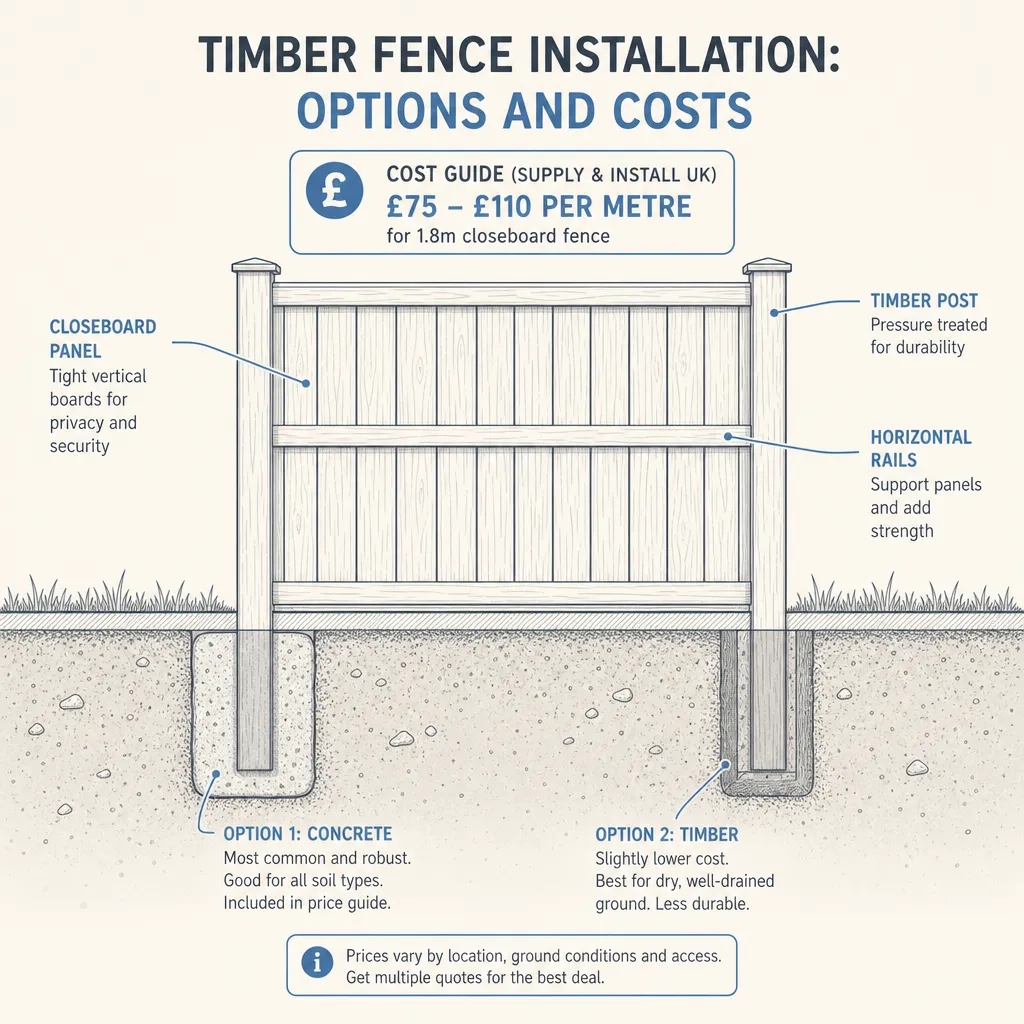
Timber Fence Installation: Options and Costs
Timber fence installation in the UK typically costs £60–£150 per metre installed, depending on fence type, post material, and ground conditions.
 Improvement & Build
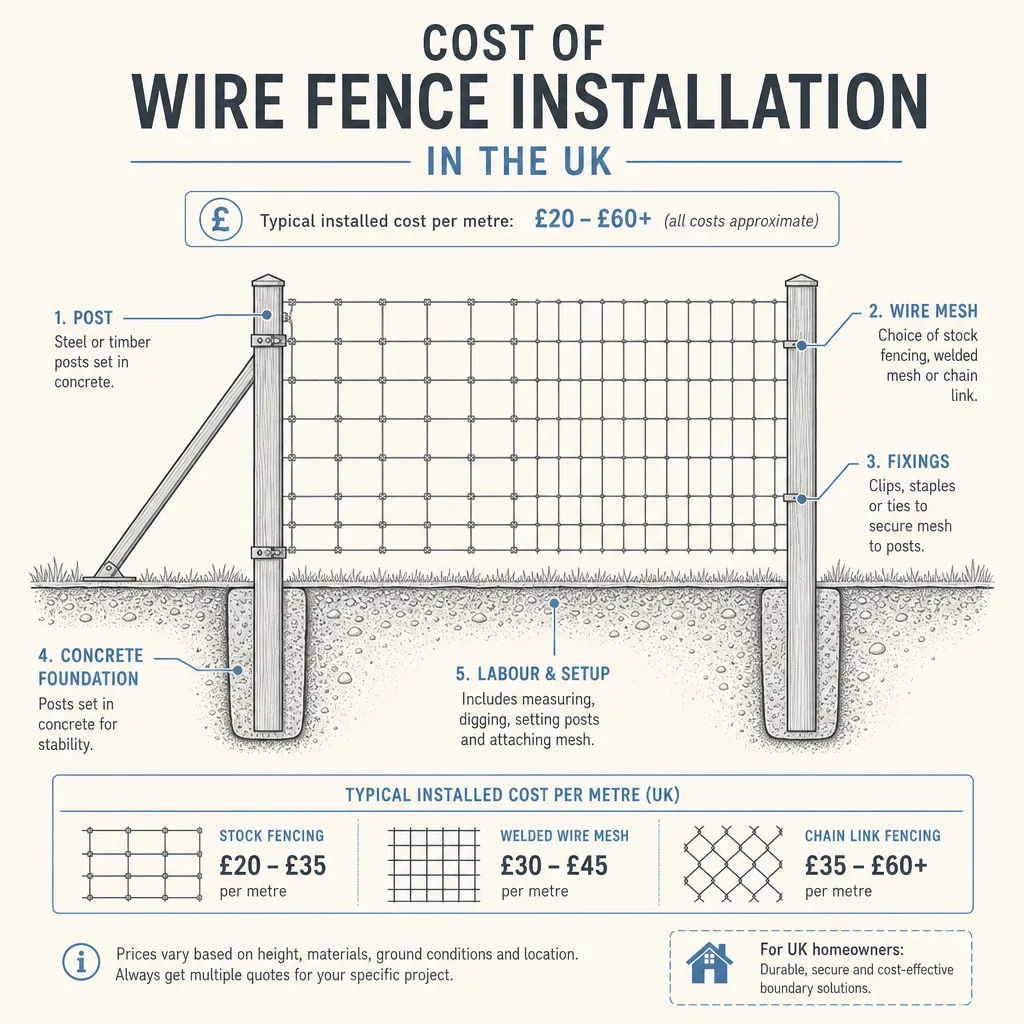
Cost of Wire Fence Installation in the UK
Wire fence installation in the UK typically costs £8–18 per metre for stock fencing, £15–35 per metre for chain-link, and £20–45 per metre for welded wire mesh panels, all installed.
 Improvement & Build
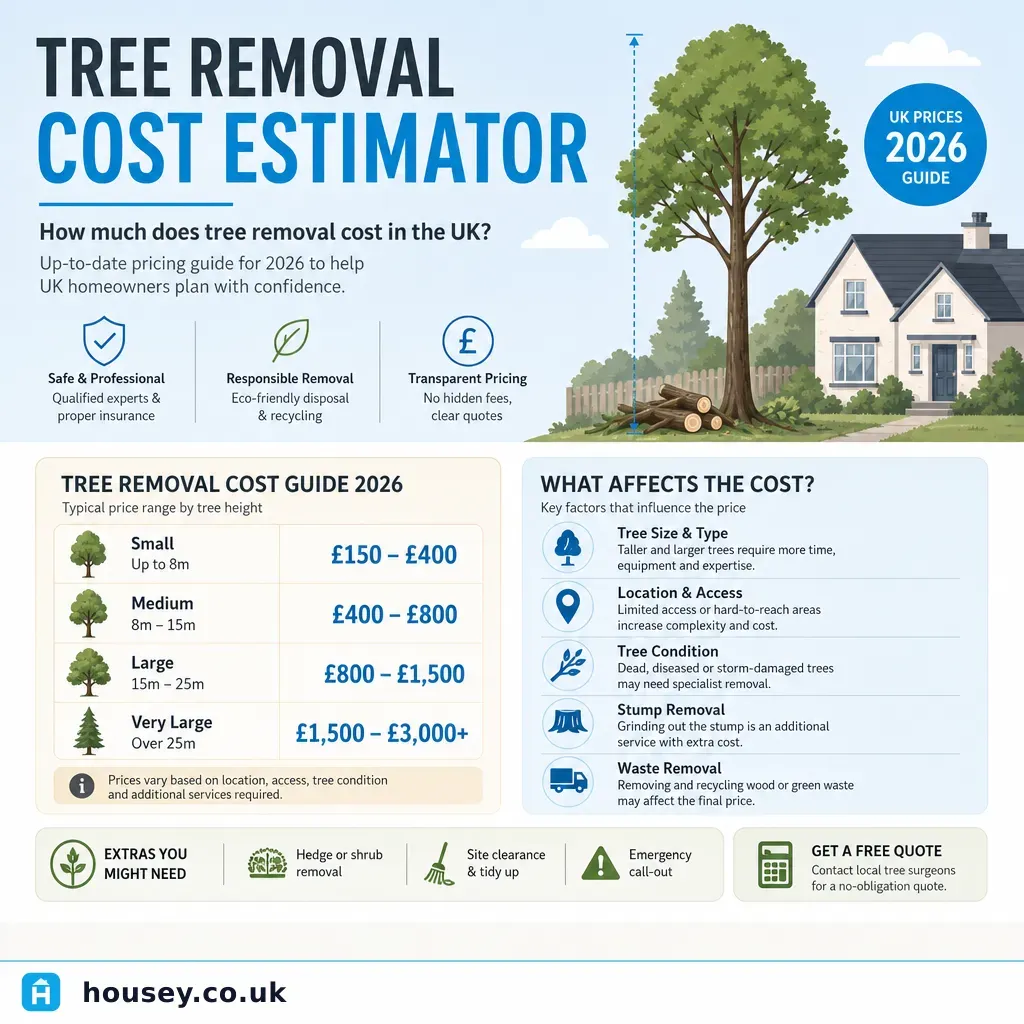
Tree Removal Cost Estimator
Tree removal in the UK costs roughly £150 to £5,000 or more, depending on the tree's height, species, access conditions, and whether stump removal is needed.
 Improvement & Build
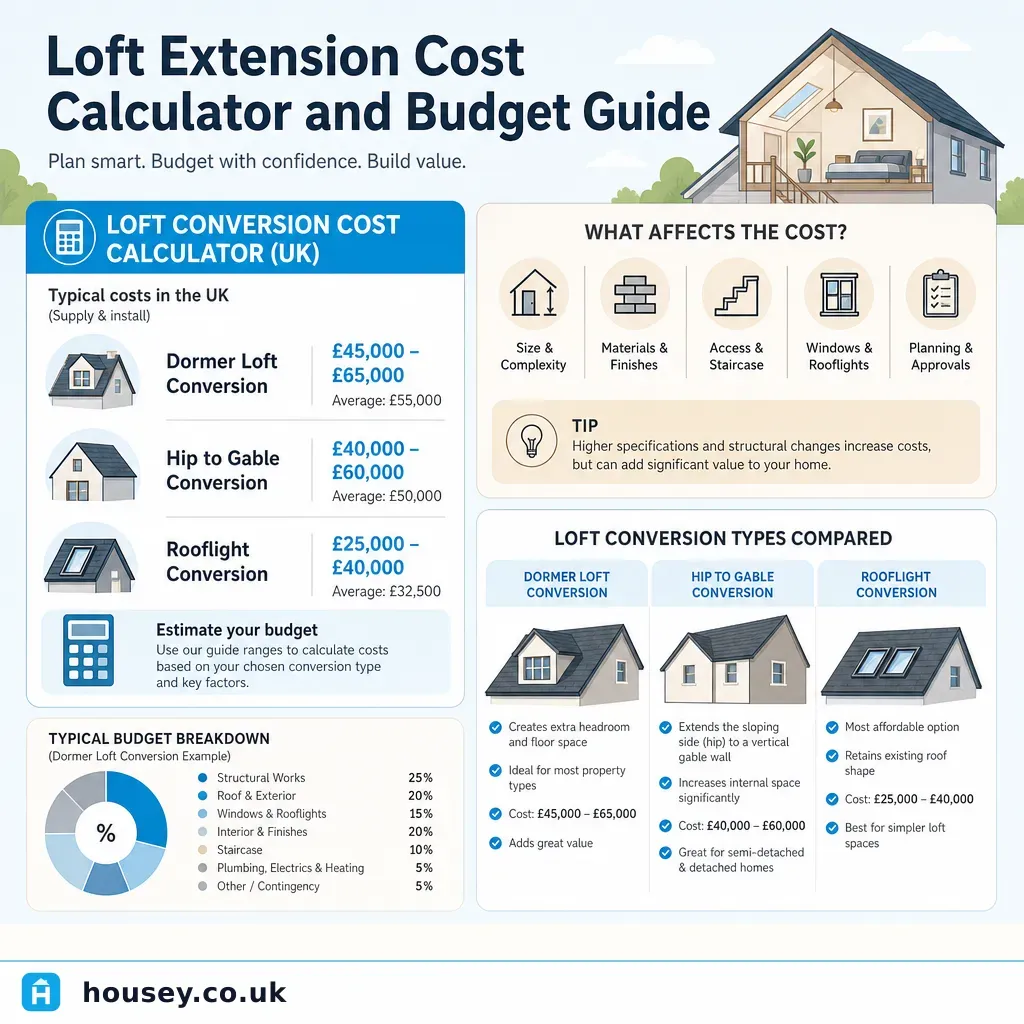
Loft Extension Cost Calculator and Budget Guide
Loft extension costs in the UK typically range from £15,000 for a basic Velux conversion to £75,000 or more for a mansard or L-shaped dormer.