Loft Extension Cost Calculator and Budget Guide
By Housey · Last reviewed 7th of May 2026
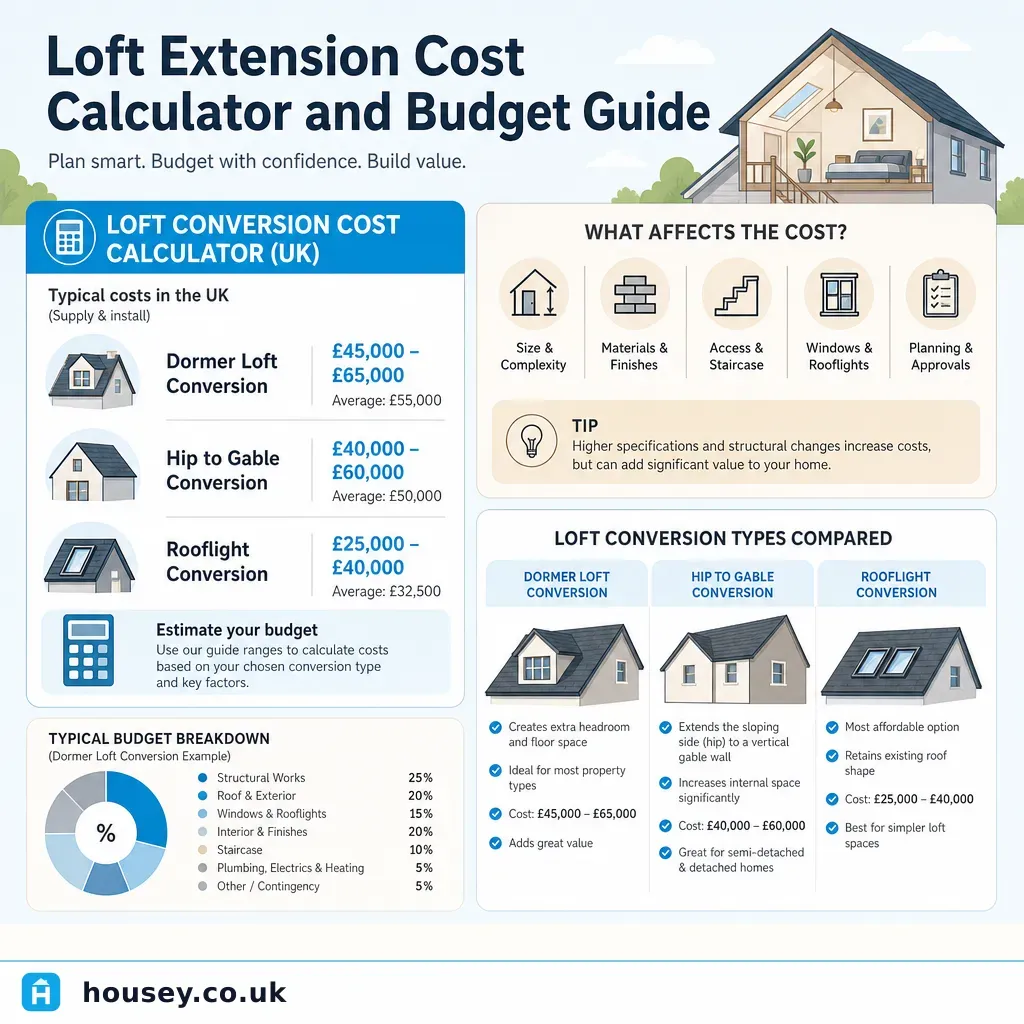
Loft Extension Cost Calculator and Budget Guide
Loft extensions and conversions are among the most cost-effective ways to add usable floor space to a UK home without moving, which is why they remain one of the most popular home improvement projects. Whether you are planning a dormer on a 1930s semi or a mansard on an Edwardian terrace, the cost depends heavily on the conversion type, structural requirements, and the level of finish you choose. Getting accurate budget expectations before approaching builders helps you compare quotes meaningfully and avoid mid-project surprises.
Key points
- Indicative UK costs range from £15,000–£25,000 for a basic Velux (roof-light) conversion to £45,000–£80,000 or more for a full mansard or L-shaped dormer, depending on size and specification (indicative UK costs, last reviewed 2026-05-07).
- Most loft conversions in England fall under permitted development rights if the volume increase does not exceed 40 m³ for terraced houses or 50 m³ for detached and semi-detached properties; the current fee for a householder planning application in England is £258 (as of December 2023).
- Building Regulations approval is required for all loft conversions regardless of planning status — the application typically costs £500–£900 depending on the local authority and whether you use the full plans or building notice route.
- Party wall agreements under the Party Wall etc. Act 1996 are often required on terraced and semi-detached properties when structural work involves shared walls or floor joists.
- VAT at 20% applies to labour and materials for most loft conversions; properties that have been empty for two or more years may qualify for a reduced 5% rate on certain qualifying works.
What affects the cost of a loft extension?
The single biggest cost driver is the conversion type, but several other factors combine to determine the final quote.
Conversion type: A Velux or roof-light conversion involves minimal structural change — insulating between rafters, adding roof windows, and fitting a staircase. It is the most affordable option but only suits roofs with sufficient head height (usually at least 2.2 m from floor to ridge). Dormer, hip-to-gable, and mansard conversions require structural alterations to the roof itself, which is where costs rise significantly.
Structural complexity: If the existing floor joists are inadequate to carry the live load of a bedroom or bathroom, they must be strengthened. This is common in properties built before the 1970s. A structural engineer's assessment is normally part of the design stage.
Property size and roof pitch: A larger floor plate means more materials and labour hours. Steeper roof pitches can sometimes provide better head height but complicate scaffolding requirements.
Specification: Bathroom en suites, dormers with Juliet balconies, bespoke joinery, and high-performance insulation all add cost. A standard specification may include basic sanitaryware and off-the-shelf windows — extras must be costed separately.
Party wall obligations: A party wall surveyor's fee (typically £700–£1,500 per adjoining neighbour) is often overlooked in initial budgets.
Location: Contractors in London and the South East typically charge 15–30% more than the national average for equivalent specification work.
Loft conversion types: cost comparison
The table below gives indicative UK cost ranges by conversion type. These are contractor quotes for a typical two-storey house converting one to two rooms in the loft; fit-out costs including bathroom, flooring, and decoration are included at the upper end of each range. All figures are indicative UK costs, last reviewed 2026-05-07.
Conversion type | Typical cost range | Best for | Key limitation |
|---|---|---|---|
Velux / roof-light | £15,000–£25,000 | Properties with adequate existing head height | No increase in roof volume; head height constrained by existing structure |
Rear dormer | £35,000–£55,000 | Terraced and semi-detached homes; maximises rear floor area | Usually requires planning permission if front-facing or in a conservation area |
Hip to gable | £40,000–£65,000 | Semi-detached and detached homes with hipped roofs | Requires replacement of the hipped end wall; more complex structural work |
L-shaped dormer | £50,000–£80,000 | Victorian and Edwardian terraces with rear outriggers | Spans two roof planes; higher design and structural cost |
Mansard | £45,000–£75,000 | Maximising floor area; urban sites where permitted | Most structural complexity; nearly always requires planning permission |
Which conversion type suits your home?
Use this decision tree as a starting point before speaking with an architect or contractor.
- Choose Velux if the floor-to-ridge height is at least 2.2 m and you do not need to maximise floor area.
- Choose a rear dormer if you need more headroom or floor area and the roof slopes away from the street at the rear.
- Choose hip to gable if you have a hipped-end roof on a semi-detached or detached property and want to create a full room rather than a confined space.
- Consider L-shaped dormer if your Victorian or Edwardian terrace has a back addition (outrigger) and you want to maximise floor area across both roof planes.
- Consider mansard if you want the maximum usable floor area, particularly in inner-city locations where roof space is limited.
- Ask a structural engineer or RICS-chartered surveyor if the roof shows signs of movement, spreading, or previous amateur alterations before committing to a conversion type.
- Check with your local planning authority if your home is in a conservation area, is listed, or if previous extensions may have used up permitted development volume.
Budget planning: what to include
Many homeowners underestimate total project cost by focusing on the main build quote and overlooking ancillary costs. A realistic budget should include all of the following:
- Architect or architectural technologist drawings: £1,500–£5,000 depending on complexity.
- Structural engineer's calculations: £500–£1,500.
- Planning application fee (where required): £258 in England.
- Building regulations application: £500–£900.
- Party wall surveyor fee (if applicable): £700–£1,500 per adjoining owner.
- Staircase: a basic prefabricated loft stair costs from £800 fitted; a bespoke carpentry staircase can reach £5,000 or more.
- Bathroom or en suite: £3,000–£8,000 depending on specification.
- Decoration and flooring: typically £1,500–£4,000 for a standard two-room conversion.
- Contingency fund: allow 10–15% of the main build cost for unforeseen structural or access issues.
Worked example: 1930s semi-detached in the East Midlands
A homeowner with a typical 1930s semi-detached with a hipped rear roof wants to add one double bedroom and an en suite. The floor-to-ridge height is 2.4 m, but the hipped end limits headroom at the sides.
A hip-to-gable dormer is chosen to square off the roof and maximise floor area. Approximate budget build-up:
Item | Indicative cost |
|---|---|
Architectural drawings and planning support | £2,500 |
Structural engineer | £800 |
Planning application (householder) | £258 |
Building regulations (full plans route) | £650 |
Party wall surveyor (one shared wall) | £900 |
Main build: hip-to-gable conversion, dormer, insulation, roof windows | £38,000 |
Staircase (bespoke) | £3,500 |
En suite bathroom | £5,500 |
Decoration and flooring | £2,500 |
Contingency (10%) | £5,000 |
Total indicative budget | ~£59,600 |
Indicative UK costs, last reviewed 2026-05-07. Actual quotes will vary by location, contractor, and specification.
Red flags when reviewing loft conversion quotes
Be cautious if a quote:
- Omits line items for structural engineer fees, building control, or party wall — these costs exist whether or not the contractor includes them.
- Guarantees permitted development without reviewing the planning history or site constraints of the property.
- Does not mention insulation standard or compliance with Building Regulations Part L.
- Lacks detail on staircase design — a staircase that does not meet minimum pitch requirements under Approved Document K may fail building control sign-off.
- Requires a deposit of more than 10–15% before work commences, with no payment milestone schedule.
- Has no provision for structural alterations if joist strengthening is found to be necessary during the build.
When to get professional help
For any loft conversion beyond a simple Velux installation, instruct qualified professionals at the outset:
- A RIBA-chartered architect or CIAT-registered architectural technologist for design and planning drawings.
- A chartered structural engineer (IStructE or ICE member) if the conversion requires joist strengthening, steel beams, or if cracks or roof movement are already visible.
- A RICS-chartered party wall surveyor if the property is semi-detached or terraced, to advise on Party Wall etc. Act 1996 obligations.
- An approved inspector or local authority building control (LABC) to formally inspect and sign off the works at key stages.
Do not rely on a contractor's verbal assurance alone regarding planning or building regulations compliance — always obtain written confirmation from the relevant authority.
How Housey can help
If you are ready to get quotes from qualified specialists, Housey can help you find and compare local contractors. Request quotes from loft conversion companies for a dedicated conversion project, or browse extension builders if your plans also include a ground-floor extension.
Frequently asked questions
Do I always need planning permission for a loft conversion?
Not always. In England, many loft conversions are permitted development provided the volume increase stays within 40 m³ (terraced houses) or 50 m³ (detached or semi-detached), materials match the existing house, and the conversion is not forward of the principal elevation. Conservation areas, listed buildings, and previous extensions that have already used up permitted development allowance can all remove this right. Always check with your local planning authority before starting work.
How long does a loft conversion take?
A standard dormer conversion typically takes 6–10 weeks from site start to practical completion. Design, planning, and building control approval can add 8–16 weeks before the build starts, so allow 4–6 months in total from first appointment of a designer to completion. Larger or more complex conversions requiring planning permission typically take longer.
Does a loft conversion add value to my home?
Loft conversions are widely cited as one of the higher-value home improvements in the UK, with many estate agents estimating a 10–20% increase in property value, though this varies by location, property type, and conversion quality. A bedroom with an en suite generally adds more value than a storage-only space. Consult a local estate agent or RICS-registered valuer for property-specific guidance.
What building regulations apply to loft conversions?
Loft conversions must comply with Building Regulations covering: structure (Approved Document A), fire safety (Part B — including protected escape routes and fire doors), insulation and energy efficiency (Part L), and stair design (Part K). Habitable loft rooms also require adequate ventilation under Part F. Building control must inspect key stages and issue a completion certificate at the end.
Can I live in the house during a loft conversion?
Usually yes. Most loft conversions are carried out via external scaffolding and the roof is open only briefly during structural works. Contractors typically work in a way that minimises disruption to the floors below. Dust and noise are inevitable, however, and you should agree working hours with the contractor before the build begins.
Sources and further reading
- Planning Portal — Loft conversions — Planning Portal
- Building Regulations Approved Document A (Structure) — GOV.UK
- Building Regulations Approved Document B (Fire safety) — GOV.UK
- Building Regulations Approved Document L (Conservation of fuel and power) — GOV.UK
- Party Wall etc. Act 1996 — Explanatory Booklet — GOV.UK
- Fees for planning applications in England — GOV.UK
Useful next reads
 Improvement & Build
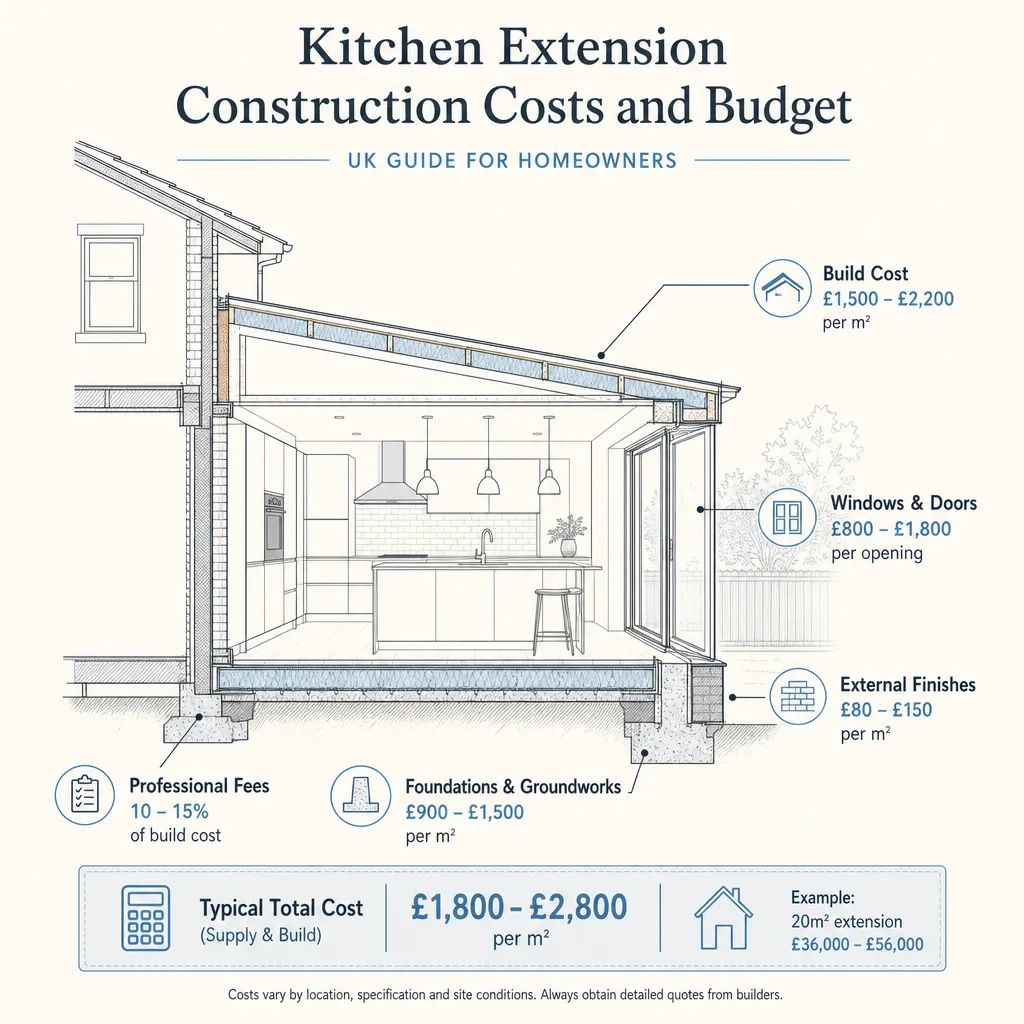
Kitchen Extension Construction Costs and Budget
A single-storey kitchen extension in the UK typically costs £25,000–£60,000 for build work, rising to £80,000+ for a large rear extension in London or the South East.
 Improvement & Build
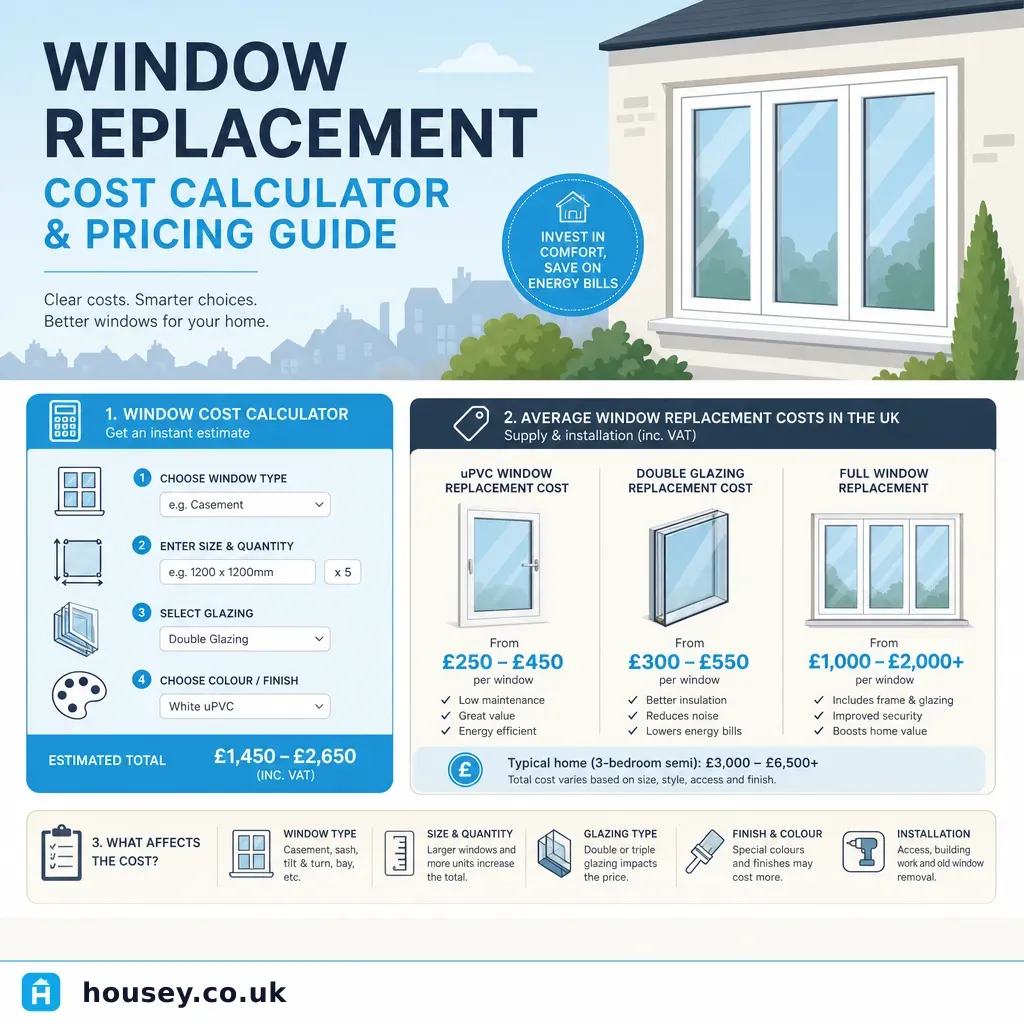
Window Replacement Cost Calculator and Pricing Guide
Replacing a standard uPVC double-glazed casement window in the UK typically costs £400–£800 supply and fit.
 Improvement & Build
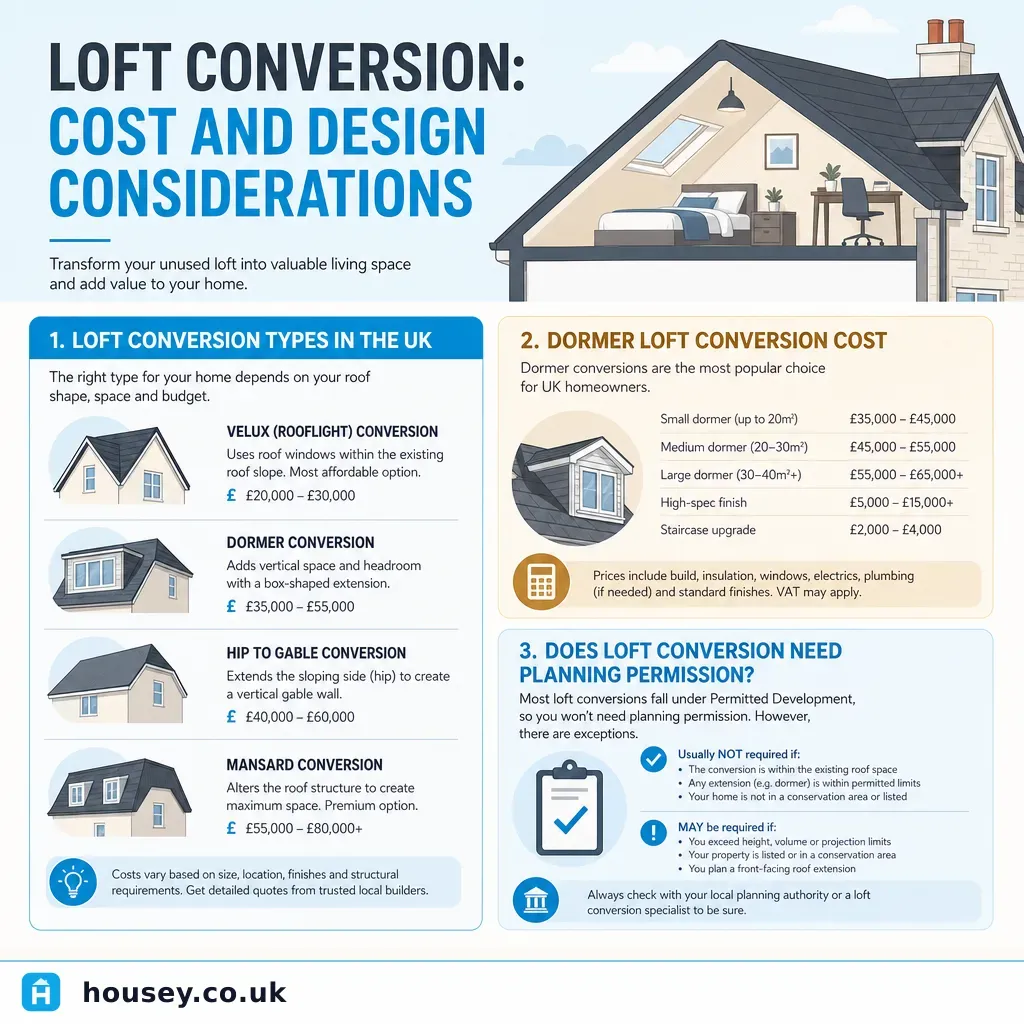
Loft Conversion: Cost and Design Considerations
UK loft conversion costs range from roughly £15,000 for a rooflight conversion to £70,000 or more for a full mansard.
 Improvement & Build
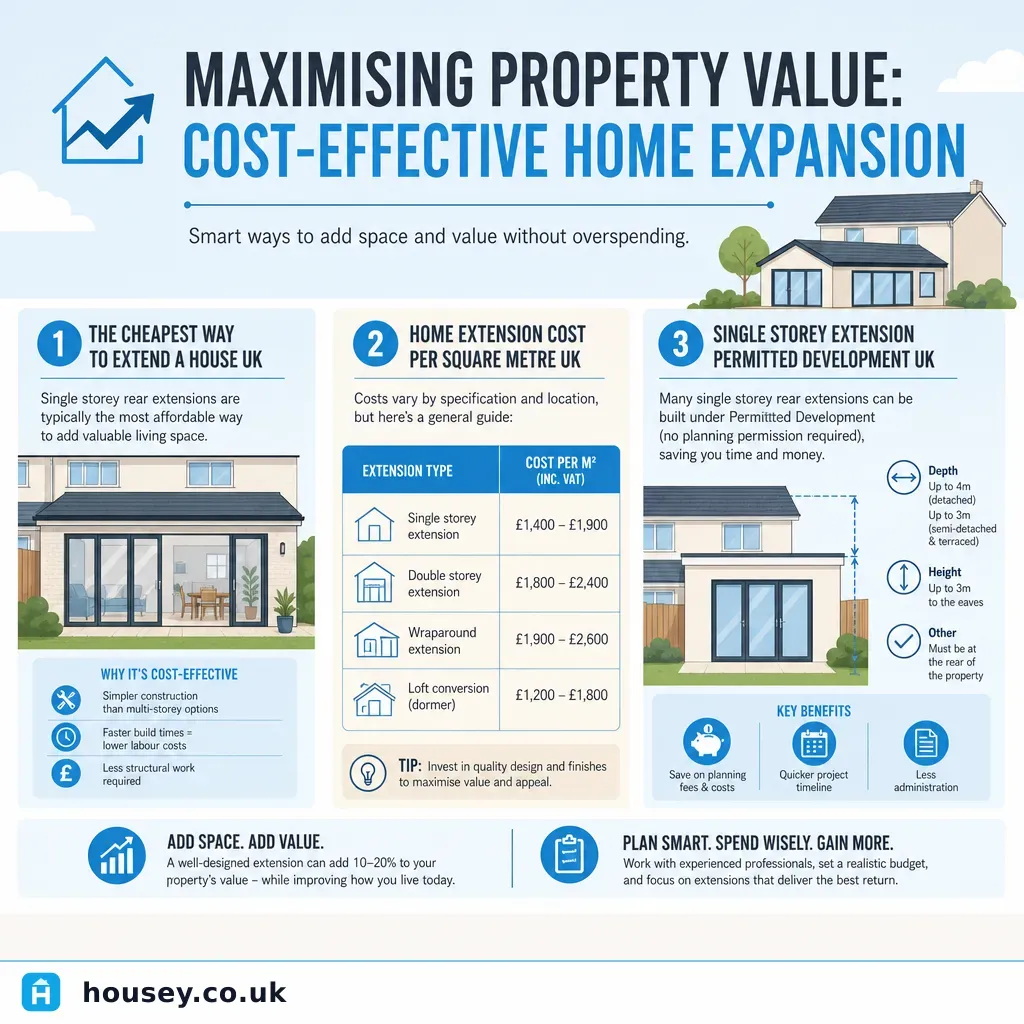
Maximising Property Value: Cost-Effective Home Expansion
A cost-effective home extension in the UK typically starts with a single-storey rear extension under permitted development, using an extension builder or design-and-build firm to control costs.
 Improvement & Build
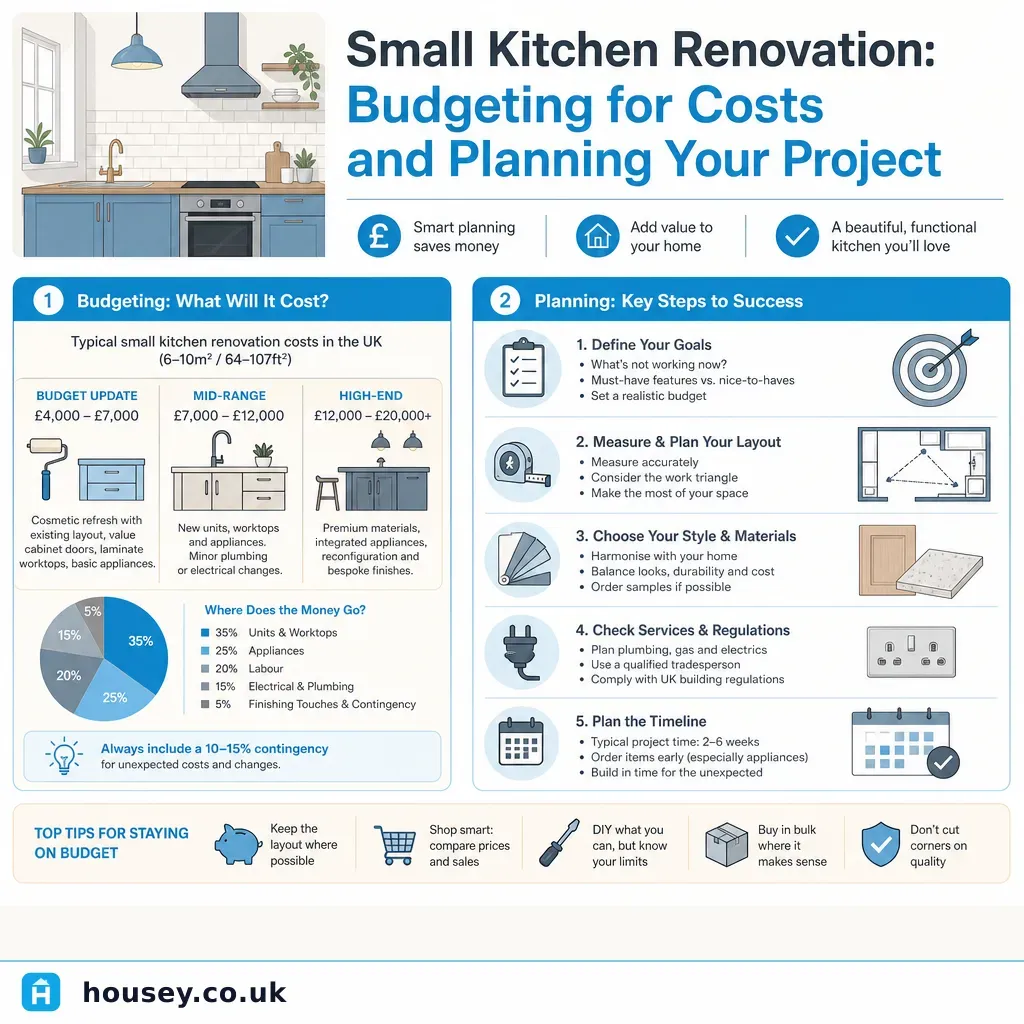
Small kitchen renovation: budgeting for costs and planning your project
A small kitchen renovation in the UK typically costs £5,000–£15,000 for a full refresh including new units, worktops, tiling, and appliances, though costs vary widely by specification, region, and whether structural changes or rewiring are involved.