Finding a Qualified Roofer for Roof Repairs
By Housey · Last reviewed 31st of May 2026
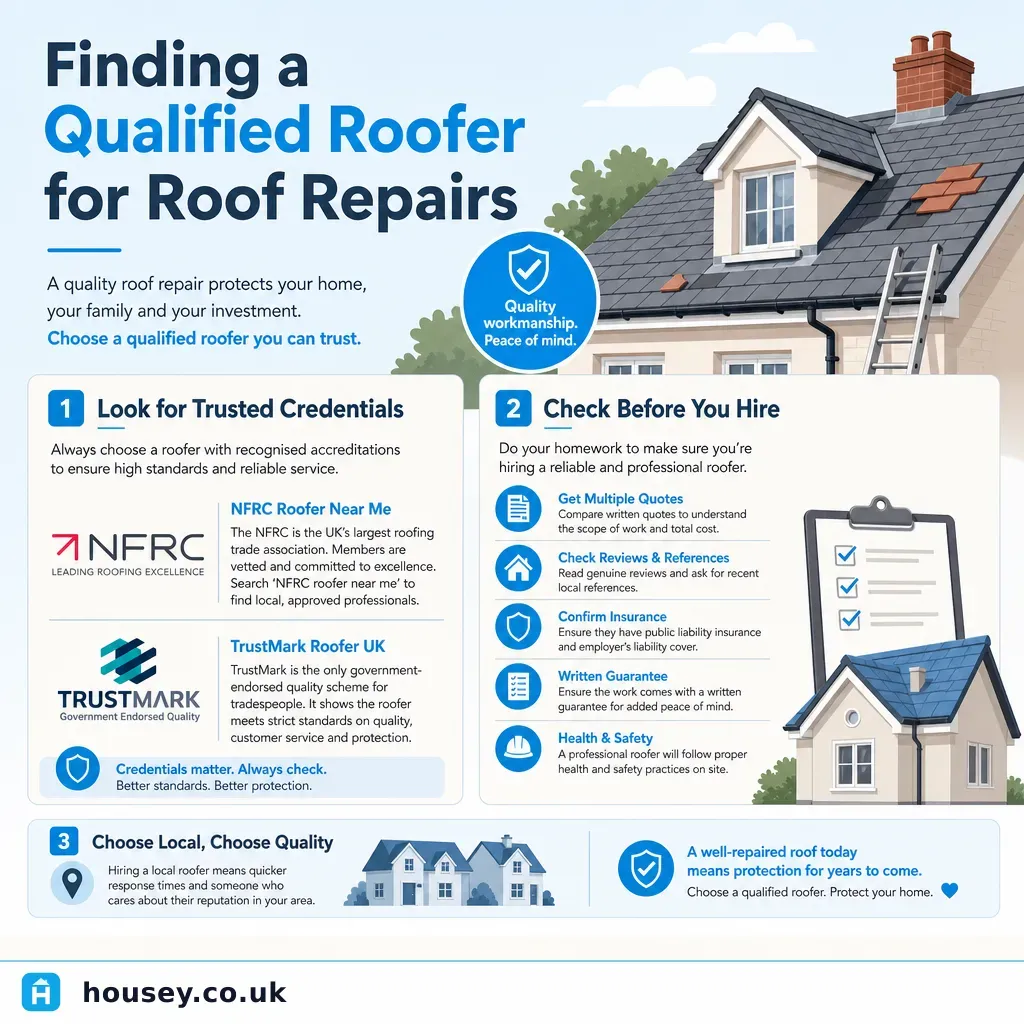
Finding a Qualified Roofer for Roof Repairs
Roof problems rarely announce themselves at a convenient time — a missing tile after a storm, a growing damp patch on an upstairs ceiling, or a failing valley gutter spotted during a survey are all common triggers for finding a roofer quickly. Choosing the wrong contractor is a costly mistake: poor repairs can fail within months, and some roof work — particularly flat roof replacement, chimney repairs, and valley gutter renewal — requires specific material knowledge and safe working practice at height.
Key points
- The National Federation of Roofing Contractors (NFRC) is the UK's largest roofing trade body; member companies must carry a minimum of £5 million public liability insurance and meet defined technical standards.
- TrustMark is a government-endorsed quality scheme covering roofing and many other trades; registered firms are assessed on technical competence, financial probity, and customer service.
- Roofing work on a standard domestic property does not usually require planning permission, but repairs on a listed building or in a conservation area using different materials may need listed building consent or prior approval.
- Always request written proof of public liability insurance — minimum £2 million, ideally £5 million — and check the policy expiry date before any work begins.
- Three written, itemised quotes is the standard recommendation for any significant roof repair or replacement; quotes should separate materials, labour, scaffolding, and waste disposal.
How to check a roofer's credentials
Before instructing any roofing contractor, verify the following:
- NFRC membership — search the member directory at nfrc.co.uk. Members carry minimum £5 million public liability insurance as a scheme requirement.
- TrustMark registration — search at trustmark.org.uk. This government-endorsed scheme assesses technical standards and business conduct.
- CompetentRoofer scheme — a government-authorised self-certification scheme that allows registered roofers to self-certify certain compliant work without a separate building control application. The register is at competentroofer.co.uk.
- Insurance documents — ask for the current public liability insurance certificate. For firms with employees, also check employers' liability insurance and note the policy expiry date.
- VAT registration — if a contractor charges VAT on a larger job, verify they are actually VAT-registered; unregistered traders should not be collecting VAT from customers.
Types of roof repair: a comparison
Repair type | When needed | Materials typically involved | Notes |
|---|---|---|---|
Tile or slate replacement | Missing, cracked, or slipped tiles | Clay, concrete, or natural slate | Like-for-like matching matters on older roofs |
Lead flashing repair | Cracked or lifted flashing at chimney, dormer, or parapet | Lead sheet to BS EN 12588 | Step flashing and back gutter often combined |
Valley gutter repair | Blocked, corroded, or leaking valley | GRP, lead, or zinc | Structural deck may need inspection at the same time |
Flat roof repair | Blistering, cracking, or ponding on felt, asphalt, or EPDM | Felt, GRP, EPDM | Full replacement may be more cost-effective on older roofs |
Chimney repointing | Crumbling mortar on stack | Lime or sand-cement mortar | Lime mortar generally preferred for pre-1920 stacks |
Gutter and fascia repair | Leaking joints, sagging, or rotted fascia | uPVC, cast iron, or aluminium | Often combined with a roofline inspection |
Red flags when hiring a roofer
Stop and ask very specific questions — or walk away — if a contractor:
- Knocks on your door unsolicited immediately after a storm and says the roof is dangerously damaged.
- Asks for a large cash deposit (more than 25–30% of the total job value) before any work starts.
- Cannot provide a written quote that itemises materials, labour, and scaffolding separately.
- Refuses to show insurance certificates or provide a verifiable business address.
- Quotes significantly lower than every other contractor without a clear explanation.
- Pressures you to make a decision on the same day.
- Has no verifiable reviews or previous customers you can contact.
Cold-call roofers — sometimes called storm chasers — operate widely across the UK after high winds or heavy rain. The NFRC advises homeowners never to use unsolicited doorstep traders for roofing work.
What to ask before accepting a roofing quote
- What exactly is included in the quoted price — materials, labour, scaffolding, waste disposal, and VAT?
- What specific materials will be used, and are they like-for-like replacements or alternatives?
- Are you NFRC-registered, TrustMark-registered, or on the CompetentRoofer scheme?
- Can I see your current public liability insurance certificate?
- Who will carry out the work — your own employees or subcontractors?
- Will the work require building regulations sign-off, and if so, how will this be handled?
- What workmanship guarantee do you offer, and is it backed by insurance?
- How will you protect my property during the works?
- What is the approximate timeline, and when can you start?
Does roof repair need planning permission?
Most like-for-like roof repairs to standard houses in England do not need planning permission under the permitted development rights in the Town and Country Planning (General Permitted Development) (England) Order 2015. However:
- Listed buildings require listed building consent for any repairs, including like-for-like work.
- Conservation areas may restrict changes to external appearance — check with your local planning authority before using different materials.
- New flat roof extensions may need planning permission if they are additions rather than repairs to an existing flat roof.
Rules in Wales, Scotland, and Northern Ireland differ from those in England. If in doubt, contact your local planning authority before work begins.
When to get professional help
Seek structural or specialist advice — beyond a general roofer — in these circumstances:
- Ceilings or upper floors show widespread damp with no single obvious roof source, suggesting possible structural or waterproofing complexity.
- A surveyor or structural engineer has noted movement in the roof structure or rafters.
- The roof is a historic or unusual construction: thatched, copper, zinc, green roof, or an early flat roofing system.
- The property is listed or in a conservation area — seek advice from a conservation architect or your local planning authority before proceeding.
- You suspect rot in the roof deck or structural timbers beneath the covering.
For all work at height, the contractor must comply with the Work at Height Regulations 2005, using appropriate scaffolding, tower, or edge protection. Never accept assurances that scaffolding is unnecessary for significant roof work.
How Housey can help
Housey makes it straightforward to find and compare vetted qualified roofers in your area. Submit a single request with your repair details and receive quotes from accredited local contractors — reviewed by previous customers and verified for insurance and scheme membership — so you can compare on a like-for-like basis.
Frequently asked questions
Does roof repair need planning permission in the UK?
Like-for-like roof repairs to standard houses generally fall under permitted development in England and do not need planning permission. Exceptions include listed buildings, properties in conservation areas, and work that materially changes the roof's appearance or materials. Always check with your local planning authority if you are uncertain before proceeding.
What accreditations should a roofer have?
Look for NFRC membership, TrustMark registration, or CompetentRoofer scheme registration. These indicate the contractor has been vetted for technical standards, insurance, and business practice. Membership is not a guarantee of quality in every case, but it substantially reduces the risk of instructing an unvetted trader.
How do I know if my roof needs repairing or replacing?
Signs that repair may be sufficient include a small number of displaced tiles, isolated flashing failure, or a single leaking area. Signs replacement may be more appropriate include widespread tile failure, significant felt degradation, sagging in the roof structure, or a flat roof over 20 to 25 years old with widespread deterioration. A reputable roofer should advise honestly.
What should a roofing quote include?
A written quote should itemise the scope of work, specific materials to be used, labour cost, scaffolding or access costs, waste disposal, VAT, any exclusions, payment schedule, and the contractor's guarantee terms. Avoid any quote given verbally or as a single lump sum without a clear breakdown of costs.
Sources and further reading
- National Federation of Roofing Contractors — NFRC
- TrustMark scheme — TrustMark
- CompetentRoofer self-certification scheme — CompetentRoofer
- Work at Height Regulations 2005 — legislation.gov.uk
- Planning permission guidance — GOV.UK
Useful next reads
 Improvement & Build
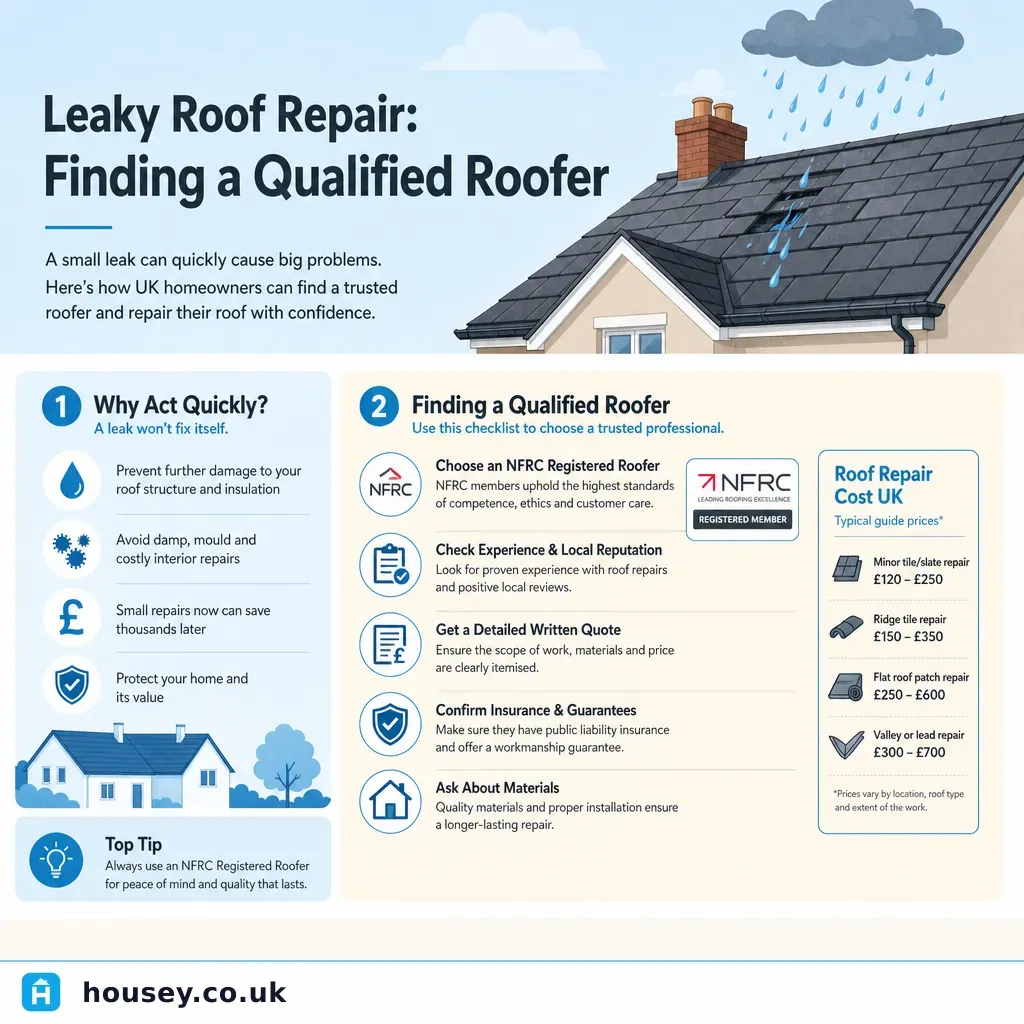
Leaky Roof Repair: Finding a Qualified Roofer
To find a qualified roofer for a leaking roof, check the NFRC member directory or search TrustMark-registered contractors.
 Improvement & Build
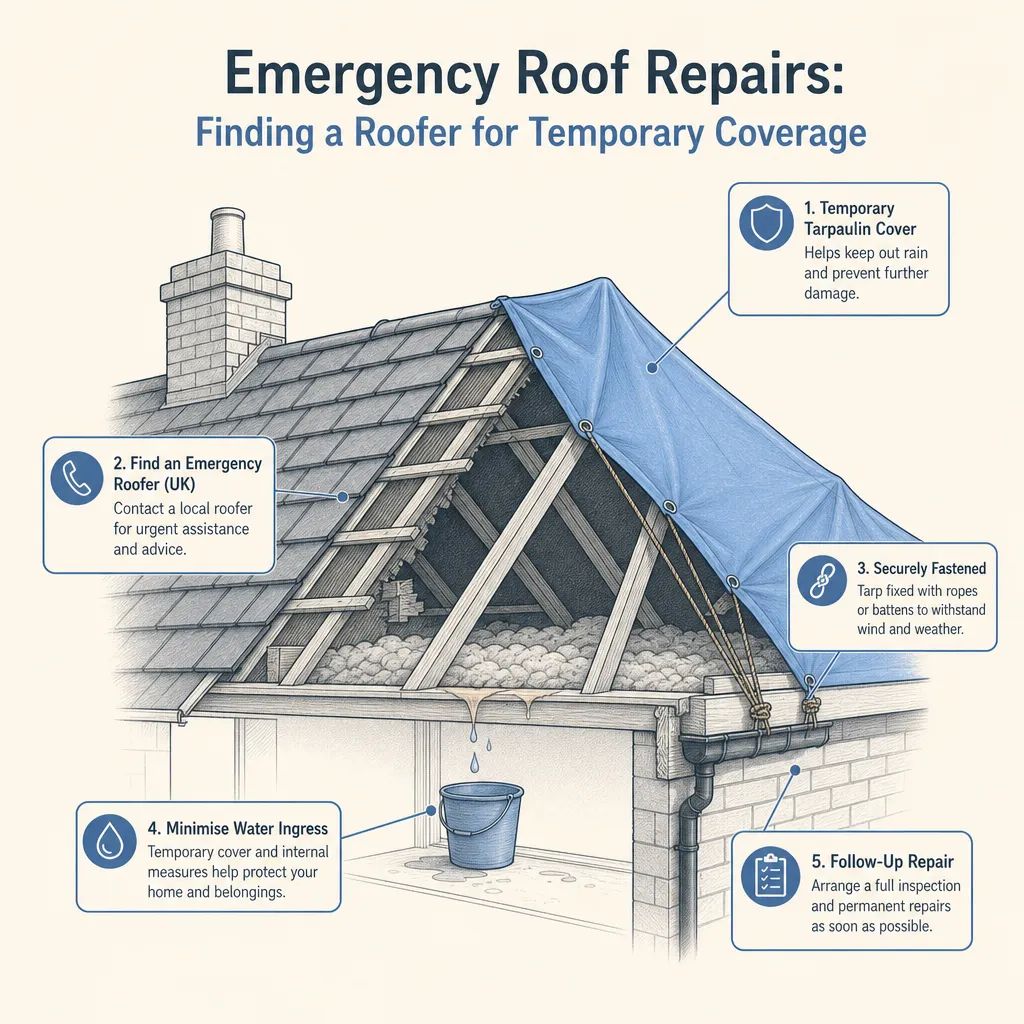
Emergency Roof Repairs: Finding a Roofer for Temporary Coverage
After storm or impact damage, the immediate priority is weatherproofing, not a permanent repair.
 Improvement & Build
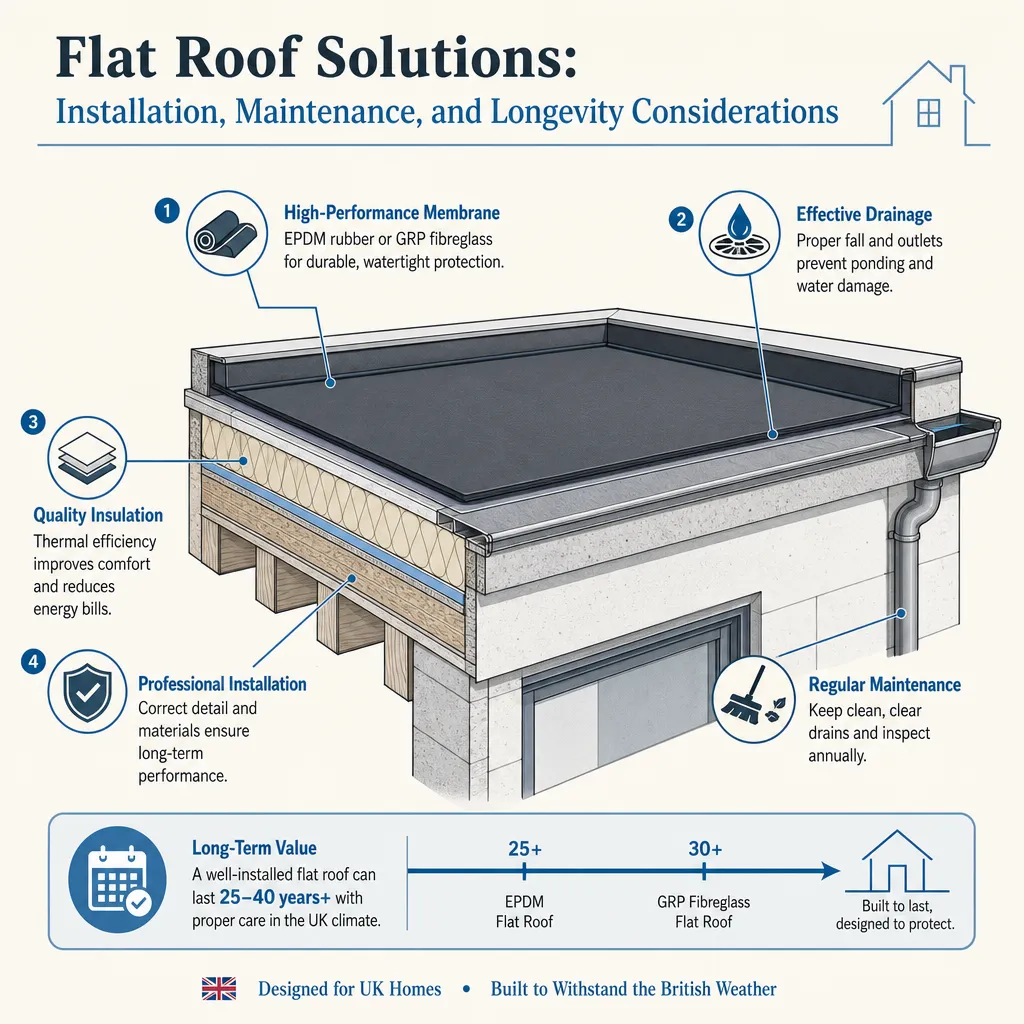
Flat Roof Solutions: Installation, Maintenance, and Longevity Considerations
Flat roofs use several waterproofing systems — EPDM rubber, GRP fibreglass, liquid-applied coatings, modified bitumen felt, lead, and zinc — each with different lifespans and installation requirements.
 Improvement & Build
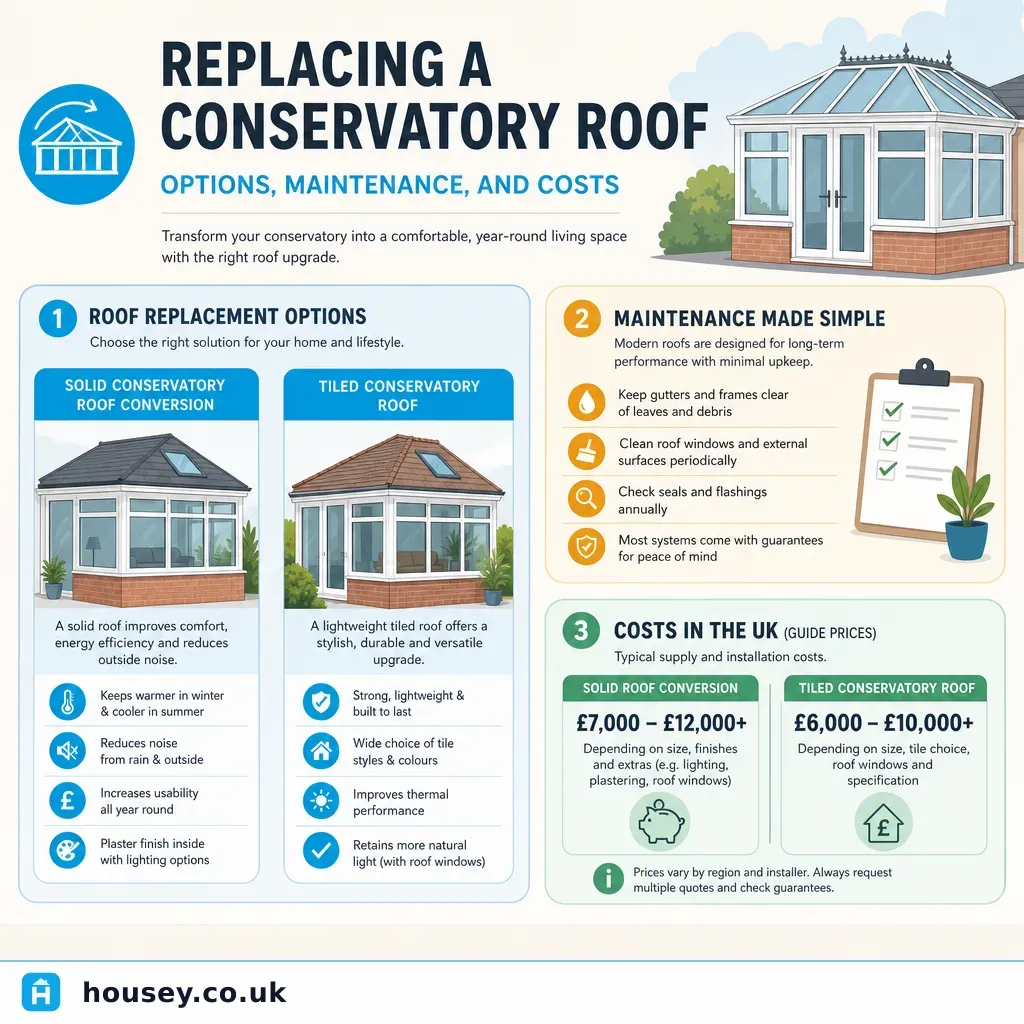
Replacing a Conservatory Roof: Options, Maintenance, and Costs
Conservatory roofs can be replaced with polycarbonate, glass, or solid tiled systems.
 Improvement & Build
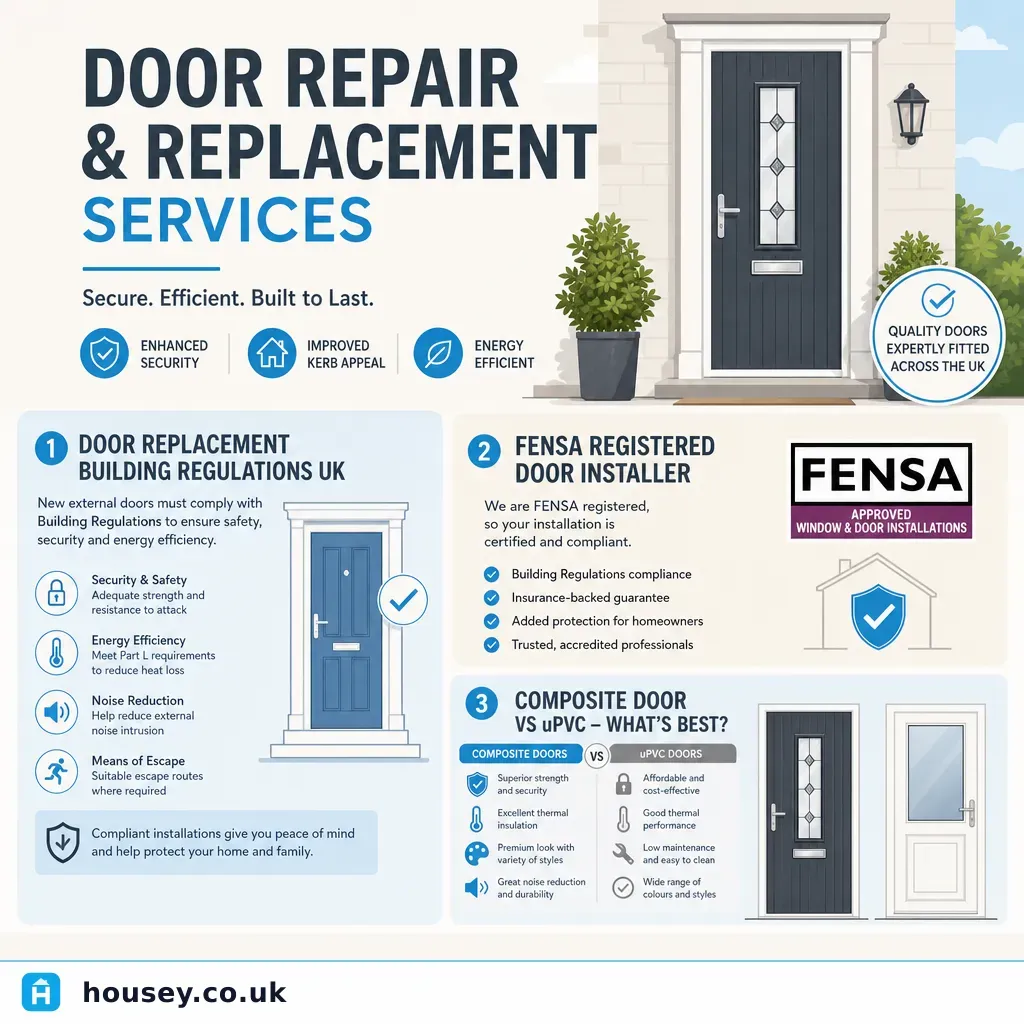
Door Repair and Replacement Services
For most UK homes, door repair is cost-effective when the frame is sound and the fault is mechanical.