Leaky Roof Repair: Finding a Qualified Roofer
By Housey · Last reviewed 31st of May 2026
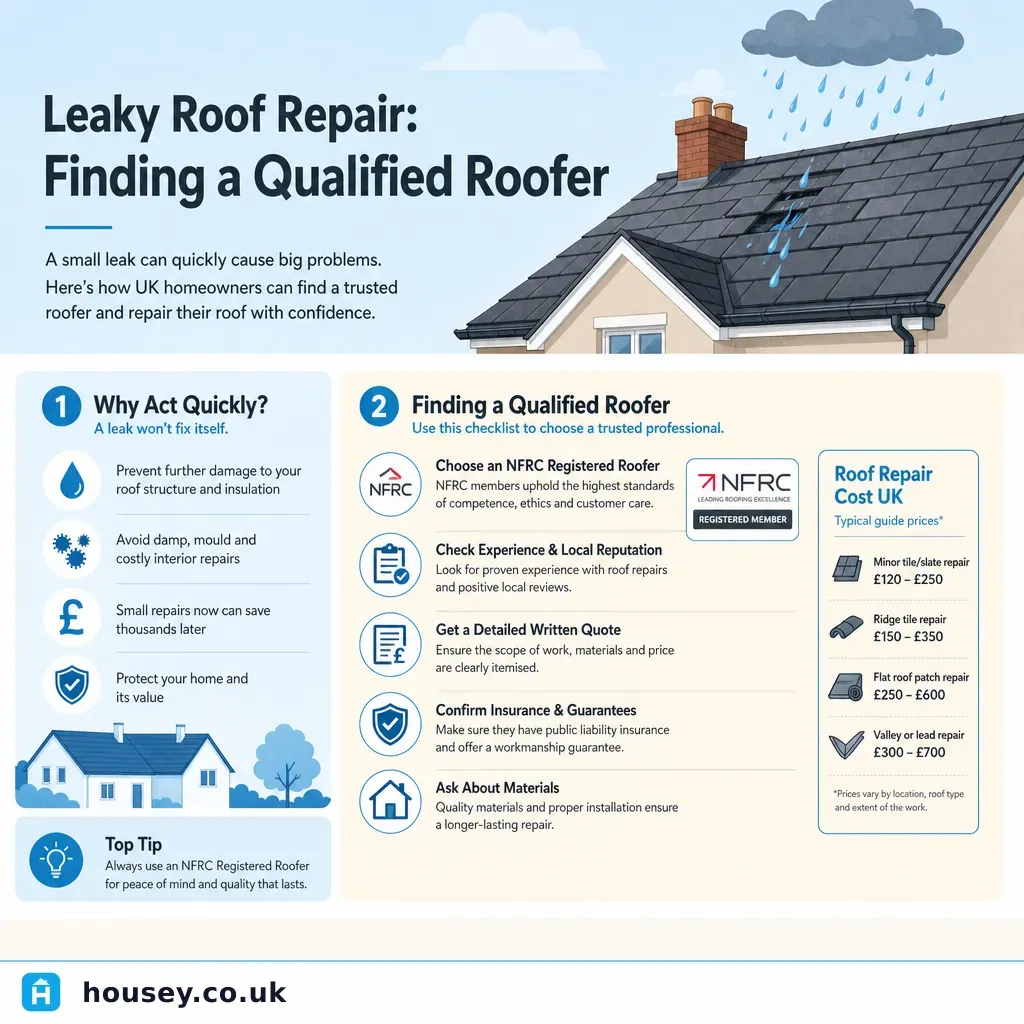
Leaky Roof Repair: Finding a Qualified Roofer
A roof leak is one of those home problems that rewards swift action. Water ingress that appears minor can, within weeks, cause damage to insulation, roof timbers, plasterwork, and electrical fittings that costs far more to rectify than the original repair would have. UK homeowners most commonly discover a leak through ceiling staining, damp patches in the loft, or water dripping during heavy rain — and the pressure to act quickly can make it tempting to accept the first quote that arrives, often from a trader who knocked unsolicited.
Key points
- The National Federation of Roofing Contractors (NFRC) is the UK's principal roofing trade body; using an NFRC member provides access to a dispute resolution scheme and a workmanship warranty.
- TrustMark is the government-endorsed quality mark for tradespeople; roofers carrying TrustMark accreditation have been independently assessed on quality, trading practices, and customer service standards.
- A temporary emergency repair — tarpaulin, temporary sealant — does not replace a permanent repair and may affect an insurance claim if a permanent fix is unduly delayed.
- The most common causes of UK roof leaks are: missing or slipped slates and tiles, failed lead or stepped flashing at chimney stacks or abutments, cracked or slipped ridge tiles, and blocked or failed valley gutters.
- Roofers who knock unsolicited on your door offering to inspect or repair your roof are a recognised consumer protection concern; always verify credentials independently before instructing.
What is causing the leak? Common causes in UK homes
Understanding the likely source before a roofer arrives helps you ask better questions and assess whether the diagnosis and quote you receive is plausible.
Symptom | Likely cause | Likely repair |
|---|---|---|
Damp patch on ceiling directly below the ridge | Cracked or displaced ridge tiles; failed mortar bed | Re-bedding or dry-ridge system installation |
Staining at ceiling edges near an external wall | Blocked gutters or failed gutter joint causing overflow | Gutter clearance and/or gutter section replacement |
Damp patch around the chimney breast | Failed lead flashing or eroded pointing at chimney base | Lead flashing renewal or repointing |
Water ingress at a single point after heavy rain | Slipped, cracked, or missing tile or slate | Tile or slate replacement; check for broken battens beneath |
Widespread damp across the loft after rain | Multiple slipped tiles, failed roofing felt, or perished underlayment | Full inspection needed; underlayment may require replacement |
Leak at a roof window | Failed window seal or flashing kit | Roof window flashing kit renewal |
Finding a qualified roofer: what to look for
The roofing sector in the UK has a relatively low barrier to entry, which means standards vary considerably. These checks help you identify credible contractors.
Homeowner checklist: vetting a roofer before instructing
What to ask before accepting a quote
- What is your diagnosis of the leak source, and how did you reach that conclusion — did you inspect from the loft as well as the roof surface?
- Is the proposed repair temporary or permanent, and what is the expected service life?
- What materials will you use, and are they compatible with my existing roof covering and any heritage or planning requirements?
- Does the quote include removal and disposal of any replaced materials?
- Do you offer a workmanship guarantee, and for how long — is it backed by the NFRC warranty scheme?
- Are you NFRC-registered or TrustMark-accredited, and can I verify this online?
- Does the quote include scaffolding or access equipment, or is this a separate cost?
- Is VAT included in the quoted price?
Emergency vs non-emergency repairs
Not every roof leak requires immediate emergency action, but some do. Understanding the difference helps you prioritise and avoid paying unnecessary emergency call-out premiums.
Treat as urgent:
- Water is actively dripping onto or near electrical fittings, ceiling roses, or into a consumer unit
- The leak is through a large area of the roof rather than a single point
- Heavy rainfall is forecast and the ingress is significant or worsening
- Ceiling plaster is beginning to bulge, indicating significant water accumulation above
Can be scheduled as a routine repair:
- The leak is a slow seep into the loft space only, with no impact on habitable rooms
- The leak appears only during unusually heavy or driven rain and has been stable in extent for some time
- A temporary repair is already in place and holding satisfactorily
For urgent situations, contact an NFRC member who offers an emergency call-out service. Document the damage with photographs before any temporary works are carried out — this protects your position with an insurer.
Insurance considerations
Your buildings insurance may cover sudden, unexpected roof damage caused by a storm, a falling tree, or another insured event. Before authorising emergency repairs, check your policy and notify your insurer — most require you to act promptly to prevent further damage, but they may also wish to appoint a loss adjuster before permanent works begin.
Keep all quotations, invoices, and photographs from before, during, and after any repair. Failure to arrange a permanent repair within a reasonable period after a temporary fix can be used by an insurer to reduce or decline a subsequent claim. For guidance on what home insurance typically covers, the Association of British Insurers publishes plain-English consumer information.
When to get professional help
Most roof leak repairs are straightforward maintenance jobs for a competent roofer, but seek specialist input in these situations:
- If the leak is accompanied by visible deflection, sagging, or cracking in the roof structure, arrange a structural engineer's assessment before roofing works proceed — the underlying cause may be structural rather than weathertightness.
- If the property is listed or in a conservation area, replacement of traditional slate, clay tile, or lead with modern alternatives may require listed building consent; check with your local planning authority before instructing works.
- If the chimney stack requires significant rebuilding or recutting of lead flashings at a historic stack, look for a contractor with specific leadwork experience or a specialist chimney contractor rather than a general roofer.
How Housey can help
Housey makes it straightforward to find vetted qualified local roofers who can diagnose and repair leaks across all common UK roof types — from natural Welsh slate on a Victorian terrace to concrete interlocking tiles on a 1970s semi. Submit your job details once and receive up to four written quotes from assessed local contractors, making it easy to compare prices and credentials without the pressure of an unsolicited doorstep visit.
Frequently asked questions
How quickly should I repair a leaking roof?
Act as promptly as practical. Even a small, slow leak causes progressive damage to roof timbers, insulation, plasterwork, and electrics over weeks or months. If water is entering habitable rooms or reaching electrical fittings, treat it as urgent. A temporary repair is acceptable as an interim measure while a permanent fix is arranged, but should not be left indefinitely as it may affect an insurance claim.
Will my home insurance cover a leaking roof?
Buildings insurance typically covers sudden, unexpected damage — a storm-loosened slate or damage from a falling tree branch. It does not normally cover gradual deterioration or wear and tear, which many routine roof repairs fall under. Check your policy wording carefully, notify your insurer promptly, and photograph the damage before any repair work begins to support your claim.
How do I find a reputable roofer?
Start with the NFRC's online member directory at nfrc.co.uk or search TrustMark-registered roofers at trustmark.org.uk. Both registers allow you to verify current membership status before instructing. Avoid roofers who knock on your door offering unsolicited repair work — this is a common approach used by less reputable traders and is a recognised consumer protection concern.
Does a roof repair require building regulations approval?
Like-for-like repairs — replacing individual tiles or slates, renewing flashing, repointing ridge tiles — do not typically require building regulations approval. However, if work involves replacing the entire roof covering, adding or upgrading insulation, or any structural change to the roof construction, building regulations may apply. Check with your local building control authority if the scope of work extends beyond minor repairs.
Sources and further reading
- NFRC: Find a roofing contractor — National Federation of Roofing Contractors
- TrustMark: Find a tradesperson — TrustMark
- Citizens Advice: Getting building work done — Citizens Advice
- Association of British Insurers: Home insurance guidance — Association of British Insurers
- GOV.UK: Listed buildings — repairs and alterations — GOV.UK
Useful next reads
 Improvement & Build
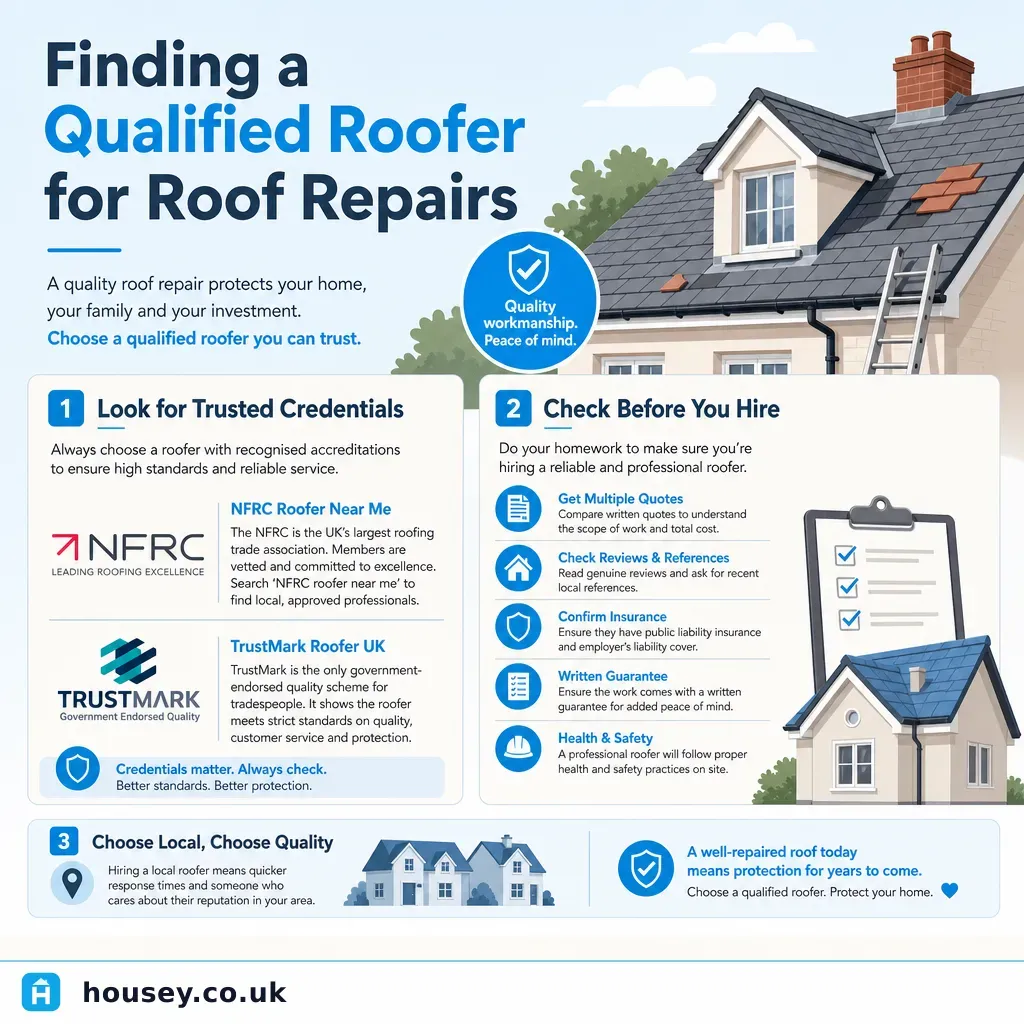
Finding a Qualified Roofer for Roof Repairs
Finding a qualified roofer means checking for NFRC membership, TrustMark registration, or CompetentRoofer accreditation and requesting at least three written, itemised quotes.
 Improvement & Build
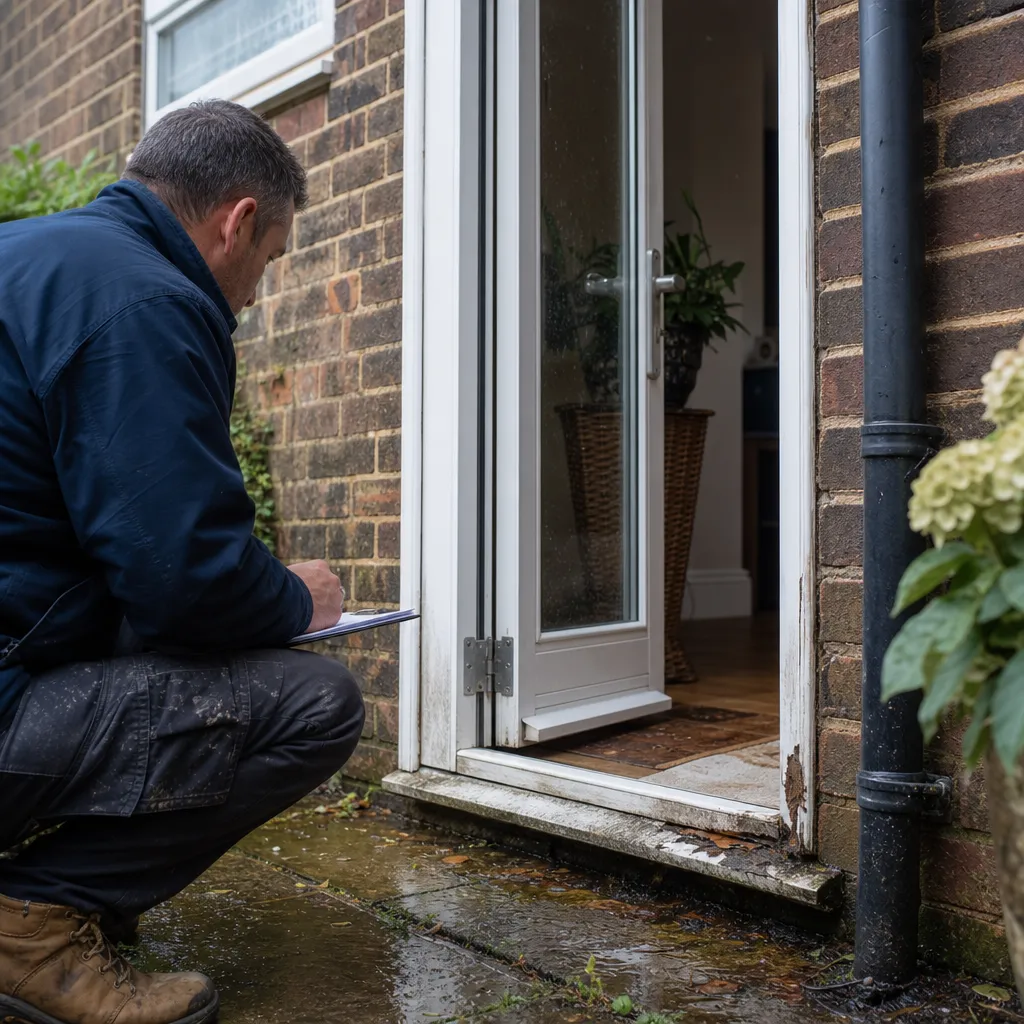
Fixing Leaking Back Doors and Water Ingress
Most leaking back doors in UK homes fail at one of three points: the threshold or door sill joint, the frame-to-masonry mastic seal, or the door weatherstrip.
 Improvement & Build
Door Repair and Replacement Services
For most UK homes, door repair is cost-effective when the frame is sound and the fault is mechanical.
 Improvement & Build
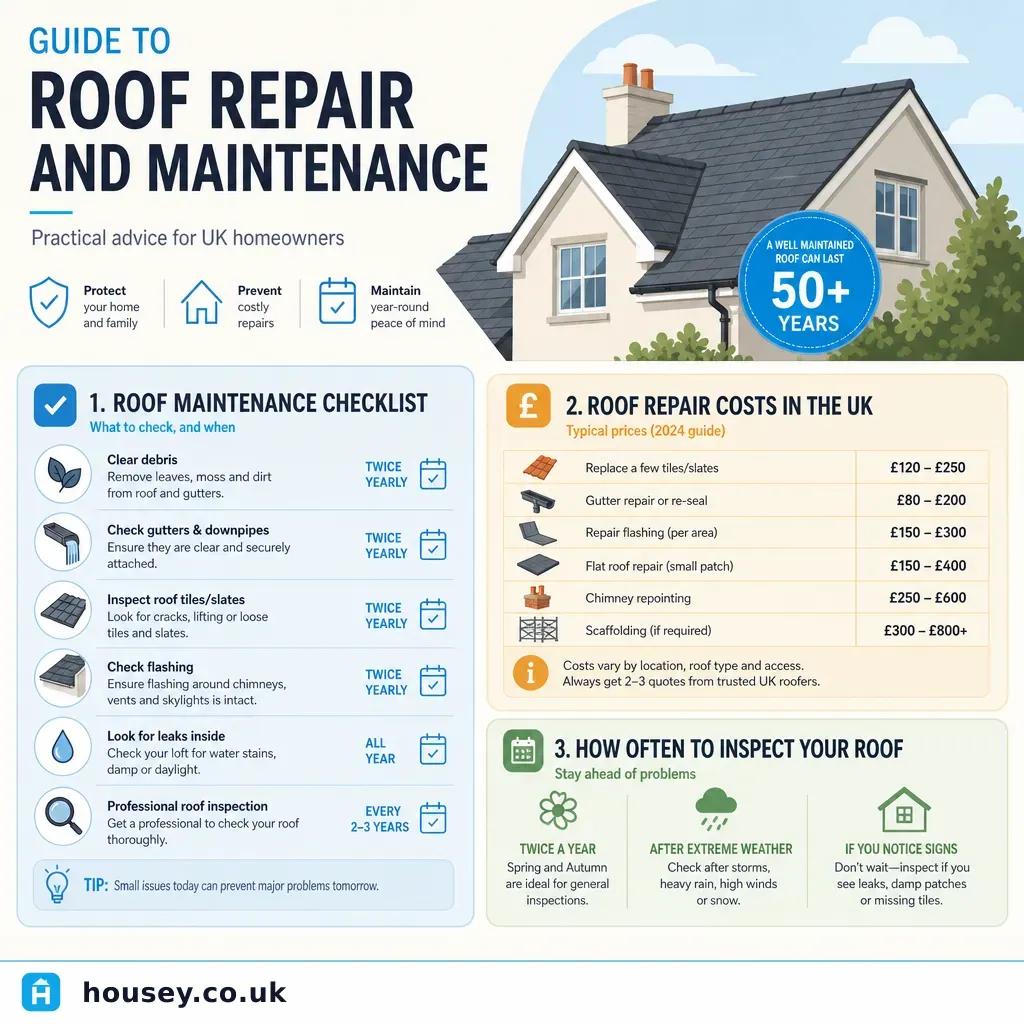
Guide to Roof Repair and Maintenance
Regular roof inspections every 3–5 years, prompt repair of damaged tiles and failed flashings, and annual gutter clearance are the core of effective UK roof maintenance.
 Improvement & Build
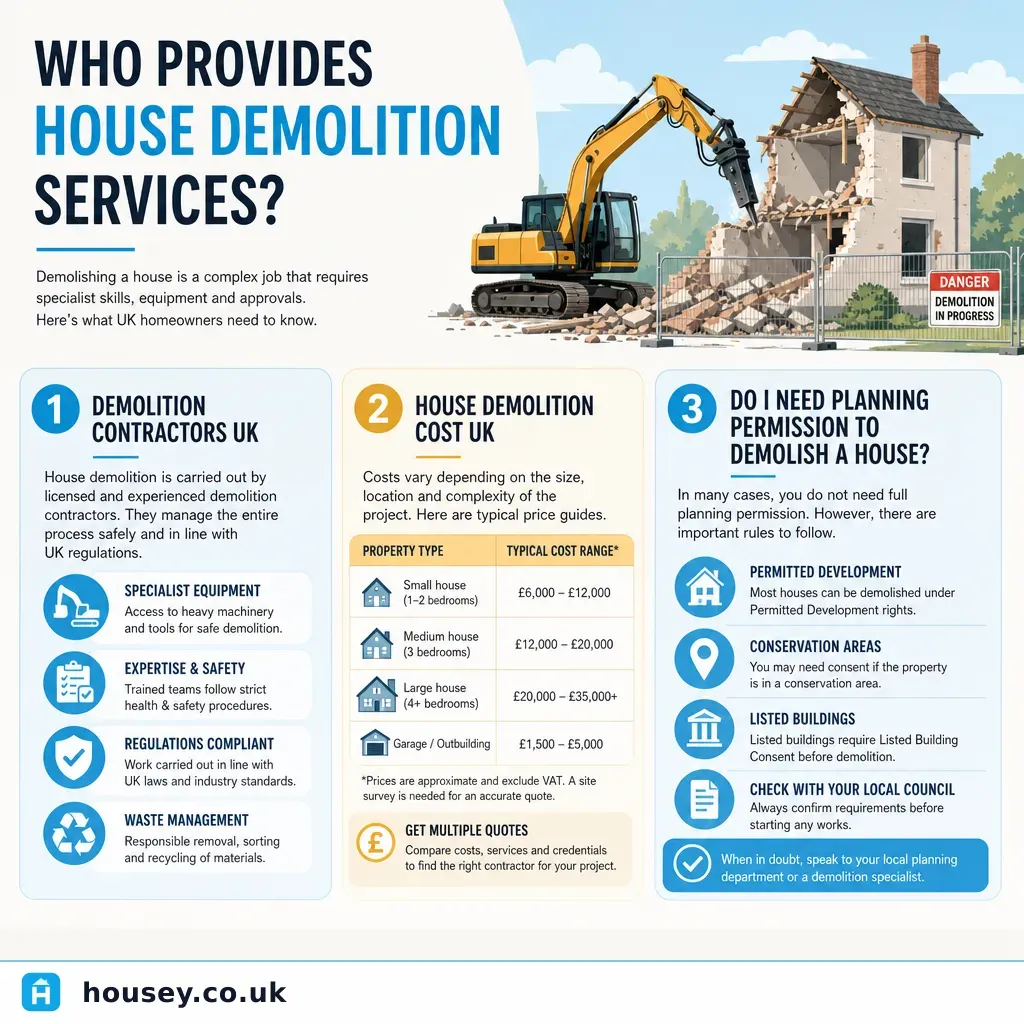
Who Provides House Demolition Services
House demolition in the UK is carried out by specialist demolition contractors, often members of the National Federation of Demolition Contractors (NFDC).