Finding a Renewable Energy Specialist for Your Home
By Housey · Last reviewed 18th of May 2026
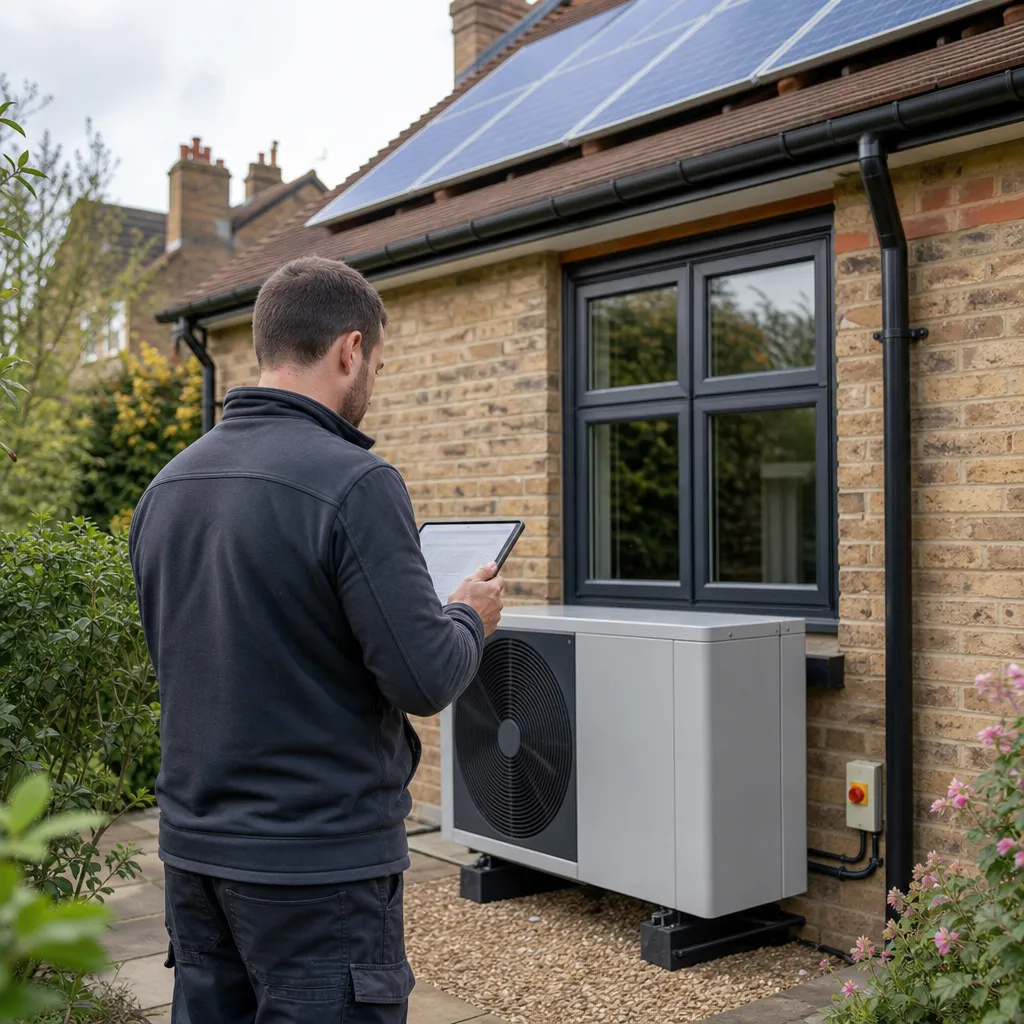
Finding a Renewable Energy Specialist for Your Home
Choosing a renewable energy installer in the UK involves more than comparing prices — the accreditation your installer holds determines whether you can access government grants, register your system correctly, and obtain certificates that protect you at resale. Most homeowners encounter this decision when they receive an energy performance certificate (EPC) recommendation, begin exploring the Boiler Upgrade Scheme, or want to reduce energy bills with solar PV or battery storage.
Key points
- MCS (Microgeneration Certification Scheme) certification is required for installers fitting solar PV, heat pumps, solar thermal, and battery storage where the homeowner wants to access the Boiler Upgrade Scheme or claim Smart Export Guarantee (SEG) payments from an energy supplier.
- The Boiler Upgrade Scheme provides grants towards air source and ground source heat pumps; only MCS-certified installers can submit the voucher application to Ofgem on your behalf — check GOV.UK for the current grant amounts.
- PAS 2035:2023 is the British Standard governing whole-house energy retrofit; projects funded through ECO4 or the Great British Insulation Scheme must involve a TrustMark-registered Retrofit Assessor and Retrofit Coordinator.
- Heat pump systems must be sized against a property-specific heat loss calculation to BS EN 12831; an incorrectly sized unit will either fail to heat the home adequately or run at poor efficiency.
- TrustMark registration has been mandatory for all government-funded retrofit work since April 2022; always verify registration at trustmark.org.uk before signing any contract.
What accreditations should a renewable energy specialist hold?
The accreditation that matters most depends on the technology being installed and whether you want to access public funding or export payments.
MCS (Microgeneration Certification Scheme) is the baseline standard for residential renewable technology in Great Britain. MCS covers installer competence and product standards for solar PV, solar thermal, heat pumps (air source and ground source), wind turbines, and battery storage. Without an MCS-certified installer you cannot apply for the Boiler Upgrade Scheme, register for SEG payments, or receive an MCS Installation Certificate — which is required for system warranties and is relevant at resale.
TrustMark is a government-endorsed quality scheme. From April 2022, any retrofit work funded through government schemes must be carried out by a TrustMark-registered business. Many MCS-certified installers also hold TrustMark registration; verify both on their respective websites.
HIES (Home Insulation & Energy Systems Quality Assured Contractors Scheme) and RECC (Renewable Energy Consumer Code) offer additional consumer protections including deposit protection and independent dispute resolution. These are worth seeking out when making a significant financial commitment.
For whole-house retrofit involving multiple measures (insulation, ventilation, heating), a PAS 2035-compliant Retrofit Coordinator must oversee the project under ECO4 and the Great British Insulation Scheme.
Which technology needs which specialist?
Not all renewable energy installers cover every technology. Use this table to identify the right type of specialist before requesting quotes.
Technology | Key accreditation | Typical additional requirement | Not ideal for |
|---|---|---|---|
Solar PV | MCS (solar PV) | DNO notification for systems above 3.68 kW per phase | Shaded roofs; listed buildings without consent |
Air source heat pump | MCS (heat pumps) | BS EN 12831 heat loss calculation | Poorly insulated homes without an upgrade plan |
Ground source heat pump | MCS (heat pumps) | Ground survey; planning consent for boreholes in some areas | Small plots; properties with no insulation improvements |
Battery storage (standalone) | MCS (battery, if grid-connected) | NAPIT or NICEIC electrical competence | Properties with no solar PV or time-of-use tariff |
Solar thermal | MCS (solar thermal) | Legionella risk assessment for hot water cylinder | Homes with combi boilers (no hot water storage) |
Whole-house retrofit | PAS 2035 Retrofit Coordinator | TrustMark registration; ECO4 eligibility check | Single-measure private projects not funded by a scheme |
How to vet and compare installers
Check accreditation registers directly. Do not rely on a contractor's website alone. Verify MCS certification via the MCS installer directory at mcscertified.com, and TrustMark registration at trustmark.org.uk. HIES membership can be checked at hiesscheme.org.uk.
Get at least three written quotes. Renewable energy quotes can vary considerably based on system design, component brands, scaffold costs, and whether electrical upgrade work such as a consumer unit change is included. A quote that omits DNO notification fees, scaffold, or electrical work is not a like-for-like comparison.
Confirm the site survey process. A reputable installer should visit the property before finalising a price. For solar PV, this means checking roof pitch, orientation, shading, and structural suitability. For a heat pump, it means measuring heat loss room by room and assessing existing radiators or underfloor heating for compatibility.
Request references from similar UK properties. A Victorian terrace and a 1990s detached house have very different retrofit requirements. Ask for references from at least one property of comparable age, construction, and tenure.
What a site survey should cover
For solar PV: roof orientation and tilt; shading from chimneys, trees, or neighbouring buildings at different times of year; roof structural integrity and load-bearing capacity; proximity to the consumer unit; and available roof area relative to the required panel count for the proposed system size.
For air source heat pumps: heat loss calculation room by room to BS EN 12831; existing heat emitter assessment (whether current radiators can operate at lower flow temperatures); hot water cylinder capacity and location; external unit positioning relative to noise levels and any planning restrictions; and whether the installer flags insulation deficiencies that would undermine system performance.
Important limitations
This article is general guidance only. Renewable energy system design is property-specific — performance, grant eligibility, planning requirements, and structural suitability all depend on your home's construction, location, tenure, and energy use. Grant schemes, VAT rates on qualifying energy-saving materials, and eligibility criteria can change; always verify current details with an MCS-certified installer and the relevant scheme administrator before committing. Nothing in this article constitutes financial, legal, or technical advice.
When this becomes urgent
Seek professional advice promptly if:
- An installer is pressuring you to sign quickly or claiming grants are about to close — high-pressure tactics are common in the renewables sector.
- A written contract does not confirm MCS certification, system performance estimates, or the commissioning certificate you will receive.
- Your property is listed or in a conservation area and the installer has not raised planning or listed building consent requirements.
- A heat pump is being proposed without carrying out or commissioning a heat loss calculation.
- An existing installation is underperforming and the installer is unresponsive — contact MCS or your consumer scheme (HIES or RECC) for escalation routes.
What to ask a qualified professional
Before instructing a renewable energy specialist, ask:
- Are you MCS-certified for this specific technology, and what is your MCS registration number so I can verify it on the MCS website?
- Are you TrustMark-registered, and does your registration cover the work you are proposing?
- Will you carry out a full site survey before finalising the quote, and will I receive the results in writing?
- For a heat pump: who will carry out the BS EN 12831 heat loss calculation, and will you provide it in writing before installation?
- Can you handle the DNO notification (for solar PV) or any planning enquiries as part of the contract?
- What MCS Installation Certificate and commissioning paperwork will I receive at completion?
- What warranty do you offer on workmanship, and what are the manufacturer warranties on the main components?
- How do I escalate a complaint if I am dissatisfied — are you a member of HIES or RECC?
How Housey can help
Housey connects UK homeowners with vetted specialists for solar surveys and heat pump surveys, helping you understand what your property can support before you commit to an installation contract.
Frequently asked questions
Do I need an MCS-certified installer for solar panels?
Yes, if you want to register for Smart Export Guarantee (SEG) payments or access any government grant. SEG regulations require MCS certification. Without it, you will not receive an MCS Installation Certificate, which most energy suppliers require before connecting your system to an export tariff and which protects your warranty at resale.
Can any heat pump installer access the Boiler Upgrade Scheme?
No. Only MCS-certified installers can apply for a Boiler Upgrade Scheme grant on your behalf. The installer submits the voucher application to Ofgem, so MCS certification must be in place before the application is made. Check GOV.UK for the current grant amount, as rates can change between publication and the date you apply.
What is PAS 2035 and does it apply to my project?
PAS 2035:2023 is the British Standard governing domestic retrofit. It is mandatory for projects funded through ECO4 or the Great British Insulation Scheme, requiring a qualified Retrofit Assessor and Retrofit Coordinator. For private, self-funded single-measure projects such as fitting solar PV or a heat pump alone, PAS 2035 is best practice rather than a legal requirement.
How many quotes should I get for a renewable energy installation?
At least three written quotes from different MCS-certified installers. Each quote should itemise the same system specification so you can compare fairly. Significant price variation often reflects different component grades, different assumptions about electrical upgrade work, or different scaffold arrangements — ask each installer to explain what drives their price.
Sources and further reading
- MCS Installer Directory — MCS
- Boiler Upgrade Scheme guidance — GOV.UK
- Smart Export Guarantee — Ofgem
- TrustMark Find a Tradesperson — TrustMark
- Heat pumps advice — Energy Saving Trust
Useful next reads
 Energy & Retrofit
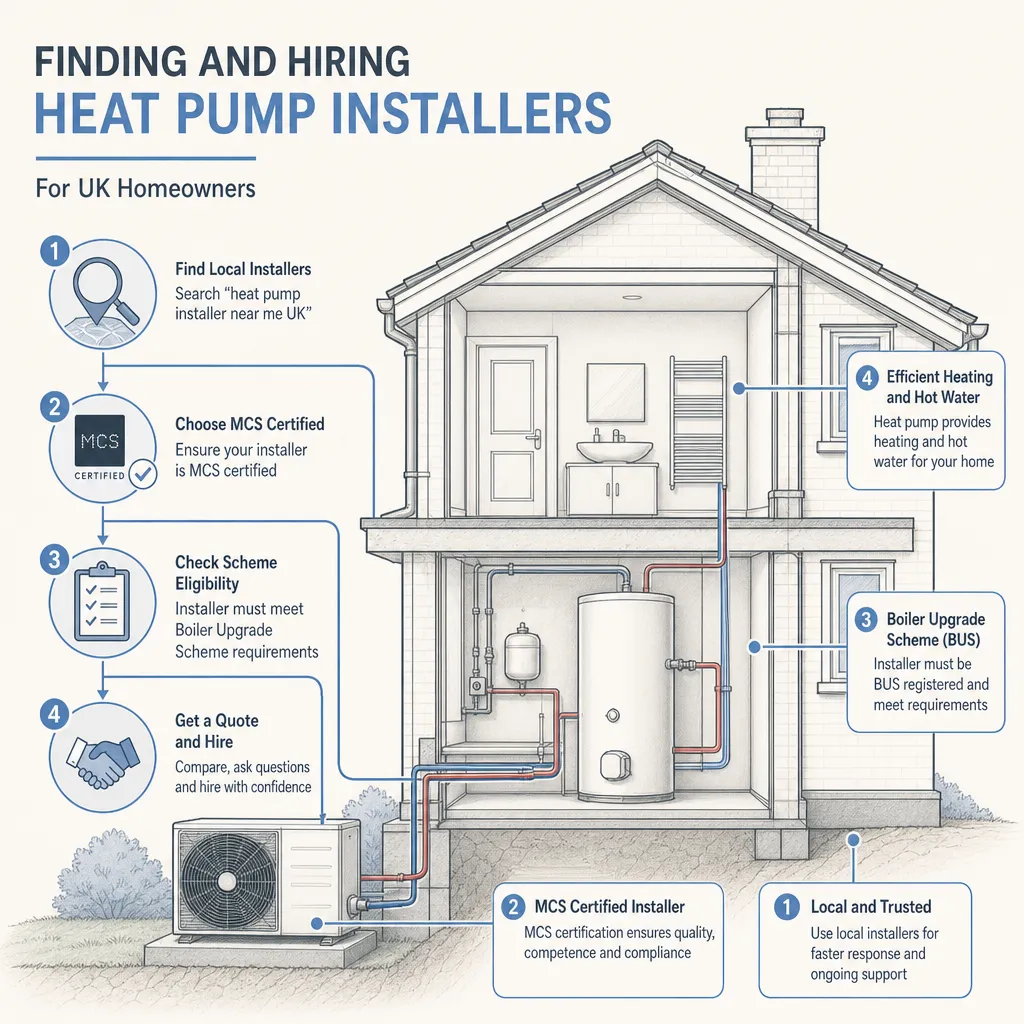
Finding and Hiring Heat Pump Installers
To find a qualified heat pump installer, check the MCS installer database for current certification, confirm the installer will carry out a full room-by-room heat loss calculation before producing a design or quote, and get at least three written quotes specifying the heat pump model, emitter sizing, and Boiler Upgrade Scheme grant process.
 Energy & Retrofit
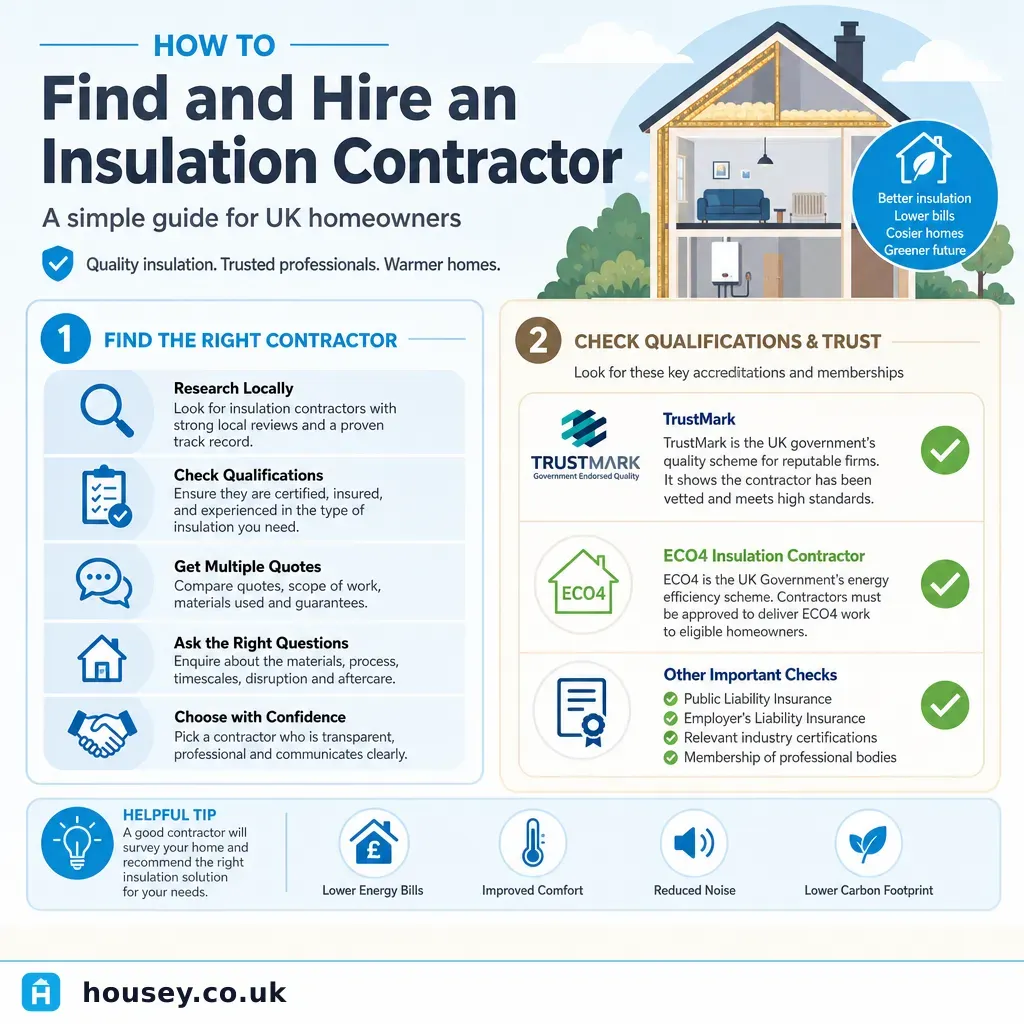
How to Find and Hire an Insulation Contractor
Look for contractors registered with TrustMark, the government-endorsed quality scheme for energy efficiency retrofit work.
 Energy & Retrofit
Optimising Heating Systems for Energy Efficiency
Optimising a UK heating system usually involves improving controls such as smart thermostats and thermostatic radiator valves, ensuring the boiler or heat pump is correctly sized, and upgrading radiators or pipework where needed.
 Energy & Retrofit
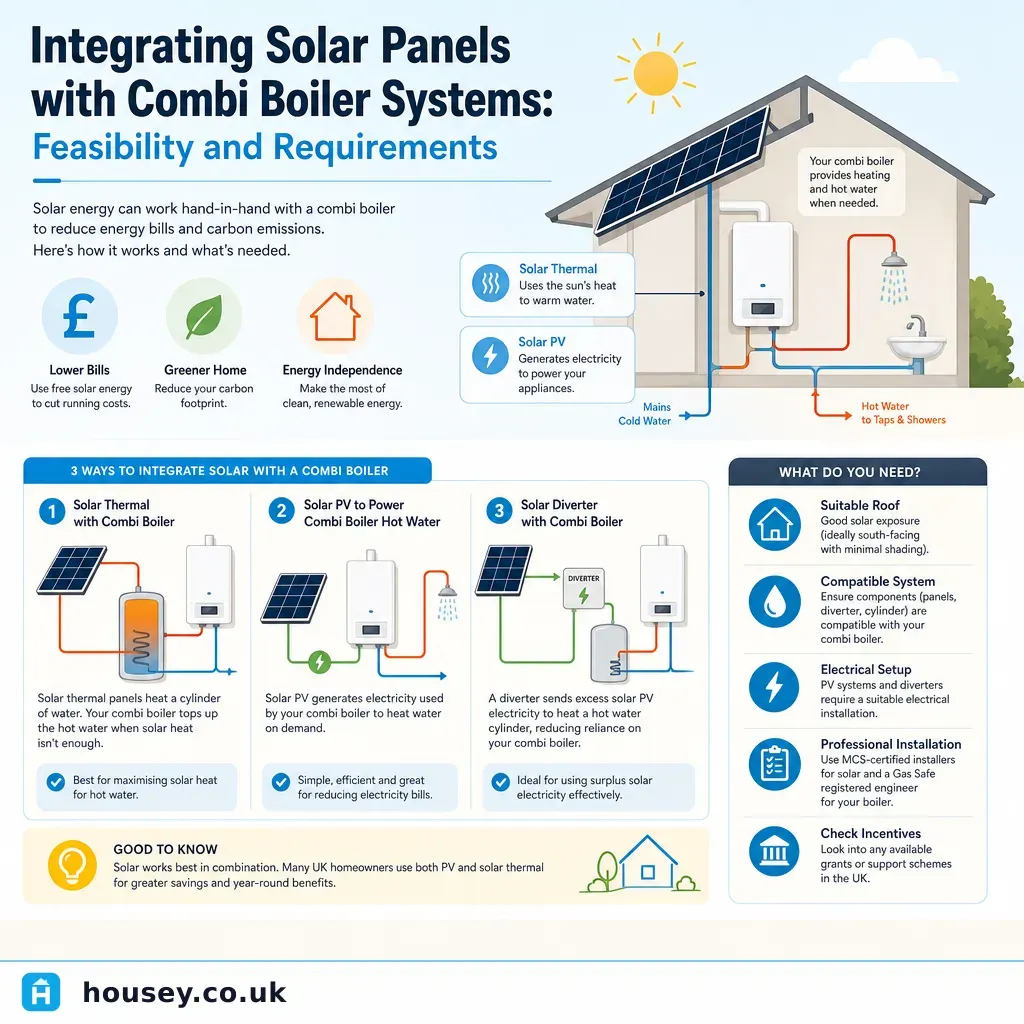
Integrating Solar Panels with Combi Boiler Systems: Feasibility and Requirements
Combi boilers heat water on demand without a hot water storage cylinder, making direct solar thermal integration impractical.
 Energy & Retrofit
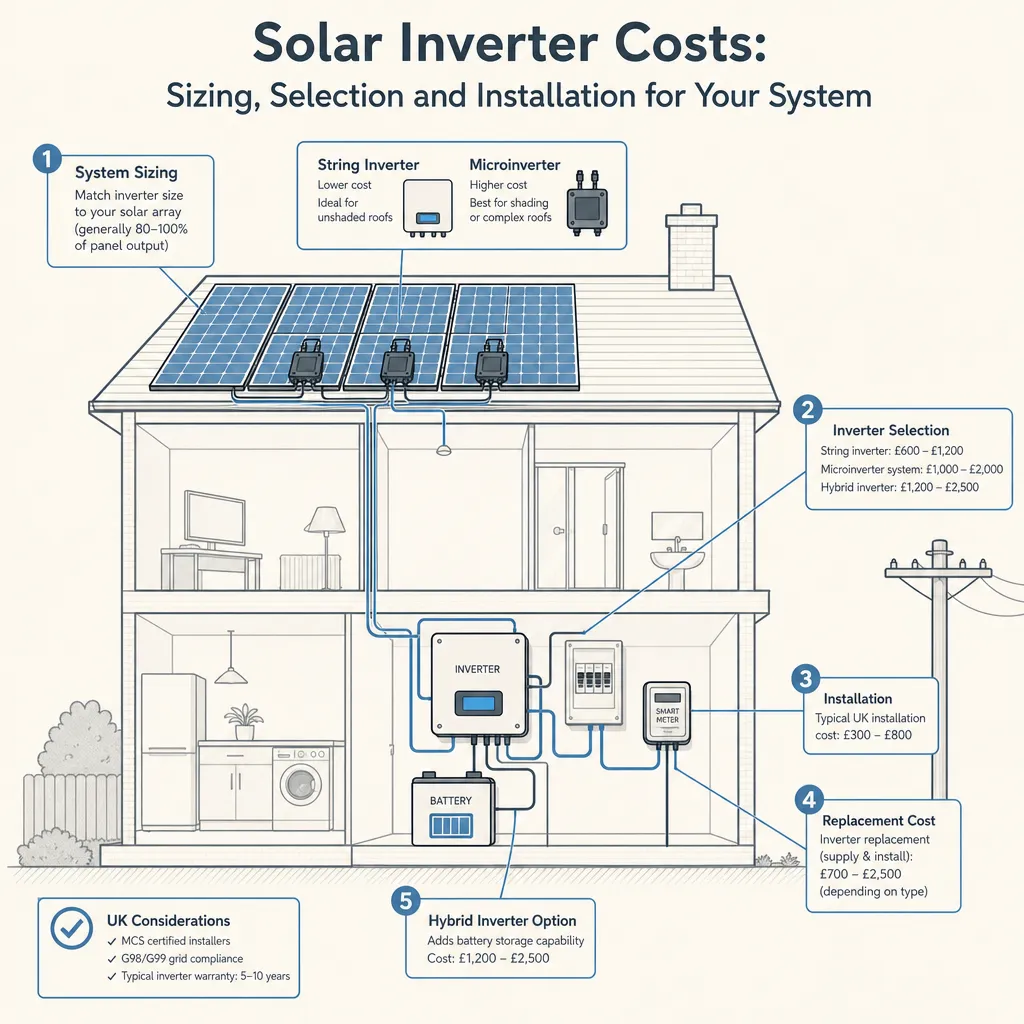
Solar Inverter Costs: Sizing, Selection and Installation for Your System
A solar inverter converts DC electricity from panels into AC power for home use.