Finding an Independent Damp Surveyor
By Housey · Last reviewed 18th of May 2026
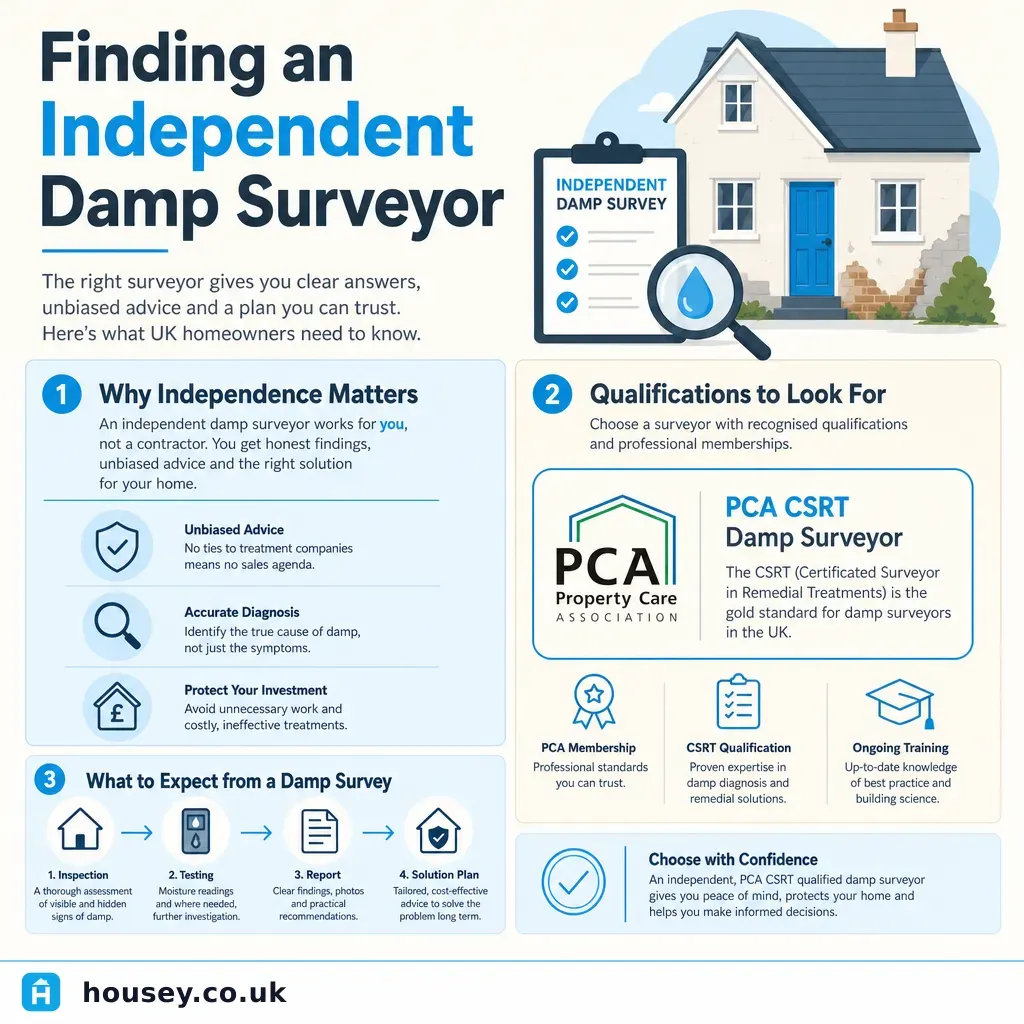
Finding an Independent Damp Surveyor
Damp problems are among the most commonly misdiagnosed — and over-treated — defects in UK property. The question of independence matters particularly here because many firms offering "free damp surveys" are tied to remediation contractors who profit from recommending treatment products. Understanding how to find a genuinely independent surveyor protects you from unnecessary expense and gives you an accurate picture of what you are actually dealing with.
Key points
- The Property Care Association (PCA) and RICS both accredit damp surveyors; the PCA's Certificated Surveyor in Remedial Treatments (CSRT) is the most widely recognised specialist qualification.
- A surveyor employed by or financially linked to a remediation company is not truly independent — always ask how the surveyor is remunerated before booking.
- Damp surveys should involve moisture meter readings, thermal imaging where appropriate, and a written diagnosis of cause — not just a symptom description.
- Free surveys offered by damp-proofing contractors are a commercial sales tool, not neutral professional assessments.
- RICS Level 2 and Level 3 Home Surveys cover visible damp as part of a general condition report, but a standalone damp survey provides greater diagnostic depth for known problems.
Why independence matters in damp diagnosis
Damp in UK properties has many causes: bridged cavity walls, failed pointing, condensation from inadequate ventilation, rising damp from absent or defective damp-proof courses, and lateral penetration from high external ground levels. Each cause has a different remedy — and the wrong remedy wastes money.
Firms tied to chemical damp-proofing products have a financial incentive to diagnose rising damp — treatable with injected DPC and replastering at significant cost — even where the actual cause is condensation or bridging, which costs considerably less to fix. Research by the BRE has long highlighted that rising damp is frequently over-diagnosed in UK housing stock.
An independent surveyor — one who charges a professional fee for the report and has no product or treatment to sell — gives you a diagnosis aligned with your interests, not theirs.
What qualifications to look for
Qualification | Body | What it means | Best for |
|---|---|---|---|
CSRT (Certificated Surveyor in Remedial Treatments) | PCA | Specialist in diagnosing and specifying damp and timber defects | Detailed standalone damp surveys |
CSSW (Certificated Surveyor in Structural Waterproofing) | PCA | Specialist in below-ground waterproofing systems | Basement conversions and tanking |
Chartered Surveyor | RICS | Broad property qualification covering condition and defects | General condition surveys with damp commentary |
No listed qualification | — | No regulated competence verification available | Avoid for formal diagnosis |
Check registration directly on the PCA member directory or the RICS Find a Surveyor tool. Membership establishes minimum professional standards and a complaints procedure.
How to find an independent damp surveyor
Start with professional directories. The PCA member directory allows you to filter by specialism and postcode. The RICS Find a Surveyor tool covers chartered surveyors offering specialist services. Both list verified practitioners.
Confirm financial independence. Before booking, ask whether the surveyor sells or installs damp-proofing products, or has any commercial arrangement with a contractor who does. A genuinely independent surveyor will confirm their fee is a fixed professional charge and that they have no remediation sales interest.
Require a written report. A credible survey produces a written report identifying moisture readings, likely causes, affected areas, and recommended remedies — not a boilerplate quotation for chemical treatment.
Consider context if buying. If a RICS Level 3 Building Survey has already flagged damp, a standalone specialist damp survey may complement rather than replace the general survey, providing greater diagnostic detail before you commit to remediation.
What to ask a damp surveyor before booking
- Are you independent of any damp-proofing or remediation contractor?
- What qualifications and professional body memberships do you hold, and are you currently registered?
- Will the survey include moisture meter readings and thermal imaging where appropriate?
- What will the written report include — and will it contain a specification suitable for obtaining independent contractor quotes?
- What is your fee, and is it fixed?
- Have you surveyed properties of this age and construction type before?
- Are you covered by professional indemnity insurance?
- What is your typical turnaround from survey to written report?
Red flags to watch for
- A "free survey" offered by a company that also sells treatment products — these are sales appointments, not independent assessments.
- A surveyor who recommends specific branded products or a named contractor without independent reasoning.
- A verbal assessment with no written report or moisture meter readings.
- Diagnosis of rising damp in a post-1960s property — modern cavity-wall homes have integral damp-proof courses and rising damp is uncommon in this construction type.
- Pressure to book treatment immediately or accept a same-day price.
- No professional indemnity insurance or current professional body registration.
When to get professional help
If a damp problem has been identified during a general home survey, or if you have visible signs — tide marks, peeling paint, efflorescence, or musty odours — commission a specialist damp survey before agreeing to any remediation. This is especially important:
- Before exchanging contracts on a property purchase.
- Before an internal refurbishment that will cover or seal affected areas.
- Before accepting a quote from a contractor who carried out the original diagnosis.
If the problem involves suspected structural movement — stair-step cracks through brickwork, distorted door or window frames, or separation at corners — a chartered surveyor or structural engineer should assess the property before a damp specialist is engaged.
How Housey can help
Housey connects homeowners and buyers with verified independent professionals across the UK. You can request a damp and timber survey through Housey and receive comparable quotes from qualified local surveyors — so you can check credentials and fees before committing to any assessment or treatment.
Frequently asked questions
Do I need an independent damp survey before buying a house?
If a general home survey has flagged damp, or if you can see signs during viewings, an independent damp survey before exchange gives you an accurate diagnosis and a basis for renegotiating or requesting repairs. A free survey from a remediation contractor is not a substitute — it is a sales tool, not an impartial assessment.
What qualifications should a damp surveyor hold?
The PCA's Certificated Surveyor in Remedial Treatments (CSRT) is the most widely recognised specialist qualification for damp diagnosis. RICS chartered surveyors also assess damp as part of building surveys. Check current registration directly on the PCA or RICS directory before booking.
How much does an independent damp survey cost?
Indicative UK costs, last reviewed 2026-05-18. Fees for a specialist damp survey typically range from £200 to £500 depending on property size and surveyor location. This is separate from any remediation costs. Always confirm what the fee covers and whether a written report with moisture readings is included.
What should a damp survey report include?
A proper damp survey report should include moisture meter readings at multiple locations, identification of the most likely cause — condensation, penetrating damp, rising damp, or a plumbing leak — a description of affected areas, and recommended remediation steps with enough specification detail to obtain independent contractor quotes.
Sources and further reading
- PCA member directory — Property Care Association
- RICS Find a Surveyor — RICS
- BRE: building defects and dampness — BRE (Building Research Establishment)
Useful next reads
 Surveys & Inspections
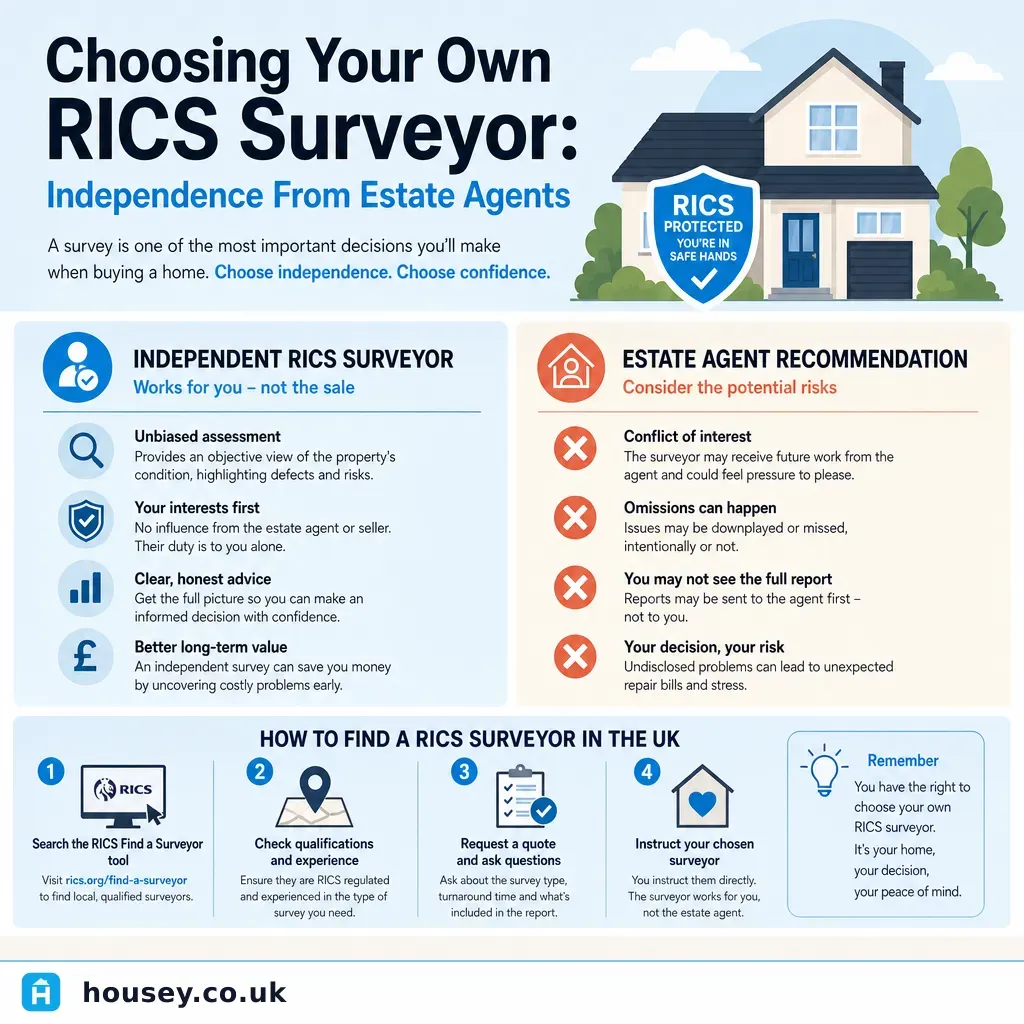
Choosing Your Own RICS Surveyor: Independence From Estate Agents
You have every right to choose your own RICS surveyor independently of your estate agent's recommendation.
 Surveys & Inspections
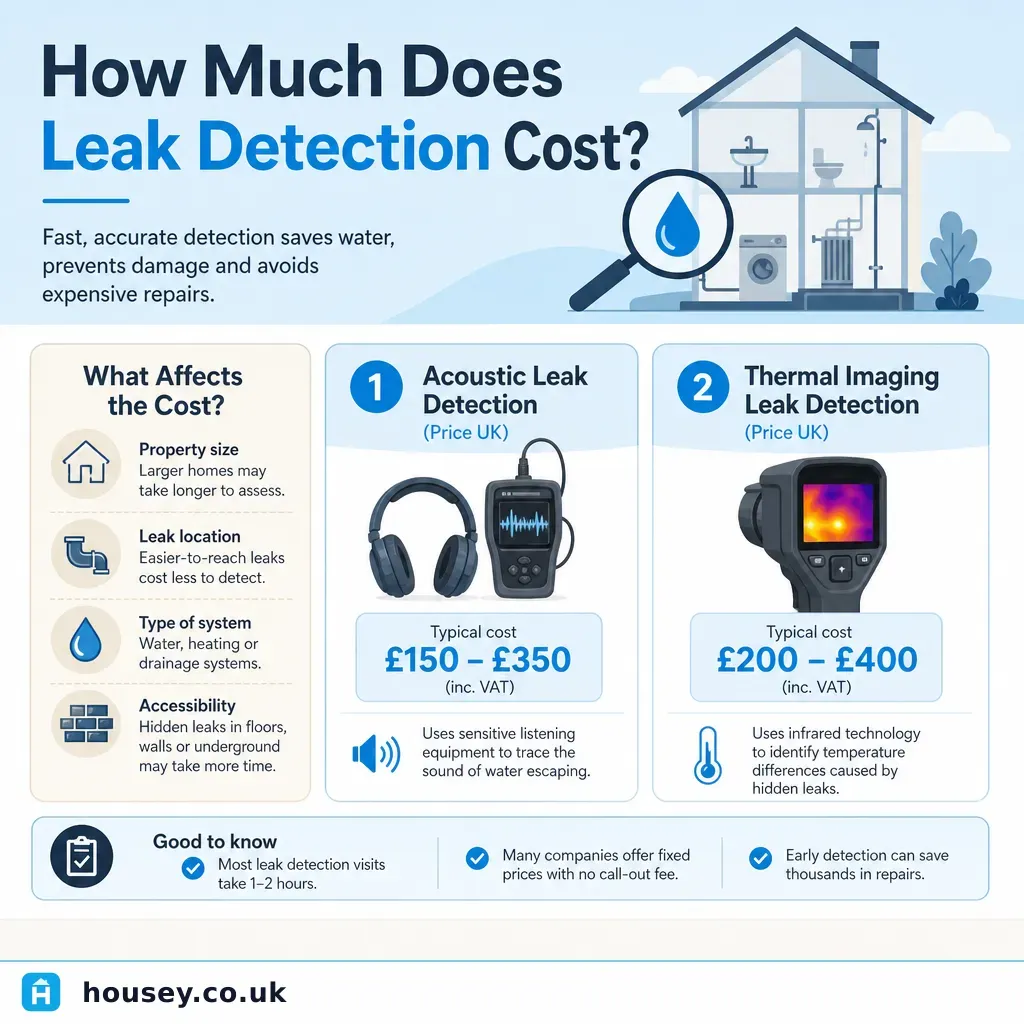
How Much Does Leak Detection Cost?
Leak detection in the UK typically costs £150–£600 for a standard residential survey, rising to £1,000 or more for complex cases requiring multiple methods.
 Surveys & Inspections
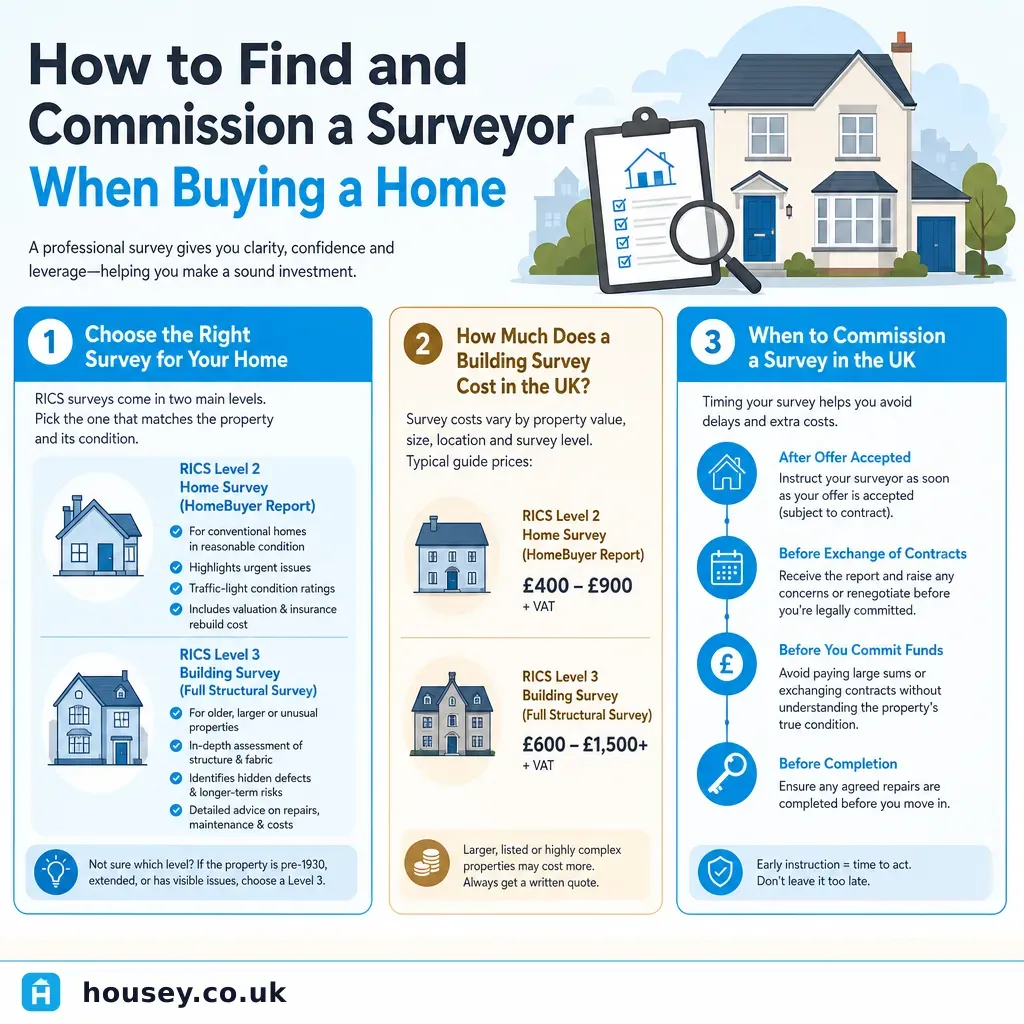
How to Find and Commission a Surveyor When Buying a Home
To commission a surveyor when buying a home, use the RICS Find a Surveyor tool to identify a regulated professional, choose between a RICS Level 2 Home Survey or Level 3 Building Survey based on the property's age and condition, and book as soon as your offer is accepted.
 Surveys & Inspections
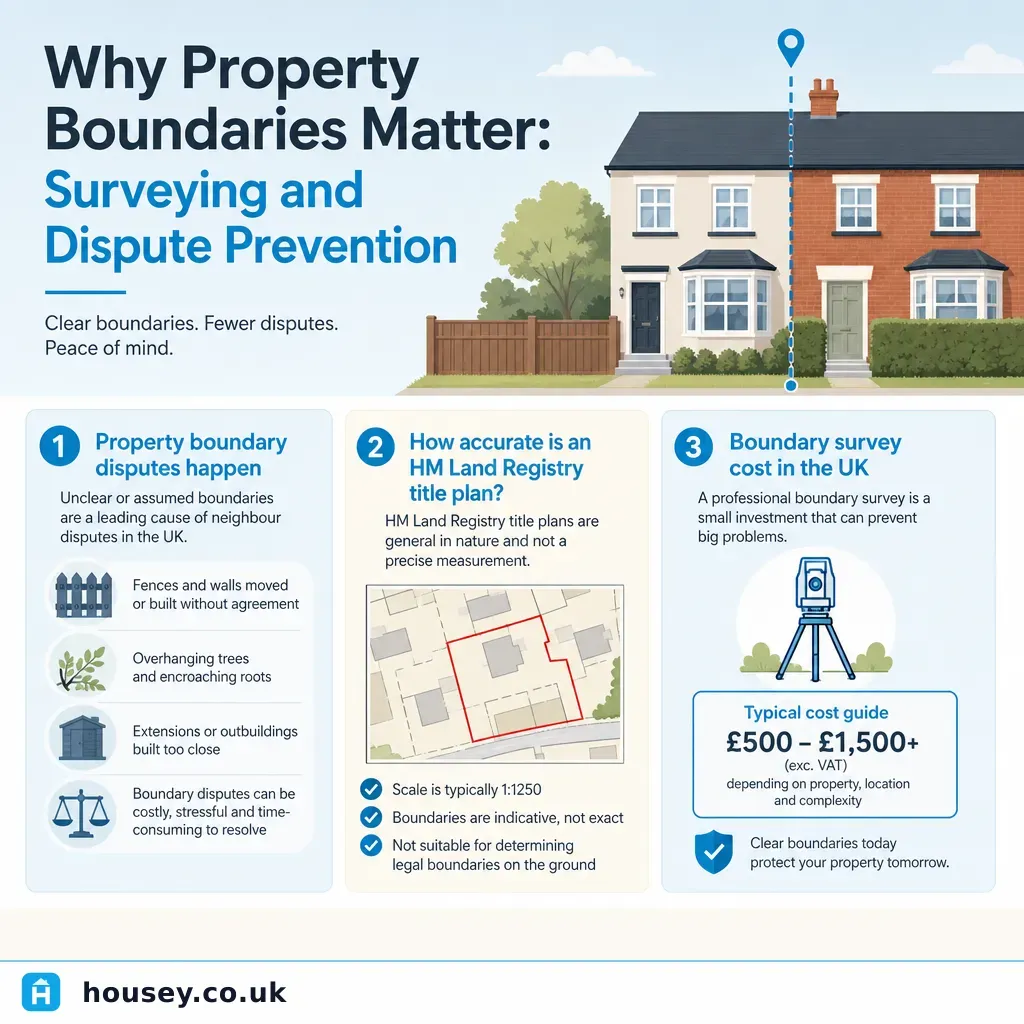
Why Property Boundaries Matter: Surveying and Dispute Prevention
Property boundaries in England and Wales are recorded as general boundaries by HM Land Registry — not precise measurements.
 Surveys & Inspections
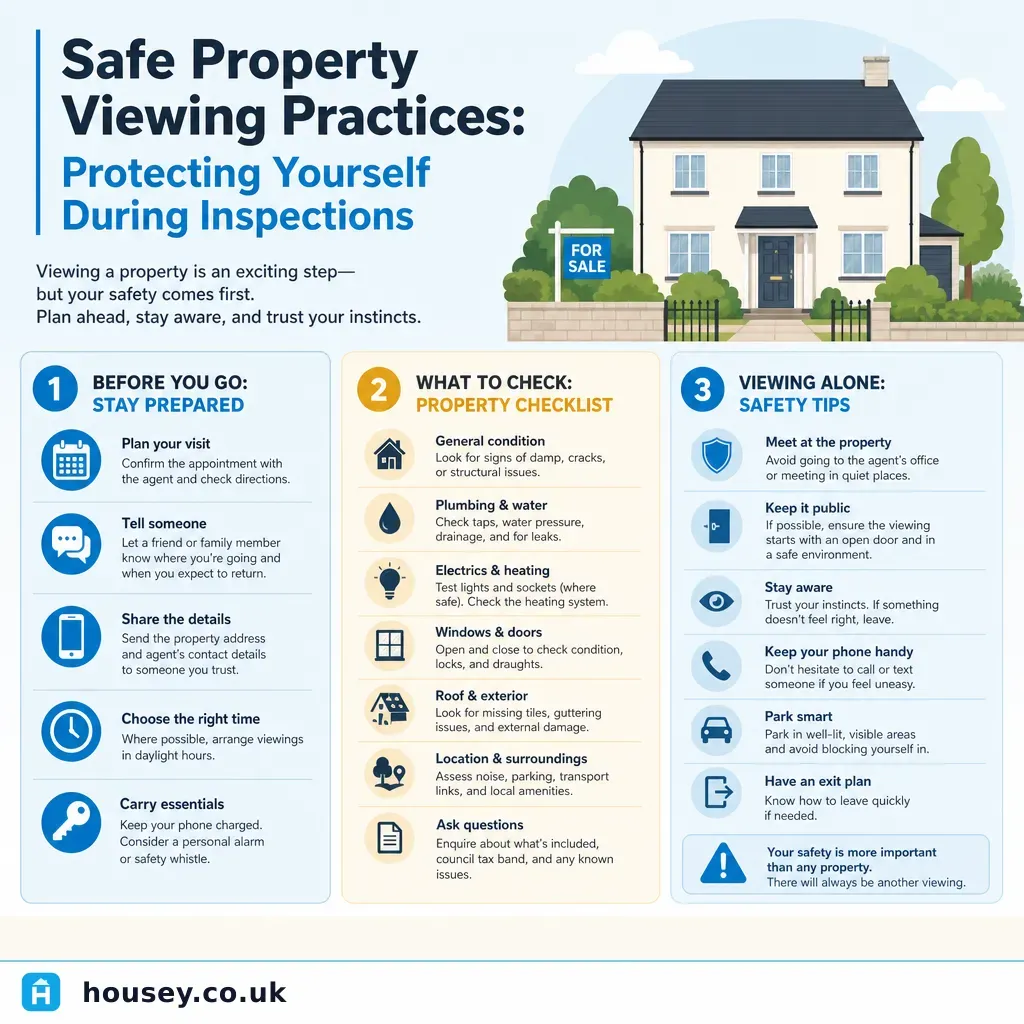
Safe Property Viewing Practices: Protecting Yourself During Inspections
When viewing a property in the UK, always tell someone where you are going and share the full address before you leave.